Electric Car Charger Home Installation Near Me: Your Complete Setup Guide
Switching to an electric vehicle is one of the smartest moves you can make for your wallet & the environment, but owning an EV without a reliable home charging setup is like having a smartphone without a charger. If you have been searching for electric car charger home installation near me, you are not alone. Millions of EV owners face the same question: how do I get a safe, code-compliant charger installed at my home without overpaying?
This comprehensive guide walks you through everything you need to know about residential EV charger installation, from electrical requirements & permitting to hiring the right contractor & understanding costs. Whether you are considering a Level 1 or Level 2 home charger, we have you covered.
At a Glance: Installation Overview
Difficulty Level: Moderate to Advanced (electrical work involved)
Estimated Cost: $500 – $2,500+ (charger unit + professional installation)
Time Required: 2 – 6 hours for professional installation
Permit Required: Yes, in most jurisdictions
Recommended Skill Level: Licensed electrician strongly advised
Understanding Home EV Charger Requirements
Before you start calling electricians or ordering equipment, it is essential to understand what your home & your vehicle actually need. Not every home is ready for EV charging out of the box, & knowing your requirements upfront saves time, money, & frustration.
Level 1 vs. Level 2 Chargers: What Is the Difference?
Level 1 chargers plug into a standard 120-volt household outlet (NEMA 5-15) & deliver roughly 3 to 5 miles of range per hour of charging. They come included with most EVs & require no special installation. However, for daily drivers who need a full charge overnight, Level 1 charging is often insufficient.
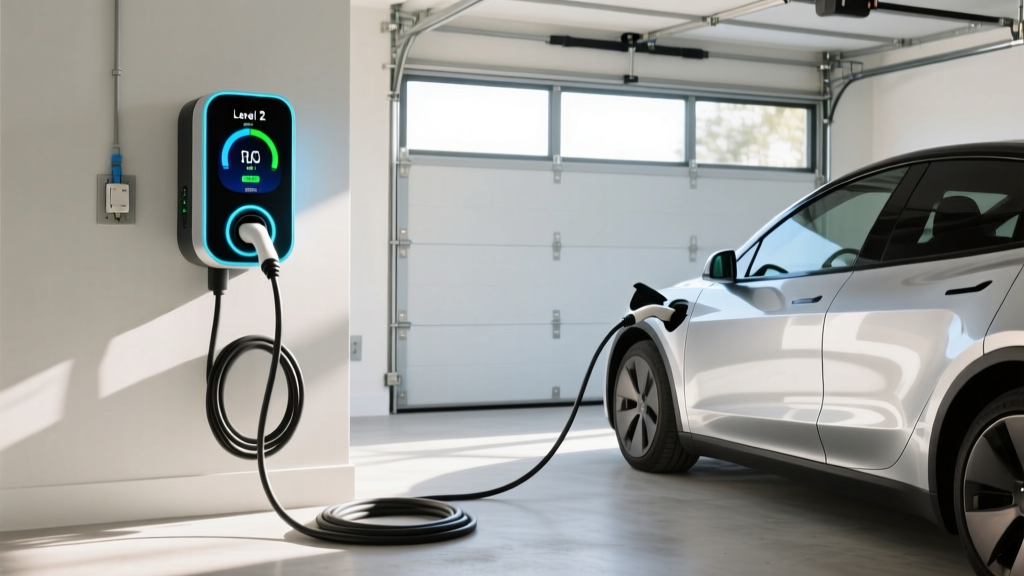
Level 2 chargers operate on a 240-volt circuit, similar to what your electric dryer or oven uses. They deliver anywhere from 12 to 60 miles of range per hour, depending on the amperage & your vehicle's onboard charger capacity. A Level 2 home charger can fully replenish most EV batteries overnight, making it the gold standard for residential charging.
For a deeper comparison of available options, check out our guide to the best Level 2 EV chargers for home use.
Electrical Panel Capacity
Your home's electrical panel is the starting point for any EV charger installation. Most modern homes have a 100-amp or 200-amp main service panel. A Level 2 charger typically requires a dedicated circuit ranging from 20 amps to 60 amps, depending on the charger model.
A qualified electrician will perform a load calculation to determine whether your existing panel can handle the additional draw. The National Electrical Code (NEC) requires that the total calculated load does not exceed 80% of your panel's rated capacity for continuous loads like EV charging. According to the National Fire Protection Association's NEC guidelines, continuous loads must be derated to 80% of the circuit breaker's rating, meaning a 40-amp charger needs a 50-amp circuit.
If your panel is at or near capacity, you may need a panel upgrade (also called a "heavy-up"), which can add $1,500 to $3,000 to your total installation cost.
Circuit & Wiring Specifications
The wiring between your electrical panel & the charger location must be properly sized for the amperage. Common configurations include:
- 20-amp circuit: 12 AWG copper wire — supports up to 16 amps continuous (3.8 kW)
- 30-amp circuit: 10 AWG copper wire — supports up to 24 amps continuous (5.8 kW)
- 40-amp circuit: 8 AWG copper wire — supports up to 32 amps continuous (7.7 kW)
- 50-amp circuit: 6 AWG copper wire — supports up to 40 amps continuous (9.6 kW)
- 60-amp circuit: 4 AWG copper wire — supports up to 48 amps continuous (11.5 kW)
The distance between your panel & the charger location also matters. Longer wire runs may require thicker gauge wire to prevent voltage drop, which can increase material costs significantly.
Step-by-Step Home EV Charger Installation Process
Whether you hire a professional or take on portions of the project yourself, understanding the full installation process helps you make informed decisions & communicate effectively with your electrician.
Step 1: Assess Your Charging Needs
Start by evaluating your daily driving habits. If you drive 30 to 40 miles per day, a 32-amp Level 2 charger (providing roughly 25 to 30 miles of range per hour) will easily replenish your battery overnight. If you frequently take long trips or have a larger battery pack (like those in trucks & SUVs), a 48-amp or higher charger may be worth the investment. Browse our EV charger reviews to compare top-rated models.
Step 2: Choose Your Charger Location
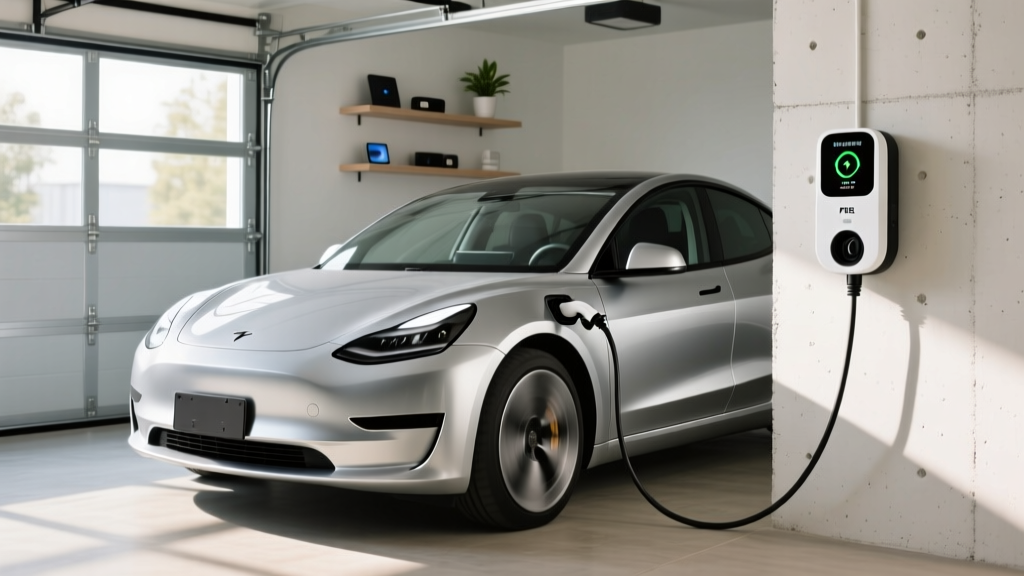
The ideal charger location is close to your electrical panel to minimize wiring costs. Most homeowners install their charger in the garage, near where the vehicle parks. Key considerations include:
- Proximity to the panel: Every additional foot of wire adds cost
- Cord reach: Ensure the charger's cable can comfortably reach your vehicle's charge port
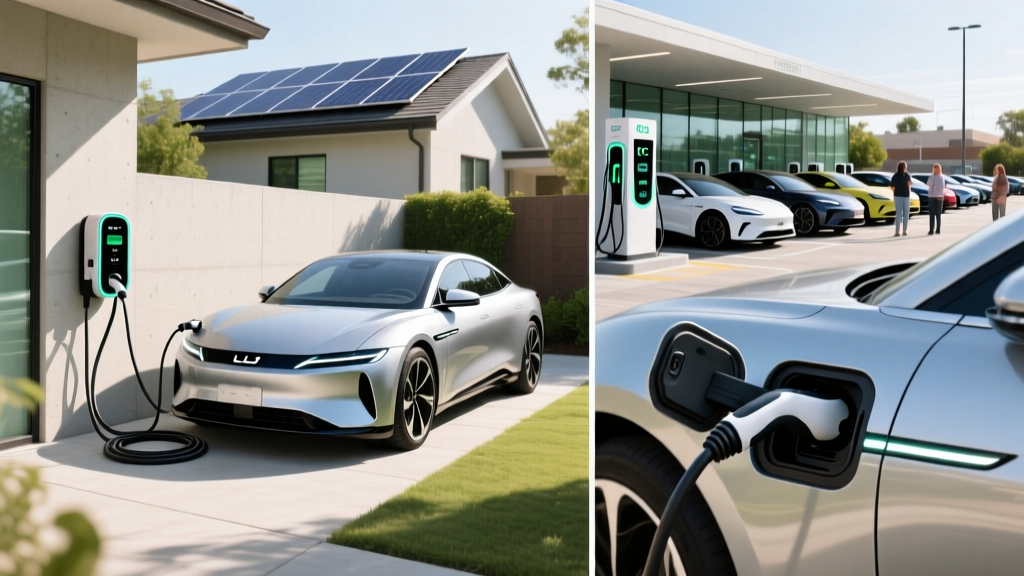
- Protection from elements: Indoor installation is ideal, but outdoor-rated chargers are available for driveway setups
- WiFi signal strength: Smart chargers need a reliable connection for scheduling & monitoring features
- Future-proofing: Consider installing a higher-amperage circuit than you currently need to accommodate future vehicles
Step 3: Obtain Necessary Permits
Most local jurisdictions require an electrical permit for EV charger installation. Your electrician typically handles this, but if you are managing the project yourself, contact your local building department to determine specific requirements. Permit fees generally range from $50 to $200 depending on your municipality.
Step 4: Install the Dedicated Circuit
The electrician will run a new dedicated circuit from your main panel to the charger location. This involves:
- Shutting off power to the panel
- Installing a new double-pole breaker of the appropriate amperage
- Running properly sized conduit & wire from the panel to the charger location
- Mounting a junction box or NEMA receptacle (if using a plug-in charger)
- Connecting all wires & ensuring proper grounding
Step 5: Mount & Connect the Charger
For hardwired installations, the charger is directly connected to the circuit wiring inside the unit's enclosure. For plug-in models, the charger simply plugs into the newly installed NEMA outlet (commonly a NEMA 14-50 or NEMA 6-50). The charger is then mounted to the wall using the included bracket & hardware.
Step 6: Test & Configure
Once installed, the electrician will test the circuit for proper voltage, grounding, & polarity. After confirming safe operation, you can configure your charger's settings, connect it to your home WiFi network, & set up any scheduling or energy management features through the manufacturer's app.
Permits, Inspections & Code Compliance
Skipping permits might seem tempting to save money, but it creates serious risks — from voided insurance claims to failed home inspections when you eventually sell your property. Here is what you need to know about staying compliant.
Why Permits Matter
Electrical permits exist to protect you. They ensure that a qualified inspector verifies the installation meets the National Electrical Code (NEC) standards, which are updated regularly to reflect the latest safety research. The NEC specifically addresses EV charging under Article 625, covering everything from circuit sizing to disconnect requirements.
The Inspection Process
After installation, your local electrical inspector will visit your home to verify:
- Correct breaker size & wire gauge
- Proper grounding & bonding
- Adequate working clearance around the panel
- Load calculation compliance
- GFCI protection where required by code
- Proper mounting & strain relief on cables
If the inspector identifies any issues, your electrician will need to correct them before the installation receives final approval. Most reputable electricians guarantee their work will pass inspection.
Utility Company Requirements
Some utility companies require notification before you install an EV charger, especially if you plan to take advantage of special EV electricity rates or demand-response programs. Contact your local utility to learn about:
- EV-specific time-of-use (TOU) rate plans
- Rebates or incentives for charger installation
- Smart charging programs that offer bill credits
- Any transformer upgrade requirements in your neighborhood
The U.S. Department of Energy maintains a comprehensive database of federal, state, & utility incentives for home EV charging equipment & installation.
DIY Installation vs. Hiring a Professional Electrician
One of the most common questions EV owners ask is whether they can install a home charger themselves. The answer depends on your skill level, the type of charger, & local regulations.
When DIY Makes Sense
DIY installation may be reasonable in limited scenarios:
- Level 1 charging: Simply plugging into an existing 120V outlet requires no electrical work
- Plug-in Level 2 with existing outlet: If you already have a properly wired NEMA 14-50 outlet (from a previous dryer or range), you may be able to simply plug in your new charger
- Experienced homeowners: If you have substantial electrical experience & understand NEC requirements, you may handle portions of the work
Why Professional Installation Is Usually Best
For the vast majority of homeowners, hiring a licensed electrician is the right choice. Here is why:
- Safety: Working inside an electrical panel is dangerous. A single mistake can cause arc flash, fire, or electrocution
- Code compliance: Licensed electricians understand current NEC requirements & local amendments
- Permit handling: Most jurisdictions require electrical work to be performed or supervised by a licensed professional
- Warranty protection: Many charger manufacturers void the warranty if the unit is not installed by a licensed electrician
- Insurance coverage: Unpermitted, DIY electrical work can void your homeowner's insurance if it causes a fire
- Liability: If unpermitted work causes damage to a neighbor's property or injures someone, you could be personally liable
Finding a Qualified EV Charger Installer Near You
When searching for an electrician to install your home EV charger, look for these qualifications:
- Proper licensing: Verify their electrical license is current & in good standing with your state
- EV experience: Ask how many EV charger installations they have completed
- Insurance: Confirm they carry general liability & workers' compensation insurance
- References: Request references from recent EV charger customers
- Multiple quotes: Get at least three quotes to compare pricing & scope of work
- Manufacturer certification: Some charger brands maintain lists of certified installers — check the manufacturer's website
Popular platforms for finding vetted local electricians include HomeAdvisor, Angi, & Thumbtack. You can also ask for recommendations in local EV owner groups & forums. For guidance on choosing the right charger before scheduling installation, see our complete EV charger buying guide.
Complete Cost Breakdown: What to Expect
Understanding the full cost picture helps you budget accurately & avoid surprises. Here is a detailed breakdown of typical expenses associated with home EV charger installation.
Charger Unit Cost
| Charger Type | Amperage | Typical Price Range |
|---|---|---|
| Basic Level 2 (non-smart) | 16 – 32 amps | $200 – $400 |
| Smart Level 2 (WiFi-enabled) | 32 – 48 amps | $350 – $700 |
| Premium Level 2 (advanced features) | 48 – 80 amps | $500 – $1,000 |
| Level 2 with cable management | 32 – 48 amps | $400 – $800 |
Installation Labor & Materials
| Installation Scenario | Estimated Cost |
|---|---|
| Simple install (short run, plug-in, panel has capacity) | $300 – $600 |
| Moderate install (20–40 ft wire run, hardwired) | $600 – $1,200 |
| Complex install (long run, conduit, drywall work) | $1,200 – $2,500 |
| Panel upgrade (200-amp service upgrade) | $1,500 – $3,000 |
| Trenching (for detached garage or outdoor run) | $500 – $2,000+ |
Additional Costs to Consider
- Permit fees: $50 – $200
- Utility meter upgrade: $0 – $500 (if required by your utility)
- WiFi extender: $30 – $80 (if your garage has poor signal)
- Surge protector: $50 – $150 (recommended for hardwired installations)
- Conduit & wire upgrades: Varies based on distance & local code
Rebates & Tax Credits
The good news is that you may be able to offset a significant portion of your installation costs. Federal, state, & local incentives can reduce your net cost by hundreds or even thousands of dollars. Many utility companies offer rebates ranging from $100 to $1,000 for installing a qualified Level 2 charger. Check with your utility provider & visit the Department of Energy's EV charging incentives page for current programs in your area.
Essential Safety Tips for Home EV Charging
Safety should always be your top priority when installing & using a home EV charger. Follow these guidelines to protect your home, your vehicle, & your family.
Electrical Safety Best Practices
- Never use extension cords with your EV charger. They are not rated for the continuous high-current draw & create a serious fire hazard
- Do not daisy-chain adapters or plug multiple devices into the same circuit as your EV charger
- Install a dedicated circuit — sharing the charger's circuit with other appliances can cause overloads & breaker trips
- Use a GFCI breaker where required by code, especially for outdoor installations
- Ensure proper grounding — a poorly grounded circuit can damage your vehicle's onboard charger & create shock hazards
Charger Placement & Environmental Safety
- Mount the charger at the manufacturer's recommended height (typically 48 inches from the floor to the center of the unit)
- Keep the charging cable off the ground when not in use to prevent tripping hazards & cable damage
- Ensure adequate ventilation if charging in an enclosed garage, especially in hot climates
- For outdoor installations, verify that both the charger & the receptacle are rated for outdoor use (NEMA 4 or IP65 rating minimum)
- Keep the charging area clear of flammable materials, including gasoline containers, paint, & solvents
Ongoing Maintenance & Inspection
While EV chargers require minimal maintenance, periodic inspection helps catch problems before they become dangerous:
- Inspect the charging cable regularly for cracks, fraying, or exposed wires
- Check the plug & receptacle for signs of heat damage, discoloration, or melting
- Test the GFCI breaker monthly by pressing the test button
- Ensure the charger's firmware is up to date for smart models
- Have a licensed electrician inspect the installation every 3 to 5 years
For more on keeping your setup in top shape, read our EV charger maintenance & troubleshooting guide.
Troubleshooting Common Installation & Charging Issues
Even professionally installed systems can encounter problems. Here are the most common issues & how to resolve them.
Charger Will Not Power On
Possible causes: Tripped breaker, loose wire connection, faulty charger unit.
Solution: Check your electrical panel for a tripped breaker & reset it. If the breaker trips again immediately, do not keep resetting it — call your electrician. A repeated trip indicates a short circuit or overload that needs professional diagnosis.
Charging Speed Is Slower Than Expected
Possible causes: Vehicle's onboard charger limitation, voltage drop from undersized wiring, charger configured for lower amperage, extreme battery temperatures.
Solution: Verify that your charger's amperage setting matches the circuit capacity. Check your vehicle's maximum AC charging rate — many EVs cannot accept the full output of a 48-amp charger. Cold batteries also charge more slowly; preconditioning your battery can help.
Breaker Trips During Charging
Possible causes: Overloaded circuit, undersized breaker, shared circuit with other appliances, faulty breaker.
Solution: Ensure the charger is on a dedicated circuit & that the continuous load does not exceed 80% of the breaker rating. If the problem persists, the breaker may be worn & need replacement.
WiFi Connectivity Issues
Possible causes: Weak signal in the garage, incompatible router settings, outdated firmware.
Solution: Try repositioning your router, installing a WiFi extender, or switching the charger to a 2.4 GHz network (which has better range than 5 GHz). Update the charger's firmware through the manufacturer's app.
Charger Shows Error Code or Fault Light
Possible causes: Ground fault, overtemperature condition, communication error with the vehicle.
Solution: Consult your charger's user manual for the specific error code. Unplug the charger from both the vehicle & the wall, wait 30 seconds, & reconnect. If the error persists, contact the manufacturer's support line.
Frequently Asked Questions
How long does it take to install a home EV charger?
A straightforward Level 2 charger installation typically takes between 2 to 4 hours when performed by a licensed electrician. This includes running the circuit, mounting the charger, testing, & cleanup. More complex installations — such as those requiring long wire runs, trenching to a detached garage, or a panel upgrade — can take a full day or more. The permitting & inspection process adds additional time, usually 1 to 2 weeks depending on your local building department's schedule.
Can I install an EV charger myself to save money?
While it is technically possible for experienced homeowners to install an EV charger, it is generally not recommended unless you have professional-level electrical skills. Working inside an electrical panel carries significant risk of shock, arc flash, & fire. Additionally, most jurisdictions require a licensed electrician to pull permits for this type of work, & DIY installation may void your charger's warranty & your homeowner's insurance coverage. The potential savings of $300 to $800 in labor costs rarely justify the risks involved.
Do I need a 200-amp electrical panel for an EV charger?
Not necessarily. Many homes with 100-amp or 150-amp panels can accommodate a Level 2 EV charger, especially lower-amperage models (16 to 32 amps). A licensed electrician will perform a load calculation per NEC Article 220 to determine if your panel has sufficient capacity. If your panel is already heavily loaded with electric heating, air conditioning, an electric range, & a dryer, you may need an upgrade. However, some modern smart chargers offer load management features that automatically reduce charging speed when other appliances are in use, allowing you to avoid a costly panel upgrade.
Is it better to hardwire or use a plug-in EV charger?
Both approaches have advantages. Hardwired chargers are permanently connected to your home's electrical system, eliminating the receptacle as a potential point of failure. They are generally considered safer for higher-amperage installations (48 amps & above) & are required by code in some jurisdictions for circuits over 50 amps. Plug-in chargers (using a NEMA 14-50 or 6-50 outlet) offer portability — you can unplug the charger & take it with you if you move, or easily replace it if it fails. Plug-in installations also allow you to use the same outlet for other 240V devices. For most homeowners, a plug-in setup with a NEMA 14-50 outlet offers the best combination of flexibility & convenience for chargers rated up to 40 amps continuous.
Will installing an EV charger increase my home's value?
Yes, in most markets, a professionally installed Level 2 EV charger is considered a desirable home feature that can increase your property's appeal & value. As EV adoption continues to grow, homebuyers increasingly expect or prefer homes with existing charging infrastructure. A study by the National Association of Realtors found that homes with EV charging capabilities sell faster & at a premium compared to similar homes without. The key is ensuring the installation is permitted, inspected, & performed by a licensed electrician — unpermitted work can actually create problems during a home sale.
Final Thoughts
Installing a home EV charger is one of the best investments you can make as an electric vehicle owner. It transforms your daily routine — no more detours to public charging stations, no more range anxiety, just the convenience of waking up to a fully charged car every morning.
When searching for electric car charger home installation near me, prioritize licensed, experienced electricians who understand NEC Article 625 requirements & have a track record of successful EV charger installations. Get multiple quotes, verify credentials, & do not skip the permitting process. The small additional cost of doing it right the first time pays enormous dividends in safety, reliability, & peace of mind.
Ready to get started? Explore our top-rated EV charger reviews to find the perfect unit for your vehicle & budget, then connect with a qualified installer in your area. Your future self — plugging in effortlessly every evening — will thank you.