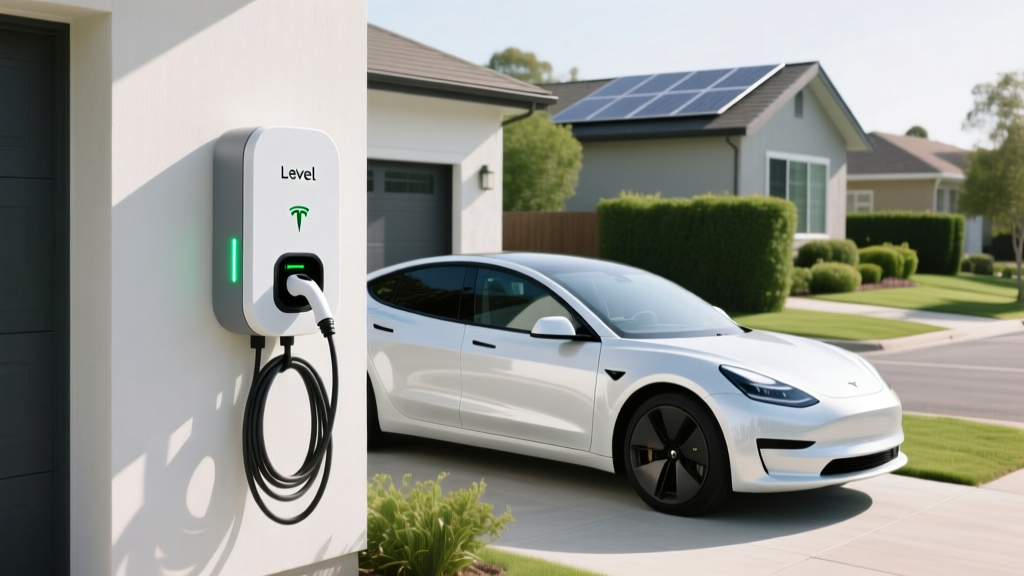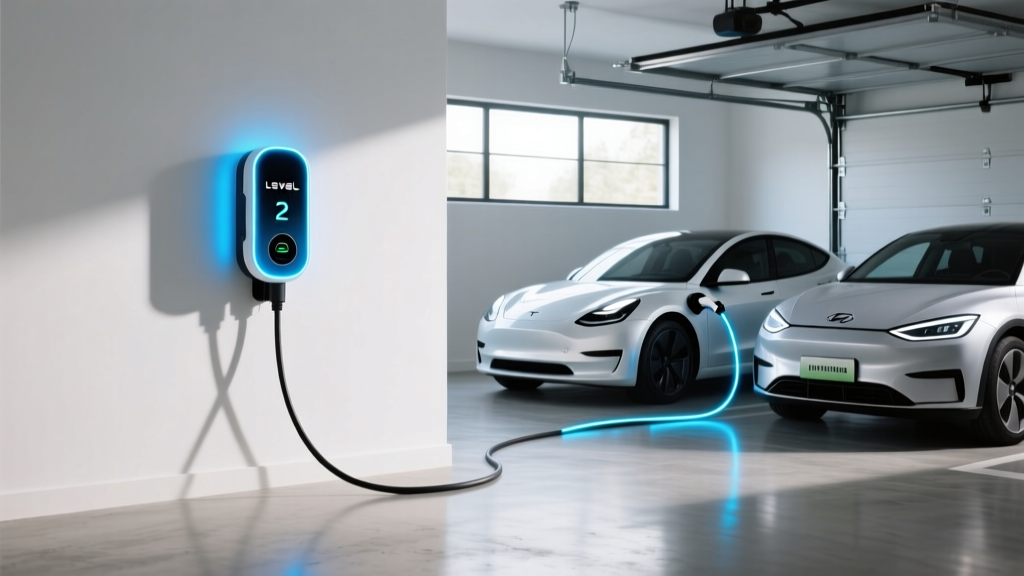
Home charging is where the vast majority of EV charging happens — roughly 80% of all electron flow for the average EV owner, according to U.S. Department of Energy surveys. But before you can wake up to a full battery every morning, you need to answer the central question: how much to install an electric car charger at home? The answer spans a wide range, from a simple $600 plug-in setup to a $7,000+ project requiring a panel upgrade and trenching. This guide breaks down every cost variable, electrical requirement, and equipment decision you'll face in 2026.
Understanding EV Charging Levels: Speed and Cost at a Glance
Before pricing out hardware and labor, you need to understand the three charging levels available to EV drivers. The distinction between kW (kilowatts — the rate of power delivery) and kWh (kilowatt-hours — the total energy stored in your battery) is fundamental. Think of kW as how fast water flows from a hose, and kWh as the total volume in the bucket. A charger rated at 11.5 kW can, at peak, deliver 11.5 kWh of energy per hour to your vehicle.
| Level | Voltage | Max Power (kW) | Miles of Range Added per Hour | Typical Use Case |
|---|---|---|---|---|
| Level 1 | 120V AC | 1.4 kW | 3–5 mi/hr | Overnight top-off; PHEV owners; low daily mileage |
| Level 2 | 240V AC | 7.2–19.2 kW | 20–75 mi/hr | Primary home charging; daily full recharge |
| DC Fast Charging | 400–800V DC | 50–350 kW | 150–1,000+ mi/hr (peak) | Road trips; public stations; no home install |
For most EV owners, a Level 2 home charger is the practical standard. It refills a typical 60–80 kWh battery overnight and adds enough range during a few hours of parking to cover daily driving. Level 1 is viable for plug-in hybrids with smaller batteries (10–20 kWh) or BEV owners who drive under 30 miles per day and can tolerate 10+ hour charge sessions. DC fast charging is not a residential option — it requires commercial-grade electrical infrastructure and is covered under public-charging costs below.
How Much Does It Cost to Install a Home EV Charger?
Installation cost depends on four variables: the charger unit itself, electrical labor, whether your service panel needs an upgrade, and local permit fees. Here is a realistic breakdown for a Level 2 (240V) home installation in 2026:
| Cost Component | Simple Install (Panel Adjacent) | Moderate Install (50–80 ft Run) | Complex Install (Panel Upgrade Required) |
|---|---|---|---|
| Level 2 Charger Unit (hardwired or plug-in, 32–48A) | $350–$700 | $350–$700 | $350–$700 |
| Electrician Labor (licensed, 2–8 hrs) | $300–$600 | $600–$1,500 | $1,200–$2,500 |
| Materials (conduit, wire, junction box, outlet) | $50–$150 | $200–$500 | $300–$800 |
| Electrical Panel Upgrade (100A → 200A service) | $0 (not needed) | $0 (not needed) | $1,500–$4,000 |
| Permit & Inspection | $50–$150 | $50–$250 | $100–$300 |
| Total Estimated Cost | $750–$1,600 | $1,200–$2,950 | $3,450–$8,300 |
A Level 2 charger drawing 48A continuous requires a 60A breaker on a 240V circuit. The National Electrical Code (NEC) requires that continuous loads not exceed 80% of a breaker's rating — so a 48A charger needs a 60A breaker, and that breaker must fit within your panel's total load calculation. Homes with older 100A service panels running central AC, electric dryers, and electric ranges may already be near capacity. Your electrician will perform a load calculation to determine if an upgrade is mandatory. Budget for this possibility — it's the single biggest cost driver.
What Electrical Upgrades Might I Need?
Beyond the panel upgrade, several electrical factors can affect your install scope and cost:
- Dedicated Circuit: A Level 2 charger requires its own dedicated 240V circuit. Sharing a circuit with other appliances is a code violation and a fire hazard.
- Wire Gauge: A 48A continuous load typically requires 6 AWG copper wire (THHN in conduit). Longer runs (over 100 ft) may require 4 AWG to prevent voltage drop — adding material cost.
- NEMA 14-50 Outlet vs. Hardwired: A plug-in charger using a NEMA 14-50 receptacle offers portability but requires a GFCI breaker in many jurisdictions (adding $50–$120). Hardwired installations avoid the GFCI requirement and allow higher amperage (up to 48A on a 60A breaker). Many 2026 installations favor hardwired for reliability.
- Outdoor Rating: If your charger mounts outdoors (driveway, carport), the unit must carry a NEMA 4 or IP65 weatherproof rating, and the junction/conduit system must be rated for wet locations.
- Smart Load Management: Some homes avoid panel upgrades by installing a smart panel-level load manager (e.g., Emporia or Span integration) that dynamically throttles charger amperage when other circuits are under heavy draw. This can save $2,000+ versus a full panel upgrade.
Which Connector Is Compatible With My EV?
As of 2026, the North American connector landscape has consolidated heavily around the North American Charging Standard (NACS), originally developed by Tesla and now adopted by Ford, GM, Rivian, Hyundai, Kia, BMW, and most major automakers. CCS1 remains on legacy vehicles, and CHAdeMO is effectively phased out for new models. Here's the compatibility map:
| Connector | Compatible Brands (New 2026 Models) | Adapter Needed? |
|---|---|---|
| NACS (native) | Tesla (all), Ford (2025+), GM (2025+), Rivian (2025+), Hyundai/Kia (2026+), BMW, Mercedes-Benz, Lucid, Fisker | None for NACS-equipped chargers |
| CCS1 | Volkswagen ID.4 (through 2025), some remaining 2024–2025 inventory models | NACS-to-CCS adapter ($150–$250) for Tesla Superchargers |
| CHAdeMO | Nissan Leaf (discontinued after 2025 MY); legacy only | No viable adapter to NACS; limited DCFC access |
For home Level 2 charging, most 2026 charger models ship with a NACS connector or include a J1772 adapter. If you own a CCS1-equipped EV, select a charger with a J1772 connector (still common on Level 2 units) or use the manufacturer-supplied adapter. On the DC fast-charging side, the NACS transition means Tesla Supercharger stations now serve non-Tesla vehicles natively — a significant improvement in public-charging reliability.
How Much Does Charging Cost per Mile vs. Gas?
Charging cost varies dramatically depending on where and when you charge. Here's a realistic comparison for a mid-size electric SUV consuming approximately 30 kWh per 100 miles (roughly the efficiency of a 2026 Hyundai Ioniq 5 AWD or Ford Mustang Mach-E):
| Charging Scenario | Cost per kWh | Cost per 100 Miles | Cost per Mile |
|---|---|---|---|
| Home Level 2 — Off-Peak Utility Rate (national avg.) | $0.13/kWh | $3.90 | $0.039 |
| Home Level 2 — Standard Residential Rate | $0.17/kWh | $5.10 | $0.051 |
| Home with Time-of-Use Plan (super off-peak) | $0.08/kWh | $2.40 | $0.024 |
| Public Level 2 (ChargePoint, EVgo L2) | $0.25–$0.39/kWh | $7.50–$11.70 | $0.075–$0.117 |
| DC Fast Charging (Electrify America, Tesla Supercharger) | $0.35–$0.55/kWh | $10.50–$16.50 | $0.105–$0.165 |
| Gas Vehicle (27 MPG combined, $3.40/gal) | — | $12.59 | $0.126 |
At home off-peak rates, EV charging costs roughly one-third to one-fifth the per-mile cost of gasoline. Even at public DC fast-charging rates, EVs break even or save modestly versus gas. The savings are largest for homeowners with time-of-use utility plans who can schedule charging between midnight and 6 AM. According to fueleconomy.gov, EVs convert over 77% of grid electricity to wheel power, versus 12–30% for internal combustion — a fundamental efficiency advantage that drives the cost gap.
Level 2 Charger Equipment Recommendations for 2026
Not all Level 2 chargers are equal. Key differentiators include max power output (which must match your circuit capacity), cable length, connector type, smart features (scheduling, load management, energy tracking), and build quality. Below are four widely recommended units for 2026:
ChargePoint Home Flex (2nd Gen)
- Power: Up to 12 kW (50A, adjustable down to 16A)
- Connector: NACS or J1772 (select at purchase)
- Cable: 24 ft
- Smart Features: Wi-Fi, app scheduling, Alexa integration, energy tracking
- Price: ~$599
- Best For: Versatile amperage adjustment for homes with limited panel headroom
Tesla Wall Connector
- Power: Up to 11.5 kW (48A)
- Connector: NACS native; J1772 adapter included
- Cable: 24 ft
- Smart Features: Wi-Fi, firmware OTA updates, load sharing (pair up to 6 units on one circuit)
- Price: ~$475
- Best For: Tesla owners and NACS-native EVs; excellent value
Emporia Level 2 Smart Charger
- Power: Up to 11.5 kW (48A)
- Connector: J1772 (NACS adapter available)
- Cable: 24 ft
- Smart Features: Real-time energy monitoring, solar integration, TOU scheduling, Emporia ecosystem
- Price: ~$399
- Best For: Solar-panel owners and energy-tracking enthusiasts; best value
Grizzl-E Smart
- Power: Up to 10 kW (40A)
- Connector: J1772 or NACS
- Cable: 24 ft
- Smart Features: Wi-Fi, OCPP support, adjustable amperage, extreme cold rating (-40°F)
- Price: ~$549
- Best For: Cold-climate installations and outdoor mounting; rugged build
Sizing tip: Your charger's max amperage should not exceed 80% of the circuit breaker rating. A 60A breaker supports a 48A charger. A 50A breaker supports a 40A charger. Your electrician will match the breaker and wire gauge to the unit you select.
How Fast Will a Level 2 Charger Refill Common EV Batteries?
Charge times depend on battery capacity (kWh), onboard charger acceptance rate (kW), and the state-of-charge (SoC) window. Most EVs accept full Level 2 power up to about 90% SoC, then taper. Below are representative 10–80% and 10–100% times for popular 2026 battery sizes at common home-charging power levels:
| Battery (Usable kWh) | Example Vehicles | At 7.2 kW (30A) | At 11.5 kW (48A) |
|---|---|---|---|
| 58 kWh | VW ID.4 Standard | 10–80%: ~5.5 hrs | 10–100%: ~7.5 hrs | 10–80%: ~3.5 hrs | 10–100%: ~4.7 hrs |
| 77 kWh | Ford Mach-E Extended, Hyundai Ioniq 5 | 10–80%: ~7.5 hrs | 10–100%: ~10 hrs | 10–80%: ~4.7 hrs | 10–100%: ~6.3 hrs |
| 82 kWh | Tesla Model Y Long Range | 10–80%: ~8 hrs | 10–100%: ~10.7 hrs | 10–80%: ~5 hrs | 10–100%: ~6.7 hrs |
| 100 kWh | Tesla Model S, Rivian R1T Max | 10–80%: ~9.7 hrs | 10–100%: ~13 hrs | 10–80%: ~6.1 hrs | 10–100%: ~8.2 hrs |
| 131 kWh | Ford F-150 Lightning Extended | 10–80%: ~12.7 hrs | 10–100%: ~17 hrs | 10–80%: ~8 hrs | 10–100%: ~10.7 hrs |
For daily driving of 30–50 miles, even a 7.2 kW charger replenishes overnight usage in 2–4 hours — more than sufficient. The 11.5 kW (48A) tier becomes important if you need a full recharge from near-empty in a single night, tow frequently (which drains batteries faster), or own a large-battery truck. Also note that some vehicles have onboard chargers limited to 7.2 or 9.6 kW — installing an 11.5 kW charger won't speed up charging beyond the car's acceptance rate. Check your vehicle's spec sheet before oversizing the unit.
Safety, Permits, and Code Requirements
Electrical safety for EV charging is governed by the National Electrical Code (NEC Article 625) and local amendments. Key requirements include:
- Permit: Nearly all jurisdictions require an electrical permit for a new 240V circuit. The permit fee typically runs $50–$250 and triggers a post-installation inspection.
- GFCI Protection: The 2020 NEC and later require GFCI protection for receptacle-based (plug-in) EV chargers. Hardwired units are generally exempt. Your electrician will install a GFCI breaker if you choose a NEMA 14-50 outlet.
- Dedicated Circuit: The charger circuit must serve no other loads. No shared outlets, no lighting circuits.
- Mounting Height: NEC requires the charger connector holster be mounted between 18 inches and 4 feet above grade (for accessibility and cable management).
- Utility Notification: Some utilities (e.g., PG&E, Con Edison, Xcel Energy) request or require notification when a Level 2 charger is installed, as it adds a significant new load to the local transformer. Some offer rebates of $250–$1,000 for doing so — check your utility's EV program before installation.
Hiring a licensed electrician is not optional — it's required for permit compliance, insurance validity, and safety. Unpermitted work can void homeowner's insurance claims in the event of an electrical fire. Per the National Fire Protection Association (NFPA), improper EV charger installations have been linked to residential electrical incidents, reinforcing the need for professional work.
Frequently Asked Questions
Can I install a Level 2 charger myself?
Only if you are a licensed electrician or working under one. A 240V, 40–60A circuit carries lethal current and must meet NEC code, pass inspection, and comply with your insurance requirements. DIY installation risks fire, electrocution, and denied insurance claims. Budget $300–$1,500 for professional labor — it's not the place to cut corners.
Does the IRS offer a tax credit for home charger installation?
The federal Alternative Fuel Vehicle Refueling Property Credit (IRS Form 8911) covers 30% of home charging equipment and installation costs, up to $1,000. However, eligibility is restricted to census tracts classified as low-income or non-urban. Check your address against the IRS qualifying census tract tool before counting on this credit. Many state and utility rebates stack on top of the federal credit.
What if my home only has 100A electrical service?
A 100A panel can sometimes support a 32A (7.7 kW) Level 2 charger if other major loads (dryer, range, HVAC) are gas-powered or not running simultaneously. Your electrician will perform a NEC Article 220 load calculation. If the calculation exceeds capacity, you'll need either a panel upgrade to 200A ($1,500–$4,000) or a smart load-management device that throttles charger amperage dynamically.
Should I get a plug-in (NEMA 14-50) or hardwired charger?
Hardwired installations allow higher continuous amperage (48A on a 60A breaker), avoid the GFCI breaker requirement, and reduce the risk of outlet overheating — a known concern with heavily cycled NEMA 14-50 receptacles. Plug-in installations offer portability: you can unplug and take the charger when you move. For a permanent home installation, hardwired is the preferred approach in 2026.
Will a home charger increase my electricity bill significantly?
Driving 12,000 miles per year in an EV consuming 30 kWh/100 mi requires about 3,600 kWh annually. At the national average residential rate of $0.17/kWh, that's roughly $612 per year — or $51 per month — added to your electric bill. Compare that to $1,500+ per year in gasoline for a 27 MPG vehicle at $3.40/gallon. Net savings typically exceed $800–$1,200 annually, depending on local rates and driving habits.
How do I find a qualified EV charger electrician?
Look for electricians certified by programs like the Electric Vehicle Infrastructure Training Project (EVITP) or listed on manufacturer installer networks (ChargePoint, Tesla). Always verify state licensing, insurance, and references. Get at least three quotes — installation prices vary by 2–3x between providers for identical scope.