If you've spent time researching electric vehicles, you've likely encountered the Edmunds EV range test — a real-world driving evaluation that frequently produces different results than the EPA's official range estimates. Understanding why those numbers diverge is only half the equation. The other half is knowing how fast you can replenish that range at home and on the road, what it actually costs, and which equipment delivers reliable daily charging.
This guide bridges the gap between range testing and charging reality. We'll break down charging speeds by level, map out home installation costs with the electrical specifics your contractor needs, compare connector standards for 2026 models, and recommend specific chargers with exact power outputs and pricing.
Why Edmunds EV Range Test Results Differ From EPA Estimates
The Edmunds EV range test drives vehicles on a fixed loop combining city and highway segments until the battery is nearly depleted. Their methodology captures real-world factors the EPA's laboratory-based testing protocol only approximates: sustained highway speeds above 65 mph, climate control usage, elevation changes, and battery thermal behavior under continuous load.
The gap matters for charging planning. If the EPA rates a vehicle at 310 miles but Edmunds testing shows 270 miles in mixed real-world driving, your charging frequency and infrastructure needs shift. A driver covering 40 miles daily with a 270-mile real-world buffer still has comfortable margin, but someone planning 250-mile road trips needs to account for DC fast-charging stops.
Charging Levels Explained: Speed, Power, and Daily Practicality
EV charging happens at three distinct levels, each defined by voltage, amperage, and resulting power output measured in kilowatts (kW). Power (kW) determines charging speed; energy (kWh) measures battery capacity. A 75 kWh battery charged at 11.5 kW gains roughly 11.5 kWh per hour — about 38 miles of range for a vehicle averaging 3.5 miles per kWh.
| Level | Voltage/Amps | Power (kW) | Miles Added Per Hour | Typical Use Case |
|---|---|---|---|---|
| Level 1 | 120V / 12A | 1.4 kW | 3-5 miles | Overnight top-up, PHEV charging |
| Level 2 | 240V / 32-48A | 7.7-11.5 kW | 25-40 miles | Daily home charging |
| DC Fast | 400-800V DC | 50-350 kW | 150-800+ miles | Road trips, rapid top-up |
Level 1 charging from a standard household outlet works for plug-in hybrids with 10-15 kWh batteries, but full EVs with 60-100 kWh packs would require multiple days for a complete charge. Level 2 is the practical baseline for battery electric vehicle ownership — an 8-hour overnight session at 11.5 kW adds roughly 300 miles, sufficient for nearly all daily driving.
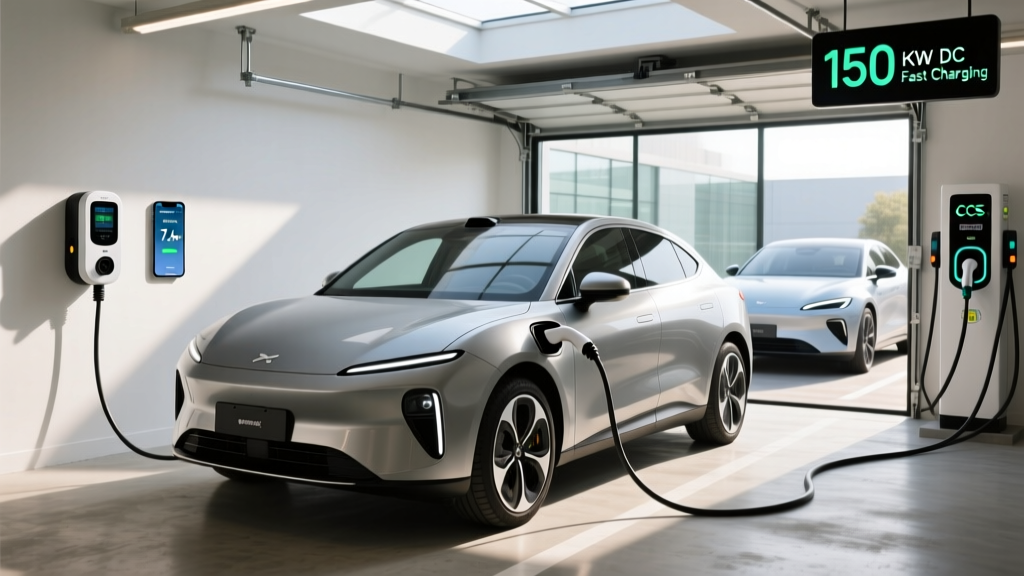
DC fast charging bypasses the vehicle's onboard charger and delivers direct current straight to the battery. Peak rates of 200-350 kW can add 200 miles in 15-20 minutes, but charging speed isn't linear. Most EVs taper charge rate significantly above 80% state of charge to protect battery longevity. A vehicle advertising "250 kW peak" may sustain that rate only between 10-50% SoC, then drop to 100 kW, then 50 kW as it approaches full charge.
Home Charger Installation: Electrical Requirements and Costs
Installing a Level 2 home charger requires a dedicated 240-volt circuit, similar to what powers an electric dryer or oven. The specific amperage depends on your chosen charger's power output and the National Electrical Code requirement that continuous loads not exceed 80% of circuit capacity.
| Charger Power | Amperage Draw | Required Circuit | Wire Gauge |
|---|---|---|---|
| 7.7 kW | 32A | 40A breaker | 8 AWG copper |
| 9.6 kW | 40A | 50A breaker | 6 AWG copper |
| 11.5 kW | 48A | 60A breaker | 4 AWG copper |
Installation Cost Breakdown
Total installation cost varies dramatically based on your electrical panel's capacity, the distance from panel to charger location, and whether your home needs a service upgrade. Here's what to budget:
| Component | Simple Install | Complex Install |
|---|---|---|
| Charger Equipment | $400-$650 | $500-$750 |
| Electrician Labor | $300-$600 | $800-$2,000 |
| Permit Fees | $50-$150 | $100-$250 |
| Panel Upgrade (if needed) | $0 | $1,500-$3,500 |
| Total | $750-$1,400 | $2,900-$6,500 |
The "simple install" assumes your panel has spare capacity, the charger mounts within 20 feet of the panel on the same wall, and no drywall repair or trenching is required. The "complex install" reflects longer wire runs through attics or crawlspaces, panel upgrades from 100A to 200A service, or concrete trenching for detached garages.
Connector Standards: NACS, CCS, and Compatibility in 2026
The North American Charging Standard (NACS), originally developed by Tesla, has become the dominant connector for new EVs starting with 2025-2026 model years. Most non-Tesla automakers — Ford, GM, Rivian, Hyundai, Kia — have transitioned to NACS ports on new vehicles. The Combined Charging System (CCS1) remains on many 2023-2024 models still on the road, and CHAdeMO persists on older Nissan Leafs.
| Connector | Vehicle Brands (2026 Models) | Adapter Needed? |
|---|---|---|
| NACS (Tesla) | Tesla, Ford, GM, Rivian, Hyundai, Kia, Volvo, Polestar | CCS-to-NACS adapter for older CCS chargers |
| CCS1 | Remaining 2023-2024 models, some commercial fleets | NACS-to-CCS adapter for Tesla Superchargers |
| CHAdeMO | Nissan Leaf (discontinued 2025), older models | Limited adapter options, declining infrastructure |
For home charging, Level 2 connectors use the J1772 standard (or NACS for Teslas). Most new home chargers ship with NACS connectors or include J1772-to-NACS adapters. If you're buying a charger in 2026, choose one with a NACS connector for forward compatibility, or verify the manufacturer offers connector swaps.
Charging Cost Per Mile: Home vs Public vs Gas
The economics of EV charging depend entirely on where and when you charge. Home charging during off-peak hours delivers the lowest cost per mile, while DC fast charging on road trips approaches gasoline pricing.
| Charging Scenario | Rate ($/kWh) | Cost Per Mile* |
|---|---|---|
| Home (off-peak utility rate) | $0.12-$0.18 | $0.03-$0.05 |
| Home (standard rate) | $0.18-$0.25 | $0.05-$0.07 |
| Public Level 2 | $0.25-$0.49 | $0.07-$0.14 |
| DC Fast Charging | $0.35-$0.65 | $0.10-$0.18 |
| Gas Vehicle (25 MPG, $3.50/gal) | — | $0.14 |
*Based on 3.5 miles per kWh efficiency, typical for midsize EVs like Tesla Model Y, Hyundai Ioniq 5, Ford Mustang Mach-E.
A driver covering 12,000 miles annually and charging primarily at home on off-peak rates spends roughly $360-$600 per year on electricity. The same distance in a 25 MPG gas vehicle at $3.50 per gallon costs $1,680. Even exclusive DC fast charging — impractical as a daily strategy — would cost $1,200-$2,160 annually, still competitive with gasoline.
Many utilities offer time-of-use (TOU) plans with super off-peak rates between midnight and 6 AM. If your utility charges $0.08/kWh during those hours, your cost per mile drops to $0.02 — a fraction of gasoline costs. Check your utility's EV-specific rate plans before defaulting to standard pricing.
Charging Time Examples: 10-80% for Common Battery Sizes
Most EV owners charge between 10-80% state of charge for daily use, reserving full charges for road trips. Charging speed peaks in the 10-50% range and tapers significantly above 80% to protect battery health. Here are realistic 10-80% times for common battery capacities:
| Battery Capacity | Level 2 (11.5 kW) | DC Fast (150 kW peak) | DC Fast (250 kW peak) |
|---|---|---|---|
| 60 kWh (Compact EV) | ~3.5 hours | ~22 minutes | ~16 minutes |
| 75 kWh (Midsize SUV) | ~4.5 hours | ~28 minutes | ~20 minutes |
| 100 kWh (Full-size/Luxury) | ~6 hours | ~35 minutes | ~25 minutes |
These times assume optimal battery temperature (68-86°F) and preconditioning — the process of warming the battery before charging to enable peak charge rates. In cold weather without preconditioning, DC fast charging can take 50-100% longer as the battery management system limits current to prevent lithium plating.
For home charging, the 10-80% window is largely academic. Plug in when you arrive home, wake up to a full battery. The real constraint is DC fast charging on road trips, where 20-30 minute stops every 200-250 miles align reasonably with rest breaks and meal stops.
Equipment Recommendations: 2026 Home Charger Picks
Choosing a home charger involves balancing power output, cable length, smart features, connector type, and price. Here are three proven options covering different needs and budgets:
ChargePoint Home Flex
- Power: Up to 12 kW (50A circuit)
- Connector: NACS or J1772 (configurable)
- Cable Length: 23 feet
- Smart Features: Wi-Fi, app scheduling, Alexa integration, energy reporting
- Price: $699
- Best For: Flexible amperage adjustment, robust app
Tesla Wall Connector
- Power: Up to 11.5 kW (60A circuit)
- Connector: NACS native
- Cable Length: 24 feet
- Smart Features: Wi-Fi, OTA updates, power sharing (multiple units), load management
- Price: $475
- Best For: Tesla owners, multi-charger installations
Emporia Level 2 Charger
- Power: Up to 11.5 kW (48A, configurable down)
- Connector: J1772 (NACS adapter included)
- Cable Length: 24 feet
- Smart Features: Energy monitoring, solar integration, time-of-use scheduling
- Price: $399
- Best For: Budget-conscious, solar panel owners
All three chargers support NACS either natively or via adapter, include UL certification for safety, and offer outdoor-rated enclosures. The ChargePoint provides the most granular amperage control — useful if your panel capacity requires limiting the circuit to 40A. The Tesla Wall Connector's power-sharing feature lets two chargers share a single 60A circuit, useful for two-car garages without panel upgrades.
Safety and Code Considerations
EV charger installation must comply with the National Electrical Code (NEC) Article 625 and local amendments. Key requirements:
- Dedicated Circuit: EV chargers require their own breaker — no sharing with other appliances
- GFCI Protection: Required for outdoor installations and some jurisdictions mandate it indoors
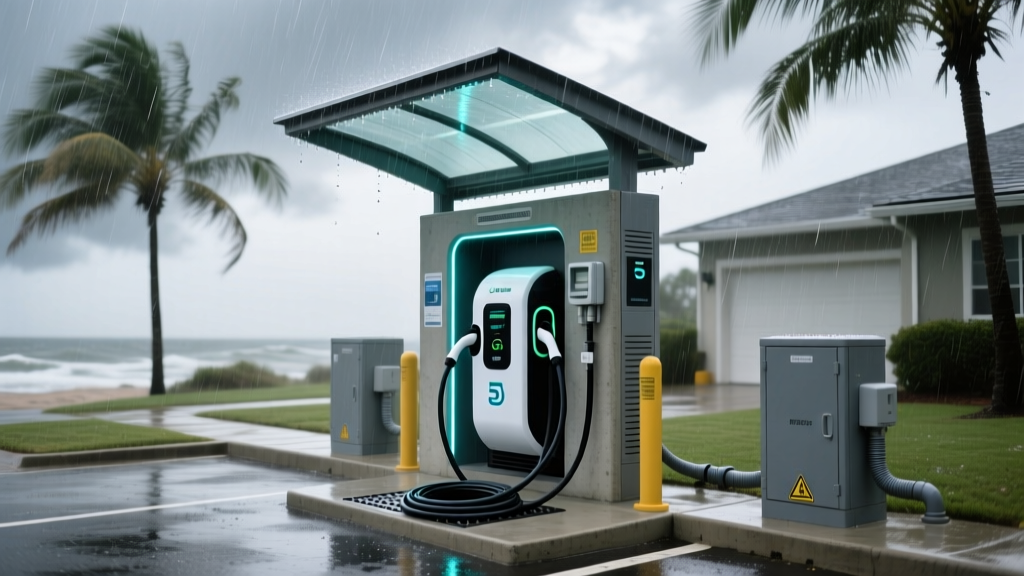
- Outdoor Rating: If mounted outside, the charger must carry a NEMA 4 or IP54 weather rating
- Permit and Inspection: Most jurisdictions require an electrical permit and post-installation inspection
- Load Calculation: Electrician must verify your panel can handle the additional continuous load
Skip the permit temptation. Unpermitted electrical work can void home insurance coverage if a fire occurs, and may surface during home sale inspections. The $50-$250 permit fee is minor insurance against liability and code violations.
Frequently Asked Questions
How much does it cost to install a home EV charger?
Simple installations with adequate panel capacity and short wire runs cost $750-$1,400 including equipment, labor, and permits. Complex installs requiring panel upgrades, long wire runs, or trenching can reach $3,000-$6,500. Get a load calculation from a licensed electrician before committing to a specific charger amperage.
How fast will each charging level add range?
Level 1 (120V) adds 3-5 miles per hour. Level 2 (240V) adds 25-40 miles per hour depending on amperage. DC fast charging adds 150-800+ miles per hour at peak rates, though charging tapers significantly above 80% state of charge. For daily driving, Level 2 provides sufficient overnight replenishment for nearly all use cases.
Which connector/charger is compatible with my EV?
2026 model-year EVs from Tesla, Ford, GM, Rivian, Hyundai, and Kia use NACS connectors. Older 2023-2024 models may have CCS1. Check your vehicle's charge port or owner's manual. For home charging, purchase a NACS-compatible charger or one with an included adapter. Public charging networks are adding NACS cables, but CCS-to-NACS adapters ($150-$250) provide interim compatibility.
How much does charging cost per mile vs gas?
Home charging during off-peak hours costs $0.03-$0.05 per mile. Public DC fast charging costs $0.10-$0.18 per mile. A 25 MPG gas vehicle at $3.50 per gallon costs $0.14 per mile. Home charging delivers 60-80% cost savings vs gasoline; exclusive DC fast charging is cost-competitive but impractical as a daily strategy due to time and availability constraints.
What electrical upgrades might I need?
Homes with 100-amp electrical service may need a panel upgrade to 200 amps ($1,500-$3,500) to support a 60A EV circuit. A licensed electrician performs a load calculation considering existing appliances, HVAC, and the proposed EV charger. Alternatives include installing a lower-amperage 40A circuit (9.6 kW charging) or using a smart charger with load management that reduces EV charging when other appliances draw power.
Does the Edmunds EV range test affect my charging needs?
Yes. If Edmunds real-world testing shows your vehicle achieves 10-15% less range than the EPA estimate, plan charging infrastructure around the lower figure. A vehicle with EPA 310 miles but Edmunds-tested 270 miles needs more frequent charging on road trips and less buffer for cold weather or high-speed driving. Use real-world range data, not EPA stickers, to determine if home charging alone meets your needs or if you'll rely on public DC fast charging.