The Promise of Dynamic Charging on Highways
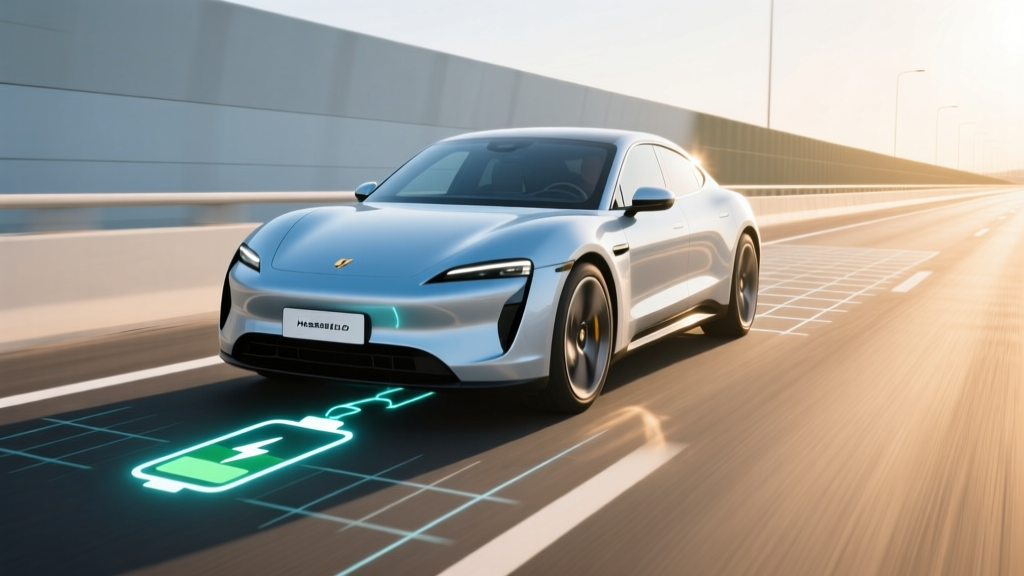
Imagine driving down an interstate at 70 mph while your electric vehicle silently draws power from the road beneath it. No plug. No stop. No range anxiety. This is the core promise of dynamic charging on highways — a technology that could fundamentally reshape how we think about EV range, battery sizing, and long-distance travel.
As of 2026, dynamic wireless charging remains in pilot and demonstration phases, with active test corridors in Michigan (Detroit's Corktown stretch), Indiana (I-65 near Purdue), and Sweden's E-road network. But while we wait for in-road infrastructure to scale, today's EV owners rely on a mature ecosystem of home Level 2 charging and public DC fast charging. This guide covers where dynamic charging stands, what you can actually use today, and how to set up the most cost-effective charging strategy for your EV.
What Is Dynamic Charging and How Does It Work?
Dynamic charging — also called dynamic wireless power transfer (DWPT) — embeds transmitter coils or conductive rails into highway lanes. Vehicles equipped with receiver pads pick up energy while in motion, effectively extending range without stopping.
There are two primary approaches:
- Inductive (wireless): Electromagnetic coils buried in pavement transfer energy to a receiver coil on the vehicle's undercarriage. Companies like Electreon have demonstrated this at power levels of 25–50 kW for passenger vehicles and up to 200 kW for heavy trucks.
- Conductive (rail-based): A physical contact arm extends from the vehicle to an electrified rail in the road surface. Sweden's Elways/Scania e-road system uses this method, delivering up to 300 kW to commercial vehicles.
The advantage is clear: smaller batteries (reducing vehicle cost and weight), theoretically unlimited highway range, and elimination of charging stops on long trips. The obstacles are enormous — infrastructure cost (estimates run $1.5–4 million per electrified lane-mile), standardization across automakers, maintenance of embedded hardware, and the sheer scale of retrofitting the U.S. highway system.
Today's Charging Levels: What You Can Actually Use
Until dynamic charging on highways reaches commercial scale, EV owners rely on three established charging tiers. Understanding the difference between kW (power — the rate of energy flow) and kWh (energy — the total capacity of your battery) is essential here.
| Level | Voltage | Power (kW) | Miles of Range Added/Hour | Typical Use Case |
|---|---|---|---|---|
| Level 1 | 120V AC | 1.0–1.4 kW | 3–5 miles | Overnight top-up, PHEVs, low-mileage drivers |
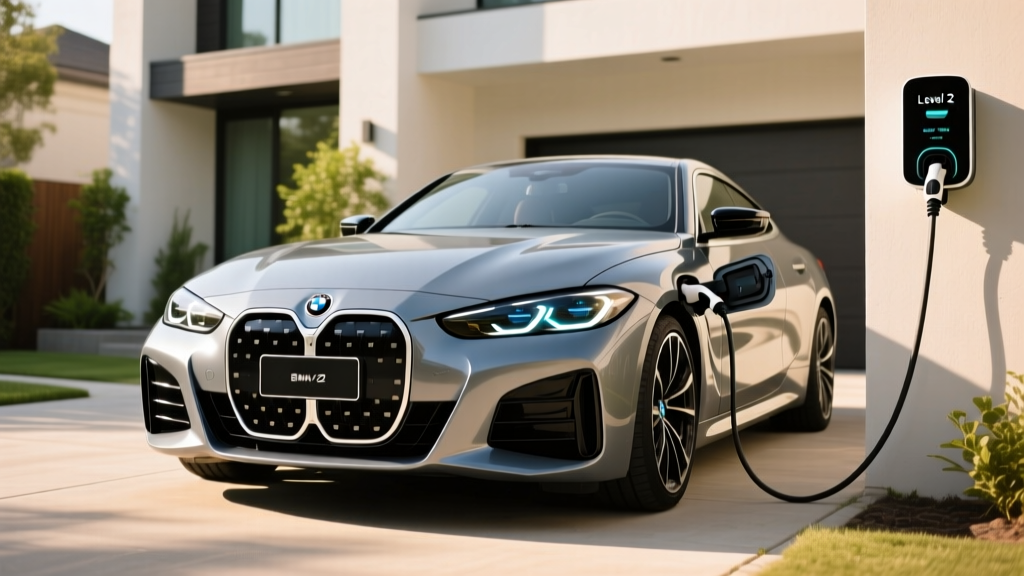
| Level 2 | 240V AC | 3.3–19.2 kW | 12–75 miles | Home daily charging, workplace, destination |
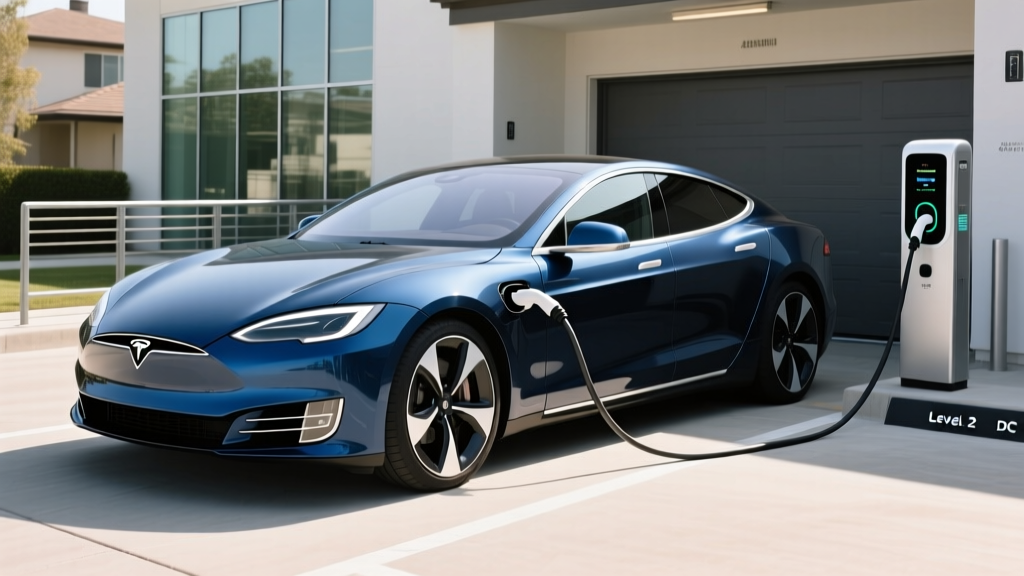
| DC Fast Charging | 400–800V DC | 50–350 kW | 150–1,200+ miles/hr (peak) | Road trips, rapid top-ups, commercial fleets |
Charging Time Examples for Common Battery Sizes
| Battery Size | 11.5 kW Level 2 | 150 kW DCFC | 250 kW DCFC | 350 kW DCFC |
|---|---|---|---|---|
| 60 kWh (e.g., base Leaf, Bolt EV) | ~3.5 hours | ~28 min | ~22 min | N/A (vehicle-limited) |
| 77 kWh (e.g., VW ID.4, Ioniq 5 Std) | ~4.5 hours | ~30 min | ~18 min | ~18 min |
| 82 kWh (e.g., Tesla Model Y LR) | ~5 hours | ~32 min | ~22 min | N/A (vehicle-limited) |
| 100 kWh (e.g., Rivian R1S, F-150 Lightning Ext) | ~6 hours | ~40 min | ~28 min | ~22 min |
| 123 kWh (e.g., GMC Hummer EV) | ~7.5 hours | ~50 min | ~35 min | ~28 min |
Home Level 2 Charger Installation: Requirements and Costs
Over 80% of EV charging happens at home, making a Level 2 installation the single highest-impact investment for any EV owner. Here's what's involved.
Electrical Requirements
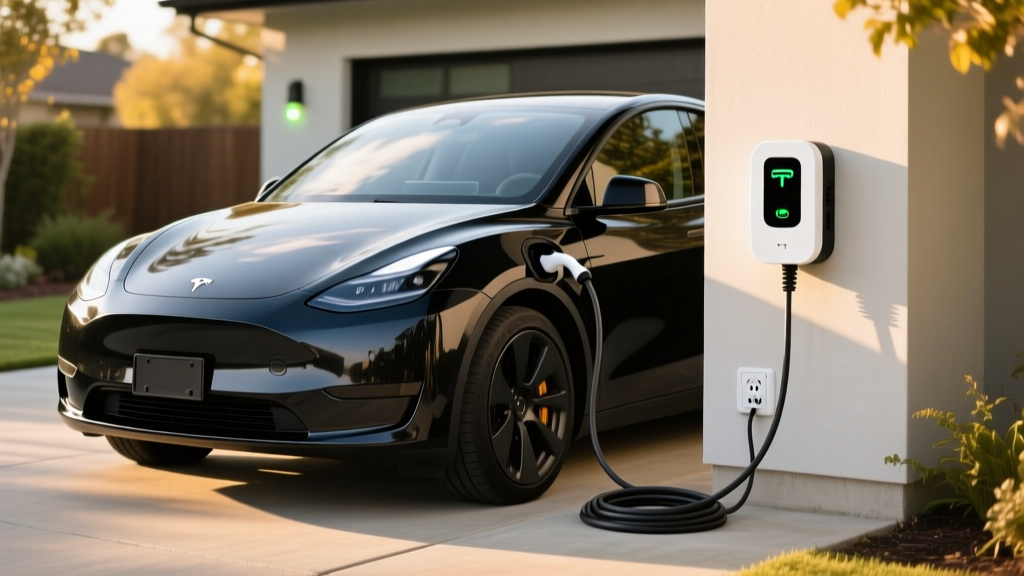
A standard home Level 2 charger requires a 240V dedicated circuit, similar to what powers a clothes dryer or electric oven. The most common configurations:
- NEMA 14-50 outlet (50A circuit, 40A continuous): Supports chargers up to 9.6 kW. Most versatile — allows unplugging the charger or using the outlet for other 240V equipment.
- Hardwired 60A circuit (48A continuous): Supports chargers up to 11.5 kW. Required for higher-output units. Eliminates the outlet as a failure point.
- Hardwired 80A circuit (64A continuous): Supports chargers up to 15.2–19.2 kW. Only needed for vehicles with large batteries and onboard chargers that accept >11.5 kW (e.g., certain Ford F-150 Lightning configurations).
Panel Upgrade Considerations
This is where costs can escalate significantly. If your home has a 100A main electrical panel — common in homes built before 1990 — you likely need an upgrade to 200A to support a Level 2 charger alongside existing loads (HVAC, electric range, dryer). A panel upgrade adds $1,500–$4,000 to your project.
Homes with existing 200A service can usually add a 50A EV circuit without an upgrade, provided there's sufficient spare capacity. Your electrician will perform a load calculation per NEC Article 220 to verify this.
| Component | Simple Install (Panel Adjacent) | Standard Install (50–80 ft Run) | Complex Install (Panel Upgrade + Long Run) |
|---|---|---|---|
| Level 2 Charger (Equipment) | $350–$700 | $350–$700 | $350–$700 |
| Electrical Materials (Wire, Conduit, Breaker) | $100–$250 | $250–$600 | $400–$900 |
| Electrician Labor (Licensed) | $300–$600 | $600–$1,500 | $1,200–$2,500 |
| Electrical Permit | $50–$150 | $50–$200 | $100–$300 |
| Panel Upgrade (if needed) | $0 | $0 | $1,500–$4,000 |
| Total Estimated Cost | $800–$1,700 | $1,250–$3,000 | $3,550–$8,400 |
Some utilities offer rebates of $250–$1,000 for Level 2 installations, and the federal Residential Clean Energy Credit (IRC §25C) may cover up to 30% of charger and installation costs (capped at $1,000 for EVSE). Check with your utility and a tax professional for current eligibility.
Connector Compatibility: NACS, CCS, and CHAdeMO
The connector landscape has shifted dramatically since 2024, when Ford, GM, Rivian, and most other automakers announced adoption of the North American Charging Standard (NACS), originally developed by Tesla. By 2026, NACS is the dominant connector for new EVs sold in North America.
| Connector | Type | Brands Using It (New Vehicles) | DC Fast Charge Availability |
|---|---|---|---|
| NACS (J3400) | AC + DC combined | Tesla, Ford, GM, Rivian, Volvo, Polestar, Mercedes, BMW, Hyundai, Kia, Nissan (new models) | Tesla Supercharger network (20,000+ stalls), growing third-party NACS stations |
| CCS1 | AC + DC combined | VW ID.4 (pre-2026), legacy BMW, older Hyundai/Kia, Stellantis | Electrify America, EVgo, ChargePoint DCFC |
| CHAdeMO | DC only (separate AC inlet) | Nissan Leaf (legacy), Mitsubishi Outlander PHEV (legacy) | Limited and declining; some EA/EVgo stalls retain CHAdeMO |
Adapter needs: If you own a CCS-equipped vehicle and want access to Tesla Superchargers (now open to non-Tesla EVs at many locations), you'll need a CCS-to-NACS adapter. Tesla sells one for $250, and third-party options from Lectron and A2Z are available for $150–$200. CHAdeMO owners face a shrinking network — consider a CHAdeMO-to-CCS adapter if available for your vehicle, though these are limited and expensive ($400+).
Cost to Charge: Home vs. Public vs. Gas
One of the strongest economic arguments for EVs is fuel cost savings — but the gap narrows significantly when you rely on public DC fast charging instead of home Level 2.
| Scenario | $/kWh or $/Gallon | Vehicle Efficiency | Cost Per Mile |
|---|---|---|---|
| Home Level 2 (national avg electricity) | $0.16/kWh | 3.0 mi/kWh (120 MPGe) | $0.053 |
| Home Level 2 (off-peak TOU rate) | $0.09/kWh | 3.0 mi/kWh | $0.030 |
| Public Level 2 (network pricing) | $0.25–$0.49/kWh | 3.0 mi/kWh | $0.083–$0.163 |
| DC Fast Charging ( Electrify America/EVgo) | $0.35–$0.58/kWh | 3.0 mi/kWh | $0.117–$0.193 |
| Tesla Supercharger (member pricing) | $0.25–$0.35/kWh | 3.5 mi/kWh (Tesla efficiency) | $0.071–$0.100 |
| Gasoline (30 MPG combined) | $3.40/gallon | 30 MPG | $0.113 |
| Gasoline (22 MPG combined, truck/SUV) | $3.40/gallon | 22 MPG | $0.155 |
Key takeaway: Home charging at off-peak rates delivers fuel costs at roughly one-third to one-fifth the cost of gasoline. Public DC fast charging at $0.48–$0.58/kWh can equal or exceed the per-mile cost of a fuel-efficient gas car. For maximum savings, prioritize home charging and use DCFC only for road trips.
Equipment Recommendations: Best Home Chargers for 2026
Best Overall: ChargePoint Home Flex (2nd Gen)
- Power Output: Up to 12 kW (50A circuit) via NACS or J1772 connector
- Cable Length: 24 ft standard
- Smart Features: Wi-Fi connected, app scheduling, TOU optimization, Alexa integration, energy reporting
- Price: $549 (NACS), $499 (J1772)
- Why: UL-listed, adjustable amperage (16A–50A via DIP switch), works with virtually any EV via adapter. Reliable app, strong utility rebate compatibility.
Best Value: Emporia Level 2 EV Charger
- Power Output: Up to 11.5 kW (48A, hardwired) or 9.6 kW (40A, NEMA 14-50)
- Cable Length: 24 ft
- Smart Features: Wi-Fi, app control, solar integration (pairs with Emporia Vue energy monitor), load management
- Price: $399
- Why: Best price-to-feature ratio. Built-in load management can prevent panel overload without a costly upgrade. Ideal for homes with solar.
Best for Tesla/Supercharger Access: Tesla Wall Connector
- Power Output: Up to 11.5 kW (48A hardwired); NACS native
- Cable Length: 24 ft
- Smart Features: Wi-Fi, OTA updates, power sharing (link multiple units on one circuit), access control
- Price: $475
- Why: If your vehicle is NACS-native (Tesla, Ford, GM, Rivian), this is the cleanest setup — no adapter needed. Power sharing lets you install two connectors on a single 60A circuit.
Best for High-Power Needs: Grizzl-E Smart
- Power Output: Up to 19.2 kW (80A circuit, hardwired) or 9.6 kW (40A)
- Cable Length: 24 ft
- Smart Features: OCPP-compatible, app scheduling, load balancing
- Price: $649
- Why: One of the few residential chargers that supports 19.2 kW output — critical for vehicles like the F-150 Lightning Extended Range (131 kWh battery) that can accept high AC charge rates. Built in Canada, extreme cold-rated (-40°F).
Safety, Code, and Installation Best Practices
EV charging involves sustained high-current draw — often for 6–10 hours at a time. This places demands on your electrical system that differ from intermittent loads like a dryer. Follow these non-negotiable safety principles:
- Dedicated circuit: Your EV charger must be on its own dedicated breaker — never shared with other appliances. NEC 625.40 requires this for all EVSE rated above 16A.
- GFCI protection: NEC 2023 (and carried into 2026 local adoptions) requires GFCI protection for all outdoor receptacles, including NEMA 14-50 outlets used for EV charging. Hardwired EVSE units have built-in ground-fault protection and do not require an external GFCI breaker (which can cause nuisance tripping).
- Outdoor rating: If your charger is installed outdoors or in an unconditioned garage, ensure it carries a NEMA 4 or NEMA 4X rating for weather resistance. All major chargers listed above meet this standard.
- Wire gauge: A 50A circuit requires minimum 6 AWG copper wire (THHN in conduit or NM-B cable). A 60A circuit requires 4 AWG. Your electrician will size this correctly — but verify it on the permit documentation.
- Permit and inspection: Every jurisdiction requires an electrical permit for EVSE installation. The inspection verifies proper wire sizing, grounding, torque on connections, and GFCI compliance. Never skip this — unpermitted work can void homeowner's insurance in the event of an electrical fire.
Dynamic Charging on Highways: Current Pilot Programs
While you can't yet charge dynamically on a U.S. interstate, several projects are actively testing the technology:
- Detroit, Michigan (Electreon + MDOT): A 1-mile stretch of road in Corktown was embedded with inductive charging coils in 2023–2024. A transit van equipped with a receiver has demonstrated wireless charging at speeds up to 35 mph. Expansion to a highway segment is under study.
- Indiana (Purdue University + INDOT): A quarter-mile test track on I-65/I-465 interchange tests inductive charging at highway speeds (65+ mph) at power levels up to 200 kW for heavy trucks. Phase 2 highway deployment is planned for 2027–2028.
- Sweden (E-road): The world's first permanent electrified highway, a 21-km stretch of E20 between Hallsberg and Örebro, opened in 2026 using conductive rail technology. Passenger cars and trucks can draw power while driving.
- Germany (eHighway A5): Overhead catenary wires (similar to trains) power hybrid trucks on a 10-km autobahn segment. Siemens/Scania have operated this since 2022, but the approach is limited to commercial vehicles with pantographs.
For passenger EVs, inductive dynamic charging is the most likely long-term approach — but widespread deployment in the U.S. remains a 2030+ prospect at the earliest. The Federal Highway Administration is studying standards and funding mechanisms, but no federal mandate or large-scale funding program exists yet.
Frequently Asked Questions
How much does it cost to install a home EV charger?
A straightforward Level 2 installation (panel has capacity, short wire run, NEMA 14-50 outlet) costs $800–$1,700 including equipment, materials, electrician labor, and permit. A standard installation with a 50–80 ft wire run typically runs $1,250–$3,000. If your home needs a 200A panel upgrade, expect $3,500–$8,400 total. Always get 2–3 quotes from licensed electricians and verify they have EVSE experience.
How fast will each charging level add range?
Level 1 (120V) adds 3–5 miles of range per hour — adequate for plug-in hybrids with small batteries or very low daily mileage. Level 2 (240V) at 40A/9.6 kW adds roughly 30–35 miles per hour for most EVs; at 48A/11.5 kW, expect 38–42 miles per hour. DC fast charging adds 150–300+ miles in 15–25 minutes depending on the vehicle's peak charge rate and battery size — but only in the 10–60% SoC window before tapering.
Which connector and charger is compatible with my EV?
Check your vehicle's charge port. If you bought a 2025+ model from Ford, GM, Rivian, Volvo, Hyundai, Kia, or Tesla, you almost certainly have NACS. Older models (pre-2025) from VW, BMW, and Stellantis typically have CCS1. The Nissan Leaf uses CHAdeMO. For home Level 2 charging, a NACS wall connector works natively with NACS vehicles; CCS vehicles can use a J1772-to-CCS adapter or a NACS charger with the appropriate adapter. When buying a home charger, match the connector to your vehicle or choose a unit that supports adapters.
How much does EV charging cost per mile compared to gas?
At the national average residential electricity rate of ~$0.16/kWh and a typical EV efficiency of 3.0 miles/kWh, home charging costs about $0.053/mile. With off-peak time-of-use rates ($0.09/kWh), it drops to $0.03/mile. Compare this to a 30 MPG gas car at $3.40/gallon ($0.113/mile) or a 22 MPG truck ($0.155/mile). Public DC fast charging at $0.48/kWh raises the EV cost to ~$0.16/mile — roughly equivalent to a fuel-efficient gas car. The savings case for EVs depends heavily on home charging access.
What electrical upgrades might I need for a home charger?
The most common upgrade is a panel replacement from 100A to 200A service, needed in older homes that lack spare breaker capacity. This costs $1,500–$4,000. Less commonly, you may need a service drop upgrade (from the utility transformer to your meter) if the utility lines are undersized — this is typically the utility's responsibility at no cost to you. Some homes with 200A panels still need a load calculation if they run electric heat, an electric range, a dryer, and a hot tub alongside the EV charger. Smart load-management devices (like the Emporia or Span drive panel) can allow EV charging without a panel upgrade by dynamically shedding non-essential loads.
Will dynamic charging on highways eliminate the need for home charging?
No. Even with fully deployed dynamic charging infrastructure, you'd still need home or workplace charging for daily use — dynamic systems would primarily extend highway range and reduce battery size requirements. Think of it as a complement to, not a replacement for, stationary charging. The energy still has to come from the grid, and the cheapest, most convenient grid connection is the one in your garage.