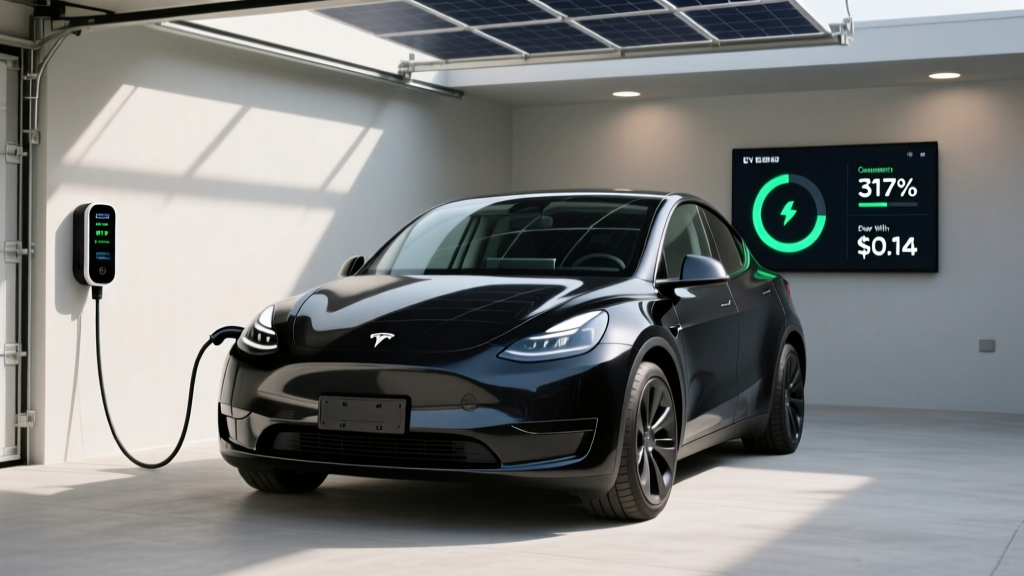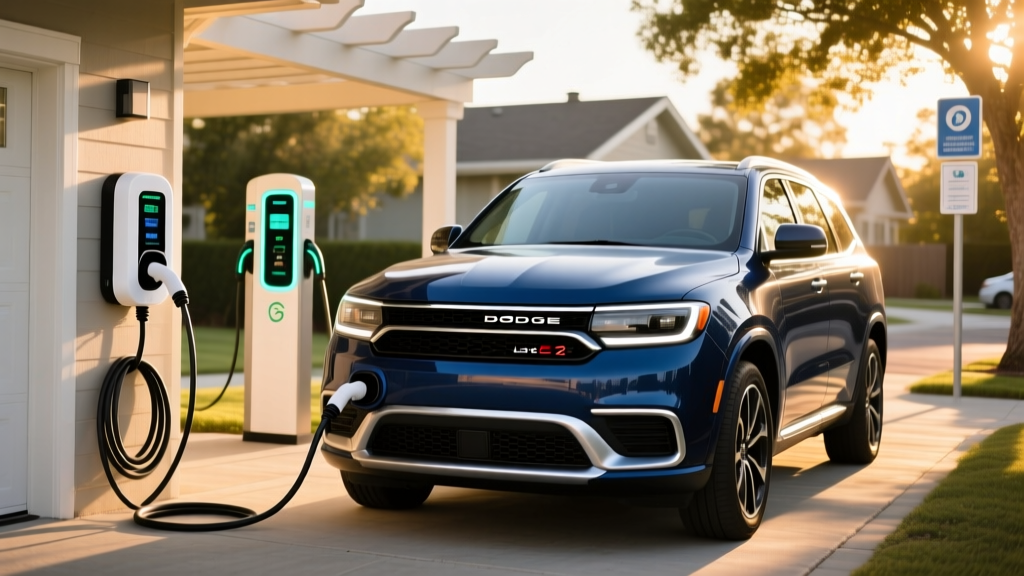
If you own or are shopping for a Dodge Durango with plug-in capability—or you're cross-shopping the Durango against a three-row electric SUV—understanding your Durango charger options is critical. The 2025–2026 Dodge Durango lineup has evolved, and while the traditional Durango remains a gas-powered V6/V8 SUV, Dodge's electrified direction means buyers are increasingly researching home charging infrastructure alongside their purchase. Whether you're setting up a charger for a Durango PHEV (announced for upcoming model years), preparing your garage for a future electric Dodge, or cross-shopping against the Kia EV9, Hyundai Ioniq 9, or Tesla Model X, this guide gives you exact numbers on speeds, costs, and installation requirements.
Charging Levels Explained: How Fast Will Each Add Range?
Every EV and plug-in hybrid charges at one of three levels. Your Durango charger experience depends entirely on which level you're using. Here's the exact breakdown:
| Level | Voltage / Amps | Power Output | Miles of Range Per Hour | Best Use Case |
|---|---|---|---|---|
| Level 1 | 120V / 12A | 1.4 kW | 3–5 mi/hr | Overnight top-ups, PHEVs, emergency backup |
| Level 2 | 240V / 32–48A | 7.7–11.5 kW | 25–45 mi/hr | Daily home charging, workplace, hotels |
| DC Fast | 400–800V DC | 50–350 kW | 150–1,200+ mi/hr (peak) | Road trips, highway corridors, quick stops |
Real-world context: A three-row SUV with a ~90 kWh battery (like the Kia EV9 or a future Durango EV) charging on Level 1 at 1.4 kW would take over 64 hours from empty to full—impractical for daily use. That same battery on a 48A Level 2 Durango charger at 11.5 kW refills in roughly 8 hours overnight. On a 350 kW DC fast charger, you'd go from 10–80% in approximately 18–24 minutes, though the charge curve tapers significantly above 80% to protect battery health.
Home Durango Charger Installation: Costs, Electrical Requirements & Panel Upgrades
Installing a Level 2 Durango charger at home is the single biggest quality-of-life upgrade for any EV or PHEV owner. But costs vary dramatically based on your home's electrical panel, wiring distance, and local code. Here's what a licensed electrician will evaluate:
Electrical Requirements
- Circuit: A dedicated 240V circuit, typically 40A or 50A (breaker rated 125% above continuous draw, so a 40A charger needs a 50A breaker)
- Wire gauge: 6 AWG copper for 50A circuits; 8 AWG for 40A (varies by run length and local code)
- Outlet vs hardwired: NEMA 14-50 outlet offers portability; hardwired is often required for circuits above 50A and provides a cleaner install
- Panel capacity: Your main panel must have enough spare amperage. A 200A panel with existing heavy loads (electric range, dryer, HVAC) may need a load calculation or full upgrade to 400A
Installation Cost Breakdown
| Component | Simple Install (panel nearby) | Complex Install (long run, conduit) | Panel Upgrade Required |
|---|---|---|---|
| Level 2 Charger Equipment | $350–$700 | $350–$700 | $350–$700 |
| Electrician Labor (2–8 hrs) | $300–$600 | $800–$2,000 | $1,500–$3,000 |
| Permit & Inspection | $50–$200 | $100–$350 | $150–$500 |
| Panel Upgrade (if needed) | N/A | N/A | $2,000–$5,000 |
| TOTAL RANGE | $700–$1,500 | $1,250–$3,050 | $4,000–$9,200 |
The panel upgrade gotcha: Homes built before 2000 often have 100A or 150A panels already near capacity. Adding a 50A EV circuit can push you over the limit. An electrician will perform a NEC Article 220 load calculation. If you need a panel upgrade to 200A or 400A, budget an additional $2,000–$5,000 and expect 1–3 days of work including utility coordination and inspection. Some utilities offer rebates for panel upgrades tied to EV adoption—check with your local provider.
Safety & Code Considerations
- Dedicated circuit: NEC requires EV chargers to have their own dedicated circuit—never share with a dryer or range
- GFCI protection: Required for all 240V receptacles in garages per NEC 2020+ (hardwired units may be exempt depending on jurisdiction)
- Outdoor rating: If mounting outside, ensure the charger carries a NEMA 4 or NEMA 4X rating for weather resistance
- Permit required: Nearly all jurisdictions require an electrical permit and final inspection for EV charger installs—skipping this risks insurance claim denial and code violations
Which Connector Is Compatible? NACS, CCS1 & Adapter Options
The connector landscape has shifted dramatically. As of 2025–2026, the North American Charging Standard (NACS), developed by Tesla, has become the dominant connector, with most legacy CCS1 vehicles requiring adapters for Tesla Supercharger access. Here's what you need to know for your Durango charger setup:
| Connector | Brands Using It (Native) | Max DC Fast Rate | Adapter Needed? |
|---|---|---|---|
| NACS (J3400) | Tesla, Ford, GM, Rivian, Volvo, Polestar, Hyundai/Kia (2025+) | Up to 350 kW | No (native); CCS1→NACS adapter ~$200–$400 |
| CCS1 | VW, BMW, older Hyundai/Kia, Stellantis (legacy) | Up to 350 kW | NACS→CCS1 adapter for Superchargers |
| CHAdeMO | Nissan Leaf (legacy), Mitsubishi | Up to 100 kW | Limited adapters; network declining |
For Dodge/Stellantis owners: Stellantis has announced adoption of NACS for future electric vehicles. If a Durango EV or PHEV enters the lineup, expect a native NACS port. Current Dodge Hornet PHEV owners use CCS1. For any CCS1-equipped vehicle, a Tesla CCS1-to-NACS adapter (approximately $200–$250) unlocks the Supercharger network, which remains the most reliable DC fast-charging infrastructure in North America per fueleconomy.gov data.
Home charger connector: Most Level 2 home chargers now ship with a J1772 connector (universal for AC charging). NACS-equipped vehicles include a J1772-to-NACS adapter in the trunk. When buying a home charger, confirm whether it ships with J1772 or NACS and whether you'll need to swap cables.
Cost to Charge: $/kWh Scenarios & Cost Per Mile vs Gas
The economics of EV charging depend on where and when you plug in. Let's compare real 2026 electricity rates against gasoline for a three-row SUV averaging 2.5–3.0 miles per kWh (typical for a large EV SUV like the Kia EV9 at 89 MPGe combined, per EPA data):
| Scenario | Rate | Cost Per Mile | Annual Cost (12,000 mi) |
|---|---|---|---|
| Home Level 2 (off-peak, utility average) | $0.13/kWh | $0.047/mi | $564 |
| Home Level 2 (peak, high-cost state like CA) | $0.32/kWh | $0.115/mi | $1,380 |
| Public Level 2 (ChargePoint, EVgo network) | $0.25–$0.40/kWh | $0.09–$0.14/mi | $1,080–$1,680 |
| DC Fast Charging (Electrify America, Tesla) | $0.35–$0.55/kWh | $0.13–$0.20/mi | $1,560–$2,400 |
| Gasoline SUV (20 MPG combined, $3.40/gal) | $3.40/gallon | $0.17/mi | $2,040 |
The takeaway: Home off-peak charging is the cheapest way to "fuel" any vehicle, period—at under $0.05/mile, it's roughly one-quarter the cost of gasoline. But if you rely exclusively on DC fast charging at $0.45+/kWh, your per-mile cost can equal or exceed gasoline. The Durango charger economics work best when you can charge at home overnight on a time-of-use (TOU) utility plan. Contact your utility about EV-specific rates—many offer 40–60% discounts for charging between midnight and 6 AM.
Charging Time Examples: 10–80% for Common Battery Sizes
Here's how long charging actually takes for battery sizes typical of three-row SUVs and large PHEVs. These times assume the vehicle can accept the charger's maximum rate (many vehicles are charge-rate limited):
- 18 kWh battery (PHEV, e.g., Dodge Hornet PHEV class): Level 2 at 7.7 kW: ~2 hours (10–80%). DC Fast at 50 kW: ~18 minutes.
- 77 kWh battery (mid-size EV SUV): Level 2 at 11.5 kW: ~5 hours (10–80%). DC Fast at 250 kW: ~18–22 minutes.
- 100 kWh battery (large three-row EV SUV): Level 2 at 11.5 kW: ~6.5 hours (10–80%). DC Fast at 350 kW: ~16–20 minutes (if 800V architecture supports it).
Cold-weather caveat: Below 32°F, lithium-ion batteries charge significantly slower unless preconditioned. A battery at 20°F may accept only 30–50% of its peak charge rate until it warms up. Always use your vehicle's navigation-directed preconditioning feature (or manually precondition via the app) before arriving at a DC fast charger in winter. This can cut your 10–80% time by 10–15 minutes in cold conditions.
Best Level 2 Durango Charger Equipment Picks (2026)
Here are proven, well-reviewed Level 2 home chargers suitable for any EV or PHEV, including future Durango electrified models. All support J1772 (universal AC) and include NACS compatibility or adapters:
ChargePoint Home Flex
- Power: Up to 11.5 kW (48A, adjustable down to 16A)
- Connector: J1772 (NACS adapter included or available)
- Cable length: 23 feet
- Smart features: Wi-Fi, app scheduling, Alexa, TOU optimization, energy tracking
- Price: ~$550–$650
- Best for: Flexibility—adjustable amperage fits any panel capacity without derating
Tesla Wall Connector (J1772 version)
- Power: Up to 11.5 kW (48A)
- Connector: J1772 (also available in native NACS)
- Cable length: 24 feet
- Smart features: Wi-Fi, OTA updates, power sharing between multiple units, load management
- Price: ~$475–$550
- Best for: Tesla and NACS-native owners; cleanest design; multi-charger households
Emporia Level 2 EV Charger
- Power: Up to 11.5 kW (48A)
- Connector: J1772 (NACS version available)
- Cable length: 24 feet
- Smart features: Wi-Fi, app with real-time energy monitoring, solar integration, TOU scheduling, works with Emporia Vue energy monitor
- Price: ~$350–$400
- Best for: Budget-conscious buyers who want smart features and energy monitoring without premium pricing
Editor's note: Avoid unbranded Amazon chargers without UL or ETL certification. A Level 2 charger pulls continuous high current for hours—certified safety components (thermal sensors, ground fault protection, proper gauge internal wiring) are non-negotiable. Look for UL 2594 or UL 2231-1 listings. Per the National Electrical Code (NEC Article 625), all EV charging equipment must be listed by a nationally recognized testing laboratory.
Federal Tax Credits & Incentives for Home Charger Installation
The IRS §30C Alternative Fuel Vehicle Refueling Property Credit offers up to 30% of the cost of home EV charger equipment and installation, capped at $1,000. However, eligibility depends on specific requirements:
- Maximum credit: $1,000 (30% of equipment + installation cost)
- Must be installed at your primary residence
- Property must be located in an eligible census tract (low-income or non-urban area, per IRS guidance)
- Equipment must be new and placed in service during the tax year
- Claim on IRS Form 8911 with your annual tax return
Many states and utilities also offer their own rebates—ranging from $200 to $1,500—for Level 2 charger purchases or panel upgrades. Check the Alternative Fuels Data Center for state-specific incentive databases.
Frequently Asked Questions
How much does it cost to install a home EV charger?
A straightforward Level 2 Durango charger installation with an existing 200A panel and short wiring run costs $700–$1,500 total (equipment + electrician + permit). Complex installations with long conduit runs cost $1,250–$3,050. If your home needs a panel upgrade from 100A/150A to 200A+, expect $4,000–$9,200 all-in. Always get 2–3 quotes from licensed electricians who specialize in EV charger installs.
How fast will each charging level add range?
Level 1 (120V) adds 3–5 miles per hour—suitable only for PHEVs with small batteries or emergency trickle charging. Level 2 (240V, 32–48A) adds 25–45 miles per hour, fully recharging most EVs overnight. DC fast charging (50–350 kW) can add 150–1,200+ miles per hour at peak, with a typical 10–80% session taking 18–30 minutes depending on battery size and vehicle charge-rate capability.
Which connector/charger is compatible with my EV?
For AC home charging, all EVs use the J1772 standard (NACS vehicles include an adapter). For DC fast charging, most new 2025–2026 vehicles use NACS natively (Tesla, Ford, GM, Rivian, Hyundai, Kia). Legacy CCS1 vehicles (VW ID.4, older Bolt, Stellantis models) can access Tesla Superchargers with a $200–$250 adapter. CHAdeMO is effectively deprecated outside older Nissan Leafs. When buying a Durango charger, a J1772 Level 2 unit will work with every EV on the road.
How much does charging cost per mile vs gas?
Home off-peak charging at $0.13/kWh costs roughly $0.047/mile for a large EV SUV—that's about $564/year for 12,000 miles. A comparable gas SUV at 20 MPG and $3.40/gallon costs $0.17/mile or $2,040/year. However, exclusive DC fast charging at $0.45/kWh pushes cost to $0.16/mile—nearly matching gasoline. The savings case for EV charging depends heavily on home access and off-peak utility rates.
What electrical upgrades might I need?
The most common upgrade is a panel capacity increase. If your home has a 100A or 150A main panel with electric appliances (range, dryer, HVAC), adding a 40–50A EV circuit may exceed your panel's capacity. A licensed electrician will perform a NEC Article 220 load calculation. Other potential upgrades include: replacing a two-prong or damaged outlet, running new conduit from the panel to the garage, or installing a sub-panel if the garage is detached. Older homes (pre-1980) with knob-and-tube or aluminum wiring may require more extensive rewiring.
Can I use a regular 120V outlet to charge my EV?
Yes, but only as a supplemental or emergency option. Level 1 charging at 1.4 kW adds just 3–5 miles of range per hour. For a PHEV with an 18 kWh battery, overnight Level 1 charging (10 hours) adds roughly 35–40 miles—adequate for daily commuting. For a full EV with a 90 kWh battery, Level 1 would take 60+ hours from empty to full. Ensure the outlet is on a dedicated 15A or 20A circuit with no other loads, and never use an extension cord.