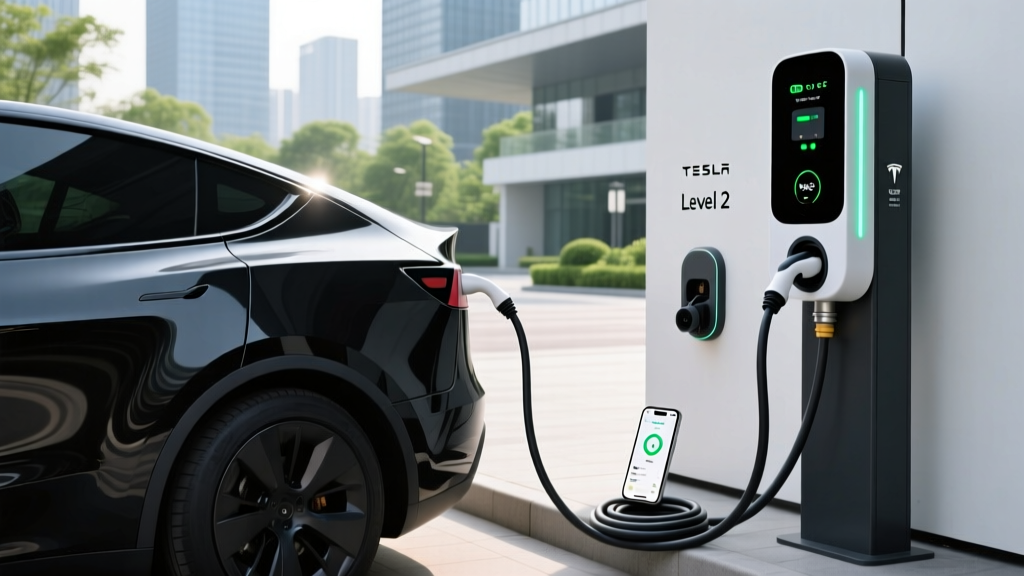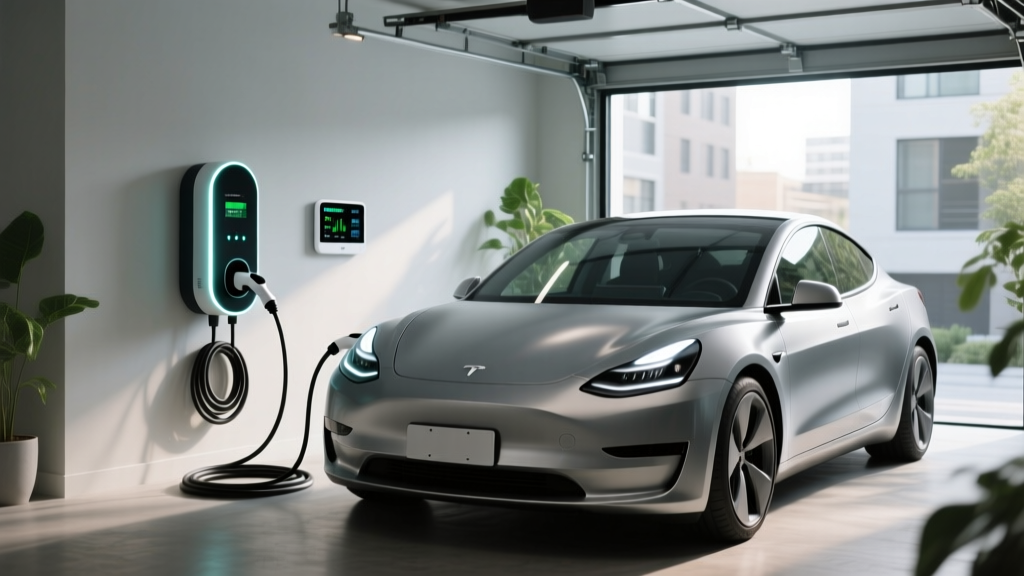
If you have ever searched for a "drop top charger" and landed on this page, you are likely envisioning a premium, high-performance home EV charging setup — the kind of wall-mounted unit that delivers maximum Level 2 power, clean cable management, and smart features that make daily charging effortless. Think of it as the EV equivalent of a premium garage tool: it looks great, performs flawlessly, and removes every friction point from your ownership experience.
This guide breaks down exactly what you need to build that ideal home charging station in 2026: the electrical requirements, real installation costs, connector compatibility across every major EV brand, per-mile charging economics, and specific equipment recommendations with pricing. Whether you drive a Tesla Model Y, a Ford F-150 Lightning, a Hyundai Ioniq 5, or a Chevrolet Equinox EV, the fundamentals are the same — but the details matter enormously.
Understanding EV Charging Levels: Speeds, Power, and What They Mean
Before selecting equipment, you need to understand the three charging levels and what each delivers in practical terms. The critical distinction in EV charging is between kW (kilowatts), which measures power or charge rate, and kWh (kilowatt-hours), which measures energy or battery capacity. Think of kW as the width of a hose and kWh as the size of the bucket you are filling. A wider hose (higher kW) fills the bucket faster, but the bucket size (kWh) stays the same.
| Level | Voltage | Max Power (kW) | Miles of Range Added Per Hour | Typical Use Case |
|---|---|---|---|---|
| Level 1 | 120V AC | 1.4–1.9 kW | 3–5 miles/hr | Overnight top-ups, PHEVs, low-mileage drivers |
| Level 2 | 240V AC | 3.3–19.2 kW | 14–75 miles/hr | Daily home charging, workplace, destinations |
| DC Fast Charging | 400–800V DC | 50–350+ kW | 150–1,200+ miles/hr (peak) | Road trips, highway corridors, rapid top-ups |
Real-world context: A 75 kWh battery (roughly a Tesla Model Y Long Range or Ford Mustang Mach-E Extended Range) charging at a 48-amp Level 2 station (11.5 kW) will go from 10% to 80% in approximately 5–6 hours. That same battery on a 150 kW DC fast charger can reach 10–80% in roughly 25–35 minutes, depending on the vehicle's charge curve and battery preconditioning. At Level 1 (1.4 kW), you are looking at nearly 48 hours for a full charge — which is why Level 2 is the practical minimum for most BEV owners.
How Much Does It Cost to Install a Home EV Charger?
This is the question every prospective EV owner asks, and the honest answer has a wide range depending on your home's electrical infrastructure. Here is a realistic breakdown based on 2026 national averages for a hardwired 48-amp Level 2 charger installation:
| Component | Typical Range | Notes |
|---|---|---|
| Level 2 Charger Equipment (40–48A, smart) | $400–$800 | Wi-Fi enabled, NACS or universal connector |
| Electrician Labor (240V/50A circuit, hardwired) | $500–$1,500 | Varies by run length, wall type, local rates |
| Electrical Permit | $50–$300 | Required in most jurisdictions |
| Panel Upgrade (if needed: 100A → 200A) | $1,500–$3,500 | Older homes with 100A service often need this |
| Total (No Panel Upgrade) | $950–$2,600 | Most newer homes with 200A service |
| Total (With Panel Upgrade) | $2,450–$6,100 | Homes built before ~2000 with 100A panels |
Electrical Requirements: What Your Charger Actually Needs
A high-performance "drop-top" Level 2 charger setup typically runs on a 240V, 50-amp dedicated circuit with a hardwired connection (no plug). This delivers up to 48 amps of continuous charging power — approximately 11.5 kW on a single-phase residential circuit. Here is what that requires:
- Dedicated circuit: The charger must have its own breaker — it cannot share a circuit with appliances, dryers, or HVAC systems.
- Wire gauge: 6 AWG copper wire for a 50A circuit (some jurisdictions require 4 AWG for longer runs to minimize voltage drop).
- GFCI protection: The 2023 NEC update (and subsequent 2026 adoptions) requires GFCI (Ground Fault Circuit Interrupter) protection for all EV charging circuits. Hardwired installations may satisfy this at the breaker; plug-in 14-50 outlets require GFCI breakers, which add $50–$120 to material costs.
- Outdoor rating: If your charger is mounted in a garage, a standard NEMA 3R (rain-resistant) rating is sufficient. For exterior wall mounting, specify NEMA 4 or NEMA 4X (weatherproof, corrosion-resistant). Most premium chargers meet NEMA 4 as standard.
- Conduit and protection: Runs through unfinished spaces (attics, crawlspaces) require conduit protection per local code.
For homes where a panel upgrade is cost-prohibitive, a 32-amp charger on a 40-amp circuit (7.7 kW) is a practical compromise. It still adds roughly 28–30 miles of range per hour — more than enough for overnight charging on most daily commutes. Some smart chargers, like the Emporia Vue-integrated models, can dynamically adjust amperage based on real-time panel load, letting you avoid an upgrade entirely.
Connector Compatibility: NACS, CCS1, and CHAdeMO in 2026
The connector landscape has consolidated significantly. As of the 2026 model year, the NACS (North American Charging Standard) — originally Tesla's proprietary connector — has been adopted by Ford, GM, Rivian, Volvo, Polestar, Mercedes-Benz, BMW, Hyundai, Kia, and most other major manufacturers. CCS1 (Combined Charging System) remains on some older models and certain commercial vehicles, while CHAdeMO is effectively legacy-only (Nissan Leaf being the last major holdout, now discontinued in the US).
| Connector | Brands Using It (2026 Models) | Adapter Needed for Other Networks? |
|---|---|---|
| NACS (J3400) | Tesla, Ford, GM (Chevy/Cadillac/GMC), Rivian, Volvo, Polestar, Hyundai, Kia, BMW, Mercedes, Lucid, Subaru, Toyota (bZ series) | CCS1 → NACS adapter (~$150–$250) for older CCS public chargers |
| CCS1 | VW ID.4 (early builds), some commercial fleet vehicles, legacy models | NACS → CCS1 adapter for Tesla Supercharger access |
| CHAdeMO | Legacy Nissan Leaf, Mitsubishi Outlander PHEV (older) | Limited public infrastructure; no practical adapter path |
For home Level 2 charging: Most Level 2 chargers sold in 2026 ship with a NACS connector as standard, with CCS1 available as an option or via adapter. The J1772 connector (the older Level 2 standard) is being phased out of new consumer equipment but remains backward-compatible with NACS via a simple passive adapter included with most new EVs.
Charging Cost Per Mile: EV vs. Gas in 2026
One of the strongest ownership arguments for an EV is the per-mile energy cost — but the numbers vary significantly depending on where and how you charge. Here is a realistic comparison using 2026 average electricity and fuel prices:
| Scenario | Rate | Cost Per Mile (3.5 mi/kWh EV) | Annual Cost (12,000 mi) |
|---|---|---|---|
| Home Off-Peak (utility time-of-use rate) | $0.08–$0.12/kWh | $0.023–$0.034 | $275–$410 |
| Home Standard Rate (national avg) | $0.16/kWh | $0.046 | $550 |
| Public Level 2 (ChargePoint, EVgo L2) | $0.25–$0.49/kWh | $0.071–$0.14 | $855–$1,680 |
| DC Fast Charging (Electrify America, Tesla Supercharger) | $0.32–$0.56/kWh | $0.091–$0.16 | $1,095–$1,920 |
| Gas Vehicle (28 MPG combined, $3.40/gal) | $3.40/gal | $0.121 | $1,455 |
Equipment Recommendations: Top Level 2 Chargers for 2026
Here are five chargers that represent the best-in-class options for building a premium home charging setup. Each is evaluated on power output, connector, cable length, smart features, and real-world reliability.
Tesla Wall Connector (Gen 4)
- Power: Up to 48A / 11.5 kW (hardwired, 240V/60A circuit)
- Connector: NACS native
- Cable: 24 ft
- Smart Features: Wi-Fi, OTA updates, load sharing (pair up to 6 units on one circuit), Power Sharing with Tesla Powerwall
- Price: ~$475
- Best For: Tesla owners and NACS-equipped EVs; cleanest aesthetic on market
ChargePoint Home Flex (2nd Gen)
- Power: Configurable 16–50A / up to 12 kW (hardwired or NEMA 14-50)
- Connector: NACS or J1772 (select at purchase)
- Cable: 24 ft
- Smart Features: Wi-Fi, Alexa integration, detailed energy reporting via app, scheduled charging, utility demand-response compatible
- Price: ~$550–$650
- Best For: Multi-EV households, utility program participants, renters (14-50 plug option enables portability)
Emporia Level 2 EV Charger
- Power: Up to 48A / 11.5 kW (hardwired, 240V/60A circuit)
- Connector: NACS or J1772
- Cable: 24 ft
- Smart Features: Integrates with Emporia Vue energy monitor for real-time panel load management; can auto-throttle amperage to avoid panel overload
- Price: ~$400 (charger) + ~$150 (Vue monitor)
- Best For: Homes with 100A panels seeking to avoid costly upgrades; solar-equipped homes
Grizzl-E Smart (United Chargers)
- Power: Up to 40A / 9.6 kW (hardwired or 14-50)
- Connector: J1772 standard (NACS adapter available)
- Cable: 24 ft
- Smart Features: Wi-Fi, OCPP-compatible (works with utility programs), built-in RFID for multi-user access, extreme cold rated (-40°F)
- Price: ~$450
- Best For: Cold-climate installations, outdoor mounting, Canadian/northern US owners
Charging Time Examples: What to Expect by Battery Size
Charge times depend on battery capacity (kWh), the charger's power output (kW), and the vehicle's onboard charger limit. Most 2026 EVs accept the full 11.5 kW from a 48A Level 2 charger, but some — particularly older PHEVs — are limited to 3.3–7.2 kW. Here are real-world estimates for 10–80% state of charge (the typical daily charging window; charging above 80% slows dramatically to protect battery health):
- Tesla Model Y Long Range (75 kWh usable, 11.5 kW onboard): ~4.5 hours from 10–80% on a 48A Level 2 charger
- Ford F-150 Lightning Extended Range (131 kWh usable, 19.2 kW onboard): ~5.5 hours from 10–80% on a 48A charger (full 8+ hours on 80A circuit at 19.2 kW)
- Hyundai Ioniq 5 (77.4 kWh usable, 10.9 kW onboard): ~5 hours from 10–80% on a 48A charger
- Chevrolet Equinox EV (85 kWh usable, 11.5 kW onboard): ~5 hours from 10–80%
- Toyota RAV4 Prime PHEV (18.1 kWh usable, 6.6 kW onboard): ~2 hours from 10–80% (limited by onboard charger)
DC Fast Charging comparison: On a 350 kW DC fast charger, the Ioniq 5 (with its 800V architecture) can achieve 10–80% in approximately 18 minutes. The Tesla Model Y on a V3 Supercharger (250 kW) reaches 10–80% in roughly 25–30 minutes. These are peak rates — the charge curve tapers significantly above 60–70% SoC, which is why 10–80% is the standard benchmark rather than 0–100%.
Safety, Code Compliance, and Common Installation Mistakes
EV chargers draw substantial continuous current — more than most household appliances — and the electrical code reflects that. Here are the most critical safety and compliance points for your installation:
- Dedicated circuit is non-negotiable. Sharing a circuit with a dryer, oven, or HVAC system creates a fire risk and violates NEC Article 625 (Electric Vehicle Charging System Equipment).
- Use a licensed electrician. DIY 240V installations are legal in some jurisdictions with proper permitting, but the continuous-load nature of EV charging makes professional installation strongly advisable. Insurance companies may deny claims related to unpermitted electrical work.
- Avoid "dryer splitter" devices. Products that claim to share a dryer outlet with your EV charger create a serious safety hazard. The NEC does not permit this for continuous loads.
- Verify GFCI compliance. Post-2023 NEC adoptions require GFCI on all EV circuits. Hardwired units satisfy this at the breaker; plug-in units need a GFCI breaker (standard breakers are no longer code-compliant for EV outlets in most jurisdictions).
- Cable management matters. A 24-foot cable left on a garage floor is a tripping hazard and degrades faster. Wall-mounted cable organizers ($20–$40) protect both the cable and your shins.
- Check utility incentives. Many utilities offer $250–$500 rebates for smart Level 2 charger installations, and some provide free or discounted time-of-use rate plans for EV owners. Check with your local utility before purchasing equipment — some programs require specific charger models for eligibility.
For the most current federal incentive information, including the IRS §30D clean vehicle credit (which applies to vehicles, not chargers directly) and the Residential Clean Energy Credit (which may cover some energy-storage installations paired with EV charging), consult a tax professional. Charger-specific rebates are typically administered at the state or utility level and vary by jurisdiction.
Frequently Asked Questions
How much does it cost to install a home EV charger?
A typical 48-amp hardwired Level 2 charger installation costs between $950 and $2,600 if your home already has a 200-amp electrical panel. If a panel upgrade from 100A to 200A is needed, add $1,500–$3,500, bringing the total to $2,450–$6,100. Equipment costs $400–$800; the remainder is electrician labor and permitting.
How fast will each charging level add range?
Level 1 (120V) adds 3–5 miles per hour. Level 2 (240V, 48A) adds roughly 35–45 miles per hour for most EVs. DC fast charging adds 150–1,200+ miles per hour at peak rates, but sessions are typically limited to 20–40 minutes due to charge-curve tapering above 80% SoC.
Which connector/charger is compatible with my EV?
For 2026 model-year vehicles, most new EVs use the NACS (J3400) connector. This includes Tesla, Ford, GM, Hyundai, Kia, Rivian, Volvo, BMW, and others. Older CCS1 vehicles may need a NACS-to-CCS adapter ($150–$250) for Tesla Supercharger access. CHAdeMO is legacy-only. For home Level 2 charging, buy a charger with the connector matching your vehicle — or use the J1772-to-NACS adapter included with most new NACS-equipped EVs.
How much does charging cost per mile vs gas?
Home charging on off-peak rates costs $0.02–$0.03 per mile — roughly one-quarter to one-fifth the cost of gasoline at $3.40/gallon in a 28 MPG vehicle ($0.12/mile). Even at standard residential rates ($0.16/kWh), EV charging costs about $0.046/mile. Public DC fast charging at $0.40–$0.56/kWh can approach or exceed gasoline costs per mile.
What electrical upgrades might I need?
The most common upgrade is a panel replacement from 100A to 200A service ($1,500–$3,500). Homes with 200A panels typically need only a new 50A or 60A breaker and dedicated circuit wiring. Some homeowners opt for a lower-amperage charger (32A on a 40A circuit) to avoid panel upgrades entirely. Smart chargers with load-management features (like the Emporia) can dynamically adjust draw to stay within panel limits without hardware upgrades.
Can I charge two EVs simultaneously at home?
Yes, but it requires planning. Options include: (1) installing two separate 50A circuits (requires significant panel capacity), (2) using Tesla Wall Connectors with Power Sharing (two units share one 60A circuit, splitting amperage dynamically), or (3) using a smart load-management system that throttles charging when other high-draw appliances are running. For most two-EV households, alternating overnight charges on a single 48A circuit is the simplest approach — most EVs only need 3–4 hours to replenish a day's driving.