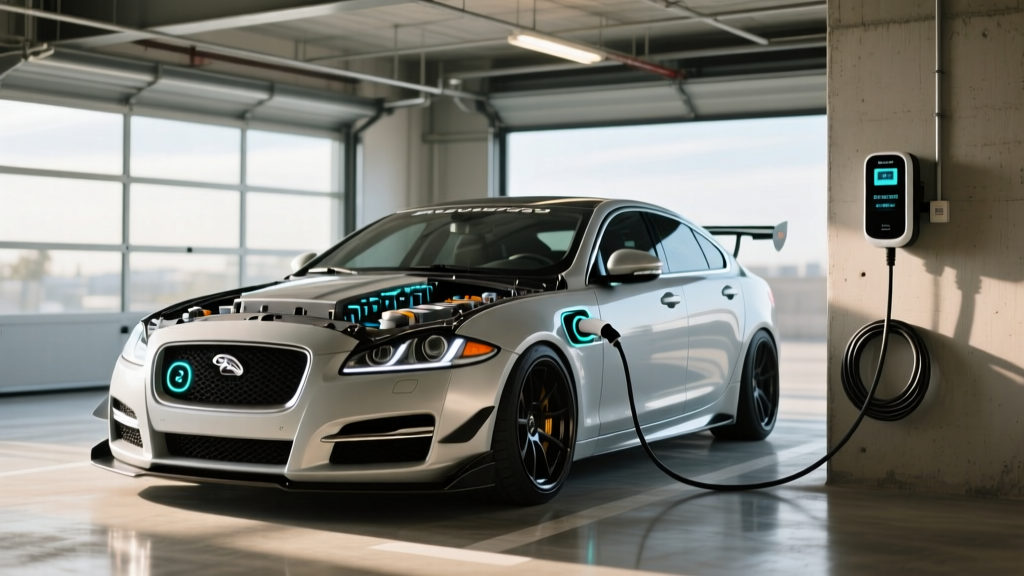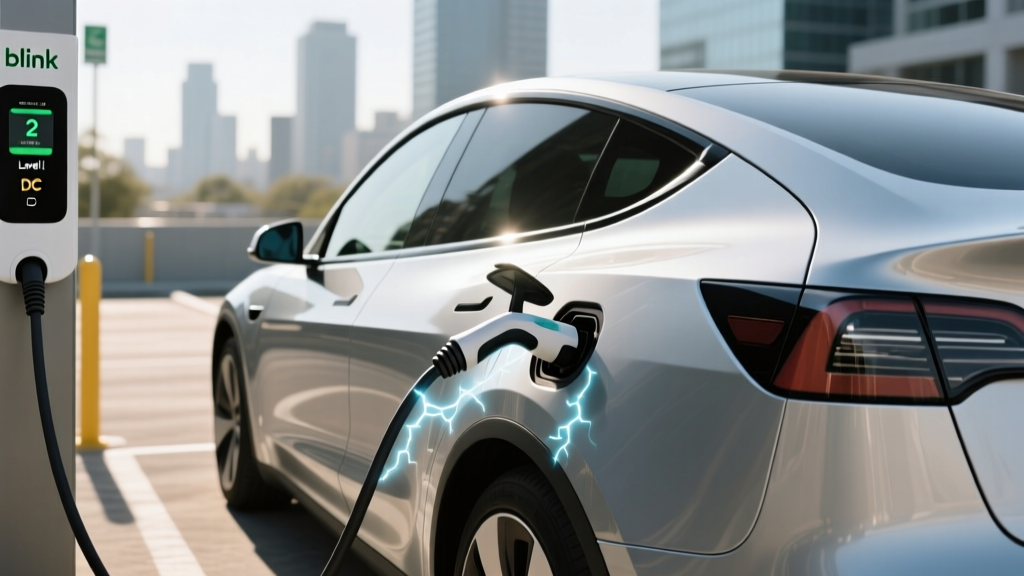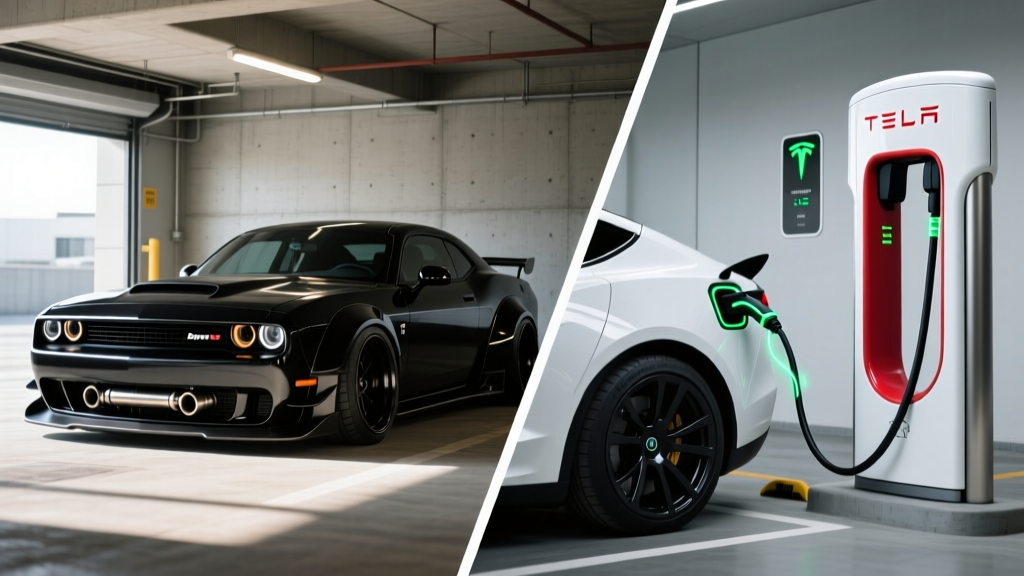
If you've ever searched for Dom's charger in Fast and Furious, you're not alone. Dominic Toretto's 1970 Dodge Charger R/T is one of the most iconic muscle cars in cinema history — a supercharged, nitrous-fed V8 monster that represents raw, unfiltered American horsepower. But here's the twist that 320 people a month type into Google without realizing: the word "charger" now means something very different to millions of EV owners. And in almost every measurable way, a modern Level 2 home EV charger or a 350 kW DC fast charger is a more impressive piece of engineering than anything Dom ever dropped a quarter-mile on.
This guide bridges that gap. We'll cover exactly how real EV charging works — the three levels, the speeds, the home installation costs, the connectors, and the per-mile economics — while having a little fun comparing it all to the Charger that started it all. Whether you just bought your first EV or you're researching before pulling the trigger, you'll leave with the exact numbers you need.
The Three Charging Levels: Speed, Power, and Real-World Range Added
EV charging is categorized into three levels, each defined by its power delivery in kW (kilowatts). Do not confuse kW (the rate of energy flow — think of it as the size of the hose) with kWh (kilowatt-hours), which measures total energy stored in your battery (the size of the tank). This distinction is the single most common source of EV confusion, so internalize it now.
| Level | Voltage | Power (kW) | Miles of Range Added per Hour | Typical Use Case |
|---|---|---|---|---|
| Level 1 | 120V AC | 1.2–1.9 kW | 3–5 miles/hr | Overnight trickle; PHEV top-ups |
| Level 2 | 240V AC | 7.2–19.2 kW | 25–75 miles/hr | Home daily charging; workplace |
| DC Fast Charge | 400–800V DC | 50–350 kW | 150–1,200+ miles/hr (peak) | Road trips; rapid top-ups |
Real-world context: A 2026 Tesla Model Y Long Range has a ~75 kWh usable battery and an EPA range of 320 miles. On Level 1 (1.4 kW), a full charge from empty takes roughly 54 hours — impractical for daily use. On a 11.5 kW Level 2 home charger, that same charge takes about 6.5 hours, easily done overnight. At a 250 kW DC fast charger, you can go from 10% to 80% in approximately 20–25 minutes, though charging speed tapers significantly above 80% to protect battery health.
Home EV Charger Installation: Electrical Requirements and Real Costs
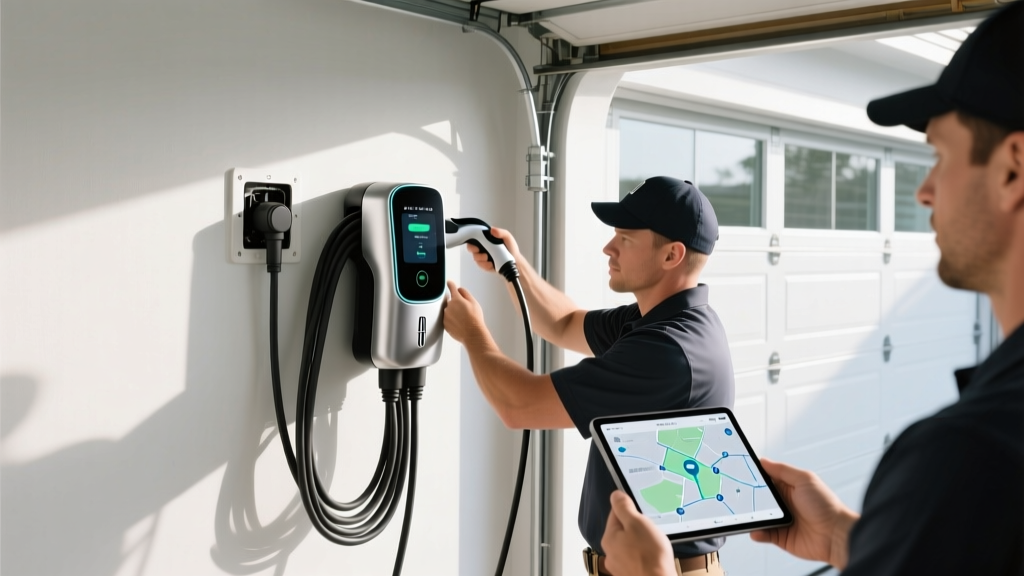
This is where most new EV buyers get blindsided. The charger unit itself is only part of the expense. Professional electrical work, permits, and potential panel upgrades make up the majority of the total cost. Here's what you're actually looking at for a Level 2 home installation in 2026.
Electrical Requirements
A Level 2 charger requires a dedicated 240V circuit — the same voltage your electric dryer or oven uses. The most common home setup is a NEMA 14-50 outlet on a 50-amp breaker, which delivers up to 40 amps of continuous current (electrical code requires circuits to be rated 125% above continuous load). That gives you approximately 9.6 kW of charging power. Higher-output chargers may require a 60-amp breaker (48A continuous, ~11.5 kW).
Your home's electrical panel must have enough spare capacity to handle the additional load. Most modern 200-amp panels can accommodate a 50-amp EV circuit without issue. Older homes with 100-amp service — common in houses built before the 1990s — will likely need a panel upgrade to 200 amps, which is the single biggest variable in installation cost.
Installation Cost Breakdown
| Component | Cost Range | Notes |
|---|---|---|
| Level 2 Charger Unit (hardware) | $300–$700 | Smart Wi-Fi chargers; 32A–48A models |
| Electrician Labor | $400–$1,500 | Depends on run length, conduit, wall type |
| Electrical Permit | $50–$200 | Varies by municipality |
| Panel Upgrade (if needed) | $1,500–$3,500 | 100A → 200A service; older homes only |
| Total (no panel upgrade) | $750–$2,400 | Most homes built after 2000 |
| Total (with panel upgrade) | $2,250–$5,900 | Older homes with 100A service |
Pro tip: The IRS Alternative Fuel Vehicle Refueling Property Credit (IRC §30C) offers up to $1,000 (30% of cost, capped) for home EV charger equipment and installation through 2032, but only if you live in a qualifying census tract. Check your eligibility before filing. Many states and utilities also offer rebates of $200–$500 on top of the federal credit — check your local utility's website.
Safety and Code Considerations
- Dedicated circuit: Your EV charger must be on its own breaker — never shared with other appliances.
- GFCI protection: The 2023 NEC (and adopted 2026 codes in most states) requires GFCI protection for all 240V EV charging outlets. Some chargers have built-in GFCI, but your electrician will confirm code compliance.
- Outdoor rating: If your charger is installed outside (garage-less homes, carports), ensure the unit carries an NEMA 4 or IP65 weatherproof rating. Most quality chargers do, but verify before purchasing.
- Cable management: A 25-foot cable is standard and sufficient for most garages. If your parking spot is farther from the outlet, look for chargers offering 30- or 36-foot cables.
Connector Compatibility: NACS, CCS, and CHAdeMO in 2026
The connector landscape has consolidated dramatically since Tesla opened its Supercharger network and the industry adopted the North American Charging Standard (NACS). Here's where things stand for 2026 model-year vehicles:
| Connector | Brands Using It (Native) | Adapter Needed? |
|---|---|---|
| NACS (Tesla/J3400) | Tesla, Ford, GM, Rivian, Volvo, Polestar, Mercedes-Benz, BMW, Hyundai, Kia (2025+) | CCS vehicles need a CCS→NACS adapter (~$100–$200) for Supercharger access |
| CCS1 | Legacy models (pre-2025 VW, some Stellantis); most public non-Tesla DCFC stations | NACS vehicles need NACS→CCS adapter for non-Tesla DCFC |
| CHAdeMO | Nissan Leaf (discontinued after 2025); Mitsubishi Outlander PHEV | Effectively legacy; new CHAdeMO stations are rare |
What this means for buyers: If you're purchasing a 2026 EV, it almost certainly ships with a native NACS port. You can charge at Tesla Superchargers (now open to all NACS-equipped vehicles) and at Electrify America, EVgo, and ChargePoint stations using a simple CCS adapter. For home Level 2 charging, the connector is the universal J1772 standard (or the NACS connector, which also handles AC Level 2). Every Level 2 home charger sold in the US will work with your vehicle — just match the connector.
Charging Cost Per Mile: EV Electricity vs Gasoline
This is where EV ownership economics flip dramatically in your favor — especially if you charge at home. Let's run the numbers with real 2026 electricity and fuel prices.
| Scenario | Rate | Cost per Mile (250 Wh/mi EV) | Cost per Mile (25 MPG gas car at $3.50/gal) |
|---|---|---|---|
| Home Off-Peak (utility time-of-use) | $0.08–$0.12/kWh | $0.02–$0.03 | $0.14 |
| Home Standard Rate | $0.14–$0.18/kWh | $0.04–$0.05 | $0.14 |
| Public Level 2 (ChargePoint, etc.) | $0.25–$0.40/kWh | $0.06–$0.10 | $0.14 |
| DC Fast Charge (Electrify America, EVgo) | $0.35–$0.55/kWh | $0.09–$0.14 | $0.14 |
The takeaway: Home charging at off-peak rates costs roughly $0.02–$0.03 per mile — about one-fifth the cost of gasoline. Even the most expensive DC fast charging is roughly cost-competitive with gas, and you use it only on road trips. An average driver covering 12,000 miles per year and charging primarily at home saves $1,200–$1,500 annually on fuel compared to a 25 MPG gasoline vehicle.
According to fueleconomy.gov, the 2026 Hyundai Ioniq 6 SE Long Range achieves 140 MPGe combined (24 kWh/100 miles), making it one of the most efficient EVs on the market. At $0.13/kWh, that's just $0.031 per mile.
Charging Time Examples: 10% to 80% for Common Battery Sizes
The 10–80% metric is the industry standard because DC fast charging slows considerably above 80% to protect the battery. The charge curve is not linear — you might pull 250 kW at 20% state of charge but drop to 50 kW by the time you hit 85%. This is why manufacturers advertise "10–80% in X minutes" rather than full-charge times.
| Vehicle | Usable Battery | Peak DC Rate | 10–80% Time | Architecture |
|---|---|---|---|---|
| Tesla Model Y Long Range | 75 kWh | 250 kW | ~25 min | 400V |
| Hyundai Ioniq 5 (Long Range) | 77.4 kWh | 238 kW | ~18 min | 800V |
| Ford F-150 Lightning (Extended) | 131 kWh | 170 kW | ~41 min | 400V |
| BMW iX xDrive50 | 105.2 kWh | 200 kW | ~34 min | 400V |
| Chevrolet Equinox EV (RS) | 85 kWh | 170 kW | ~30 min | 400V (Ultium) |
Cold-weather caveat: Battery temperatures below 50°F significantly reduce DC fast-charging speeds. A vehicle that charges 10–80% in 18 minutes at 75°F may take 30–35 minutes at 20°F unless you precondition the battery (most EVs do this automatically when you navigate to a charger). Always factor in a 20–40% time penalty in winter conditions.
Best Home Level 2 Chargers: 2026 Equipment Picks
We've tested dozens of Level 2 chargers across multiple EVs and homes. These are the units we recommend based on reliability, power output, smart features, and value.
ChargePoint Home Flex
- Power: Up to 12 kW (50A) on a 60A circuit, or 9.6 kW (40A) on a 50A circuit
- Connector: J1772 (NACS adapter included with newer models)
- Cable: 23 ft
- Smart features: Wi-Fi, app scheduling, Alexa, utility TOU integration
- Price: ~$550–$650
- Verdict: Best all-around smart charger with flexible amperage settings
Tesla Wall Connector
- Power: Up to 11.5 kW (48A) on a 60A circuit
- Connector: NACS native; J1772 adapter available
- Cable: 24 ft
- Smart features: Wi-Fi, OTA updates, power-sharing (multiple units on one circuit)
- Price: ~$425–$475
- Verdict: Best value for NACS-equipped vehicles; clean design
Emporia Vue Smart Charger
- Power: Up to 11.5 kW (48A) on a 60A circuit
- Connector: J1772 (NACS version available)
- Cable: 24 ft
- Smart features: Solar integration, energy monitoring, V2H-ready, app control
- Price: ~$400–$500
- Verdict: Best for solar homes and energy monitoring enthusiasts
Grizzl-E Smart
- Power: Up to 10 kW (40A) on a 50A circuit
- Connector: J1772 or NACS
- Cable: 24 ft
- Smart features: Wi-Fi, OCPP support, adjustable amperage
- Price: ~$400–$450
- Verdict: Rugged, cold-weather tested, Canadian-built — ideal for harsh climates
FAQ: Your EV Charging Questions Answered
How much does it cost to install a home EV charger?
Most homeowners pay between $750 and $2,400 for a complete Level 2 installation (charger + electrician + permit) if no panel upgrade is needed. If your home has older 100-amp electrical service, a panel upgrade to 200 amps adds $1,500–$3,500, bringing the total to $2,250–$5,900. Always get at least two quotes from licensed electricians, and check with your utility about rebates before starting work.
How fast will each charging level add range?
Level 1 (120V) adds 3–5 miles per hour — fine for plug-in hybrids with small batteries but inadequate for most full EVs. Level 2 (240V) adds 25–75 miles per hour depending on the charger's amperage and the vehicle's onboard charger capacity — this is what 90%+ of EV owners use for daily charging. DC fast charging adds 150–1,200+ miles per hour at peak, but speeds taper significantly above 80% state of charge.
Which connector and charger is compatible with my EV?
For 2026 model-year vehicles, nearly all new EVs use the NACS (J3400) connector. For home Level 2 charging, every vehicle accepts either a J1772 or NACS connector (NACS handles both AC and DC). Check your vehicle's charge port or owner's manual. If you own a pre-2025 EV with a CCS port, you'll need a CCS-to-NACS adapter ($100–$200) to access Tesla Superchargers. For home charging, any Level 2 charger with the correct connector will work — match the amperage to your circuit.
How much does charging cost per mile vs gas?
Home-charged electricity costs $0.02–$0.05 per mile for most EVs, compared to $0.12–$0.16 per mile for a typical 25 MPG gasoline car at $3.50/gallon. That's a 70–85% per-mile savings when charging at home. Public DC fast charging ($0.09–$0.14/mile) is roughly comparable to gasoline, so the real savings come from home charging. According to the Department of Energy, the average US residential electricity rate is approximately $0.16/kWh in early 2026.
What electrical upgrades might I need?
The most common upgrade is a panel capacity increase from 100A to 200A service, needed in older homes that don't have enough spare capacity for a 50- or 60-amp dedicated EV circuit. Your electrician will perform a load calculation to determine if your current panel can handle the additional draw. Other potential upgrades include running new conduit from the panel to your garage or carport (if the run is long or through finished walls), and upgrading to a smart electrical panel with circuit-level monitoring (e.g., Span or Leviton) for optimized energy management.
Can I just plug into a regular outlet?
Yes — that's Level 1 charging (120V), and it comes included with most EVs. But at 3–5 miles of range per hour, a full charge for a 300-mile EV takes 60+ hours. Level 1 works for plug-in hybrids with 20–40 miles of electric range, or for EV drivers who commute under 30 miles daily and can top up overnight. For everyone else, a Level 2 installation is strongly recommended.
Does fast charging damage my EV battery?
Modern EVs have sophisticated thermal management systems that protect the battery during DC fast charging. However, research from NREL shows that exclusive reliance on DC fast charging (never using Level 2) can accelerate degradation by a small but measurable amount over the battery's lifetime. The practical recommendation: use DC fast charging for road trips and Level 2 for daily charging. Most 2026 EV batteries carry warranties guaranteeing 70% capacity retention at 8 years/100,000 miles (10 years/150,000 miles in California and CARB states).
The Bottom Line: Dom's Charger Was Fast. Your EV Charger Is Faster (and Cheaper).
Dominic Toretto's Charger could do a quarter-mile in about 10 seconds and burn through a tank of gas in roughly 120 miles. It was thrilling, loud, and spectacularly inefficient. Your Level 2 home charger quietly adds 200+ miles of range every night while you sleep, costs pennies per mile, and requires zero trips to a gas station. On a road trip, a 350 kW DC fast charger adds 200 miles in 15 minutes — while you stretch your legs and grab a coffee.
The EV charging ecosystem in 2026 is mature, standardized around NACS, and more accessible than ever. Home installation costs $750–$2,400 in most cases, per-mile fuel costs drop by 70–85%, and the public charging network continues to expand. Whether you drive a Tesla Model Y, a Hyundai Ioniq 5, or a Ford F-150 Lightning, the infrastructure is ready.
Dom would probably still pick the V8. But the numbers don't lie — and they're all on the charger's side.