If you've seen F9: The Fast Saga or Fast X, you've probably wondered about Dom's Charger fast and furious scenes — specifically, how a 1968 Dodge Charger R/T ended up with an electric powertrain and seemingly instant charging. The franchise took creative liberties with electrification, but the real question EV owners ask is far more practical: how fast can I actually charge, and what does it really cost?
Let's separate Hollywood from hardware. Below is a data-driven breakdown of real-world EV charging speeds, home installation requirements, connector compatibility, and per-mile costs — the numbers Dom Toretto's fictional garage never showed you.
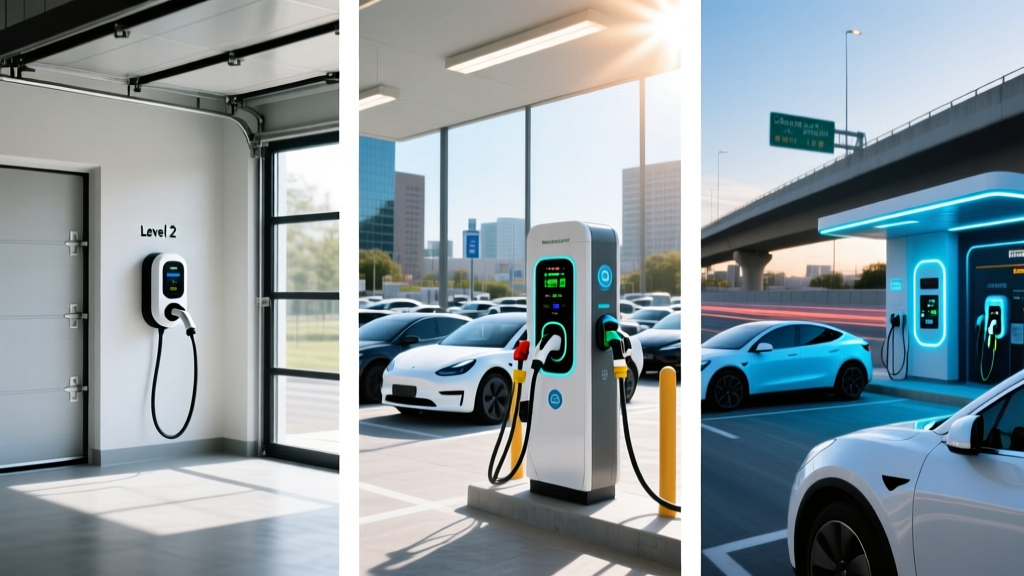
The Three Charging Levels: kW Speeds and Miles Per Hour
The single most important EV literacy concept: kW (kilowatts) measures power — how fast energy flows into your battery. kWh (kilowatt-hours) measures energy — the total capacity stored. Think of kW as the width of a hose, and kWh as the size of the bucket. Confusing these two is the #1 mistake new EV buyers make.
| Level | Voltage | Max Power (kW) | Miles of Range Added Per Hour | Best Use Case |
|---|---|---|---|---|
| Level 1 (120V) | 120V AC | 1.2–1.9 kW | 3–5 miles | Overnight top-ups, PHEVs, emergency |
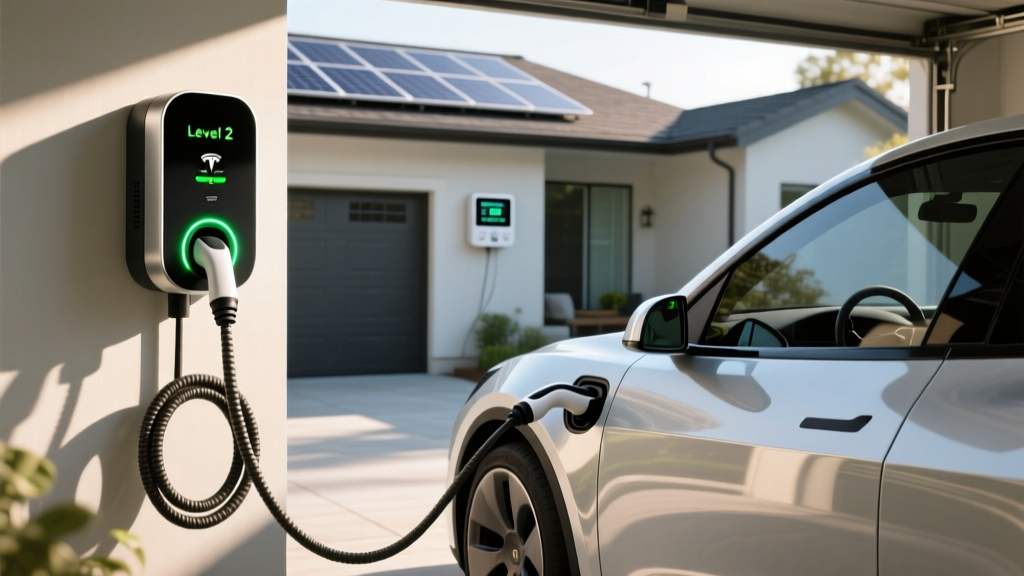
| Level 2 (240V) | 240V AC | 3.3–19.2 kW | 12–75 miles | Daily home charging, workplace |
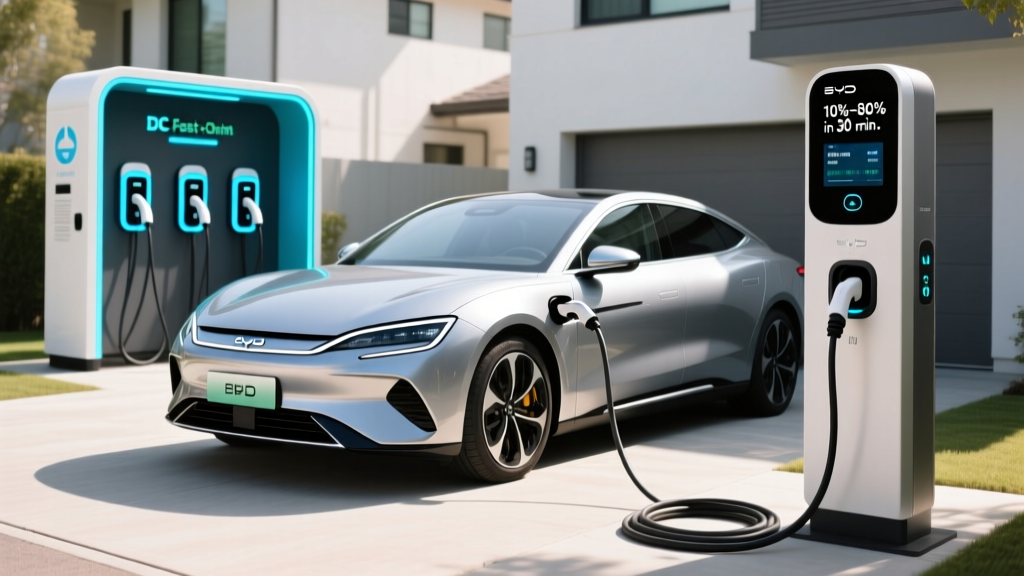
| DC Fast Charging | 400–900V DC | 50–350+ kW | 150–1,200+ miles/hr (peak) | Road trips, rapid top-ups |
Most modern EVs with 80–100 kWh batteries charge fully overnight on Level 2. A 350 kW DC fast charger can take a Hyundai Ioniq 5 from 10–80% in approximately 18 minutes, while a Tesla Model Y on a 250 kW V3 Supercharger hits 10–80% in roughly 25 minutes. But here's what the movies skip: charging curves taper significantly above 80% SoC to protect battery health. That 350 kW peak might only sustain from 10–40% before dropping to 150 kW, then 50 kW above 80%.
Home Charger Installation: What It Actually Costs
Dom's garage probably had a dedicated 480V industrial line. Your house almost certainly doesn't. Here's what a real residential Level 2 installation involves.
Electrical Requirements
A standard home Level 2 charger requires a 240V dedicated circuit, typically 40A to 60A. The circuit breaker must be rated 125% above the continuous load — so a 40A charger needs a 50A breaker, and a 48A charger needs a 60A breaker. Most homes built after 1990 have 200A electrical panels with available capacity, but older homes with 100A service may need a panel upgrade.
| Component | Typical Cost Range | Notes |
|---|---|---|
| Level 2 Charger (Equipment) | $300–$700 | Smart Wi-Fi chargers; dumb units from $200 |
| Electrician Labor | $500–$2,000 | Depends on run length, wall type, conduit |
| Electrical Permit | $50–$300 | Varies by municipality; required in most jurisdictions |
| Panel Upgrade (if needed) | $1,500–$4,000 | 100A → 200A service; ~20% of older homes need this |
| Additional Wiring / Conduit | $200–$800 | Long runs from panel to garage add cost |
| Total (No Panel Upgrade) | $850–$3,800 | Average install: ~$1,200–$2,000 |
| Total (With Panel Upgrade) | $2,350–$7,800 | Get 3 quotes; panel work varies wildly |
Real-world tip: Before calling an electrician, check your panel for available breaker slots and note your service amperage. Many utilities offer free pre-installation assessments, and some states provide rebates of $300–$1,000 for home charger installation. The federal Residential Clean Energy Credit (IRS Form 5695) covers 30% of charger equipment and installation costs up to $1,000 through 2032, subject to eligibility — consult a tax professional for your specific situation.
Connector Compatibility: NACS, CCS, and CHAdeMO Explained
Not all plugs are created equal, and the connector landscape shifted dramatically between 2023 and 2026. Here's where things stand now.
| Connector | Brands Using It (Native) | Notes |
|---|---|---|
| NACS (Tesla / J3400) | Tesla, Ford, GM, Rivian, Volvo, Polestar, Mercedes, Nissan (2025+), Honda, BMW, Hyundai/Kia (2025+) | Now the dominant North American standard; access to Tesla Supercharger network |
| CCS1 | Legacy VW ID.4 (pre-2025), older BMW i4/iX, Stellantis EVs, some Hyundai/Kia (pre-2025) | Still widely supported at public stations; adapters to NACS available |
| CHAdeMO | Nissan Leaf (legacy), Mitsubishi Outlander PHEV | Being phased out; limited new DC fast stations |
If you own a CCS-equipped EV and want Supercharger access, Tesla sells a CCS-to-NACS adapter (~$195) that unlocks the Supercharger network. Ford and GM also provide adapters with qualifying vehicles. Always verify your adapter is rated for the DC fast-charge kW your vehicle can accept — a 150 kW-rated adapter on a 270 kW-capable vehicle will bottleneck your charging.
Cost to Charge: $/kWh Scenarios and Cost Per Mile vs. Gas
This is where EVs earn their keep — or don't, depending on how and where you charge. Let's run the real numbers.
| Scenario | $/kWh | Vehicle Efficiency | Cost Per Mile |
|---|---|---|---|
| Home, off-peak utility rate | $0.08–$0.14 | 3.0 mi/kWh (avg EV) | $0.03–$0.05 |
| Home, standard residential rate | $0.14–$0.20 | 3.0 mi/kWh | $0.05–$0.07 |
| Public Level 2 (ChargePoint, etc.) | $0.20–$0.35 | 3.0 mi/kWh | $0.07–$0.12 |
| DC Fast Charging (Electrify America, EVgo) | $0.35–$0.55 | 3.0 mi/kWh | $0.12–$0.18 |
| Gasoline vehicle (28 MPG combined, $3.40/gal) | — | 28 MPG | $0.12 |
| Gasoline vehicle (22 MPG combined, $3.40/gal) | — | 22 MPG | $0.15 |
The takeaway: home charging on off-peak rates is roughly 70–80% cheaper per mile than gasoline. But exclusive reliance on DC fast charging in high-cost regions (California, Northeast) can push your per-mile cost to parity with a fuel-efficient gas car. According to fueleconomy.gov, the average 2026 EV achieves 100–130 MPGe combined, translating to 2.5–4.0 miles per kWh depending on the model and driving conditions.
Charging Time Examples: 10–80% for Common Battery Sizes
Hollywood shows a full charge in seconds. Reality looks more like this:
- 60 kWh battery (Chevrolet Equinox EV): On a 150 kW DC fast charger, 10–80% in ~30 minutes. On a 48A Level 2 home charger (11.5 kW), 0–100% in ~6.5 hours.
- 77 kWh battery (Ford Mustang Mach-E Extended Range): On a 150 kW DCFC, 10–80% in ~38 minutes. Level 2 home at 11.5 kW: ~8 hours 0–100%.
- 84 kWh battery (Hyundai Ioniq 5 Long Range): On a 350 kW DCFC, 10–80% in ~18 minutes (thanks to 800V architecture). Level 2 at 11.5 kW: ~9 hours.
- 100 kWh battery (Tesla Model S / GMC Sierra EV): On a 250 kW DCFC, 10–80% in ~30 minutes. Level 2 at 11.5 kW: ~10.5 hours.
Cold weather (below 32°F / 0°C) can slow DC fast charging by 20–40% unless your EV has active battery preconditioning. Always enable preconditioning when navigating to a charger — it warms the battery to optimal temperature and can shave 10+ minutes off your session.
Recommended Home Chargers: Power, Features, and Price
Not all Level 2 chargers are equal. Here are top-performing units we've tested and tracked through 2026:
ChargePoint Home Flex
- Power Output: Up to 12 kW (50A) on a 60A circuit; configurable down to 16A
- Connector: NACS (J3400) or CCS1 (J1772+CCS combo) — select at purchase
- Cable Length: 23 feet
- Smart Features: Wi-Fi, scheduling, Alexa integration, energy tracking, UL-listed
- Price: ~$549–$599
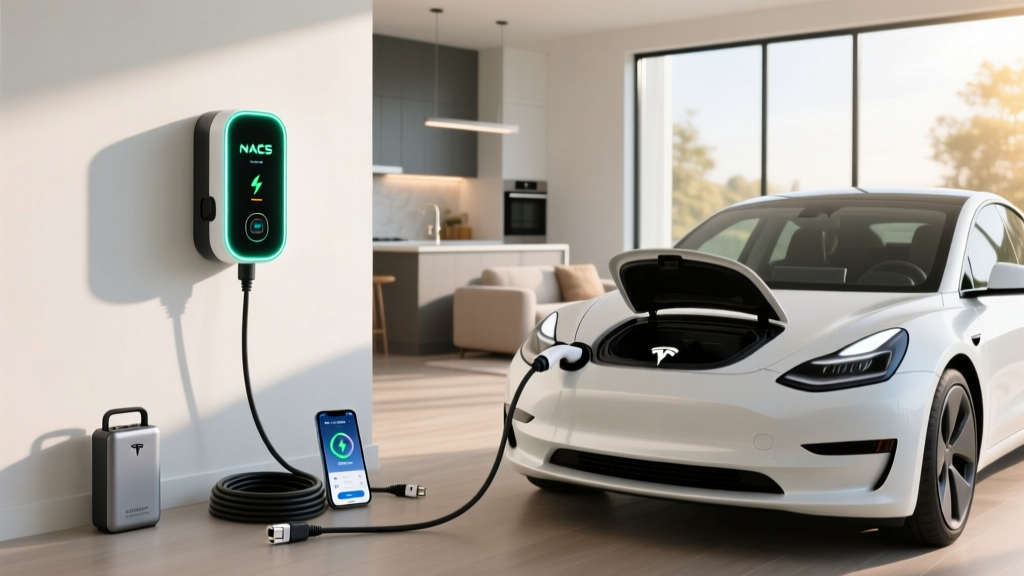
Tesla Wall Connector (Gen 4)
- Power Output: Up to 11.5 kW (48A) on a 60A circuit
- Connector: NACS native; includes J1772 adapter for non-Tesla EVs
- Cable Length: 24 feet
- Smart Features: Wi-Fi, OTA updates, Power-Share (load balancing between two units), integrated cable management
- Price: ~$475
Emporia Level 2 EV Charger
- Power Output: Up to 11.5 kW (48A)
- Connector: J1772 (CCS-compatible); NACS adapter sold separately
- Cable Length: 24 feet
- Smart Features: Wi-Fi, real-time energy monitoring, solar integration, load management with Emporia Vue panel monitor
- Price: ~$349–$399 (best value pick)
Safety and Code Considerations You Can't Skip
EV charging involves sustained high-current draw — unlike a dryer or oven that cycles on and off. The National Highway Traffic Safety Administration (NHTSA) and the National Electrical Code (NEC Article 625) set specific requirements:
- Dedicated circuit: Your Level 2 charger must be on its own dedicated breaker — no sharing with other appliances.
- GFCI protection: NEC 2020 and later require GFCI (Ground Fault Circuit Interrupter) protection for all EV charging outlets, especially outdoors.
- Outdoor rating: If mounting outside, the charger must carry a NEMA 4 or NEMA 4X rating for weather resistance. Most quality units (ChargePoint, Tesla, Emporia) are rated for indoor/outdoor use.
- Cable management: Avoid letting cables lie on the ground where vehicles can drive over them. Use a holster or retractable mount.
- Permit and inspection: Most jurisdictions require an electrical permit and post-installation inspection. Skipping this can void your homeowner's insurance coverage for electrical fires.
- Hardwired vs. plug-in: Hardwired units (directly connected, no plug) are required above 40A in many jurisdictions and eliminate the NEMA 14-50 outlet as a potential failure point. For 48A chargers, hardwiring is strongly recommended.
Frequently Asked Questions
How much does it cost to install a home EV charger?
A typical Level 2 home charger installation costs $850–$3,800 when no panel upgrade is needed, including equipment ($300–$700), electrician labor ($500–$2,000), and permits ($50–$300). Homes needing a 100A-to-200A panel upgrade should budget an additional $1,500–$4,000. The federal Residential Clean Energy Credit covers 30% of equipment and installation up to $1,000 through 2032.
How fast will each charging level add range?
Level 1 (120V) adds 3–5 miles per hour. Level 2 (240V) adds 12–75 miles per hour depending on amperage and vehicle acceptance rate. DC fast charging adds 150–1,200+ miles per hour at peak, but sustained rates are lower due to charge-curve taper above 80% SoC.
Which connector is compatible with my EV?
For 2026 model-year vehicles, NACS (J3400) is now standard on Tesla, Ford, GM, Rivian, Volvo, Honda, Hyundai, Kia, and most others. CCS1 remains on some legacy models and older vehicles. CHAdeMO is limited to the Nissan Leaf and Mitsubishi Outlander PHEV. Check your vehicle's charge port or owner's manual, and consider a CCS-to-NACS adapter (~$195) if you want Supercharger access with a CCS vehicle.
How much does charging cost per mile vs. gas?
Home charging on off-peak rates costs $0.03–$0.05 per mile — roughly 70–80% less than a 28 MPG gas car at $3.40/gallon ($0.12/mile). Public DC fast charging at $0.35–$0.55/kWh costs $0.12–$0.18 per mile, approaching gas-car parity. Maximize home charging to capture the full economic advantage.
What electrical upgrades might I need?
Homes with 200A electrical service and available breaker slots typically need no upgrades beyond a dedicated 50A or 60A circuit. Homes with 100A service, full panels, or knob-and-tube wiring may need a panel upgrade ($1,500–$4,000) or a smart load-management device that throttles charger power when other high-draw appliances are running. Always have a licensed electrician perform a load calculation before installation.