If you've spent any time on EV forums or social media, you've likely encountered the doge charger ev meme — a Shiba Inu peering skeptically at a charging station, captioned with broken-English worries about range, cost, and plug compatibility. It's funny because it's relatable. New EV owners and shoppers genuinely face a confusing maze of charging levels, connector types, installation costs, and per-mile economics that the auto industry hasn't always explained plainly.
This guide replaces meme-fueled uncertainty with hard numbers: exact charge rates in kilowatts (kW), real installation cost breakdowns, connector compatibility by brand, and cost-per-mile math you can verify yourself. Whether you're installing a Level 2 charger at home or relying on public DC fast networks, the data below reflects the 2026 charging landscape.
The Three Charging Levels: Speed, Power, and Real-World Range Added
Before comparing equipment or costs, you need the baseline physics. EV charging is measured in kW (kilowatts), which is the rate of power delivery — think of it as the width of the hose. Your battery capacity is measured in kWh (kilowatt-hours), which is the total energy stored — the size of the bucket. Confusing the two is the single most common mistake in EV literacy.
| Level | Voltage | Power (kW) | Miles of Range Added Per Hour | Best For |
|---|---|---|---|---|
| Level 1 (120V) | 120V AC | 1.0–1.4 kW | 3–5 miles | Overnight top-ups, PHEVs, low-mileage drivers |
| Level 2 (240V) | 240V AC | 3.3–19.2 kW | 12–75 miles | Daily home charging, most EV owners |
| DC Fast Charging | 400–800V DC | 50–350 kW | 150–1,200+ miles (theoretical) | Road trips, rapid top-ups |
For a practical example: a 2026 Hyundai Ioniq 5 (84 kWh usable battery, NMC chemistry) charging on a 350 kW DC fast charger will add roughly 180 miles of EPA range in 18 minutes (10–80%). On a home Level 2 charger at 11.5 kW, that same 10–80% fill takes about 5.5 hours — which is fine overnight but useless for a quick stop.
How Much Does It Cost to Install a Home EV Charger?
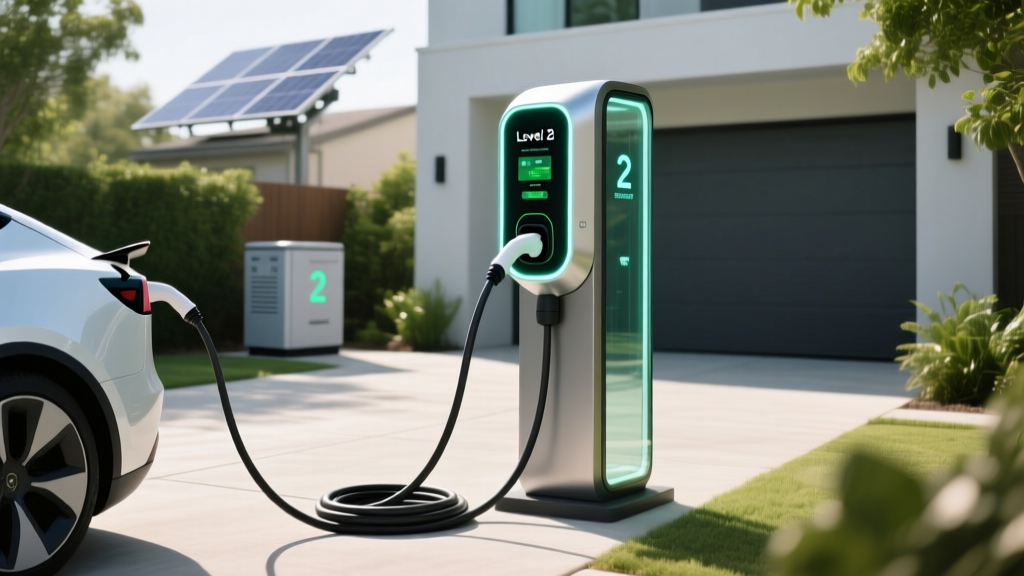
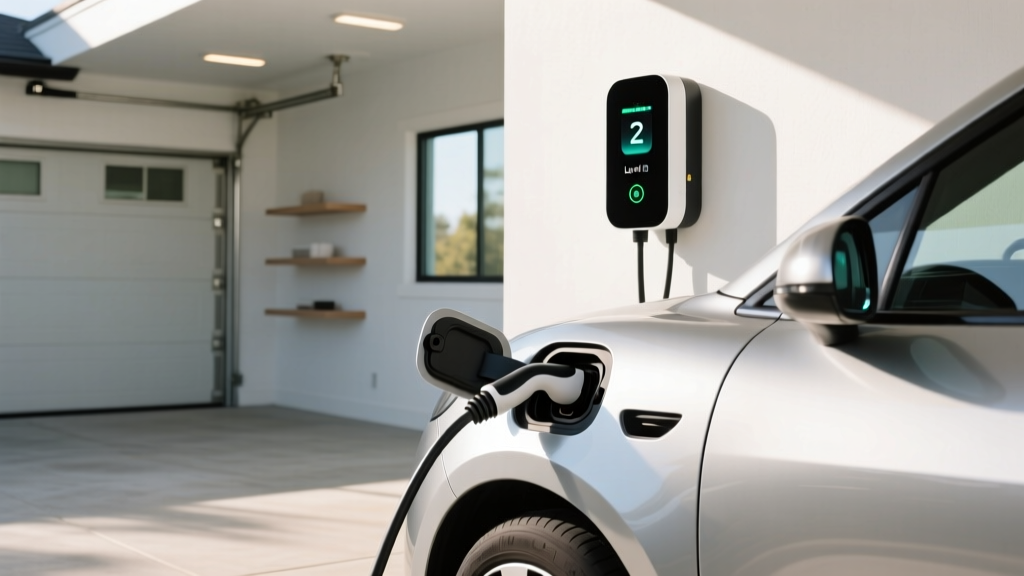
This is where the doge meme anxiety becomes real. Home Level 2 charger installation costs vary enormously based on your electrical panel's condition, the distance from panel to charger location, and local permitting. Here's the honest breakdown:
| Component | Typical Range | Notes |
|---|---|---|
| Level 2 Charger Equipment | $350–$750 | Smart Wi-Fi chargers with 24–48 ft cables |
| Electrician Labor (standard install) | $500–$1,500 | Short run from 200A panel, conduit, mounting |
| Electrical Permit | $50–$250 | Varies by municipality |
| Panel Upgrade (if needed) | $1,500–$4,000 | Required if existing panel is 100A or near capacity |
| Long Wire Runs (100+ ft) | $400–$1,200 additional | Detached garage, far driveway |
Total typical install (no panel upgrade): $900–$2,500
Total with panel upgrade: $2,500–$5,500+
Federal Incentive: The §30C Alternative Fuel Credit
Don't confuse this with the vehicle purchase credit. The IRS §30C Alternative Fuel Vehicle Refueling Property Credit covers up to 30% of home charging equipment and installation costs, capped at $1,000 per tax year. Eligibility depends on your census tract meeting specific low-income or non-urban criteria. Consult a tax professional — rules and qualifying tracts are updated periodically.
Connector Compatibility: NACS, CCS1, and CHAdeMO Explained
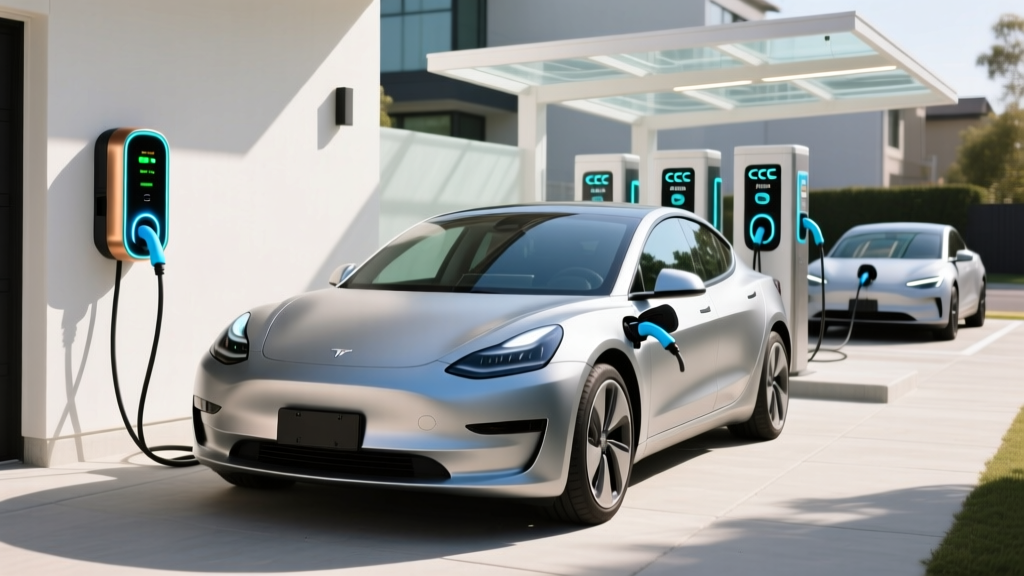
The North American charging landscape has largely consolidated around NACS (North American Charging Standard, originally Tesla's proprietary connector) as of 2025–2026, but you'll still encounter CCS1 and CHAdeMO at existing public stations.
| Connector | Brands Using It Natively | Adapter Needed? |
|---|---|---|
| NACS (Tesla standard) | Tesla, Ford, GM, Rivian, Volvo, Polestar, Mercedes-Benz (2025+), Hyundai/Kia (2026+) | CCS-to-NACS adapters available (~$150–$250) for legacy CCS stations |
| CCS1 | VW ID.4 (2024 and earlier), BMW i4/iX (pre-2025), older Hyundai/Kia models | NACS-to-CCS adapters needed for Tesla Superchargers |
| CHAdeMO | Nissan Leaf (legacy), Mitsubishi Outlander PHEV | No practical adapter to NACS; CHAdeMO stations declining |
What this means in practice: If you're buying a 2026 model-year EV from Ford, GM, Rivian, Hyundai, or Kia, it ships with NACS. You'll have native access to the Tesla Supercharger network (17,000+ stalls in North America) plus Electrify America and other networks adding NACS cables. If you own a CCS-equipped vehicle from 2023–2025, a NACS-to-CCS adapter unlocks Supercharger access, though at slightly reduced peak charge rates due to the adapter's thermal limits.
Cost Per Mile: EV Charging vs. Gasoline
This is where EV ownership economics either shine or disappoint, depending entirely on how and where you charge.
| Scenario | Rate ($/kWh or $/gal) | Cost Per Mile* | Annual Cost (12,000 mi) |
|---|---|---|---|
| Home Level 2, off-peak utility rate | $0.08–$0.14/kWh | $0.024–$0.042 | $288–$504 |
| Home Level 2, standard utility rate | $0.15–$0.22/kWh | $0.045–$0.066 | $540–$792 |
| Public Level 2 (workplace, retail) | $0.20–$0.35/kWh | $0.06–$0.105 | $720–$1,260 |
| DC Fast Charging (Electrify America, EVgo) | $0.35–$0.55/kWh | $0.105–$0.165 | $1,260–$1,980 |
| Gasoline (28 MPG combined, $3.40/gal) | $3.40/gal | $0.121 | $1,452 |
*Based on 3.0 miles per kWh average efficiency (typical for midsize crossover EVs like the Tesla Model Y or Ford Mustang Mach-E). Actual efficiency varies by model, temperature, and driving style.
Equipment Picks: Best Home Level 2 Chargers (2026)
Not all Level 2 chargers are equal. Here are three widely recommended units with specific specs that matter:
ChargePoint Home Flex
- Power Output: Up to 12 kW (50A circuit, 40A continuous)
- Connector: NACS or J1772 (configurable)
- Cable Length: 23 ft
- Smart Features: Wi-Fi, scheduling, Alexa/Google integration, energy tracking
- Price: ~$599
- Best For: Most homeowners wanting a reliable smart charger
Tesla Wall Connector
- Power Output: Up to 11.5 kW (60A circuit, 48A continuous)
- Connector: NACS native (includes J1772 adapter in box)
- Cable Length: 24 ft
- Smart Features: Wi-Fi, OTA updates, power sharing between units, vehicle integration
- Price: ~$475
- Best For: Tesla owners or multi-EV households (power sharing)
Emporia Vue Level 2
- Power Output: Up to 11.5 kW (48A circuit, 40A continuous)
- Connector: J1772 (NACS adapter available)
- Cable Length: 24 ft
- Smart Features: Whole-home energy monitoring integration, solar-aware scheduling, load management
- Price: ~$399
- Best For: Solar-equipped homes and energy-monitoring enthusiasts
Installation requirement for all above: A dedicated 240V circuit (NEMA 14-50 outlet or hardwired). Hardwired installations avoid the GFCI breaker requirement that the National Electrical Code (NEC) mandates for 240V receptacles — saving $60–$120 on the breaker alone and eliminating a common nuisance-trip issue.
Safety, Code, and Installation Essentials
EV charging draws sustained high current for hours — this is fundamentally different from briefly running a dryer or oven. The NEC treats it as a continuous load, requiring specific safety provisions:
- Dedicated circuit: Your Level 2 charger must have its own circuit — not shared with other appliances. A 40A charger needs a 50A circuit (125% rule).
- GFCI protection: Required for all 240V receptacles (NEC 2023+). Hardwired installations are exempt, which is why many electricians recommend hardwiring.
- Outdoor rating: If mounted outside, the charger must carry a NEMA 4 (or IP65+) weather rating. All three chargers above are outdoor-rated.
- Wire gauge: A 50A circuit requires 6 AWG copper wire; a 60A circuit requires 4 AWG. Longer runs may need thicker wire to prevent voltage drop.
- Permit and inspection: Most jurisdictions require an electrical permit and post-installation inspection. Skipping this can void your homeowner's insurance coverage for electrical fires.
Charging Time Examples: 10–80% for Common Battery Sizes
How long does a typical charge session actually take? Here are real-world estimates accounting for charge-curve taper (charging slows significantly above 80% SoC to protect battery health):
| Battery Size | Example Vehicles | Level 2 (11.5 kW) | DC Fast (150 kW peak) | DC Fast (250–350 kW peak) |
|---|---|---|---|---|
| 40 kWh usable | Nissan Leaf, base Mini Cooper SE | ~2.5 hours | ~28 min | ~22 min |
| 65 kWh usable | VW ID.4, base Tesla Model 3 RWD | ~4 hours | ~32 min | ~20 min |
| 80 kWh usable | Ford Mustang Mach-E ER, Tesla Model Y LR | ~5 hours | ~38 min | ~18–22 min |
| 100 kWh usable | Tesla Model S/X, Rivian R1T Max Pack | ~6.5 hours | ~48 min | ~25–30 min |
These times assume battery preconditioning is active (the vehicle's thermal management system warms the battery to optimal charging temperature before arrival at the DC fast charger). Without preconditioning — common in cold weather or when navigating to a non-Tesla charger without route preconditioning — expect 10–80% times to increase by 20–40% due to the battery management system limiting charge rate to protect cell health.
Frequently Asked Questions
How much does it cost to install a home EV charger?
A standard Level 2 home charger installation (equipment + electrician + permit) runs $900–$2,500 if your electrical panel has sufficient capacity. If a 200A panel upgrade is required, total costs rise to $2,500–$5,500. The §30C federal credit may offset up to $1,000 depending on your census tract.
How fast will each charging level add range?
Level 1 (120V) adds 3–5 miles of range per hour. Level 2 (240V) adds 12–75 miles per hour depending on amperage (16A–80A). DC fast charging adds 150+ miles in 15–30 minutes, though peak rates are sustained only in the lower portion of the battery (typically 10–50% SoC) before tapering.
Which connector/charger is compatible with my EV?
2026 model-year EVs from Tesla, Ford, GM, Rivian, Hyundai, Kia, Volvo, and Mercedes use NACS natively. Older CCS1-equipped vehicles (2023–2025 VW, BMW, and some Hyundai/Kia) require a NACS-to-CCS adapter (~$150–$250) for Supercharger access. CHAdeMO (Nissan Leaf) has no practical adapter path and relies on a shrinking public network.
How much does charging cost per mile vs gas?
Home off-peak charging averages $0.03–$0.04 per mile — roughly 70–75% less than gasoline at $3.40/gal and 28 MPG combined. Public DC fast charging at $0.40–$0.55/kWh costs $0.12–$0.17 per mile, which can match or exceed gasoline. The economic advantage of EV ownership is strongest with consistent home or workplace charging.
What electrical upgrades might I need?
Homes with 100A service panels or panels already near capacity may require an upgrade to 200A ($1,500–$4,000). Detached garages or distant parking spots may need long wire runs adding $400–$1,200. A licensed electrician should perform a NEC Article 220 load calculation to determine if your existing panel can support a dedicated 40–60A circuit without upgrades.