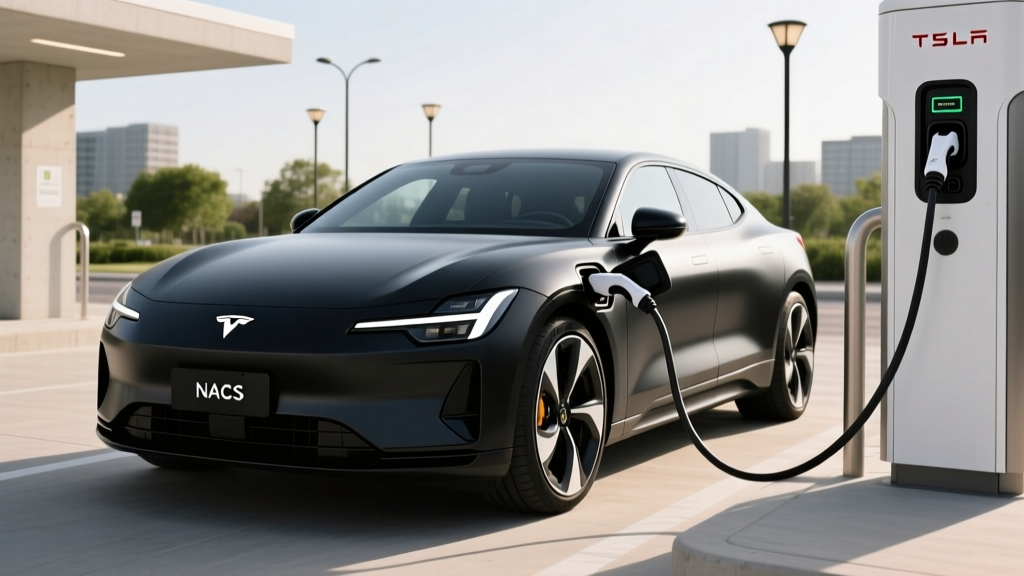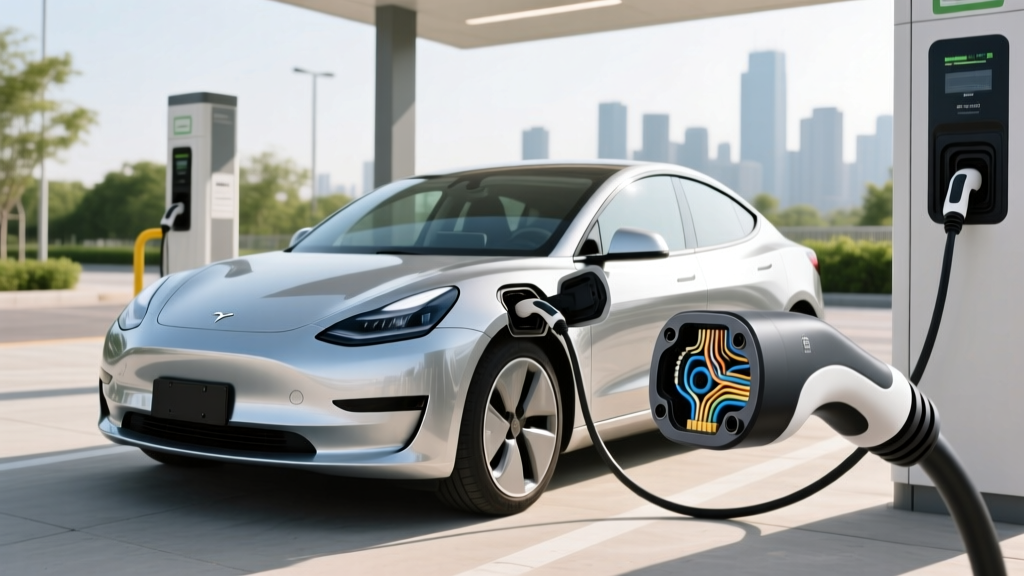
The Short Answer: Superchargers Don't Change Your EV's Efficiency
If you've searched "does a supercharger increase mpg," you're not alone — it's one of the most common questions from drivers transitioning from gas to electric. The answer requires untangling a few concepts that the auto industry and marketing have made unnecessarily confusing.
No, using a Tesla Supercharger (or any DC fast charger) does not increase or decrease your vehicle's MPGe rating or real-world efficiency. Your EV's efficiency — measured in kWh per 100 miles or MPGe — is determined by the vehicle's weight, aerodynamics, drivetrain, and thermal management system, not by how quickly you put electrons into the battery.
What a Supercharger does change is your charging time, not your consumption rate. A Tesla Model Y Long Range AWD will consume roughly 28 kWh per 100 miles (122 MPGe combined per EPA data on fueleconomy.gov) whether you charge at a 120V wall outlet, a 240V home wall connector, or a 250 kW Supercharger. The energy required to move the car one mile stays the same. Only the speed of replenishing that energy changes.
Where the confusion originates: some drivers notice slightly lower range after repeated DC fast charging over months or years. This is related to long-term battery degradation from sustained high-heat charging — not a change in the vehicle's mechanical efficiency. We'll cover that nuance below.
MPGe (miles per gallon equivalent) translates electricity consumption into a gas-familiar metric: 33.7 kWh of electricity = 1 gallon of gasoline. A 2026 Tesla Model Y Long Range rates at 122 MPGe combined. But real-world efficiency varies with speed, temperature, and terrain. Expect 10–20% lower efficiency at sustained 75+ mph highway speeds, and up to 30% range reduction in sub-freezing weather without preconditioning.
Understanding kW vs. kWh: The Most Critical EV Distinction
Before evaluating any charger, you need to internalize the difference between kW (kilowatts) and kWh (kilowatt-hours). Confusing these is the single most common EV literacy gap.
- kW (kilowatts) = power, the rate at which energy flows. Think of it like water pressure from a hose. A 250 kW Supercharger delivers energy very quickly.
- kWh (kilowatt-hours) = energy, the total amount stored or consumed. Think of it like gallons of water in a bucket. A Tesla Model Y Long Range has roughly 75 kWh of usable battery capacity.
Your EV's battery capacity is measured in kWh. Charger output is measured in kW. If you plug into a 11.5 kW Level 2 charger and charge for one hour, you'll add roughly 11.5 kWh to the battery (minus small losses to heat and conversion). If that same vehicle consumes 28 kWh per 100 miles, that one hour of charging adds approximately 41 miles of range.
This relationship is fixed: charge speed (kW) × time = energy added (kWh) ÷ consumption rate (kWh/mi) = miles of range added. The charger's power output affects how fast you add miles, never how many miles each kWh provides.
Charging Levels Explained: Speeds, Power, and Range Added Per Hour
EV charging falls into three categories. Here's how each actually performs in practice:
| Level | Voltage | Typical Power (kW) | Miles of Range Added Per Hour | Best Use Case |
|---|---|---|---|---|
| Level 1 | 120V AC | 1.0–1.4 kW | 3–5 miles/hour | Overnight top-ups, PHEVs, low-mileage drivers |
| Level 2 | 240V AC | 7.2–19.2 kW | 25–70 miles/hour | Daily home charging, workplace, destination |
| DC Fast Charging | 400V–800V DC | 50–350 kW | 150–1,200+ miles/hour (peak) | Road trips, quick top-ups, commercial fleets |
Real-world DC fast charging context: Peak kW ratings are just that — peaks. No EV sustains maximum charge rate from 10% to 80%. A vehicle that peaks at 250 kW (like a Tesla Model 3 Long Range on a V3 Supercharger) will taper significantly above 50–60% state of charge. This is why manufacturers quote 10–80% charge times rather than 0–100%. For the Model 3 LR, that's roughly 15–18 minutes at a V3/V4 Supercharger. For a Hyundai Ioniq 5 with 800V architecture on a 350 kW Electrify America station, expect 10–80% in approximately 18 minutes under ideal thermal conditions.
Cold batteries charge substantially slower. If you arrive at a DC fast charger without preconditioning the battery (most EVs do this automatically when you navigate to a charger), expect peak rates 30–50% below the vehicle's rated maximum until the battery warms up.
Home EV Charger Installation: Requirements, Costs, and Panel Upgrades
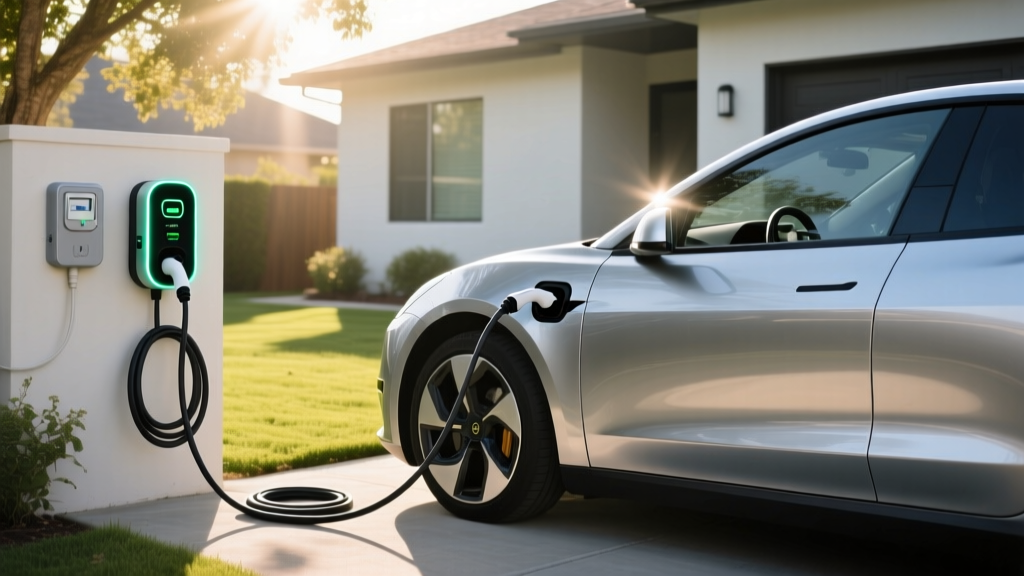
Installing a Level 2 home charger is the single highest-impact upgrade an EV owner can make. Here's what's actually involved.
Electrical Requirements
Most home Level 2 installations use a 240V circuit at 40–60 amps, delivering 9.6–11.5 kW of continuous power (chargers are rated for 80% continuous load on the circuit breaker per the National Electrical Code). A 48-amp charger requires a 60-amp breaker. A 40-amp charger requires a 50-amp breaker.
Your home's electrical panel must have sufficient spare capacity. A licensed electrician will perform a load calculation to determine whether your panel can support the additional circuit. Many homes built after 2000 with 200-amp service can accommodate a Level 2 charger without issue. Older homes with 100-amp panels often cannot.
Panel Upgrade Reality
If your load calculation exceeds your panel's rated capacity, you'll need a panel upgrade — typically from 100A to 200A service. This is the single biggest variable in home charging cost. A panel upgrade adds $1,500–$4,000+ to the project and may require utility coordination and a new meter base.
Alternatives to a full panel upgrade include:
- Load-management devices (like the Emporia Smart Load Management or Tesla Gateway) that dynamically throttle charger output based on real-time household consumption — typically $300–$600 installed
- Lower-amperage circuits — a 24-amp charger on a 30-amp breaker (5.8 kW) adds roughly 20 miles per hour, which is sufficient for drivers who charge 10+ hours overnight and drive under 60 miles daily
Installation Cost Breakdown
| Component | Cost Range | Notes |
|---|---|---|
| Level 2 Charger Equipment | $300–$700 | Varies by brand, power output, cable length, smart features |
| Electrician Labor (standard install) | $500–$1,500 | Assumes panel is nearby, conduit run under 50 ft, no drywall work |
| Permit & Inspection | $50–$300 | Varies by municipality; required for code compliance and insurance |
| Panel Upgrade (if needed) | $1,500–$4,000+ | 100A to 200A service upgrade; includes utility coordination |
| Total (no panel upgrade) | $850–$2,500 | Most common scenario for modern homes |
| Total (with panel upgrade) | $2,350–$6,500+ | Older homes with 100A panels |
Always get a permit. Unpermitted electrical work can void homeowner's insurance claims and create liability issues. Your electrician should pull the permit — not you.
Safety and Code Considerations
- Dedicated circuit: EV chargers must be on a dedicated circuit — no shared outlets or loads
- GFCI protection: NEC 2020 and later require GFCI (ground-fault circuit interrupter) protection for EV charging circuits, especially outdoors. Many modern chargers have built-in GFCI, but your electrician should verify code compliance in your jurisdiction
- Outdoor rating: If installing outside, the charger must carry a NEMA 4 or NEMA 4X rating for weather resistance. Most major chargers (ChargePoint, Emporia, Wallbox, Tesla) are rated for outdoor use
- Hardwired vs. plug: Hardwired installations (directly connected to the circuit) are preferred for chargers above 40 amps and eliminate the failure point of a receptacle. NEMA 14-50 outlets are common for 40-amp chargers but must be installed with a commercial-grade receptacle (Hubbell or Bryant, not residential-grade) to handle sustained high-current draw
Connector Compatibility: NACS, CCS, and CHAdeMO in 2026
The North American charging connector landscape has consolidated dramatically since Tesla opened its Supercharger network and the industry adopted the North American Charging Standard (NACS). Here's where things stand for 2026 model-year vehicles:
| Connector | Brands Using It (2026 Models) | Adapter Needed? |
|---|---|---|
| NACS (Tesla/J3400) | Tesla (all), Ford, GM, Rivian, Volvo, Polestar, Mercedes-Benz, Nissan, Fisker, Lucid (new models) | Older CCS vehicles need CCS-to-NACS adapter (~$200–$300) |
| CCS1 | Hyundai, Kia, BMW, Volkswagen, Audi, Porsche, Subaru, some Stellantis models | NACS-to-CCS adapter available for Supercharger access |
| CHAdeMO | Legacy Nissan Leaf, Mitsubishi Outlander PHEV (discontinued on new models) | No adapter to NACS/CCS; declining infrastructure |
For home Level 2 charging, all EVs sold in North America use the J1772 connector (or NACS, which is backward-compatible with J1772 AC charging via the same pins). Tesla vehicles have used a proprietary connector that accepts J1772 via a small adapter included with every Tesla. Starting with 2025–2026 models, most new EVs ship with NACS ports natively, and J1772-to-NACS adapters are widely available for under $100.
If you're buying a home charger in 2026, choose one with a NACS connector if your vehicle has a NACS port, or a J1772 connector if your vehicle uses J1772. Most charger manufacturers now offer both options at purchase.
Cost to Charge: Home vs. Public vs. Gas Per-Mile Comparison
Charging economics vary enormously by location, utility rate plan, and charger type. Here are representative scenarios using national averages as of early 2026:
| Scenario | Rate ($/kWh) | Vehicle Efficiency | Cost Per Mile | Annual Cost (12,000 mi) |
|---|---|---|---|---|
| Home, off-peak utility rate | $0.08–$0.12 | 3.0 mi/kWh (101 MPGe) | $0.027–$0.040 | $320–$480 |
| Home, standard residential rate | $0.14–$0.18 | 3.0 mi/kWh | $0.047–$0.060 | $560–$720 |
| Public Level 2 (ChargePoint, etc.) | $0.25–$0.49 | 3.0 mi/kWh | $0.083–$0.163 | $1,000–$1,960 |
| DC Fast Charging (Tesla Supercharger) | $0.25–$0.40 | 3.0 mi/kWh | $0.083–$0.133 | $1,000–$1,600 |
| DC Fast Charging (Electrify America, EVgo) | $0.35–$0.55 | 3.0 mi/kWh | $0.117–$0.183 | $1,400–$2,200 |
| Gasoline vehicle (28 MPG combined) | $3.30/gallon | 28 MPG | $0.118 | $1,414 |
The takeaway: Home charging at off-peak rates costs roughly one-quarter to one-third per mile compared to an efficient gas car. Even at standard residential rates, home charging is 40–60% cheaper per mile. Public DC fast charging narrows the gap significantly — in some high-cost markets, frequent DC fast charging can approach or exceed gasoline per-mile costs.
This is why home Level 2 charging is the economic foundation of EV ownership. Drivers who rely exclusively on public fast charging save far less (or nothing) on fuel compared to gas vehicles.
Many utilities offer time-of-use (TOU) plans with deeply discounted overnight rates (often $0.06–$0.10/kWh between 10 PM and 6 AM). Setting your charger to schedule charging during off-peak hours maximizes savings. Most smart chargers and EVs support scheduled charging natively.
Charging Time Examples: 10–80% for Common Battery Sizes
Charging speed depends on three factors: the charger's power output (kW), the vehicle's maximum acceptance rate, and the battery's state of charge and temperature. Here are realistic 10–80% charge times for popular 2026 EVs:
| Vehicle | Usable Battery (kWh) | Max DC Charge Rate (kW) | 10–80% Time (DC Fast) | Level 2 at 11.5 kW (0–100%) |
|---|---|---|---|---|
| Tesla Model 3 Long Range | 75 kWh | 250 kW | ~15–18 min (V3 Supercharger) | ~7 hours |
| Tesla Model Y Long Range | 75 kWh | 250 kW | ~16–20 min (V3 Supercharger) | ~7 hours |
| Hyundai Ioniq 5 (Long Range) | 77.4 kWh | 238 kW (800V) | ~18 min (350 kW station) | ~7.5 hours |
| Ford F-150 Lightning (Extended Range) | 131 kWh | 150 kW | ~41 min (150 kW station) | ~12 hours |
| Chevrolet Equinox EV (3RS) | 85 kWh | 150 kW | ~30 min (150 kW station) | ~8 hours |
| BMW i4 eDrive40 | 81.5 kWh | 200 kW | ~22 min (200 kW station) | ~8 hours |
Why charging slows above 80%: Lithium-ion batteries accept charge fastest at low states of charge. As the battery fills, the battery management system (BMS) reduces current to prevent lithium plating and excess heat. This is called the charge curve taper. The last 20% (80–100%) often takes as long as the first 70%. This is why road-trip strategy focuses on 10–80% charging sessions — you minimize time at the charger by arriving low and leaving at 80%.
Recommended Home Level 2 Chargers for 2026
Here are four chargers we recommend based on reliability, features, and value. All are UL-listed and support scheduled charging.
Tesla Wall Connector (Gen 3)
- Power: Up to 11.5 kW (48A on a 60A circuit)
- Connector: NACS native; J1772 adapter included
- Cable length: 24 feet
- Smart features: Wi-Fi, OTA updates, power sharing between multiple units, load management via Tesla Gateway
- Price: ~$475
- Best for: Tesla owners; NACS-equipped 2025–2026 EVs from Ford, GM, Rivian
ChargePoint Home Flex
- Power: Up to 12 kW (50A adjustable, on a 60A circuit)
- Connector: J1772 or NACS (configurable at purchase)
- Cable length: 23 feet
- Smart features: Wi-Fi, app scheduling, Alexa integration, amperage configurable via app
- Price: ~$599–$649
- Best for: Non-Tesla EVs; flexibility across J1772 and NACS; renters who may move
Emporia Vue EV Charger
- Power: Up to 11.5 kW (48A on a 60A circuit)
- Connector: J1772 or NACS
- Cable length: 24 feet
- Smart features: Wi-Fi, integration with Emporia Vue energy monitor, real-time solar-aware charging, load management
- Price: ~$399
- Best for: Solar-panel owners; budget-conscious buyers; homes needing load management
Wallbox Pulsar Plus
- Power: Up to 11.5 kW (48A on a 60A circuit)
- Connector: J1772 or NACS
- Cable length: 25 feet
- Smart features: Wi-Fi + Bluetooth, app scheduling, Eco-Smart solar integration, Power Sharing, compact form factor
- Price: ~$549–$649
- Best for: Tight garage spaces; solar integration; multi-charger installations
Important note on amperage: Always match the charger's amperage to your circuit. A 48-amp charger requires a 60-amp breaker. A 40-amp charger requires a 50-amp breaker. Your electrician will size the wire gauge accordingly (typically 6 AWG copper for 60A circuits, 8 AWG for 50A).
Does Fast Charging Degrade Your Battery? The Real Data
This is the legitimate concern hiding behind the "does a Supercharger increase MPG" question. While DC fast charging doesn't change your efficiency, exclusive reliance on DC fast charging can accelerate battery degradation over years of ownership.
The mechanism: high-power DC charging generates heat inside the battery cells. Sustained heat above 40°C (104°F) accelerates electrolyte decomposition and solid-electrolyte interphase (SEI) layer growth, which permanently reduces usable capacity. Modern EVs have sophisticated thermal management — liquid cooling systems actively regulate battery temperature during fast charging — but the physics still apply.
Real-world degradation data from fleet studies and owner-reported data (aggregated by sources like Recurrent Auto) shows:
- EVs charged primarily on Level 2 (home/work): ~8–12% capacity loss at 100,000 miles
- EVs charged frequently on DC fast (50%+ of sessions): ~12–18% capacity loss at 100,000 miles
- The difference is real but modest — and most batteries still retain 80%+ capacity well past 150,000 miles
Practical advice: Use Level 2 for daily charging. Use DC fast charging for road trips and occasional needs. Avoid charging to 100% on DC fast unless you need the range immediately. Set your daily charge limit to 80% (or 90% for LFP batteries, which tolerate higher SoC better). This approach minimizes degradation while giving you full access to fast charging when it matters.
All major manufacturers warranty their traction batteries for 8 years / 100,000 miles (10 years / 150,000 miles in California Air Resources Board states) against capacity loss below 70% of original. Per IRS guidelines on irs.gov, the federal §30D tax credit of up to $7,500 (available as a point-of-sale transfer at the dealer for 2026) requires vehicles to meet battery component and critical minerals sourcing thresholds — which indirectly ensures that qualifying vehicles use supply chains with documented battery quality standards.
Frequently Asked Questions
Does a Supercharger increase MPG or MPGe?
No. Your vehicle's MPGe rating is fixed by the EPA based on the vehicle's efficiency in converting stored electricity into motion. Charging speed (whether 1.4 kW Level 1 or 250 kW Supercharger) affects only how quickly you replenish the battery, not how efficiently the vehicle uses that energy. A Tesla Model Y rates at 122 MPGe combined regardless of charging method.
How much does it cost to install a home EV charger?
A standard Level 2 home installation (equipment + electrician + permit) typically costs $850–$2,500 if your electrical panel has sufficient capacity. If a panel upgrade from 100A to 200A is required, total costs range from $2,350–$6,500+. Get at least three quotes from licensed electricians and always pull a permit.
How fast will each charging level add range?
Level 1 (120V) adds 3–5 miles per hour. Level 2 (240V, 48A) adds roughly 35–45 miles per hour for a typical mid-size EV. DC fast charging adds 150–1,200+ miles per hour at peak rates, but real sessions are measured in 10–80% charge times of 15–45 minutes depending on the vehicle and charger.
Which connector does my EV need?
For 2026 models: Tesla, Ford, GM, Rivian, Volvo, and Polestar use NACS. Hyundai, Kia, BMW, and Volkswagen still use CCS1. For home Level 2, all vehicles accept J1772 or NACS (which handles AC charging natively). Check your vehicle's charge port — if it's a slim Tesla-style connector, you need NACS; if it's the wider CCS combo plug, you need J1772 (with a CCS adapter for DC fast charging).
How much does charging cost per mile compared to gas?
Home charging at off-peak rates costs $0.03–$0.04 per mile for a typical EV — about one-third the cost of a 28 MPG gas car at $3.30/gallon ($0.12/mile). Public DC fast charging costs $0.08–$0.18 per mile, narrowing the savings gap. The more you charge at home, the more you save.
What electrical upgrades might I need?
The most common upgrade is a panel capacity increase (100A to 200A), needed in older homes with high existing electrical loads. Alternatives include load-management devices ($300–$600) that throttle the charger when household demand is high, or simply installing a lower-amperage circuit (24A/30A breaker) that adds ~20 miles per hour — sufficient for most daily driving.
Is it safe to charge an EV in the rain or snow?
Yes. All UL-listed EV chargers with NEMA 4 or 4X ratings are designed for outdoor use in rain, snow, and dust. The connector and vehicle charge port are engineered to prevent water ingress during connection. Never use a damaged cable or a charger with visible corrosion.