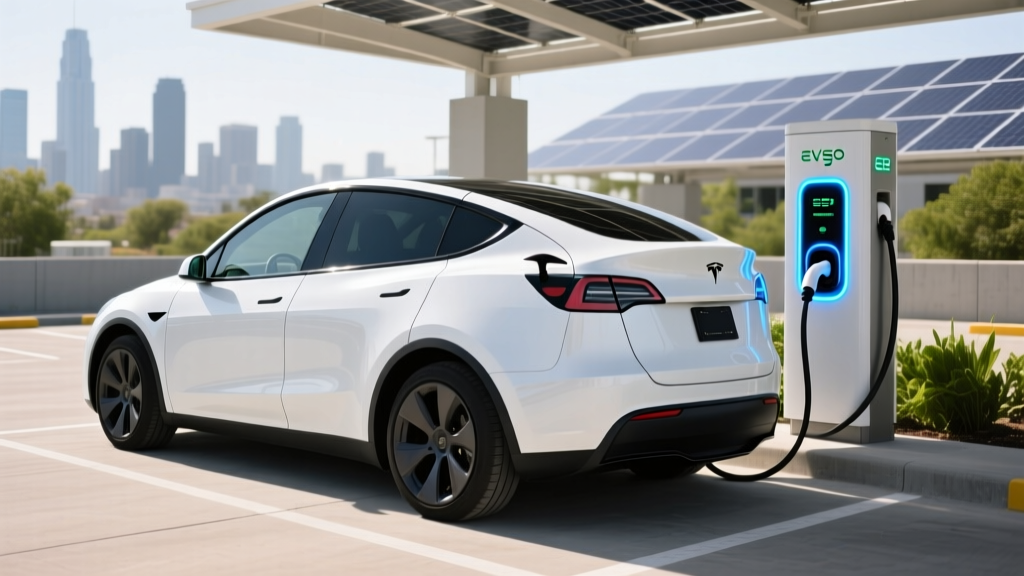
If you own a Tesla — or are about to buy one — and you're wondering whether you can use EVgo's public charging network, the short answer is yes. As of 2026, EVgo supports Tesla vehicles through two paths: the native North American Charging Standard (NACS) connector now widely deployed across EVgo's fleet, and the legacy CCS1 connector paired with a Tesla CCS adapter. But compatibility is only the starting question. The real decisions involve which EVgo chargers you'll actually encounter, how fast they'll charge your specific Tesla model, what you'll pay per kWh, and whether you need any hardware or app setup before you pull up to a stall.
This guide breaks down everything a Tesla owner needs to know about using EVgo — connector logistics, real-world charge speeds, cost-per-mile math, and the home-charging setup that makes public charging a backup rather than a daily necessity.
Does EVgo Work With Tesla? The Connector Answer
Tesla vehicles use the NACS (North American Charging Standard) connector — the same port Tesla has used since the Model S launched, now formally adopted as an industry standard (SAE J3400). EVgo has been retrofitting its network with native NACS cables since late 2024, and by 2026 the majority of EVgo's new and upgraded DC fast-charging stations offer NACS connectors alongside CCS1.
Here's the practical reality depending on your Tesla model year:
- 2025–2026 Tesla models (Model 3, Model Y, refreshed Model S/X): These ship with NACS ports. If the EVgo station has a NACS cable, plug in directly — no adapter required.
- Pre-2025 Tesla models: These also have the Tesla/NACS port. You can use any EVgo stall with a NACS cable. If only a CCS1 cable is available, you'll need a CCS-to-Tesla adapter (Tesla sells one for ~$175; third-party options like Lectron run ~$100–$140).
- Non-Tesla EVs with NACS ports (2025+ Ford, Rivian, GM, etc.): Same logic — plug directly into EVgo's NACS cables.
The EVgo app shows connector availability at each station. Before driving to a location, filter for "NACS" or "Tesla" to confirm a compatible cable is on-site. Not every legacy EVgo station has been upgraded yet, particularly in rural corridors.
| Connector | Tesla Vehicles | Non-Tesla NACS EVs | CCS1 EVs | CHAdeMO EVs |
|---|---|---|---|---|
| NACS (native) | Direct plug-in | Direct plug-in | Needs NACS-to-CCS adapter | Not compatible |
| CCS1 | Needs CCS-to-Tesla adapter | Needs NACS-to-CCS adapter | Direct plug-in | Not compatible |
| CHAdeMO | Not compatible | Not compatible | Not compatible | Direct plug-in |
Note: CHAdeMO is effectively phased out for new vehicles. The Nissan Leaf remains the most common CHAdeMO vehicle on US roads, and EVgo is gradually retiring CHAdeMO connectors at upgraded sites.
How Fast Will EVgo Charge a Tesla? DC Fast-Charging Speeds
EVgo operates a mix of DC fast chargers ranging from 50 kW legacy units to 350 kW ultra-fast stations. The speed you actually get depends on three factors: the charger's maximum output, your Tesla's onboard charge acceptance rate, and your battery's state of charge (SoC) at plug-in.
Here's what to expect at common EVgo charger tiers with a Tesla Model Y Long Range (82 kWh usable battery, NMC chemistry):
| Level | Power (kW) | Voltage / Amperage | Miles of Range Added per Hour | Typical Use Case |
|---|---|---|---|---|
| Level 1 (120V) | 1.4–1.9 kW | 120V / 12–16A | 3–5 mi/hr | Emergency / overnight trickle |
| Level 2 (240V) | 7.2–19.2 kW | 240V / 30–80A | 20–55 mi/hr | Home daily charging, workplace |
| DC Fast (50 kW) | 50 kW | 200–500V DC | ~120–150 mi/hr | Older public stations |
| DC Fast (150 kW) | 150 kW | 200–500V DC | ~350–500 mi/hr | Common EVgo stations |
| DC Fast (350 kW) | 350 kW | 200–920V DC | ~600–900 mi/hr (peak) | EVgo flagship / highway corridor |
Critical nuance — the charge curve: DC fast chargers don't deliver peak kW for the entire session. A 150 kW EVgo charger might deliver 150 kW to a Tesla Model Y from 10% to roughly 45% SoC, then taper to ~100 kW through 65%, and drop to ~40 kW above 80%. This is why manufacturers quote 10–80% times rather than 0–100%.
Real-world 10–80% charge times for common Tesla models at a 150 kW EVgo station:
- Model 3 RWD (60 kWh LFP): ~28–32 minutes (LFP batteries accept charge more linearly; less taper)
- Model Y Long Range (82 kWh NMC): ~25–30 minutes
- Model S Plaid (100 kWh NMC): ~28–35 minutes
At a 350 kW EVgo station, the Model Y Long Range can peak around 250 kW (its maximum acceptance), shaving 10–80% to roughly 18–22 minutes. The Model 3 RWD with LFP peaks around 170 kW, so a 350 kW stall won't charge it meaningfully faster than a 180 kW stall.
Preconditioning matters. Navigate to the EVgo station using your Tesla's built-in navigation, and the car will automatically warm or cool the battery to optimal temperature for fast charging. Skipping preconditioning — especially in cold weather — can add 5–10 minutes to your session and reduce peak kW by 20–40%.
How Much Does Charging at EVgo Cost? Per-kWh and Per-Mile Breakdown
EVgo pricing varies by location, time of day, and membership tier. As of early 2026, typical EVgo rates for DC fast charging in major US metro areas:
- Guest (no membership): $0.43–$0.58/kWh
- EVgo Plus™ member ($4.99/month): $0.34–$0.48/kWh
- Idle fee: $0.25/minute after charge completes (don't linger)
Some EVgo stations offer Time-of-Use (TOU) pricing with off-peak rates 15–25% lower, typically between 9 PM and 6 AM.
To put this in perspective, let's compare charging cost per mile against gasoline for a Tesla Model Y Long Range (rated at 28 kWh/100 mi, or roughly 3.6 mi/kWh) versus a comparable gas SUV averaging 26 MPG combined:
| Scenario | Rate | Cost per Mile (Model Y) | Cost per Mile (Gas SUV @ 26 MPG) |
|---|---|---|---|
| Home charging (off-peak) | $0.12/kWh | $0.034 | $0.135 (at $3.50/gal) |
| Home charging (peak) | $0.22/kWh | $0.062 | |
| EVgo Plus (DC fast) | $0.40/kWh | $0.112 | |
| EVgo Guest (DC fast) | $0.52/kWh | $0.146 |
The takeaway: home charging is dramatically cheaper than gas. Public DC fast charging at EVgo guest rates can actually exceed the per-mile cost of a fuel-efficient gas car. This is why home Level 2 charging is the economic backbone of EV ownership — public fast charging is for road trips and top-ups, not daily fueling strategy.
For the most current EVgo pricing in your area, check the EVgo pricing page or use the EVgo app, which shows real-time per-kWh rates at each station.
Setting Up EVgo for Tesla: App, Accounts, and Plug & Charge
Using EVgo with a Tesla is straightforward, but a few setup steps will save you frustration at the stall:
- Download the EVgo app and create an account. You can browse stations, filter by NACS connector, and initiate sessions.
- Consider EVgo Plus™ if you'll use the network more than twice a month — the $4.99/month fee typically pays for itself in two sessions.
- Plug & Charge (Autocharge+): EVgo supports automatic session initiation for compatible vehicles. Tesla's NACS implementation supports Plug & Charge on EVgo's updated stations — just plug in and the session starts automatically. Enable this in the EVgo app under "Vehicle Settings."
- Tesla in-app charging: Tesla's own app also shows third-party chargers (including EVgo) but initiating a session still requires the EVgo app or Plug & Charge.
One practical tip: keep a CCS-to-Tesla adapter in your frunk even if you primarily use NACS stations. Some older EVgo locations — particularly those installed before 2024 — may still only have CCS1 cables. The adapter weighs under 2 lbs and costs ~$100–$175.
Home Charging Setup: The Foundation of Tesla Ownership
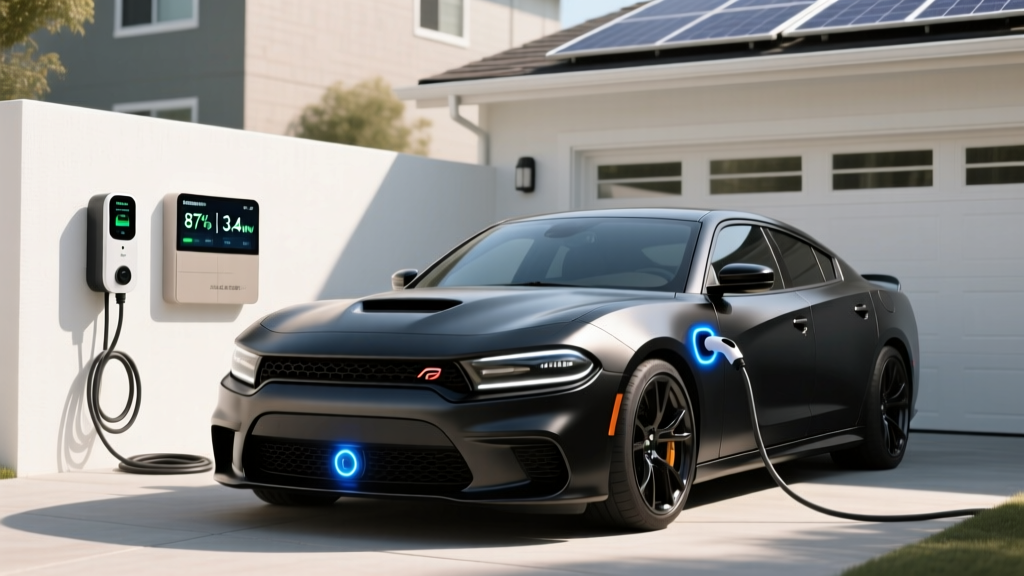
Public networks like EVgo are essential for road trips, but 80–90% of Tesla charging happens at home. Getting your home Level 2 setup right is the single highest-impact ownership decision you'll make.
Electrical Requirements
A Level 2 home charger for a Tesla requires a 240-volt dedicated circuit. The most common configurations:
- NEMA 14-50 outlet (50A circuit, 40A continuous): The most popular setup. Delivers up to 9.6 kW (approximately 30–35 miles of range per hour for a Model Y). This is what Tesla's Mobile Connector and Wall Connector are designed for.
- Hardwired 60A circuit (48A continuous): Required for Tesla's Wall Connector at its maximum 11.5 kW output. Delivers ~40–44 miles of range per hour.
- Hardwired 80A circuit (64A continuous): For the Wall Connector at 19.2 kW — useful if you have a high-mileage daily commute or want to charge a large battery (Cybertruck, Model S) faster overnight.
Do You Need a Panel Upgrade?
This is the variable that catches many homeowners off guard. Your electrical panel has a maximum amperage rating (commonly 100A, 150A, or 200A in US homes). Adding a 50A or 60A dedicated EV circuit consumes a significant chunk of that capacity. If your panel is already near capacity — running central AC, electric oven, electric dryer, and an electric water heater — you may need a panel upgrade to 200A to safely accommodate an EV charger.
Signs you might need a panel upgrade:
- Your panel is rated 100A or less
- Your home has all-electric appliances (heat, water, cooking, dryer)
- An electrician's load calculation shows insufficient headroom
- Your panel is a legacy brand (Federal Pacific, Zinsco) that needs replacement regardless
A panel upgrade adds $1,500–$4,000 to your project. It's a real cost, but it also increases your home's electrical capacity for future needs (heat pumps, solar, second EV).
Installation Cost Breakdown
| Component | Simple Install (outlet near panel) | Moderate Install (50–80 ft run) | Complex Install (panel upgrade + long run) |
|---|---|---|---|
| Level 2 Charger (equipment) | $250–$600 | $250–$600 | $250–$600 |
| Electrical materials (wire, conduit, breaker) | $50–$150 | $200–$500 | $400–$800 |
| Electrician labor | $300–$600 | $600–$1,500 | $1,200–$2,500 |
| Permit & inspection | $50–$200 | $50–$200 | $100–$300 |
| Panel upgrade (if needed) | $0 | $0 | $1,500–$4,000 |
| Total | $650–$1,550 | $1,100–$2,800 | $3,450–$8,200 |
The national median for a straightforward NEMA 14-50 install with an existing 200A panel is roughly $1,200–$1,800 all-in. Get at least three quotes from licensed electricians — pricing varies significantly by region and contractor.
Federal incentive: The IRS §30C Alternative Fuel Vehicle Refueling Property Credit offers up to $1,000 (30% of equipment + installation cost, capped at $1,000) for home charger installations in qualifying census tracts. Check IRS guidance for your zip code eligibility.
Equipment Recommendations: Which Home Charger to Buy for a Tesla
Tesla owners have excellent home-charging options. Here are three proven picks across price tiers, all with NACS connectors (or available with NACS):
Tesla Wall Connector (Best Overall for Tesla Owners)
- Power output: Up to 11.5 kW (48A) on a 60A circuit; up to 19.2 kW (80A) on a 100A circuit — though the latter requires a hardwired install on a 100A breaker, uncommon in residential
- Connector: Native NACS (Tesla plug)
- Cable length: 24 ft
- Smart features: Wi-Fi connectivity, over-the-air firmware updates, load sharing (install two on one circuit), Power-Share with Tesla Powerwall, access control
- Price: ~$475
- Verdict: The default choice for Tesla-only households. Seamless integration, reliable, and supports the fastest Level 2 speeds most homes can deliver.
ChargePoint Home Flex (Best Multi-Vehicle Household)
- Power output: Up to 12 kW (50A) on a NEMA 14-50; up to 19.2 kW (80A) hardwired on a 100A circuit
- Connector: Available with NACS or CCS1 (J1772) plug; NACS version launched late 2024
- Cable length: 23 ft
- Smart features: Wi-Fi, ChargePoint app scheduling, Alexa integration, detailed energy reporting, amperage adjustable via DIP switch
- Price: ~$599–$699
- Verdict: Ideal if you have a Tesla and a non-Tesla EV, or plan to switch brands. The adjustable amperage lets you match your circuit exactly.
Tesla Mobile Connector (Budget / Renter-Friendly)
- Power output: Up to 7.2 kW (32A) on a NEMA 14-50 outlet; 1.4 kW on a standard 120V outlet
- Connector: Native NACS (comes with Tesla vehicles)
- Cable length: 20 ft
- Smart features: None (no Wi-Fi, no scheduling beyond the car's built-in timer)
- Price: ~$200 (included with new Tesla vehicles as of 2025)
- Verdict: Adequate for lower-mileage drivers who can recharge overnight. At 7.2 kW, you'll add ~22 miles of range per hour — enough for most daily commutes if you plug in for 8–10 hours. Not ideal for high-mileage days or larger batteries.
Safety, Code, and Installation Best Practices
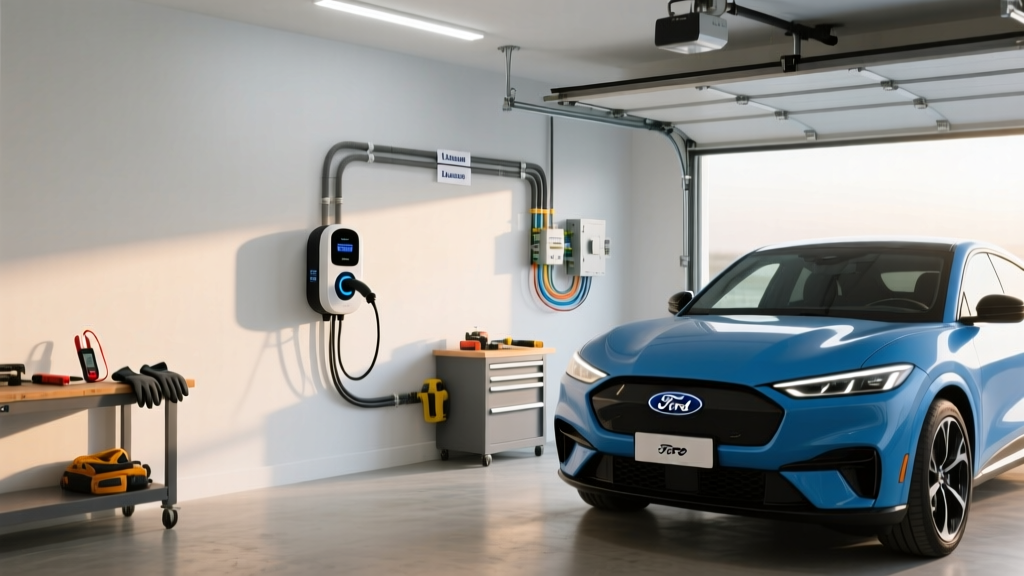
EV charging draws sustained high current for hours — this is a fundamentally different electrical load than intermittent appliances. Proper installation isn't optional:
- Dedicated circuit: Your EV charger must be on its own dedicated breaker. Never share a circuit with other high-draw appliances.
- GFCI protection: The 2023 NEC (National Electrical Code) and most 2026 local adoptions require GFCI (Ground Fault Circuit Interrupter) protection for outdoor receptacles used for EV charging. Hardwired chargers with built-in ground-fault protection (like the Tesla Wall Connector) satisfy this requirement.
- Outdoor rating: If your charger or outlet is outdoors, it must be rated for wet locations (NEMA 4 or NEMA 4X enclosure). The Tesla Wall Connector is rated NEMA 4 (indoor/outdoor).
- Wire gauge: A 50A circuit requires minimum 6 AWG copper wire; a 60A circuit requires 4 AWG. Your electrician will size this correctly, but verify — undersized wire is a fire hazard.
- Permit and inspection: Most jurisdictions require an electrical permit for new 240V circuits. The inspection ensures the work meets NEC and local code. Don't skip this — unpermitted work can void homeowners insurance.
- Load management: If your panel is tight, consider a smart load-management system (like the Emporia Load Management or Tesla Wall Connector's built-in load sharing) that dynamically reduces charger amperage when other appliances are drawing heavily.
Always hire a licensed electrician. The National Electrical Code (NEC) Article 625 specifically governs EV charging installations, and your electrician should be familiar with it.
Frequently Asked Questions
Can I use EVgo without downloading the app?
Technically yes — most EVgo stations accept credit card tap-to-pay at the terminal. However, guest rates are higher, and you won't see real-time connector availability or station status. The app is strongly recommended, especially to confirm a NACS connector is active at your destination before you drive there.
Does EVgo charge Tesla vehicles at full speed?
EVgo will charge your Tesla up to the lower of two limits: the station's maximum output or your vehicle's maximum acceptance rate. A Tesla Model Y Long Range peaks at ~250 kW. At a 350 kW EVgo station, you'll see ~250 kW peak. At a 150 kW station, you're capped at 150 kW. The car's battery management system controls the actual draw — EVgo cannot force more power than the vehicle requests.
Is it cheaper to charge at EVgo or at home?
Home charging is almost always cheaper. At the US average residential rate of ~$0.16/kWh (per EIA data), home charging costs roughly $0.045/mile for a Model Y. EVgo's typical DC fast rate of $0.40–$0.52/kWh works out to $0.11–$0.15/mile — roughly 2.5–3x more. Reserve EVgo for road trips and occasional top-ups.
Do I need an adapter to use EVgo with a 2023 Tesla Model 3?
It depends on the station. If the EVgo location has a NACS cable, no adapter needed — your 2023 Model 3 has a native Tesla/NACS port. If the station only has CCS1 cables, you'll need a CCS-to-Tesla adapter (available from Tesla or third-party manufacturers). Check the EVgo app for connector types at each location.
How long does it take to charge a Tesla Model 3 from 10% to 80% at EVgo?
At a 150 kW EVgo station, expect roughly 28–32 minutes for a Model 3 RWD (60 kWh LFP battery) and 22–28 minutes for a Model 3 Long Range (82 kWh NMC). At a 350 kW station, the Long Range drops to ~18–22 minutes (peaking at ~250 kW). The LFP Model 3 peaks at ~170 kW, so the 350 kW stall won't significantly reduce its charge time.
Can EVgo handle Tesla's Supercharger-level speeds?
EVgo's newest 350 kW stations are competitive with Tesla V3 Superchargers (250 kW) and even Tesla V4 Superchargers (up to 350 kW for Cybertruck). In practice, most Tesla vehicles max out around 250 kW regardless of the station's capability, so a 350 kW EVgo stall and a 250 kW Tesla Supercharger will deliver very similar real-world charge times for Model 3/Y.