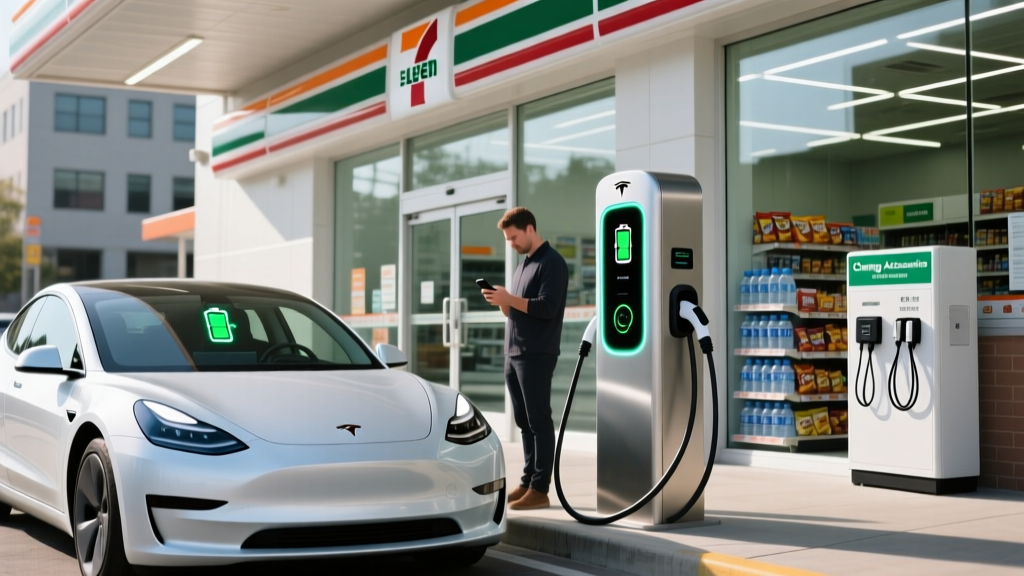
If you've ever stood in a 7-Eleven at 11 p.m. with a dying phone, the answer to does 711 sell phone chargers is yes — most locations carry Lightning, USB-C, and micro-USB cables, plus wall adapters and power banks in the electronics aisle. But for EV drivers, the more interesting question is what else you can charge at a 7-Eleven, and how that compares to charging at home. This guide covers both.
What 7-Eleven Actually Sells for Charging (Phones and EVs)
Phone-charging inventory at 7-Eleven typically includes:
- USB-C to USB-C cables (3ft/6ft, $12–$22)
- Lightning cables ($14–$24, MFi-certified brands like Belkin)
- 20W–30W USB-C wall adapters ($18–$35)
- Portable power banks, 10,000–20,000 mAh ($25–$55)
- Car chargers with USB-A and USB-C ports ($15–$30)
Pricing runs 30–50% above big-box retail — the convenience premium. Inventory varies by franchise, so call ahead if you need a specific connector.
On the EV side, 7-Eleven has been quietly expanding its DC fast-charging footprint. The chain partnered with EVgo and EVCS to install chargers at select locations, primarily in California, Texas, and the Northeast corridor. These are typically 50–150 kW DC fast chargers — adequate for a 15–25 minute top-up while you grab food, but not a substitute for a home Level 2 setup. More on that below.
The Three EV Charging Levels: Speed, Cost, and Use Case
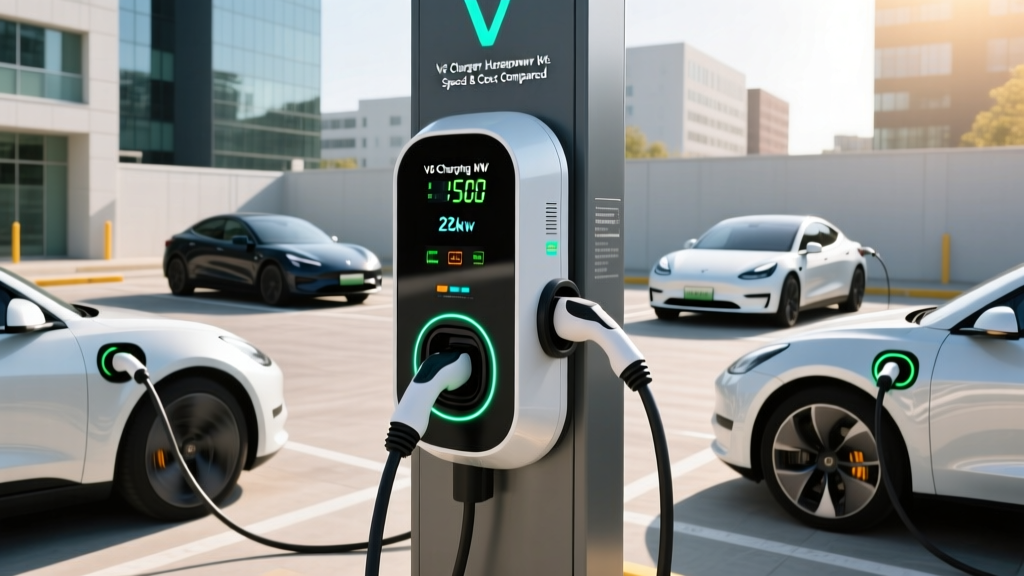
Before deciding where to charge, you need to understand the three charging tiers. The distinction between kW (power, or charge rate) and kWh (energy, or battery capacity) is non-negotiable — kW is how fast you're filling, kWh is how big the tank is.
| Level | Voltage | Peak Power (kW) | Miles of Range Added per Hour | Typical Use Case |
|---|---|---|---|---|
| Level 1 (120V) | 120V AC | 1.2–1.8 kW | 3–5 mi/hr | Overnight trickle; PHEVs, low-mileage drivers |
| Level 2 (240V) | 240V AC | 7.2–19.2 kW | 20–60 mi/hr | Daily home/work charging; the EV ownership standard |
| DC Fast (Level 3) | 400–800V DC | 50–350 kW | 150–1,000+ mi/hr (peak) | Road trips, quick top-ups; not for daily use |
Real-World Charging Time Examples
Charging times depend on battery size and the charger's sustained rate, not just the peak kW number (chargers taper significantly above 80% State of Charge to protect the battery). Here are realistic 10–80% times for common battery sizes:
- 60 kWh battery (e.g., base Tesla Model 3 RWD): ~28 min at 150 kW DCFC; ~7.5 hours at 7.7 kW Level 2; ~38 hours Level 1
- 85 kWh battery (e.g., Hyundai Ioniq 5 Long Range): ~22 min at 240 kW DCFC; ~9.5 hours at 9.6 kW Level 2; ~52 hours Level 1
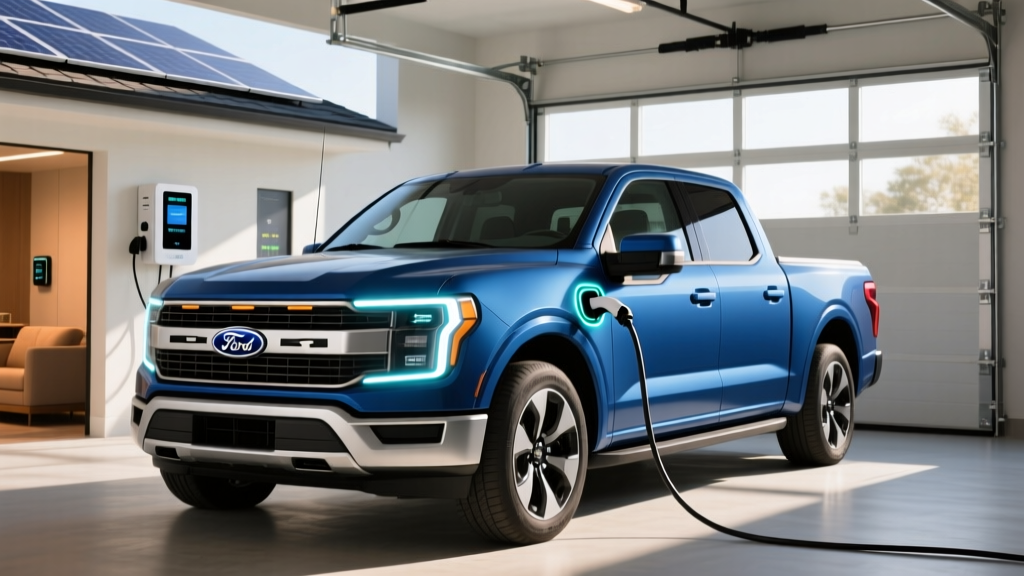
- 131 kWh battery (e.g., Ford F-150 Lightning Extended Range): ~42 min at 150 kW DCFC; ~14 hours at 9.6 kW Level 2; impractical on Level 1
The 10–80% window matters because the final 20% can take nearly as long as the first 80%. Lithium-ion batteries accept charge fastest at low State of Charge; above 80%, the Battery Management System (BMS) throttles current to prevent lithium plating and thermal stress.
Home EV Charger Installation: What It Actually Costs
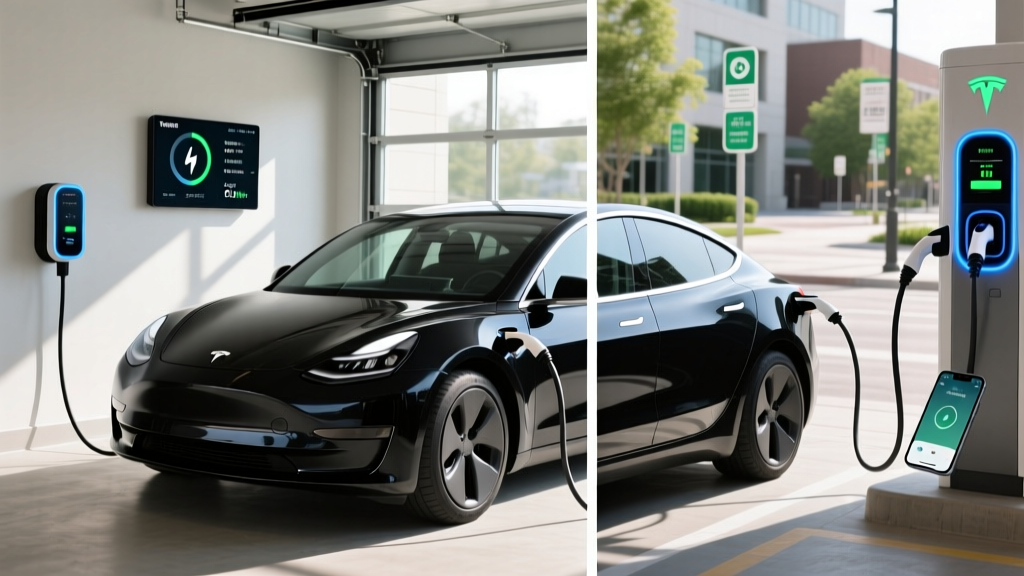
Home Level 2 charging is the backbone of practical EV ownership — it's cheaper per kWh, more reliable than public chargers, and lets you wake up to a full battery every morning. But the install cost varies enormously based on your home's electrical panel.
Electrical Requirements
A standard home Level 2 charger requires:
- Voltage: 240V (the same as a dryer or oven circuit)
- Amperage: 40A or 48A circuit (for 32A or 40A continuous charging, respectively — the National Electrical Code requires circuits rated at 125% of continuous load)
- Dedicated circuit: The charger must have its own breaker; it cannot share with other appliances
- GFCI protection: Required by NEC 2020+ for EV outlets in garages and outdoors
Do You Need a Panel Upgrade?
This is the single biggest cost variable. Most modern homes with 200A service can accommodate a 40–48A EV circuit without a panel upgrade. But if your home has:
- 100A service (common in homes built before 1990)
- An already-loaded panel (electric range, dryer, HVAC, water heater all on 240V circuits)
- Less than 4–6 open breaker slots
...you may need a panel upgrade to 200A or a smart load-management device like the Emporia Smart Load Manager, which dynamically shares capacity between the EV charger and other circuits. This avoids a panel upgrade but costs $300–$500 for the hardware.
| Component | Low Estimate | High Estimate | Notes |
|---|---|---|---|
| Level 2 charger hardware | $300 | $700 | 32A–48A hardwired or NEMA 14-50 plug |
| Electrician labor | $400 | $1,500 | Depends on run length from panel to garage/driveway |
| Permit fees | $50 | $250 | Varies by municipality; required for inspection |
| Panel upgrade (if needed) | $1,500 | $3,500 | 200A upgrade; only ~25% of installs need this |
| Load-management device (alternative) | $300 | $500 | Emporia, Span, or similar; avoids panel swap |
| Total (no panel upgrade) | $750 | $2,450 | Typical suburban home with 200A service |
| Total (with panel upgrade) | $2,250 | $5,950 | Older homes with 100A service |
The federal Residential Clean Energy Credit (IRS §25D) covers 30% of EV charger hardware and installation costs, up to $1,000, through 2032. Some states and utilities add additional rebates — check your local utility and AFDC state incentive database for specifics.
Connector Compatibility: Which Plug Does Your EV Use?
The North American charging landscape has consolidated heavily toward NACS (the Tesla-designed connector, now formalized as SAE J3400). But you'll still encounter CCS1 and CHAdeMO in the wild, especially at older public stations.
| Connector | Brands Using It | Notes |
|---|---|---|
| NACS (J3400) | Tesla (all), Ford, GM, Rivian, Hyundai/Kia, BMW, Mercedes, Volvo, Polestar, Nissan (2026+) | Now the dominant standard; access to Tesla Supercharger network natively or via adapter |
| CCS1 | VW, Audi, some older Ford/GM/Hyundai models (pre-2025) | Still widely available at Electrify America, EVgo; adapters to NACS available ($150–$250) |
| CHAdeMO | Nissan Leaf (discontinued 2025), Mitsubishi Outlander PHEV (older) | Legacy standard; declining infrastructure |
Adapter reality check: If you drive a CCS1-equipped EV, a NACS-to-CCS adapter ($150–$250 from Ford, Tesla, or Lectron) unlocks the Supercharger network — over 25,000 stalls in North America. This is the single most impactful accessory for road-trip charging reliability.
Cost to Charge: Home vs. Public vs. Gas
Electricity pricing varies dramatically by location, time of day, and charger type. Here's how the economics shake out for a typical midsize EV averaging 3.0 miles per kWh (about 115 MPGe combined):
| Charging Scenario | Typical $/kWh | Cost per Mile | Equivalent Gas MPG Cost |
|---|---|---|---|
| Home, off-peak (utility rate) | $0.08–$0.14 | $0.03–$0.05 | Like $0.90–$1.50/gal gas |
| Home, standard rate | $0.13–$0.18 | $0.04–$0.06 | Like $1.20–$1.80/gal gas |
| Public Level 2 (ChargePoint, etc.) | $0.20–$0.35 | $0.07–$0.12 | Like $2.10–$3.60/gal gas |
| DC Fast (Electrify America, EVgo) | $0.35–$0.55 | $0.12–$0.18 | Like $3.60–$5.40/gal gas |
| Gasoline (2026 national avg ~$3.40/gal) | — | $0.11 (at 30 MPG) | $0.11/mile baseline |
The takeaway: Home charging is almost always cheaper than gas. Public DC fast charging can actually exceed the cost of gasoline per mile — which is why home Level 2 installation is the single most important economic decision an EV owner makes. Use DCFC for road trips, not daily fueling.
Recommended Home Level 2 Chargers (2026)
Here are four chargers we'd recommend based on reliability, power output, smart features, and price. All support the NACS connector natively or via included adapter.
Emporia Level 2 Smart Charger
- Power output: 48A (11.5 kW on 240V)
- Connector: NACS native
- Cable length: 24 ft
- Smart features: Wi-Fi, scheduling, solar integration, load management with Emporia panel monitor
- Price: ~$399
- Best for: Budget-conscious buyers with solar panels or who want load management without a panel upgrade
ChargePoint Home Flex
- Power output: Up to 50A (12 kW) — adjustable via DIP switch
- Connector: NACS native (2025+ models)
- Cable length: 23 ft
- Smart features: Wi-Fi, app scheduling, Alexa/Google integration, amperage configurable to match your circuit
- Price: ~$549
- Best for: Flexibility — you can set it to 32A, 40A, or 48A depending on your electrical capacity
Tesla Wall Connector (Gen 4)
- Power output: 48A (11.5 kW)
- Connector: NACS native
- Cable length: 24 ft
- Smart features: Wi-Fi, OTA updates, power-sharing between two units on one circuit, Tesla app integration
- Price: ~$475
- Best for: Tesla owners or multi-EV households (power-sharing feature is unique)
Grizzl-E Smart
- Power output: 40A (9.6 kW)
- Connector: NACS or J1772 (specify at purchase)
- Cable length: 24 ft
- Smart features: OCPP-compatible, works with multiple apps, extreme cold-rated (-40°F)
- Price: ~$449
- Best for: Cold-climate owners — Canadian-built, tested to -40°F, with a rugged aluminum case
Safety and Code Considerations
EV chargers draw significant continuous current — more than most household appliances. Cutting corners on installation is a fire hazard. Here's what to require from your electrician:
- Dedicated circuit: No sharing with dryers, HVAC, or other 240V loads
- Hardwired vs. plug: Hardwired connections are preferred for 48A+ chargers (no plug to loosen over time). If using a NEMA 14-50 outlet, ensure it's an industrial-grade receptacle (Hubbell or Bryant — not the $10 hardware-store version, which has melted under sustained EV load)
- GFCI breaker: Required by NEC 625 for any EV outlet; hardwired units may be exempt in some jurisdictions
- Outdoor rating: If mounting outside, the charger must be NEMA 4-rated (rain/sleet-proof). All four chargers above meet this standard
- Permit and inspection: Always pull a permit. An unpermitted install can void your homeowner's insurance and cause problems at resale
Frequently Asked Questions
How much does it cost to install a home EV charger?
A typical installation with an existing 200A panel runs $750–$2,450 total (charger + electrician + permit). If your home needs a panel upgrade from 100A to 200A, add $1,500–$3,500. The federal §25D credit covers 30% up to $1,000.
How fast will each charging level add range?
Level 1 adds 3–5 miles per hour. Level 2 adds 20–60 miles per hour depending on amperage. DC fast charging can add 150–1,000+ miles per hour at peak, but real-world sessions are typically 10–80% in 18–45 minutes depending on the vehicle's charge curve.
Which connector/charger is compatible with my EV?
Check the connector table above. For 2025–2026 model-year EVs, NACS is now the dominant standard. If you have an older CCS1 vehicle, a NACS-to-CCS adapter unlocks the Supercharger network.
How much does charging cost per mile vs. gas?
Home off-peak charging costs $0.03–$0.05/mile — roughly equivalent to $0.90–$1.50/gallon gasoline. Public DC fast charging costs $0.12–$0.18/mile, which can actually exceed gasoline. The economic case for EVs depends heavily on home charging access.
What electrical upgrades might I need?
If your panel is 100A or nearly full, you'll need either a panel upgrade ($1,500–$3,500) or a smart load-management device ($300–$500) that shares capacity between the charger and other circuits. Your electrician can do a load calculation to determine which path is needed.
Does 7-Eleven sell phone chargers?
Yes. Most 7-Eleven locations carry USB-C, Lightning, and micro-USB cables, wall adapters, car chargers, and power banks in the electronics aisle. Prices run 30–50% above big-box stores. Some 7-Eleven locations also have EVgo or EVCS DC fast chargers in the parking lot — check the EVgo or PlugShare app to find them.