Quick Verdict: What Charger Hybrid Owners Need to Know About Charging
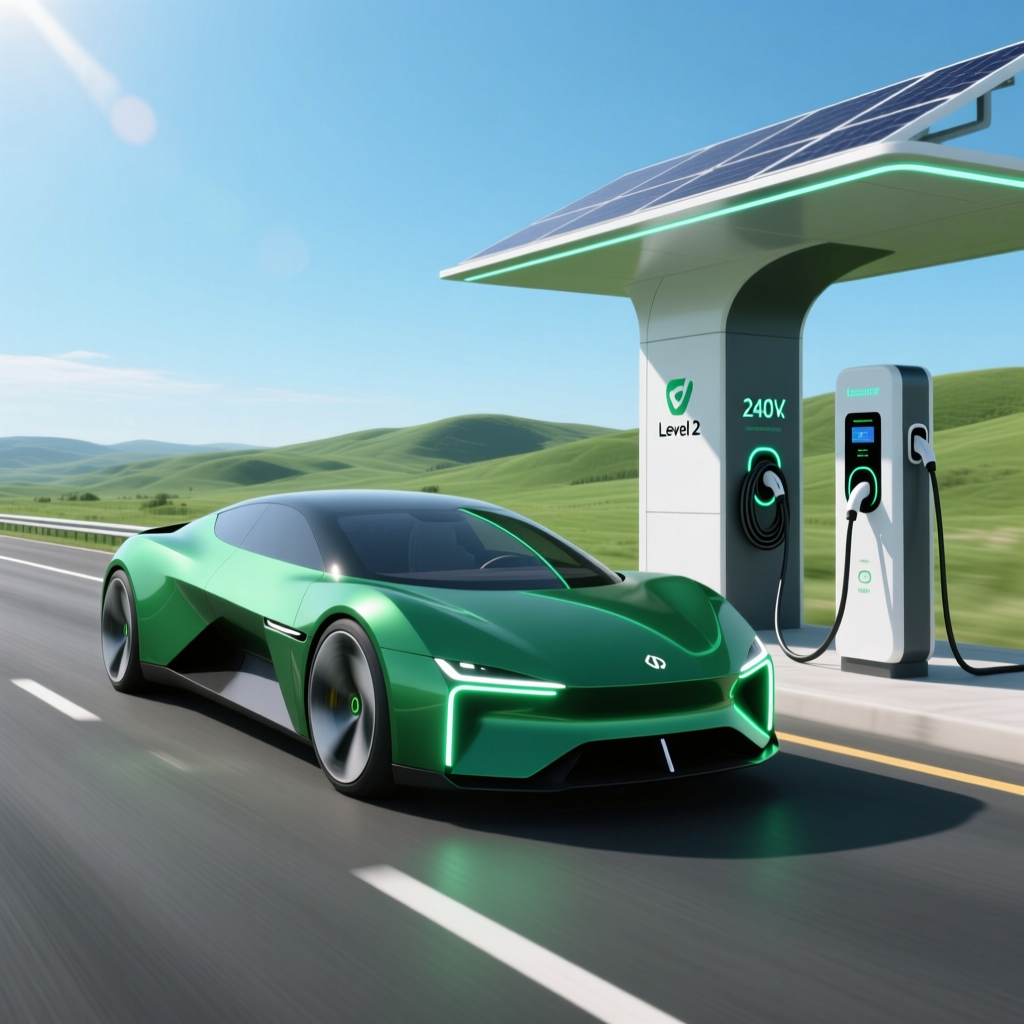
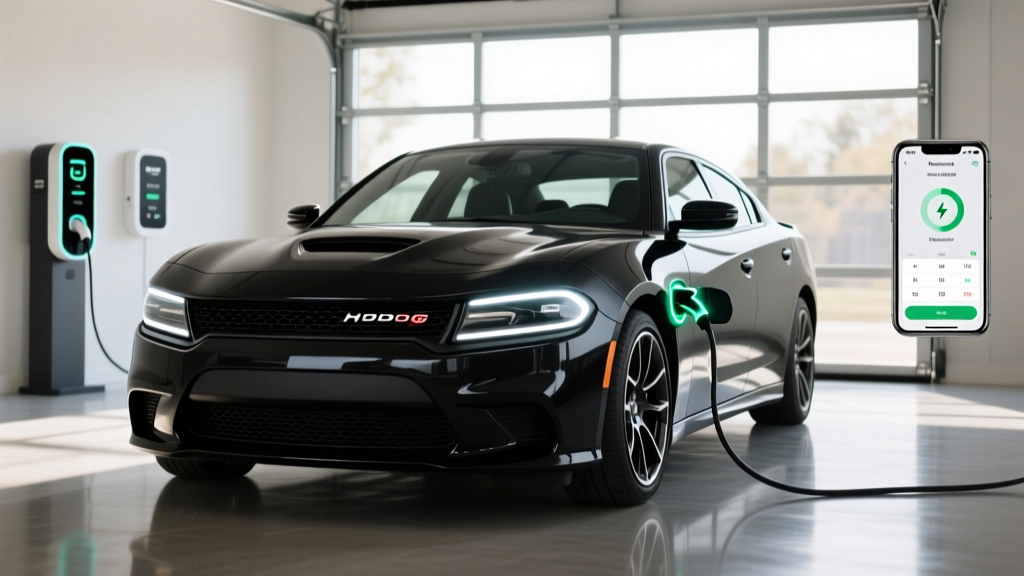
If you're researching how to charge a Dodge Charger hybrid car — specifically the 2026 Dodge Charger Daytona plug-in hybrid (PHEV) variants built on Stellantis' STLA Large platform — this guide covers the home electrical requirements, public charging realities, connector compatibility, and true cost-per-mile math you'll need before plugging in. The Charger Daytona lineup now includes electrified powertrains alongside the Hurricane inline-six options, and understanding the difference between kW (power, or how fast energy flows) and kWh (energy capacity, like a fuel tank) is the single most important concept for new PHEV owners.
Unlike a full battery-electric vehicle with a 75–100 kWh pack, the Charger Daytona PHEV carries a smaller traction battery designed for short electric-only commutes supplemented by a gasoline engine for longer trips. That means your home Level 2 charger is the workhorse, DC fast charging plays a smaller role, and Level 1 (standard 120V) can actually keep up for many daily routines. Let's break down every layer.
Charging Levels Explained: Speeds in kW and Miles Per Hour
Every Dodge Charger hybrid car owner will interact with three charging tiers. Here's how they differ in power delivery (kW) and practical range recovery.
| Level | Voltage | Max Power (kW) | Miles of EV Range Added Per Hour | Typical 10–80% Time* |
|---|---|---|---|---|
| Level 1 (120V household) | 120V / 12A | ~1.4 kW | 3–5 miles | 10–14 hours |
| Level 2 (240V home/public) | 240V / 32–48A | 7.7–11.5 kW | 20–35 miles | 1.5–2.5 hours |
| DC Fast Charging | 400V+ DC | 50–150 kW (varies by model) | 80–150+ miles | 20–35 minutes |
*Times assume a ~20 kWh usable PHEV battery. Actual charge times depend on the onboard charger acceptance rate — many PHEVs cap at 7.7 kW even when connected to a higher-power Level 2 station.
Key insight: The onboard charger inside the Charger Daytona PHEV limits how much AC power the car can accept. Even if you install a 48-amp (11.5 kW) home charger, the vehicle may only draw 7.7 kW. That's not wasted money — future EVs in your household will use the full capacity — but it means your 10–80% time won't shrink below the car's acceptance ceiling.
Home Charger Installation: Electrical Requirements and Real Costs
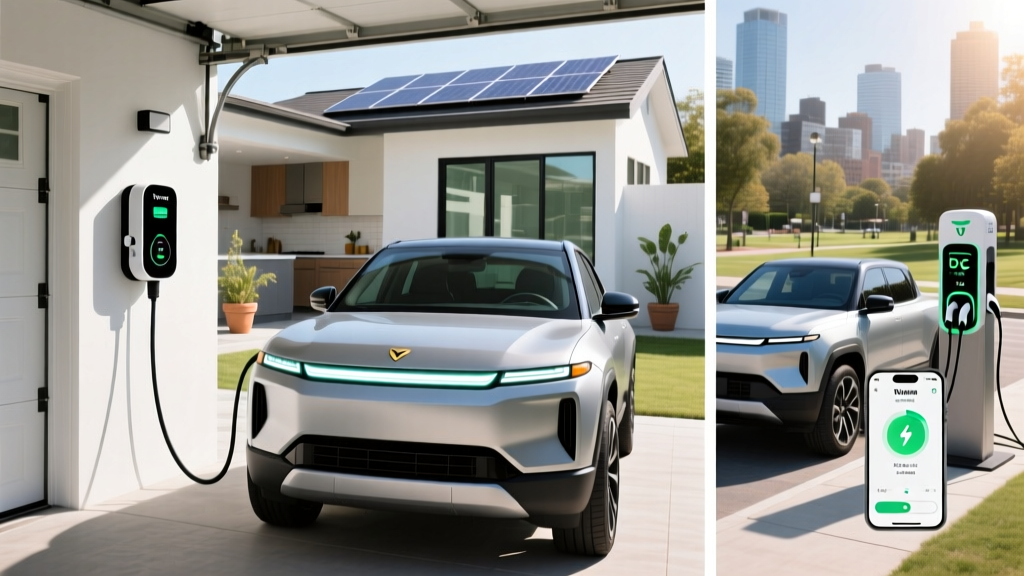
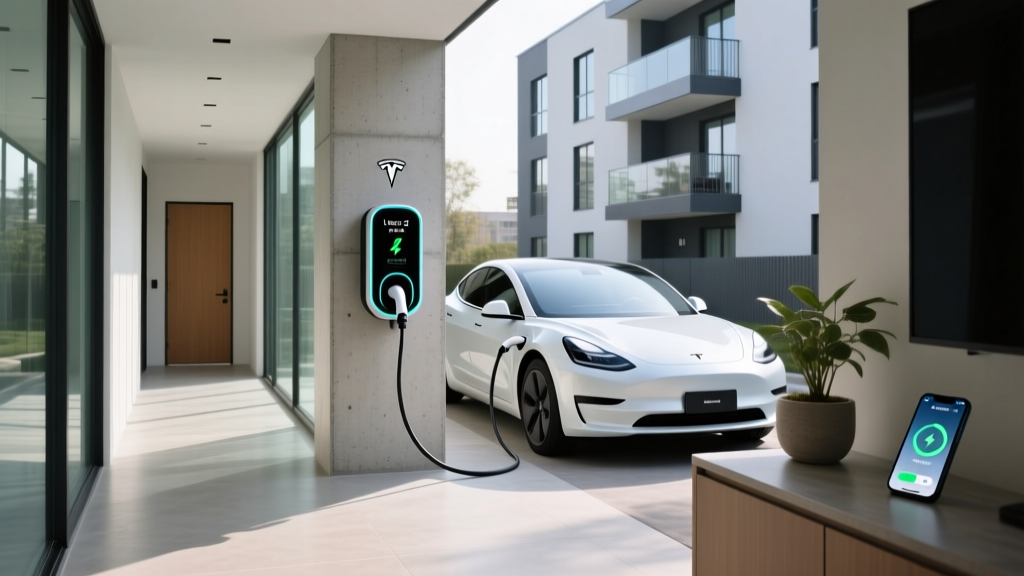
Installing a Level 2 home charger for your Dodge Charger hybrid car is the single highest-impact upgrade you can make for daily EV-mode driving. Here's what's involved electrically and financially.
Electrical Requirements
- Circuit: A dedicated 240V circuit — typically 40A or 50A — run from your main service panel to the charger location.
- Breaker sizing: EV chargers are considered continuous loads under NEC Article 625, so the circuit must be rated at 125% of the charger's maximum draw. A 32A charger needs a 40A breaker; a 48A charger needs a 60A breaker.
- Wire gauge: 6 AWG copper for 40–50A circuits; 4 AWG for 60A runs. Longer runs may require upsizing to minimize voltage drop.
- Panel capacity: Most modern 200A panels can accommodate a 40–50A EV circuit. Older 100A or 150A panels — common in homes built before the 1990s — may require a panel upgrade.
Panel Upgrade Reality
If your home has a 100A service panel that's already near capacity (electric dryer, range, central AC, water heater), adding a 40–50A EV circuit could push you over the safe load calculation. A panel upgrade to 200A typically costs $1,500–$3,500 including permits and utility coordination. Some homeowners opt for a smart load-management device (like the Emporia VUE with automatic load shedding) to avoid a full panel upgrade — these devices throttle the charger when other heavy loads kick on.
| Component | Low-End Estimate | High-End Estimate | Notes |
|---|---|---|---|
| Level 2 Charger (hardware) | $350 | $700 | 32A–48A smart chargers; Wi-Fi enabled |
| Electrician labor | $500 | $2,000 | Depends on run length, wall type, conduit |
| Electrical permit | $50 | $250 | Varies by municipality |
| Panel upgrade (if needed) | $1,500 | $3,500 | Only for older/undersized panels |
| Total (no panel upgrade) | $900 | $2,950 | Most homes fall in $1,200–$1,800 |
| Total (with panel upgrade) | $2,400 | $6,450 | Less common but a real possibility |
Federal incentive: The IRS §30D alternative fuel vehicle refueling property credit covers 30% of home charger installation costs, up to $1,000, subject to income limits and census-tract eligibility. Check current-year rules at irs.gov and consult a tax professional for your specific situation.
Connector Compatibility: What Plugs Into a Dodge Charger Hybrid
Connector standards have consolidated significantly by 2026, but knowing which plug your Charger Daytona PHEV uses matters for both home equipment purchases and public charging trips.
| Connector | Used By | AC Level 2? | DC Fast? | Adapter Available? |
|---|---|---|---|---|
| J1772 | Most non-Tesla EVs/PHEVs (including Stellantis brands) | Yes | No | N/A — standard |
| CCS1 (J1772 + DC pins) | GM, Ford, VW, Hyundai, Stellantis DC charging | Yes (J1772 portion) | Yes | CCS-to-NACS adapters widely available |
| NACS (Tesla / SAE J3400) | Tesla; Ford, GM, Rivian, others transitioning 2025+ | Yes | Yes | CCS-to-NACS adapters from Tesla and third parties |
| CHAdeMO | Nissan Leaf (legacy); phasing out | No | Yes | Limited adapters; infrastructure declining |
For the Dodge Charger hybrid car specifically: Stellantis PHEVs sold in North America have historically used the J1772 connector for AC charging and CCS1 for DC fast charging. If you're installing a home Level 2 charger, a J1772-terminated unit will plug directly in. If your charger has a NACS (Tesla-style) plug, you'll need a NACS-to-J1772 adapter (~$100–$200).
For public DC fast charging, the Charger Daytona PHEV — if equipped with DC fast-charge capability — will use CCS1 at Electrify America, EVgo, and similar networks. As networks add NACS connectors through 2026, a CCS-to-NACS adapter becomes useful for accessing Tesla Superchargers that have opened to non-Tesla vehicles.
Cost to Charge: Home vs. Public vs. Gas — The Real Math
One of the strongest reasons to buy a Dodge Charger hybrid car in PHEV form is the ability to run short commutes on electricity at a fraction of gasoline cost. Here's the per-mile breakdown.
| Scenario | Rate | Efficiency | Cost Per Mile |
|---|---|---|---|
| Home charging (off-peak utility rate) | $0.12/kWh | 3.0 mi/kWh (EV mode) | $0.04 |
| Home charging (standard rate) | $0.18/kWh | 3.0 mi/kWh | $0.06 |
| Public Level 2 (network pricing) | $0.30/kWh | 3.0 mi/kWh | $0.10 |
| DC Fast Charging (public) | $0.45/kWh | 3.0 mi/kWh | $0.15 |
| Gasoline (hybrid mode, 28 MPG combined) | $3.40/gallon | 28 MPG | $0.12 |
Bottom line: Charging at home on off-peak rates costs roughly one-third what gasoline does per mile. Even public DC fast charging is comparable to or slightly more expensive than gas — which is why home charging is the economic foundation of PHEV ownership. If you rarely plug in, the Charger Daytona operates as a conventional hybrid and you'll pay gas prices for every mile.
According to fueleconomy.gov, PHEV efficiency varies significantly between charge-depleting (EV) mode and charge-sustaining (hybrid) mode. The EPA window sticker shows separate MPGe and MPG figures — the MPGe number applies only when the battery is charged; once it depletes, the gasoline MPG takes over.
Recommended Home Charging Equipment for the Charger Daytona PHEV
Based on power output, reliability, connector options, smart features, and price, here are three Level 2 chargers well-suited to a Dodge Charger hybrid car owner's garage.
Emporia Level 2 Smart Charger
- Power output: 48A (11.5 kW) on a 60A circuit
- Connector: J1772 (NACS version available)
- Cable length: 24 feet
- Smart features: Wi-Fi, app scheduling, energy monitoring, load management with Emporia VUE panel sensor
- Price: ~$399
- Best for: Budget-conscious owners who want full smart features and load management to avoid panel upgrades
ChargePoint Home Flex
- Power output: Configurable 16A–50A (up to 12 kW)
- Connector: J1772 (NACS adapter included in recent kits)
- Cable length: 23 feet
- Smart features: Wi-Fi, Alexa integration, flexible amperage dial to match your circuit
- Price: ~$549–$649
- Best for: Owners who want adjustable amperage to match existing circuits without rewiring
Grizzl-E Smart
- Power output: 40A (9.6 kW) on a 50A circuit
- Connector: J1772 or NACS (choose at purchase)
- Cable length: 24 feet
- Smart features: Wi-Fi, OCPP protocol support, outdoor-rated enclosure, extreme cold tolerance (-40°F)
- Price: ~$499
- Best for: Outdoor installations and cold-climate owners; built in Canada with a rugged aluminum case
Why 40–48A when the PHEV may only accept 7.7 kW? Future-proofing. If you add a full BEV to your household — or upgrade to a future Charger Daytona with higher AC acceptance — you won't need to rewire. The incremental cost of a 48A charger over a 32A unit is typically under $100.
Safety, Code, and Installation Best Practices
EV charging is a high-duration, high-current electrical load. Cutting corners here is a fire risk and an insurance liability. Here's what the National Electrical Code (NEC) and best practices require:
- Dedicated circuit: Your Level 2 charger must have its own dedicated breaker — no sharing with other outlets or appliances.
- GFCI protection: NEC 2020 and later require GFCI protection for EV charging outlets (14-50 or 6-50 receptacles). Hardwired installations with built-in GFCI in the charger unit may satisfy this differently — your electrician will determine compliance.
- Outdoor rating: If mounting outside, the charger must carry a NEMA 4 or NEMA 4X rating for weather resistance. All three chargers recommended above meet outdoor standards.
- Permit and inspection: Most jurisdictions require an electrical permit for new 240V circuits. The inspection verifies wire gauge, breaker sizing, grounding, and GFCI compliance. Skipping the permit can void home insurance coverage for electrical fires.
- Hardwired vs. plug-in: Hardwired installations (no receptacle) eliminate the GFCI-breaker requirement at the panel and are generally more reliable for high-current use. Plug-in (14-50 outlet) offers portability if you move. Both are code-compliant when done correctly.
Always hire a licensed electrician experienced with EV charger installations. Ask whether they'll perform a load calculation on your panel before recommending a circuit size — if they skip this step, get a second opinion.
Charging Time Examples: How Long Does a Charger Hybrid Battery Take?
Here are practical charging scenarios assuming a ~20 kWh usable battery (typical for a performance PHEV like the Charger Daytona Scat Pack PHEV) and a 7.7 kW onboard charger acceptance rate:
| Scenario | Power Delivered | Time (0–100%) | Time (10–80%) |
|---|---|---|---|
| Level 1 (120V / 12A) | 1.4 kW | ~14 hours | ~10 hours |
| Level 2 (240V / 32A) | 7.7 kW | ~2.6 hours | ~1.8 hours |
| Level 2 (240V / 48A, car limited to 7.7 kW) | 7.7 kW | ~2.6 hours | ~1.8 hours |
| DC Fast Charge (if equipped, 50 kW peak) | 50 kW (tapers) | ~35 minutes | ~20 minutes |
Charge curve reality: DC fast charging does not sustain peak power for the full session. A 50 kW peak rate may hold from 10–50% State of Charge (SoC), then taper to 25–30 kW from 50–80%, and slow dramatically above 80% to protect battery health. The "10–80%" metric is the industry standard because charging past 80% on DC is rarely worth the wait — especially in a PHEV where the battery is small enough that Level 2 handles overnight top-ups easily.
Cold weather note: Lithium-ion batteries charge more slowly when cold. If your Charger Daytona PHEV is parked outside in sub-freezing temperatures, expect Level 2 charging to take 15–30% longer until the battery thermal management system warms the pack. Preconditioning (available via the Uconnect app on many Stellantis PHEVs) mitigates this by warming the battery while still plugged in.
Frequently Asked Questions
How much does it cost to install a home EV charger for the Dodge Charger hybrid?
Most homeowners pay $1,200–$1,800 total for a Level 2 charger installation (hardware + electrician + permit) when no panel upgrade is needed. If your home has an older 100A panel, a panel upgrade to 200A can add $1,500–$3,500. The federal §30D alternative fuel refueling credit may cover 30% of installation costs up to $1,000 — check current eligibility at irs.gov.
How fast will each charging level add range to my Charger hybrid?
Level 1 (120V) adds roughly 3–5 miles of EV range per hour — enough for a 30–40 mile daily commute if parked overnight. Level 2 (240V) adds 20–35 miles per hour and fully recharges a PHEV battery in about 2.5 hours. DC fast charging can replenish 10–80% in roughly 20 minutes if the vehicle supports it.
Which connector is compatible with the Dodge Charger Daytona PHEV?
Stellantis vehicles in North America use the J1772 connector for AC Level 1 and Level 2 charging, and CCS1 for DC fast charging. If you purchase a NACS-terminated home charger, a NACS-to-J1772 adapter (~$100–$200) bridges the gap. For Tesla Supercharger access (where opened to non-Tesla vehicles), a CCS-to-NACS adapter is needed.
How much does charging cost per mile compared to gasoline?
Home charging at $0.12/kWh costs about $0.04 per mile in EV mode — roughly one-third the cost of gasoline at $3.40/gallon and 28 MPG ($0.12/mile). Public DC fast charging at $0.45/kWh costs about $0.15/mile, which is slightly more than gas. The economic case for a PHEV depends heavily on consistent home or workplace charging.
What electrical upgrades might my home need for a Level 2 charger?
Homes with a 200A panel and available breaker slots typically need no upgrades beyond the dedicated 240V circuit. Homes with 100A or 150A panels, or panels already near their load capacity, may need a panel upgrade ($1,500–$3,500). An alternative is a smart load-management device that throttles charger power when other heavy appliances run, avoiding the need for a full upgrade.
Can I just use the Level 1 cord that came with the car?
Yes — for a PHEV with a ~20 kWh battery, Level 1 charging overnight (8–10 hours at 1.4 kW) can replenish most or all of the electric range. Many PHEV owners run exclusively on Level 1 for months before investing in a Level 2 install. The trade-off is slower recovery if you deplete the battery mid-day and need a quick top-up.
Does the Dodge Charger Daytona PHEV support DC fast charging?
DC fast-charge capability varies by PHEV model and trim. Some Stellantis PHEVs (like the Wrangler 4xe) support DC fast charging via CCS1, while others are limited to AC Level 2. Check the specific Charger Daytona PHEV trim's spec sheet on dodge.com for confirmed DC charge rates before planning road-trip charging strategies.
Final Considerations for Charger Hybrid Car Buyers
The Dodge Charger hybrid car in PHEV form offers a compelling bridge: electric-mode commuting for daily drives with gasoline range for road trips. The charging infrastructure you set up at home determines how often you actually drive on electricity versus defaulting to gas. A $1,200–$1,800 Level 2 installation pays for itself within 12–18 months of regular EV-mode commuting through fuel savings alone, and the convenience of waking up to a full battery every morning fundamentally changes the ownership experience.
Before purchasing, confirm the exact battery capacity (kWh), onboard charger acceptance rate (kW), and connector type for your specific Charger Daytona PHEV trim and model year at fueleconomy.gov. Specs can shift between model years, and getting the right home charger matched to your car's actual acceptance rate avoids both overspending and underperformance.