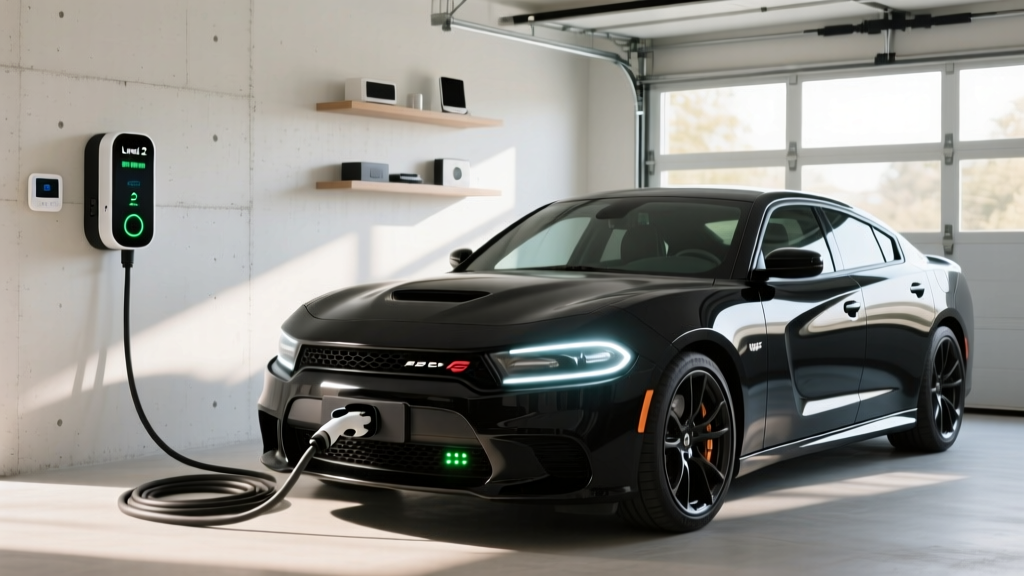
So you're eyeing a 2026 Dodge Charger Daytona EV lease. The all-electric muscle car packs a 100.5 kWh battery (usable capacity approximately 93 kWh), up to 670 horsepower on the R/T and Scat Pack trims, and an EPA-estimated range of around 317 miles on the R/T. Before you sign the lease papers, though, you need a charging plan. The Charger Daytona's massive battery means home charging infrastructure isn't optional — it's the difference between waking up with a full "tank" every morning and spending your evenings at public DC fast chargers.
This guide walks through exactly what you need to charge a Dodge Charger EV at home, what it costs, which equipment to buy, and how charging costs compare to the gas you'd burn in a V8 Challenger. We'll also cover public charging realities for road trips.
How Much Does It Cost to Install a Home EV Charger?
Home Level 2 charger installation for a Dodge Charger EV typically runs between $800 and $4,500, depending on your electrical panel's condition and the distance from panel to charger location. The Charger's large battery makes a robust Level 2 setup essential — you'll want at least a 40-amp circuit to replenish meaningful range overnight.
| Component | Low Estimate | High Estimate | Notes |
|---|---|---|---|
| Level 2 Charger (Equipment) | $350 | $750 | 40A–48A smart chargers; Wi-Fi enabled |
| Electrician Labor | $300 | $1,500 | Depends on run length, wall type, conduit |
| Electrical Permit | $50 | $300 | Varies by municipality; required by code |
| Panel Upgrade (if needed) | $1,500 | $3,500 | 100A → 200A service upgrade for older homes |
| Total (no panel upgrade) | $700 | $2,550 | Most homes with 200A service fall here |
| Total (with panel upgrade) | $2,200 | $6,050 | Common in pre-1990 homes with 100A panels |
The Charger Daytona's battery is large. If you're plugging into a standard 120V outlet (Level 1), you'll add roughly 3–4 miles of range per hour — meaning a full charge from empty would take over 30 hours. That's impractical for most lessees. A 48-amp Level 2 charger on a 60-amp dedicated circuit delivers about 11.5 kW, adding roughly 30–35 miles of range per hour, and can fully replenish the battery in about 9–10 hours. That's your overnight sweet spot.
How Fast Will Each Charging Level Add Range?
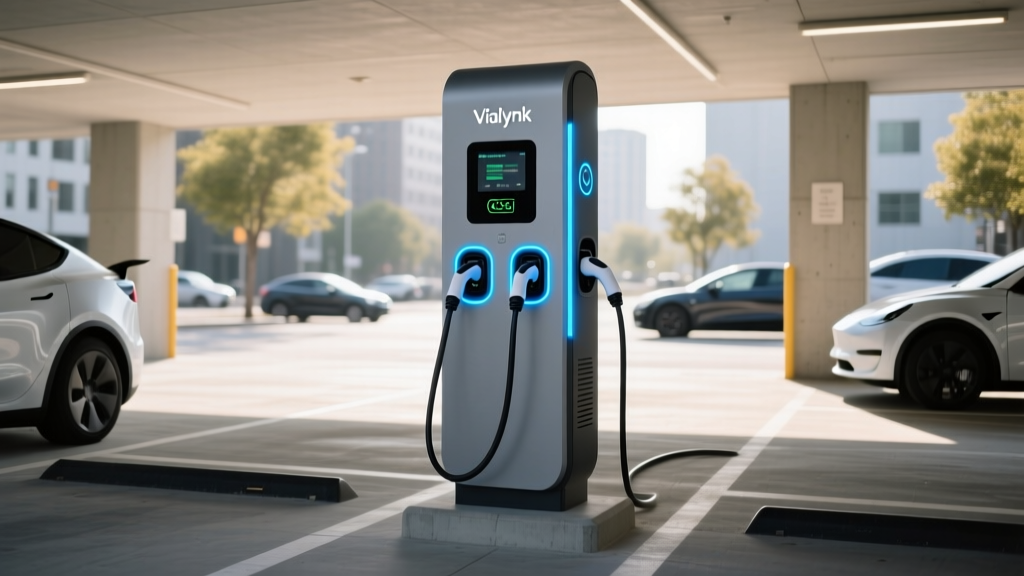
Understanding charging speeds is critical before you commit to a lease. The Dodge Charger Daytona supports up to approximately 150 kW peak DC fast charging and up to 11.5 kW on Level 2 (48A). Here's what each level delivers in practical terms:
| Level | Voltage / Amperage | Power (kW) | Miles of Range Added per Hour | 10–80% Time (Charger Daytona ~93 kWh usable) | Best For |
|---|---|---|---|---|---|
| Level 1 (120V) | 120V / 12A | ~1.4 kW | 3–4 mi/hr | Not practical (40+ hrs) | Emergency top-up only |
| Level 2 (240V, 40A) | 240V / 40A | ~9.6 kW | 25–28 mi/hr | ~7.5 hours | Minimum recommended home setup |
| Level 2 (240V, 48A) | 240V / 48A | ~11.5 kW | 30–35 mi/hr | ~6.5 hours | Ideal home setup for Charger |
| DC Fast Charging | 400V+ / variable | Up to ~150 kW peak | ~150–180 mi in 10 min (peak) | ~28–35 minutes | Road trips, highway corridors |
Critical distinction: kW vs. kWh. Kilowatts (kW) measure power — the rate at which energy flows into the battery, like water pressure from a hose. Kilowatt-hours (kWh) measure energy — the total capacity stored, like the size of the water tank. The Charger's ~100.5 kWh battery (93 kWh usable) is the tank. A 150 kW DC fast charger is a high-pressure hose filling that tank. As the battery approaches full, the charge rate tapers — which is why 10–80% is the standard metric, not 0–100%.
On a DC fast charger, the Charger Daytona will peak near 150 kW at low state of charge (SoC), then taper significantly above 60–70%. Expect the 10–80% session to take roughly 28–35 minutes at a 150+ kW station. At a 50 kW legacy charger, plan for 80+ minutes.
Which Connector and Charger Is Compatible with the Dodge Charger EV?
The 2026 Dodge Charger Daytona uses the CCS1 (Combined Charging System) connector as standard. However, with Stellantis joining the NACS (North American Charging Standard) coalition, future models may shift to NACS. For now, CCS1 is your native plug, and you'll need an adapter to access Tesla Superchargers.
| Connector Type | Native Support? | Where You'll Find It | Adapter Needed? |
|---|---|---|---|
| CCS1 | Yes (native) | Electrify America, EVgo, ChargePoint, most public DCFC | No |
| NACS (Tesla) | No | Tesla Superchargers (now open to non-Tesla EVs) | Yes — CCS-to-NACS adapter (~$150–$250) |
| CHAdeMO | No | Largely legacy; mostly older Nissan Leaf stations | Not recommended; adapters rare and expensive |
| J1772 (Level 2) | Yes (via CCS inlet upper portion) | Home chargers, public Level 2, workplaces | No — J1772 is the Level 2 standard built into CCS1 |
Adapter tip: If you plan to road-trip the Charger, buy a CCS-to-NACS adapter from a reputable brand like Lectron or A2Z. Tesla's own adapter is designed for Tesla vehicles receiving CCS, not the reverse. Confirm compatibility with your specific model year before purchasing, as connector standards are still transitioning across the industry.
Recommended Level 2 Chargers for the Dodge Charger EV
Given the Charger's large battery, I recommend 48-amp chargers on a 60-amp dedicated circuit. Here are three proven units that pair well with this vehicle:
ChargePoint Home Flex (48A)
- Power Output: Up to 11.5 kW (48A at 240V)
- Connector: J1772 (compatible with Charger's CCS inlet for Level 2)
- Cable Length: 23 feet
- Smart Features: Wi-Fi, app scheduling, utility rate optimization, Alexa integration
- Price: ~$550–$650
- Why it works: Adjustable amperage (16A–48A via DIP switch) lets you match your circuit. NEMA 14-50 plug or hardwired. ChargePoint Home Flex specs.
Emporia Level 2 EV Charger (48A)
- Power Output: Up to 11.5 kW (48A at 240V)
- Connector: J1772
- Cable Length: 24 feet
- Smart Features: Wi-Fi, energy monitoring, solar integration, load management
- Price: ~$350–$400
- Why it works: Best value in the 48A category. Pairs with Emporia's whole-home energy monitor for solar owners. Hardwired installation required for full 48A.
Wallbox Pulsar Plus (48A)
- Power Output: Up to 11.5 kW (48A at 240V)
- Connector: J1772
- Cable Length: 25 feet
- Smart Features: Wi-Fi + Bluetooth, app control, Power Sharing for dual installations
- Price: ~$500–$600
- Why it works: Compact form factor, outdoor-rated (NEMA 4), and Power Sharing allows two chargers on a single circuit — useful if you add a second EV later.
All three chargers deliver the 11.5 kW you want for overnight replenishment of the Charger's ~93 kWh usable battery. The Emporia wins on value; the ChargePoint offers the most mature app ecosystem; the Wallbox is the best choice for tight garages or outdoor mounting.
How Much Does Charging Cost Per Mile vs. Gas?
One of the biggest financial benefits of leasing a Charger Daytona over a gas V8 Challenger is fuel cost. Here's a realistic breakdown based on the Charger's efficiency of approximately 2.5–2.8 kWh/mile (roughly 115–120 MPGe combined, per fueleconomy.gov):
| Scenario | Rate | Cost per Mile (Charger EV) | Equivalent Gas Car (22 MPG, $3.40/gal) |
|---|---|---|---|
| Home Charging (off-peak utility rate) | $0.10/kWh | $0.25–$0.28 | $0.15 |
| Home Charging (national avg residential) | $0.17/kWh | $0.43–$0.48 | $0.15 |
| Public Level 2 (network pricing) | $0.30/kWh | $0.75–$0.84 | $0.15 |
| DC Fast Charging (Electrify America, EVgo) | $0.48/kWh | $1.20–$1.34 | $0.15 |
The honest math: At home on off-peak rates, the Charger EV costs roughly $0.25–$0.28 per mile — competitive with a 22 MPG gas car at $3.40/gallon ($0.15/mile). However, the Charger is a performance vehicle. A comparable gas Challenger R/T (5.7L HEMI, ~19 MPG combined) costs about $0.18/mile in fuel. So at home rates, you save modestly; at public DC fast charging rates, you actually pay more per mile than gas.
The real savings come from convenience and time: home charging means zero gas station stops, and off-peak utility rates (often $0.08–$0.12/kWh between midnight and 6 AM) make the per-mile cost very competitive. Check with your utility about EV-specific time-of-use (TOU) plans — many offer significantly reduced overnight rates for EV owners.
What Electrical Upgrades Might You Need?
Before your electrician pulls a permit, they'll assess your home's electrical service. Here's what to expect:
Panel Capacity Assessment
Most modern homes (built after ~2000) have a 200-amp main service panel. A 48A EV charger draws about 38 continuous amps (EVSE draws 80% of circuit rating per NEC Article 625). If your panel is already near capacity — running central AC, electric range, electric dryer, and an electric water heater — adding 38 continuous amps may exceed safe loading. Your electrician will perform a NEC Article 220 load calculation to determine if your panel can handle it.
When a Panel Upgrade Is Required
If your home has a 100-amp panel (common in homes built before 1990) or your load calculation shows insufficient headroom, you'll need a panel upgrade to 200A. This costs $1,500–$3,500 depending on your area, utility connection requirements, and whether new service wires are needed from the transformer.
Smart Load Management (Alternative to Panel Upgrade)
Before committing to a panel upgrade, ask about smart load management devices like the Emporia Smart Load Center or Wallbox Power Sharing. These systems monitor your home's real-time electrical usage and dynamically reduce charger amperage when other large loads (AC, dryer) kick on. This can allow a 48A charger to coexist on a 100A panel without a full upgrade, saving $1,500+.
Safety and Code Requirements
- Dedicated circuit: NEC requires a dedicated circuit for EV charging — no sharing with other outlets or appliances.
- GFCI protection: 2020+ NEC editions require GFCI protection for outdoor receptacles used for EV charging (NEMA 14-50). Hardwired installations may have different requirements depending on your jurisdiction.
- Outdoor rating: If your charger is mounted outdoors or in an open carport, it must be rated NEMA 4 (weather-resistant). All three chargers recommended above meet this standard.
- Permit required: Nearly all jurisdictions require an electrical permit for EV charger installation. The permit ensures the work is inspected and meets code — critical for insurance and warranty purposes. Unpermitted work can void your homeowner's insurance in the event of an electrical fire.
Public Charging on Road Trips: What Charger Lessees Need to Know
The Charger Daytona's 150 kW peak DC fast charging rate is moderate by 2026 standards — rivals like the Hyundai Ioniq 5 and Kia EV6 accept up to 240 kW on 800V architectures. That means longer stops at DC fast chargers on road trips.
Plan for 30–40 minute stops at 150+ kW stations to go from 10–80%. Use apps like PlugShare or A Better Routeplanner to map routes with reliable Electrify America, EVgo, or Tesla Supercharger stations (with your CCS-to-NACS adapter). Preconditioning the battery — available through the Charger's infotainment system when you set a DC fast charger as your navigation destination — warms the battery to optimal temperature and can reduce charging time by 10–15% in cold weather.
Real-world range on highway road trips will be lower than the EPA sticker. Expect roughly 250–270 miles at 70–80 mph in moderate temperatures, and 200–230 miles in sub-freezing conditions. Plan your charging stops around 200 miles of highway driving to maintain a comfortable buffer.
Frequently Asked Questions
Can I charge the Dodge Charger EV on a standard 120V outlet?
Yes, but it's impractical as a primary charging method. A standard 120V/12A outlet delivers about 1.4 kW, adding roughly 3–4 miles of range per hour. Fully charging the ~93 kWh usable battery from empty would take over 60 hours. Use Level 1 only for overnight top-ups when you've driven less than 30–40 miles.
Does the Dodge Charger EV lease include a home charger?
As of the 2026 model year, Stellantis has not announced a complimentary home charger program for Charger Daytona lessees (unlike some competitors). Budget $350–$650 for a quality Level 2 charger and $500–$2,000 for professional installation. Some utilities offer rebates of $250–$500 for charger equipment and installation — check with your local utility.
Will charging the Charger EV at home increase my electric bill significantly?
Driving 12,000 miles per year at the Charger's ~2.7 kWh/mile efficiency consumes roughly 32,400 kWh annually. At $0.13/kWh (national residential average), that's approximately $4,212/year or $351/month added to your electric bill. However, this replaces roughly $2,400–$3,000/year in gasoline for a comparable V8 Challenger, depending on fuel prices and your local electricity rates. Off-peak TOU rates can reduce the electric cost by 30–40%.
Is a hardwired charger better than a NEMA 14-50 plug?
Hardwired installations are generally preferred for 48A chargers. A NEMA 14-50 receptacle is rated for 50A, but NEC continuous-load rules limit it to 40A — meaning a 48A charger on a 14-50 plug must be derated to 40A (9.6 kW). Hardwiring allows the full 48A (11.5 kW) on a 60A circuit. Hardwired setups also eliminate the risk of a loose plug connection, which has been a documented cause of melted receptacles in high-draw EV charging applications.
What's the battery warranty on the Dodge Charger Daytona EV?
Stellantis provides an 8-year/100,000-mile warranty on the Charger Daytona's high-voltage battery, covering defects and capacity loss below a specified threshold (typically 70% state of health). This warranty transfers to subsequent owners, which is relevant if you plan to purchase the vehicle at lease-end. For full terms, consult your lease agreement and Stellantis warranty documentation.
Can I use a Tesla Supercharger with the Dodge Charger EV?
Yes, but only with a CCS-to-NACS adapter. Tesla has opened many Supercharger stations to non-Tesla EVs through the NACS standard. With a quality adapter ($150–$250), the Charger Daytona can access these stations. Note that not all Supercharger stalls are configured for non-Tesla vehicles — use the Tesla app or in-car navigation to confirm station compatibility before relying on Superchargers for a road trip.
Leasing the 2026 Dodge Charger Daytona EV is an exciting entry into electric performance, but the 100+ kWh battery demands a serious home charging setup. Budget $700–$2,550 for a proper 48A Level 2 installation (more if your panel needs upgrading), choose a quality smart charger, and enroll in your utility's EV time-of-use plan. Do that, and you'll wake up every morning with 300+ miles of electric muscle ready to go — no gas station required.