The New Era: Different Types of Dodge Chargers Explained
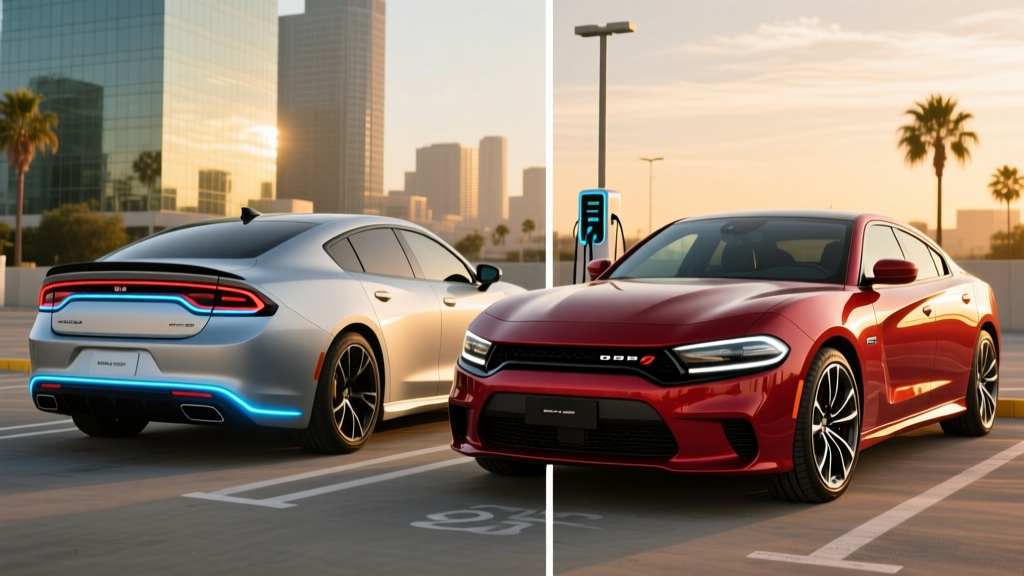
If you've searched for "different types of Dodge Chargers" lately, you're not alone. Dodge has completely reimagined its iconic muscle car lineup for 2026, and buyers now face a choice that would have been unthinkable a few years ago: gas-powered Charger with the Hurricane inline-six, or the all-electric Charger Daytona. Understanding the charging infrastructure and ownership realities for each is critical before you sign on the dotted line.
This guide covers the full 2026 Dodge Charger lineup, with a deep dive into what it actually takes to charge the electric Daytona at home and on the road — including exact kW speeds, installation costs, and real-world range expectations.
2026 Dodge Charger Lineup at a Glance
Dodge currently offers the Charger in two distinct powertrain families for the 2026 model year:
- Dodge Charger Daytona (BEV) — All-electric muscle car available in R/T and Scat Pack trims, built on Stellantis's STLA Large platform with an 800-volt architecture.
- Dodge Charger (Gas) — Powered by the 3.0L Hurricane twin-turbo inline-six, available in R/T (420 hp) and Scat Pack (550 hp) trims.
The discontinuation of the HEMI V8 after 2023 left a gap that Dodge has filled with two very different approaches. If you're considering the Daytona EV, the rest of this guide is built for you.
Dodge Charger Daytona EV: Range, Battery, and Efficiency
The 2026 Dodge Charger Daytona uses a 100.5 kWh (gross) battery pack with NMC (nickel-manganese-cobalt) chemistry. Here's what the EPA and real-world testing tell us:
| Spec | Daytona R/T | Daytona Scat Pack |
|---|---|---|
| Battery (usable) | ~93 kWh | ~93 kWh |
| EPA Range | 317 miles | 260 miles |
| Real-World Highway (70 mph) | ~260–280 miles | ~210–230 miles |
| Cold-Weather Range (20°F) | ~220–250 miles | ~180–200 miles |
| Efficiency (MPGe) | 96 MPGe combined | 82 MPGe combined |
| Efficiency (kWh/100 mi) | 35 kWh/100mi | 41 kWh/100mi |
| Horsepower | 496 hp (with PowerShot) | 670 hp (with PowerShot) |
| 0–60 mph | 4.7 seconds | 3.3 seconds |
| Drivetrain | AWD | AWD |
| Starting MSRP | $59,595 | $73,590 |
Charging Levels Explained: Level 1, Level 2, and DC Fast Charging
Before you buy a Daytona, you need to understand the three charging levels and what they mean in practical terms. This is where kW (kilowatts — the rate of power delivery) and kWh (kilowatt-hours — the energy stored in your battery) diverge. Think of kW as the width of the hose and kWh as the size of the bucket.
| Level | Voltage | Max Power (kW) | Miles of Range Added per Hour | Best For |
|---|---|---|---|---|
| Level 1 | 120V AC | 1.4 kW | ~3–5 miles/hour | Overnight top-up, emergencies, PHEVs |
| Level 2 | 240V AC | 7.2–19.2 kW | ~20–65 miles/hour | Daily home charging, workplace |
| DC Fast Charging | 400–800V DC | 50–350 kW | ~150–600+ miles/hour (peak) | Road trips, quick top-ups |
Level 1 (120V): Plugging the Daytona into a standard household outlet will add roughly 4 miles of range per hour. A full charge from 10% to 100% would take approximately 4–5 days. This is fine for plug-in hybrids with small batteries but essentially useless as a primary strategy for a 93 kWh battery.
Level 2 (240V): This is your daily workhorse. At 11.5 kW (48A), the most common home setup, you'll add roughly 33 miles of range per hour — enough to fully recharge the Daytona overnight in about 8–9 hours. At the maximum 19.2 kW (80A), you can cut that to roughly 5 hours.
DC Fast Charging: The Daytona's 800V architecture supports peak DC fast charging at up to 175 kW (R/T) and approximately 175 kW (Scat Pack). On a 350 kW-capable station, you'll hit peak speeds immediately, but the charge curve tapers significantly above 80% state of charge (SoC).
Charging Time Examples: 10–80% SoC
| Charging Method | Time (10–80%) | Notes |
|---|---|---|
| Level 1 (1.4 kW, 120V) | ~60+ hours | Not practical for daily use |
| Level 2 (11.5 kW, 48A) | ~6.5 hours | Most common home setup |
| Level 2 (19.2 kW, 80A) | ~4 hours | Requires 100A circuit |
| DC Fast (175 kW peak) | ~27 minutes | Peak rate to ~55%, then tapers; 80% at ~27 min |
Home Charger Installation: Requirements, Costs, and Gotchas
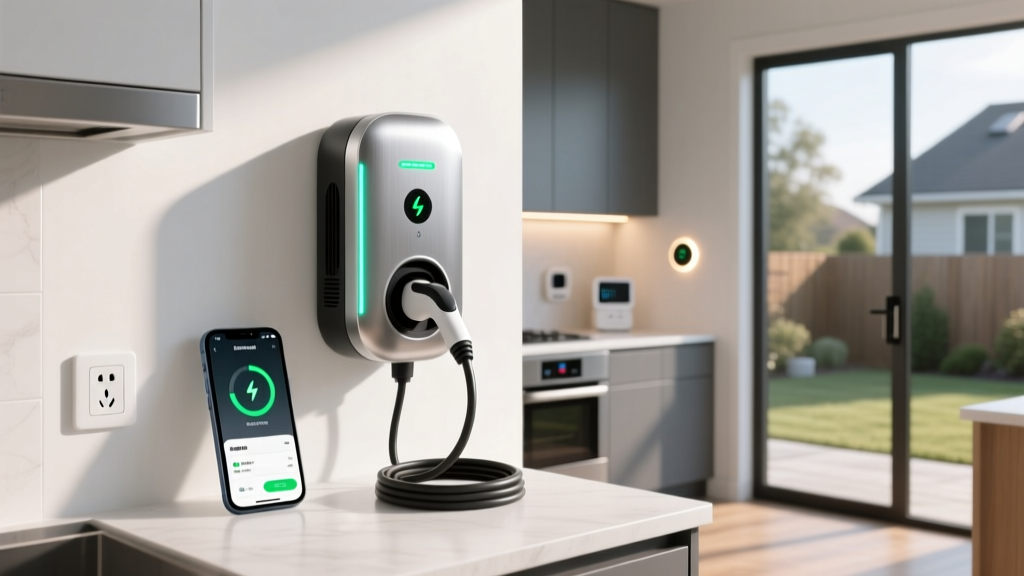
Installing a Level 2 home charger is the single biggest ownership adjustment for new EV buyers. Here's exactly what's involved for a Dodge Charger Daytona.
Electrical Requirements
The Daytona's onboard charger accepts up to 11.5 kW on Level 2 (48A). To deliver this, you need:
- A 240V dedicated circuit with a 60-amp breaker (NEC code requires circuits rated at 125% of continuous load, so 48A continuous requires a 60A breaker).
- 6 AWG copper wire for runs up to ~50 feet; thicker gauge (4 AWG) for longer runs to minimize voltage drop.
- A NEMA 14-60 outlet (if using a plug-in charger) or hardwired connection (often preferred for 48A+ chargers).
Panel Upgrade Reality
Most homes built after 1990 have a 200-amp electrical panel, which can typically support a 60A EV circuit alongside existing loads. However, older homes with 100A or 150A panels, or homes already running high-draw appliances (electric range, dryer, HVAC, hot tub), may need a panel upgrade to 200A or even 400A. This is the single largest variable in installation cost.
| Component | Cost Range | Notes |
|---|---|---|
| Level 2 Charger (Equipment) | $300–$700 | Varies by brand, power output, smart features |
| Electrician Labor (standard install) | $500–$1,500 | 240V circuit, ~30 ft run, panel has capacity |
| Permit & Inspection | $50–$300 | Varies by municipality; some areas waive for EV |
| Panel Upgrade (if needed) | $1,500–$4,000 | 200A upgrade; 400A can exceed $5,000 |
| Trenching / Conduit (long runs) | $200–$1,000+ | Detached garage or far-from-panel installs |
| Total (no panel upgrade) | $850–$2,500 | Most typical scenario |
| Total (with panel upgrade) | $2,500–$6,000+ | Older homes or max-load panels |
Safety and Code Considerations
- Dedicated circuit: NEC requires the EV charger to have its own dedicated breaker — no sharing with other appliances.
- GFCI protection: The 2023 NEC update requires GFCI protection for EV outlets in garages. Hardwired chargers may be exempt in some jurisdictions — check local code.
- Outdoor rating: If your charger is installed outside (carport, driveway), it must be rated NEMA 4 (weatherproof). Most quality Level 2 chargers carry this rating.
- Load management: Some smart chargers (e.g., Emporia Vue-integrated, Wall Connector with Power Sharing) can dynamically reduce charge rate when household load is high, avoiding a panel upgrade entirely.
Connector Compatibility: NACS, CCS1, and What the Daytona Uses
The 2026 Dodge Charger Daytona uses the CCS1 (Combined Charging System) connector for DC fast charging and a J1772 inlet for Level 1/Level 2 AC charging. This is important because the North American EV industry is mid-transition to Tesla's NACS (North American Charging Standard).
| Connector | Type | Used By | Daytona Compatible? |
|---|---|---|---|
| J1772 | AC (Level 1 & 2) | All non-Tesla EVs | Yes — native inlet |
| CCS1 | DC Fast | Ford, GM, Hyundai, VW, Stellantis, most others | Yes — native inlet |
| NACS (Tesla) | AC + DC Fast | Tesla (native); Ford, GM, Rivian, Volvo (2025+) | Adapter required for Tesla Superchargers |
| CHAdeMO | DC Fast | Nissan Leaf (legacy); being phased out | No |
What this means for Daytona owners: You can use Electrify America, EVgo, ChargePoint, and other CCS networks natively. For Tesla Supercharger access, you'll need a CCS-to-NACS adapter (Stellantis has indicated adapter availability through dealers; third-party options like Lectron also exist, typically $180–$250). Always verify adapter certification and max kW throughput before purchasing — cheap adapters may limit charge speed or lack safety certification.
Charging Cost: Home vs. Public vs. Gas Comparison
One of the strongest arguments for the Daytona over the gas Charger is fuel cost. Here's how the numbers break down using national averages as of early 2026.
| Scenario | Rate | Cost per 100 Miles (R/T at 35 kWh/100mi) | Cost per 100 Miles (Gas Charger R/T at 20 MPG combined) |
|---|---|---|---|
| Home Charging (off-peak utility rate) | $0.12/kWh | $4.20 | $16.50 (at $3.30/gal) |
| Home Charging (national avg residential) | $0.17/kWh | $5.95 | $16.50 |
| Public Level 2 (ChargePoint, etc.) | $0.25–$0.39/kWh | $8.75–$13.65 | $16.50 |
| DC Fast Charging (Electrify America) | $0.35–$0.55/kWh | $12.25–$19.25 | $16.50 |
According to fueleconomy.gov, the gas-powered 2026 Charger R/T with the Hurricane I6 achieves approximately 20 MPG combined. At $3.30/gallon, that's $16.50 per 100 miles. The Daytona R/T, charged at home on a typical utility rate, costs roughly $5–6 per 100 miles — a savings of ~$10–11 per 100 miles, or roughly $1,200–$1,500 per year at 12,000 miles driven.
However, if you rely heavily on DC fast charging at $0.45–$0.55/kWh, the cost advantage narrows or disappears. Home charging access is the single biggest economic variable in EV ownership. Per the IRS §30D guidelines, the Daytona may qualify for up to $7,500 in federal tax credits depending on battery component sourcing, your income, and MSRP caps — but eligibility is complex and changes annually. Consult a tax professional and verify current-year rules before relying on credit estimates.
Recommended Home Chargers for the Dodge Charger Daytona
Based on the Daytona's 11.5 kW onboard charger and CCS1/J1772 inlet, here are three Level 2 units that match its capabilities well:
ChargePoint Home Flex
- Power Output: Up to 12 kW (50A), adjustable down to 16A
- Connector: J1772 (CCS-compatible for AC charging)
- Cable Length: 23 feet
- Smart Features: Wi-Fi, app scheduling, Alexa integration, energy reports
- NEMA Rating: NEMA 4 (indoor/outdoor)
- Price: ~$549
- Best For: Flexibility — adjustable amperage lets you match your circuit without overspending
Tesla Wall Connector (with J1772 adapter)
- Power Output: Up to 11.5 kW (48A)
- Connector: NACS native; includes J1772 adapter for non-Tesla EVs
- Cable Length: 24 feet
- Smart Features: Wi-Fi, OTA updates, Power Sharing (multiple units on one circuit)
- NEMA Rating: NEMA 4
- Price: ~$450 (plus ~$30 for J1772 adapter if not included)
- Best For: Households with both Tesla and non-Tesla EVs; cleanest cable management
Emporia Level 2 EV Charger
- Power Output: Up to 11.5 kW (48A)
- Connector: J1772
- Cable Length: 24 feet
- Smart Features: Integrates with Emporia Vue home energy monitor for solar-aware charging, load management
- NEMA Rating: NEMA 4
- Price: ~$399
- Best For: Homes with solar panels or those wanting detailed energy tracking; best value
Frequently Asked Questions
How much does it cost to install a home EV charger for the Dodge Charger Daytona?
For a typical home with a 200A panel and a moderate wire run, expect $850–$2,500 total (charger + electrician + permit). If your home needs a panel upgrade, costs can reach $2,500–$6,000+. Always get a quote from a licensed electrician who will perform a load calculation on your panel before recommending a circuit size.
How fast will each charging level add range to the Daytona?
Level 1 (120V): approximately 3–5 miles per hour. Level 2 (240V, 48A/11.5 kW): approximately 33 miles per hour — a full overnight charge. DC fast charging (175 kW peak): approximately 150+ miles added in 15 minutes at peak rate, though real-world 10–80% takes about 27 minutes due to charge-curve taper above 55% SoC.
Which connector does the Dodge Charger Daytona use?
The 2026 Daytona uses a CCS1 connector for DC fast charging and a J1772 inlet for AC Level 1 and Level 2 charging. It is compatible with Electrify America, EVgo, ChargePoint, and other CCS networks natively. Tesla Supercharger access requires a CCS-to-NACS adapter (typically $180–$250).
How much does charging the Daytona cost per mile versus gas?
At home on an average residential rate of $0.17/kWh, the Daytona R/T costs approximately $0.06 per mile to charge. The gas Charger R/T at 20 MPG combined and $3.30/gallon costs approximately $0.165 per mile. That's roughly $0.10/mile in savings, or about $1,200/year at 12,000 miles. Public DC fast charging at $0.45+/kWh can push EV cost per mile above gas in some markets.
What electrical upgrades might I need for a home charger?
If your electrical panel is 200A and has available capacity, you likely only need a new 60A breaker and a 240V circuit run — no panel upgrade required. Homes with 100A or 150A panels, or those with many high-draw electric appliances, may need a panel upgrade to 200A ($1,500–$3,000) or even 400A ($3,000–$5,000+). A smart charger with load management (like Emporia with Vue integration) can sometimes avoid a panel upgrade by dynamically reducing charge rate during peak household usage. Always consult a licensed electrician for a formal load calculation before purchasing equipment.
Does the Dodge Charger Daytona qualify for the federal EV tax credit?
Eligibility for the §30D federal clean vehicle credit (up to $7,500) depends on several factors: your modified adjusted gross income (AGI caps: $150K single / $300K joint), the vehicle's MSRP (must be under $55,000 for sedans — the Daytona R/T at $59,595 currently exceeds this cap), and battery component/critical mineral sourcing requirements. Tax rules change frequently; always verify current eligibility on IRS.gov and consult a tax professional. Some states offer additional incentives that stack with federal credits — check your state energy office or AFDC.energy.gov for local programs.
Bottom Line: Which Dodge Charger Is Right for You?
The 2026 Dodge Charger lineup forces a genuine decision. The gas Charger delivers muscle-car sound, easier refueling anywhere, and no home electrical work — but at $16.50+ per 100 miles in fuel and rising maintenance costs as it ages. The Daytona EV offers superior acceleration (3.3 seconds 0–60 in the Scat Pack), dramatically lower "fuel" costs with home charging, and the quiet, instant torque that only an EV delivers — but requires home charging infrastructure, planning for road trips, and acceptance of real-world range below the EPA sticker.
If you can install a Level 2 charger at home, drive under 250 miles most days, and have access to DC fast charging for road trips, the Daytona is a compelling daily driver. If you regularly drive 400+ mile stretches through charging deserts, or lack home charging access, the gas Charger remains the pragmatic choice for now.