The 2025-2026 Dodge Charger EV marks Stellantis's first all-electric muscle car, built on the STLA Large platform. But with a 100.5 kWh battery pack, this sedan demands serious charging infrastructure — both at home and on the road. If you're researching Dodge Charger EV specs with an eye toward ownership, charging logistics should be front and center.
This guide breaks down exactly what it takes to charge the Charger Daytona Scat Pack and R/T trims, from Level 1 trickle charging to 270 kW DC fast charging, plus a realistic look at home installation costs and electrical upgrades you may need.
Dodge Charger EV Battery, Range & Charging Specs at a Glance
| Spec | Daytona R/T (AWD) | Daytona Scat Pack (AWD) |
|---|---|---|
| Usable Battery Capacity | 100.5 kWh (NMC) | 100.5 kWh (NMC) |
| EPA Range | 311 miles | 260 miles |
| Real-World Range (highway/cold) | ~255–275 miles | ~210–230 miles |
| Peak DC Fast Charge Rate | 270 kW (CCS1) | 270 kW (CCS1) |
| 10–80% DC Fast Charge Time | ~27 minutes (est.) | ~27 minutes (est.) |
| Level 2 Onboard Charger | 11.5 kW (48A) | 11.5 kW (48A) |
| Level 2 Full Charge Time (0–100%) | ~9 hours | ~9 hours |
| 0–60 mph | 4.7 sec | 3.3 sec |
| Horsepower | 496 hp | 670 hp |
| Base MSRP | ~$61,590 | ~$74,590 |
| Battery/Powertrain Warranty | 8 yr / 100,000 mi | 8 yr / 100,000 mi |
A 100.5 kWh battery is substantial — larger than the Tesla Model S (100 kWh) and the Hyundai Ioniq 5 (84 kWh). That capacity delivers strong range but also means longer charge times on lower-powered equipment. Understanding the difference between kW (power, or how fast energy flows) and kWh (energy, or how much the battery holds) is essential. Think of kW as the diameter of a hose and kWh as the size of the bucket you're filling.
Charging Levels Explained: Speeds & Range Added Per Hour
Every EV owner uses three charging tiers. Here's how each applies to the Charger EV's 100.5 kWh pack:
| Level | Voltage / Amps | Power (kW) | Miles of Range Per Hour | Best Use Case |
|---|---|---|---|---|
| Level 1 (120V) | 120V / 12A | ~1.4 kW | ~3–4 mi/hr | Emergency / overnight trickle |
| Level 2 (240V) | 240V / 48A | 11.5 kW | ~30–34 mi/hr | Daily home charging |
| DC Fast Charge | 400V+ architecture | Up to 270 kW | ~600+ mi/hr (peak) | Road trips, quick top-ups |
Level 1 is included with the car via the mobile charging cord. Plugging into a standard 120V household outlet adds roughly 3–4 miles per hour. To fully charge a depleted 100.5 kWh battery would take over 70 hours — impractical for daily use but adequate if you drive under 30 miles per day and can plug in overnight.
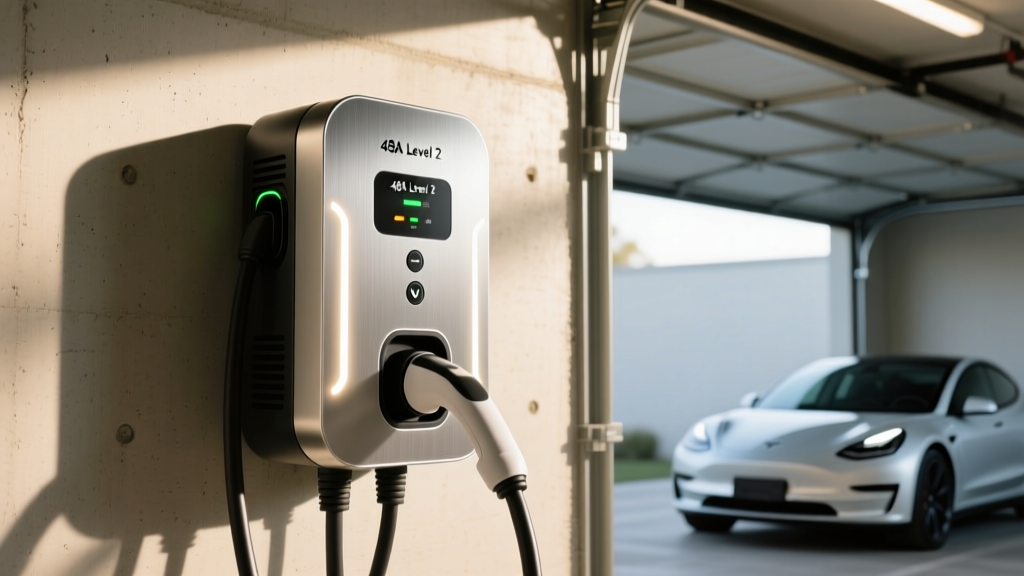
Level 2 is the backbone of home EV ownership. The Charger EV's onboard charger accepts up to 11.5 kW (48 amps at 240V). This adds about 30–34 miles of range per hour, meaning a full 0–100% charge takes roughly 9 hours. Most owners plug in each evening and wake to a full battery. For a 100.5 kWh pack, Level 2 is not optional — it's a necessity.
DC Fast Charging bypasses the onboard charger and sends DC current directly to the battery. The Charger EV supports up to 270 kW peak on CCS1-equipped stations. At peak rate, you can add roughly 10 miles of range per minute. However, charging follows a curve: the battery accepts peak power only between roughly 10–40% State of Charge (SoC), then tapers progressively. A 10–80% session takes approximately 27 minutes under ideal conditions (warm battery, low SoC start). Above 80%, speed drops sharply — from 80–100% can take as long as the 10–80% session.
Home Charger Installation: Electrical Requirements & Costs
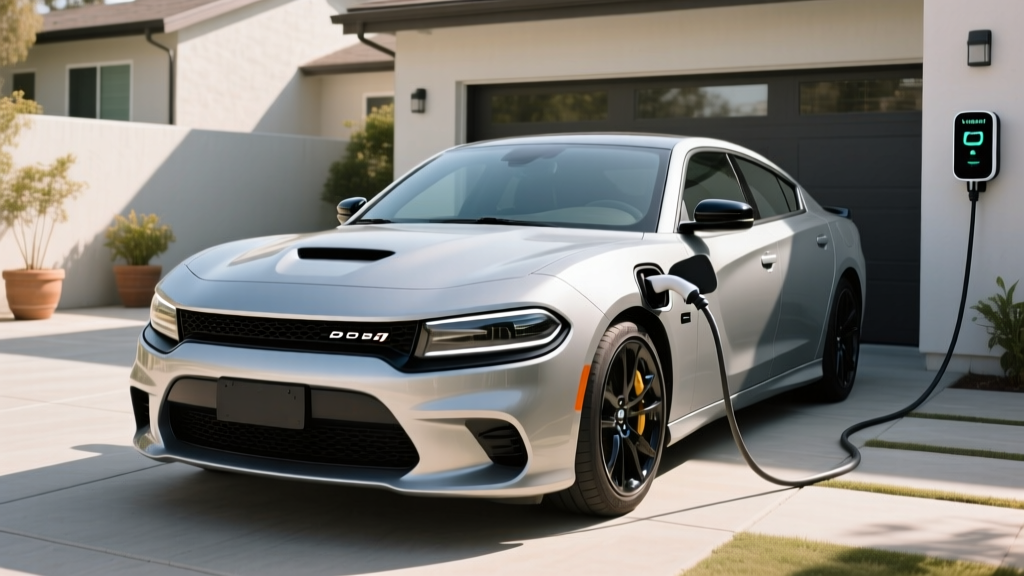
Installing a dedicated Level 2 home charger for the Charger EV requires a 240V circuit, similar to an electric dryer or oven. Here's what's involved:
Electrical Specifications Needed
- Circuit: Dedicated 60-amp breaker (supports continuous 48A draw, per NEC 80% rule)
- Wire: 6 AWG copper (THHN in conduit or NM-B/Romex, depending on local code)
- Outlet: NEMA 14-60 (if using a plug-in charger) or hardwired connection
- Panel capacity: Minimum 200-amp service recommended for homes with existing electric appliances
If your electrical panel is already near capacity — common in homes built before 2000 with added HVAC, electric ranges, and dryers — you may need a panel upgrade from 100A or 150A to 200A service. This is the single biggest variable in installation cost.
Installation Cost Breakdown
| Item | Low End | High End | Notes |
|---|---|---|---|
| Level 2 Charger (Equipment) | $400 | $750 | 40A–48A, 240V, smart/Wi-Fi capable |
| Electrician Labor | $500 | $1,500 | Depends on panel-to-garage distance, conduit run |
| Electrical Permit | $50 | $200 | Required in most jurisdictions |
| Panel Upgrade (if needed) | $1,500 | $3,500 | 100A→200A service upgrade |
| Total (No Panel Upgrade) | $950 | $2,450 | Most newer homes with 200A service |
| Total (With Panel Upgrade) | $2,450 | $5,950 | Older homes needing service upgrade |
Most homeowners with a 200A panel and a garage within 50 feet of the panel spend between $1,200 and $2,000 total for a quality Level 2 installation. If your panel is in the basement and your parking spot is in a detached garage, expect conduit and trenching costs to push the total higher.
Always hire a licensed electrician and pull a permit. Unpermitted electrical work can void your homeowner's insurance and create fire risk. The NEC requires a GFCI-protected circuit for EV charging in garages and all outdoor installations.
What Electrical Upgrades Might I Need?
Beyond the dedicated 60A circuit, the most common upgrade is a panel replacement. Signs you may need one:
- Your panel is rated below 200A (check the main breaker label)
- Your panel uses fuses rather than breakers
- You have a Federal Pacific or Zinsco panel (known safety hazards — replace regardless of EV charging)
- Your electrician's load calculation shows insufficient headroom for a 48A continuous draw
Some utilities offer rebates for panel upgrades tied to EV adoption. Check with your local utility before scheduling work.
Connector Compatibility: NACS, CCS1 & Adapter Requirements
The 2025-2026 Dodge Charger EV ships with a CCS1 (Combined Charging System) port. This is the standard connector used by most non-Tesla EVs in North America through 2025.
| Connector | Native Support? | Network Access | Adapter Needed? |
|---|---|---|---|
| CCS1 | Yes (native) | Electrify America, EVgo, ChargePoint, Ionity | No |
| NACS (Tesla) | No (adapter required) | Tesla Supercharger network (16,000+ stalls) | Yes — CCS-to-NACS adapter (~$200–$250) |
| CHAdeMO | No | Largely discontinued in US | N/A — not recommended |
| J1772 (Level 2) | Yes (CCS includes J1772) | All public Level 2 stations | No |
Key consideration: Tesla's Supercharger network is the largest and most reliable DC fast-charging network in the US. Stellantis has not announced native NACS adoption for the Charger EV as of early 2026. To access Superchargers, you'll need a third-party CCS-to-NACS adapter (such as those from Lectron or A2Z). Verify adapter compatibility with your specific model year before purchasing, and note that some adapters limit charge rate to 150 kW rather than the Charger's full 270 kW capability.
For Level 2 public charging, the CCS port's upper J1772 section is fully compatible with all public Level 2 stations — no adapter needed.
Charging Cost Per Mile: EV vs Gas Comparison
One of the Charger EV's strongest ownership arguments is fuel-cost savings. Here's how electricity costs compare to gasoline for a vehicle in this performance class:
| Scenario | $/kWh or $/gallon | Cost Per Mile | Annual (12,000 mi) |
|---|---|---|---|
| Home charging (off-peak TOU rate) | $0.12/kWh | $0.036 | $432 |
| Home charging (standard rate) | $0.18/kWh | $0.054 | $648 |
| Public Level 2 (ChargePoint, etc.) | $0.25–$0.35/kWh | $0.075–$0.105 | $900–$1,260 |
| DC Fast Charging (Electrify America) | $0.40–$0.55/kWh | $0.12–$0.165 | $1,440–$1,980 |
| Gas equivalent (Dodge Challenger R/T, 18 MPG combined) | $3.40/gal | $0.189 | $2,268 |
At the Charger EV's efficiency of approximately 3.0–3.3 kWh/mile (roughly 100–110 MPGe combined), home charging at off-peak rates delivers fuel costs around $0.04 per mile — less than one-fifth the cost of gasoline in a comparable V8 muscle car.
Even relying exclusively on DC fast charging (the most expensive option), the Charger EV costs less per mile than a gas Challenger R/T getting 18 MPG. Most owners who charge at home 80% of the time and use DC fast charging only on road trips spend $600–$800 annually on electricity versus $2,200+ on gasoline.
According to fueleconomy.gov, the national average electricity rate for EV charging is approximately $0.17/kWh, though time-of-use (TOU) plans from your utility can drop overnight rates to $0.08–$0.12/kWh.
Recommended Level 2 Home Chargers for the Charger EV
With an 11.5 kW onboard charger, you want a Level 2 unit that can deliver at least 48 amps (11.5 kW). Here are three proven options:
ChargePoint Home Flex
- Power Output: Up to 12 kW (50A) — adjustable down
- Connector: J1772 (compatible with CCS port)
- Cable Length: 23 feet
- Smart Features: Wi-Fi, Alexa, scheduling, energy tracking
- Price: ~$550–$650
- Install: Hardwired or NEMA 14-50 plug
Best for: Smart scheduling with TOU rates, robust app
Emporia Level 2 EV Charger
- Power Output: Up to 11.5 kW (48A)
- Connector: J1772
- Cable Length: 24 feet
- Smart Features: Wi-Fi, energy monitoring, solar integration
- Price: ~$400–$450
- Install: Hardwired or NEMA 14-50 plug
Best for: Budget-conscious buyers with solar panels
Wallbox Pulsar Plus
- Power Output: Up to 11.5 kW (48A)
- Connector: J1772
- Cable Length: 25 feet
- Smart Features: Wi-Fi/Bluetooth, Power Sharing, compact design
- Price: ~$500–$600
- Install: Hardwired or NEMA 14-50 plug
Best for: Small garages, dual-charger setups
All three units are UL-listed and support the 48A continuous draw the Charger EV can accept. Avoid 32A (7.7 kW) chargers — they'll add only ~22 miles of range per hour and need 13+ hours for a full charge on this large battery.
DC Fast Charging on the Road: Networks & Practical Tips
The Charger EV's 270 kW peak DC fast-charge capability places it among the faster-charging EVs available. To take advantage:
- Electrify America operates 350 kW-capable CCS1 stations across the US — the Charger can pull close to its 270 kW peak here
- EVgo offers 350 kW CCS1 stalls at select metro locations
- Tesla Superchargers (with adapter) — most V3 stalls cap at 250 kW, limiting the Charger slightly below its peak
For optimal DC fast charging, precondition the battery. The Charger EV's navigation system will automatically begin warming the battery when you route to a charging station. A cold battery (below 50°F) will accept significantly less power — potentially dropping peak charge rate from 270 kW to under 100 kW until the pack warms. Preconditioning typically begins 10–20 minutes before arrival and is essential in winter.
Plan road-trip charging stops between 10–80% SoC. The time penalty for charging from 80–100% on DC fast is severe — often adding 20+ minutes for the last 20% of the battery. On a 300-mile trip, two 20-minute stops (10–80%) are faster than one 45-minute stop (10–100%).
Safety, Code Compliance & Best Practices
EV charging involves sustained high-current draw — often 8–10 hours at 48 amps. Safety is non-negotiable:
- Dedicated circuit: Your Level 2 charger must have its own breaker — never share a circuit with other appliances
- GFCI protection: Required by NEC 2020+ for all EV charging outlets in garages and outdoors
- Outdoor rating: If installing outside, ensure the charger carries a NEMA 4 (weatherproof) rating — all three units above qualify
- Cable management: Use a wall-mounted holster to keep cables off the ground and prevent tripping hazards
- Permit and inspection: Most municipalities require an electrical permit and final inspection for EV charger installations — this protects you and is often required for utility rebates
Never use an extension cord with an EV charger. If the charger's cable doesn't reach your vehicle's charge port, have an electrician relocate the outlet or install a longer-cable unit.
Frequently Asked Questions
How much does it cost to install a home EV charger for the Dodge Charger EV?
Expect $1,200–$2,000 total (equipment + electrician + permit) if your home has a 200A panel and the garage is near the panel. If you need a panel upgrade from 100A to 200A, add $1,500–$3,500. The large 100.5 kWh battery makes a proper 48A Level 2 installation essential — don't cut corners with a 32A unit.
How fast will each charging level add range?
Level 1 (120V): ~3–4 miles per hour. Level 2 (240V, 48A): ~30–34 miles per hour. DC Fast (270 kW peak): ~10 miles per minute at peak, tapering above 50% SoC. A 10–80% DC fast session takes approximately 27 minutes.
Which connector is compatible with the Dodge Charger EV?
The Charger EV uses CCS1 natively, which covers Electrify America, EVgo, ChargePoint DC stations, and all J1772 Level 2 stations. To use Tesla Superchargers, you need a CCS-to-NACS adapter (~$200–$250). CHAdeMO is not supported and is largely discontinued in the US.
How much does charging cost per mile vs gas?
Home charging at $0.12/kWh (off-peak): ~$0.04/mile. Standard home rate ($0.18/kWh): ~$0.05/mile. DC fast charging ($0.48/kWh avg): ~$0.14/mile. A comparable gas Dodge Challenger R/T at 18 MPG and $3.40/gal costs ~$0.19/mile. Home charging saves 75–80% on fuel costs.
What electrical upgrades might I need?
The most common is a panel upgrade from 100A or 150A to 200A service ($1,500–$3,500). You'll need a dedicated 60A breaker with 6 AWG wire. Homes with Federal Pacific or Zinsco panels should replace them regardless of EV plans. Your electrician will perform a load calculation to determine if your current panel has capacity.
Does the Dodge Charger EV qualify for the federal tax credit?
Federal §30D tax credit eligibility depends on MSRP caps ($55,000 for sedans), buyer income limits ($150K single / $300K joint), and battery critical-mineral sourcing requirements. As of 2026, the Charger EV's base MSRP exceeds the sedan cap on most trims, potentially limiting credit eligibility. Check the latest rules at IRS.gov and consult a tax professional before relying on the credit in your purchase decision.
Sources: fueleconomy.gov, IRS §30D Clean Vehicle Credits, Stellantis/Dodge official specifications.