Trading Your HEMI for Kilowatts: What Changes When You Go Electric
If you've been driving a 2006 Dodge Charger — whether the 2.7L V6 sipping fuel at 21 MPG combined or the 5.7L HEMI V8 rumbling through 18 MPG — you already know the ritual: watch the fuel gauge drop, find a station, and hand over $45-$70 every week. Switching to a battery-electric vehicle (BEV) replaces that routine with something fundamentally different, but the transition raises immediate questions. How do you actually fuel an EV? What does home charging cost? Will your garage electrical panel handle it?
This guide breaks down everything a Charger owner needs to know about EV charging in 2026: the three charging levels and what they actually deliver, real installation costs for a home Level 2 setup (including the panel upgrade scenario many older homes face), connector standards, per-mile cost comparisons against gasoline, and specific equipment recommendations. No marketing gloss — just the numbers.
The Three Charging Levels: Speed, Power, and Real-World Range Gains
EV charging is measured in kilowatts (kW), which represents the rate of power delivery — think of it like the flow rate of a gas pump nozzle. The battery itself stores energy measured in kilowatt-hours (kWh), which is the total capacity, analogous to the size of your Charger's 19-gallon fuel tank. Confusing kW with kWh is the single most common mistake new EV owners make. Keep them separate: kW is speed, kWh is volume.
| Level | Voltage / Amps | Max Power (kW) | Miles of Range Added Per Hour | Best Use Case |
|---|---|---|---|---|
| Level 1 | 120V / 12A | ~1.4 kW | 3–5 miles | Overnight top-up, PHEVs, low-mileage drivers |
| Level 2 | 240V / 32A–48A | 7.7–11.5 kW | 25–44 miles | Daily home charging, workplace charging |
| DC Fast Charge | 400V–800V DC | 50–350 kW | 150–1,200+ miles (equivalent rate) | Road trips, rapid top-ups |
Level 1 plugs into any standard household 120V outlet. At roughly 1.4 kW, it adds about 3-5 miles of range per hour. For a PHEV with 30 miles of electric range, an overnight session fully replenishes the battery. For a full BEV with an 80 kWh battery, Level 1 would take 50+ hours from empty — impractical as a primary strategy, but useful as a backup or for plug-in hybrids.
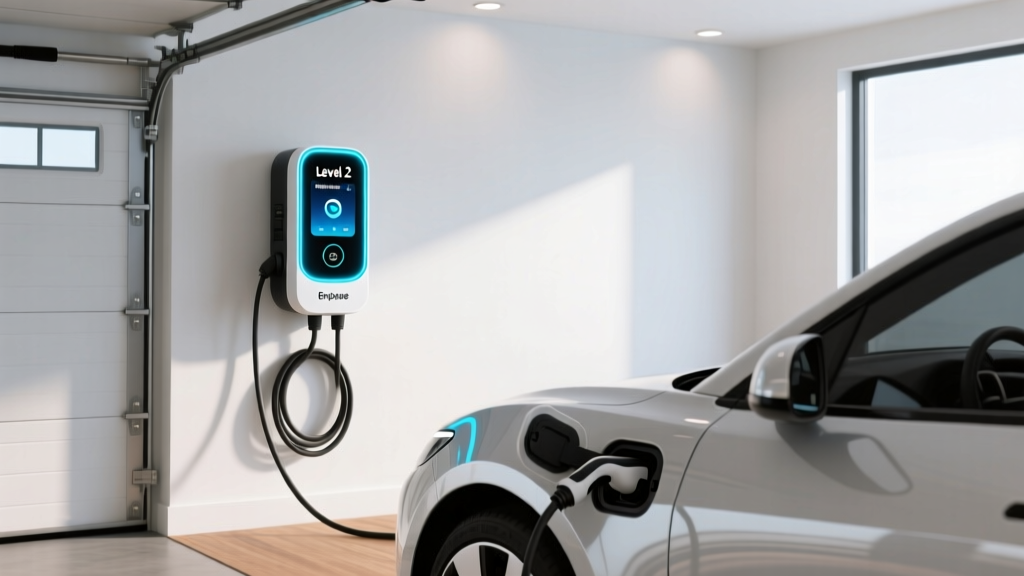
Level 2 requires a 240V circuit — the same voltage your electric dryer or oven uses. Most modern Level 2 home chargers deliver between 7.7 kW (32A) and 11.5 kW (48A). At 11.5 kW, you add roughly 40-44 miles of range per hour, meaning a 300-mile BEV replenishes overnight in about 7-8 hours. This is the standard home charging solution for the vast majority of EV owners.
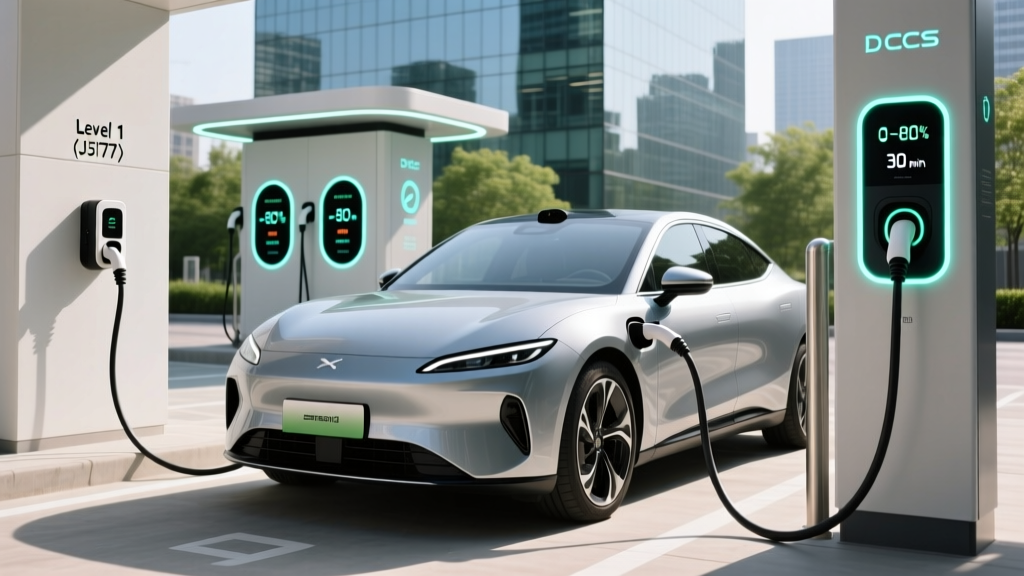
DC Fast Charging bypasses the vehicle's onboard charger and feeds DC current directly to the battery. Peak rates range from 50 kW at older stations to 350 kW at modern Electrify America or Tesla Supercharger V4 stalls. A 10-80% charge on a capable vehicle can take as little as 15-20 minutes at 250+ kW. However, charge speed is not linear: the battery accepts peak power only in a narrow state-of-charge window (typically 10-50%), then tapers significantly above 80% to protect cell health. A "250 kW" charger doesn't deliver 250 kW for the entire session — the sustained average is often closer to 120-170 kW depending on battery temperature and chemistry.
Home Level 2 Installation: Electrical Requirements and Real Costs
Installing a Level 2 home charger isn't just about buying a wall box — it's an electrical project that must comply with the National Electrical Code (NEC) and your local jurisdiction's permitting requirements. Here's what's involved.
Electrical Specifications
A typical Level 2 charger requires a dedicated 240V circuit. The most common configurations:
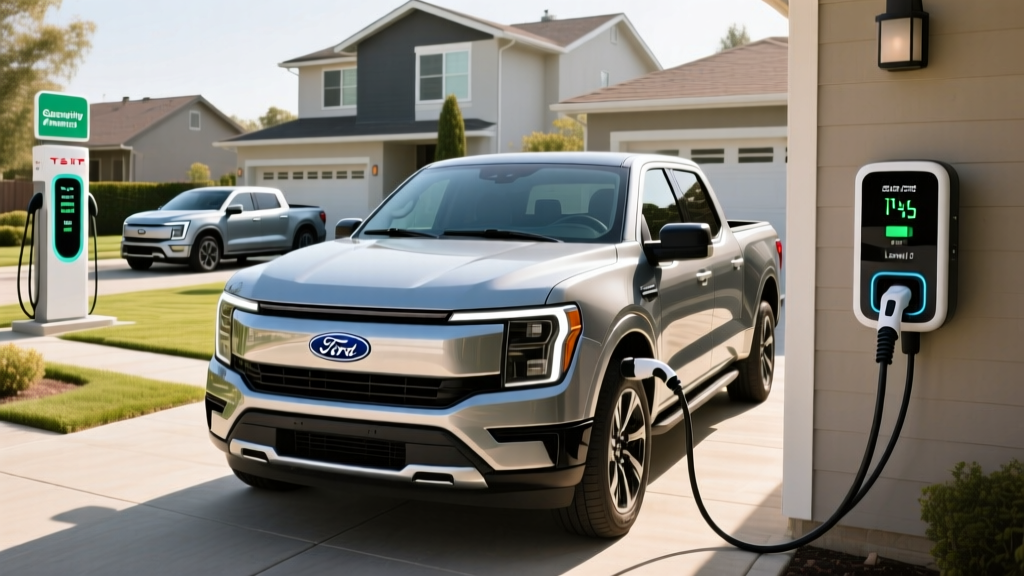
- NEMA 14-50 outlet (50A circuit, 40A continuous draw): Supports chargers up to 9.6 kW. This is the most versatile option because you can unplug the charger and use the outlet for other equipment, and it's compatible with many portable EV chargers.
- Hardwired 60A circuit (48A continuous draw): Supports chargers up to 11.5 kW. Hardwired connections are more reliable (no plug to loosen over time) and are required for the highest-power residential units.
- NEMA 6-20 outlet (20A circuit, 16A continuous): Supports 3.8 kW chargers — adequate for PHEVs or low-mileage BEV drivers, and cheaper to install.
NEC Article 625 requires EV charging equipment to be on a dedicated circuit with ground-fault protection (GFCI). Outdoor installations require weather-rated (NEMA 4 or NEMA 4X) enclosures and connectors.
Panel Upgrade Reality
This is where many owners of older homes — including anyone whose house was wired around the same era as a 2006 Dodge Charger — encounter a surprise. A 40A or 48A EV circuit demands available capacity on your main electrical panel. Many homes built before 2010 have 100A or 150A main service. If your panel is already near capacity (running central AC, electric range, electric dryer, and water heater), adding a 40-50A EV circuit may require a panel upgrade to 200A, which typically costs $1,500-$3,000 on top of the charger installation.
Before committing to a charger, have a licensed electrician perform a load calculation per NEC Article 220. Some utilities offer free or subsidized panel upgrades for EV adopters — check with your local provider.
Installation Cost Breakdown
| Component | Simple Install (Panel Nearby) | Complex Install (Long Run / Panel Upgrade) |
|---|---|---|
| Level 2 Charger (Equipment) | $350–$700 | $350–$700 |
| Electrician Labor (2–4 hrs simple; 6–10 hrs complex) | $400–$900 | $1,200–$2,500 |
| Electrical Materials (conduit, wire, breakers) | $100–$300 | $300–$800 |
| Permit & Inspection | $50–$200 | $50–$200 |
| Panel Upgrade (if needed) | N/A | $1,500–$3,000 |
| Total | $900–$2,100 | $3,400–$7,200 |
The wide range reflects real-world variability: a garage with the panel on the adjacent wall and conduit already in place might cost under $1,000 all-in. A detached garage 80 feet from the panel, requiring a trench, new conduit, and a 200A service upgrade, can exceed $6,000. Always get at least two itemized quotes from licensed electricians.
Connector Standards in 2026: NACS, CCS, and Adapters
The connector landscape has consolidated significantly since the early 2020s. Here's where things stand for 2026 model-year vehicles:
| Connector | Brands Using It Natively | Notes |
|---|---|---|
| NACS (North American Charging Standard) | Tesla, Ford, GM, Rivian, Volvo, Polestar, Mercedes-Benz, Fisker, Lucid (adapter), Honda (upcoming) | Now the dominant standard. Access to Tesla Supercharger network natively or via adapter. |
| CCS1 (Combined Charging System) | Hyundai, Kia, Volkswagen, BMW, Stellantis (some), Subaru, Toyota (bZ series) | Still widely available at Electrify America, EVgo, ChargePoint. Adapters to NACS available. |
| CHAdeMO | Nissan Leaf (legacy), Mitsubishi Outlander PHEV (legacy) | Being phased out. Few new vehicles use it. Stations still exist but declining. |
Key takeaway: If you're buying a new EV in 2026, your vehicle will almost certainly use either NACS or CCS1. Home Level 2 chargers are available with either connector type, and many manufacturers now offer NACS-to-CCS adapters (typically $150-$250) so you can use either public network. When selecting a home charger, match the connector to your vehicle's native port to avoid needing an adapter for daily use.
Charging Cost Per Mile: EV vs. Your Old Charger's Gas Bill
The 2006 Dodge Charger with the 5.7L HEMI averaged roughly 18 MPG combined. At $3.50/gallon (a reasonable 2026 national average), that's $0.194 per mile in fuel alone. Let's compare that against common EV charging scenarios using a midsize sedan consuming 30 kWh per 100 miles (roughly the efficiency of a Tesla Model 3 or Hyundai Ioniq 6):
| Scenario | Rate | Cost Per Mile | Annual Cost (12,000 mi) |
|---|---|---|---|
| 2006 Charger 5.7L HEMI | $3.50/gal, 18 MPG | $0.194 | $2,333 |
| Home Level 2 (national avg electricity) | $0.16/kWh | $0.048 | $576 |
| Home Level 2 (off-peak / time-of-use) | $0.09/kWh | $0.027 | $324 |
| Public Level 2 (ChargePoint, EVgo) | $0.30/kWh | $0.090 | $1,080 |
| DC Fast Charging (Electrify America) | $0.48/kWh | $0.144 | $1,728 |
Even at the most expensive public DC fast-charging rates, an EV costs less per mile than the HEMI Charger. At home on off-peak electricity, you're paying roughly one-seventh the per-mile fuel cost. Over 12,000 miles annually, that's a potential savings of $1,750-$2,000 per year — enough to cover a Level 2 home installation in the first year.
Source: Electricity rates based on U.S. Energy Information Administration (EIA) average retail prices. Fuel economy figures from fueleconomy.gov.
Charging Time Examples: What to Expect with Common Battery Sizes
Charging time depends on three variables: battery capacity (kWh), charger power output (kW), and the vehicle's charge acceptance curve. Here are realistic estimates for common 2026 EV battery sizes, assuming you charge from 10% to 80% state of charge (the typical fast-charge window):
- 60 kWh battery (e.g., base Tesla Model 3 RWD, Chevy Equinox EV): ~42 kWh needed for 10-80%. On a 250 kW DC fast charger, expect approximately 18-22 minutes. On a home Level 2 at 11.5 kW, approximately 4 hours for a full charge.
- 80 kWh battery (e.g., Ford Mustang Mach-E Extended Range, Hyundai Ioniq 5): ~56 kWh for 10-80%. On a 350 kW charger with an 800V architecture (Ioniq 5), expect approximately 16-18 minutes. On an 800V-capable vehicle at a 250 kW station, approximately 22-26 minutes. Home Level 2 at 11.5 kW: ~7 hours full charge.
- 100+ kWh battery (e.g., GMC Sierra EV, Tesla Model S): ~70 kWh for 10-80%. On a 350 kW charger, approximately 25-32 minutes. Home Level 2 at 11.5 kW: ~9-10 hours full charge.
Charge curve reality check: Those peak kW numbers (250, 350) apply only in the 10-50% SoC range under ideal thermal conditions. Above 60%, most batteries taper significantly. Above 80%, charging slows to roughly Level 2 speeds to protect cell longevity. This is why EV road-trippers target 10-80% charges rather than filling to 100% — the last 20% can take as long as the first 60%.
Recommended Home Level 2 Chargers (2026 Picks)
Emporia Vue Level 2 Smart Charger
- Power Output: 11.5 kW (48A hardwired) or 9.6 kW (40A NEMA 14-50)
- Connector: J1772 (NACS adapter available) or native NACS
- Cable Length: 24 feet
- Smart Features: Wi-Fi, scheduling, energy monitoring, solar integration, load management
- Price: ~$399
- Best For: Budget-conscious buyers wanting full smart features and solar-aware charging
ChargePoint Home Flex (2nd Gen)
- Power Output: Up to 12 kW (50A hardwired); adjustable down to 16A for lower-capacity panels
- Connector: J1772 or NACS
- Cable Length: 18 or 23 feet
- Smart Features: Wi-Fi, app scheduling, Alexa integration, flexible amperage dial for panel-limited homes
- Price: ~$599–$699
- Best For: Homes with limited panel capacity — the adjustable amperage lets you install on a 20A-50A circuit without replacing the unit
Tesla Wall Connector
- Power Output: 11.5 kW (48A hardwired)
- Connector: Native NACS (J1772 adapter included for non-Tesla EVs)
- Cable Length: 24 feet
- Smart Features: Wi-Fi, power sharing (link multiple units on one circuit), OTA updates, access control
- Price: ~$475
- Best For: Tesla owners or households with multiple NACS-equipped EVs (power sharing is unique)
All three units are UL-listed, NEMA 4-rated for outdoor use, and ENERGY STAR certified. Your choice should be driven by your vehicle's connector, your panel's available amperage, and whether you need smart scheduling for time-of-use electricity rates.
Safety, Code, and Installation Best Practices
EV charging draws sustained high current for hours — unlike a dryer that cycles on and off. This places unique demands on your electrical system. Key requirements per NEC Article 625 and best practices:
- Dedicated circuit: Your EV charger must have its own breaker — no shared circuits with other appliances. A 48A charger requires a 60A breaker (NEC requires circuits to be rated at 125% of continuous load).
- GFCI protection: Required for all EV supply equipment, whether hardwired or outlet-based. Most modern EVSE units have built-in ground-fault detection.
- Outdoor rating: If installing outside, the unit must be rated NEMA 4 (weather-resistant) or NEMA 4X (corrosion-resistant for coastal areas). The connector holster should include a drip loop provision.
- Permit and inspection: Nearly all jurisdictions require an electrical permit for a new 240V circuit. The inspection verifies wire gauge, breaker sizing, grounding, and GFCI compliance. Skipping the permit risks insurance claim denial if an electrical fire occurs.
- Wire gauge: A 60A circuit typically requires 6 AWG copper (THHN in conduit) or 4 AWG aluminum. Your electrician will size this based on run length and local code amendments.
- Cable management: A 24-foot charging cable weighs several pounds and can be a tripping hazard. Wall-mounted cable organizers or retractors keep the garage floor clear.
Frequently Asked Questions
How much does it cost to install a home EV charger?
A straightforward Level 2 installation (panel nearby, short wire run, no upgrade needed) typically costs $900-$2,100 including equipment, electrician labor, materials, and permit. If your home requires a panel upgrade from 100A/150A to 200A service, total costs can reach $3,400-$7,200. Always get itemized quotes that separate equipment, labor, materials, and permit fees.
How fast will each charging level add range?
Level 1 (120V): 3-5 miles per hour. Level 2 (240V, 48A): 35-44 miles per hour depending on vehicle efficiency. DC Fast Charging: effectively 150-1,200+ miles per hour at peak rate, though the charge curve tapers above 50-60% SoC, so real sessions average much less than peak. For daily driving, Level 2 replenishes a full day's driving (30-50 miles) in under two hours.
Which connector/charger is compatible with my EV?
Check your vehicle's charge port. Most 2026 EVs use either NACS (Tesla, Ford, GM, Rivian, Volvo, and others) or CCS1 (Hyundai, Kia, VW, BMW, Subaru, Toyota). Legacy Nissan Leaf models use CHAdeMO. Home chargers are available with either NACS or J1772 connectors (J1772 works with CCS1 vehicles natively and with NACS vehicles via adapter). Match your home charger to your vehicle's native port for convenience.
How much does charging cost per mile vs. gas?
A 2006 Dodge Charger 5.7L HEMI at 18 MPG costs roughly $0.194/mile at $3.50/gallon. An efficient EV (30 kWh/100 mi) charged at home at $0.16/kWh costs $0.048/mile — a 75% reduction. Even at expensive public DC fast-charger rates ($0.48/kWh), the EV costs $0.144/mile, still 26% cheaper than the HEMI. Plug-in hybrids fall in between, with electric-only miles at EV cost and gas miles at 40-50 MPG efficiency.
What electrical upgrades might I need?
The most common upgrade is a panel capacity increase. Homes with 100A or 150A main service that already run multiple high-draw appliances (electric range, dryer, central AC, electric water heater) may not have 40-50A of spare capacity. A licensed electrician will perform a NEC Article 220 load calculation to determine available headroom. If a panel upgrade to 200A is needed, budget $1,500-$3,000. Some utilities offer rebates or on-bill financing for EV-related panel upgrades — check with your provider before proceeding.