Disney Springs EV Charging: What's Actually There?
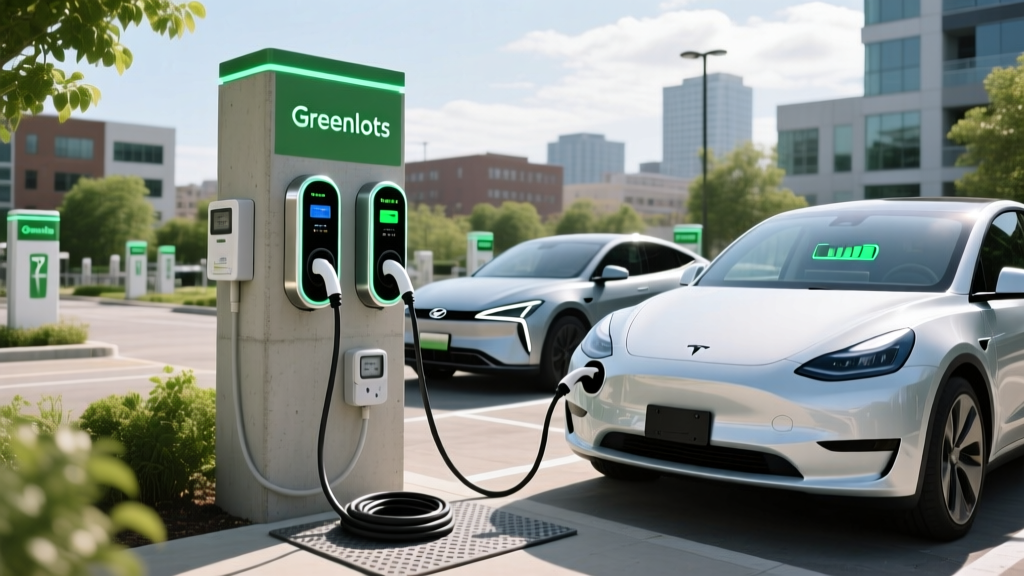
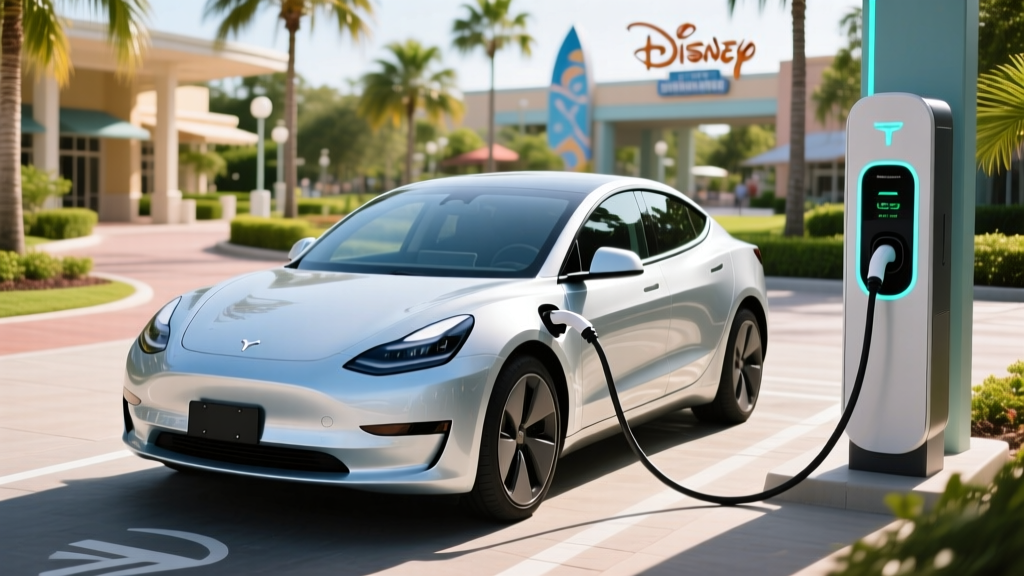
If you're driving an electric vehicle to Walt Disney World, Disney Springs is one of the most accessible charging stops in the Orlando area. The complex hosts a bank of Tesla Superchargers located in the Orange Garage (also called the Orange Parking Garage), making it a convenient top-up point while you shop, dine, or catch a movie. As of 2026, this installation consists of V3 Supercharger stalls capable of delivering up to 250 kW of DC fast-charging power.
But here's what trip planners often get wrong: Disney Springs is not a universal charging destination. If you drive a non-Tesla EV with a CCS1 or CHAdeMO connector, your options on Disney property are limited. This guide breaks down exactly what's available, what connectors you'll need, realistic charging times, costs, and the backup Level 2 and DC fast-charging networks within a short drive.
Charging Levels Explained: What You'll Find at Disney Springs and Beyond
Before we get into specific stations, let's establish what each charging level delivers. Understanding the difference between kW (power — how fast energy flows) and kWh (energy — the battery's total capacity) is essential for planning your stop.
| Level | Voltage | Power (kW) | Miles Added/Hour | Typical Use |
|---|---|---|---|---|
| Level 1 | 120V AC | 1.0–1.4 kW | 3–5 mi/hr | Overnight trickle, emergency |
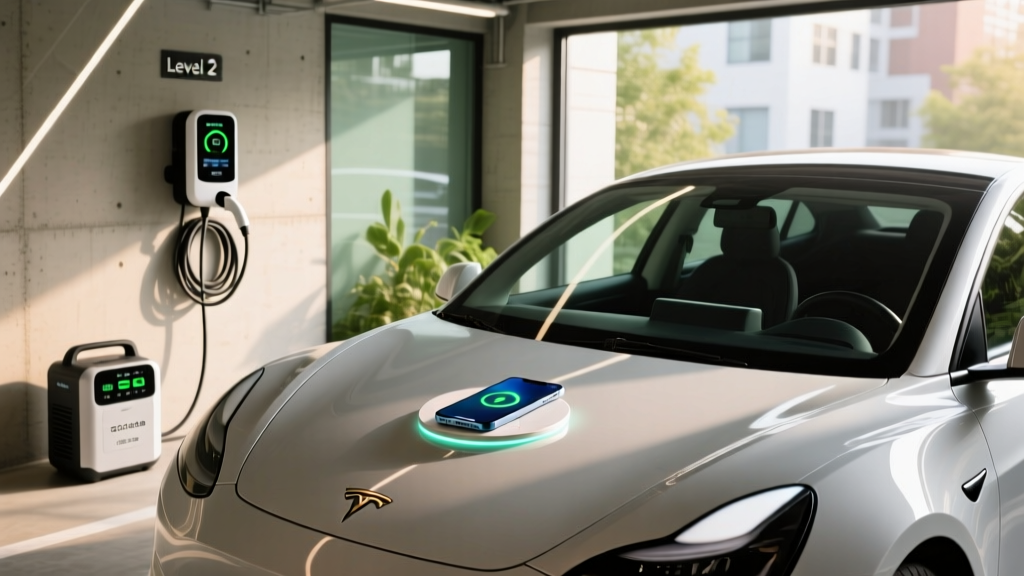
| Level 2 | 240V AC | 7.2–19.2 kW | 25–75 mi/hr | Home daily charging, destination |
| DC Fast Charge | 400–800V DC | 50–350 kW | 150–1,000+ mi/hr (peak) | Road trips, quick top-ups |
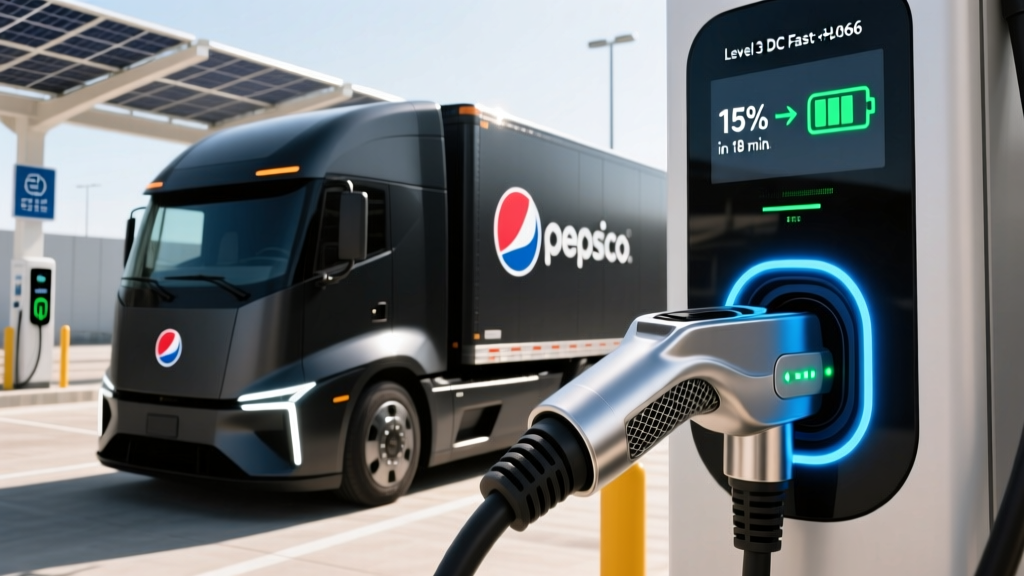
At Disney Springs, you're dealing with DC fast charging (Level 3 equivalent). A V3 Supercharger at 250 kW can add roughly 200 miles of range in 15 minutes on a compatible Tesla — but only during the peak portion of the charge curve. Above 80% state of charge, the rate tapers significantly, often dropping below 50 kW. That's why EV drivers target the 10–80% window for the fastest session.
Connector Compatibility: Will Your EV Plug In?
This is where Disney Springs charging gets complicated for non-Tesla drivers. Here's the connector landscape as of 2026:
| Connector | Vehicles Using It | Disney Springs Availability |
|---|---|---|
| NACS (Tesla) | Tesla (all), Ford F-150 Lightning & Mustang Mach-E (2025+), Rivian (2025+), GM Ultium vehicles (2025+), Hyundai/Kia (2026 models) | Available — Tesla Superchargers in Orange Garage |
| CCS1 | Hyundai/Kia (2024 and earlier), VW ID.4, BMW iX, older Ford/Rivian/GM EVs | Not on-site — nearest DCFC ~2–4 miles away |
| CHAdeMO | Nissan Leaf (legacy) | Not available on Disney property |
The NACS transition matters here. By 2026, most major automakers have adopted the North American Charging Standard (NACS) for new vehicles. Ford, GM, Rivian, and Hyundai/Kia models built from 2025 onward ship with native NACS ports. If you're driving a 2024 or earlier model with CCS1, you'll need a Tesla-approved CCS-to-NACS adapter (approximately $200–$250) to access Superchargers — and only at Supercharger stalls that Tesla has opened to non-Tesla vehicles through its "Magic Dock" program. Check the Tesla app or the Tesla Supercharger map to confirm whether the Disney Springs stalls support non-Tesla access before you arrive.
For CCS1 drivers without an adapter, the closest reliable DC fast-charging alternatives include:
- Electra America locations along I-4 and International Drive (CCS1, up to 150–350 kW)
- EVgo stations in the Orlando Vineland Premium Outlets area (CCS1, 50–100 kW)
- ChargePoint DC fast stations near Disney's Coronado Springs Resort area
Realistic Charging Times and Costs at Disney Springs
Let's put numbers on what a session actually looks like. Charging speed depends on your vehicle's maximum acceptance rate, battery size, state of charge, and battery temperature.
Charging Time Examples (10–80% DC Fast Charge)
| Vehicle | Battery (kWh usable) | Peak Charge Rate (kW) | 10–80% Time (est.) |
|---|---|---|---|
| Tesla Model 3 Long Range (2026) | 75 kWh (NMC) | 250 kW | ~25–28 min |
| Tesla Model Y Long Range (2026) | 75 kWh (NMC) | 250 kW | ~25–28 min |
| Ford F-150 Lightning Ext. Range (2026) | 131 kWh (NMC) | 150 kW (CCS) / 250 kW (NACS adapter) | ~40–45 min |
| Hyundai Ioniq 5 (2026, NACS) | 84 kWh (NMC) | 240 kW (800V) | ~18–20 min |
| Chevrolet Equinox EV (2026) | 85 kWh (NMC) | 190 kW | ~30–35 min |
Real-world caveat: These times assume a preconditioned battery (warm, ~70–80°F) and starting at 10% SoC. In Florida's summer heat, thermal management may slightly reduce sustained peak power. If you arrive at 30% SoC instead of 10%, your session will be shorter in total time but you'll spend more of it in the tapered portion of the charge curve.
Cost to Charge: Disney Springs and Comparison Scenarios
Tesla Supercharger pricing varies by location and time of day. For the Disney Springs area, expect rates in the range of $0.30–$0.40 per kWh during standard hours, with potential peak pricing during high-demand evening periods.
| Scenario | Rate | Cost for 300 mi (at 3 mi/kWh) | Cost per Mile |
|---|---|---|---|
| Home Level 2 (off-peak utility rate) | $0.12/kWh | $12.00 | $0.04 |
| Home Level 2 (standard rate) | $0.16/kWh | $16.00 | $0.053 |
| Disney Springs Supercharger | $0.35/kWh (est.) | $35.00 | $0.117 |
| Electrify America DCFC | $0.48/kWh (guest rate) | $48.00 | $0.16 |
| Gas car (27 MPG, $3.30/gal) | — | $36.67 | $0.122 |
The takeaway: even at public DC fast-charging rates, an efficient EV like the Tesla Model 3 or Hyundai Ioniq 5 costs roughly the same or less per mile than a gas car averaging 27 MPG. But home charging remains 3–4x cheaper per mile. If your Disney trip includes a hotel stay with Level 2 charging, use that for overnight fills and reserve the Supercharger for departure-day top-ups.
Planning Your Orlando EV Trip: Beyond Disney Springs
Disney Springs should be one node in your charging plan, not your only option. Here's a practical framework for Orlando-area EV visitors:
Choose Disney Springs Supercharger if:
- You drive a Tesla or NACS-equipped vehicle
- You plan to spend 1–3 hours at Disney Springs (shopping, dining, AMC theater)
- You need a quick 10–80% top-up before heading back to your hotel or hitting I-4
Choose an alternative DCFC station if:
- Your EV has a CCS1 port and you don't carry a Magic Dock-compatible adapter
- You need CHAdeMO (Nissan Leaf owners)
- The Supercharger stalls show congestion on the Tesla app during peak evening hours
Hotels Near Disney with Level 2 Charging
Several Disney Resort hotels and nearby properties offer Level 2 charging for overnight guests. Disney's own resorts have been progressively adding ChargePoint and Tesla Destination Charger stations. Typical Level 2 rates at hotels range from complimentary to $0.25/kWh. Confirm availability through the hotel concierge or apps like PlugShare before booking — Level 2 spots at resorts are limited and first-come, first-served.
Charging on I-4 and the Florida Turnpike
If you're driving into Orlando from Tampa, Jacksonville, or Miami, you'll pass multiple DC fast-charging stations along I-4 and the Turnpike. Electrify America, EVgo, and Tesla Superchargers are spaced at roughly 30–50 mile intervals along these corridors. Plan your stops using the EPA's fueleconomy.gov range data for your specific vehicle, subtracting 15–20% for sustained highway speeds (70+ mph) and another 10–15% if running HVAC hard in Florida summer heat.
Understanding the Charge Curve: Why Your Session Isn't Linear
A common mistake first-time EV road-trippers make is calculating charge time as a simple division: battery size ÷ charge rate. That ignores the charge curve — the way DC fast charging slows dramatically as the battery fills.
Here's what a typical session looks like at a 250 kW V3 Supercharger with a Tesla Model 3 Long Range (75 kWh battery):
- 10–30% SoC: Charging at 200–250 kW peak. ~5 minutes to add ~80 miles.
- 30–60% SoC: Rate drops to 120–170 kW. ~10 minutes for another ~100 miles.
- 60–80% SoC: Rate tapers to 50–80 kW. ~12 minutes for ~60 miles.
- 80–100% SoC: Rate drops below 30 kW. Not recommended for road-trip stops — it's faster to stop twice at 80% than once at 100%.
Preconditioning matters. If your EV's navigation is set to the Supercharger as your destination, the vehicle will warm or cool the battery en route to optimize the charge rate upon arrival. Without preconditioning — for instance, if you just pull in without routing through the nav — your initial charge rate may be 30–50% lower until the battery reaches optimal temperature. In Florida's heat, this typically means the battery may need cooling before accepting peak power.
If You're Considering a Home Charger After Your Trip
Many EV road trips spark the question: "Should I install a Level 2 charger at home?" If your Disney Springs experience convinces you that home charging is the move, here's what the installation looks like in practical terms.
Electrical Requirements
A standard home Level 2 installation requires:
- 240V dedicated circuit (same voltage as an electric dryer or oven)
- 40A to 60A breaker depending on the charger's maximum draw
- For a 48A charger, you need a 60A breaker (NEC requires circuits rated at 125% of continuous load)
- NEMA 14-50 outlet or hardwired connection (hardwired is preferred for 48A+ chargers)
Installation Cost Breakdown
| Component | Cost Range | Notes |
|---|---|---|
| Level 2 charger (hardware) | $350–$700 | Depends on power output and smart features |
| Electrician labor | $500–$2,000 | Varies by run length from panel to garage |
| Electrical permit | $50–$200 | Required in most jurisdictions |
| Panel upgrade (if needed) | $1,500–$3,500 | Older homes with 100A service may need 200A upgrade |
| Total (no panel upgrade) | $900–$2,900 | Most common scenario for newer homes |
| Total (with panel upgrade) | $2,400–$6,400 | Older homes, longer wire runs |
Panel upgrade reality check: Homes built before 1990 often have 100A electrical panels. Adding a 48A EV charger (60A breaker) may consume most of the panel's remaining capacity, especially if you also have electric heat, a dryer, and an oven. A licensed electrician will perform a load calculation to determine if your panel can handle the additional circuit. If not, a panel upgrade to 200A is necessary — and that's the single biggest variable in your installation cost. Always get a detailed quote from a licensed electrician before committing.
Equipment Recommendations
ChargePoint Home Flex
- Power: Up to 50A (12 kW) — adjustable via DIP switches
- Connector: NACS or J1772 (NACS for 2025+ vehicles)
- Cable length: 23 feet
- Smart features: Wi-Fi, app scheduling, energy tracking, Alexa integration
- Price: ~$550–$650
- Best for: Most homes, flexible amperage for older panels
Tesla Wall Connector
- Power: Up to 48A (11.5 kW)
- Connector: NACS native
- Cable length: 24 feet
- Smart features: Wi-Fi, OTA updates, Power-Share (dual units share one circuit), access control
- Price: ~$475
- Best for: Tesla and NACS-equipped vehicles; excellent value
Emporia Level 2 EV Charger
- Power: Up to 48A (11.5 kW)
- Connector: J1772 (NACS adapter available)
- Cable length: 24 feet
- Smart features: Wi-Fi, energy monitoring, solar integration, time-of-use scheduling
- Price: ~$350–$400
- Best for: Budget-conscious buyers, solar-panel homes
Safety and Code Considerations
- Dedicated circuit: NEC requires EV chargers to be on a dedicated circuit — no sharing with other outlets or appliances.
- GFCI protection: 2026 NEC requires GFCI protection for all EV charging outlets (hardwired units are exempt in many jurisdictions).
- Outdoor rating: If your charger is installed outside, ensure it carries a NEMA 4 or IP65 rating for weather resistance.
- Wire gauge: A 60A circuit requires 6 AWG copper wire minimum; longer runs may need 4 AWG to prevent voltage drop.
- Permit and inspection: Most municipalities require an electrical permit and post-installation inspection. Skipping this can void homeowner's insurance coverage for electrical fires.
Frequently Asked Questions
Are the Disney Springs EV chargers free?
No. Tesla Superchargers at Disney Springs charge per kWh. Expect rates around $0.30–$0.40/kWh depending on time of day. Tesla occasionally offers promotional free Supercharging, but this is vehicle-specific and not a general policy for the location.
Can non-Tesla EVs charge at Disney Springs Superchargers?
Possibly. Tesla has been opening select Supercharger stations to non-Tesla EVs through its Magic Dock adapter program, provided the vehicle has a CCS1 connector or a NACS adapter. Check the Tesla app for real-time availability — not all stalls at every location support non-Tesla vehicles. As of 2026, NACS-native vehicles from Ford, GM, Rivian, and Hyundai/Kia can access Superchargers directly.
How long does it take to charge at Disney Springs?
For a Tesla Model 3 or Model Y Long Range (75 kWh battery), expect approximately 25–28 minutes for a 10–80% session at a V3 Supercharger delivering up to 250 kW. Larger batteries like the F-150 Lightning Extended Range (131 kWh) will take 40–45 minutes for the same window.
What's the closest non-Tesla DC fast charger to Disney Springs?
Electrify America and EVgo operate DC fast-charging stations within 2–5 miles of Disney Springs, primarily along International Drive, Vineland Avenue, and the I-4 corridor. These stations offer CCS1 connectors at 50–350 kW. Use the PlugShare or Alternative Fuels Data Center locator to find the nearest active station.
How much does it cost to install a home EV charger?
A typical Level 2 home installation costs $900–$2,900 including the charger hardware, electrician labor, and permit — assuming your electrical panel has sufficient capacity. If a panel upgrade from 100A to 200A is needed, add $1,500–$3,500, bringing the total to $2,400–$6,400. Always get a load calculation from a licensed electrician first.
Is it cheaper to charge at home or at public DC fast chargers?
Home charging is significantly cheaper. At a national average electricity rate of $0.16/kWh, charging a 75 kWh battery at home costs about $12 for a full fill. The same fill at a Disney Springs Supercharger at $0.35/kWh costs about $26.25. Over a year of regular driving, home charging can save $600–$1,200 compared to relying on public DC fast chargers.
Do Disney Resort hotels have EV chargers?
Select Disney Resort hotels have Level 2 charging stations (typically ChargePoint or Tesla Destination Chargers) available to overnight guests. Availability is limited and first-come, first-served. Check with your specific resort before booking, or use the PlugShare app to confirm station status. Level 2 charging adds roughly 25–40 miles of range per hour, which is sufficient for overnight replenishment for most daily driving.