The Three Charging Levels: Speeds, Power, and What They Mean for Your EV
Every electric vehicle charges using one of three levels. The distinction between kW (power, or how fast energy flows) and kWh (energy, or how much your battery holds) is the single most important piece of EV literacy. A 75 kWh battery charged at 11 kW gains energy far more slowly than one charged at 150 kW of direct current fast charging. Here is exactly how each level performs.
| Level | Voltage | Power (kW) | Miles of Range Added Per Hour | Typical Use Case |
|---|---|---|---|---|
| Level 1 | 120V AC | 1.0–1.4 kW | 3–5 mi/hr | Overnight trickle; PHEVs and low-mileage commuters |
| Level 2 | 240V AC | 3.3–19.2 kW | 12–75 mi/hr | Home daily charging; workplace; destination |
| DC Fast (Level 3) | 200–900V DC | 50–350+ kW | 150–1,200+ mi/hr (peak) | Road trips; rapid top-ups; commercial fleets |
Level 1 uses a standard household outlet and the portable cord that ships with most EVs. It is adequate for plug-in hybrids with small batteries (say, 15–20 kWh) but painfully slow for a full battery electric vehicle. Plugging a 90 kWh battery into Level 1 means a multi-day charge.
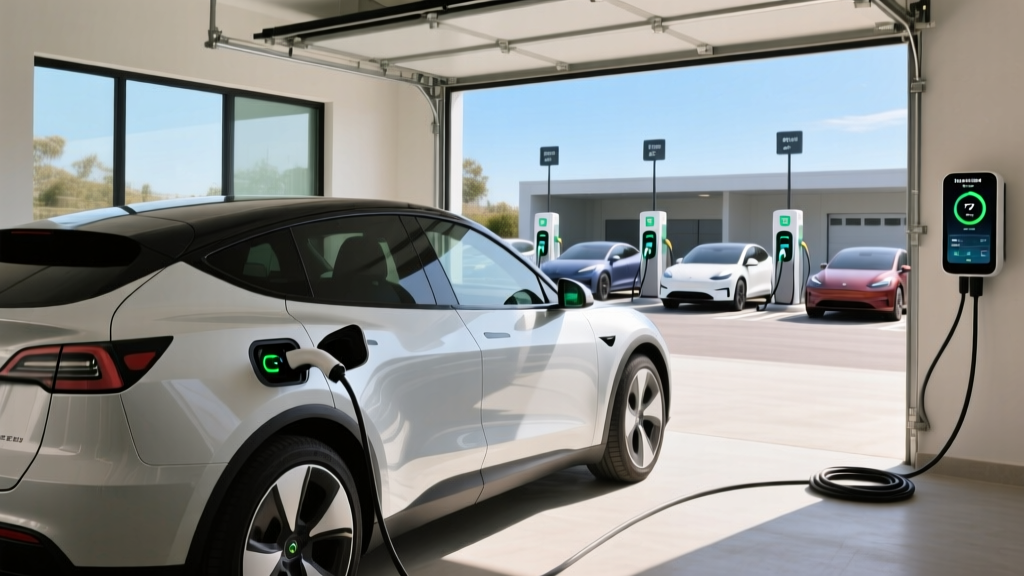
Level 2 is the home-charging backbone. A 48-amp (11.5 kW) home charger will refill most EVs overnight in 6–10 hours. This is where most daily charging happens for BEV owners with garage or driveway access.
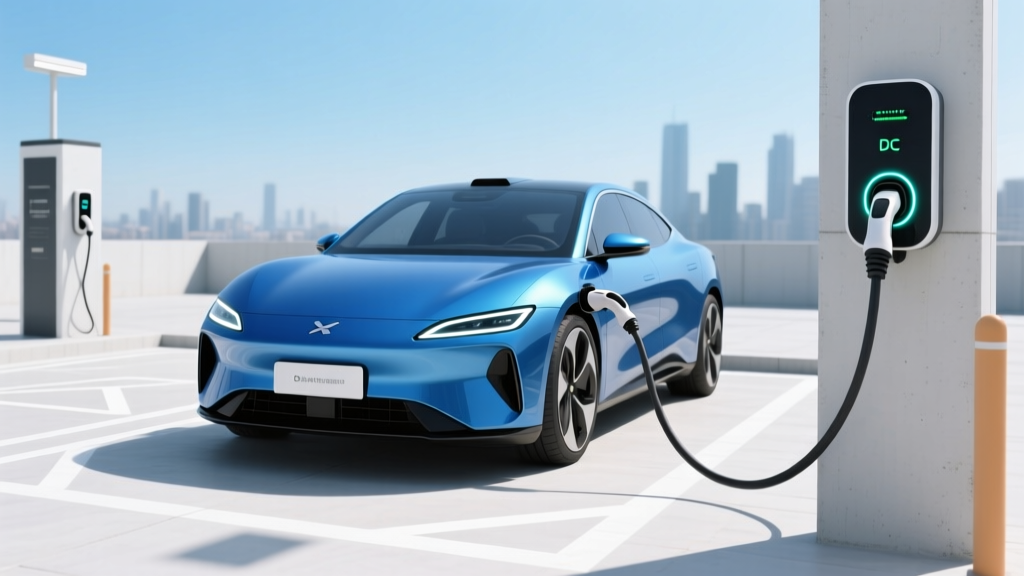
Direct current fast charging bypasses the vehicle's onboard AC-to-DC converter entirely. The charger delivers DC power straight to the battery, which is why speeds scale so dramatically — from 50 kW legacy units up to 350 kW ultra-fast stations like those in the Electrify America and Ionity networks. The trade-off: DC fast charging infrastructure is expensive, public, and priced accordingly.
How Fast Will Direct Current Fast Charging Refill Your Battery?
Peak kW ratings on chargers are headline numbers, not sustained rates. Every EV's battery management system (BMS) tapers the charge rate as the state of charge climbs — a phenomenon known as the charge curve. A vehicle that peaks at 240 kW at 10% SoC may drop to 80 kW by 60% and trickle to 30 kW past 85%.
This is why the industry standard metric is 10–80% charge time. Here are representative times for common battery sizes and vehicle architectures:
| Vehicle / Battery | Usable Battery (kWh) | Peak DC Rate (kW) | 10–80% Time (min) | Charger Required |
|---|---|---|---|---|
| Hyundai Ioniq 5 (800V architecture) | 77.4 | 240 | ~18 | 350 kW station |
| Tesla Model Y Long Range | 75 | 250 | ~25–28 | V3 Supercharger (250 kW) |
| Ford F-150 Lightning (Extended Range) | 131 | 150 (est.) | ~41 | 150+ kW station |
| Chevrolet Bolt EV | 65 | 55 | ~55–60 | 50+ kW CCS station |
| Kia EV6 GT-Line (800V) | 77.4 | 240 | ~18 | 350 kW station |
Two critical observations. First, vehicles with 800-volt architectures (Hyundai Ioniq 5/6, Kia EV6/9, Porsche Taycan, Genesis Electrified GV70) sustain higher charge rates longer because they draw fewer amps at higher voltage, generating less heat in the battery cells. Second, plugging a 55 kW-capable vehicle like the Bolt EV into a 350 kW charger wastes nothing but also gains nothing — the car dictates the draw.
For context, preconditioning matters. Most modern EVs warm the battery when you navigate to a DC fast charger, optimizing the cells for maximum charge acceptance. Skipping preconditioning in cold weather can double your 10–80% time. Always use the vehicle's built-in navigation to route to a fast charger, even if you know the way — it triggers the thermal prep.
Home EV Charger Installation: Electrical Requirements, Costs, and Panel Upgrades
Installing a Level 2 home charger is the single highest-impact upgrade an EV owner can make. You will need a dedicated 240V circuit — the same voltage your electric dryer or oven uses — with amperage matched to your charger.
Electrical Specifications
- Common circuit sizes: 40A (supports up to 32A continuous / 7.7 kW), 50A (40A continuous / 9.6 kW), 60A (48A continuous / 11.5 kW)
- National Electrical Code (NEC) rule: Continuous loads (EV charging qualifies) cannot exceed 80% of the circuit breaker rating. A 48A charger requires a 60A breaker.
- Wire gauge: Typically 6 AWG copper for 50A circuits, 4 AWG for 60A — your electrician will specify based on run length and local code.
- GFCI protection: NEC 2020 and later requires GFCI protection for EV outlets. Hardwired chargers often integrate this internally.
Installation Cost Breakdown
Costs vary enormously based on your home's electrical panel capacity, the distance from panel to charger location, and local labor rates. Here is a realistic range for a typical single-family home:
| Component | Low Estimate | High Estimate | Notes |
|---|---|---|---|
| Level 2 charger (hardware) | $350 | $700 | 32A–48A smart chargers; Wi-Fi-enabled |
| Electrician labor (standard install) | $400 | $1,200 | Short panel-to-garage run, conduit, wiring |
| Permit and inspection | $50 | $250 | Varies by municipality; some waive for EV |
| Panel upgrade (200A service) | $1,500 | $4,000+ | Required if existing panel is 100A or near capacity |
| Total (no panel upgrade) | $800 | $2,150 | Most homes with 200A service |
| Total (with panel upgrade) | $2,300 | $6,000+ | Older homes, 100A panels, or high-load households |
The panel upgrade is the variable that catches buyers off guard. If your home has a 100-amp main panel — common in houses built before 1990 — adding a 40–60A EV circuit may push total load beyond 80% of panel capacity, triggering a required upgrade to 200A service. An electrician will perform a load calculation per NEC Article 220 to determine this before pulling a permit.
Some utilities offer rebates of $250–$1,000 for home charger installation, and the federal Alternative Fuel Vehicle Refueling Property Credit (IRC §30C) provides up to $1,000 (30% of cost, capped) for home charging equipment installed through 2032, subject to census-tract eligibility. Check irs.gov for current qualification maps.
Connector Compatibility: NACS, CCS1, and CHAdeMO
The connector landscape in North America has consolidated significantly. Here is where things stand for 2026-model vehicles:
| Connector | Type | Vehicles Using It (Native) | Max DC Rate | Adapter Availability |
|---|---|---|---|---|
| NACS (J3400) | AC + DC combined | Tesla (all), Ford, GM, Rivian, Volvo, Polestar, Mercedes, BMW, Hyundai/Kia (2025+) | Up to 350 kW (900V) | CCS→NACS adapters widely available ($150–$250) |
| CCS1 | AC + DC combined | Legacy: VW ID.4 (pre-2025), some older Hyundai/Kia, BMW iX (pre-2025), Stellantis | Up to 350 kW | NACS→CCS adapters available; CCS stations declining |
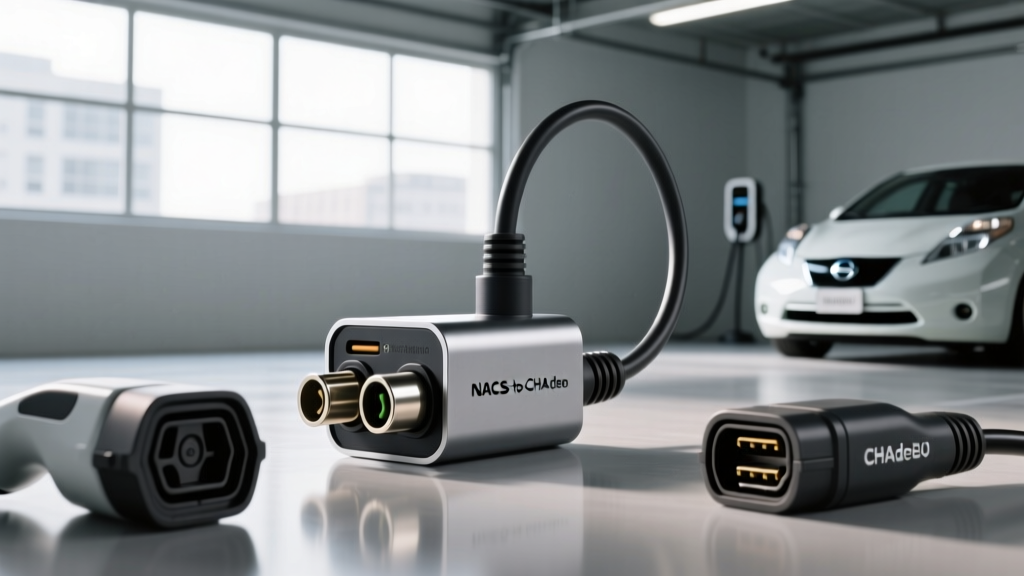
| CHAdeMO | DC only | Nissan Leaf, Mitsubishi Outlander PHEV (legacy) | Up to 100 kW | Limited adapters; network support declining |
The shift to NACS (North American Charging Standard), now formalized as SAE J3400, is effectively complete for new vehicles. Ford, GM, Rivian, and most other automakers began equipping vehicles with NACS ports for the 2025 model year onward. CCS1 is becoming a legacy connector, though Electrify America and other networks maintain CCS1 cables alongside NACS.
If you own a CCS1-equipped vehicle and want access to the Tesla Supercharger network (now open to non-Tesla vehicles with NACS), you will need a CCS-to-NACS adapter. Tesla sells one for ~$250, and third-party options from brands like Lectron and A2Z exist at lower prices, though build quality varies.
CHAdeMO is effectively end-of-life for new vehicles. Nissan dropped it for the Ariya (which uses CCS1/NACS). Existing Leaf owners can still find CHAdeMO stations, but new installations are rare.
Cost to Charge: Home Electricity vs. Public DC Fast Charging vs. Gas
The economics of EV charging depend entirely on where you charge. Home electricity is cheap; public direct current fast charging is expensive; gasoline is somewhere in between.
| Scenario | Rate | Efficiency Assumption | Cost Per Mile |
|---|---|---|---|
| Home Level 2 (national avg electricity) | $0.17/kWh | 3.5 mi/kWh | $0.049 |
| Home Level 2 (off-peak time-of-use) | $0.09/kWh | 3.5 mi/kWh | $0.026 |
| Public Level 2 (ChargePoint, EVgo) | $0.30/kWh | 3.5 mi/kWh | $0.086 |
| DC Fast Charging (Electrify America, Tesla) | $0.48/kWh | 3.5 mi/kWh | $0.137 |
| DC Fast Charging (peak pricing, some networks) | $0.64/kWh | 3.5 mi/kWh | $0.183 |
| Gasoline vehicle (25 MPG combined) | $3.40/gal | 25 mi/gal | $0.136 |
| Gasoline vehicle (30 MPG combined) | $3.40/gal | 30 mi/gal | $0.113 |
The takeaway is unambiguous: home-charged EVs cost roughly one-quarter to one-third what gasoline costs per mile. But exclusive reliance on public DC fast charging can actually exceed the cost of fueling an efficient gas car. This is why home charging access is the single most important variable in EV ownership satisfaction.
For a driver covering 12,000 miles per year, the difference between home off-peak charging ($312/year) and exclusive DC fast charging ($1,644/year) is over $1,300 annually. Most EV owners charge at home 80–90% of the time and use DC fast charging only for road trips, landing their real blended cost around $0.05–$0.07/mile.
Source for electricity rates: U.S. Energy Information Administration. Gas prices based on EIA weekly retail gasoline data.
Equipment Recommendations: Home Level 2 Chargers Worth Buying
Not all Level 2 chargers are equal. The differences that matter: amperage (which determines charge speed), connector type, cable length, smart features (scheduling, load management), and build quality. Here are proven options across the price spectrum:
Emporia Vue Level 2 EV Charger
- Power output: 48A (11.5 kW) on a 60A circuit
- Connector: NACS (J3400); CCS adapter available
- Cable length: 24 ft
- Smart features: Wi-Fi, app scheduling, energy monitoring, solar integration
- Price: ~$400
- Best for: Budget-conscious buyers wanting full 48A output and smart controls
ChargePoint Home Flex
- Power output: Up to 50A (12 kW) configurable on 40–60A circuits
- Connector: NACS (J3400)
- Cable length: 23 ft
- Smart features: Wi-Fi, Alexa/Google integration, scheduling, load sharing between two units
- Price: ~$550
- Best for: Multi-EV households needing load management between two chargers on one circuit
Tesla Wall Connector
- Power output: 48A (11.5 kW) on a 60A circuit
- Connector: NACS (native Tesla)
- Cable length: 24 ft
- Smart features: Wi-Fi, OTA updates, power sharing (up to 6 units on one circuit), access control
- Price: ~$475
- Best for: Tesla owners or mixed fleets (works with all NACS-equipped vehicles)
Grizzl-E Smart
- Power output: 40A (9.6 kW) on a 50A circuit
- Connector: NACS (J3400); J1772 version also available
- Cable length: 24 ft
- Smart features: Wi-Fi, OCPP-compatible, adjustable amperage, extreme cold rating (-40°F)
- Price: ~$500
- Best for: Cold-climate and outdoor installations; built in Canada
For most homeowners, a 48A charger on a 60A circuit is the sweet spot. It delivers 11.5 kW — enough to add roughly 40 miles of range per hour of charging, fully replenishing a 90 kWh battery in about 8 hours. Going to a 60A charger (14.4 kW) is possible but requires an 80A breaker and heavier wiring, which adds cost without meaningful daily benefit for most drivers.
Safety, Code Compliance, and Installation Best Practices
EV charging draws high current for extended periods — often 6–10 continuous hours. This makes it one of the most demanding loads in a residential electrical system. Cutting corners is both dangerous and illegal.
Non-Negotiable Safety Requirements
- Dedicated circuit: Your EV charger must have its own dedicated breaker. Sharing a circuit with other appliances is a code violation and fire risk.
- Hardwired vs. plug-in: Hardwired chargers (no plug) are generally preferred for 48A+ installations because they eliminate the plug/connection as a failure point. Plug-in units (NEMA 14-50 outlet) offer portability but require a high-quality industrial-grade receptacle — cheap 14-50 outlets from big-box stores have been linked to overheating incidents.
- GFCI protection: Required by NEC for receptacle-based EV charging. Hardwired units typically have ground-fault protection built in.
- Outdoor rating: If your charger is mounted outside, it must carry a NEMA 3R or NEMA 4 rating for weather resistance. All the chargers recommended above are outdoor-rated.
- Permit and inspection: Every jurisdiction requires a permit for new circuit installation. The inspection verifies wire gauge, breaker sizing, grounding, and GFCI compliance. Skipping this can void your homeowner's insurance in the event of an electrical fire.
Hire a licensed electrician — not a handyman. Ask for their experience specifically with EV charger installations and whether they perform a NEC Article 220 load calculation. A competent electrician will also check whether your panel has physical breaker slots available, not just amperage headroom.
Frequently Asked Questions
How much does it cost to install a home EV charger?
For a home with adequate panel capacity (200A service), expect $800–$2,150 total, including the charger hardware ($350–$700), electrician labor ($400–$1,200), and permits ($50–$250). If your home requires a panel upgrade from 100A to 200A service, add $1,500–$4,000+. Federal tax credit IRC §30C may cover up to $1,000 (30% of equipment and installation cost) for qualifying census tracts — verify eligibility on irs.gov.
How fast will each charging level add range?
Level 1 (120V, 1.4 kW) adds roughly 3–5 miles per hour. Level 2 (240V, 11.5 kW) adds roughly 35–45 miles per hour for a typical crossover EV. Direct current fast charging at 150 kW adds roughly 400–500 miles per hour at peak — but peak rates are sustained only at low states of charge. Expect a 10–80% DC fast charge to take 18–40 minutes depending on your vehicle's battery size and maximum charge rate.
Which connector and charger is compatible with my EV?
For 2025-and-newer vehicles from Tesla, Ford, GM, Rivian, Hyundai, Kia, Volvo, BMW, and Mercedes, your vehicle has a NACS (J3400) port. Older non-Tesla EVs (2024 and earlier VW ID.4, older Hyundai/Kia models) typically have CCS1. The Nissan Leaf uses CHAdeMO. Match your home charger's connector to your vehicle's port, or plan to use an adapter. When in doubt, check your owner's manual or the charge-port door — the connector shape is unmistakable.
How much does EV charging cost per mile compared to gasoline?
Home charging at the national average electricity rate ($0.17/kWh) costs approximately $0.05 per mile for an EV averaging 3.5 mi/kWh — roughly one-third the cost of gasoline at $3.40/gallon in a 25 MPG vehicle ($0.14/mile). Off-peak home rates ($0.09/kWh) drop this to under $0.03/mile. However, exclusive reliance on public DC fast charging ($0.40–$0.64/kWh) pushes costs to $0.11–$0.18/mile, which can equal or exceed gasoline.
What electrical upgrades might I need for a home charger?
The most common upgrade is a panel replacement from 100A to 200A service ($1,500–$4,000), required when your existing panel lacks amperage headroom for a 40–60A EV circuit. Other potential needs: adding breaker slots (a subpanel can solve this for $300–$800), upgrading the service drop from the utility (usually handled by the utility at no cost), or installing a whole-home surge protector ($200–$400). Your electrician's load calculation will determine exactly what is required.