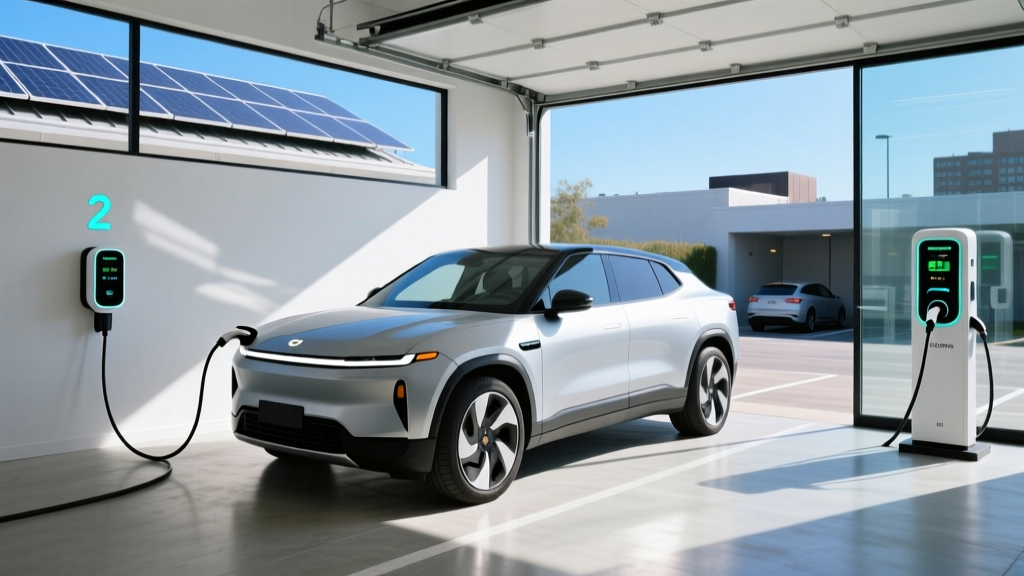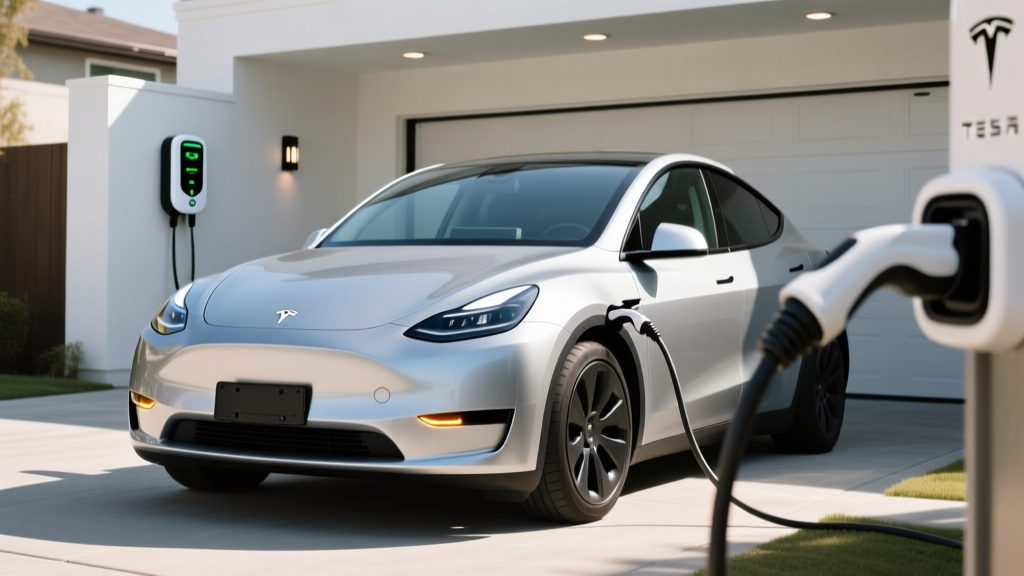
Buying an electric vehicle is only half the equation. The other half — arguably the one that dictates your daily satisfaction — is understanding how you'll actually charge it. The EV charging landscape has matured considerably, but the terminology, hardware options, and electrical requirements still trip up even seasoned car buyers. Whether you're plugging into a standard wall outlet overnight, hardwiring a 48-amp wallbox in your garage, or pulling up to a 350 kW highway charger, each method delivers electrons at vastly different rates and costs.
This guide breaks down every charger type available to US EV owners in 2026, pairs them with real-world charging times and costs, and walks through the home installation math — including the panel upgrades that can double your budget if you're not prepared.
The Three Charging Levels: kW, Miles Per Hour, and Real-World Times
Before we get into hardware, let's nail down the single most important distinction in EV charging: kW (kilowatts) measures power — the rate at which electricity flows into your battery. kWh (kilowatt-hours) measures energy — the total capacity stored in your battery. Think of kW as the width of a pipe and kWh as the size of the tank you're filling. A wider pipe fills the tank faster, but the tank size stays the same.
Every EV battery has a usable capacity measured in kWh — for example, the 2026 Tesla Model Y Long Range holds about 75 kWh usable, while the Ford F-150 Lightning Extended Range pack stores roughly 131 kWh. The charger's kW output determines how quickly those kWh get replenished.
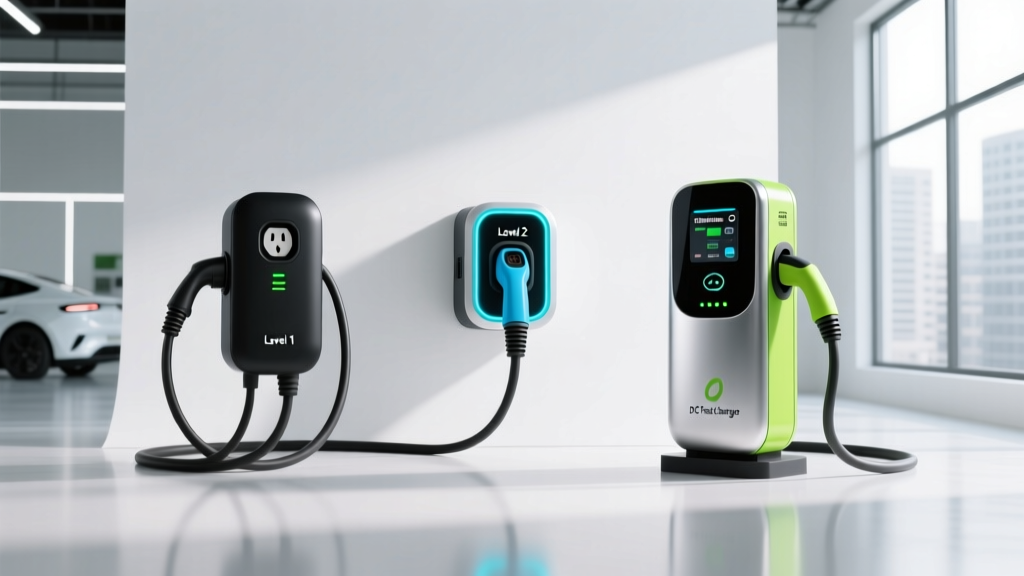
| Level | Voltage | Power Output | Miles of Range Per Hour | Typical Use Case | 10–80% Time (75 kWh Battery) |
|---|---|---|---|---|---|
| Level 1 | 120V AC | 1.0–1.4 kW | 3–5 mi/hr | Overnight trickle; emergency top-up | ~40–50 hours |
| Level 2 | 240V AC | 3.3–19.2 kW | 12–75 mi/hr | Home daily charging; workplace; shopping centers | ~3.5–4.5 hrs (7.7 kW) / ~45 min (19.2 kW) |
| DC Fast Charge (DCFC) | 200–800V DC | 50–350 kW | 150–1,000+ mi/hr (peak) | Highway road trips; quick top-ups | ~15–30 min (varies by vehicle & peak kW) |
A few critical real-world caveats. Level 2 speeds depend on both the charger's output and your vehicle's onboard charger capacity — a 19.2 kW wallbox won't charge a vehicle with an 11.5 kW onboard charger any faster than 11.5 kW. DC fast charging follows a charge curve: the battery accepts peak power only at low states of charge (typically 10–30% SoC), then progressively tapers. A "250 kW peak" rating may average 130–150 kW across a 10–80% session. Cold batteries also accept charge more slowly, which is why preconditioning — warming the battery before plugging in — matters enormously for DC fast charging.
Home EV Charger Installation: Electrical Requirements and Costs
For most EV owners, a Level 2 home charger is the cornerstone of daily charging. You'll wake up to a full battery every morning, and the cost per mile undercuts gasoline by a wide margin. But getting that wallbox installed isn't as simple as screwing it to the wall.
Electrical Requirements for Level 2 Charging
Level 2 chargers require a 240-volt circuit — the same type of outlet your electric dryer or oven uses. The most common residential setups are:
- 240V / 40A circuit — delivers up to 32A continuous (9.6 kW), the sweet spot for most homes and EVs
- 240V / 50A circuit — delivers up to 40A continuous (9.6–11.5 kW), common for higher-capacity onboard chargers
- 240V / 60A circuit — delivers up to 48A continuous (11.5 kW), needed to max out vehicles like the Ford F-150 Lightning or Hummer EV
The National Electrical Code (NEC) requires that continuous loads (like EV charging, which runs for 3+ hours) use only 80% of a circuit's rated capacity. That's why a 40A breaker supports 32A of continuous charging — not 40A.
Does Your Electrical Panel Need an Upgrade?
This is the wildcard that can add $1,500–$4,000+ to your project. Most modern homes have a 200A main panel, which usually has enough headroom for a 40–50A EV circuit. But older homes with 100A or 150A service — or panels already loaded with electric heating, A/C, a hot tub, and a double oven — may need a panel upgrade to 200A before an electrician will sign off on adding an EV circuit.
Your electrician will perform a load calculation (NEC Article 220) to determine available capacity. Some jurisdictions now allow smart load-management devices (like the Span panel or Emporia Load Center) that dynamically shed non-essential loads to avoid a full panel upgrade — worth asking about if you're quoted for one.
| Cost Component | Simple Install (Near Panel) | Complex Install (Far Run / Panel Upgrade) |
|---|---|---|
| Level 2 Charger Hardware | $350–$700 | $350–$700 |
| Electrician Labor (2–6 hrs) | $300–$600 | $800–$2,000 |
| Conduit, Wiring, Breaker | $100–$300 | $300–$800 |
| Permit Fee | $50–$150 | $50–$200 |
| Panel Upgrade (if needed) | $0 | $1,500–$4,000 |
| Total Estimated Range | $800–$1,750 | $3,000–$7,700 |
Always get at least two quotes from licensed electricians. Ask specifically whether the quote includes the permit and final inspection — some municipalities require both, and skipping them can void your homeowner's insurance coverage for electrical fires.
Connector Types: NACS, CCS1, CHAdeMO, and Adapters
The connector landscape shifted dramatically between 2023 and 2026. Here's where things stand now.
| Connector | Also Known As | AC Level 2 | DC Fast | Used By | Notes |
|---|---|---|---|---|---|
| NACS | Tesla connector / SAE J3400 | Yes | Yes | Tesla (all years); Ford, GM, Rivian, Hyundai, Kia, Volvo, and others (2025+ models) | Now the dominant North American standard; compact single-port design |
| CCS1 (Combo) | SAE J1772 Combo | Yes (via J1772 upper section) | Yes | VW ID.4 (pre-2026), BMW iX (pre-2025), older Ford/GM EVs | Being phased out on new models; adapters to NACS widely available |
| CHAdeMO | — | No | Yes | Nissan Leaf (all years), Mitsubishi Outlander PHEV | Legacy standard; declining DCFC availability outside Japan |
| J1772 | SAE J1772 | Yes | No | All non-Tesla AC Level 2 (pre-NACS transition) | AC-only; NACS-to-J1772 adapters available for older EVs at public L2 stations |
Adapter reality check: If you own a CCS-equipped EV (say, a 2024 VW ID.4), you can purchase a CCS-to-NACS adapter ($150–$300 from brands like Lectron or A2Z) to access Tesla Superchargers. Tesla owners moving to a CCS-equipped vehicle can use the Tesla-provided Magic Dock adapter at select Superchargers or buy a NACS-to-CCS adapter for Electrify America and other CCS networks. CHAdeMO owners face the tightest constraints — new CHAdeMO stations are rare, and adapters to NACS/CCS are limited and expensive.
For finding compatible chargers near you, the Alternative Fuels Data Center maintains a searchable map filtered by connector type.
How Much Does EV Charging Actually Cost? Home vs. Public vs. Gas
The cost advantage of home charging is the single biggest financial argument for EV ownership. But public fast charging tells a different story — one that surprises many new EV buyers.
| Scenario | Price | Vehicle Efficiency | Cost Per Mile |
|---|---|---|---|
| Home Level 2 (national avg. electricity) | $0.16/kWh | 3.0 mi/kWh (avg. EV) | $0.053/mi |
| Home Level 2 (off-peak TOU rate) | $0.09/kWh | 3.0 mi/kWh | $0.030/mi |
| Public Level 2 (network pricing) | $0.25–$0.40/kWh | 3.0 mi/kWh | $0.083–$0.133/mi |
| DC Fast Charge (Electrify America, EVgo, etc.) | $0.35–$0.55/kWh | 3.0 mi/kWh | $0.117–$0.183/mi |
| Tesla Supercharger (avg. 2026) | $0.28–$0.40/kWh | 3.5 mi/kWh (Tesla efficiency) | $0.080–$0.114/mi |
| Gasoline vehicle (25 MPG combined) | $3.30/gallon | 25 mi/gal | $0.132/mi |
| Gasoline vehicle (30 MPG combined) | $3.30/gallon | 30 mi/gal | $0.110/mi |
The takeaway: home charging at off-peak rates costs roughly 75% less per mile than gasoline. Even at national average electricity rates, home Level 2 charging undercuts gas by about 60%. But DC fast charging at peak public rates can approach or even exceed the per-mile cost of an efficient gasoline car — a reality that matters for road-trip-heavy drivers or apartment dwellers who rely entirely on public charging.
If your utility offers a time-of-use (TOU) rate plan, charging between 10 PM and 6 AM can drop your cost to $0.07–$0.10/kWh in many regions. Pair that with your charger's scheduled charging feature and you'll wake up to a full battery at rock-bottom rates.
Charging Time Examples: How Long Does a Session Really Take?
Theoretical peak kW ratings don't tell the full story. Here are real-world charging times for common EV battery sizes, accounting for charge-curve taper and typical onboard charger limits.
| Vehicle (Battery Size) | Level 1 (1.4 kW) | Level 2 Home (9.6 kW) | DC Fast (Peak kW → 10–80%) | |
|---|---|---|---|---|
| Tesla Model Y LR (75 kWh) | ~50 hrs (0–100%) | ~7.5 hrs | 250 kW peak → ~22 min | |
| Hyundai Ioniq 5 (77.4 kWh) | ~52 hrs | ~7.5 hrs (10.9 kW onboard) | 240 kW peak → ~18 min | |
| Ford F-150 Lightning ER (131 kWh) | ~90 hrs | ~12 hrs (11.5 kW onboard) | 150 kW peak → ~55 min | |
| Chevrolet Equinox EV (85 kWh) | ~58 hrs | ~7.5 hrs (11.5 kW onboard) | 150 kW peak → ~30 min | |
| BMW i4 eDrive40 (81.5 kWh) | ~55 hrs | ~7.5 hrs (11 kW onboard) | 200 kW peak → ~28 min |
Notice that the Hyundai Ioniq 5's 800V architecture enables it to sustain higher charging power deeper into the session, making its 10–80% time faster than vehicles with similar battery sizes but 400V systems. This is the kind of spec nuance that matters if you road-trip frequently.
Best Home EV Chargers: Equipment Picks for 2026
Not all Level 2 wallboxes are created equal. Below are four proven units across different budgets and use cases. Every recommendation includes the connector type, maximum power output, and key features.
Emporia Vue EV Charger (Best Value)
- Power: 48A / 11.5 kW (hardwired) or 40A / 9.6 kW (NEMA 14-50 plug)
- Connector: J1772 (NACS adapter included)
- Cable: 24 ft
- Smart Features: Wi-Fi, app scheduling, energy monitoring, solar integration with Emporia Vue panel
- Price: ~$399 (hardwired)
- Best For: Budget-conscious buyers who want full app control and solar-aware charging
ChargePoint Home Flex (Most Flexible)
- Power: Configurable 16A–50A (3.8–12 kW); adjustable to match your circuit
- Connector: J1772 or NACS (select at purchase)
- Cable: 23 ft
- Smart Features: Wi-Fi, Alexa/Google Home integration, scheduled charging, detailed session history
- Price: ~$599–$699
- Best For: Homes with limited panel capacity — you can set a lower amperage to match a 30A circuit
Tesla Wall Connector (Best for NACS Vehicles)
- Power: 48A / 11.5 kW (hardwired, 60A circuit required)
- Connector: NACS (native Tesla); J1772 adapter included for non-Tesla NACS vehicles
- Cable: 24 ft
- Smart Features: Wi-Fi, power sharing (link multiple units on one circuit), OTA updates
- Price: ~$450
- Best For: Tesla owners or multi-Tesla households; cleanest NACS-native experience
Grizzl-E Smart (Most Durable / Outdoor)
- Power: 40A / 9.6 kW (NEMA 14-50) or 48A / 11.5 kW (hardwired)
- Connector: J1772 or NACS
- Cable: 24 ft
- Smart Features: Wi-Fi, OCPP-compatible, works with multiple utility demand-response programs
- Price: ~$449–$549
- Best For: Outdoor installs in harsh climates; IP67 rated, -40°F operational rating
Safety, Code, and Installation Best Practices
EV charging draws sustained high current for hours — a duty cycle far more demanding than a dryer or stove, which cycle on and off. That makes proper installation non-negotiable.
- Dedicated circuit: Your Level 2 charger must have its own dedicated breaker — never share a circuit with other appliances.
- GFCI protection: The 2020 NEC (Article 625.54) requires GFCI protection for all receptacles used for EV charging. Hardwired installations may not require a GFCI breaker in all jurisdictions — check with your local inspector. Note: some EVSE (charger) units have built-in ground-fault detection, which can satisfy this requirement.
- Outdoor rating: If your charger will be mounted outside, ensure the unit carries at least an IP55 rating (dust and water-jet resistant). For harsh winter climates, IP67 is preferable. NEMA 14-50 receptacles installed outdoors require an in-use weatherproof cover.
- Cable management: A 24-foot cable draped across a garage floor is a tripping hazard. Wall-mounted cable organizers or retractors ($30–$60) keep things tidy and protect connectors from damage.
- Permit and inspection: Most jurisdictions require an electrical permit for new 240V circuits. The inspection verifies correct wire gauge, breaker sizing, grounding, and GFCI compliance. Skipping this step risks insurance claim denial in the event of an electrical fire.
For a comprehensive overview of residential EV electrical safety, refer to the National Fire Protection Association's NEC resources.
Frequently Asked Questions
How much does it cost to install a home EV charger?
A straightforward Level 2 installation — short wire run from a 200A panel with available capacity — typically costs $800–$1,750 including the charger hardware, electrician labor, materials, and permit. Complex installs requiring long conduit runs, sub-panels, or a full service upgrade to 200A can push costs to $3,000–$7,700. Always get multiple quotes and verify that the permit and inspection are included.
How fast will each charging level add range?
Level 1 (120V) adds roughly 3–5 miles of range per hour — enough for overnight top-ups if your daily commute is under 30 miles. Level 2 (240V) at 9.6 kW adds 30–35 miles per hour, easily refilling most EVs overnight. DC fast charging at 150+ kW can add 100–200+ miles in 15–20 minutes, though actual speed depends on the vehicle's charge curve and battery temperature.
Which connector and charger is compatible with my EV?
Check your vehicle's charge port. Most 2025–2026 EVs from Ford, GM, Hyundai, Kia, Rivian, and Volvo now use the NACS connector. Older models (pre-2025) from VW, BMW, and others may still have CCS1. The Nissan Leaf uses CHAdeMO for DC fast charging. For home Level 2, most new chargers ship with either NACS or J1772 connectors, and adapters are available for cross-compatibility.
How much does charging cost per mile compared to gas?
Home charging at the national average electricity rate ($0.16/kWh) costs roughly $0.05/mile for an average EV — about 60% less than gasoline at $3.30/gallon in a 25 MPG vehicle ($0.13/mile). Off-peak TOU rates can drop that to $0.03/mile. However, public DC fast charging at $0.40–$0.55/kWh can cost $0.13–$0.18/mile, approaching or exceeding gas costs.
What electrical upgrades might I need for a home charger?
If your home has a 100A or 150A main panel that's already near capacity, you may need a panel upgrade to 200A ($1,500–$4,000). A licensed electrician will perform an NEC Article 220 load calculation to determine available headroom. In some cases, a smart load-management system can avoid the need for a full upgrade by dynamically reducing charger power when other circuits are drawing heavily.
Can I charge my EV with a regular household outlet?
Yes — that's Level 1 charging (120V, 1.0–1.4 kW). It adds only 3–5 miles per hour, so a full charge from empty can take 40+ hours for a mid-size EV battery. Level 1 works as a daily solution only if you drive fewer than 30–40 miles per day and can plug in for 10–12 hours overnight. For anything beyond that, Level 2 is strongly recommended.
Does the federal tax credit cover home charger installation?
The residential clean energy credit (IRS §25C) previously covered 30% of EV charger hardware and installation costs up to $1,000. However, this credit has undergone changes — check current IRS guidance or consult a tax professional to confirm eligibility and caps for the current tax year. The §30D new-vehicle credit does not cover charging equipment.