Detroit made global headlines by embedding wireless charging coils directly into a public roadway — a stretch of Jefferson Avenue became the first in the United States to test dynamic wireless power transfer (DWPT) for electric vehicles. For EV owners and shoppers, the "Detroit electric charging road" raises a practical question: can a road really charge your car while you drive, and how does the power delivery compare to plugging in at home or a DC fast charger?
This guide breaks down the technology behind Detroit's wireless charging road, then puts it in context against the three charging levels every EV owner needs to know. You'll get exact kW figures, miles-per-hour of range added, real installation costs for home Level 2 charging, connector compatibility, and per-mile cost comparisons against gasoline.
What Is the Detroit Electric Charging Road?
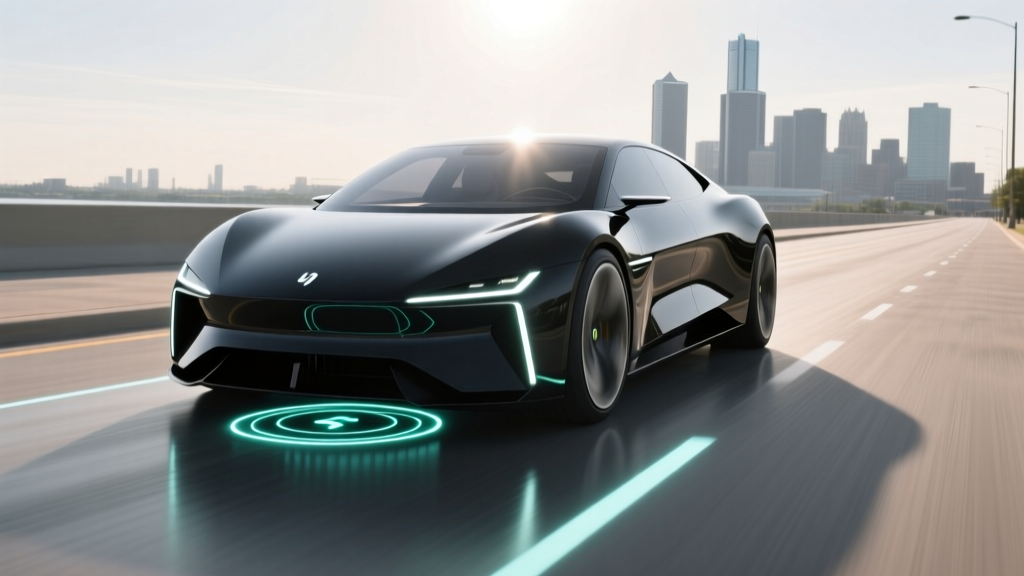
The Detroit electric charging road project is a collaboration between the Michigan Department of Transportation (MDOT), the city of Detroit, and Israeli wireless-charging firm Electreon. Embedded copper coils beneath roughly a quarter-mile of Jefferson Avenue transmit power to a receiver pad mounted on the underside of a specially equipped vehicle. The system operates at approximately 20 kW of power transfer while the vehicle moves at normal city speeds.
That 20 kW figure matters for context. It is roughly equivalent to a robust home Level 2 charger — enough to maintain or slowly grow your battery's state of charge during a commute, but nowhere near the 150–350 kW you'd see at a DC fast charging station. The technology targets fleet vehicles, buses, and commercial routes where predictable, repeated travel over the same corridor makes embedded infrastructure economically viable.
The Detroit pilot is a proof-of-concept, not a consumer product you can drive onto today with any EV. Your vehicle needs a compatible receiver — currently limited to test fleet vehicles. But the project signals where public infrastructure may head for high-traffic commercial corridors.
Charging Levels Explained: Speeds in kW and Miles Per Hour
Whether you're comparing wireless road charging to traditional plug-in methods or planning your home setup, understanding the three charging levels is essential. The key distinction: kW (kilowatts) measures the rate of power delivery — how fast energy flows. kWh (kilowatt-hours) measures total energy stored in your battery — the "tank size." Never confuse the two.
| Level | Voltage | Power (kW) | Miles of Range Added Per Hour | Typical Use |
|---|---|---|---|---|
| Level 1 | 120V AC | 1.2–1.9 kW | 3–5 mi/hr | Overnight trickle; emergency top-up |
| Level 2 | 240V AC | 7.2–19.2 kW | 20–60 mi/hr | Home daily charging; workplace; public destinations |
| DC Fast (Level 3) | 400–900V DC | 50–350 kW | 150–1,000+ mi/hr (peak) | Road trips; rapid replenishment; 10–80% in 15–40 min |
Detroit's wireless road at 20 kW sits at the upper end of Level 2 — comparable to a high-amperage home wall connector. For comparison, here's how common battery sizes charge at each level:
10–80% Charging Time Examples
- 62 kWh battery (e.g., Nissan Ariya, base Hyundai Ioniq 5): Level 1 at 1.4 kW ≈ 31 hours. Level 2 at 11.5 kW ≈ 3.8 hours. DC fast at 150 kW ≈ 18 minutes.
- 82 kWh battery (e.g., Ford Mustang Mach-E Extended Range): Level 1 ≈ 41 hours. Level 2 at 11.5 kW ≈ 5 hours. DC fast at 150 kW ≈ 25 minutes.
- 100 kWh battery (e.g., Tesla Model S, Rivian R1T Large Pack): Level 1 ≈ 50 hours. Level 2 at 11.5 kW ≈ 6.1 hours. DC fast at 250 kW ≈ 20–25 minutes (with 800V architecture).
Charge curve reality: Peak DC fast charging kW is never sustained for the full session. A vehicle rated at 250 kW peak may only hold that rate from 10–30% state of charge (SoC), then taper to 150 kW, then 50 kW above 80%. Always look at 10–80% time, not peak kW, for real-world trip planning.
Home Level 2 Charger Installation: Requirements and Costs
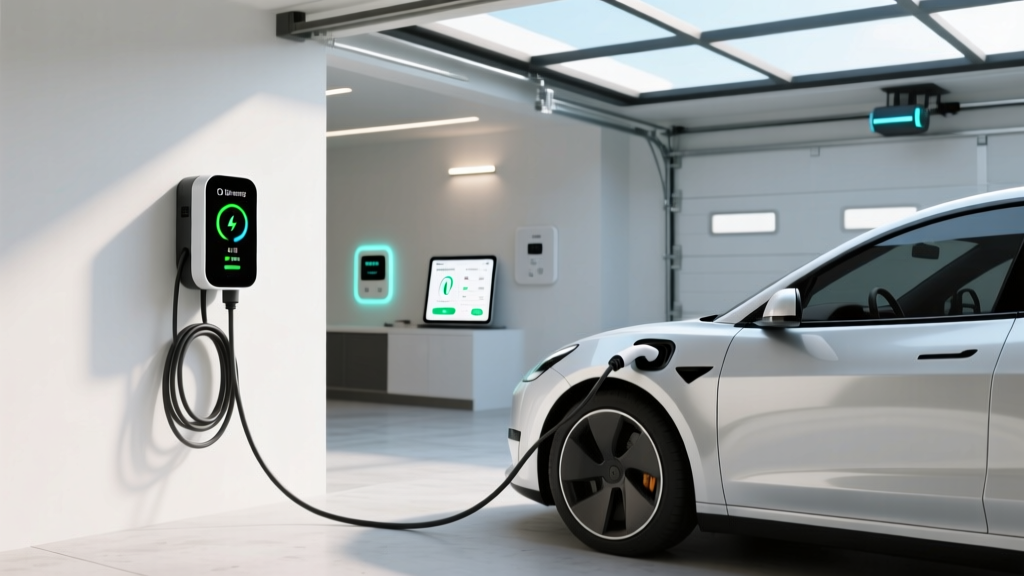
Level 2 home charging is the backbone of practical EV ownership. Most EV owners do 80–90% of their charging at home, waking to a full battery every morning. Here's what it takes to install.
Electrical Requirements
A typical Level 2 home charger runs on a 240-volt dedicated circuit, the same voltage as an electric dryer or oven. Common amperage configurations:
- 40-amp circuit / 32-amp continuous draw: Delivers 7.7 kW. Sufficient for most EVs with overnight charging (adds ~25 miles/hr).
- 50-amp circuit / 40-amp continuous: Delivers 9.6 kW. Adds ~32 miles/hr. Good for larger batteries (80+ kWh).
- 60-amp circuit / 48-amp continuous: Delivers 11.5 kW. Adds ~38 miles/hr. Ideal for high-capacity batteries and vehicles that accept 11.5 kW onboard (e.g., Ford F-150 Lightning, some Tesla models).
The National Electrical Code (NEC) requires that continuous loads (like EV charging, which runs for 3+ hours) not exceed 80% of the circuit breaker rating. A 48-amp charger therefore requires a 60-amp breaker.
Panel Upgrade: The Hidden Cost
Many older homes have 100-amp or 150-amp main electrical panels that may lack capacity for a new 50–60 amp dedicated circuit. An electrician will perform a load calculation per NEC Article 220 to determine if your panel can handle the additional draw. If not, a panel upgrade to 200 amps typically costs $1,500–$3,500 before the charger circuit even begins.
| Component | Cost Range | Notes |
|---|---|---|
| Level 2 charger unit (hardwired or NEMA 14-50 plug) | $350–$750 | Varies by brand, power output, smart features |
| Electrician labor (circuit run, breaker, wiring) | $500–$2,000 | Depends on distance from panel to garage/driveway |
| Permit and inspection | $50–$250 | Required in most jurisdictions; varies by municipality |
| Panel upgrade (if needed) | $1,500–$3,500 | Only if load calculation shows insufficient capacity |
| Total (no panel upgrade) | $900–$3,000 | Most homes with 200A panels fall in this range |
| Total (with panel upgrade) | $2,400–$6,500 | Older homes with 100A service |
Federal incentive: The IRS Residential Clean Energy Credit (IRC §25C) covers 30% of the cost of EV charging equipment installed through 2032, up to $1,000 per year. This applies to the charger hardware and installation labor but not to panel upgrades. Eligibility depends on your tax liability — consult a tax professional. Some states and utilities offer additional rebates; check your local utility's website.
Connector Compatibility: NACS, CCS, and CHAdeMO
The connector landscape has shifted dramatically. As of 2025–2026, the North American Charging Standard (NACS), developed by Tesla, has become the dominant connector for new EVs. Here's where each standard stands:
| Connector | Brands Using It (2026) | Notes |
|---|---|---|
| NACS (Tesla) | Tesla, Ford, GM, Rivian, Volvo, Polestar, Mercedes-Benz, Nissan, Honda, Fisker, Lucid (adapter), BMW (2025+) | Compact, no CCS locking mechanism; Tesla Supercharger network access |
| CCS1 | Hyundai, Kia, Volkswagen, Audi, Porsche, Stellantis brands (legacy models) | Larger connector; Electrify America, EVgo networks; adapters to NACS available |
| CHAdeMO | Nissan Leaf (discontinued 2025), Mitsubishi Outlander PHEV (legacy) | Effectively phased out for new vehicles in the US |
Adapter needs: If you drive a CCS-equipped EV (Hyundai Ioniq 5, VW ID.4, etc.), you can purchase a CCS-to-NACS adapter ($200–$300) to access Tesla Superchargers. Ford and GM vehicles shipped with NACS ports starting in 2025. For home Level 2 charging, nearly all chargers use the J1772 connector (which NACS vehicles accept with a simple passive adapter included with the car).
Wireless charging, as tested in Detroit, bypasses the connector question entirely — power transfers inductively from road coil to vehicle receiver pad with no physical plug.
Cost to Charge: Home, Public, and Per-Mile vs. Gas
One of the strongest ownership arguments for EVs is fuel cost savings — but the gap narrows or widens dramatically depending on where and when you charge.
| Scenario | Rate ($/kWh) | Cost for 62 kWh Fill | Cost Per Mile (at 3.2 mi/kWh) |
|---|---|---|---|
| Home off-peak (utility time-of-use rate) | $0.08–$0.12 | $4.96–$7.44 | $0.025–$0.038 |
| Home standard residential rate | $0.14–$0.18 | $8.68–$11.16 | $0.044–$0.056 |
| Public Level 2 (ChargePoint, workplace) | $0.20–$0.35 | $12.40–$21.70 | $0.063–$0.109 |
| DC fast charging (Electrify America, EVgo) | $0.35–$0.55 | $21.70–$34.10 | $0.109–$0.172 |
| Gasoline comparison (28 MPG, $3.40/gal) | — | — | $0.121 |
The takeaway: Home off-peak charging delivers per-mile costs roughly 70–80% below gasoline. Public DC fast charging at peak rates can actually exceed gasoline cost per mile. The economics strongly favor home charging — which is why Level 2 installation is the single highest-impact investment an EV owner can make.
For context on a 12,000-mile driving year:
- Home off-peak at $0.10/kWh: ~$375/year in electricity
- Home standard at $0.16/kWh: ~$600/year
- Exclusively DC fast at $0.45/kWh: ~$1,688/year
- Gasoline at 28 MPG, $3.40/gal: ~$1,457/year
Recommended Home Level 2 Chargers (2026)
Not all Level 2 chargers are equal. Power output, cable length, smart scheduling, and connector type vary significantly. Here are top picks based on real-world use and current market pricing:
ChargePoint Home Flex
- Power: Up to 12 kW (50A circuit / 40A continuous), adjustable down to 16A
- Connector: J1772 (NACS adapter included or available)
- Cable: 23 feet
- Smart features: Wi-Fi, app scheduling, Alexa integration, energy tracking
- Price: ~$549 (unit only)
- Best for: Flexible amperage for homes with limited panel capacity
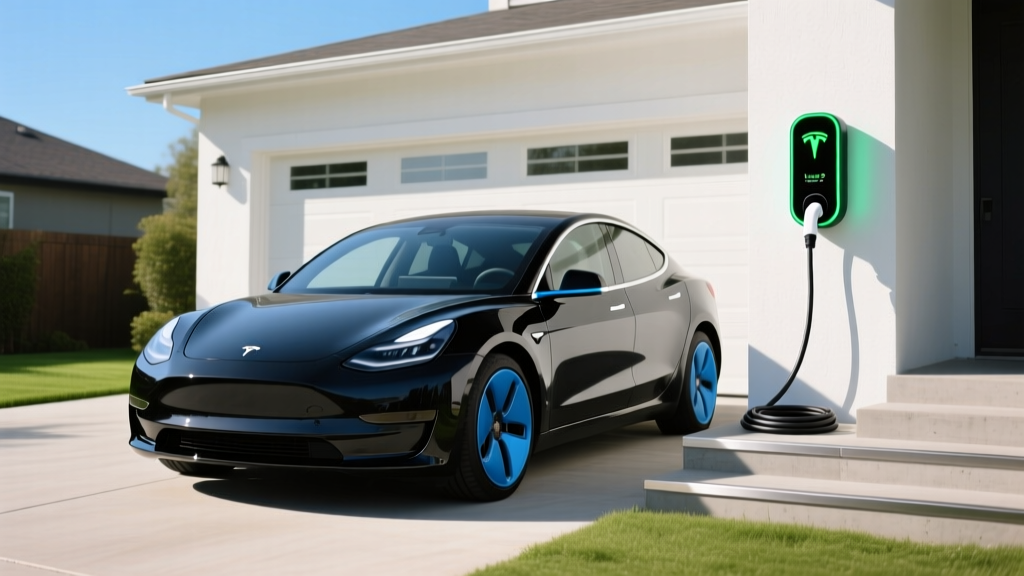
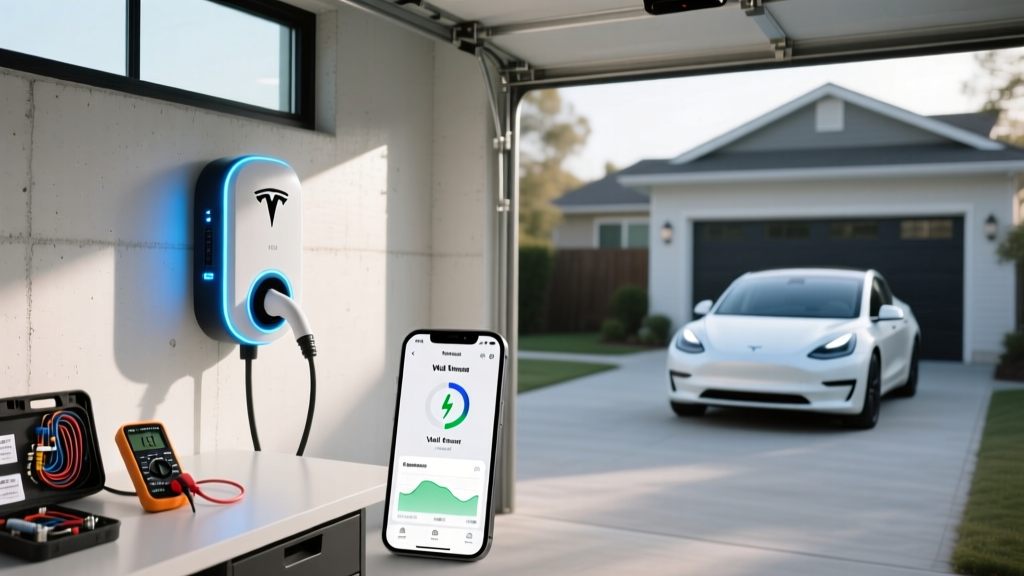
Tesla Wall Connector
- Power: Up to 11.5 kW (60A circuit / 48A continuous)
- Connector: NACS native (J1772 adapter included for non-Tesla EVs)
- Cable: 24 feet
- Smart features: Wi-Fi, over-the-air updates, power sharing between two units, load management
- Price: ~$475
- Best for: Tesla owners and NACS-equipped vehicles; best value at 48A
Emporia Vue EV Charger
- Power: Up to 11.5 kW (60A circuit / 48A continuous)
- Connector: J1772 (NACS adapter available)
- Cable: 24 feet
- Smart features: Whole-home energy monitoring integration, solar-aware charging, app scheduling
- Price: ~$399
- Best for: Solar-equipped homes; budget-conscious buyers wanting 48A
Grizzl-E Smart
- Power: Up to 10 kW (50A circuit / 40A continuous)
- Connector: J1772 or NACS (select at purchase)
- Cable: 24 feet
- Smart features: Wi-Fi, OCPP compatibility, adjustable amperage
- Price: ~$499
- Best for: Cold-climate durability (rated to -40°F); outdoor installations
All units above are UL-listed or ETL-listed, a non-negotiable safety requirement. Never install a charger without third-party safety certification — many cheaper units on online marketplaces lack this and may void your homeowner's insurance in the event of a fire.
Safety, Code, and Installation Best Practices
EV charging draws sustained high current for hours — a use profile that stresses electrical systems differently than intermittent loads like a microwave. Follow these requirements:
- Dedicated circuit: Your EV charger must have its own breaker — never share a circuit with other appliances.
- GFCI protection: NEC 2023 and later require ground-fault circuit interrupter protection for outdoor receptacles used for EV charging. Hardwired installations may have different requirements — your electrician will determine compliance.
- Outdoor rating: If your charger is installed outdoors (driveway, exterior wall), the unit must carry a NEMA 4 or NEMA 4X weather rating. All units recommended above meet this standard.
- Wire gauge: A 60-amp circuit requires 6 AWG copper wire (or 4 AWG aluminum). Your electrician will size wire per NEC Table 310.16.
- Permit and inspection: Required in virtually all US jurisdictions. An unpermitted installation can void insurance coverage and create liability in the event of a fire. Budget $50–$250 for the permit, and expect a city/county inspector to visit after installation.
Hardwired vs. plug-in: A hardwired charger (directly connected to the circuit, no plug) allows the full 48A on a 60A breaker. A NEMA 14-50 receptacle is limited to 40A continuous (50A breaker) and requires GFCI protection if outdoors. Hardwired is generally preferred for maximum power and code compliance simplicity.
Wireless Charging vs. Plug-In: Where Detroit's Road Fits
The Detroit electric charging road demonstrates that inductive wireless charging works — but its 20 kW delivery, limited corridor coverage, and vehicle-receiver requirement place it in a different category than the plug-in infrastructure you'll rely on daily. Here's a practical comparison:
- Home Level 2 (11.5 kW, $900–$3,000 install): Your primary charging method. Predictable, cheapest per kWh, available every morning.
- DC fast charging (150–350 kW, pay-per-use): Your road-trip method. Expensive per kWh but delivers 10–80% in 15–30 minutes.
- Wireless road charging (20 kW, infrastructure-dependent): A future supplement for specific corridors, fleets, and commercial routes. Not yet available to consumer vehicles at scale.
If you're shopping for an EV or planning a home charger installation today, plug-in Level 2 remains the practical foundation. The Detroit pilot is worth watching as wireless technology matures and standardizes — but it won't replace your home wall connector anytime soon.
Frequently Asked Questions
How much does it cost to install a home EV charger?
Expect $900–$3,000 total (charger + electrician + permit) if your electrical panel has sufficient capacity. If you need a panel upgrade from 100A to 200A service, add $1,500–$3,500, bringing the total to $2,400–$6,500. The IRS §25C credit covers 30% of equipment and installation, up to $1,000.
How fast will each charging level add range?
Level 1 (120V) adds 3–5 miles per hour. Level 2 (240V) adds 20–60 miles per hour depending on amperage (7.2–11.5 kW typical). DC fast charging adds 150–1,000+ miles per hour at peak rate, but the rate tapers significantly above 80% SoC — plan around 10–80% times of 15–40 minutes.
Which connector is compatible with my EV?
For 2026 model-year vehicles: Tesla, Ford, GM, Rivian, Volvo, and most new brands use NACS. Hyundai, Kia, and VW still use CCS1 on many models. CHAdeMO is effectively discontinued. For home Level 2 charging, J1772 is the universal standard; NACS vehicles use a simple passive adapter included with the car.
How much does charging cost per mile vs. gas?
Home off-peak charging costs $0.025–$0.038 per mile — about 70–80% less than gasoline at $3.40/gal and 28 MPG ($0.121/mi). Public DC fast charging at $0.45/kWh costs $0.14–$0.17 per mile, which can exceed gasoline. Home charging is where the economics overwhelmingly favor EVs.
What electrical upgrades might I need?
An electrician will perform a load calculation on your panel. Homes with 200-amp service typically have capacity for a 50–60 amp EV circuit without upgrades. Homes with 100-amp or 150-amp panels — common in houses built before 2000 — often need a panel upgrade to 200 amps ($1,500–$3,500). Some utilities offer "make-ready" programs that offset this cost.
Can any EV use Detroit's wireless charging road?
No. The Electreon system requires a vehicle-mounted receiver pad tuned to the road's coil frequency. Currently, only pilot fleet vehicles are equipped. Consumer availability of compatible receivers is years away, and no automaker has announced a production vehicle with built-in Electreon compatibility as of early 2026.