Detroit's Wireless Charging Road: A Quick Reality Check
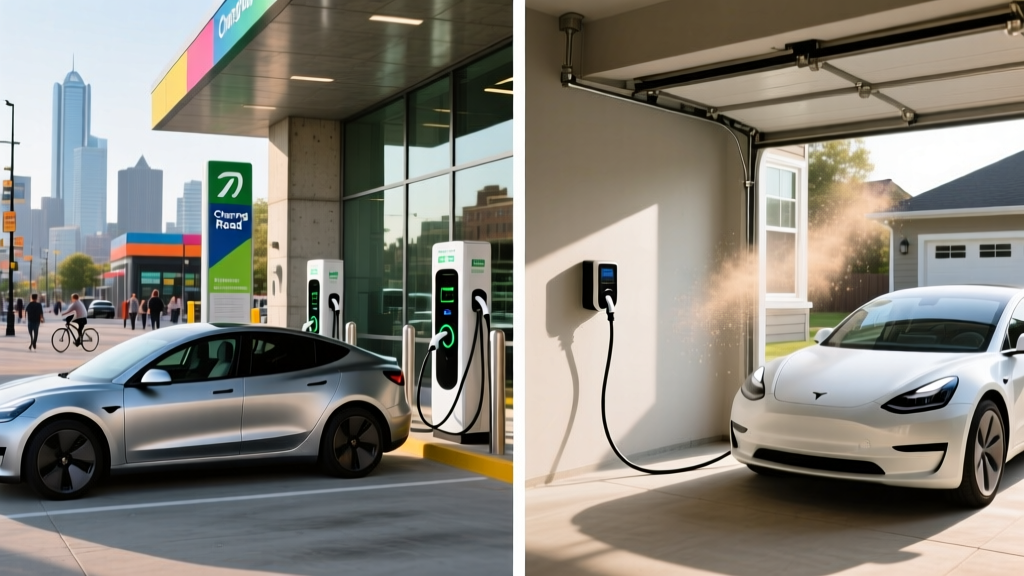
Electreon's dynamic wireless power transfer (DWPT) system embedded under a stretch of Woodward Avenue in Detroit is a legitimate engineering milestone — the first public wireless EV-charging road in the United States. But before you imagine ditching your home wall connector, let's anchor the conversation in physics and dollars. DWPT delivers roughly 25 kW of power to a moving vehicle equipped with a compatible receiver coil. That's meaningful for range-extension in city traffic, but it sits well below what a modern DC fast charger or even a robust home Level 2 setup can deliver. This guide breaks down where Detroit's charging road fits in a practical EV-charging strategy — and how home, public, and DC fast charging still do the heavy lifting in 2026.
Charging Levels Explained: Level 1, Level 2, DC Fast & Wireless
The single most common EV confusion is between kW (power, or how fast energy flows) and kWh (energy, or how much your battery holds). Think of kW as the width of a hose and kWh as the size of the bucket. A wider hose fills the bucket faster, but the bucket's capacity doesn't change.
| Level | Power (kW) | Voltage / Amps | Miles Added per Hour | Typical Use |
|---|---|---|---|---|
| Level 1 (120V outlet) | 1.2–1.9 kW | 120V / 12–16A | 3–5 mi/hr | Overnight trickle, PHEVs |
| Level 2 (240V home/public) | 7.2–19.2 kW | 240V / 30–80A | 22–60 mi/hr | Daily home charging |
| DC Fast Charging | 50–350 kW | 400–800V DC | 150–1,000+ mi/hr (peak) | Road trips, rapid top-ups |
| Wireless DWPT (Detroit road) | ~25 kW (dynamic) | Embedded coils | ~75–90 mi/hr equivalent (while driving) | Range extension in traffic |
How Much Does Home EV Charger Installation Actually Cost?
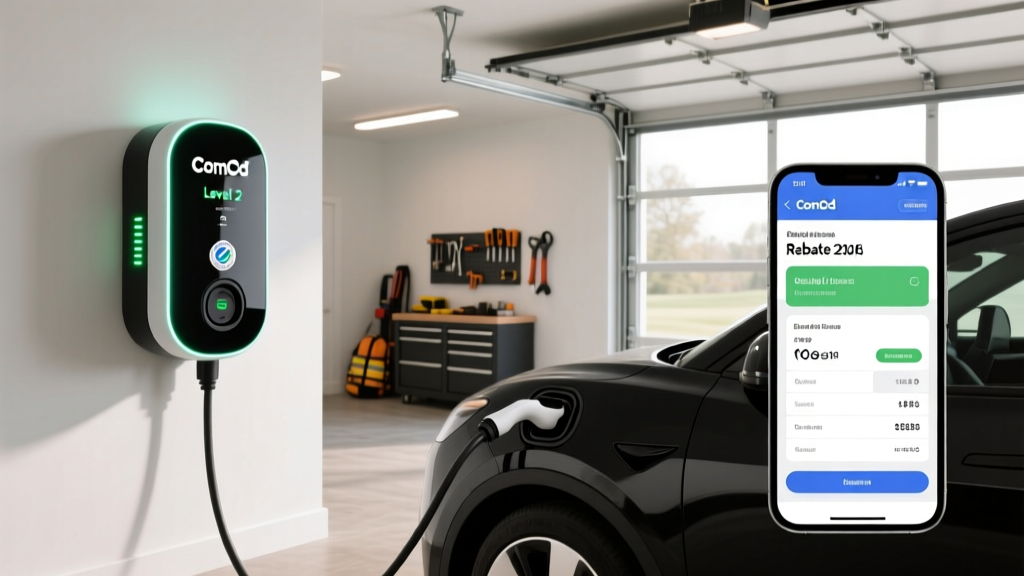
Home Level 2 charging is where most EV owners do 80–90% of their charging. But the sticker price of the charger itself is only part of the equation. Electrical upgrades, permits, and labor vary wildly depending on your home's panel capacity and the distance from the panel to your garage or driveway.
| Component | Low End | High End | Notes |
|---|---|---|---|
| Level 2 Charger (hardware) | $350 | $800 | 32A–48A smart chargers; Wi-Fi enabled |
| Electrician Labor | $400 | $1,500 | Depends on run length, conduit, wall type |
| Electrical Permit | $50 | $250 | Varies by municipality; required in most jurisdictions |
| Panel Upgrade (if needed) | $1,500 | $4,000 | 100A → 200A service upgrade for older homes |
| Total (no panel upgrade) | $800 | $2,550 | Most homes with 200A service fall here |
| Total (with panel upgrade) | $2,300 | $6,550 | Common in pre-1990 homes with 100A panels |
If your home already has a 200-amp electrical panel and the charger location is within 20–30 feet of the panel, expect to pay $1,200–$2,000 all-in. Homes with 100-amp service — common in older Detroit-area housing stock — frequently need a panel upgrade before adding a 40A or 48A dedicated EV circuit. A licensed electrician should perform a load calculation per NEC Article 220 before any work begins.
Charging Time Examples: 10–80% for Common Battery Sizes
Charging speed depends on three variables: the charger's max kW output, the vehicle's onboard charger capacity (for Level 2), and the battery's charge-curve acceptance rate (for DC fast charging). Here are realistic 10–80% times for common 2025–2026 EVs:
- Tesla Model 3 (75 kWh battery, 250 kW peak): ~20 minutes at a V3 Supercharger; ~7.5 hours on a 48A Level 2 (11.5 kW).
- Hyundai Ioniq 5 (77.4 kWh, 800V architecture, 240 kW peak): ~18 minutes at a 350 kW station; ~7 hours on a 48A Level 2.
- Ford F-150 Lightning (131 kWh extended range, 150 kW peak): ~38 minutes DC fast; ~12.5 hours on a 48A Level 2 (11.5 kW).
- Chevrolet Equinox EV (85 kWh, 150 kW peak): ~30 minutes DC fast; ~8.5 hours on a 48A Level 2.
Connector Compatibility: NACS, CCS1, and CHAdeMO in 2026
The North American Charging Standard (NACS), pioneered by Tesla, has effectively won the connector war. As of 2025–2026, Ford, GM, Rivian, Volvo, Polestar, and most major automakers have adopted NACS on new vehicles. CCS1 remains on many 2022–2024 models, and CHAdeMO is limited to the Nissan Leaf and Mitsubishi Outlander PHEV legacy fleet.
| Connector | Brands Using It (New Vehicles) | Adapter Needed? |
|---|---|---|
| NACS (Tesla-style) | Tesla, Ford, GM, Rivian, Volvo, Polestar, Hyundai/Kia (2025+), Toyota | CCS→NACS adapter (~$150–$250) for older CCS stations |
| CCS1 | VW ID.4 (2024 and earlier), BMW i4/iX, Mercedes EQE/EQS, older Hyundai/Kia | NACS→CCS adapter for Tesla Superchargers |
| CHAdeMO | Nissan Leaf (all years), Mitsubishi Outlander PHEV | No adapter available; CHAdeMO stations declining |
If you're buying a 2025 or 2026 EV, it almost certainly uses NACS. For home chargers, choose a NACS-equipped unit or a J1772 unit with a NACS adapter — J1772 remains the standard for Level 2 public charging in many locations, and the physical adapter is trivial.
Cost Per Mile: Home Charging vs. Public DC Fast vs. Gas
The economics of EV charging depend entirely on where you charge. Home charging on an off-peak utility rate is dramatically cheaper than gasoline; public DC fast charging narrows the gap considerably.
| Scenario | Rate ($/kWh) | Cost per Mile (at 3 mi/kWh) | Annual Cost (12,000 mi) |
|---|---|---|---|
| Home Off-Peak (utility rate) | $0.08–$0.14 | $0.03–$0.05 | $360–$600 |
| Home Standard Rate | $0.14–$0.20 | $0.05–$0.07 | $600–$840 |
| Public Level 2 (ChargePoint, EVgo) | $0.25–$0.49 | $0.08–$0.16 | $960–$1,920 |
| DC Fast Charging (Electrify America, Tesla) | $0.35–$0.55 | $0.12–$0.18 | $1,440–$2,160 |
| Gasoline (27 MPG avg, $3.30/gal) | — | $0.12 | $1,440 |
At home off-peak rates, an EV costs roughly one-quarter to one-third what a comparable gas car spends on fuel. But if you rely exclusively on public DC fast charging, your per-mile cost approaches or even exceeds gasoline. This is why home Level 2 installation isn't a luxury — it's the economic backbone of EV ownership.
Where Detroit's Wireless Charging Road Fits
Electreon's DWPT system on Woodward Avenue delivers approximately 25 kW to vehicles equipped with a receiver pad (currently being tested with commercial fleets and select passenger vehicles). At 25 kW, a vehicle traveling at 30 mph in city traffic receives roughly 75–90 miles of range per hour of driving — enough to offset the energy consumed in stop-and-go traffic and effectively extend range without stopping.
However, this technology has important limitations:
- Vehicle compatibility: Your EV must have an aftermarket receiver coil installed. No mass-market 2026 EV ships with DWPT hardware as standard.
- Geographic scope: The Detroit installation covers roughly one mile of roadway. This is a pilot, not a network.
- Cost model: Pricing for wireless charging per kWh has not been publicly established at consumer scale.
- Speed ceiling: 25 kW is useful for range maintenance in traffic but cannot compare to a 150–350 kW DC fast charger for rapid replenishment.
Think of Detroit's charging road as a fascinating proof-of-concept that may eventually complement — not replace — home Level 2 and DC fast charging. For now, your charging strategy should still center on a home installation for daily use and DC fast networks for road trips.
Recommended Home Level 2 Chargers for 2026
ChargePoint Home Flex
Power: Up to 12 kW (50A, configurable down to 16A)
Connector: NACS or J1772
Cable: 23 feet
Smart Features: Wi-Fi, app scheduling, Alexa, utility demand-response
Price: ~$550–$650
Best For: Flexible amperage for older panels; UL-listed, Energy Star certified
Tesla Wall Connector
Power: Up to 11.5 kW (48A)
Connector: NACS native
Cable: 24 feet
Smart Features: Wi-Fi, OTA updates, Power Sharing (up to 6 units on one circuit)
Price: ~$475
Best For: Tesla owners; best value-per-kW in the market
Emporia Vue EV Charger
Power: Up to 11.5 kW (48A)
Connector: J1772 (NACS adapter included)
Cable: 24 feet
Smart Features: Wi-Fi, solar integration, real-time energy monitoring
Price: ~$400–$500
Best For: Budget-conscious buyers; solar-home integration
Safety, Electrical Code, and Permit Essentials
Every Level 2 home charger installation should comply with NEC Article 625 (Electric Vehicle Charging System Equipment) and local amendments. Key requirements:
- Dedicated circuit: Your charger must be on its own breaker — no sharing with other appliances. A 48A charger requires a 60A breaker (NEC requires the circuit to be rated at 125% of continuous load).
- GFCI protection: Required for all receptacle-based installations (NEMA 14-50 outlets). Hardwired units may be exempt depending on local code, but GFCI breakers are strongly recommended for outdoor installations.
- Outdoor rating: If your charger is mounted outside, it must be rated NEMA 3R or NEMA 4 (weatherproof). Most major chargers meet NEMA 4.
- Permit and inspection: Most municipalities require a permit for any new 240V circuit. Skipping this can void homeowner's insurance coverage for electrical fires and create problems at resale.
- Load calculation: A licensed electrician should verify your panel has sufficient spare capacity. Adding a 60A circuit to a 100A panel that's already near capacity is a fire risk and a code violation.
Frequently Asked Questions
How much does it cost to install a home EV charger?
Most homes with a 200A panel spend $1,200–$2,500 total (charger + electrician + permit). Older homes needing a panel upgrade should budget $2,300–$6,550. Always get a load calculation from a licensed electrician before committing.
How fast will each charging level add range?
Level 1 adds 3–5 miles per hour. Level 2 adds 22–60 miles per hour depending on amperage. DC fast charging adds 150–1,000+ miles per hour at peak, but tapers significantly above 80% SoC. Detroit's wireless charging road adds roughly the equivalent of 75–90 miles per hour of driving at 25 kW.
Which connector and charger is compatible with my EV?
For 2025–2026 models, most new EVs use NACS. Older EVs (2022–2024) may use CCS1. The Nissan Leaf uses CHAdeMO. Check your vehicle's charge port or owner's manual. For home chargers, a NACS-equipped unit covers most new EVs; a J1772 unit with a NACS adapter covers everything.
How much does EV charging cost per mile compared to gas?
Home charging at off-peak rates costs $0.03–$0.05 per mile — roughly one-quarter the cost of gasoline at $3.30/gallon in a 27 MPG vehicle. Public DC fast charging costs $0.12–$0.18 per mile, which approaches or matches gasoline.
What electrical upgrades might I need for a home charger?
The most common upgrade is a panel service increase from 100A to 200A, costing $1,500–$4,000. You may also need a new conduit run if your panel is far from the charger location, or a sub-panel if your main panel has no spare breaker slots. A licensed electrician's load calculation (per NEC Article 220) will determine exactly what's needed.