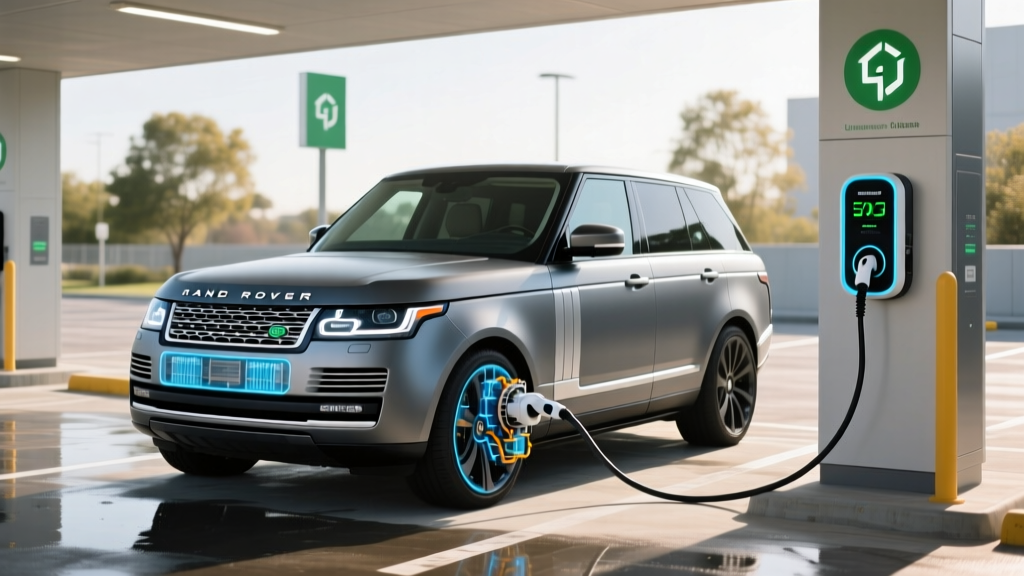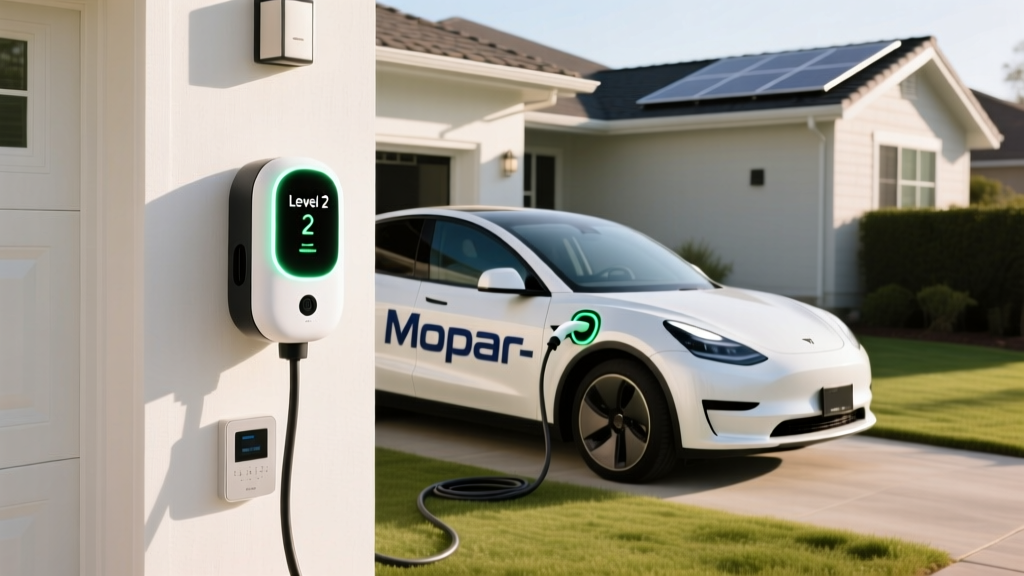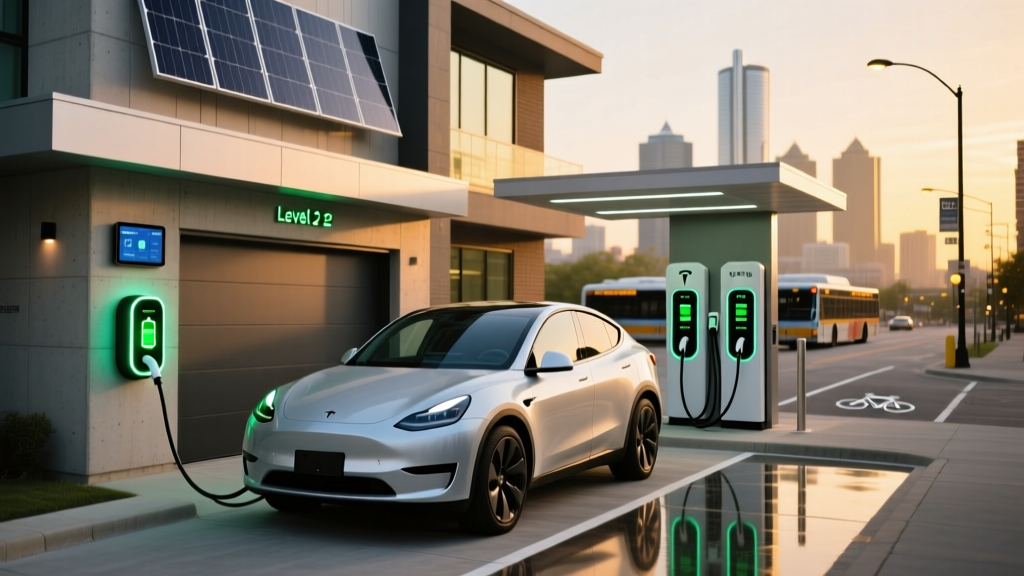
For EV owners in Metro Detroit, the phrase "charging lane" takes on two meanings. First, it's the literal infrastructure — the growing network of public DC fast chargers along I-75, I-96, and US-23 that makes corridor travel viable. Second, it's the personal charging ecosystem you build at home and navigate in public. With Michigan winters routinely dropping below 20°F and a public network that's expanding but still inconsistent in some suburbs, getting your Detroit charging lane right is the difference between effortless daily driving and range-stress frustration.
This guide breaks down every layer of EV charging for Detroit-area drivers: the physics of each charging level, what your home electrical panel can actually support, which connector your 2026 EV requires, and exactly what it costs per mile compared to filling up at a Detroit gas station. Whether you're in Ann Arbor, Royal Oak, Dearborn, or out toward Novi, these numbers apply.
Charging Levels Explained: How Fast Each Level Adds Range
The single most important distinction in EV charging is between kW (kilowatts — the rate of power delivery, like water pressure) and kWh (kilowatt-hours — the total energy stored in your battery, like the size of the tank). A charger's kW rating tells you how fast it can push energy; your battery's kWh rating tells you how much it holds. Confusing the two is the most common mistake new EV owners make.
Here's how each charging level performs in real-world Detroit conditions, including cold-weather derating that can slow Level 2 and DC fast charging by 15–30% when battery temperatures drop below freezing.
| Level | Voltage | Power (kW) | Miles of Range Added per Hour | Best For |
|---|---|---|---|---|
| Level 1 (120V) | 120V AC | 1.2–1.9 kW | 3–5 mi/hr | Overnight top-up, low-mileage drivers, PHEVs |
| Level 2 (240V) | 240V AC | 3.3–19.2 kW | 12–75 mi/hr | Daily home charging, workplace, shopping centers |
| DC Fast Charging | 400–800V DC | 50–350 kW | 150–1,200+ mi/hr (peak) | Road trips, corridor travel, quick top-ups |
A practical example: A 2026 Tesla Model Y Long Range with a 78 kWh usable battery and ~320 miles of EPA range charging on a 11.5 kW Level 2 home charger will add roughly 44 miles of range per hour — going from 10% to 80% in about 5 hours. On a 250 kW DC fast charger, that same 10–80% session takes roughly 18–22 minutes, though sustained speed tapers significantly above 50% state of charge due to the battery management system protecting cell health.
Home EV Charger Installation in Metro Detroit: Costs and Electrical Requirements
Installing a Level 2 home charger is the single highest-impact upgrade a Detroit EV owner can make. Most homes in the Metro Detroit area — from 1950s bungalows in Ferndale to newer builds in Northville — have 100-amp or 200-amp electrical panels. The question is whether your panel has enough spare capacity to add a dedicated 40-amp or 50-amp circuit for EV charging.
Electrical Requirements for Level 2 Charging
A typical Level 2 home charger runs on a 240V circuit (the same voltage as your electric dryer or oven). The most common configurations:
- 32A circuit (7.7 kW): Requires a 40A breaker. Adequate for most daily driving — adds ~28–30 miles of range per hour.
- 40A circuit (9.6 kW): Requires a 50A breaker. The sweet spot for most EV owners — adds ~36–40 mi/hr.
- 48A circuit (11.5 kW): Requires a 60A breaker. Maximum for most hardwired chargers — adds ~44 mi/hr. Best for larger batteries (100+ kWh trucks like the F-150 Lightning).
Electrical code requires that continuous loads (like EV charging) use no more than 80% of a circuit's rated capacity. That's why a 48A charger needs a 60A breaker, not a 48A breaker.
What Electrical Upgrades Might You Need?
Many older Detroit homes (especially those built before 1980 with 100-amp service) may require a panel upgrade to 200 amps before adding EV charging. Signs you'll need an upgrade:
- Your panel is at or near capacity with existing circuits
- You have a 100-amp main breaker
- Your panel uses fuses rather than breakers
- You already run multiple high-draw appliances simultaneously (electric heat, electric water heater, electric dryer, electric range)
A panel upgrade in the Detroit area typically runs $1,800–$3,500 depending on complexity, utility connection fees (DTE Energy), and whether new conduit must be run from the street. This is the single biggest variable in your total install cost and one many online guides gloss over.
Detroit Home Charger Install Cost Breakdown
| Cost Component | Simple Install (Panel Has Capacity) | Complex Install (Panel Upgrade Needed) |
|---|---|---|
| Level 2 Charger Equipment | $350–$700 | $350–$700 |
| Electrician Labor (2–6 hrs @ $100–$150/hr) | $200–$600 | $400–$900 |
| Electrical Permit (Detroit/suburban) | $50–$150 | $100–$250 |
| Panel Upgrade (if needed) | $0 | $1,800–$3,500 |
| Conduit/Wiring Materials (50–100 ft run) | $100–$300 | $150–$500 |
| Total Estimated Cost | $700–$1,750 | $2,800–$5,850 |
DTE Energy occasionally offers rebates for Level 2 charger installations — check their current EV programs before scheduling work. The federal Alternative Fuel Vehicle Refueling Property Credit (IRS Form 8911) may cover up to 30% of home charger equipment and installation costs (capped at $1,000) if you live in an eligible census tract. Consult a tax professional for your specific eligibility.
Detroit's Public Charging Network: DC Fast Corridors and Level 2 Destinations
Metro Detroit's public charging infrastructure has matured significantly. The major DC fast-charging corridors for road trips include:
- I-75 corridor: Electrify America and Tesla Supercharger stations spaced roughly every 50–70 miles from Detroit to Flint and north toward the Upper Peninsula.
- I-94 corridor: Good coverage from Detroit through Ann Arbor and west toward Chicago, with EA, ChargePoint, and Supercharger options.
- I-96/US-23: Coverage improving toward Lansing and Grand Rapids, though gaps remain in some stretches — plan accordingly.
For daily use, Detroit's Level 2 destination chargers at shopping centers (Twelve Oaks Mall, Somerset Collection), grocery stores (Meijer locations with ChargePoint), and parking garages downtown provide convenient supplemental charging. Expect 7–11 kW at most destination Level 2 chargers, adding roughly 25–44 miles of range per hour.
Real-world DC fast charging note: Advertised peak speeds (e.g., 350 kW) are rarely sustained. A typical 350 kW-capable charger delivers peak speed only between ~10–30% state of charge, then tapers progressively. For a vehicle like the 2026 Hyundai Ioniq 5 (peak 240 kW, 77.4 kWh battery), expect 10–80% in roughly 18 minutes under ideal conditions, but 25–30 minutes in cold Michigan weather when the battery must first warm itself.
Connector Compatibility: NACS, CCS1, CHAdeMO, and Adapters
The connector landscape in 2026 has consolidated significantly, but your EV's port still determines where you can plug in without an adapter.
| Connector | Brands Using It (Native) | Notes |
|---|---|---|
| NACS (Tesla/SAE J3400) | Tesla, Ford, GM, Rivian, Volvo, Polestar, Mercedes-Benz, BMW, Hyundai/Kia (select 2026 models) | Now the dominant North American standard; access to Tesla Supercharger network |
| CCS1 | Most legacy non-Tesla EVs (2021–2024 models), Volkswagen ID.4, some Stellantis models | Adapters available for NACS/Supercharger access; still supported at Electrify America, ChargePoint |
| CHAdeMO | Nissan Leaf (legacy only — no new models) | Declining network support; avoid for new purchases |
If your 2026 EV has a native NACS port, you get direct access to the Tesla Supercharger network (now over 30,000 stalls in North America) plus all Electrify America and ChargePoint stations via built-in CCS adapters or network-native NACS cables. If you own a CCS1-equipped vehicle from 2022–2025, a NACS-to-CCS adapter (typically $150–$250 from Tesla, Lectron, or A2Z) unlocks Supercharger access.
For home Level 2 charging, virtually all chargers now ship with either a native NACS connector or a J1772 connector (which plugs into the AC port on CCS1 vehicles; NACS vehicles use an included J1772-to-NACS adapter).
Cost to Charge in Detroit: Per-Mile vs. Gasoline
Detroit drivers pay an average of $3.10–$3.50 per gallon for regular unleaded as of early 2026 (per EIA data). Let's compare that to the cost of charging at various rates for a vehicle averaging 3.0 miles per kWh (a reasonable combined figure for a mid-size EV crossover like the Model Y or Ioniq 5).
| Scenario | Rate | Cost per kWh | Cost per Mile (3 mi/kWh) | Annual Cost (12,000 mi) |
|---|---|---|---|---|
| Home — DTE Off-Peak (overnight) | $0.09–$0.12/kWh | $0.11 | $0.037 | $444 |
| Home — Standard Rate | $0.17–$0.20/kWh | $0.18 | $0.060 | $720 |
| Public Level 2 (ChargePoint, etc.) | $0.25–$0.40/kWh | $0.33 | $0.110 | $1,320 |
| DC Fast Charging (EA, Supercharger) | $0.30–$0.50/kWh | $0.40 | $0.133 | $1,596 |
| Gas Vehicle (25 MPG combined) | — | — | $0.132 (at $3.30/gal) | $1,584 |
The takeaway: Home charging on an off-peak DTE rate plan is roughly 72% cheaper per mile than gasoline. Even exclusive public DC fast charging is cost-competitive with gas at current Detroit fuel prices. The savings case for EV ownership in Michigan is overwhelmingly driven by home charging access.
Pro tip: Enroll in DTE Energy's EV time-of-use rate plan if available in your area. Off-peak rates (typically 11 PM–6 AM) can drop your charging cost to $0.08–$0.10/kWh, making a full charge of a 78 kWh battery cost under $8 — versus $45–$55 to fill a gas tank.
Best Home EV Chargers for Detroit Homes: Equipment Picks
We evaluate chargers on power output, connector type, cable length, smart features (scheduling, energy tracking, load management), cold-weather durability, and price. All recommendations below are rated for outdoor installation — essential for Detroit's climate where garage space isn't always available.
Emporia Level 2 Smart Charger
- Power: 48A (11.5 kW) hardwired / 40A (9.6 kW) NEMA 14-50 plug
- Connector: J1772 (NACS adapter included)
- Cable: 24 ft
- Smart Features: Wi-Fi, energy monitoring, solar integration, time-of-use scheduling
- Outdoor Rating: NEMA 4 (weatherproof)
- Price: ~$399–$449
- Best For: Budget-conscious owners wanting full smart features and energy tracking
ChargePoint Home Flex
- Power: Up to 50A (12 kW) hardwired / up to 40A NEMA 14-50
- Connector: J1772 or NACS (configurable)
- Cable: 23 ft
- Smart Features: Wi-Fi, Alexa integration, flexible amperage dial, ChargePoint network access
- Outdoor Rating: NEMA 4
- Price: ~$599–$699
- Best For: Owners wanting adjustable amperage to match their panel capacity without replacing hardware
Tesla Wall Connector
- Power: 48A (11.5 kW) hardwired
- Connector: Native NACS
- Cable: 24 ft
- Smart Features: Wi-Fi, over-the-air updates, power sharing (multiple units on one circuit), vehicle-specific access control
- Outdoor Rating: NEMA 3R (weather-resistant)
- Price: ~$475
- Best For: Tesla and NACS-native Ford/GM/Rivian owners wanting seamless integration
For Detroit installations, we generally recommend hardwiring your charger rather than using a NEMA 14-50 outlet. Hardwired connections eliminate the receptacle as a failure point, allow higher amperage (48A vs. 40A max on a plug), and avoid the NEC 2023 requirement for GFCI breakers on 14-50 receptacles — which can cause nuisance tripping with some chargers and add $80–$150 in breaker cost.
Safety, Code, and Cold-Weather Considerations for Michigan Installations
Michigan adopts the National Electrical Code (NEC) with state amendments. Key requirements for your Detroit-area EV charger install:
- Dedicated circuit: Your EV charger must be on its own dedicated breaker — no sharing with other outlets or appliances.
- GFCI protection: Required for all outdoor receptacles (NEC 625.54). Hardwired chargers are exempt from this requirement, which is one reason installers prefer hardwiring.
- Outdoor rating: Any charger mounted outside (carport, driveway, exterior wall) must carry at minimum a NEMA 3R rating. NEMA 4 is preferred for Michigan's wind-driven rain and snow.
- Cable management: Michigan code doesn't mandate a holster, but keeping your cable off the ground prevents ice encasement and salt corrosion — both common Detroit problems.
- Load management: If your panel is near capacity but you want to avoid a full upgrade, consider a smart load-management device (like the Emporia VUE with automatic load shedding) that dynamically reduces charger draw when other appliances activate.
Frequently Asked Questions
How much does it cost to install a home EV charger in Detroit?
A straightforward Level 2 installation with an adequate electrical panel costs $700–$1,750 total (equipment, electrician labor, permit). If your home needs a 200-amp panel upgrade, total costs range from $2,800–$5,850. Always get at least two quotes from licensed electricians and confirm they include permit costs in their estimate.
How fast will each charging level add range to my EV?
Level 1 (120V) adds 3–5 miles per hour — enough for PHEVs or very low daily mileage. Level 2 (240V) adds 12–75 miles per hour depending on amperage (32A–48A). DC fast charging adds 150–1,200+ miles per hour at peak speed, but sustained rates taper above 50% state of charge. For a 78 kWh battery, a 10–80% DC fast session takes 18–30 minutes depending on peak kW and battery temperature.
Which connector and charger is compatible with my 2026 EV?
If you own a 2026 Tesla, Ford, GM, Rivian, Volvo, or Polestar, your vehicle has a native NACS port — choose a NACS charger (Tesla Wall Connector) or a J1772 charger with the included adapter. If you drive a 2022–2025 CCS1 vehicle (VW ID.4, older Hyundai/Kia models), use a J1772 charger for Level 2 and carry a NACS-to-CCS adapter for Supercharger access. CHAdeMO (Nissan Leaf) owners should plan charging carefully as public CHAdeMO infrastructure continues to shrink.
How much does EV charging cost per mile compared to gas in Detroit?
Home charging on DTE's off-peak rate costs roughly $0.04 per mile — about 70% less than a 25 MPG gas vehicle at $3.30/gallon ($0.13/mile). Standard-rate home charging runs ~$0.06/mile. Public DC fast charging ($0.30–$0.50/kWh) costs $0.10–$0.17/mile, making it comparable to gasoline. The economic case for EV ownership in Michigan depends heavily on having reliable home charging access.
What electrical upgrades might my Detroit home need for EV charging?
Homes built before 1980 with 100-amp service often need a panel upgrade to 200 amps ($1,800–$3,500). Homes with 200-amp panels usually have sufficient capacity for a 40–60A dedicated EV circuit, but a licensed electrician must perform a load calculation to confirm. If your panel is full but rated for sufficient total amperage, tandem breakers or a sub-panel may be more cost-effective solutions than a full upgrade.
For authoritative guidance on electrical safety standards, refer to the National Fire Protection Association's NEC resources and always hire a licensed Michigan electrician for your installation. For EV efficiency data and MPGe ratings by model, consult fueleconomy.gov.