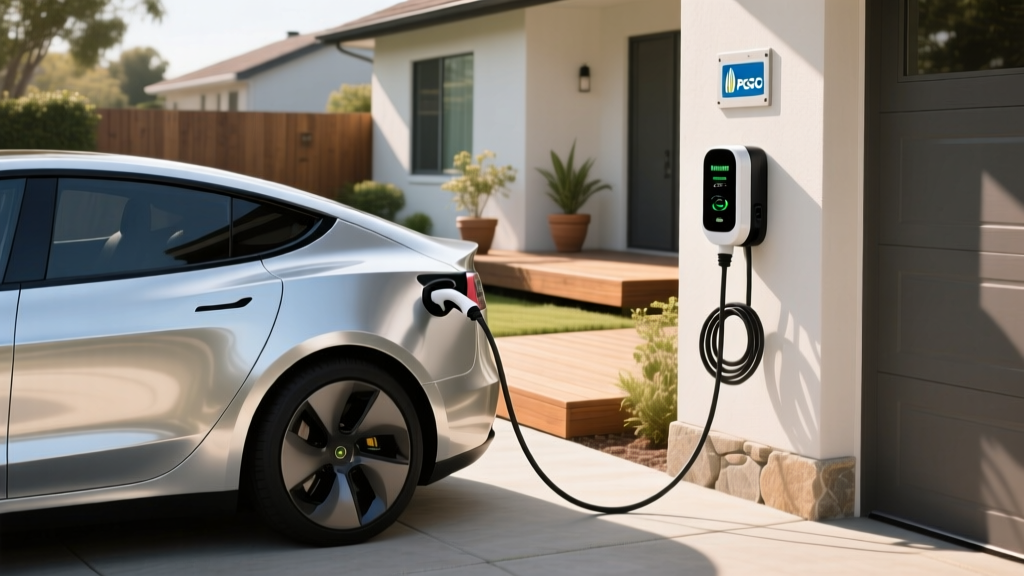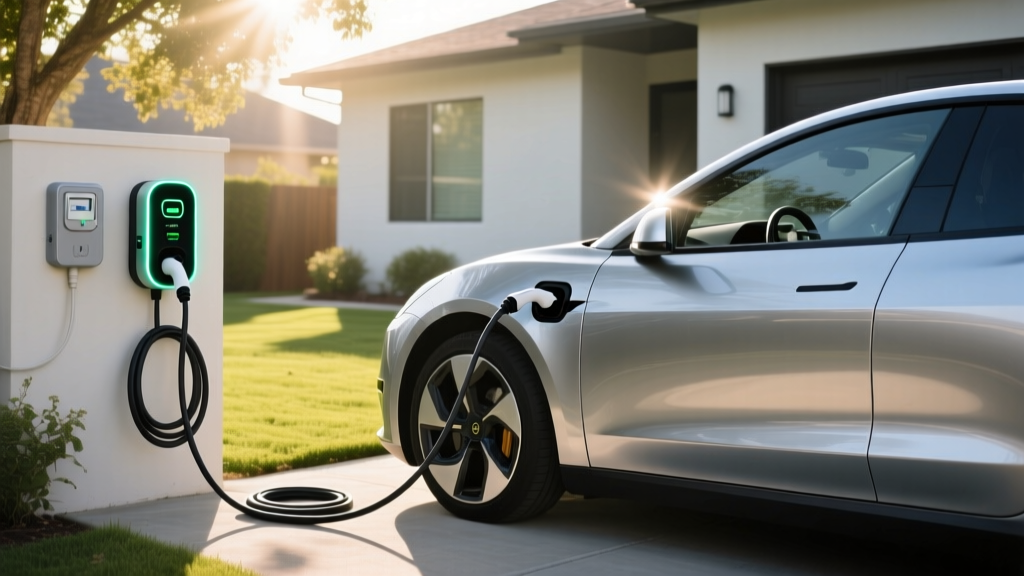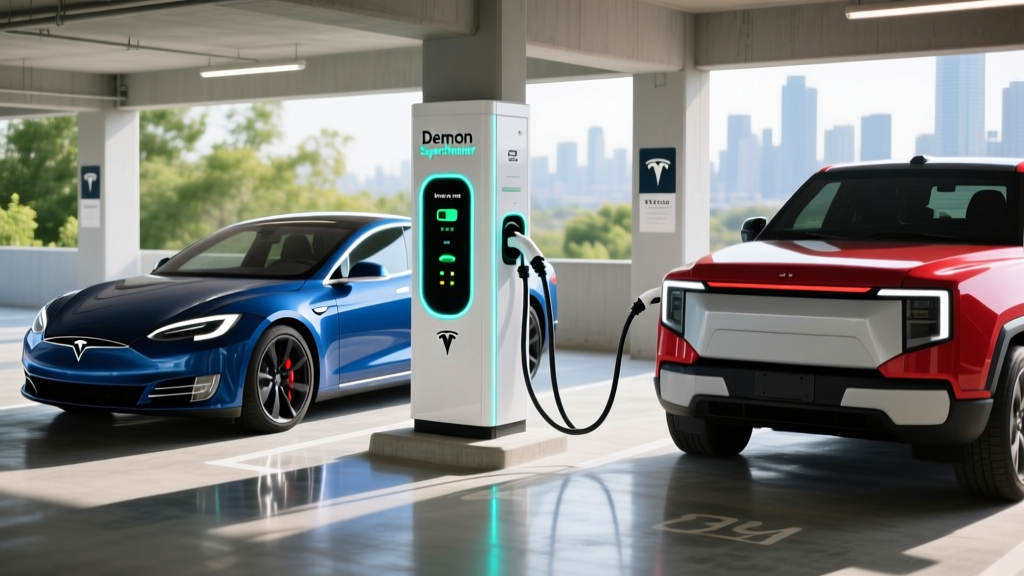
If you've spent any time on EV forums or social media, you've likely encountered the term "Demon Supercharger." Searches for it spike regularly, usually attached to viral claims of chargers that add 500 miles in five minutes or deliver 1+ megawatt of power to consumer vehicles. Here's the reality: no public "Demon Supercharger" network or hardware product exists for consumer EVs as of 2026. The term appears to be a meme or a misattribution — sometimes conflating Tesla's V4 Supercharger cabinets, heavy-duty Megacharger prototypes for the Tesla Semi, or simply internet hype.
What does exist is a rapidly maturing DC fast-charging ecosystem that, while not demonic, is genuinely impressive. The fastest consumer-facing chargers in the U.S. now deliver 350–400 kW, and the newest EVs can accept peak rates above 300 kW. That's enough to add roughly 200 miles of range in 15–20 minutes in the right vehicle.
This guide cuts through the hype and gives you the exact numbers you need: real charging speeds at every level, what home installation actually costs in 2026, which connector your car uses, and how charging costs compare to gasoline per mile.
The Three Charging Levels: Speeds in kW and Miles Per Hour
Before comparing equipment or pricing, you need the foundational distinction that trips up many new EV owners: kW (kilowatts) measures power — the rate at which energy flows into your battery. kWh (kilowatt-hours) measures energy — the total capacity of your battery, like gallons in a fuel tank. A 100 kWh battery charged at 10 kW takes roughly 10 hours; at 100 kW, about 1 hour (in simplified terms — charge curves complicate this, as we'll cover).
| Level | Voltage | Typical Power (kW) | Miles of Range Added Per Hour | Best Use Case |
|---|---|---|---|---|
| Level 1 | 120V AC | 1.0–1.9 kW | 3–5 mi/hr | Overnight top-up for PHEVs or low-mileage drivers |
| Level 2 | 240V AC | 3.3–19.2 kW | 12–75 mi/hr | Daily home and workplace charging |
| DC Fast Charge | 400–800V DC | 50–400 kW | 150–1,200+ mi/hr (peak) | Road trips and rapid top-ups |
The "miles per hour" column varies enormously based on your vehicle's efficiency. A lightweight, aerodynamic sedan like the Hyundai Ioniq 6 (4.0 mi/kWh) gains more miles per kWh than a heavy, boxy truck like the Ford F-150 Lightning (roughly 2.0 mi/kWh). Always calculate your own expectation using your car's EPA efficiency rating from fueleconomy.gov.
DC Fast Charging Reality: Peak kW vs. Sustained Charge Curves
No "Demon Supercharger" is needed when you understand what modern DC fast charging actually delivers — and where it falls short of marketing claims.
Charger manufacturers advertise peak power: a "350 kW charger" can deliver up to 350 kW. But your EV's battery management system (BMS) won't accept that rate for long. Lithium-ion batteries must taper charge speed as they fill to prevent overheating and lithium plating. A typical charge curve looks like this:
- 10–40% SoC: Near-peak power (e.g., 250–350 kW on capable vehicles)
- 40–60% SoC: Moderate taper (e.g., 150–200 kW)
- 60–80% SoC: Significant taper (e.g., 80–120 kW)
- 80–100% SoC: Trickle charge (e.g., 20–50 kW)
This is why the industry standard metric is 10–80% charge time, not peak kW. Real-world examples for 2026 model-year vehicles:
| Vehicle | Battery (kWh usable) | Peak DC Rate (kW) | 10–80% Time | Charger Required |
|---|---|---|---|---|
| Hyundai Ioniq 5 (Long Range) | 77.4 kWh (NMC) | ~240 kW | ~18 min | 350 kW CCS/NACS station |
| Tesla Model Y (Long Range) | ~75 kWh (NMC) | ~250 kW | ~20 min | V3/V4 Supercharger (250–350 kW) |
| Kia EV6 (GT-Line AWD) | 77.4 kWh (NMC) | ~240 kW | ~18 min | 350 kW CCS/NACS station |
| Ford F-150 Lightning (Extended) | 131 kWh (NMC) | ~150 kW | ~41 min | 150+ kW station |
| Chevrolet Equinox EV (3RS) | 85 kWh (NMC) | ~150 kW | ~30 min | 150+ kW CCS/NACS station |
Note the F-150 Lightning: despite a 150 kW peak rate, its massive 131 kWh battery means a longer absolute fill time. Bigger batteries need either higher peak rates or more patience. This is physics, not a charger deficiency.
Preconditioning matters. Most EVs with active thermal management (Tesla, Hyundai/Kia E-GMP, GM Ultium, Ford) will warm the battery to an optimal temperature when you navigate to a DC fast charger. Skipping preconditioning in cold weather can cut your peak charge rate by 50% or more. Always use your car's built-in navigation to route to a fast charger — this triggers preconditioning automatically.
Home Level 2 Charging: Installation Requirements and Costs
For most EV owners, a home Level 2 charger handles 90%+ of their charging. Here's exactly what's involved in installing one.
Electrical Requirements
A Level 2 charger requires a 240-volt dedicated circuit — the same voltage as your electric dryer or oven. Common configurations:
- NEMA 14-50 outlet (50A circuit, delivers up to 40A continuous / 9.6 kW): Most popular for portable or plug-in chargers
- NEMA 6-50 outlet (50A circuit, 240V only, no neutral): Common in garages
- Hardwired connection (60A circuit, delivers up to 48A continuous / 11.5 kW): Required for the fastest Level 2 chargers; no plug, direct junction-box connection
The National Electrical Code (NEC) requires that continuous loads (like EV charging, which runs for hours) not exceed 80% of the circuit rating. So a 50A circuit safely delivers 40A continuous; a 60A circuit delivers 48A continuous.
Panel Upgrade Considerations
Many homes built before 2000 have 100A or 150A main electrical panels. Adding a 50–60A EV circuit may push you near or over your panel's capacity, especially if you also run electric heat, an electric dryer, and an electric oven simultaneously. A licensed electrician will perform a load calculation per NEC Article 220 to determine whether your panel can handle the addition.
If a panel upgrade is needed — typically from 100A/150A to 200A — expect this to add $1,500–$4,000 to your project. In rare cases with very old wiring or a utility service drop upgrade, costs can exceed $5,000. This is the single biggest variable in home charger installation and the one most online guides understate.
| Component | Low End | Typical | High End |
|---|---|---|---|
| Level 2 Charger (Equipment) | $300 | $550 | $750 |
| Electrician Labor (outlet install, no panel upgrade) | $400 | $800 | $1,500 |
| Permit & Inspection | $50 | $150 | $350 |
| Electrical Panel Upgrade (if needed) | $0 | $0 | $4,000 |
| Total (no panel upgrade) | $750 | $1,500 | $2,600 |
| Total (with panel upgrade) | $2,250 | $3,500 | $6,600 |
These ranges assume a relatively short wire run (panel to garage/carport under 50 feet). Long runs, trenching for detached garages, or conduit through finished walls will push costs toward the high end.
Safety and Code Requirements
Your installation must comply with NEC Article 625 (Electric Vehicle Charging System Equipment). Key requirements:
- Dedicated circuit: The EV charger must have its own breaker — no sharing with other outlets or appliances.
- GFCI protection: NEC 2020 and later require ground-fault circuit interrupter protection for outdoor outlets used for EV charging. Many hardwired chargers have built-in GFCI; plug-in units on outdoor receptacles need a GFCI breaker.
- Outdoor rating: If your charger is installed outside, both the unit and the receptacle must carry a NEMA 3R or NEMA 4 (weather-resistant) rating.
- Permit and inspection: Most jurisdictions require an electrical permit and a post-installation inspection. Skipping this can void your homeowner's insurance coverage for electrical fires.
Connector Compatibility: NACS, CCS1, and CHAdeMO in 2026
The North American charging connector landscape has largely consolidated around NACS, but legacy connectors remain in wide use.
| Connector | Used By (New Vehicles) | DC Fast Availability | Adapter Needed? |
|---|---|---|---|
| NACS (J3400) | Tesla (all), Ford, GM, Rivian, Volvo, Polestar, Mercedes-Benz, BMW (2025+), Hyundai/Kia (2026+) | Tesla Supercharger network (20,000+ stalls), plus growing third-party NACS stations | CCS-to-NACS adapters available for older CCS vehicles (~$200–$300) |
| CCS1 | Legacy: pre-2025 VW ID.4, Hyundai Ioniq 5, Kia EV6, BMW i4/iX, older Chevy Bolt, etc. | Electrify America, EVgo, ChargePoint DC network | NACS-to-CCS adapters available; many automakers now include them |
| CHAdeMO | Nissan Leaf (discontinued 2025), Mitsubishi Outlander PHEV (legacy) | Limited and declining; some Electrify America stations retain CHAdeMO cables | No practical adapter to NACS/CCS for DC fast charging |
The critical takeaway for 2026: if you're buying a new EV, it almost certainly has a NACS port or will have one by the 2027 model year. CCS1 vehicles sold in 2023–2025 are receiving complimentary NACS adapters from their manufacturers (Ford, GM, Rivian, and others have confirmed this). CHAdeMO is effectively a legacy standard with a shrinking public network.
For Level 2 home charging, all connectors use the J1772 standard for AC charging (or the NACS connector, which handles both AC and DC in one plug). Any Level 2 home charger with a J1772 plug will charge any non-Tesla EV; Tesla owners use a NACS plug or a J1772-to-NACS adapter (included with most Tesla vehicles).
Level 2 Charger Equipment Recommendations
Here are four well-regarded Level 2 chargers available in 2026, spanning budget to premium. All are UL-listed (or ETL-listed to UL standards) and support the 80% continuous-duty rule.
ChargePoint Home Flex
- Power Output: Up to 12 kW (50A) on a 60A hardwired circuit; configurable down to 16A for lower-capacity panels
- Connector: J1772 (NACS adapter included for newer versions)
- Cable Length: 23 feet
- Smart Features: Wi-Fi connected, ChargePoint app scheduling, energy tracking, Alexa/Google Home integration
- Price: ~$550–$650
- Best For: Most homeowners wanting app-controlled scheduling and utility off-peak integration
Emporia Level 2 EV Charger
- Power Output: Up to 11.5 kW (48A) hardwired or 9.6 kW (40A) on NEMA 14-50
- Connector: J1772
- Cable Length: 24 feet
- Smart Features: Wi-Fi, Emporia app, integrates with Emporia Vue home energy monitor, solar-aware charging
- Price: ~$350–$400
- Best For: Budget-conscious buyers who want smart features and solar integration
Grizzl-E Smart
- Power Output: Up to 10 kW (40A) on NEMA 14-50
- Connector: J1772
- Cable Length: 24 feet
- Smart Features: OCPP-compatible (works with utility demand-response programs), basic app, extremely durable aluminum enclosure
- Price: ~$400–$450
- Best For: Outdoor installations in harsh climates (rated to -40°F); Canadian-built
Tesla Wall Connector
- Power Output: Up to 11.5 kW (48A) hardwired
- Connector: NACS (native Tesla plug; J1772 adapter available separately)
- Cable Length: 24 feet
- Smart Features: Wi-Fi, firmware updates, power sharing between two units on one circuit, no third-party app ecosystem
- Price: ~$475
- Best For: Tesla-only households wanting a clean, native plug experience
One note: do not buy an uncertified charger from an online marketplace to save $100–$200. Non-UL-listed chargers may lack overcurrent protection, thermal cutoffs, or proper grounding — and your electrical inspector will reject them. Your electrician may also refuse to install one due to liability.
Charging Cost Per Mile vs. Gasoline
Electricity pricing varies dramatically by location, time of day, and whether you're charging at home or on a public DC fast network. Here's a realistic breakdown using a mid-efficiency EV (3.5 mi/kWh, similar to a Tesla Model Y or Hyundai Ioniq 5) compared to a 28 MPG gasoline crossover.
| Scenario | Price | Cost Per Mile (EV at 3.5 mi/kWh) | Cost Per Mile (Gas at 28 MPG, $3.40/gal) |
|---|---|---|---|
| Home charging (off-peak utility rate) | $0.09/kWh | $0.026/mi | $0.121/mi |
| Home charging (average U.S. residential) | $0.17/kWh | $0.049/mi | $0.121/mi |
| Home charging (high-cost state: CA, HI, Northeast) | $0.30/kWh | $0.086/mi | $0.121/mi |
| Public Level 2 (workplace, retail) | $0.25–$0.35/kWh | $0.071–$0.100/mi | $0.121/mi |
| DC Fast Charging ( Electrify America, EVgo, Tesla Supercharger) | $0.35–$0.55/kWh | $0.100–$0.157/mi | $0.121/mi |
The math is clear: home charging is almost always cheaper than gasoline per mile, often by a factor of 3–5x. Public DC fast charging, however, can match or exceed gasoline costs per mile — particularly at $0.48–$0.55/kWh rates common at highway travel plazas. This is why EV ownership economics depend heavily on home charging access.
If you drive 12,000 miles per year and charge exclusively at home at the U.S. average rate ($0.17/kWh), your annual "fuel" cost is roughly $583. The equivalent gasoline cost at 28 MPG and $3.40/gallon is $1,457 — a savings of $874/year. Over a 5-year ownership period, that's $4,370 in fuel savings, which helps offset the EV's typically higher purchase price.
For the most accurate comparison, use your utility's actual rate (check your bill for $/kWh) and your state's average gas price via the U.S. Energy Information Administration.
Frequently Asked Questions
Is the "Demon Supercharger" a real product or charging network?
No. As of 2026, no product, network, or technology officially named "Demon Supercharger" exists. The term circulates on social media, sometimes misattributing Tesla's Megacharger (a ~750 kW+ system designed for the Tesla Semi, not consumer vehicles) or exaggerating the capabilities of 350–400 kW public DC fast chargers. The fastest consumer EV charging currently available peaks around 350 kW, adding roughly 200 miles in 15–20 minutes in a compatible vehicle.
How much does it cost to install a home EV charger?
For a standard Level 2 installation on an existing 200A panel with a short wire run, expect $750–$2,600 total (equipment + electrician + permit). If your home needs an electrical panel upgrade from 100A/150A to 200A, add $1,500–$4,000, bringing the total to $2,250–$6,600. Always get at least two quotes from licensed electricians, and confirm the quote includes the permit and inspection fee.
How fast will each charging level add range?
Level 1 (120V): 3–5 miles per hour. Level 2 (240V): 12–75 miles per hour depending on amperage and vehicle efficiency. DC Fast Charging: at peak rate, effectively 150–1,200+ miles per hour, though this tapers significantly above 60% battery. For practical planning, use 10–80% charge times (18–40 minutes for most 2026 EVs on a 150+ kW station).
Which connector/charger is compatible with my EV?
For 2026 model-year vehicles: Tesla, Ford, GM, Rivian, Volvo, Polestar, and most new Hyundai/Kia models use NACS. Most 2022–2025 non-Tesla EVs use CCS1 and can access NACS/Supercharger stations via adapter. The Nissan Leaf (discontinued 2025) used CHAdeMO. For home Level 2, all vehicles accept J1772 (or NACS, which integrates J1772-equivalent AC charging). Check your owner's manual or the charge-port door for the specific connector type.
How much does charging cost per mile vs gas?
At the U.S. average residential electricity rate ($0.17/kWh) and a mid-efficiency EV (3.5 mi/kWh), you'll pay roughly $0.049/mile — about 60% less than a 28 MPG gas car at $3.40/gallon ($0.121/mile). However, public DC fast charging at $0.40–$0.55/kWh can equal or exceed gasoline costs. The economic case for an EV is strongest when you can charge at home.
What electrical upgrades might I need?
The most common upgrade is a panel capacity increase from 100A or 150A to 200A, needed when your existing panel lacks headroom for a 50–60A EV circuit on top of existing loads. Your electrician will perform a NEC Article 220 load calculation. Other potential needs: replacing a Federal Pacific or Zinsco panel (known fire hazards, commonly found in pre-1990 homes), upgrading aluminum branch wiring, or running new conduit for detached garages. Some utilities offer rebates of $200–$1,000 for panel upgrades paired with EV charger installation — check with your local provider.
Does the federal tax credit apply to home charger installation?
The IRS §30C Alternative Fuel Vehicle Refueling Property Credit covers 30% of the cost of home EV charging equipment and installation, up to $1,000, but with significant restrictions: your home must be in a qualifying low-income or non-urban census tract, and the credit is non-refundable. The IRS publishes a census tract lookup tool. This credit is separate from the §30D new-EV purchase credit and has its own eligibility rules — consult a tax professional to confirm your qualification.
The Bottom Line: Skip the Hype, Focus on the Fundamentals
There is no "Demon Supercharger" — but the real-world EV charging infrastructure in 2026 is robust enough that most owners rarely think about it. The winning formula is straightforward: install a Level 2 charger at home (budget $1,500 for a typical installation), use public DC fast charging only for road trips, and take advantage of off-peak electricity rates to keep your per-mile cost under $0.05.
Understand your car's actual 10–80% charge time (not its peak kW marketing number), know your connector type, and confirm your electrical panel can handle the load before calling an electrician. Those fundamentals will serve you better than any internet myth about chargers that don't exist.