If you've spent any time in EV forums or YouTube comment sections, you've probably encountered the term "demon chargers" — a colloquial label enthusiasts use for ultra-high-power DC fast chargers capable of delivering 350 kW or more. The name evokes hellish speeds, and in some cases, the numbers back it up: certain 2026 EVs can add 200 miles of range in under 10 minutes when paired with the right hardware. But "demon charger" isn't an official industry term, and the reality of ultra-fast charging involves far more nuance than a peak power number suggests.
This guide cuts through the hype. We'll explain what demon chargers actually are, how they compare to the Level 2 home chargers most EV owners rely on daily, what electrical upgrades your home might need, and exactly how much charging costs per mile versus gasoline. Whether you're planning a home installation or mapping a cross-country road trip, these are the numbers that matter.
What Exactly Is a "Demon Charger"?
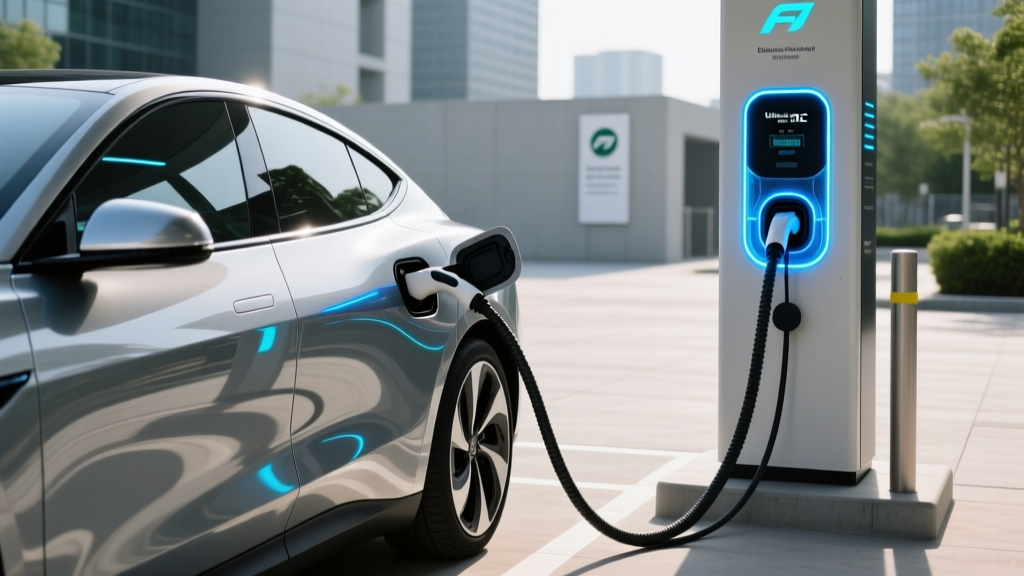
The term "demon charger" has no formal engineering definition. In EV communities, it typically refers to DC fast chargers rated at 350 kW or above — hardware like Electrify America's 350 kW dispensers, Tesla's V4 Superchargers (which support up to 350+ kW for compatible vehicles), and IONNA's (the BMW-GM-Honda-Mercedes joint venture) ultra-fast corridor chargers rolling out through 2026.
The "demon" label captures the headline-grabbing peak power, but here's the critical distinction every EV owner must understand: kW (kilowatts) measures power — the rate of energy delivery — while kWh (kilowatt-hours) measures energy, the actual amount stored in your battery. A 350 kW charger doesn't dump 350 kWh into your car. It can deliver energy at a rate of up to 350 kilojoules per second, but only if your vehicle's battery management system (BMS) can accept that rate, and only for a portion of the charging session before the curve tapers.
Real-world charging at a "demon charger" typically looks like this: a rapid ramp-up to peak kW between 10-30% state of charge (SoC), a sustained plateau through roughly 50-60%, then a progressive taper from 60-80% and a steep drop-off above 80%. The 10-80% time is the metric that matters — not the peak kW number on the sticker.
Charging Levels: Speeds, Power, and Real-World Range Gains
Every EV owner interacts with three charging tiers. Here's how they stack up in measurable terms:
| Level | Voltage | Power (kW) | Miles of Range Added per Hour | Typical Use Case |
|---|---|---|---|---|
| Level 1 | 120V AC | 1.0–1.9 kW | 3–5 miles/hr | Overnight top-up, PHEV owners, emergency |
| Level 2 | 240V AC | 3.3–19.2 kW | 12–75 miles/hr | Home daily charging, workplace, destination |
| DC Fast (standard) | 400–800V DC | 50–150 kW | 150–400 miles/hr (peak) | Highway travel, quick top-ups |
| DC Fast ("demon"/ultra-fast) | 800V+ DC | 250–500 kW | 500–1,200+ miles/hr (peak) | Corridor travel, 800V-architecture EVs |
A few notes on these figures. The "miles per hour" column assumes an average vehicle efficiency of 3–4 mi/kWh (roughly the EPA combined average for mainstream 2026 EVs like the Hyundai Ioniq 5, Tesla Model Y, and Chevrolet Equinox EV). Efficiency varies significantly: a Lucid Air achieves over 4.5 mi/kWh, while a GMC Hummer EV manages roughly 1.8 mi/kWh. Your actual range gain depends on your vehicle's efficiency, not just the charger's output.
DC fast charging speeds are peak values, not sustained averages. A 350 kW charger might deliver 350 kW for 3-5 minutes before tapering to 200 kW, then 150 kW, then 80 kW as the battery fills. This is why we always cite 10-80% charge times rather than peak kW alone.
Real-World 10-80% Charging Times by Battery Size
Here's what charging actually looks like for common 2026 EV battery sizes across different charger types. These times assume optimal battery temperature (preconditioned) and a compatible connector:
| Battery Size (usable kWh) | Example Vehicles | 50 kW DC | 150 kW DC | 350 kW DC ("Demon") |
|---|---|---|---|---|
| ~40 kWh | Nissan Leaf (2026), base LEAF | ~36 min | ~18 min* | ~18 min* (CHAdeMO caps at ~100 kW) |
| ~60 kWh | Chevrolet Equinox EV, VW ID.4 | ~52 min | ~26 min | ~18-22 min (CCS/NACS, 400V) |
| ~77 kWh | Tesla Model Y, Ford Mustang Mach-E | ~68 min | ~30 min | ~18-25 min (NACS) |
| ~84 kWh | Hyundai Ioniq 5, Kia EV6 (800V) | ~72 min | ~32 min | ~16-18 min (800V architecture) |
| ~100 kWh | BMW iX, Mercedes EQS, Rivian R1S | ~90 min | ~40 min | ~20-28 min (varies by architecture) |
*CHAdeMO-equipped vehicles like the Leaf are typically limited to 50-100 kW peak regardless of charger capacity. A 350 kW "demon charger" provides no benefit to these vehicles without an adapter, and even with one, the vehicle's BMS limits the charge rate.
The takeaway: "demon chargers" deliver their most dramatic advantage to vehicles with 800-volt battery architectures — currently the Hyundai Ioniq 5/6, Kia EV6/EV9, Genesis GV60, Porsche Taycan, and Audi e-tron GT. If your EV uses a 400V architecture (most Teslas, Fords, GMs, and VWs), you'll see diminishing returns above ~250 kW because the vehicle simply can't accept more current without exceeding its thermal limits.
Home Level 2 Installation: Electrical Requirements and True Costs
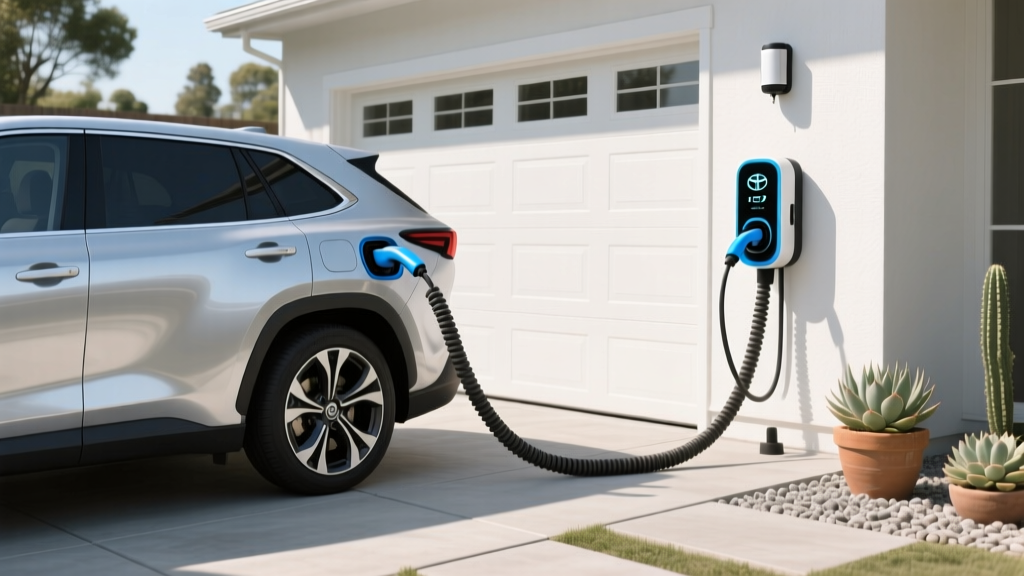
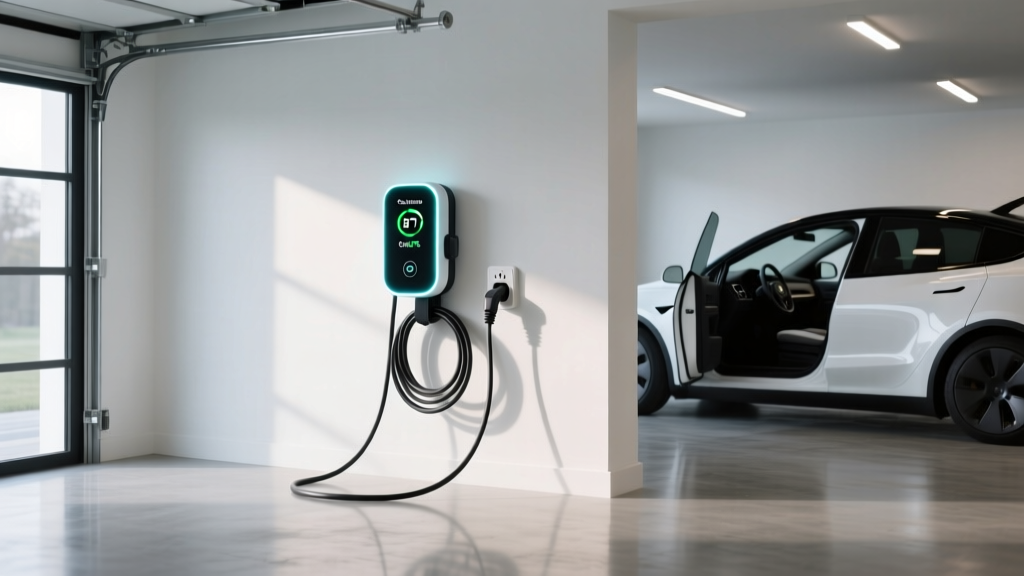
While "demon chargers" grab headlines, 90%+ of EV charging happens at home on Level 2. Here's what a proper installation actually requires and costs in 2026.
Electrical Requirements
A standard home Level 2 charger requires a dedicated 240-volt circuit, typically rated at 40, 50, or 60 amps. The National Electrical Code (NEC) requires that continuous loads (which EV charging qualifies as) not exceed 80% of the circuit's rated capacity. This means:
- A 40A circuit delivers up to 32A continuous → ~7.7 kW
- A 50A circuit delivers up to 40A continuous → ~9.6 kW
- A 60A circuit delivers up to 48A continuous → ~11.5 kW
Most 2026 EVs have onboard chargers rated between 7.2 kW and 11.5 kW, meaning a 50A or 60A circuit covers the vast majority of vehicles. Higher-amperage circuits (80A/100A) are available for vehicles like the Chevrolet Silverado EV or Hummer EV with optional 19.2 kW onboard chargers, but these require significantly heavier wiring and are uncommon in residential installs.
Panel Upgrade Considerations
This is the cost variable most online guides gloss over. If your home has a 100-amp or 150-amp main electrical panel — common in homes built before 2000 — adding a 50A or 60A dedicated EV circuit may push your total calculated load beyond the panel's capacity. In this case, you'll need a panel upgrade to 200A (or in rare cases, a second sub-panel or a "smart" load-management device like the Sense or Span panel that dynamically allocates capacity).
Signs you may need a panel upgrade: your panel is already near capacity (multiple large appliances, electric heat, hot tub), you have a Federal Pacific or Zinsco panel (known safety hazards that electricians will recommend replacing regardless), or your utility service drop is limited to 100-150A.
Installation Cost Breakdown
| Component | Simple Install (panel nearby, no upgrade) | Complex Install (long wire run, panel upgrade) |
|---|---|---|
| Level 2 Charger (hardwired, 48A) | $400–$750 | $400–$750 |
| Electrical permit | $50–$200 | $50–$200 |
| Electrician labor (licensed) | $500–$1,500 | $1,500–$4,000 |
| Wire, conduit, breaker | $150–$400 | $400–$1,200 |
| Panel upgrade (if needed) | $0 | $1,500–$3,500 |
| Utility service upgrade (rare) | $0 | $2,000–$5,000 |
| Total estimated range | $1,100–$2,850 | $5,850–$14,650 |
The median cost for a straightforward installation (200A panel with capacity, charger mounted within 20 feet of the panel) is approximately $1,500–$2,500 all-in. The federal Alternative Fuel Vehicle Refueling Property Credit (IRS Form 8911) covers 30% of the cost of home charging equipment and installation, up to $1,000 — but this credit has income and census-tract eligibility requirements that vary by location. Check the IRS guidelines and confirm with a tax professional before assuming eligibility.
Connector Compatibility: NACS, CCS, and CHAdeMO in 2026
The connector landscape has shifted dramatically. Here's where things stand for 2026 model-year vehicles:
| Connector | Native Brands | Max DC Rate Supported | Adapter Needed For |
|---|---|---|---|
| NACS (Tesla / SAE J3400) | Tesla, Ford, GM, Rivian, Volvo, Polestar, Mercedes, BMW (2025+), Hyundai/Kia (2026+) | Up to 350+ kW (vehicle dependent) | CCS stations require NACS-to-CCS adapter (available from Tesla, ~$250) |
| CCS1 (Combined Charging System) | VW, Audi (pre-2026), legacy BMW, Stellantis, Honda (pre-2026), most pre-2025 models | Up to 350 kW | Tesla Superchargers require CCS-to-NACS adapter (Tesla, ~$250) |
| CHAdeMO | Nissan Leaf (legacy), Mitsubishi Outlander PHEV (legacy) | Up to 100 kW (typically 50 kW) | Limited network; no viable adapter to NACS/CCS for DC fast charging |
The 2026 reality: NACS has won the North American standard war. Nearly every major automaker has adopted the Tesla-originated connector for 2025-2026 models. If you're buying a new EV in 2026, it almost certainly has NACS. If you own a 2023-2024 CCS-equipped vehicle, adapters are widely available and Tesla has opened its Supercharger network to CCS vehicles via adapter.
CHAdeMO is effectively a legacy standard. Nissan has moved the Ariya and future Leaf replacements to NACS, and new CHAdeMO infrastructure investment has essentially stopped. If you own a CHAdeMO vehicle, plan your road trips around the remaining Electrify America and EVgo stations that still maintain CHAdeMO connectors — but recognize this network is shrinking.
Cost to Charge: Home vs. Public vs. Gas
This is the calculation that determines whether an EV actually saves you money. Here are real 2026 cost scenarios:
| Charging Scenario | Average $/kWh | Cost per Mile (at 3.5 mi/kWh) | Equivalent Gas Price (at 25 MPG) |
|---|---|---|---|
| Home, off-peak utility rate | $0.08–$0.14 | $0.023–$0.040 | $0.57–$1.00/gal |
| Home, standard residential rate | $0.13–$0.20 | $0.037–$0.057 | $0.93–$1.43/gal |
| Home, Time-of-Use (TOU) super off-peak | $0.05–$0.09 | $0.014–$0.026 | $0.36–$0.64/gal |
| Public Level 2 (workplace, shopping) | $0.20–$0.40 | $0.057–$0.114 | $1.43–$2.86/gal |
| Public DC Fast (Electrify America, EVgo) | $0.35–$0.55 | $0.100–$0.157 | $2.50–$3.93/gal |
| Tesla Supercharger (member/non-member) | $0.28–$0.45 | $0.080–$0.129 | $2.00–$3.21/gal |
| Gasoline (national avg., mid-2026) | — | $0.136 (at $3.40/gal, 25 MPG) | $3.40/gal |
The numbers make the case clearly: home charging is the economic sweet spot, consistently delivering fuel costs equivalent to gasoline at $0.50–$1.40 per gallon. Public DC fast charging, while essential for road trips, can approach or even exceed gasoline costs per mile at the highest-rate stations. This is why EV ownership economics fundamentally depend on reliable home or workplace charging access.
For a concrete example: a driver covering 12,000 miles annually in a vehicle averaging 3.5 mi/kWh would use approximately 3,429 kWh per year. At a home rate of $0.14/kWh, that's $480/year in electricity. The same distance in a 25 MPG gas vehicle at $3.40/gallon costs $1,632/year. The annual fuel savings: roughly $1,150 — though this varies by local utility rates and gas prices.
Equipment Recommendations: Home Level 2 Chargers for 2026
Here are proven Level 2 chargers we recommend based on power output, reliability, smart features, and value. All are NACS-native or offer NACS/CCS configurations:
Tesla Wall Connector (Gen 4)
- Power output: Up to 11.5 kW (48A on a 60A circuit)
- Connector: NACS native
- Cable length: 24 feet
- Smart features: Wi-Fi, OTA updates, Power Sharing (link up to 6 units on one circuit), Tesla app integration
- Price: ~$475
- Best for: Tesla owners and NACS-equipped EVs; cleanest ecosystem integration
ChargePoint Home Flex (2nd Gen)
- Power output: Up to 12 kW (50A on a 60A circuit; configurable down to 16A)
- Connector: NACS or CCS1 (user-selectable at purchase)
- Cable length: 23 feet
- Smart features: Wi-Fi, Alexa integration, ChargePoint app with scheduling and cost tracking, load management
- Price: ~$550–$650
- Best for: Multi-EV households, CCS and NACS flexibility, detailed energy tracking
Emporia Level 2 EV Charger
- Power output: Up to 11.5 kW (48A on a 60A circuit)
- Connector: NACS (J1772 adapter included)
- Cable length: 24 feet
- Smart features: Wi-Fi, Emporia app, integrates with Emporia Vue energy monitor for whole-home load tracking, solar-aware charging
- Price: ~$350–$400
- Best for: Budget-conscious buyers, solar homes, energy-monitoring enthusiasts
Grizzl-E Smart (United Chargers)
- Power output: Up to 10 kW (40A on a 50A circuit)
- Connector: NACS or J1772
- Cable length: 24 feet
- Smart features: OCPP-compatible, works with multiple apps (including ev.energy for utility demand-response programs), adjustable amperage
- Price: ~$450–$550
- Best for: Canadian/Northern US climates (rated to -40°F), utility demand-response participants, open-protocol preference
Key buying advice: Always hardwire your Level 2 charger rather than using a 240V plug (NEMA 14-50). Hardwired connections are safer for continuous high-amperage loads, eliminate the risk of plug overheating, and are required by code in many jurisdictions for circuits above 40A. If you rent or may move, a plug-in unit offers portability — but budget for a licensed electrician to install a dedicated, properly torqued receptacle.
Safety, Code, and Installation Best Practices
EV charging is a continuous, high-amperage load that runs for hours — a fundamentally different electrical profile than most household appliances. Here's what proper installation requires:
- Dedicated circuit: Your EV charger must be on its own dedicated breaker — never shared with other appliances. This is a NEC requirement, not a recommendation.
- GFCI protection: The 2020 and 2023 NEC require GFCI protection for EV charging outlets (not hardwired units in most interpretations). Many modern chargers have built-in GFCI protection; confirm with your electrician and local inspector.
- Outdoor rating: If your charger is mounted outdoors, it must carry a NEMA 4 or NEMA 4X rating (weatherproof). All chargers listed above meet this standard.
- Wire gauge: A 60A circuit typically requires 6 AWG copper wire (or 4 AWG aluminum) for runs under 50 feet. Longer runs may require upsizing to prevent voltage drop. Your electrician will calculate this.
- Permits and inspection: Virtually all jurisdictions require an electrical permit for EV charger installation. The work must pass inspection before your utility will approve any EV-specific rate plans or rebates. Never skip the permit — unpermitted work can void insurance coverage and create liability.
- Load calculation: A licensed electrician will perform a NEC Article 220 load calculation on your panel before recommending a circuit size. If they skip this step, get a second opinion.
Frequently Asked Questions
How much does it cost to install a home EV charger?
A straightforward Level 2 installation (200A panel with available capacity, short wire run) typically costs $1,100–$2,850 including the charger, permit, wiring, and electrician labor. Complex installations requiring a panel upgrade, long wire runs through finished walls, or utility service upgrades can range from $5,850–$14,650. The federal Alternative Fuel Vehicle Refueling Property Credit (30% up to $1,000) may offset part of this cost, subject to income and census-tract eligibility per IRS guidelines.
How fast will each charging level add range?
Level 1 (120V) adds roughly 3–5 miles per hour — adequate for PHEVs with small batteries but impractical for BEVs. Level 2 (240V) adds 12–75 miles per hour depending on amperage and your vehicle's onboard charger capacity. DC fast charging adds the equivalent of 150–1,200+ miles per hour at peak rates, but the actual 10-80% session takes 16–72 minutes depending on battery size, voltage architecture, and charger power. See our charging time table above for specific estimates.
Which connector/charger is compatible with my EV?
For 2026 models, NACS (SAE J3400) is the dominant standard — adopted by Tesla, Ford, GM, Rivian, Hyundai, Kia, BMW, Mercedes, Volvo, and Polestar. CCS1 remains on many 2023-2025 vehicles and adapters are available for Supercharger access. CHAdeMO is limited to legacy Nissan and Mitsubishi models. Check your vehicle's charge port or the EPA's fueleconomy.gov listing for your specific model and year.
How much does charging cost per mile vs gas?
Home charging at standard residential rates ($0.13–$0.20/kWh) costs roughly $0.037–$0.057 per mile in an average-efficiency EV — equivalent to gasoline at $0.93–$1.43 per gallon. Public DC fast charging ($0.35–$0.55/kWh) costs $0.10–$0.16 per mile, comparable to gas at $2.50–$3.93 per gallon. The average gasoline vehicle at 25 MPG with gas at $3.40/gallon costs about $0.136 per mile.
What electrical upgrades might I need?
The most common upgrade is a panel upgrade from 100A or 150A to 200A ($1,500–$3,500), required when your existing panel lacks capacity for a dedicated 50-60A circuit. Older homes may also need a utility service drop upgrade ($2,000–$5,000 in rare cases). Some homeowners opt for a smart electrical panel (like Span) or a load-management device that dynamically shares capacity between the EV charger and other appliances, avoiding a full panel upgrade. A licensed electrician's load calculation will determine what's needed for your specific home.
Can any EV use a 350 kW "demon charger" at full speed?
No. Your vehicle's battery architecture determines how much power it can accept. Vehicles with 800-volt architectures (Hyundai Ioniq 5/6, Kia EV6/EV9, Porsche Taycan, Genesis GV60) can sustain higher charge rates and benefit most from 350 kW chargers, achieving 10-80% in roughly 16-20 minutes. Most 400V vehicles peak between 150-250 kW regardless of charger capacity. Additionally, battery temperature matters enormously — an un-preconditioned battery in cold weather may accept less than half its rated charge rate. Always use your vehicle's built-in navigation to route to a charger, which triggers battery preconditioning automatically.