If you've heard the term "supercharging" tossed around in EV circles and wondered what it actually means in practical terms, you're not alone. The phrase gets conflated with everything from Tesla's proprietary Supercharger network to any DC fast-charging session, but the physics and the hardware behind it deserve a precise explanation. This guide will define supercharging in the context of modern EV ownership, then walk you through every charging level, connector standard, home installation requirement, and per-mile cost comparison you need to make an informed decision in 2026.
What Does "Supercharging" Actually Mean?
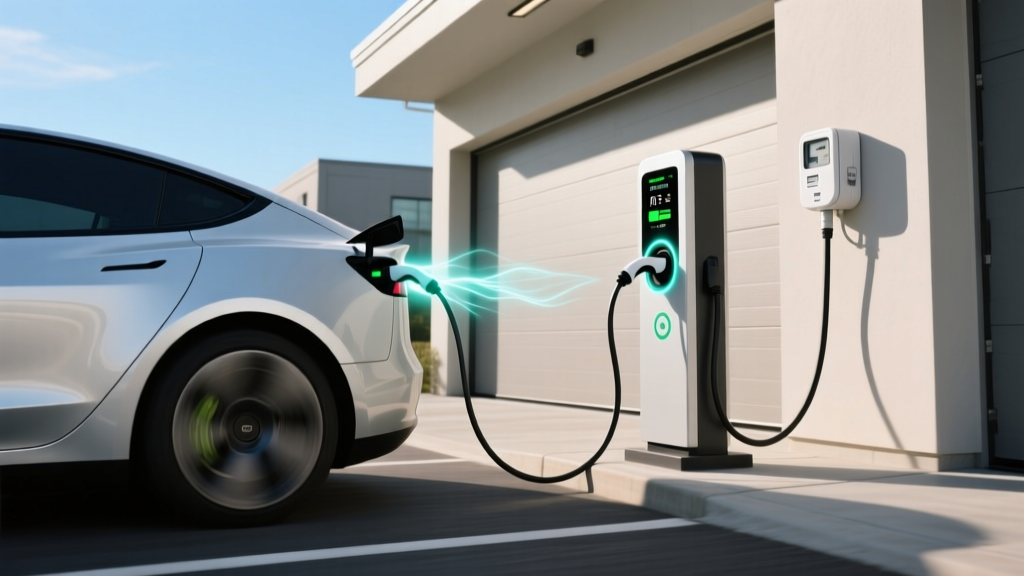
At its core, supercharging refers to charging an electric vehicle's battery at a high power rate — typically using direct current (DC) at 50 kW or above — bypassing the vehicle's onboard charger to deliver electricity straight to the battery pack. The term was popularized by Tesla's Supercharger network, but the underlying concept applies to any DC fast-charging (DCFC) infrastructure, whether it's an Electrify America station, an EVgo charger, or a Tesla Supercharger V4 stall.
Here's the critical distinction: kW (kilowatts) measures power — the rate at which energy flows into your battery. kWh (kilowatt-hours) measures energy — the total capacity stored in your battery. Think of kW as the width of a hose and kWh as the size of the bucket. A 250 kW charger fills an 84 kWh battery much faster than a 7.2 kW Level 2 unit, but the battery can only accept peak power for a portion of the session before the charge curve tapers.
Charging Levels: Speeds in kW and Miles Added Per Hour
Every EV owner interacts with three charging tiers. Understanding the power output and practical range recovery of each is essential for trip planning and daily ownership.
| Level | Voltage | Power Output | Miles of Range Added Per Hour | Typical Use Case |
|---|---|---|---|---|
| Level 1 | 120V AC | 1.0–1.9 kW | 3–5 miles | Overnight trickle, emergency top-off |
| Level 2 | 240V AC | 3.3–19.2 kW | 12–75 miles | Home daily charging, workplace, destination |
| DC Fast (incl. "Supercharging") | 400V–900V DC | 50–350 kW | 150–1,200+ miles (at peak rate) | Road trips, rapid top-ups on highways |
Level 1 plugs into any standard household 120V outlet. It's included with most EVs but adds only about 4 miles per hour — adequate for plug-in hybrids with small batteries or EV owners who drive under 30 miles daily and can leave the car plugged in for 10+ hours.
Level 2 requires a 240V circuit (the same voltage as a clothes dryer). Most home chargers deliver between 7.2 kW and 11.5 kW, adding roughly 25–45 miles of range per hour. An 84 kWh battery (like the one in a Hyundai Ioniq 5 or Tesla Model Y Long Range) charges from 10-80% in approximately 7–9 hours on an 11.5 kW Level 2 unit.
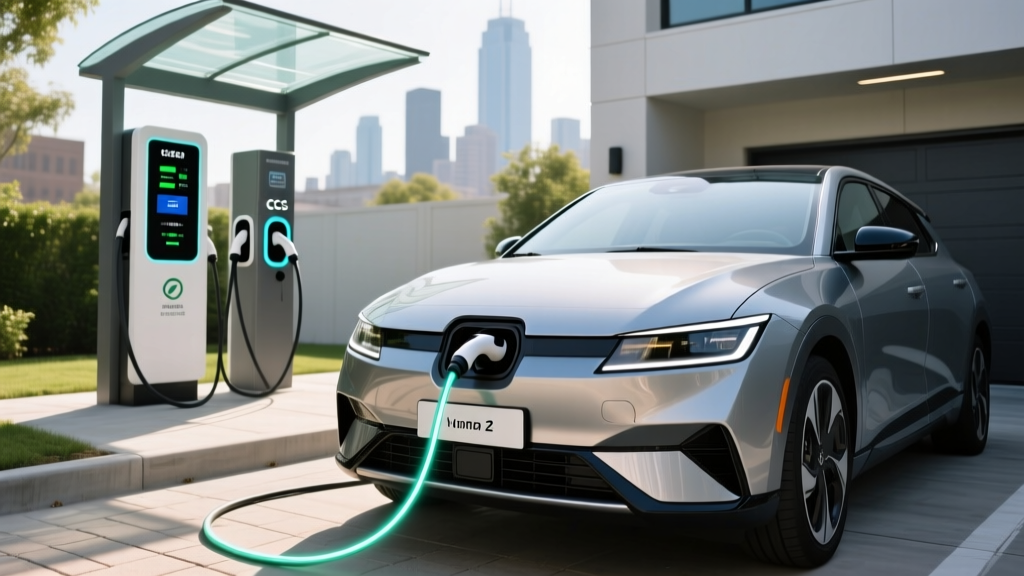
DC Fast Charging — what most people mean when they say "supercharging" — delivers 50 kW to 350 kW directly to the battery. On a 350 kW charger, vehicles with 800V architectures like the Hyundai Ioniq 5, Kia EV6, and Porsche Taycan can charge from 10-80% in approximately 18 minutes. Vehicles on 400V architectures typically peak between 150-250 kW and take 25-40 minutes for the same session.
How Much Does It Cost to Install a Home EV Charger?
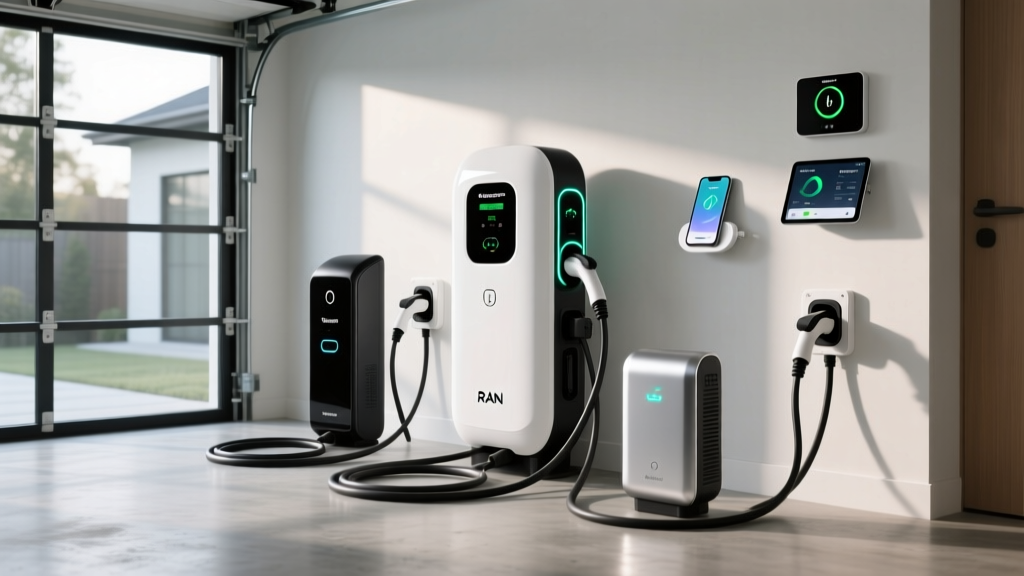
Home Level 2 charging is where most EV owners do 80-90% of their charging. The total installed cost depends on your electrical panel capacity, the distance from the panel to the charger location, and local permit fees.
| Component | Cost Range | Notes |
|---|---|---|
| Level 2 Charger Equipment (hardwired or NEMA 14-50 plug) | $350–$750 | Smart Wi-Fi-enabled units with 25-ft cable |
| Electrician Labor (standard install, <25 ft from panel) | $500–$1,200 | Includes conduit, wiring, mounting |
| Electrical Permit | $50–$200 | Varies by municipality |
| Panel Upgrade (if needed: 100A → 200A) | $1,500–$3,500 | Older homes with 100A service often need this for a 40A+ EV circuit |
| Total (no panel upgrade) | $900–$2,150 | Most common scenario for modern homes |
| Total (with panel upgrade) | $2,400–$5,650 | Common in pre-1990 homes |
The panel-upgrade gotcha: A 48A hardwired Level 2 charger requires a dedicated 60A circuit (per NEC 80% continuous-load rule). If your home has a 100A main panel that's already near capacity with existing appliances, adding a 60A EV circuit will likely require upgrading to 200A service. Always have a licensed electrician perform a load calculation before committing to equipment.
Electrical requirements for common home setups:
- 32A charger (7.7 kW): Requires a 40A dedicated circuit, NEMA 14-50 outlet or hardwired
- 40A charger (9.6 kW): Requires a 50A dedicated circuit, hardwired recommended
- 48A charger (11.5 kW): Requires a 60A dedicated circuit, must be hardwired per NEC
Many utility companies offer rebates of $200–$500 for Level 2 equipment or installation, and some states offer additional incentives. Check with your local utility before purchasing.
Connector Compatibility: NACS, CCS1, and CHAdeMO
The connector landscape has shifted dramatically. As of 2026, the North American Charging Standard (NACS), originally developed by Tesla, has become the dominant connector for new EVs sold in North America. Here's where each standard stands:
| Connector | Brands Using It (New Vehicles) | DC Fast Charging Availability | Adapter Needed? |
|---|---|---|---|
| NACS (Tesla-style) | Tesla, Ford, GM, Rivian, Volvo, Polestar, Mercedes-Benz, BMW (2025+) | Tesla Supercharger network + growing NACS stations on EA, EVgo | CCS-to-NACS adapter for older CCS vehicles (~$200–$250) |
| CCS1 (Combined Charging System) | Hyundai, Kia, Volkswagen, legacy BMW/Mercedes (pre-2025) | Electrify America, EVgo, ChargePoint DC stations | NACS-to-CCS adapter available for Tesla Supercharger access |
| CHAdeMO | Nissan Leaf (discontinued in US), Mitsubishi Outlander PHEV | Limited and declining — few new installations | Not easily adapted; plan around CCS/NACS stations |
If you're buying a new EV in 2026, NACS is increasingly the default. Ford, GM, and Rivian owners now have access to Tesla's Supercharger network using either a built-in NACS port or a manufacturer-approved adapter. Hyundai and Kia's newer models (Ioniq 5 refresh, EV9) still ship with CCS1 in many markets but NACS adoption is expanding.
For home Level 2 charging, the J1772 connector remains the universal AC standard, though Tesla provides a J1772-to-NACS adapter with every vehicle, and many aftermarket Level 2 chargers now ship with NACS connectors natively.
Charging Cost Per Mile: Home vs. Public vs. Gas
One of the strongest arguments for EV ownership is lower per-mile energy cost — but the savings vary dramatically depending on where and when you charge.
| Scenario | Rate | Cost Per Mile (at 3.5 mi/kWh) | Annual Cost (12,000 mi) |
|---|---|---|---|
| Home, off-peak utility rate | $0.09–$0.14/kWh | $0.03–$0.04 | $360–$480 |
| Home, standard residential rate | $0.15–$0.20/kWh | $0.04–$0.06 | $480–$720 |
| Public Level 2 (ChargePoint, workplace) | $0.25–$0.49/kWh | $0.07–$0.14 | $840–$1,680 |
| DC Fast Charging (EA, EVgo, Tesla) | $0.35–$0.55/kWh | $0.10–$0.16 | $1,200–$1,920 |
| Gas vehicle (28 MPG combined, $3.40/gal) | $3.40/gallon | $0.12 | $1,440 |
The math is clear: home charging on an off-peak or time-of-use (TOU) plan delivers the lowest per-mile cost — often one-quarter to one-third the cost of gasoline. Public DC fast charging, while convenient for road trips, can approach or exceed the per-mile cost of a fuel-efficient gas car. The ownership sweet spot is installing a Level 2 charger at home and using DC fast charging only for trips exceeding your battery's range.
Source: National average electricity and gas pricing data from the U.S. Energy Information Administration (EIA).
Recommended Home Level 2 Chargers (2026 Picks)
Emporia Level 2 Smart Charger
- Power Output: 48A (11.5 kW) hardwired / 40A (9.6 kW) plug-in
- Connector: J1772 (NACS adapter included)
- Cable Length: 24 ft
- Smart Features: Wi-Fi, energy monitoring, solar integration, scheduling via app
- Price: ~$399
- Best For: Budget-conscious buyers wanting full smart features and energy tracking
ChargePoint Home Flex
- Power Output: Up to 50A (12 kW) — configurable via DIP switch
- Connector: J1772 (NACS pigtail available)
- Cable Length: 23 ft
- Smart Features: Wi-Fi, Alexa integration, ChargePoint network stats, flexible amperage
- Price: ~$599
- Best For: Owners who want adjustable amperage to match their circuit capacity
Tesla Wall Connector
- Power Output: 48A (11.5 kW) hardwired
- Connector: NACS native (J1772 adapter not included)
- Cable Length: 24 ft
- Smart Features: Wi-Fi, OTA updates, power sharing between two units, vehicle-specific access control
- Price: ~$475
- Best For: Tesla and NACS-equipped Ford/GM/Rivian owners who want a clean native-connector setup
Grizzl-E Smart
- Power Output: 40A (9.6 kW)
- Connector: J1772 or NACS (choose at purchase)
- Cable Length: 24 ft
- Smart Features: Wi-Fi, OCPP protocol support, adjustable amperage, extreme cold rated (-40°F)
- Price: ~$499
- Best For: Cold-climate owners who need rugged outdoor-rated equipment
Charging Time Examples for Common Battery Sizes
Here's what real charging sessions look like for popular EV battery sizes across each level. All times assume a 10-80% session, which is the practical charging window most owners use (charging above 80% slows dramatically and is typically reserved for overnight Level 2 sessions).
| Battery Size | Example Vehicles | Level 1 (1.4 kW) | Level 2 (11.5 kW) | DC Fast (peak rate) |
|---|---|---|---|---|
| 62 kWh | Chevrolet Equinox EV | ~30 hours | ~4.5 hours | ~28 min (at 150 kW) |
| 77 kWh | Ford Mustang Mach-E ER, Tesla Model Y LR | ~38 hours | ~5.5 hours | ~22 min (at 250 kW) |
| 84 kWh | Hyundai Ioniq 5, Kia EV6 | ~42 hours | ~6 hours | ~18 min (at 350 kW, 800V) |
| 100 kWh | BMW iX, Rivian R1T (Max Pack) | ~50 hours | ~7.5 hours | ~30 min (at 250 kW) |
| 131 kWh | GMC Hummer EV, Ford F-150 Lightning ER | ~65 hours | ~9.5 hours | ~42 min (at 250 kW) |
Safety, Code, and Installation Best Practices
EV charging involves sustained high-current draw for hours at a time — this is fundamentally different from intermittent appliance use. The National Electrical Code (NEC) treats EV chargers as continuous loads, meaning the circuit must be rated for 125% of the charger's maximum amperage.
Key safety and code considerations:
- Dedicated circuit: Your EV charger must have its own dedicated breaker — never share a circuit with other appliances.
- GFCI protection: NEC 2020 and later requires GFCI protection for outdoor receptacles used for EV charging. Hardwired installations may have different requirements depending on your jurisdiction.
- Outdoor rating: If mounting outdoors, ensure the charger carries a NEMA 4 or NEMA 4X rating for weather resistance. All recommended chargers above meet this standard.
- Cable management: A 24-25 ft cable is standard; ensure the charger location allows the cable to reach your vehicle's charge port without stretching across walkways. Many units include cable holsters or retraction systems.
- Permit and inspection: Most municipalities require an electrical permit for new 240V circuits. The inspection ensures proper wire gauge, breaker sizing, and grounding. Skipping the permit can void homeowner's insurance coverage for electrical fires.
- Load management: If your panel is near capacity but a full upgrade isn't feasible, consider an energy management system (EMS) like the Emporia charger's built-in load balancing, which dynamically reduces charge rate when household demand spikes.
Always hire a licensed electrician familiar with EV charger installations. The National Fire Protection Association (NFPA) publishes NEC guidelines that your electrician should follow.
Frequently Asked Questions
How much does it cost to install a home EV charger?
A standard Level 2 home installation with an existing 200A panel and the charger located within 25 feet of the electrical panel typically costs $900–$2,150 total (equipment, labor, and permit). If your home needs a panel upgrade from 100A to 200A service, add $1,500–$3,500, bringing the total to $2,400–$5,650.
How fast will each charging level add range?
Level 1 (120V) adds 3–5 miles per hour. Level 2 (240V, 11.5 kW) adds 30–45 miles per hour. DC fast charging at 150-350 kW can add 150–300+ miles in a 20-30 minute session, though actual speed depends on your vehicle's peak charge rate and the charge curve taper above 80%.
Which connector/charger is compatible with my EV?
For 2026 models: Tesla, Ford, GM, Rivian, Volvo, and Polestar use NACS. Hyundai, Kia, and most pre-2025 European brands use CCS1. For home Level 2 charging, all vehicles accept J1772 (or NACS with adapter). Check your vehicle's charge port or owner's manual, and verify adapter compatibility before purchasing a charger.
How much does charging cost per mile vs. gas?
Home charging at $0.12/kWh costs roughly $0.03–$0.04 per mile (assuming 3.5 mi/kWh efficiency). A comparable gas vehicle at 28 MPG and $3.40/gallon costs about $0.12 per mile. Public DC fast charging at $0.45/kWh costs roughly $0.13 per mile — comparable to gas. The savings come primarily from consistent home charging.
What electrical upgrades might I need?
The most common upgrade is a 100A-to-200A panel swap in older homes ($1,500–$3,500). You may also need a new dedicated 40A–60A breaker, appropriately gauged wiring (6 AWG for 50A, 4 AWG for 60A), and conduit runs. Some utilities offer free or discounted panel upgrades for EV adopters — check with your provider. An electrician's load calculation will determine whether your existing panel has sufficient headroom.
Is "supercharging" bad for my EV battery long-term?
Occasional DC fast charging has minimal impact on battery health. Modern battery management systems (BMS) actively regulate temperature and current to minimize degradation. However, relying exclusively on DC fast charging — particularly at 250+ kW — over many years can accelerate degradation compared to predominantly Level 2 charging. Studies from fueleconomy.gov and real-world fleet data suggest that keeping DCFC sessions to road-trip use and doing daily charging at Level 2 preserves the best long-term State of Health (SoH).