The Knowledge Gap Between the Showroom and Your Garage
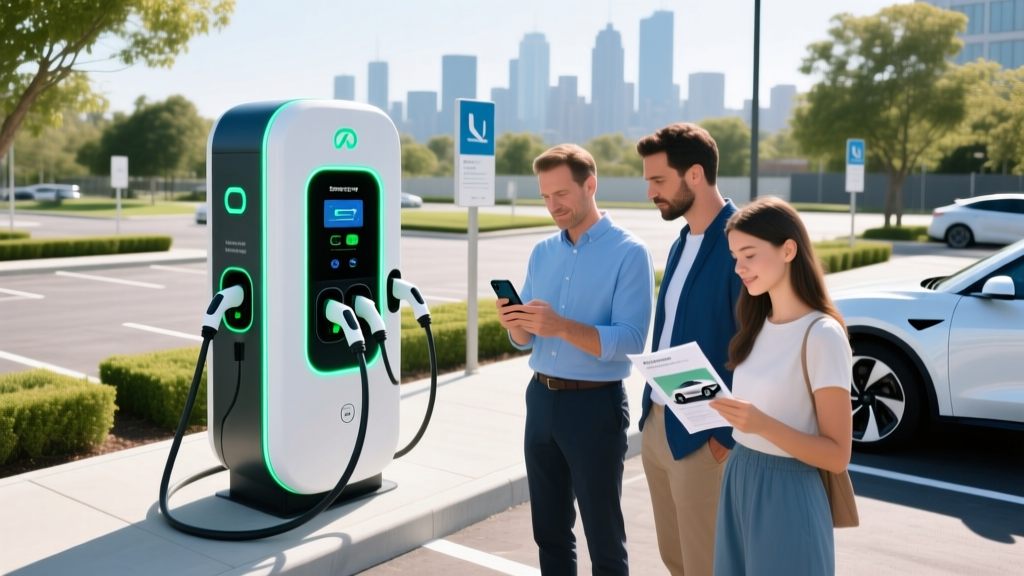
Walk into any dealership in 2026 and you'll notice something new: salespeople carrying charging-infrastructure cheat sheets alongside window stickers. As dealers face EV charging education push from manufacturers like Ford, Hyundai, and GM, the industry is acknowledging what EV owners have known for years — the biggest barrier to electrification isn't vehicle availability, it's charging literacy.
A 2025 J.D. Power study found that 47% of EV intenders couldn't correctly distinguish between kW (charging power) and kWh (battery energy capacity). That confusion leads to mismatched expectations: buyers who think a "fast charger" will fill their battery in ten minutes, or who assume every public station works with every car.
This guide closes that gap with exact numbers. We'll cover charging speeds in kilowatts and miles-per-hour, home installation costs down to the permit fee, connector compatibility across every major brand, and the real cost-per-mile compared to gasoline.
Charging Levels Decoded: kW, Miles Per Hour, and Real Charge Times
EV charging happens at three distinct levels. The critical distinction: kW (kilowatts) measures power — how fast energy flows into your car. kWh (kilowatt-hours) measures energy — the total capacity of your battery. Think of kW as the width of a pipe and kWh as the size of the tank it's filling.
| Level | Voltage | Power (kW) | Miles of Range Per Hour | Typical Use Case |
|---|---|---|---|---|
| Level 1 | 120V AC | 1.0–1.4 kW | 3–5 mi/hr | Overnight top-up, PHEVs, low-mileage drivers |
| Level 2 | 240V AC | 7.2–19.2 kW | 25–75 mi/hr | Home daily charging, workplace, shopping centers |
| DC Fast Charge | 400–800V DC | 50–350 kW | 150–1,200 mi/hr (peak) | Road trips, highway corridors, fleet depots |
Real Charge Times: 10–80% for Common Battery Sizes
Charging from 10% to 80% State of Charge (SoC) is the standard benchmark because charge speed tapers significantly above 80% to protect battery health. Here's what that looks like for popular 2026 models:
- Hyundai Ioniq 5 (84 kWh battery, 350 kW peak): ~18 minutes on a 350 kW DC fast charger
- Tesla Model Y Long Range (75 kWh, 250 kW peak): ~25 minutes on a V3 Supercharger
- Ford F-150 Lightning Extended Range (131 kWh, 150 kW peak): ~41 minutes on a 150 kW station
- Chevrolet Equinox EV (85 kWh, 150 kW peak): ~30 minutes on a 150 kW station
Home Charging Installation: Costs, Electrical Requirements, and Panel Gotchas
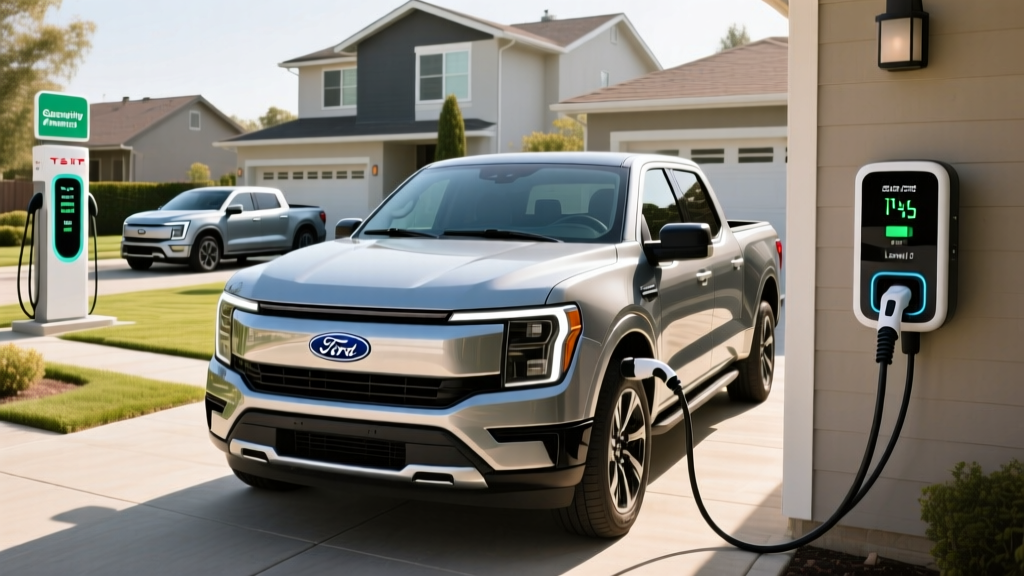
Home Level 2 charging is where 80%+ of all EV charging happens, according to the U.S. Department of Energy. But installation costs vary enormously depending on your home's electrical infrastructure.
What a Level 2 Home Charger Actually Requires
A typical home Level 2 charger runs on a 240-volt dedicated circuit, identical to what powers an electric dryer or oven. The most common residential setup:
- Circuit: 50-amp breaker (delivering 40 amps continuous to the charger, per NEC 80% rule)
- Power output: 9.6 kW (240V × 40A)
- Wire gauge: 6 AWG copper for runs up to 50 feet; 4 AWG for longer runs
- Outlet vs. hardwired: NEMA 14-50 outlet offers portability; hardwired avoids GFCI nuisance trips and is often preferred by inspectors
| Component | Low-End Estimate | High-End Estimate | Notes |
|---|---|---|---|
| Level 2 Charger Equipment | $350 | $750 | Smart Wi-Fi chargers (Emporia, ChargePoint, Wallbox) |
| Electrician Labor | $500 | $2,000 | Depends on panel proximity, wall type, conduit run |
| Electrical Permit | $50 | $350 | Varies by municipality; some jurisdictions bundle |
| Panel Upgrade (if needed) | $1,500 | $4,500 | 100A → 200A service upgrade; common in pre-1990 homes |
| Total (no panel upgrade) | $900 | $3,100 | Most homes with 200A service fall in $1,200–$2,000 |
| Total (with panel upgrade) | $2,400 | $7,600 | Older homes or those adding solar/heat pumps simultaneously |
Safety and Code Considerations
The National Electrical Code (NEC) treats EV charging as a continuous load, which triggers specific requirements:
- Dedicated circuit: Your EV charger cannot share a breaker with other outlets or appliances
- GFCI protection: Required for outdoor installations and some jurisdictions require it indoors; hardwired units often exempt from GFCI breaker requirements since they include internal ground-fault protection
- Outdoor rating: Any charger mounted outside must carry a NEMA 4 or NEMA 4X enclosure rating for weather resistance
- Permit and inspection: Virtually all jurisdictions require a permit for new 240V circuits; skipping this can void homeowner's insurance claims related to electrical fires
For final specifications and load calculations, always consult a licensed electrician — local codes vary and a professional assessment is the only way to confirm your home's readiness.
Connector Compatibility: NACS, CCS, and CHAdeMO Explained
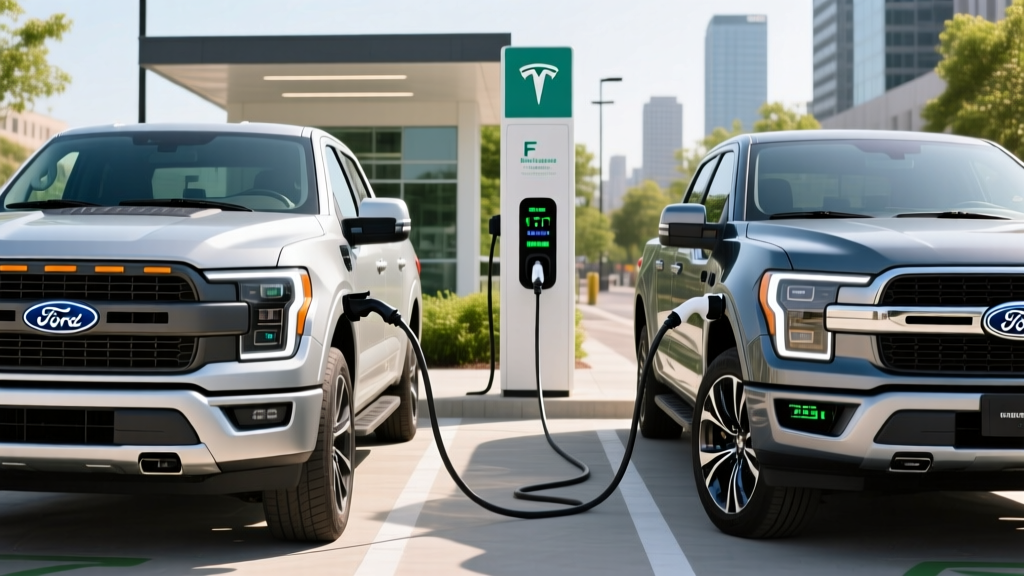
One of the most confusing aspects for new EV buyers is the connector landscape. As of 2026, the industry has largely consolidated around the North American Charging Standard (NACS), originally developed by Tesla, but legacy connectors remain on the road.
| Connector | Brands Using It (New Vehicles) | Max DC Fast Charge Power | Adapter Availability |
|---|---|---|---|
| NACS (Tesla) | Tesla, Ford, GM, Rivian, Volvo, Polestar, Hyundai/Kia (2025+), Nissan (2026+) | Up to 350 kW | CCS-to-NACS adapters from Tesla, Lectron, A2Z (~$200–$350) |
| CCS1 | Legacy: 2024 and earlier models from VW, BMW, Hyundai/Kia, Stellantis | Up to 350 kW | NACS-to-CCS adapters widely available |
| CHAdeMO | Nissan Leaf (discontinued after 2025), Mitsubishi Outlander PHEV | Up to 100 kW | Limited adapter options; network shrinking |
What this means for buyers: If you're purchasing a new 2026 EV, it almost certainly has a NACS port — giving you native access to Tesla's Supercharger network (over 28,000 stalls in North America) plus Electrify America and other networks adding NACS cables. If you're buying a used EV from 2023–2024, it likely has CCS1, which still works at Electrify America and EVgo stations, and you can purchase a NACS adapter for Supercharger access.
For home Level 2 charging, all non-Tesla EVs use a J1772 connector (included with every home charger). Tesla vehicles include a J1772-to-NACS adapter in the glovebox. This means any Level 2 home charger works with any EV — connector compatibility only matters for DC fast charging on the road.
Charging Cost Per Mile: Home vs. Public vs. Gasoline
The economics of EV charging depend heavily on where you charge. Home electricity rates, public charging markups, and gasoline prices create a wide cost spectrum.
| Scenario | Rate | Vehicle Efficiency | Cost Per Mile |
|---|---|---|---|
| Home charging (national avg. residential, off-peak) | $0.13/kWh | 3.0 mi/kWh (avg. EV) | $0.043 |
| Home charging (California, off-peak TOU) | $0.18/kWh | 3.0 mi/kWh | $0.060 |
| Public Level 2 (ChargePoint, EVgo) | $0.35/kWh | 3.0 mi/kWh | $0.117 |
| DC Fast Charging (Electrify America, Tesla) | $0.48/kWh | 3.0 mi/kWh | $0.160 |
| Gasoline (25 MPG combined, $3.40/gal) | $3.40/gallon | 25 mi/gal | $0.136 |
| Gasoline (25 MPG combined, $4.20/gal — CA/WA) | $4.20/gallon | 25 mi/gal | $0.168 |
The takeaway: home charging is the economic sweet spot, delivering fuel costs at roughly one-third the price of gasoline. Public DC fast charging, while essential for road trips, can actually exceed the per-mile cost of an efficient gas car at current rates. This is why dealers are learning to emphasize home charging setup as part of the purchase conversation — an EV owner who relies exclusively on public fast charging may not see the fuel savings they expect.
Recommended Home Chargers: Power, Features, and Price
Not all Level 2 chargers are created equal. Here are four proven units we recommend based on power output, build quality, smart features, and value.
Emporia Level 2 Smart Charger
- Power: 48A / 11.5 kW (hardwired) or 40A / 9.6 kW (NEMA 14-50)
- Connector: J1772 (works with all EVs; Tesla adapter included)
- Cable: 24 feet
- Smart features: Wi-Fi, energy monitoring via Emporia VUE, solar integration, scheduled charging
- Price: ~$399
- Best for: Budget-conscious buyers who want smart energy tracking
ChargePoint Home Flex
- Power: Adjustable 16–50A / up to 12 kW (hardwired)
- Connector: J1772 (25-foot cable)
- Smart features: Wi-Fi, Alexa integration, amperage adjustment via app, ChargePoint network account
- Price: ~$699
- Best for: Flexibility — adjustable amperage means it works with any panel capacity
Tesla Wall Connector
- Power: 48A / 11.5 kW (hardwired, 60A circuit)
- Connector: NACS native (J1772 adapter available for non-Tesla EVs)
- Cable: 24 feet
- Smart features: Wi-Fi, over-the-air updates, power sharing between two units, load management
- Price: ~$475
- Best for: Tesla owners or households with NACS-port vehicles
Wallbox Pulsar Plus
- Power: 40A / 9.6 kW (NEMA 14-50) or 48A / 11.5 kW (hardwired)
- Connector: J1772 (25-foot cable)
- Smart features: Wi-Fi + Bluetooth, Power Boost load management, myWallbox app scheduling
- Price: ~$649
- Best for: Compact size (smallest footprint in class), European build quality
Why the Dealer Education Push Matters for Buyers
Automakers are investing in dealer charging education because uninformed buyers return vehicles. Ford's 2025 internal data reportedly showed that F-150 Lightning customers who didn't install home charging within the first 90 days had significantly lower satisfaction scores and higher early trade-in rates.
As a buyer, here's what to demand from your dealer before signing:
- A written estimate of your home charging setup cost — many dealers now partner with electricians like Qmerit or Energy Solutions to provide free home assessments
- Connector confirmation — verify your specific model's charge port matches your planned public charging network
- Charging schedule guidance — ask about your EV's scheduled charging feature and how to set off-peak charging windows to minimize electricity costs
- Preconditioning education — learn how to precondition your battery before DC fast charging (warming the battery to optimal temperature for faster charge acceptance, critical in cold weather)
- Realistic range expectations — EPA range figures assume moderate temperatures and mixed driving; expect 20–30% range reduction in sub-freezing weather and 10–15% reduction at sustained highway speeds above 70 mph, per fueleconomy.gov data
Frequently Asked Questions
How much does it cost to install a home EV charger?
For a home with an existing 200-amp electrical panel and a nearby garage wall, expect $1,200–$2,000 total (charger equipment + electrician labor + permit). Homes needing a panel upgrade from 100A to 200A should budget $2,400–$7,600. Always get a load calculation from a licensed electrician before committing.
How fast will each charging level add range?
Level 1 (120V standard outlet) adds 3–5 miles of range per hour — adequate for plug-in hybrids or drivers covering under 30 miles daily. Level 2 (240V home charger) adds 25–75 miles per hour depending on amperage, fully recharging most EVs overnight in 6–10 hours. DC Fast Charging adds 150–1,200 miles per hour at peak, enabling 10–80% charges in 18–45 minutes depending on the vehicle and station power.
Which connector/charger is compatible with my EV?
For 2026 model-year EVs, nearly all new vehicles use the NACS connector, which provides native access to Tesla Superchargers and a growing number of third-party stations. Older EVs (2024 and earlier) typically use CCS1. The Nissan Leaf used CHAdeMO, but that standard is fading. For home Level 2 charging, all EVs use the J1772 standard (Tesla includes an adapter), so any home charger works with any car.
How much does charging cost per mile vs. gas?
Home charging at the national average of $0.13/kWh costs approximately $0.043 per mile in a typical EV getting 3 miles per kWh — about one-third the cost of gasoline at $3.40/gallon in a 25 MPG vehicle ($0.136/mile). Public DC fast charging at $0.48/kWh costs roughly $0.16/mile, which can exceed gasoline costs. The economic case for EVs depends heavily on access to affordable home charging.
What electrical upgrades might I need?
The most common upgrade is a panel capacity increase from 100A to 200A, required when your existing panel can't accommodate an additional 50-amp breaker. Other potential needs include: replacing a Federal Pacific or Zinsco panel (known fire hazards that insurers may require you to replace), upgrading aluminum wiring to copper, or adding a sub-panel if your main panel is full. Some homeowners use smart load-management devices like the Emporia VUE or Wallbox Power Boost to avoid panel upgrades by dynamically sharing capacity between the EV charger and other appliances.
Can I use a regular 120V outlet to charge my EV?
Yes — this is Level 1 charging, and it works with any standard household outlet. However, at 1.0–1.4 kW, you'll only recover 3–5 miles of range per hour. A full charge for a 75 kWh battery from empty would take approximately 55–75 hours. Level 1 is practical for plug-in hybrids with small batteries (10–20 kWh) or as a backup option, but it's not viable as a primary charging strategy for battery-electric vehicles driven more than 30 miles daily.
Is the home charger tax credit still available in 2026?
The IRS §30C credit provides 30% of equipment and installation costs, up to $1,000, for home EV charging equipment. However, eligibility is restricted to equipment installed in qualifying census tracts (generally low-income or rural areas). Check the IRS census tract locator tool to confirm your address qualifies before relying on this credit. Tax rules change — consult a tax professional for current-year guidance.