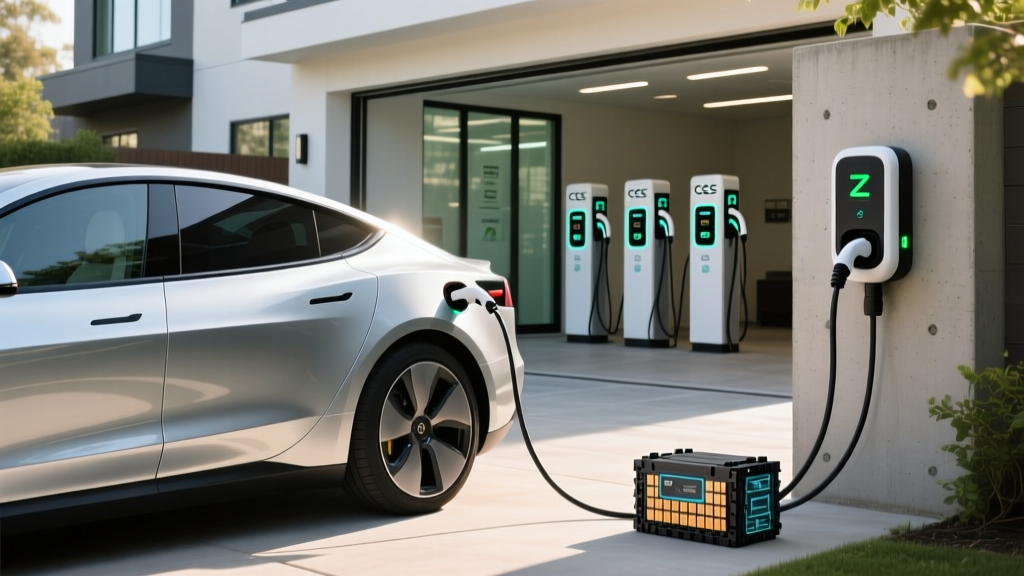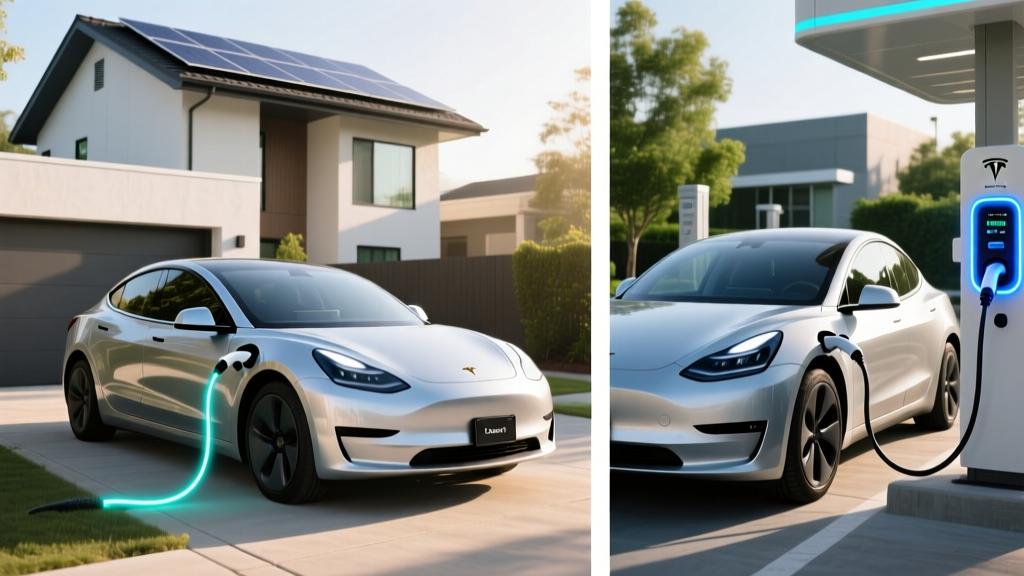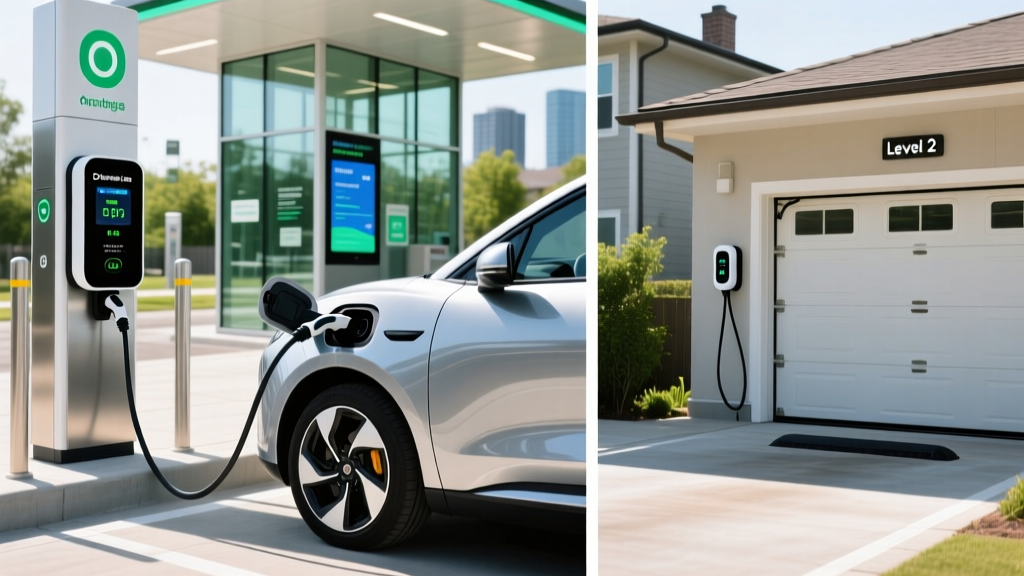
If you've ever pulled up to an Electrify America or Tesla Supercharger stall and watched the dollar counter climb, you've asked the same question every EV owner eventually confronts: what am I actually paying per mile? The dc fast charging cost per session can rival a tank of gas on some networks, while home Level 2 charging remains a fraction of that price. Understanding the real economics of each charging tier — and when DC fast charging makes financial sense — is essential for anyone budgeting an EV purchase or optimizing their daily routine.
This guide breaks down every charging level by speed, cost per kWh, and cost per mile, compares them head-to-head with gasoline, and covers the home installation economics that determine whether you can unlock the cheapest electrons available. All figures reflect 2026 network pricing and utility rates.
The Three Charging Levels: Speed, Power, and What They Cost
Before comparing prices, it's critical to distinguish kW (kilowatts — the rate of power delivery, like water pressure from a hose) from kWh (kilowatt-hours — the total energy delivered into your battery, like gallons in a bucket). You pay per kWh consumed; the kW rating determines how quickly that energy flows. A 350 kW charger can theoretically fill a battery far faster than a 7.2 kW home unit, but you'll pay a premium for that speed at public stations.
| Level | Voltage | Power (kW) | Miles of Range Added per Hour | Typical Use Case |
|---|---|---|---|---|
| Level 1 | 120V AC | 1.0–1.4 kW | 3–5 mi/hr | Overnight top-up, PHEVs, emergency |
| Level 2 (Home/Public) | 240V AC | 3.3–19.2 kW | 12–75 mi/hr | Daily home charging, workplace, destinations |
| DC Fast Charging | 400–800V DC | 50–350 kW | 150–1,000+ mi/hr (peak) | Road trips, quick top-ups, commercial fleets |
A practical note on DC fast charging speeds: the peak kW number advertised on a stall is almost never sustained for the full session. Most EVs exhibit a charging curve taper — the battery accepts maximum power only between roughly 10–50% State of Charge (SoC), then progressively slows to protect cell health. A vehicle rated for "250 kW peak" may sustain that rate for only 8–12 minutes before dropping to 150 kW, then 100 kW, then 50 kW as it approaches 80%. This is why manufacturers quote 10–80% charge times rather than 0–100%.
DC Fast Charging Cost: What You'll Actually Pay Per kWh
Public DC fast charging pricing in 2026 varies dramatically by network, location, time of day, and whether you hold a membership. Here's the landscape based on current published rates from major U.S. networks:
- Tesla Supercharger (V3/V4): $0.28–$0.48/kWh depending on location and time-of-use pricing. Non-Tesla EVs with NACS adapters may pay a $0.05–$0.10/kWh surcharge on some stalls.
- Electrify America: $0.48–$0.58/kWh for guest rates; Pass+ membership ($7/month) drops rates to $0.36–$0.48/kWh.
- EVgo: $0.43–$0.55/kWh guest; EVgo Plus membership reduces rates by roughly $0.05–$0.10/kWh.
- ChargePoint (DC stations): Set by site host, typically $0.39–$0.59/kWh.
- Ionna (formerly Shell Recharge highway corridors): $0.41–$0.52/kWh.
For a concrete example: charging a Hyundai Ioniq 5 (84 kWh usable battery, NMC chemistry) from 10–80% requires roughly 59 kWh. At a Tesla Supercharger averaging $0.38/kWh, that session costs about $22.42. At Electrify America guest rates of $0.54/kWh, the same session runs $31.86. Compare that to filling 59 kWh at home on a national-average residential rate of $0.17/kWh: $10.03.
Cost Per Mile: EV Charging vs. Gasoline
The most useful comparison for budgeting is cost per mile. We'll use a 2026 Tesla Model Y Long Range (EPA efficiency: 28 kWh/100 mi, or roughly 3.57 mi/kWh per fueleconomy.gov) and a comparable gasoline crossover averaging 28 MPG combined.
| Scenario | Rate | Cost per kWh | Cost per Mile | Cost for 300-Mile Trip |
|---|---|---|---|---|
| Home Level 2 (national avg) | $0.17/kWh | $0.17 | $0.048 | $14.40 |
| Home Level 2 (off-peak TOU) | $0.09/kWh | $0.09 | $0.025 | $7.50 |
| Public Level 2 (avg) | $0.28/kWh | $0.28 | $0.078 | $23.40 |
| DC Fast — Tesla Supercharger | $0.38/kWh avg | $0.38 | $0.106 | $31.80 |
| DC Fast — Electrify America (guest) | $0.54/kWh | $0.54 | $0.151 | $45.30 |
| DC Fast — EA Pass+ member | $0.42/kWh | $0.42 | $0.118 | $35.40 |
| Gasoline (28 MPG, $3.40/gal) | — | — | $0.121 | $36.30 |
The takeaway is unambiguous: home charging is always cheaper than gas, often by a factor of 2.5–5×. DC fast charging at premium networks without a membership can actually exceed the per-mile cost of gasoline. Network memberships and off-peak utility rates are the two levers that make EV ownership economically compelling.
Home Level 2 Charger Installation: Full Cost Breakdown
Installing a dedicated 240V Level 2 home charger is the single most impactful investment an EV owner can make for long-term cost savings. But the price varies enormously depending on your home's electrical infrastructure.
| Component | Simple Install (panel nearby) | Complex Install (long run / panel upgrade) |
|---|---|---|
| Level 2 EVSE equipment (hardwired, 40–48A) | $400–$700 | $400–$700 |
| Electrician labor (240V/50A circuit) | $500–$1,200 | $1,500–$3,500 |
| Conduit, wiring, and materials | $100–$300 | $400–$1,200 |
| Electrical permit | $50–$150 | $50–$200 |
| Electrical panel upgrade (100A → 200A) if needed | $0 | $1,800–$4,000 |
| Total estimated cost | $1,050–$2,350 | $4,150–$9,600 |
Electrical Requirements and Panel Upgrade Considerations
A typical Level 2 home charger operates on a 240V, 40–50 amp dedicated circuit, delivering 9.6–12 kW of charging power. The National Electrical Code (NEC) requires that continuous loads (including EV charging) not exceed 80% of the circuit breaker rating, so a 48A charger needs a 60A breaker.
Homes built after 2000 typically have 200A electrical panels with spare capacity. Older homes with 100A panels may require a panel upgrade or a load-management device (like the Emporia Load Management Controller or Span smart panel) that throttles charger amperage when other household circuits draw heavy current. This can avoid a full panel upgrade, saving $2,000–$3,500.
Always hire a licensed electrician who will pull a permit. Unpermitted EV charger installations can void homeowner's insurance claims and create fire liability. The National Electrical Code (NEC Article 625) governs EV charging equipment installation.
Connector Compatibility: NACS, CCS, and CHAdeMO in 2026
The connector landscape has consolidated significantly. As of the 2025–2026 model years, nearly every major automaker has adopted the North American Charging Standard (NACS), originally developed by Tesla. Here's where each brand stands:
| Connector | Brands Using It Natively | DC Fast Charge Max (typical) | Adapter Needed? |
|---|---|---|---|
| NACS (Tesla) | Tesla, Ford, GM, Rivian, Hyundai, Kia, Volvo, Polestar, BMW, Mercedes, Subaru, Lucid, Fisker | 250–350 kW | None for NACS vehicles; CCS vehicles need NACS-to-CCS adapter ($150–$250) |
| CCS1 | VW ID.4 (2024 and earlier), legacy models, some commercial vans | 150–270 kW | CCS-to-NACS adapter required at Tesla Superchargers |
| CHAdeMO | Nissan Leaf (discontinued after 2025), Mitsubishi Outlander PHEV (legacy) | 50–100 kW | No adapter available; limited to CHAdeMO stations |
If you're buying a 2026 model-year EV, it almost certainly has a NACS port unless it's a carryover model. The practical implication: NACS vehicles can access both Tesla Superchargers (the most extensive and reliable DC fast network) and third-party networks with CCS connectors via a compact adapter. CCS-only vehicles can use Superchargers only with Tesla's approved adapter.
Home Charger Equipment Recommendations
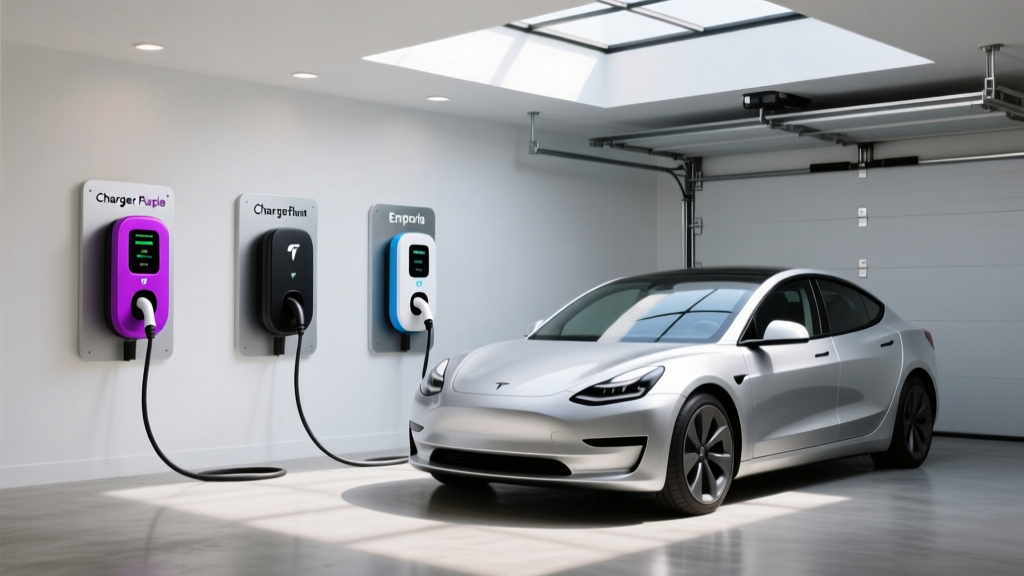
Below are three proven Level 2 home chargers that cover different budgets and feature needs. All are UL-listed and support NACS connectors natively or via included adapter.
Tesla Wall Connector (Gen 4)
- Power output: 11.5 kW (48A) on 60A circuit
- Connector: NACS native; J1772 adapter included
- Cable length: 24 ft
- Smart features: Wi-Fi, OTA updates, load sharing (pair up to 6 units), access control
- Price: $475
- Best for: Tesla and NACS-vehicle owners wanting seamless ecosystem integration
ChargePoint Home Flex
- Power output: Up to 12 kW (50A) on 60A circuit; adjustable 16–50A via DIP switches
- Connector: NACS or J1772 (choose at purchase)
- Cable length: 23 ft
- Smart features: Wi-Fi, ChargePoint app, scheduling, energy tracking, Alexa integration
- Price: $549–$649
- Best for: Multi-EV households needing flexible amperage and robust app control
Emporia Vue Level 2 Charger
- Power output: 11.5 kW (48A) on 60A circuit
- Connector: NACS native; J1772 adapter available
- Cable length: 24 ft
- Smart features: Wi-Fi, Emporia app, integrates with Emporia Vue energy monitor, load management, solar-aware charging
- Price: $399
- Best for: Budget-conscious buyers, solar-panel owners, and homes needing load management without a panel upgrade
Charging Time Examples: 10–80% for Common Battery Sizes
DC fast charging times depend on battery size, chemistry, and the vehicle's maximum charge acceptance rate. LFP (lithium iron phosphate) batteries can often sustain higher charge rates deeper into the SoC curve than NMC batteries, partially offsetting their typically lower peak kW ratings.
| Vehicle | Battery (kWh usable) | Chemistry | Peak DC Rate | 10–80% Time (350 kW stall) | 10–80% Time (150 kW stall) |
|---|---|---|---|---|---|
| 2026 Tesla Model Y Long Range | 78 kWh | NMC | 250 kW | ~25 min | ~35 min |
| 2026 Hyundai Ioniq 5 Long Range | 84 kWh | NMC | 240 kW (800V) | ~18 min | ~38 min |
| 2026 Ford F-150 Lightning Ext. Range | 131 kWh | NMC | 170 kW | ~42 min | ~55 min |
| 2026 Tesla Model 3 RWD | 57.5 kWh | LFP | 170 kW | ~28 min | ~40 min |
| 2026 Chevrolet Equinox EV 3RS | 85 kWh | NMC | 190 kW | ~30 min | ~45 min |
Note that plugging into a 350 kW stall does not guarantee 350 kW delivery — the vehicle's onboard charge controller limits the rate. The Hyundai Ioniq 5's 800V architecture lets it take better advantage of high-power stalls than 400V vehicles like the F-150 Lightning.
Safety, Electrical Code, and Installation Best Practices
EV charging draws sustained high current for hours — making proper installation non-negotiable. Key safety requirements per NEC Article 625 and best practices:
- Dedicated circuit: Your EV charger must have its own breaker. Sharing a circuit with a dryer, oven, or HVAC system risks tripping or overheating.
- GFCI protection: NEC 2023 and later require GFCI (Ground Fault Circuit Interrupter) protection for all receptacles used for EV charging, including 240V outlets. Hardwired units with built-in ground-fault protection may satisfy this requirement — confirm with your electrician and local inspector.
- Outdoor rating: If your charger is mounted outdoors (driveway, carport), the EVSE must carry a NEMA 4 or IP65 weather rating. All outdoor wiring must be in rated conduit.
- Cable management: Use a holster or cable retractors to prevent tripping hazards and protect the connector from ground moisture and debris.
- Utility notification: Many utilities require you to notify them when installing an EV charger. Some offer dedicated EV rates (time-of-use plans) that dramatically reduce off-peak charging costs — often $0.07–$0.11/kWh overnight.
Maximizing Value: When DC Fast Charging Makes Financial Sense
DC fast charging is a convenience and road-trip tool, not a daily charging strategy. Here's a practical decision framework:
Choose Home Level 2 Charging If:
- You have a garage, driveway, or dedicated parking spot with 240V access
- Your daily driving is under 80 miles (covers 90%+ of U.S. commutes)
- Your utility offers off-peak TOU rates below $0.12/kWh
- You want the lowest possible cost per mile ($0.03–$0.05)
Use DC Fast Charging When:
- You're on a road trip exceeding your vehicle's EPA range
- You live in an apartment or lack home charging access
- You need a quick 15–25 minute top-up during a shopping stop or meal
- Your vehicle's battery is below 15% and you need range immediately
Frequently Asked Questions
How much does it cost to install a home EV charger?
A straightforward installation (panel has spare capacity, charger mounts near the panel) typically costs $1,050–$2,350 including equipment, electrician labor, wiring, and permit. If your home needs a 100A-to-200A panel upgrade, expect $4,150–$9,600 total. Get at least two quotes from licensed electricians and confirm they pull a local permit.
How fast will each charging level add range?
Level 1 (120V) adds 3–5 miles of range per hour. Level 2 (240V, 48A) adds roughly 30–45 miles per hour depending on vehicle efficiency. DC fast charging at 150–350 kW can add 150–1,000+ miles per hour at peak — but the rate tapers significantly above 50–60% SoC. A realistic 10–80% DC fast session takes 18–45 minutes depending on battery size and vehicle architecture.
Which connector/charger is compatible with my EV?
For 2026 model-year vehicles: Tesla, Ford, GM, Rivian, Hyundai, Kia, BMW, Mercedes, Volvo, Polestar, and Subaru all use NACS connectors natively. Older VW ID.4 models and a few carryover vehicles still use CCS1. The Nissan Leaf (now discontinued) used CHAdeMO. Check your vehicle's charge port or the manufacturer's spec sheet. If you own a CCS vehicle and want Tesla Supercharger access, you'll need a CCS-to-NACS adapter ($150–$250).
How much does charging cost per mile vs. gas?
Home Level 2 charging on a national-average electricity rate ($0.17/kWh) costs roughly $0.04–$0.05 per mile for a typical EV — about 60% less than a 28 MPG gas car at $3.40/gallon ($0.12/mile). Off-peak home rates drop that to $0.02–$0.03/mile. Public DC fast charging at $0.40–$0.55/kWh costs $0.10–$0.16/mile, which can match or exceed gasoline costs at the most expensive networks.
What electrical upgrades might I need?
The most common upgrade is a 100A-to-200A electrical panel replacement ($1,800–$4,000) for older homes. Alternatives include smart load-management devices ($300–$800 installed) that share capacity between the EV charger and other circuits. If your panel is already 200A with open breaker slots, you likely need only a new 60A double-pole breaker and a wiring run to the charger location. A licensed electrician's load calculation will determine the exact requirement.
Sources: U.S. EPA Fuel Economy for vehicle efficiency data; IRS §30D Clean Vehicle Credit for incentive eligibility; network pricing from Electrify America, EVgo, and Tesla Supercharger published rate pages as of early 2026. Tax credit eligibility depends on MSRP caps, buyer income limits, and battery-sourcing requirements — consult a tax professional.