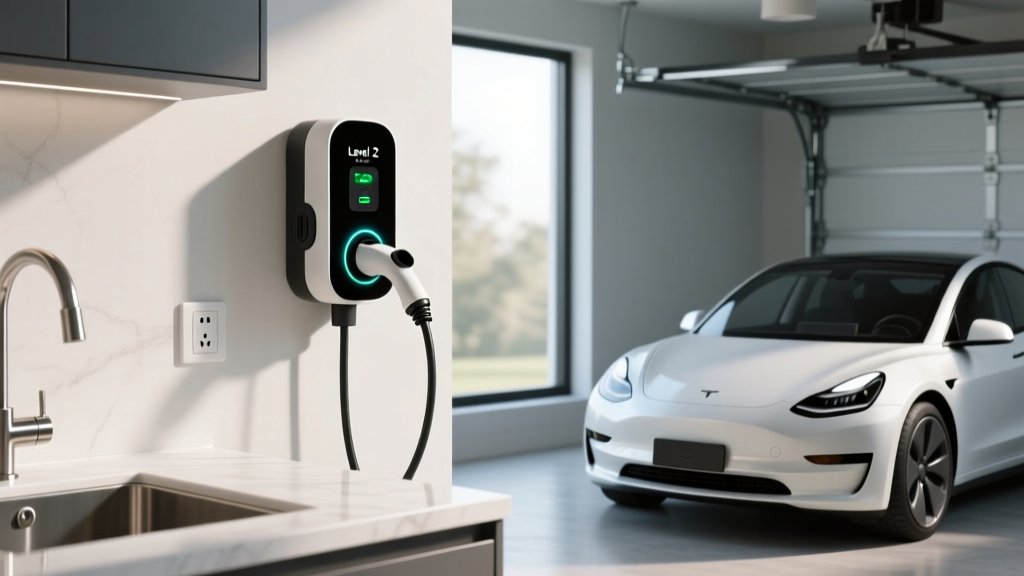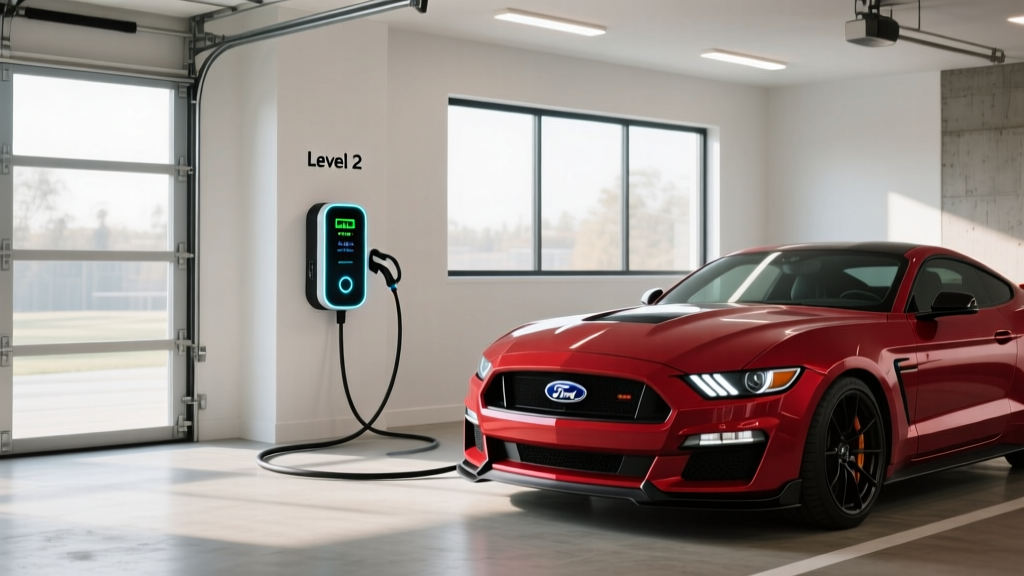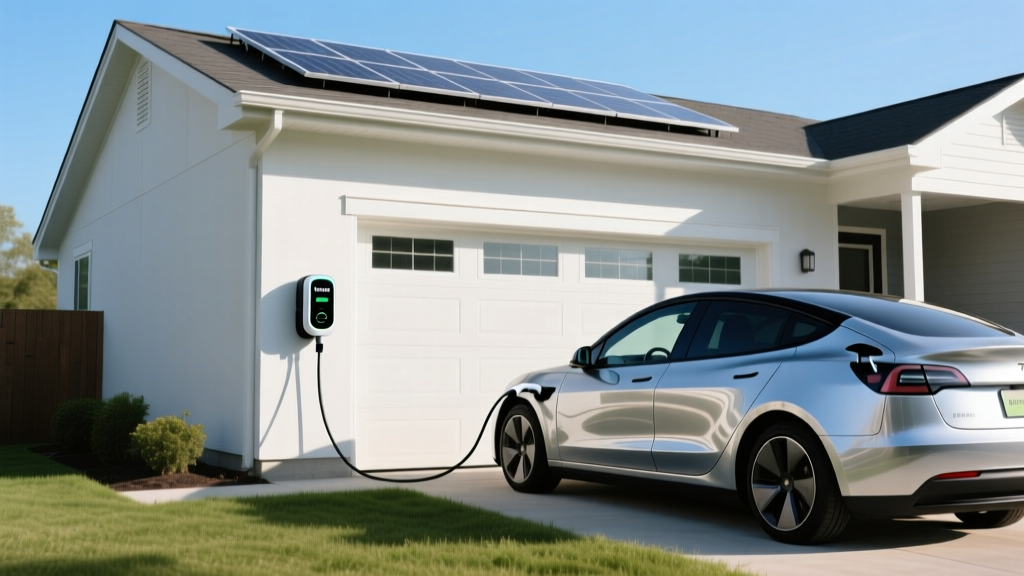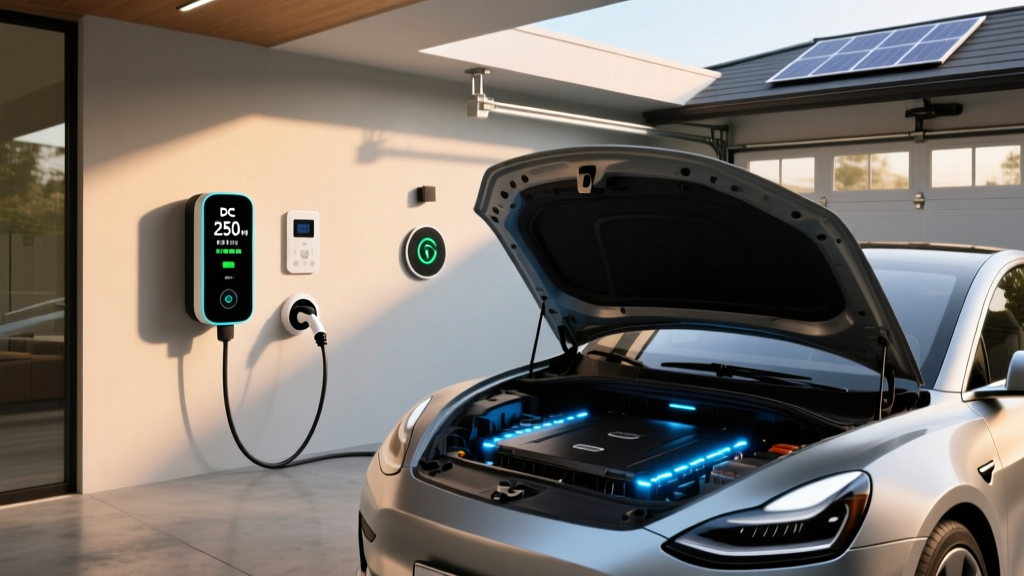
If you've ever sat at a public DC fast charging station watching your battery climb from 10% to 80% in twenty minutes, you've probably wondered: could I put a DC fast charger at home and skip the public stations entirely? The short answer is yes — but the real question is whether the $10,000 to $30,000+ investment makes sense when a Level 2 home charger already covers 95% of daily driving needs for a fraction of the cost.
This guide breaks down exactly what's involved in installing a DC fast charger at home, compares it head-to-head with Level 2 alternatives, and gives you the specific numbers — electrical requirements, costs, charge times, and equipment — you need to make the right call for your situation.
Understanding Charging Levels: kW, kWh, and Miles Per Hour
Before evaluating a DC fast charger at home, you need clarity on the three charging tiers and what they actually deliver. The most common EV confusion is mixing up kW (kilowatts — the rate of power flow, like water pressure from a hose) with kWh (kilowatt-hours — the total energy stored in your battery, like the size of the bucket being filled). A charger's kW rating tells you how fast it can push energy; your battery's kWh capacity tells you how much it holds.
| Level | Voltage | Max Power (kW) | Miles of Range Per Hour | Typical Use Case |
|---|---|---|---|---|
| Level 1 | 120V AC | 1.4–1.9 kW | 3–5 mi/hr | Overnight trickle, PHEVs |
| Level 2 | 240V AC | 7.2–19.2 kW | 20–60 mi/hr | Home daily charging, workplaces |
| DC Fast (Level 3) | 400–800V DC | 24–350+ kW | 80–300+ mi/hr | Public stations, fleet depots, luxury home |
Here's the critical distinction: Level 1 and Level 2 deliver alternating current (AC) to your car's onboard charger, which converts it to DC for the battery. A DC fast charger bypasses the onboard charger entirely, feeding DC directly to the battery at much higher power. That's why DC fast chargers are physically larger, more expensive, and require commercial-grade electrical infrastructure.
- 75 kWh battery (Tesla Model Y, Hyundai Ioniq 5): Level 2 at 11.5 kW ≈ 5.5 hours | DC Fast at 150 kW ≈ 22 minutes | DC Fast at 24 kW ≈ 2.5 hours
- 100 kWh battery (Ford F-150 Lightning Extended, Rivian R1S): Level 2 at 11.5 kW ≈ 7 hours | DC Fast at 150 kW ≈ 35 minutes | DC Fast at 24 kW ≈ 3.5 hours
- 18 kWh PHEV battery (Toyota RAV4 Prime): Level 1 at 1.4 kW ≈ 10 hours | Level 2 at 7.2 kW ≈ 2 hours
Note: DC fast charging slows significantly above 80% SoC to protect battery health. The charge curve tapers — a 150 kW peak may average 90–100 kW across the full 10–80% session.
Can You Actually Install a DC Fast Charger at Home?
Yes, residential DC fast chargers exist, and several manufacturers sell them. However, they're fundamentally different from the $500 Level 2 wallbox most EV owners install. Here's what a home DC fast charger actually requires:
Electrical Requirements for Home DC Fast Charging
Even the smallest residential DC fast chargers (24 kW units like the UniQ or older Bosch models) require three-phase power or a significant single-phase service upgrade. Here's the breakdown:
- 24 kW DC charger: Requires a dedicated 100A circuit at 240V (single-phase) or three-phase service. Most US homes have 200A total panel capacity — dedicating 100A to a charger may leave insufficient headroom for HVAC, electric range, and other loads.
- 50 kW DC charger: Typically requires 480V three-phase commercial power. This is not available at most residential addresses without a utility transformer upgrade costing $5,000–$15,000+.
- 150–350 kW chargers: Strictly commercial/industrial infrastructure. Not feasible for residential installation.
Most US homes have a 200A main electrical panel. A 24 kW DC fast charger pulling roughly 100A continuously means you're allocating half your home's total electrical capacity to charging a single car. If you also run electric heat, an electric oven, a dryer, and an air conditioner, you'll likely need a panel upgrade to 320A or 400A service, which costs $2,000–$5,000 depending on your utility and local codes.
Home EV Charger Installation Cost Breakdown
Whether you're considering a DC fast charger at home or sticking with Level 2, here are the real numbers based on 2025–2026 national averages for licensed electrician rates:
| Cost Component | Level 2 (11.5 kW / 48A) | DC Fast (24 kW Residential) |
|---|---|---|
| Charger Equipment | $400–$800 | $4,000–$8,000 |
| Electrical Permit | $50–$300 | $200–$600 |
| Electrician Labor (240V circuit run) | $600–$2,000 | $2,000–$5,000 |
| Panel Upgrade (if needed) | $1,500–$3,500 | $3,000–$7,000 |
| Utility Service Upgrade (if needed) | Rarely needed | $5,000–$15,000 |
| Total Typical Range | $1,000–$2,500 | $10,000–$25,000+ |
For the vast majority of EV owners, a Level 2 installation delivers the best value. You wake up every morning with a full battery, and the total installation cost is often less than a single year of public DC fast charging.
Which Connector Does Your EV Need?
Connector compatibility determines which chargers you can physically plug into. As of 2026, the North American market has largely consolidated around the NACS (North American Charging Standard) connector pioneered by Tesla, though many vehicles on the road still use CCS1 or CHAdeMO.
| Connector | Brands Using It | Home Charger Availability | Adapters |
|---|---|---|---|
| NACS (Tesla) | Tesla, Ford, GM, Rivian, Volvo, Polestar, Hyundai, Kia (2025+ models) | Tesla Wall Connector, ChargePoint Home Flex (NACS), Emporia Vue | CCS-to-NACS adapters widely available ($150–$300) |
| CCS1 | VW, BMW, older Ford/GM/Hyundai/Kia (pre-2025), most legacy EVs | ChargePoint Home Flex, JuiceBox, Emporia Vue | NACS-to-CCS adapters available |
| CHAdeMO | Nissan Leaf (legacy), Mitsubishi Outlander PHEV | Limited — most new home chargers don't offer CHAdeMO | Rare, expensive ($400+) |
If you own a 2025+ model-year EV from Ford, GM, Rivian, or the Hyundai Motor Group, your vehicle likely ships with a native NACS port. For DC fast charging at home with these vehicles, you'll want a NACS-equipped charger. If your EV has CCS1, most Level 2 home chargers still use the J1772 connector for AC charging (which is universal across all EVs for Level 1/2), while DC fast charging requires a CCS1 plug.
Best Home EV Chargers: Level 2 and DC Fast Equipment Compared
Here are specific charger models worth considering, with exact specs and 2026 pricing:
Level 2 Chargers (Recommended for Most Homes)
- Power: Up to 11.5 kW (48A)
- Connector: NACS (J1772 adapter included)
- Cable Length: 24 ft
- Smart Features: Wi-Fi, OTA updates, load sharing between two units, access control
- Price: $475
- Best For: Tesla owners and NACS-equipped EVs
- Power: Up to 12 kW (50A), configurable from 16A–50A
- Connector: J1772 (NACS adapter available)
- Cable Length: 23 ft
- Smart Features: Wi-Fi, app scheduling, Alexa integration, energy tracking
- Price: $549–$649
- Best For: Universal compatibility, flexible amperage for older panels
- Power: Up to 11.5 kW (48A)
- Connector: J1772 or NACS (selectable at purchase)
- Cable Length: 24 ft
- Smart Features: Wi-Fi, solar integration, real-time energy monitoring via Emporia app
- Price: $399–$499
- Best For: Budget-conscious buyers, solar homes
Residential DC Fast Chargers (For High-Demand Users)
- Power: 24 kW DC
- Connector: CCS1 or NACS (selectable)
- Charge Time (75 kWh, 10–80%): ~2.5 hours
- Requirements: 240V single-phase, 100A dedicated circuit
- Price: $5,500–$7,500 (equipment only)
- Best For: Fleet vehicles, high-mileage drivers needing midday top-ups
- Power: 7.4 kW DC (bidirectional V2H capable)
- Connector: CHAdeMO (Nissan Leaf compatible) — limited to specific vehicles
- Charge Time (40 kWh, 10–80%): ~3 hours
- Requirements: 240V, 40A dedicated circuit
- Price: ~$4,500
- Best For: Nissan Leaf owners interested in vehicle-to-home backup power
Cost to Charge: Home vs. Public vs. Gas Per Mile
The economics of home charging versus public DC fast charging are stark. Here's what you'll actually spend per mile driven, based on national average rates and EPA efficiency data:
| Scenario | Rate | Vehicle Example (3.5 mi/kWh) | Cost Per Mile |
|---|---|---|---|
| Home Level 2 (off-peak utility rate) | $0.12/kWh | Tesla Model Y, Hyundai Ioniq 6 | $0.034/mi |
| Home Level 2 (standard residential rate) | $0.17/kWh | Same | $0.049/mi |
| Public Level 2 (ChargePoint, EVgo) | $0.25–$0.39/kWh | Same | $0.071–$0.111/mi |
| Public DC Fast (Electrify America, Tesla Supercharger) | $0.35–$0.55/kWh | Same | $0.100–$0.157/mi |
| Gas Vehicle (28 MPG combined, $3.40/gal) | $3.40/gallon | Toyota Camry, Honda CR-V | $0.121/mi |
For a driver covering 12,000 miles per year, the annual fuel cost difference is significant:
- Home Level 2 charging (off-peak): ~$410/year
- Public DC fast charging exclusively: ~$1,200–$1,880/year
- Gas vehicle at 28 MPG: ~$1,455/year
This is why a DC fast charger at home rarely makes financial sense for personal use. The equipment and installation cost of $10,000–$25,000 would take decades to recoup versus a $1,500 Level 2 setup, even if you charged exclusively at public DC fast stations instead.
Safety, Electrical Code, and Permitting Requirements
Any EV charger installation — Level 2 or DC fast — must comply with the National Electrical Code (NEC) and your local jurisdiction's amendments. Key requirements include:
- Dedicated circuit: Your charger must have its own circuit, not shared with other appliances. A 48A Level 2 charger requires a 60A breaker (NEC requires 125% overcurrent protection for continuous loads). A 24 kW DC fast charger requires a 100A+ breaker.
- GFCI protection: The 2020 NEC (and later editions) require ground-fault circuit interrupter protection for all EV charging outlets rated 150V to ground or less, and 50A or less. Many modern Level 2 chargers include built-in GFCI protection. Hardwired installations may have different requirements depending on your local AHJ (Authority Having Jurisdiction).
- Outdoor rating: If your charger is installed outdoors (garage-adjacent or driveway), the unit must carry a NEMA 3R or NEMA 4 rating for weather resistance. All chargers recommended above meet at least NEMA 3R standards.
- Permit and inspection: Most jurisdictions require an electrical permit for any new 240V circuit. Your electrician will pull the permit, and a local inspector will verify the installation meets code before you energize the circuit. Permit costs range from $50–$300 for Level 2, and $200–$600 for DC fast installations.
- Load calculation: Your electrician must perform a load calculation on your panel to ensure adding a charger doesn't exceed your home's total service capacity. This is where panel upgrades become necessary — particularly in older homes with 100A or 150A service.
Who Should Actually Consider a DC Fast Charger at Home?
For most EV owners, a DC fast charger at home is overkill. But there are legitimate scenarios where it makes sense:
- High-mileage commercial drivers: If you drive a delivery van, rideshare vehicle, or work truck that covers 200+ miles daily and needs rapid midday top-ups, a 24 kW home DC charger cuts downtime versus Level 2.
- Multi-EV households with limited parking time: Families with two or three EVs sharing one parking spot may benefit from faster turnover between vehicles.
- Off-grid or solar-rich installations: Homes with large solar arrays and battery storage (like a Tesla Powerwall system) can use DC fast charging to rapidly absorb excess solar production during peak generation hours.
- Fleet operators: Small fleet depots (5–15 vehicles) operating from a residential-zoned property may find a residential-rated DC charger more practical than relying on public infrastructure.
For everyone else — the commuter who plugs in at night and wakes up to a full battery every morning — a Level 2 home charger at 11.5 kW is the practical, cost-effective choice. A 75 kWh battery fully recharges in roughly 6.5 hours on Level 2, which is more than enough time while you sleep.
Frequently Asked Questions
How much does it cost to install a home EV charger?
A Level 2 home charger installation typically costs $1,000–$2,500 total, including equipment ($400–$800), electrician labor ($600–$2,000), and permits ($50–$300). If your panel needs upgrading, add $1,500–$3,500. A residential DC fast charger installation runs $10,000–$25,000+ due to the expensive equipment ($4,000–$8,000) and heavier electrical infrastructure requirements, potentially including a utility service upgrade.
How fast will each charging level add range?
Level 1 (120V standard outlet) adds roughly 3–5 miles of range per hour. Level 2 (240V, 48A) adds 20–40 miles per hour depending on your EV's efficiency. A 24 kW DC fast charger adds roughly 60–90 miles per hour, while public 150–350 kW DC fast chargers can add 150–300+ miles per hour at peak rate. Real-world speeds depend on your battery's state of charge, temperature, and the vehicle's charge curve — charging slows significantly above 80% SoC.
Which connector/charger is compatible with my EV?
For Level 1 and Level 2 AC charging, all EVs sold in North America use the J1772 connector (or NACS, which is backward-compatible with J1772 via adapter). For DC fast charging, check your vehicle's port: 2025+ models from Tesla, Ford, GM, Rivian, Hyundai, and Kia use NACS; most pre-2025 EVs from VW, BMW, and legacy brands use CCS1; the Nissan Leaf uses CHAdeMO. Adapters are available for cross-compatibility, but always verify the adapter's rated power capacity — some limit DC fast charging speed.
How much does charging cost per mile vs. gas?
Home Level 2 charging at off-peak utility rates ($0.12/kWh) costs roughly $0.03–$0.05 per mile for a typical EV achieving 3–4 miles per kWh. Gasoline at $3.40/gallon in a vehicle getting 28 MPG costs about $0.12 per mile. Even public DC fast charging at $0.45/kWh works out to roughly $0.11–$0.15 per mile — competitive with gas. Home charging is where EVs deliver their strongest economic advantage.
What electrical upgrades might I need?
For a Level 2 charger, you may need a new 60A breaker and a dedicated 240V circuit run from your panel to the charger location. If your panel is at capacity (common in older homes), you may need a panel upgrade from 100A or 150A to 200A service. For a DC fast charger at home, expect to need a 100A+ dedicated circuit, which often requires a panel upgrade to 320A or 400A, and possibly a utility service upgrade. Always have a licensed electrician perform a load calculation before purchasing equipment. According to NHTSA and the National Electrical Code, proper installation by a qualified professional is essential for safety.
Is a DC fast charger at home safe?
When installed by a licensed electrician to NEC code with proper permitting and inspection, a home DC fast charger is safe. However, the higher amperage and voltage requirements mean more potential points of failure if installed improperly. Never attempt a DIY installation of any hardwired EV charger — the arc flash and fire risk from an undersized circuit or improper connection is severe. Ensure your unit is UL-listed (or ETL-listed) and that your installation passes local inspection.