Understanding DC Fast Charging vs. Level 1 and Level 2
The single most common confusion for new EV buyers is mixing up kW (power — how fast energy flows into your battery) and kWh (energy — how much your battery holds). Think of it like plumbing: kW is the width of the pipe, kWh is the size of the tank. A wider pipe fills the tank faster, but the tank size doesn't change.
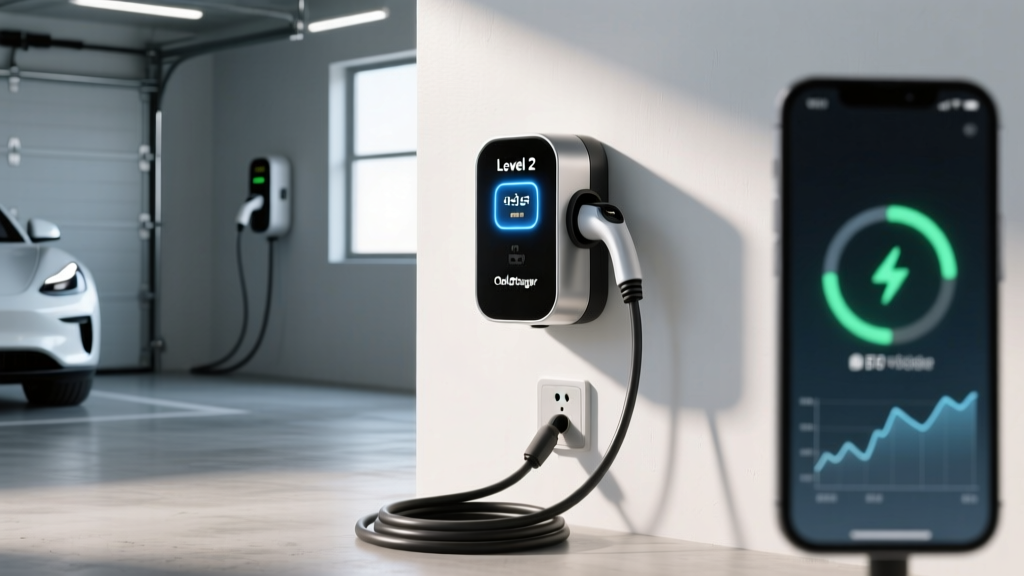
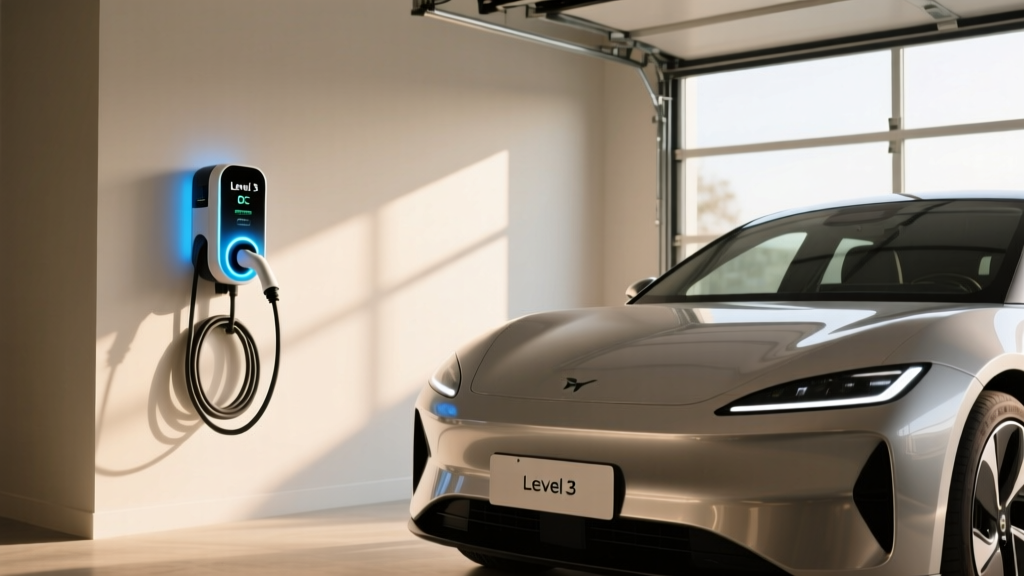
Every EV owner deals with three charging tiers. Here's exactly what each delivers:
| Level | Voltage | Power (kW) | Miles Added/Hour | Best Use Case |
|---|---|---|---|---|
| Level 1 (120V) | 120V AC | 1.4–1.9 kW | 3–5 mi/hr | Overnight top-offs, PHEVs |
| Level 2 (240V) | 240V AC | 3.3–19.2 kW | 12–75 mi/hr | Daily home & workplace charging |
| DC Fast Charger | 400–900V DC | 50–400 kW | 150–1,200+ mi/hr | Road trips, rapid top-ups |
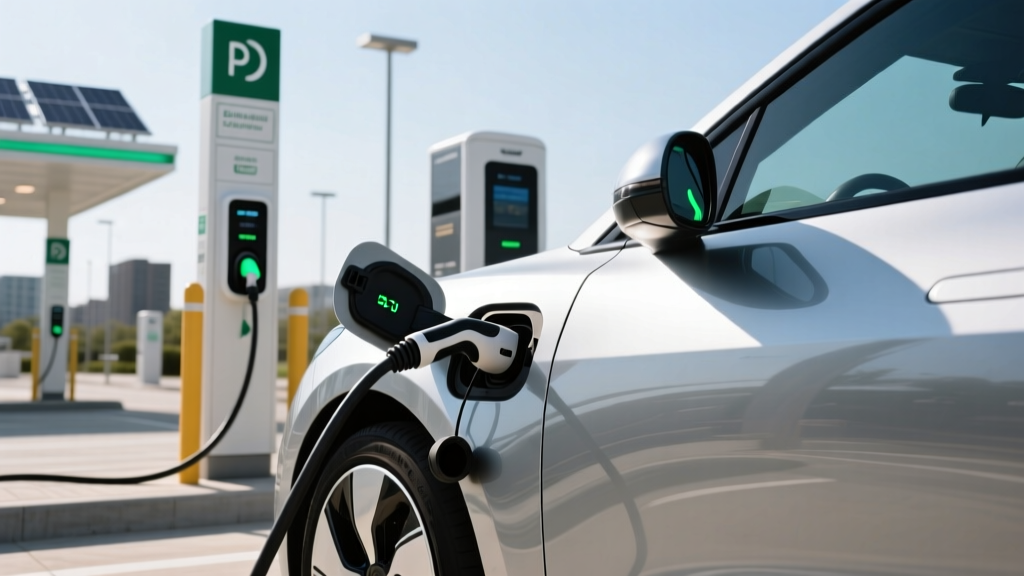
Level 1 and Level 2 both deliver alternating current (AC) to your car's onboard charger, which converts it to DC for the battery. A dc fast charger bypasses the onboard charger entirely, feeding DC directly into the battery pack. That's why DCFC stations can push 50–400 kW — they're not limited by your car's internal AC-to-DC converter.
How Fast Will Each Charging Level Add Range?
Real-world charging speed depends on your battery size, its chemistry (LFP vs. NMC), state of charge, and ambient temperature. Here's a practical breakdown using a mid-size EV with a ~77 kWh usable battery (like a Tesla Model Y or Hyundai Ioniq 5):
| Scenario | Charge Time (0–80%) | Charge Time (10–80%) | Notes |
|---|---|---|---|
| Level 1 (120V, 12A) | ~55 hours | ~48 hours | Not practical for full BEV recharges |
| Level 2 (240V, 48A / 11.5 kW) | ~7.5 hours | ~6 hours | Ideal overnight charge |
| DC Fast (50 kW) | ~95 minutes | ~80 minutes | Older or budget DCFC stations |
| DC Fast (150 kW) | ~35 minutes | ~28 minutes | Typical Electrify America / EVgo stall |
| DC Fast (250 kW) | ~22 minutes | ~18 minutes | Tesla V3 Supercharger, EA 350 kW stalls |
| DC Fast (350+ kW) | ~16 minutes | ~12–14 minutes | Requires 800V architecture (Ioniq 5, Taycan) |
Connector Compatibility: NACS, CCS1, and CHAdeMO
The North American charging landscape has consolidated heavily around the North American Charging Standard (NACS), originally developed by Tesla. As of 2025–2026, Ford, GM, Rivian, Hyundai, Kia, BMW, and most major automakers have adopted NACS on new vehicles. CCS1 (Combined Charging System) is being phased out on new models but remains widely available at public stations. CHAdeMO is effectively legacy — only the Nissan Leaf still uses it, and Nissan's next EV is expected to switch to NACS.
| Connector | Vehicles Using It (2026) | Public Network Availability | Adapter Needed? |
|---|---|---|---|
| NACS (Tesla) | Tesla (all), Ford, GM, Rivian, Hyundai, Kia, BMW, Volvo, Mercedes | Tesla Superchargers (open to all), new EA/BP/ChargePoint stalls | CCS-to-NACS adapters available (~$200–$300) |
| CCS1 | VW ID.4 (some trims), older Ford/GM/Hyundai models, legacy EVs | Electrify America, EVgo, ChargePoint, most non-Tesla networks | NACS-to-CCS adapters available (~$200–$350) |
| CHAdeMO | Nissan Leaf (legacy), Mitsubishi Outlander PHEV (older) | Declining — some EA and EVgo locations | No adapter to NACS/CCS; CHAdeMO stations required |
If you own a CCS-equipped vehicle (model years 2019–2024), you'll likely need a NACS-to-CCS adapter to access Tesla Superchargers. Ford and GM provide these adapters to owners at no cost or through dealer programs. Check your automaker's portal before purchasing a third-party adapter — compatibility and firmware handshakes matter.
How Much Does Charging Cost Per Mile vs. Gas?
This is where the math heavily favors EVs — but only if you charge smart. Public dc fast charger pricing varies wildly, and charging exclusively on the road erodes the cost advantage.
| Charging Scenario | Avg. Cost ($/kWh) | Cost per Mile* | Annual Cost (12,000 mi) |
|---|---|---|---|
| Home Level 2 (off-peak utility rate) | $0.08–$0.14 | $0.025–$0.045 | $300–$540 |
| Home Level 2 (standard rate) | $0.14–$0.20 | $0.045–$0.065 | $540–$780 |
| Public Level 2 (workplace, mall) | $0.20–$0.35 | $0.065–$0.11 | $780–$1,320 |
| DC Fast Charger ( Electrify America, EVgo) | $0.35–$0.55 | $0.11–$0.18 | $1,320–$2,160 |
| Tesla Supercharger (avg. national) | $0.28–$0.40 | $0.09–$0.13 | $1,080–$1,560 |
| Gas car (28 MPG avg, $3.40/gal) | — | $0.12 | $1,440 |
*Based on an EV efficiency of 3.2 miles/kWh (roughly 110 MPGe combined), per EPA fueleconomy.gov data for mid-size crossover EVs.
The takeaway: home charging on off-peak rates is 3–4x cheaper per mile than gas. Even expensive dc fast charger sessions at $0.48/kWh still match or beat gasoline on a per-mile basis. But if your daily driving is under 40 miles and you can install a Level 2 charger at home, your fuel cost drops to roughly $40–$65/month.
How Much Does It Cost to Install a Home EV Charger?
Home Level 2 installation is where most EV owners do the bulk of their charging, and it's where costs vary the most. Your total depends on three factors: equipment, electrical labor, and whether your panel needs an upgrade.
| Cost Component | Basic Install (40A) | Standard Install (48A) | Full Upgrade (60–80A) |
|---|---|---|---|
| EVSE Equipment (hardwired or plug-in) | $350–$600 | $500–$800 | $600–$1,200 |
| Electrician labor (2–6 hours) | $400–$900 | $600–$1,500 | $1,000–$2,500 |
| Electrical permit | $50–$200 | $50–$200 | $100–$300 |
| Panel upgrade (100A → 200A) if needed | $0 | $0 | $1,500–$3,500 |
| Conduit/wiring (long runs >50 ft) | $100–$300 | $200–$600 | $300–$800 |
| Total Estimated Cost | $900–$2,000 | $1,350–$3,100 | $3,500–$8,300 |
What Electrical Upgrades Might I Need?
A 48A Level 2 charger requires a dedicated 60A circuit (NEC code mandates circuits be rated at 125% of continuous load). That means 6 AWG copper wire and a double-pole 60A breaker in your panel. Here's when you'll hit upgrade territory:
- 200A panel with spare capacity: You're likely fine. Most modern homes (built after ~2000) have 200A service with room for a 60A breaker. A licensed electrician will do a load calculation to confirm.
- 100A panel (older homes): You may be limited to a 32A charger (40A circuit) or need a panel upgrade to 200A. Budget $1,500–$3,500 for the upgrade.
- Garage far from panel: Wire runs over 50 feet require thicker gauge wire (4 AWG or 3 AWG) to prevent voltage drop, adding $300–$800 in materials and labor.
- No 240V outlet nearby: You'll need either a NEMA 14-50 outlet installed (for plug-in chargers) or a hardwired connection. Hardwired is preferred for 48A+ units — NEMA 14-50 outlets are rated for 50A and some EVSEs at 48A continuous load can cause thermal issues in lower-quality receptacles.
Always get a licensed electrician to perform a load calculation before purchasing equipment. Many utilities offer free or discounted home energy assessments that include EV charging readiness.
Home Charger Equipment Recommendations
These are proven Level 2 units based on sustained real-world use, reliability data, and feature sets. Note: these are not dc fast chargers — they're AC Level 2 units that convert to DC inside your vehicle.
ChargePoint Home Flex
- Power Output: Up to 12 kW (50A) on a 60A circuit; adjustable down to 16A
- Connector: J1772 (NACS adapter included with some bundles)
- Cable Length: 23 feet
- Smart Features: Wi-Fi, app scheduling, utility rate optimization, Alexa integration
- Price: ~$550–$650
- Best For: Flexible amperage adjustment if your panel has limited capacity
Wallbox Pulsar Plus
- Power Output: Up to 11.5 kW (48A) on a 60A circuit
- Connector: J1772 (NACS version available)
- Cable Length: 25 feet
- Smart Features: Wi-Fi + Bluetooth, Power Sharing (daisy-chain two units on one circuit), app control
- Price: ~$500–$650
- Best For: Two-EV households wanting to share a single circuit
Tesla Wall Connector
- Power Output: Up to 11.5 kW (48A) on a 60A circuit
- Connector: NACS native (J1772 adapter available)
- Cable Length: 24 feet
- Smart Features: Wi-Fi, OTA updates, Power Sharing, load management with Tesla gateway
- Price: ~$450–$500
- Best For: Tesla and NACS-equipped vehicle owners; best value in its class
Emporia Level 2 EV Charger
- Power Output: Up to 11.5 kW (48A) on a 60A circuit
- Connector: J1772
- Cable Length: 24 feet
- Smart Features: Wi-Fi, real-time energy monitoring, integrates with Emporia Vue home energy panel
- Price: ~$350–$400
- Best For: Budget-conscious buyers who want energy monitoring
For a 240V/48A installation, the Tesla Wall Connector offers the strongest value if your vehicle uses NACS. The ChargePoint Home Flex is the most versatile for mixed-connector households. Always verify that your chosen EVSE is UL-listed (or ETL-listed) — non-certified units may void insurance claims in the event of an electrical fault.
Safety, Code, and Installation Best Practices
EV charging is a continuous high-load electrical event — your charger will pull maximum current for 6–10 hours straight. That's fundamentally different from a dryer or oven that cycles on and off. Here's what the National Electrical Code (NEC) and practical safety demand:
- Dedicated circuit: Your EVSE must have its own breaker — never share a circuit with other appliances. A 48A charger needs a dedicated 60A breaker.
- GFCI protection: NEC 2020 and later require GFCI protection for all 240V EV charging outlets. Hardwired EVSEs often have built-in ground-fault protection, which may satisfy the requirement without a GFCI breaker (confirm with your inspector).
- Outdoor rating: If your charger is mounted outside, it must be rated NEMA 4 (weatherproof). All four units recommended above carry outdoor ratings, but cable management and connector holsters still need protection from direct UV and ice buildup.
- Permit and inspection: Most jurisdictions require an electrical permit for a new 240V circuit. The inspection typically verifies wire gauge, breaker sizing, grounding, and GFCI compliance. Skipping the permit risks insurance denial if a fire originates from the circuit.
- Wire gauge: 6 AWG copper for runs under 50 feet at 60A; 4 AWG for runs 50–100 feet. Aluminum wire requires upsizing (4 AWG aluminum ≈ 6 AWG copper ampacity).
DC Fast Charger Networks: What to Expect on the Road
When you need a dc fast charger away from home, you'll encounter several major networks. Reliability and pricing vary considerably:
| Network | Typical Peak kW | Connector | Avg. $/kWh | Reliability Notes |
|---|---|---|---|---|
| Tesla Supercharger | 150–250 kW (V3/V4) | NACS | $0.28–$0.40 | Highest uptime (~97%); now open to non-Tesla NACS vehicles |
| Electrify America | 150–350 kW | CCS1 + NACS (newer stalls) | $0.40–$0.55 | Improved since 2024; occasional screen/connector faults |
| EVgo | 100–350 kW | CCS1 + NACS + CHAdeMO (some) | $0.35–$0.50 | Strong urban coverage; older 50 kW stalls still common |
| ChargePoint (DC) | 62.5–400 kW | CCS1 + NACS | $0.30–$0.48 | Location-dependent; many are 62.5 kW "express" units |
| BW IONITY / BP Pulse | 150–350 kW | CCS1 + NACS | $0.35–$0.50 | Expanding highway corridor coverage |
For road-trip planning, use A Better Route Planner (ABRP) or your vehicle's built-in navigation (Tesla, Rivian, and Hyundai's EV route planner all pre-condition the battery for faster DC charging when a fast-charger stop is in the nav). Battery preconditioning can shave 5–10 minutes off your 10–80% time in cold weather by warming the pack to optimal charging temperature.
Frequently Asked Questions
Can I install a dc fast charger at home?
Technically yes, but practically no for almost all homeowners. A 50 kW dc fast charger requires 480V three-phase power, costs $15,000–$40,000 for the equipment alone, and needs utility-grade electrical service that residential panels cannot provide. Some commercial-grade 25 kW DC units exist for ~$10,000 but still require 480V. A Level 2 home charger at 11.5 kW delivers a full overnight charge for under $3,000 installed — that's the right solution for 99% of EV owners.
How fast will each charging level add range?
Level 1 (120V) adds 3–5 miles per hour — enough for PHEVs but impractical for full BEVs. Level 2 (240V, 48A) adds roughly 30–40 miles per hour for a mid-size EV, fully replenishing overnight. A dc fast charger at 150 kW adds roughly 200+ miles in 20 minutes; at 250–350 kW with an 800V vehicle, you can add 200 miles in under 15 minutes.
Which connector/charger is compatible with my EV?
Check your vehicle's charge port. If it's a Tesla or a 2025+ Ford, GM, Hyundai, Kia, Rivian, or BMW — it's NACS. If it's a 2024 or older non-Tesla — it's likely CCS1. The Nissan Leaf uses CHAdeMO. For public dc fast charger compatibility, NACS vehicles can use Superchargers natively and CCS stations with an adapter. CCS vehicles can use most non-Tesla networks natively and Superchargers with a NACS adapter.
How much does charging cost per mile vs. gas?
At home on off-peak rates ($0.10/kWh), an efficient EV costs roughly $0.03 per mile — about 4x cheaper than a 28 MPG gas car at $3.40/gallon ($0.12/mile). On the most expensive dc fast charger networks at $0.50/kWh, the cost rises to ~$0.16/mile, which exceeds gas. The economic case for EVs is strongest when you can charge at home most of the time.
What electrical upgrades might I need for a Level 2 charger?
If your home has a 200A panel with spare breaker slots and capacity, you likely need only a new 60A double-pole breaker and a wire run to the garage ($900–$2,000 total). Homes with 100A service, full panels, or long wire runs may need a panel upgrade ($1,500–$3,500) or a lower-amperage charger (32A instead of 48A). A licensed electrician's load calculation is the definitive answer — never guess on this.
Does frequent dc fast charger use damage my battery?
Modern EV battery packs with active liquid thermal management handle DC fast charging well. The degradation difference between exclusive DCFC use and exclusive Level 2 use is roughly 2–3% over 100,000 miles according to fleet data from Recurrent Auto. Avoid charging to 100% on DCFC regularly (the combination of high SoC and heat is the stressor), and your battery will last well beyond the 8-year/100,000-mile federal warranty minimum.