Understanding DC Fast Charge and Every EV Charging Level
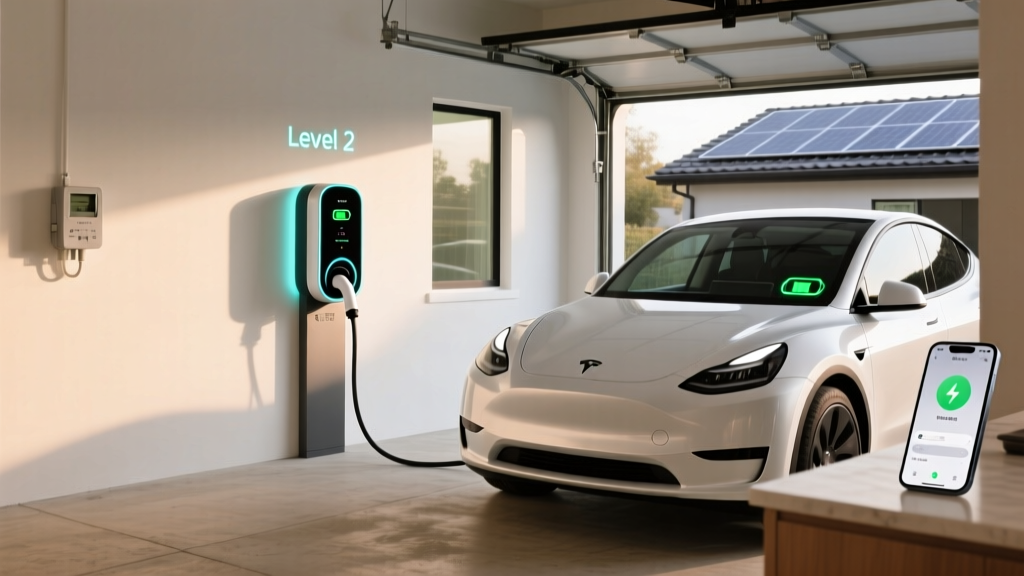
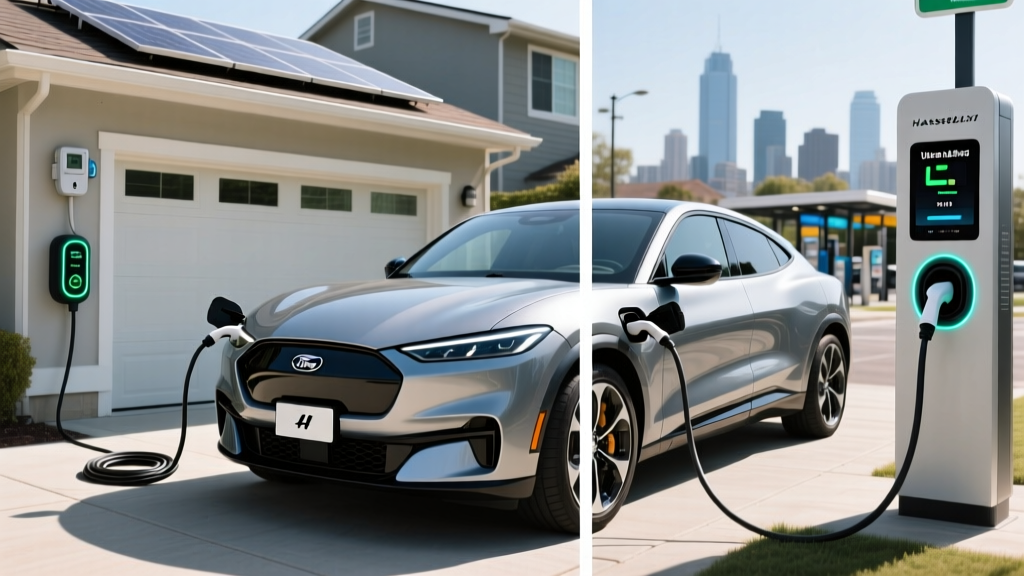
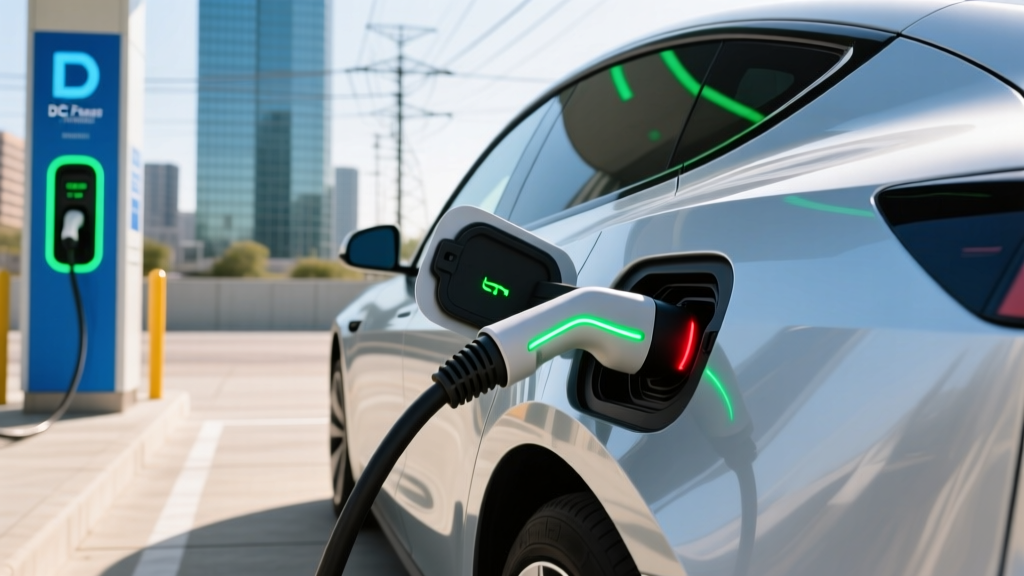
If you're shopping for an electric vehicle or planning your first road trip in one, you'll encounter three distinct charging levels. The term DC fast charge (DCFC) refers to high-power public charging that delivers direct current straight to your battery, bypassing the car's onboard charger. It's the only practical way to recharge on a highway stop. But for daily driving, Level 2 home charging does the heavy lifting. Understanding the difference between kilowatts (kW, the rate of energy flow) and kilowatt-hours (kWh, the total energy stored or delivered) is the single most important piece of EV literacy you need.
Think of it this way: kW is how fast water flows from a hose, and kWh is how many gallons end up in the bucket. A charger rated at 150 kW can theoretically deliver energy much faster than a 7.2 kW home unit, but the total energy your battery holds—say, 77 kWh—doesn't change.
| Level | Voltage | Power (kW) | Miles of Range Per Hour | Typical Use Case |
|---|---|---|---|---|
| Level 1 | 120V AC | 1.0–1.4 kW | 3–5 miles/hr | Overnight top-up, PHEVs, emergency |
| Level 2 | 240V AC | 3.3–19.2 kW | 12–75 miles/hr | Home daily charging, workplace, destinations |
| DC Fast Charge | 200–900V DC | 50–350+ kW | 150–1,000+ miles/hr (peak) | Highway road trips, rapid public charging |
A few critical nuances: those "miles per hour" figures assume peak delivery, and DC fast charge rates taper significantly as the battery fills past 80% state of charge (SoC). A charger rated at 350 kW won't sustain that rate for the entire session—real-world 10–80% sessions average far less than the peak number suggests. We'll break down realistic charge times below.
How Fast Will Each Charging Level Add Range?
Charging speed depends on both the charger's output and your vehicle's maximum acceptance rate. Plugging a car that can only accept 150 kW into a 350 kW station won't speed anything up—the car dictates the ceiling.
Here's what realistic 10–80% charging sessions look like for common EV battery sizes across each level:
| Battery Size | Level 1 (1.4 kW) | Level 2 (11.5 kW) | Level 2 (19.2 kW) | DCFC (150 kW peak) | DCFC (250+ kW peak) |
|---|---|---|---|---|---|
| 62 kWh (e.g., Chevy Equinox EV) | ~31 hours | ~3.8 hours | ~2.3 hours | ~28 min | ~20 min |
| 77 kWh (e.g., Tesla Model Y LR) | ~38 hours | ~4.7 hours | ~2.8 hours | ~30 min | ~22 min |
| 84 kWh (e.g., Ford F-150 Lightning Ext.) | ~42 hours | ~5.1 hours | ~3.1 hours | ~35 min | ~25 min |
| 100 kWh (e.g., Rivian R1S Max) | ~50 hours | ~6.1 hours | ~3.7 hours | ~40 min | ~28 min |
The charge-curve reality: DC fast charging follows a tapering curve. Your vehicle might pull a peak 250 kW from 10–30% SoC, then step down to 150 kW by 50%, and drop below 50 kW past 80%. This is why manufacturers quote 10–80% times rather than 0–100%. Charging from 80–100% on DCFC can take as long as the 10–80% session. For battery longevity and efficiency, most EV owners set their DCFC target at 80% on road trips.
Cold weather adds another variable. In sub-freezing temperatures, expect DC fast charge sessions to take 15–30% longer unless your vehicle has active battery preconditioning (Tesla, Hyundai/Kia, and BMW are notably good at this). Without preconditioning, the battery management system limits charge rate to protect cold cells.
Which Connector and Charger Is Compatible With My EV?
The connector landscape shifted dramatically between 2023 and 2025 when nearly every major automaker committed to the North American Charging Standard (NACS), originally developed by Tesla. As of 2026, NACS is the dominant connector for new EVs sold in the United States, though CCS1 vehicles remain common on the road and CHAdeMO persists on older Nissan Leafs.
| Connector | Brands Using It (New Vehicles) | DCFC Availability | Adapter Options |
|---|---|---|---|
| NACS (Tesla) | Tesla, Ford, GM, Rivian, Hyundai, Kia, BMW, Mercedes, Volvo, Polestar, Toyota | Tesla Supercharger network (25,000+ stalls), plus growing third-party NACS stations | CCS-to-NACS adapters available from Ford, GM; Tesla provides NACS-to-CCS adapter for legacy vehicles |
| CCS1 | Legacy VW ID.4, older Hyundai Ioniq 5, older BMW iX, Stellantis (some models) | Electrify America, EVgo, ChargePoint, Ionity | NACS-to-CCS adapters widely available (~$200–$300) |
| CHAdeMO | Nissan Leaf (discontinued after 2025 model year), Mitsubishi Outlander PHEV (older) | Limited and declining; some Electrify America and EVgo stations | No practical adapter to NACS/CCS for DCFC |
Key takeaway for 2026 buyers: If you're purchasing a new EV, it almost certainly comes with a NACS port or will include a CCS-to-NACS adapter in the box. The Tesla Supercharger network—now open to NACS-equipped non-Tesla vehicles—remains the most reliable DC fast charge network in the U.S., according to J.D. Power's EV charging reliability studies. CCS vehicles can access Electrify America and other networks, but adapter-carrying is wise for road trips.
How Much Does It Cost to Install a Home EV Charger?
Home Level 2 charging is where most EV owners do 80–90% of their charging. Installation costs vary enormously depending on your home's electrical panel capacity, the distance from the panel to your garage or driveway, and local permit fees.
| Component | Basic Install (Near Panel) | Standard Install (50–100 ft run) | Complex Install (Panel Upgrade Needed) |
|---|---|---|---|
| Level 2 EVSE Equipment | $300–$700 | $400–$800 | $400–$800 |
| Electrician Labor | $300–$600 | $600–$1,500 | $1,200–$3,000 |
| Electrical Permit | $50–$150 | $50–$200 | $50–$200 |
| Panel Upgrade (200A) | Not needed | Not needed | $1,500–$4,000 |
| Total Estimated Cost | $650–$1,450 | $1,050–$2,500 | $3,150–$8,000 |
The panel-upgrade factor: Many homes built before 2000 have 100-amp electrical panels. A Level 2 charger drawing 40 amps (9.6 kW) requires a dedicated 50-amp circuit (the National Electrical Code requires circuits to be rated at 125% of continuous load). If your panel is already near capacity, you'll need an upgrade to 200 amps—this is the single biggest variable in installation cost. A licensed electrician can assess your panel during a site visit, usually for $100–$200 applied toward the job.
Electrical requirements for common Level 2 setups:
- 32A / 7.7 kW charger: Requires a dedicated 40-amp, 240V circuit. Works with most 100A panels if load allows.
- 40A / 9.6 kW charger: Requires a dedicated 50-amp, 240V circuit. The most common home setup.
- 48A / 11.5 kW charger: Requires a dedicated 60-amp, 240V circuit. Many EVs' onboard chargers max out here.
- 80A / 19.2 kW charger: Requires a dedicated 100-amp, 240V circuit. Needs a 200A+ panel; compatible with vehicles like the Ford F-150 Lightning (with dual onboard chargers) and some Hummer EV configurations.
Home EV Charger Equipment Recommendations
Not all Level 2 chargers are equal. Here are proven picks based on reliability, smart features, build quality, and value—each with a NACS connector option for 2025–2026 vehicles.
| Charger Model | Max Power Output | Cable Length | Smart Features | Connector | Approx. Price |
|---|---|---|---|---|---|
| Tesla Wall Connector | 11.5 kW (48A) | 24 ft | Wi-Fi updates, load sharing, scheduling via app, Power Share (multiple units) | NACS (CCS adapter included) | $425 |
| ChargePoint Home Flex | 12 kW (50A, adjustable down) | 23 ft | App scheduling, Alexa integration, amperage adjustment, energy tracking | NACS or CCS1 (configurable) | $550–$650 |
| Emporia Vue Level 2 | 11.5 kW (48A) | 24 ft | Solar integration, energy monitoring, utility demand-response programs | NACS or J1772 | $400–$500 |
| Grizzl-E Smart | 10 kW (40A) | 24 ft | App control, OCPP compatibility, extreme cold rating (-40°F) | NACS or J1772 | $450–$550 |
| Enel X Way JuiceBox Pro | 11.5 kW (48A) | 25 ft | Load balancing, utility program support, detailed energy reports | NACS or J1772 | $500–$600 |
Safety and code considerations: All hardwired Level 2 installations should be on a dedicated circuit with a properly sized breaker. The NEC requires GFCI protection for receptacle-based (plug-in) EVSE installations on 240V circuits—hardwired units are exempt from this requirement in most jurisdictions. If your charger will be mounted outdoors, verify it carries a NEMA 4 (weatherproof) rating. The Tesla Wall Connector, ChargePoint Home Flex, and Grizzl-E are all rated for outdoor use. Always pull a permit; it protects your home insurance coverage and is required for any electrical work in most U.S. jurisdictions.
How Much Does Charging Cost Per Mile vs. Gas?
The economics of EV charging depend heavily on where and when you charge. Home charging on off-peak electricity rates is dramatically cheaper than DC fast charging on the road. Here's a realistic breakdown:
| Charging Scenario | Avg. $/kWh | Cost for 77 kWh Battery (0–100%) | Cost Per Mile (3.5 mi/kWh EV) | Equiv. Gas Cost (30 MPG @ $3.40/gal) |
|---|---|---|---|---|
| Home Off-Peak (utility rate) | $0.08–$0.14 | $6.16–$10.78 | $0.023–$0.040 | $0.113/mile |
| Home Standard Rate | $0.14–$0.20 | $10.78–$15.40 | $0.040–$0.057 | $0.113/mile |
| Public Level 2 (workplace/retail) | $0.20–$0.35 | $15.40–$26.95 | $0.057–$0.100 | $0.113/mile |
| DC Fast Charge (Electrify America, EVgo) | $0.35–$0.55 | $26.95–$42.35 | $0.100–$0.157 | $0.113/mile |
| Tesla Supercharger (varies by location/time) | $0.25–$0.40 | $19.25–$30.80 | $0.071–$0.114 | $0.113/mile |
The bottom line: An EV owner who charges primarily at home on off-peak rates pays roughly $0.03–$0.04 per mile—about one-third the fuel cost of a 30 MPG gas vehicle. Even frequent DC fast charging on road trips ($0.10–$0.16/mile) remains competitive with or cheaper than gasoline. However, if you rely exclusively on expensive public DC fast charging, your costs can approach or exceed gasoline. This is why home charging access is the single biggest factor in EV ownership economics.
According to the U.S. Department of Energy's fueleconomy.gov, the national average electricity rate for EV charging is approximately $0.16/kWh, but time-of-use plans from your utility can cut that by 40–50% for overnight charging.
DC Fast Charge Networks: What to Expect on the Road
The public DC fast charge landscape in 2026 is more accessible but still uneven. Here's a realistic assessment of major networks:
- Tesla Supercharger (now open to NACS-equipped non-Tesla EVs): 25,000+ stalls in the U.S., 150–250 kW typical (V4 stalls up to 350 kW at select locations). Reliability consistently tops surveys. Pricing averages $0.25–$0.40/kWh. The Tesla app or in-car navigation handles routing and preconditioning.
- Electrify America: ~5,000 chargers at 1,000+ stations. Offers 150 kW and 350 kW stalls. CCS1 native; NACS availability expanding. Reliability has improved but still trails Tesla. Pricing: $0.35–$0.55/kWh. The EA app is required for activation.
- EVgo: ~3,500 public fast chargers, mostly 50–350 kW. CCS1 native with NACS adapters at many locations. Competitive pricing with subscription plans ($0.30–$0.45/kWh). Good urban coverage.
- ChargePoint (DCFC locations): Smaller DCFC footprint (~1,000 fast chargers) but massive Level 2 network. Useful for destination charging. Pricing varies by host.
Pro tip for road trips: Use your vehicle's built-in navigation to route through DC fast charge stations. Most modern EVs (Tesla, Hyundai/Kia E-GMP, GM Ultium, BMW) will automatically precondition the battery when a DCFC stop is in the route, warming or cooling the cells to optimize charge rate. Without preconditioning, you may arrive at a 250 kW station and only pull 90 kW until the battery reaches optimal temperature.
Safety, Electrical Codes, and Smart Charging Practices
EV charging is safe when installed correctly, but it involves significant electrical loads running for hours. Here are the code requirements and best practices every EV owner should know:
- Dedicated circuit: Your Level 2 charger must be on its own dedicated circuit—never shared with other appliances. A 48A charger requires a 60A breaker.
- GFCI protection: NEC 2023 and later require GFCI protection for plug-in (receptacle-based) 240V EVSE. Hardwired installations are generally exempt. If you experience nuisance GFCI trips, consult your electrician—some EVSE units have built-in ground-fault detection that can conflict with external GFCI breakers.
- Outdoor rating: Any charger mounted outside must be rated NEMA 4 or NEMA 4X. Check that both the unit and the connector holster are rated for rain, snow, and UV exposure.
- Cable management: Avoid running charging cables across walkways or driveways where they pose a trip hazard or can be damaged by vehicles. Use cable retractors or wall-mounted holsters.
- Utility demand-response programs: Many utilities offer rebates ($200–$500) for smart chargers and reduced rates for participating in load-management programs. Check with your local utility before purchasing.
- Federal tax credit for home charging: The IRS §30C Alternative Fuel Vehicle Refueling Property Credit offers up to $1,000 (30% of cost, capped) for home EV charger installation through 2032, but only if you live in a qualifying census tract. Consult a tax professional for eligibility.
Frequently Asked Questions
How much does it cost to install a home EV charger?
A straightforward Level 2 home charger installation near your electrical panel typically costs $650–$1,450 (equipment + electrician + permit). If the charger is 50–100 feet from the panel, expect $1,050–$2,500. If your home needs a 200-amp panel upgrade, total costs can reach $3,150–$8,000. Always get a site assessment from a licensed electrician before committing to equipment.
How fast will each charging level add range?
Level 1 (120V) adds 3–5 miles of range per hour. Level 2 (240V) adds 12–75 miles per hour depending on amperage (32A–80A) and your vehicle's onboard charger capacity. DC fast charge adds 150–1,000+ miles per hour at peak rate, but the actual 10–80% session takes 18–40 minutes depending on battery size and charger power. Real-world DCFC sessions average well below the peak kW rating due to the charge curve taper.
Which connector/charger is compatible with my EV?
For 2025–2026 model-year vehicles, most new EVs use the NACS connector (Tesla's standard, now adopted by Ford, GM, Hyundai, Kia, BMW, Rivian, and others). Older or legacy EVs may use CCS1 (Volkswagen ID.4, older Ioniq 5) or CHAdeMO (Nissan Leaf). Check your vehicle's charge port or owner's manual. Adapters from CCS to NACS are widely available ($200–$300) and often included with new vehicle purchases. For home Level 2 charging, purchase a charger with the matching connector for your vehicle.
How much does charging cost per mile vs gas?
Home charging on off-peak rates costs approximately $0.03–$0.04 per mile—roughly one-third the cost of gasoline at $3.40/gallon in a 30 MPG vehicle ($0.11/mile). Standard home rates bring EV costs to $0.04–$0.06/mile. Public DC fast charging ($0.35–$0.55/kWh) costs $0.10–$0.16/mile, which is competitive with or slightly above gasoline. The key savings advantage comes from consistent home charging.
What electrical upgrades might I need?
The most common upgrade is a panel capacity increase from 100A to 200A, which costs $1,500–$4,000. You may also need: a new dedicated circuit with appropriately sized breaker and wire gauge (6 AWG for 50A, 4 AWG for 60A), a 240V NEMA 14-50 receptacle if using a plug-in charger (rather than hardwired), and possibly a whole-home surge protector. Homes with 200A panels and available breaker slots typically need no upgrade beyond the dedicated circuit.
Can I use a DC fast charger at home?
Technically possible but impractical for nearly all homeowners. DC fast chargers require 480V three-phase power (commercial-grade), cost $20,000–$100,000+ for equipment and installation, and draw 50–350 kW—far beyond residential electrical service. Level 2 home charging at 9.6–11.5 kW fully replenishes most EV batteries overnight, which covers daily needs. Reserve DCFC for road trips.
Does DC fast charging degrade my battery faster?
Modern battery management systems mitigate most DCFC-related degradation through thermal management and charge-rate limiting. Studies from the National Renewable Energy Laboratory (NREL) and real-world fleet data show that exclusive DCFC use may add 1–3% additional degradation over 100,000 miles compared to Level 2 charging. For context, most EV batteries retain 85–92% capacity after 100,000 miles under normal mixed-use charging. Occasional DCFC on road trips has negligible impact; daily DCFC use in extreme heat without preconditioning is the scenario to avoid.