The Three Charging Levels Every EV Owner Must Know
Before plugging in anywhere, you need to understand the difference between power (kW) and energy (kWh). Kilowatts measure the rate of energy delivery — think of it as the width of a hose. Kilowatt-hours measure the total energy stored in your battery — the size of the bucket. A 100 kWh battery charged at 100 kW (peak) doesn't fill in exactly one hour because charging speed tapers as the battery fills, especially above 80% state of charge. Keeping this distinction straight will save you from the most common EV confusion.
| Level | Voltage | Power (kW) | Miles of Range Added Per Hour | Typical Use Case |
|---|---|---|---|---|
| Level 1 | 120V AC | 1.0–1.4 kW | 3–5 mi/hr | Overnight top-up, PHEVs, emergencies |
| Level 2 | 240V AC | 3.3–19.2 kW | 12–75 mi/hr | Home daily charging, workplaces, destinations |
| DC Fast Charging (Level 3) | 200–900V DC | 50–350 kW | 150–1,200+ mi/hr (peak) | Road trips, rapid top-ups, commercial fleets |
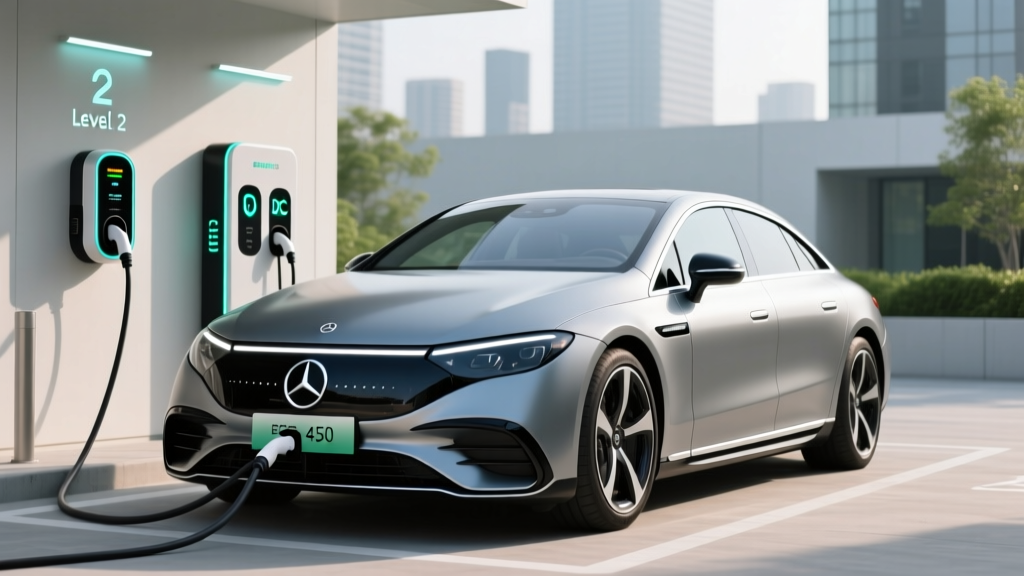
DC fast charging bypasses the vehicle's onboard AC-to-DC converter entirely, feeding direct current straight into the battery pack at much higher power levels. That's why DC fast charging — often called Level 3 or DCFC — can add hundreds of miles in 20–30 minutes while Level 2 takes hours. But peak power ratings are misleading: a charger rated for 350 kW won't deliver that rate for the entire session. Most EVs hit peak power only between roughly 10% and 40% state of charge, then taper progressively. This is the charging curve, and it's the reason we measure charging speed in "10–80% time" rather than raw kW figures.
DC EV Charging Times: What to Expect From 10% to 80%
Real-world DC fast charging times depend on three variables: the charger's maximum output, the vehicle's maximum acceptance rate, and the battery's current state of charge and temperature. Here's how common battery sizes and charge rates translate to actual session times.
| Battery Size (usable) | Vehicle Example | Peak Acceptance Rate | Charger Used | Approx. 10–80% Time |
|---|---|---|---|---|
| 58 kWh | VW ID.4 (RWD) | 135 kW | 150 kW EA station | ~30 minutes |
| 77 kWh | Ford Mustang Mach-E (ER) | 150 kW | 150 kW station | ~38 minutes |
| 82 kWh | Hyundai Ioniq 5 (RWD) | 240 kW (800V) | 350 kW station | ~18 minutes |
| 100 kWh | Tesla Model S (Long Range) | 250 kW | V3 Supercharger | ~28 minutes |
| 131 kWh | Ford F-150 Lightning (ER) | 150 kW | 150 kW station | ~55 minutes |
A critical detail most spec sheets bury: vehicles with 800-volt architectures — like the Hyundai Ioniq 5, Kia EV6, Porsche Taycan, and Lucid Air — can sustain higher charging power for longer portions of the curve because higher voltage means lower current at the same wattage, reducing heat buildup in the battery. If DC fast charging speed is a priority for your road-trip plans, an 800V vehicle paired with a 350 kW charger delivers meaningfully faster sessions than a 400V vehicle on the same hardware.
Cold-weather caveat: Battery chemistry slows ion movement at low temperatures. In sub-40°F conditions without preconditioning, expect DC fast charging times to increase 30–50%. Most modern EVs precondition the battery when you navigate to a charger — always use the car's built-in navigation to trigger this, or manually activate preconditioning 15–20 minutes before arrival.
Connector Compatibility: NACS, CCS1, and CHAdeMO in 2026
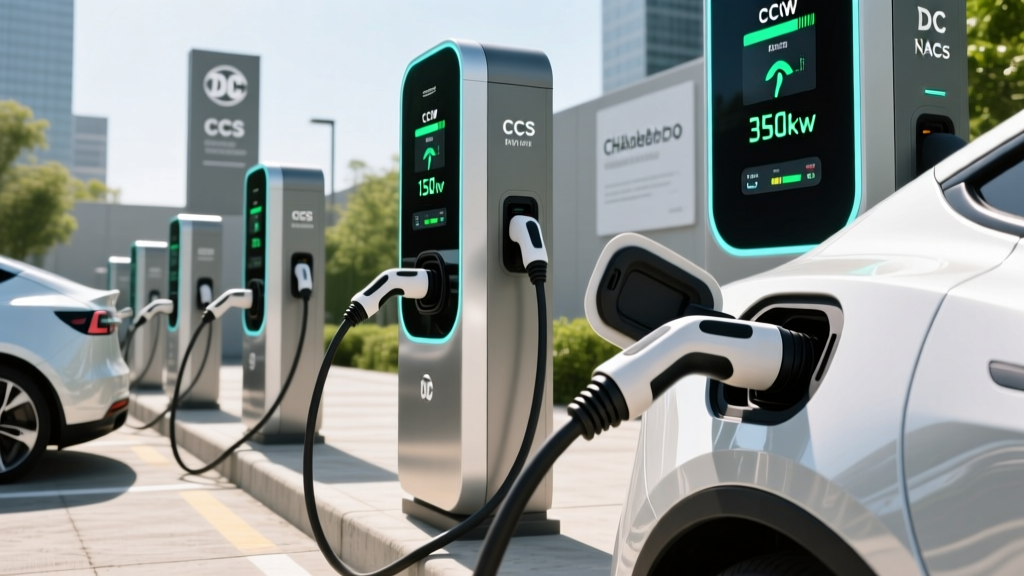
The connector landscape has consolidated dramatically. Tesla's North American Charging Standard (NACS) has been adopted by Ford, GM, Rivian, Volvo, BMW, Hyundai, and nearly every major automaker for 2025–2026 models. CCS1 (Combined Charging System) remains on many 2022–2024 vehicles still on the road, while CHAdeMO is essentially legacy — found on older Nissan Leaf and Mitsubishi Outlander PHEV models.
| Connector | Automakers Using It (New Vehicles) | Network Access | Adapter Needed? |
|---|---|---|---|
| NACS (native) | Tesla, Ford, GM, Rivian, Volvo, Polestar, BMW, Hyundai, Kia, Mercedes-Benz (2026+) | Tesla Supercharger network + growing NACS third-party stations | None for Superchargers; CCS adapter for older CCS stations |
| CCS1 | Remaining 2022–2024 models (VW ID.4 pre-2025, some Stellantis) | Electrify America, EVgo, ChargePoint, Ionity | NACS-to-CCS adapter needed for Tesla Superchargers |
| CHAdeMO | Legacy only (Nissan Leaf discontinued; Mitsubishi Outlander PHEV switched to CCS/NACS) | Limited — many stations removing CHAdeMO cables | No practical adapter to NACS/CCS for DCFC |
If you're buying a new EV in 2026, NACS is the clear standard going forward. If you own a CCS1-equipped vehicle, Tesla sells a CCS-to-NACS adapter (~$250) that unlocks Supercharger access, though charge rates may be limited by the adapter's throughput rating. For CHAdeMO owners, the network is shrinking — plan trips carefully using PlugShare or A Better Routeplanner to confirm station availability.
How Much Does DC EV Charging Actually Cost?
Electricity pricing varies wildly depending on where and when you charge. Here's the real cost picture across common scenarios, benchmarked against a 30 MPG gasoline vehicle at $3.50/gallon.
| Charging Scenario | Avg. Cost per kWh | Cost to Add 200 Miles* | Cost Per Mile |
|---|---|---|---|
| Home Level 2 (off-peak utility rate) | $0.08–$0.14 | $5.60–$9.80 | $0.028–$0.049 |
| Home Level 2 (standard residential rate) | $0.14–$0.20 | $9.80–$14.00 | $0.049–$0.070 |
| Public Level 2 (ChargePoint, etc.) | $0.25–$0.49 | $17.50–$34.30 | $0.088–$0.172 |
| DC Fast Charging (Electrify America, EVgo) | $0.35–$0.60 | $24.50–$42.00 | $0.123–$0.210 |
| Tesla Supercharger (varies by location/time) | $0.25–$0.45 | $17.50–$31.50 | $0.088–$0.158 |
| Gasoline baseline (30 MPG @ $3.50/gal) | — | $23.33 | $0.117 |
*Based on an EV averaging 3.5 miles per kWh (≈285 Wh/mi), a realistic combined figure for mid-size crossovers like the Tesla Model Y or Hyundai Ioniq 5.
The economics are clear: home charging at off-peak rates delivers fuel costs roughly one-quarter to one-third of gasoline. Even public DC fast charging, the most expensive option, often matches or slightly undercuts gas on a per-mile basis. The break-even point shifts if you exclusively rely on premium-priced public DCFC in high-cost states (California, Massachusetts) — in those cases, your per-mile fuel cost can edge above a fuel-efficient hybrid. The data source for vehicle efficiency figures is the EPA's fueleconomy.gov, which lists kWh/100mi and MPGe for every certified EV.
Pro tip: Many utilities offer time-of-use (TOU) plans that drop electricity rates to $0.05–$0.08/kWh between midnight and 6 AM. Setting your EV or charger to schedule charging during these windows can cut your home charging cost below $0.03/mile — less than one-quarter the cost of gas.
Home EV Charger Installation: Requirements, Costs, and Gotchas
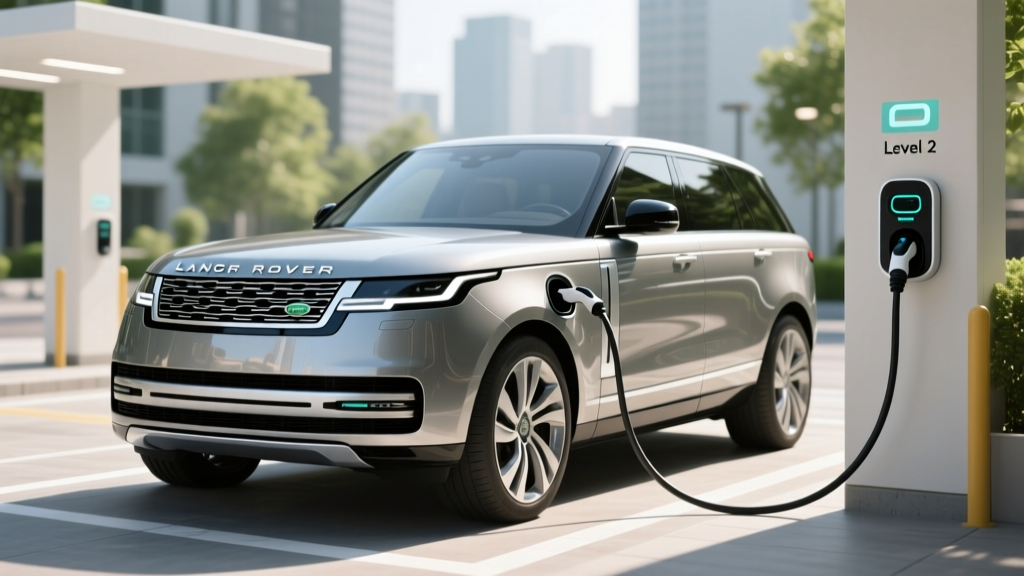
While DC fast charging is essential for road trips, roughly 80–90% of all EV charging happens at home on Level 2 equipment. Installing a dedicated Level 2 station requires understanding your home's electrical capacity, local code, and realistic cost expectations.
Electrical Requirements
A typical Level 2 home charger requires a dedicated 240V circuit, similar to what powers an electric dryer or oven. The most common configurations:
- 40-amp circuit / 32-amp continuous charge (7.7 kW): Sufficient for most EVs; adds ~25–30 miles per hour. The most cost-effective home setup.
- 50-amp circuit / 40-amp continuous charge (9.6 kW): Recommended for larger-battery EVs (100+ kWh) or households with two EVs sharing one charger on a schedule.
- 60-amp circuit / 48-amp continuous charge (11.5 kW): Maximum for most residential chargers. Requires thicker wire (6 AWG copper or 4 AWG aluminum) and a higher-rated breaker.
The National Electrical Code (NEC) requires that continuous loads — and EV charging qualifies — not exceed 80% of the circuit breaker rating. So a 40A breaker supports 32A continuous draw. Your electrician will size the circuit accordingly.
Panel Upgrade Reality Check
Many homes built before 2000 have 100-amp or 150-amp main electrical panels. Adding a 50-amp EV circuit to an already-loaded panel may require a panel upgrade to 200 amps — or an alternative solution like a smart panel monitor (e.g., Span smart panel or Enphase IQ system) that dynamically limits EV charging when other loads are high. A panel upgrade typically costs $1,500–$3,500 depending on your utility's requirements and local labor rates. Don't skip this step in your budget planning — it's the single most common "surprise" cost in home EV charger installation.
| Cost Component | Low Estimate | High Estimate | Notes |
|---|---|---|---|
| Level 2 charging equipment (hardwired or plug-in) | $350 | $750 | 32A–48A smart chargers; WiFi-enabled models cost more |
| Electrician labor (circuit run + install) | $500 | $2,000 | Depends on distance from panel to garage/driveway; conduit length matters |
| Electrical permit | $50 | $250 | Required in most jurisdictions; fee varies by city/county |
| Panel upgrade (if needed) | $1,500 | $3,500 | 100A→200A upgrade; not always required |
| Total (no panel upgrade) | $900 | $3,000 | Typical for modern homes with 200A service |
| Total (with panel upgrade) | $2,400 | $6,500 | Older homes or homes with high existing loads |
The Federal Tax Credit for Home Charging Equipment
Under IRS §30C (Alternative Fuel Vehicle Refueling Property Credit), you may claim up to $1,000 for home EV charging equipment and installation costs. The credit covers 30% of qualified expenses, capped at $1,000 per tax year. Important restrictions apply: the property must be installed at your principal residence, and eligibility is subject to census-tract requirements (the credit is primarily available in non-urban or low-income census tracts). Always verify current eligibility on irs.gov and consult a tax professional before claiming.
Recommended Home Level 2 Chargers for 2026
While DC fast charging handles road trips, your daily charging workhorse will be a Level 2 home unit. Here are proven picks across budget and feature tiers:
Emporia Vue Level 2 EV Charger
- Power Output: 48A (11.5 kW) on a 60A circuit; configurable down to 32A/40A
- Connector: NACS (2026 model); CCS1 version also available
- Cable Length: 24 feet
- Smart Features: WiFi scheduling, solar-integration with Emporia Vue energy monitor, load management, utility TOU optimization
- Price: ~$399 (frequently on sale for ~$349)
- Best For: Budget-conscious buyers who want maximum power and energy monitoring without paying premium prices
ChargePoint Home Flex
- Power Output: Up to 50A (12 kW) on a 60A circuit; adjustable in-app from 16A to 50A
- Connector: NACS (2025+ refresh); J1772 adapter included for legacy vehicles
- Cable Length: 23 feet
- Smart Features: Alexa/Google Home integration, flexible amperage settings, scheduling, ChargePoint network account for public charging tracking
- Price: ~$699
- Best For: Households wanting flexible amperage to match their circuit capacity; strong app ecosystem
Tesla Wall Connector
- Power Output: Up to 48A (11.5 kW) on a 60A circuit
- Connector: NACS native; includes J1772 adapter for non-Tesla EVs
- Cable Length: 24 feet
- Smart Features: WiFi firmware updates, power-sharing (link two units on one circuit for two-EV garages), Tesla app integration
- Price: ~$475
- Best For: Tesla owners and mixed-EV households wanting a reliable, well-priced NACS-native unit with power-sharing for dual-EV setups
Grizzl-E Smart
- Power Output: 40A (9.6 kW) on a 50A circuit
- Connector: NACS or J1772 versions available
- Cable Length: 24 feet
- Smart Features: OCPP-compatible (works with utility demand-response programs), outdoor-rated (IP67), built-in cord management
- Price: ~$499
- Best For: Outdoor installations, extreme climates (-40°F rated), and utility-program participants needing OCPP protocol support
Safety, Code, and Installation Best Practices
EV charging draws sustained high current for hours — longer than almost any other household appliance. This places unique demands on your wiring and protection devices.
- Dedicated circuit required: Your EV charger must be on its own dedicated breaker — never shared with other outlets or appliances. This prevents overloading and nuisance trips.
- GFCI protection: The 2020 NEC revision (and subsequent updates) requires Ground Fault Circuit Interrupter protection for EV charging outlets. Hardwired installations may use a GFCI breaker. Plug-in installations using a NEMA 14-50 receptacle require a GFCI breaker, which can add $50–$150 to the electrical cost. Some jurisdictions enforce this strictly; others have local amendments.
- Outdoor rating: If your charger is mounted outside or in an unenclosed carport, ensure the unit carries at least an IP55 rating (protected against water jets). Units rated IP67 can withstand temporary submersion — important for flood-prone areas.
- Hardwired vs. plug-in: Hardwired installations (direct wire from panel to charger, no receptacle) are generally preferred for 48A+ chargers because NEMA 14-50 receptacles are rated for 50A but continuous EV loads at 48A push the connector to its thermal limits. Hardwired setups also eliminate the GFCI breaker requirement in some jurisdictions, as the charger's internal protection suffices.
- Permit and inspection: Most municipalities require an electrical permit and post-installation inspection. Skipping this can void homeowner's insurance coverage for electrical fires and create problems during a future home sale. Budget $50–$250 for the permit fee and schedule the inspection before closing the wall.
Public DC Fast Charging Networks: What to Expect in 2026
The public DC fast charging infrastructure has matured considerably, though reliability still varies by network and location.
| Network | Max Charger Power | Connector | Typical Pricing | Reliability Notes |
|---|---|---|---|---|
| Tesla Supercharger | 250 kW (V3) / 325+ kW (V4) | NACS | $0.25–$0.45/kWh | Highest uptime (~97%); open to non-Tesla NACS vehicles at select locations |
| Electrify America | 350 kW | CCS1 (NACS adapters rolling out) | $0.38–$0.56/kWh | Improving; ~90% uptime; occasional connector/handshake issues |
| EVgo | 350 kW (newer stations) | CCS1, CHAdeMO (legacy), NACS (new) | $0.35–$0.50/kWh (+ membership plans) | Mixed; newer 350 kW stalls reliable, older 50 kW stations aging |
| ChargePoint (DCFC) | 125–400 kW | CCS1, NACS (newer) | Varies by site host ($0.30–$0.55/kWh) | Site-dependent; station ownership varies (retail, fleet, municipal) |
For road-trip planning, use A Better Routeplanner (ABRP) — it factors in your specific vehicle's charging curve, elevation changes, weather, and battery preconditioning to generate realistic charge-stop plans with time and cost estimates. This is significantly more accurate than simply dividing your route distance by EPA range.
Frequently Asked Questions
How much does it cost to install a home EV charger?
A typical Level 2 home charger installation costs between $900 and $3,000 when no panel upgrade is needed (equipment $350–$750, electrician labor $500–$2,000, permit $50–$250). If your home needs a 200-amp panel upgrade, add $1,500–$3,500, bringing the total to $2,400–$6,500. The federal §30C tax credit can offset up to $1,000 of qualified equipment and installation costs, subject to census-tract eligibility.
How fast will each charging level add range?
Level 1 (120V) adds 3–5 miles per hour. Level 2 (240V, 32A–48A) adds 25–40 miles per hour for most EVs. DC fast charging adds 150–1,200+ miles per hour at peak rates, but tapers significantly above 80% SoC — a typical 10–80% session takes 18–55 minutes depending on battery size and vehicle architecture.
Which connector and charger is compatible with my EV?
For 2025–2026 model-year vehicles, NACS is the dominant standard (Tesla, Ford, GM, Rivian, Hyundai, Kia, BMW, Volvo, Mercedes-Benz). Older 2022–2024 models from VW, BMW, and others may use CCS1 — a NACS-to-CCS adapter unlocks Supercharger access. CHAdeMO is legacy-only. Check your vehicle's charge port or owner's manual, and verify connector type before purchasing a home charger.
How much does charging cost per mile vs. gas?
Home charging at off-peak rates costs $0.03–$0.05 per mile — roughly one-third the cost of gasoline at $0.12/mile (30 MPG at $3.50/gallon). Public DC fast charging costs $0.09–$0.21/mile, which is comparable to or slightly above gasoline depending on local electricity and fuel prices. The biggest savings come from consistent home charging.
What electrical upgrades might I need for a home charger?
Homes with 200-amp electrical service and available panel space typically need only a new dedicated 240V circuit (breaker, wire, conduit). Homes with 100A or 150A service, or panels already near capacity, may need a panel upgrade to 200A ($1,500–$3,500). Alternatives include smart load-management devices (Span panel, Enphase) that share capacity dynamically, or a lower-amperage charger (16A–24A) that draws less from the panel. A licensed electrician should perform a load calculation before you commit to equipment.
Can I use DC fast charging at home?
Technically yes, but it's impractical for nearly all residential users. DC fast chargers cost $15,000–$80,000+, require 480V three-phase power (rare in residential settings), and need utility-grade infrastructure. For home use, a Level 2 charger at 9.6–11.5 kW adds enough range overnight for virtually any daily driving pattern. Reserve DC fast charging for road trips and occasional rapid top-ups.
Does frequent DC fast charging damage my battery?
Modern EV battery management systems (BMS) actively manage charge rates, cell temperatures, and voltage limits to minimize degradation from DC fast charging. Research from NREL and real-world fleet data indicate that exclusive DCFC use may increase capacity loss by 2–5% over 100,000 miles compared to Level 2 charging. For daily use, Level 2 is gentler; for road trips, DCFC is perfectly safe. Avoid repeatedly charging to 100% on DCFC — stop at 80% for the best balance of speed and battery longevity.