Understanding DC EV Chargers and Why They Matter
When most EV owners think about fast charging, they picture the bulky cabinets at highway rest stops. But DC EV chargers — devices that deliver direct current straight to your battery, bypassing the car's onboard charger — now span a wide spectrum. From 50 kW public stations to 350 kW ultra-fast corridors, and even emerging residential DC units, the landscape has shifted dramatically. This guide breaks down exactly what DC charging delivers, what it costs, and how it fits alongside Level 1 and Level 2 AC charging in a real ownership routine.
Charging Levels Compared: Speed, Power, and Real-World Range Added
Every EV owner uses a mix of charging levels. Here's how they stack up in measurable terms:
| Level | Power Source | Typical kW Output | Miles of Range Added per Hour | Best Use Case |
|---|---|---|---|---|
| Level 1 (AC) | 120V household outlet | 1.2–1.9 kW | 3–5 mi/hr | Overnight top-ups, PHEVs, low-mileage drivers |
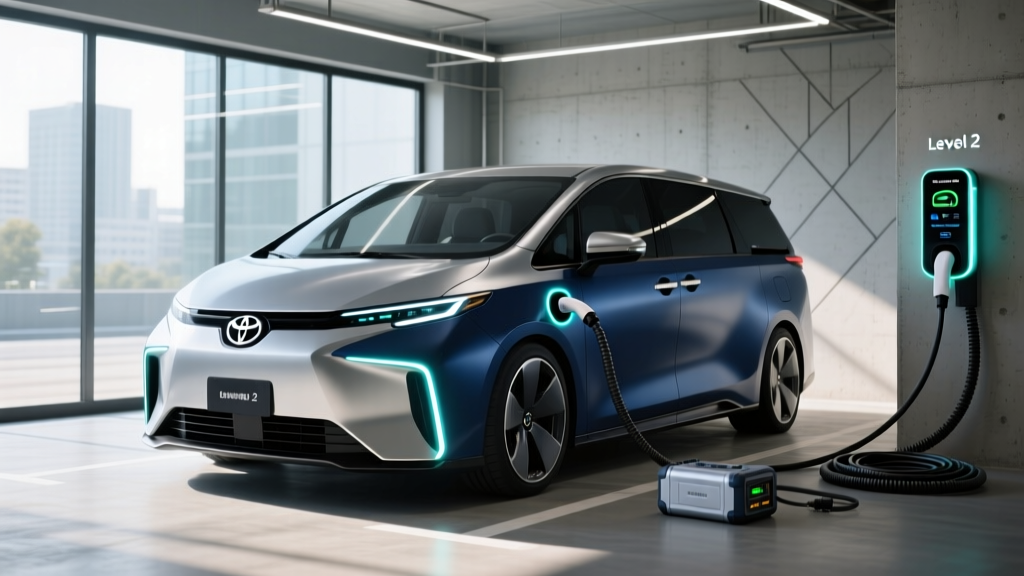
| Level 2 (AC) | 240V dedicated circuit | 7.2–19.2 kW | 20–60 mi/hr | Daily home charging, workplace, destinations |
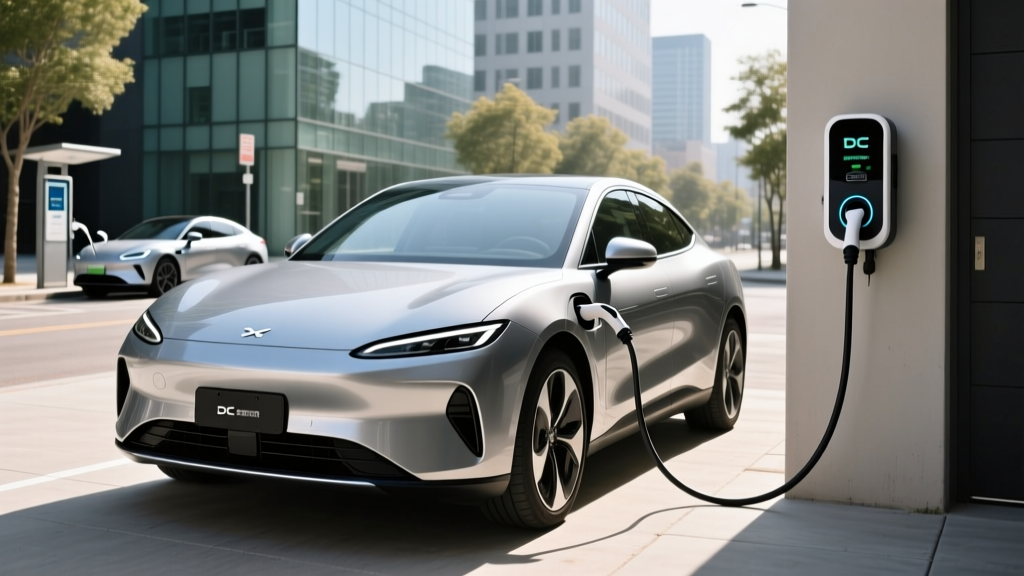
| DC Fast (Level 3) | 480V+ three-phase commercial | 50–350 kW | 150–1,200+ mi/hr | Road trips, fleet depots, rapid top-ups |
DC fast chargers achieve those numbers by converting AC grid power to DC externally, then feeding it directly to the battery at high voltage. This skips the vehicle's onboard AC-to-DC converter (typically limited to 7.2–11.5 kW on most 2026 models), which is why DC charging is exponentially faster.
Real-world charge time examples (10–80% SoC):
- Hyundai Ioniq 5 (84 kWh battery, 350 kW peak): ~18 minutes on a 350 kW charger, ~25 minutes on a 150 kW unit
- Tesla Model Y Long Range (75 kWh usable, 250 kW peak): ~25–28 minutes on a V3 Supercharger
- Ford F-150 Lightning Extended Range (131 kWh battery, 150 kW peak): ~41 minutes on a 150 kW charger
- Chevrolet Equinox EV (85 kWh battery, 150 kW peak): ~30 minutes on a 150 kW charger
Home DC EV Chargers: Are They Practical in 2026?
Traditionally, DC charging was exclusively a commercial proposition — the equipment alone cost $20,000–$100,000+. That's beginning to change. Companies like Wallbox and Fermata Energy have introduced residential-grade DC chargers in the 10–40 kW range, priced between $5,000 and $12,000 before installation. These units offer a compelling advantage: they bypass the vehicle's onboard charger, meaning even cars with modest 7.2 kW onboard chargers can accept the full DC rate.
However, for most homeowners, a Level 2 AC charger remains the pragmatic choice. A 48-amp Level 2 unit delivers 11.5 kW — enough to fully recharge a 75 kWh battery overnight (roughly 6.5 hours from empty) — at a fraction of the equipment cost. Residential DC chargers make sense primarily for:
- High-mileage drivers who need faster turnaround between shifts (rideshare, delivery)
- V2H (vehicle-to-home) setups that require bidirectional DC capability
- Fleet vehicles parked at a depot or large residential property
Home Installation: Electrical Requirements, Costs, and Panel Upgrades
Whether you're installing a Level 2 AC charger or exploring residential DC, the electrical work is the same starting point — and it's where most of the cost variability lives.
Level 2 charger electrical requirements:
- Voltage: 240V (same as an electric dryer or oven)
- Amperage: 40A circuit for a 32A charger (NEC requires circuits rated 125% above continuous load); 60A circuit for a 48A charger
- Wiring: 6 AWG copper for 40A; 4 AWG for 60A (varies by run length)
- Dedicated circuit: Required — the charger cannot share a breaker with other appliances
| Cost Component | Typical Range | Notes |
|---|---|---|
| Level 2 charger equipment | $350–$750 | Smart Wi-Fi units at upper end |
| Electrician labor (standard install) | $500–$1,500 | Depends on panel proximity, wall type, conduit run |
| Permit and inspection | $50–$300 | Varies by municipality; some jurisdictions waive for EV |
| Electrical panel upgrade (if needed) | $1,500–$4,000 | 100A → 200A service upgrade for older homes |
| Total (no panel upgrade) | $900–$2,550 | Most homes with 200A service fall here |
| Total (with panel upgrade) | $2,400–$6,550 | Common in pre-1990 homes with 100A panels |
Panel upgrade reality: If your home has a 100-amp electrical panel — common in houses built before 1990 — adding a 40A or 60A dedicated EV circuit may push total load beyond safe capacity. An electrician will perform a load calculation per NEC Article 220. If you're near the limit, a panel upgrade to 200A (or even 400A for homes with heat pumps and solar) becomes necessary. This is the single biggest variable in home charging installation, and it's often not disclosed until the electrician's site visit.
For residential DC chargers (10–40 kW units), expect additional requirements:
- Three-phase power availability (rare in US residential — may require a phase converter)
- Dedicated 60–100A circuits at 240V or 480V
- Concrete pad or reinforced wall mount (units weigh 80–200 lbs)
- Utility coordination for higher service drops
Connector Compatibility: NACS, CCS1, CHAdeMO, and Adapters
The connector landscape in 2026 has consolidated significantly around NACS (North American Charging Standard), but legacy connectors remain in wide use. Here's what fits what:
| Connector | Brands Using It (2026 Models) | DC Fast Charge Capable? | Notes |
|---|---|---|---|
| NACS (Tesla) | Tesla (all), Ford, GM, Rivian, Volvo, Polestar, Hyundai/Kia (select 2026+), BMW, Mercedes | Yes (up to 350 kW) | Now the dominant standard; compact single-port design |
| CCS1 (Combo) | VW, Audi, Porsche, Hyundai/Kia (2025 and earlier), BMW (older), Stellantis | Yes (up to 350 kW) | Being phased out on new models; widely available at public stations |
| CHAdeMO | Nissan Leaf (legacy), Mitsubishi Outlander PHEV (legacy) | Yes (up to 100 kW) | Effectively discontinued; stations being decommissioned |
Adapter needs: If your EV has a CCS1 port (common on 2023–2025 models) and you want access to Tesla Superchargers, you'll need a CCS-to-NACS adapter. Tesla sells one for ~$250, and third-party options from Lectron and A2Z are available for $150–$200. Ford and GM provide adapters with qualifying vehicles. Conversely, NACS-equipped vehicles can use CCS public stations via a NACS-to-CCS adapter, though these are less common.
Public DC EV Chargers: Networks, Speeds, and Reliability
Public DC fast charging infrastructure has expanded considerably. As of early 2026, the US has over 50,000 DC fast charging ports across major networks:
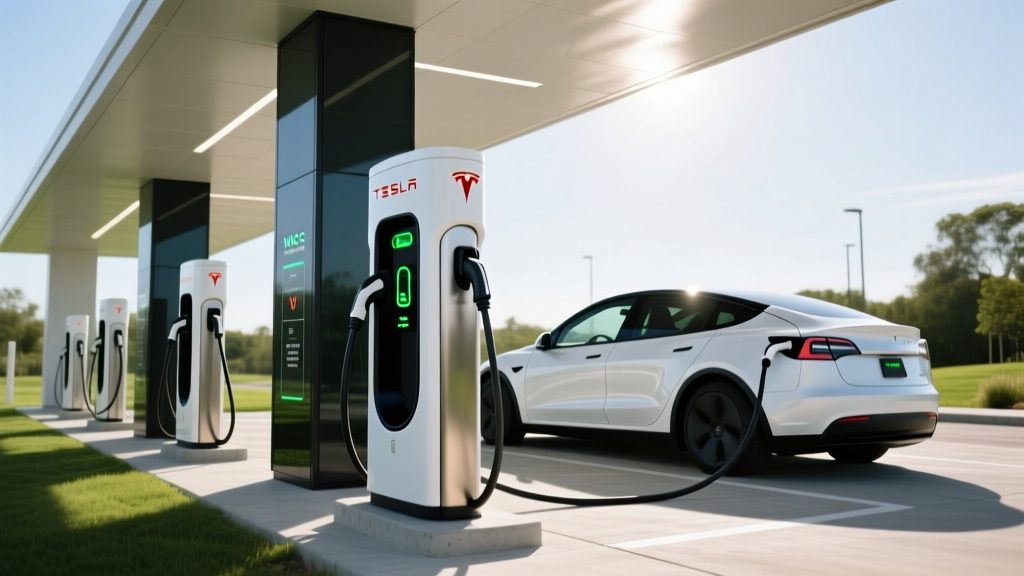
- Tesla Supercharger: 30,000+ ports, V3 (250 kW) and V4 (up to 350 kW); now open to non-Tesla EVs via NACS or Magic Dock adapter. Uptime consistently above 98% per Tesla's network data.
- Electrify America: 4,000+ ports, 150 kW and 350 kW units; CCS and NACS connectors on newer stations. Variable reliability — check PlugShare for station-specific reviews.
- EVgo: 3,500+ ports, mix of 50 kW, 100 kW, and 350 kW; strong urban coverage.
- ChargePoint: Expanding DC network with 175 kW and 400 kW Express Plus cabinets.
When using public DC fast chargers, preconditioning your battery matters. Most EVs with navigation-integrated routing (Tesla, Hyundai/Kia, Ford) will automatically warm or cool the battery to optimal temperature as you approach a charger, reducing taper and improving peak charge acceptance. Without preconditioning — especially in cold weather — you may see peak rates 30–50% below the station's rated output.
Cost to Charge: Home vs Public DC vs Gas
The economics of EV charging vary enormously depending on where and when you plug in. Here's a realistic breakdown:
| Charging Scenario | Typical $/kWh | Cost to Add 200 Miles* | Cost per Mile |
|---|---|---|---|
| Home Level 2 (off-peak utility rate) | $0.08–$0.14 | $5.60–$9.80 | $0.028–$0.049 |
| Home Level 2 (standard residential rate) | $0.13–$0.20 | $9.10–$14.00 | $0.046–$0.070 |
| Public Level 2 (workplace/destination) | $0.15–$0.30 | $10.50–$21.00 | $0.053–$0.105 |
| Public DC Fast (EA, EVgo, etc.) | $0.30–$0.55 | $21.00–$38.50 | $0.105–$0.193 |
| Tesla Supercharger (varies by location/time) | $0.25–$0.40 | $17.50–$28.00 | $0.088–$0.140 |
| Gasoline (25 MPG combined, $3.50/gal) | $3.50/gal | $28.00 | $0.140 |
| Gasoline (25 MPG combined, $4.50/gal) | $4.50/gal | $36.00 | $0.180 |
*Based on a vehicle consuming 28 kWh per 100 miles (~3.5 mi/kWh), representative of mid-size crossovers like the Tesla Model Y, Hyundai Ioniq 5, and Ford Mustang Mach-E. Source: fueleconomy.gov EPA data.
The takeaway is clear: home charging at off-peak rates delivers fuel costs at roughly one-quarter to one-third the price of gasoline. Public DC fast charging, while convenient for road trips, can approach or even exceed gasoline costs at peak pricing. This is why the vast majority of EV owners do 80–90% of their charging at home and treat DC fast chargers as a road-trip necessity, not a daily routine.
Recommended DC and Level 2 Charging Equipment for 2026
For most EV owners, the practical home setup is a high-quality Level 2 charger supplemented by public DC fast charging on trips. If you're exploring residential DC, options exist but at a premium. Here are specific, vetted recommendations:
ChargePoint Home Flex (Level 2)
- Power output: Up to 12 kW (50A) on a 60A circuit; configurable down to 16A for lower-capacity panels
- Connector: J1772 (NACS adapter included in 2026 revision)
- Cable length: 23 feet
- Smart features: Wi-Fi, app scheduling, utility demand-response integration, Alexa/Google Home
- Price: ~$550
- Best for: Most homeowners; flexible amperage accommodates older panels
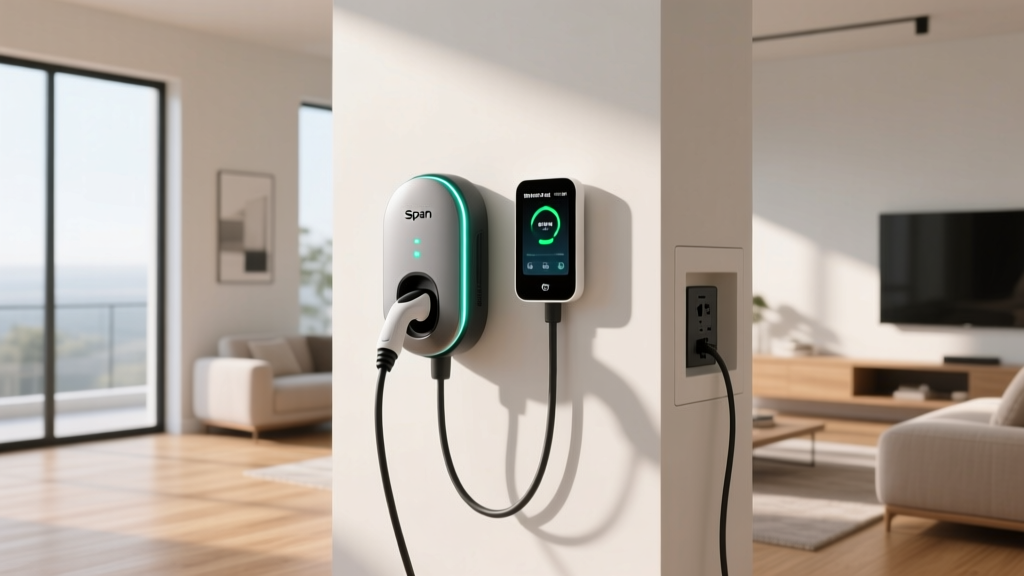
Tesla Wall Connector (Level 2)
- Power output: Up to 11.5 kW (48A) on a 60A circuit
- Connector: NACS native (J1772 adapter available)
- Cable length: 24 feet
- Smart features: Wi-Fi, power sharing between multiple units, OTA updates, integrated with Tesla app
- Price: ~$475
- Best for: Tesla owners and NACS-equipped Ford/GM/Rivian drivers
Emporia Level 2 Smart Charger
- Power output: Up to 11.5 kW (48A) on a 60A circuit
- Connector: J1772 (NACS adapter available)
- Cable length: 24 feet
- Smart features: Energy monitoring, solar integration, time-of-use scheduling, load management
- Price: ~$400
- Best for: Budget-conscious buyers, solar-equipped homes
Wallbox Quasar 2 (Residential DC)
- Power output: Up to 22 kW DC (bidirectional V2H capable)
- Connector: CCS1 (NACS version announced for late 2026)
- Cable length: 16 feet
- Smart features: V2H/V2G, app control, solar integration, energy arbitrage
- Price: ~$7,500–$9,000 (equipment only)
- Best for: V2H early adopters, commercial micro-fleet, high-turnaround use cases
Safety, Code Compliance, and Installation Best Practices
EV charging installation is governed by the National Electrical Code (NEC) Article 625 and local amendments. Key requirements that protect you and your home:
- Dedicated circuit: Your EV charger must have its own breaker — no sharing with outlets, lights, or appliances. This prevents overloading and tripped breakers during sustained high-draw sessions.
- GFCI protection: NEC 2020 and later requires GFCI (Ground Fault Circuit Interrupter) protection for all EV charging outlets. Hardwired units typically have GFCI built into the charger itself. If you're using a plug-in (NEMA 14-50) outlet, the breaker must be GFCI-rated — these cost $50–$80 more than standard breakers.
- Outdoor rating: If your charger is installed outdoors (garage-exterior wall, carport, driveway post), the unit must carry a NEMA 4 or NEMA 4X rating for water and dust ingress. All recommended units above meet this standard.
- Permit and inspection: Nearly all jurisdictions require an electrical permit for EV charger installation. The inspection verifies wire gauge, breaker sizing, grounding, and GFCI compliance. Skipping the permit risks insurance claim denial in the event of an electrical fire.
- Cable management: For outdoor installs, a cable holster or retractor prevents tripping hazards and protects the connector from ground contact and moisture.
Hire a licensed electrician who has specific EV charger installation experience. Ask whether they perform a full NEC Article 220 load calculation before recommending a circuit size — if they skip this step, find someone else. Per the National Highway Traffic Safety Administration, properly installed home EV charging equipment has an excellent safety record, but improper wiring is the primary risk factor.
Frequently Asked Questions
How much does it cost to install a home EV charger?
For a Level 2 charger (the standard home setup), expect $900–$2,550 total if your electrical panel has sufficient capacity. This includes $350–$750 for the charger, $500–$1,500 for electrician labor, and $50–$300 for permits. If your home needs a panel upgrade from 100A to 200A service, add $1,500–$4,000. Residential DC chargers (10–22 kW) run $7,500–$15,000+ installed due to equipment cost and heavier electrical requirements.
How fast will each charging level add range?
Level 1 (120V) adds 3–5 miles per hour. Level 2 (240V, 48A) adds roughly 35–45 miles per hour for a typical crossover. DC fast charging at 150 kW adds approximately 500–700 miles per hour of sustained charging (realistically, 150–200 miles in a 20-minute session due to taper). At 350 kW with a compatible vehicle, you can add 200+ miles in 15–18 minutes.
Which connector/charger is compatible with my EV?
Check your vehicle's charge port. If it's a 2025+ Tesla, Ford, GM, Rivian, Volvo, or select Hyundai/Kia models, you have NACS. If it's a 2024 or earlier VW, Hyundai, Kia, or BMW, you likely have CCS1. The Nissan Leaf uses CHAdeMO. For home Level 2 charging, all non-Tesla EVs use J1772 (or NACS on newer models); adapters are widely available. For public DC charging, confirm your port type and check whether the station offers your connector — the PlugShare and A Better Routeplanner apps show connector availability per station.
How much does charging cost per mile vs gas?
Home charging at average US electricity rates ($0.16/kWh) costs roughly $0.045–$0.055 per mile for a mid-size EV — about one-third the cost of a 25 MPG gas car at $3.50/gallon ($0.14/mile). Public DC fast charging at $0.40/kWh costs ~$0.11–$0.13 per mile, which is competitive with gasoline. The savings are maximized when you charge at home, especially on time-of-use plans with off-peak rates below $0.10/kWh.
What electrical upgrades might I need?
The most common upgrade is a panel capacity increase from 100A to 200A, required when your home's total calculated load (existing appliances plus the new 40–60A EV circuit) exceeds the panel's rating. Other potential needs: replacing a Federal Pacific or Zinsco panel (known fire hazards, no longer code-compliant), adding a sub-panel if the main panel is full, or upgrading the utility service drop for 400A panels. A licensed electrician's load calculation will identify exactly what's required before any work begins.
Is it worth installing a residential DC fast charger at home?
For most owners, no — a Level 2 charger at $1,000–$2,500 installed covers daily needs fully, and public DC stations handle road trips. Residential DC chargers ($7,500–$15,000 installed) make sense if you need sub-2-hour full charges between shifts, run a home-based fleet, or want V2H backup power capability. The technology is viable but remains a niche investment in 2026.
Whether you're setting up a Level 2 home station or mapping DC fast charger routes for your next road trip, the data is clear: plan your charging around your routine, not the other way around. Home Level 2 handles daily life at the lowest cost, and DC EV chargers on public networks deliver the speed you need when distance demands it.