If you're shopping for an EV or planning your first road trip, you've probably encountered the term DC CCS charger — and wondered how it fits into the broader charging ecosystem alongside Level 1 wall outlets and Level 2 home stations. This guide breaks down every charging level with exact kW figures, miles-per-hour rates, real installation costs, and connector compatibility so you can plan your charging with confidence, not guesswork.
Understanding the Three EV Charging Levels
Before diving into DC CCS chargers specifically, it's essential to understand the three charging tiers and what each delivers. The critical distinction in EV charging is between kW (kilowatts — the rate of power delivery, like water pressure) and kWh (kilowatt-hours — the total energy stored in your battery, like gallons in a tank). A charger's kW rating tells you how fast it can push energy; your battery's kWh capacity tells you how much it holds.
| Level | Voltage | Typical Power (kW) | Miles of Range Added per Hour | Best Use Case |
|---|---|---|---|---|
| Level 1 | 120V AC | 1.0–1.4 kW | 3–5 mi/hr | Overnight top-up, PHEV owners, low-mileage drivers |
| Level 2 | 240V AC | 3.3–19.2 kW | 12–75 mi/hr | Daily home charging, workplace, destination charging |
| DC Fast (CCS/NACS) | 200–900V DC | 50–350 kW | 150–1,000+ mi/hr (peak) | Road trips, rapid top-ups, fleet turnaround |
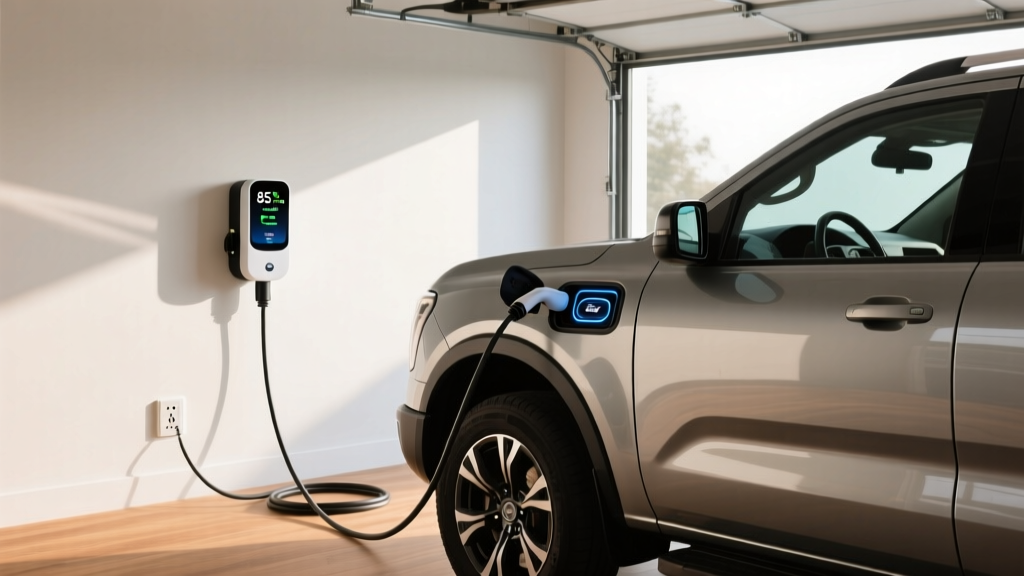
Level 1 uses a standard household outlet and works fine for plug-in hybrids with small batteries (10–20 kWh) or BEV owners who drive under 30 miles daily. Level 2 is the practical standard for home BEV charging. DC fast charging — including DC CCS chargers — bypasses the vehicle's onboard AC-to-DC converter and feeds direct current straight to the battery, which is why it can deliver dramatically higher power levels.
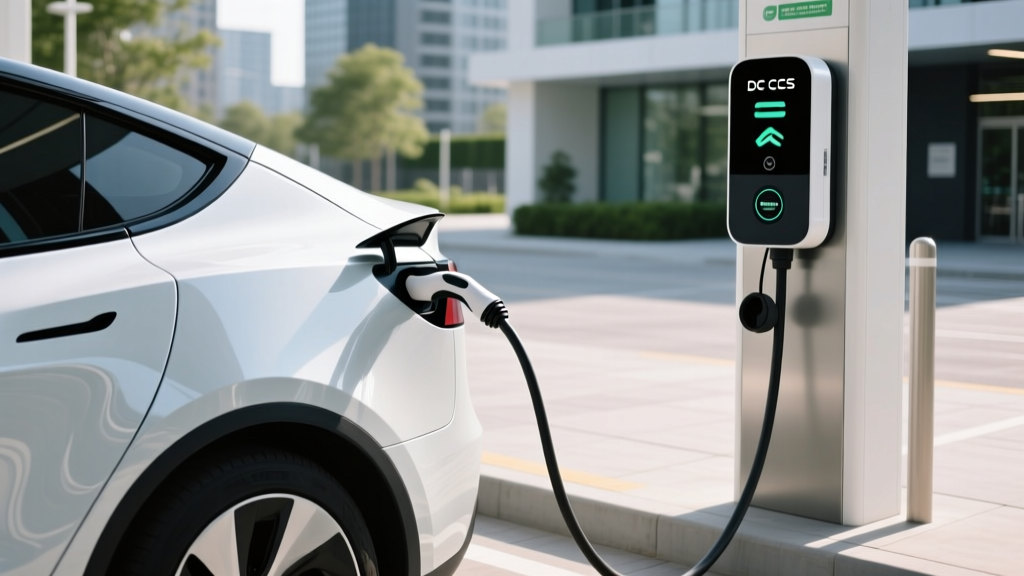
DC CCS Chargers: What CCS1 Is and How It Works
The Combined Charging System (CCS) — specifically CCS1 in North America — adds two DC pins below the standard J1772 AC connector, creating a single port that handles both Level 2 AC and DC fast charging. When you plug into a DC CCS charger at an Electrify America, EVgo, or Ionity station, those two lower pins carry high-voltage DC directly to your battery management system.
As of the 2025–2026 model years, CCS1 remains the native fast-charging connector on vehicles from Volkswagen, Hyundai/Kia, BMW, Ford (pre-2025 models), GM, Rivian (pre-2025), and most European brands sold in the US. However, the industry is rapidly shifting toward the North American Charging Standard (NACS), pioneered by Tesla and now adopted by Ford, GM, Rivian, Hyundai, and others. Many 2025–2026 models ship with NACS ports natively, while CCS1 vehicles can access Tesla Superchargers using a Tesla-approved CCS-to-NACS adapter (typically $200–$250).
Peak vs. Sustained Charging: The Curve Reality
A DC CCS charger rated at 150 kW does not deliver 150 kW for the entire session. Battery chemistry and thermal limits create a charging curve: power peaks at low states of charge (typically 10–30% SoC) and tapers progressively above 50–60%, slowing dramatically past 80%. This is why manufacturers quote 10–80% charge times rather than 0–100%.
For example, a Hyundai Ioniq 5 with its 77.4 kWh battery on a 350 kW DC CCS charger peaks at roughly 238 kW around 15% SoC, tapering to ~100 kW by 60% and ~50 kW by 80%, yielding a 10–80% time of approximately 18 minutes. That same session on a 50 kW DC CCS charger takes roughly 65–75 minutes because it never exceeds the 50 kW cap. Always plan road-trip stops around the 10–80% window — charging past 80% at a DC fast station is both slow and expensive.
Which Connector Is Compatible with My EV?
Connector compatibility depends on your vehicle's model year and manufacturer. Here's the current landscape for 2025–2026 vehicles sold in North America:
| Connector | Native Vehicles | AC Charging | DC Fast Charging |
|---|---|---|---|
| NACS (Tesla) | Tesla (all), Ford (2025+), GM (2025+), Rivian (2025+), Hyundai/Kia (2026+), Volvo (2025+) | Yes (native) | Yes (native at Superchargers) |
| CCS1 | VW ID.4, Hyundai Ioniq 5 (2022–2025), Kia EV6 (2022–2025), BMW iX, older Ford/GM EVs | Yes (J1772 portion) | Yes (at Electrify America, EVgo, etc.) |
| CHAdeMO | Nissan Leaf (all years), Mitsubishi Outlander PHEV (older) | Yes (J1772) | Yes (declining network support) |
Adapter strategy: If you own a CCS1 vehicle, a CCS-to-NACS adapter unlocks access to 25,000+ Tesla Superchargers. If you own a NACS vehicle, a NACS-to-CCS adapter lets you use Electrify America and other CCS networks. CHAdeMO owners face the most limited DC fast-charging future, as new station buildouts overwhelmingly favor CCS1 and NACS.
Home Charging Installation: Costs, Electrical Requirements, and Panel Upgrades
While DC CCS chargers are public-infrastructure equipment (you won't install a 150 kW DC unit at home), your home Level 2 station is where 80–90% of your charging will happen. Here's what a proper Level 2 home installation requires.
Electrical Requirements
A typical Level 2 home charger runs on a 240V dedicated circuit, similar to an electric dryer or oven. Common configurations include:
- 40A circuit / 32A continuous — delivers 7.7 kW, suitable for most EVs and the most common residential setup
- 50A circuit / 40A continuous — delivers 9.6 kW, faster charging for larger batteries (100+ kWh trucks/SUVs)
- 60A circuit / 48A continuous — delivers 11.5 kW, requires robust panel capacity and thicker wire
The National Electrical Code (NEC) requires EV circuits to be rated at 125% of the continuous load, which is why a 32A charger needs a 40A breaker. Your charger should be hardwired or use a NEMA 14-50 receptacle, installed by a licensed electrician with a permit.
Installation Cost Breakdown
| Component | Simple Install (panel nearby) | Moderate Install (50–80 ft run) | Complex Install (panel upgrade needed) |
|---|---|---|---|
| Level 2 Charger (equipment) | $300–$700 | $300–$700 | $300–$700 |
| Electrician labor | $300–$600 | $600–$1,500 | $1,000–$2,500 |
| Permit & inspection | $50–$200 | $50–$200 | $50–$200 |
| Electrical panel upgrade (if needed) | — | — | $1,500–$4,000 |
| Total | $650–$1,500 | $950–$2,400 | $2,850–$7,400 |
The panel upgrade gotcha: Homes built before 1990 often have 100A or even 60A service panels. Adding a 40A EV circuit to a 100A panel that's already near capacity (electric range, dryer, HVAC) may require upgrading to a 200A panel — the single largest cost variable in any EV charger installation. Before purchasing a charger, have an electrician perform a load calculation on your existing panel. Some utilities offer rebates of $500–$1,500 for panel upgrades tied to EV adoption.
Safety and Code Considerations
Every home EV charger installation should meet these requirements per the NEC (Article 625) and local code:
- Dedicated circuit: The EV charger must have its own breaker — never share a circuit with other appliances
- GFCI protection: Required for outdoor receptacles (NEMA 14-50); hardwired units often have built-in ground-fault protection
- Outdoor rating: If mounted outside, the charger must carry a NEMA 4 or NEMA 4X rating for weather resistance
- Proper wire gauge: 6 AWG copper for 50A circuits, 8 AWG for 40A — undersized wire creates a fire hazard
- Permit and inspection: Required in virtually all US jurisdictions; skipping it risks insurance claim denial if a fire occurs
What Does Charging Cost per Mile vs. Gas?
Charging costs vary enormously depending on where and when you charge. Here's a realistic comparison using a mid-size EV averaging 3.0 miles per kWh (roughly 112 MPGe combined, similar to a Hyundai Ioniq 5 or Tesla Model Y):
| Scenario | Cost per kWh | Cost per Mile (3.0 mi/kWh) | Annual Cost (12,000 mi) |
|---|---|---|---|
| Home charging (off-peak utility rate) | $0.08–$0.13 | $0.027–$0.043 | $320–$520 |
| Home charging (standard residential rate) | $0.14–$0.20 | $0.047–$0.067 | $560–$800 |
| Public Level 2 (workplace/shopping) | $0.20–$0.35 | $0.067–$0.117 | $800–$1,400 |
| DC fast charging (public, peak) | $0.35–$0.55 | $0.117–$0.183 | $1,400–$2,200 |
| Gasoline vehicle (28 MPG, $3.40/gal) | — | $0.121 | $1,457 |
The takeaway: home charging at off-peak rates is 3–4× cheaper per mile than gasoline. Even public DC fast charging at premium rates is roughly cost-competitive with gas. The savings compound dramatically for high-mileage drivers. According to the US Department of Energy's fueleconomy.gov, the average EV driver pays the equivalent of $1.20–$1.50 per gallon when charging primarily at home.
Recommended Home Level 2 Chargers (2025–2026)
While DC CCS chargers are public infrastructure, your home Level 2 unit is the most important charging equipment you'll buy. Here are top picks with exact specs:
Emporia Vue Level 2 Smart Charger
- Power output: 48A (11.5 kW on 60A circuit) or 40A (9.6 kW on 50A circuit)
- Connector: J1772 (NACS adapter included with newer units)
- Cable length: 24 ft
- Smart features: Wi-Fi, energy monitoring, solar integration, scheduled charging
- Price: $349–$399
- Best for: Budget-conscious buyers wanting full smart features
ChargePoint Home Flex
- Power output: Configurable 16A–50A (3.8–12.0 kW), adjustable to match your circuit
- Connector: J1772 (NACS version available 2025)
- Cable length: 23 ft
- Smart features: Wi-Fi, app scheduling, Alexa integration, detailed energy reports
- Price: $549–$649
- Best for: Flexibility — adjustable amperage avoids panel upgrades in older homes
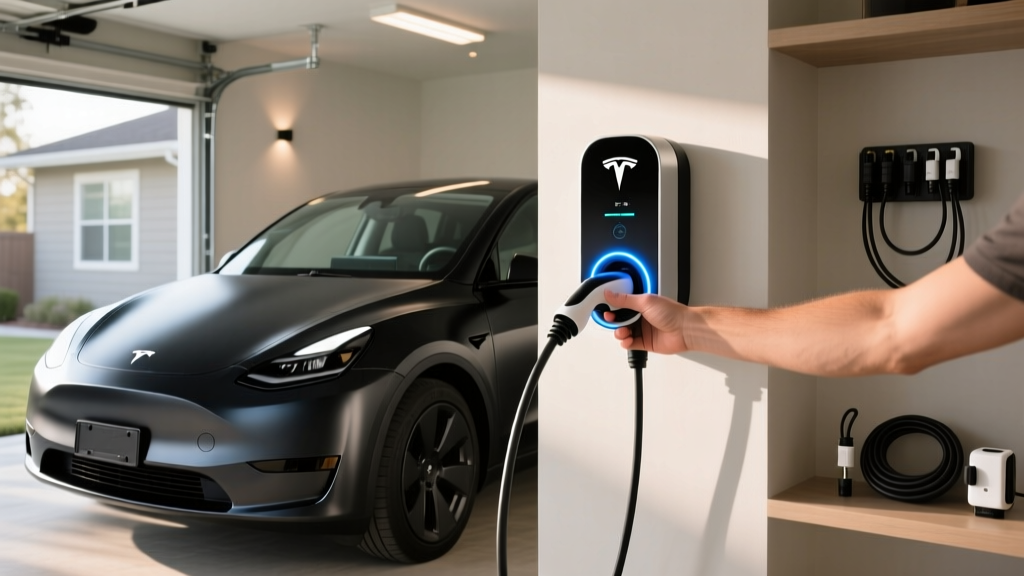
Tesla Wall Connector (J1772 or NACS)
- Power output: 48A (11.5 kW on 60A circuit)
- Connector: NACS native or J1772 version
- Cable length: 24 ft
- Smart features: Wi-Fi, OTA updates, power sharing (link two units on one circuit), Tesla app
- Price: $450–$500
- Best for: Tesla owners and those wanting premium build quality with power-sharing
Charging Time Examples: 10–80% by Battery Size
Real charging times depend on the vehicle's peak acceptance rate and the charger's output. Here are representative 10–80% times for common battery sizes:
| Battery Size | Example Vehicle | 50 kW DC CCS | 150 kW DC CCS | 350 kW DC CCS/NACS |
|---|---|---|---|---|
| 58 kWh (usable) | VW ID.4 Standard | ~55 min | ~30 min | ~28 min (135 kW peak) |
| 77.4 kWh | Hyundai Ioniq 5 | ~73 min | ~25 min | ~18 min (238 kW peak, 800V) |
| 82 kWh | BMW iX xDrive50 | ~78 min | ~31 min | ~31 min (150 kW peak) |
| 100 kWh | GMC Sierra EV / Hummer EV | ~95 min | ~38 min | ~28 min (350 kW peak, 800V) |
| 123 kWh | Lucid Air Grand Touring | ~115 min | ~42 min | ~22 min (300+ kW peak, 900V) |
Note that vehicles with 800V+ architectures (Hyundai Ioniq 5, Kia EV6, Porsche Taycan, Lucid Air, GM Ultium trucks) accept higher sustained power on 350 kW chargers than 400V vehicles. On a 50 kW DC CCS charger, all vehicles charge at roughly the same rate because the charger is the bottleneck, not the vehicle.
Frequently Asked Questions
How much does it cost to install a home EV charger?
A straightforward Level 2 home charger installation on an existing 200A panel with a short wire run costs $650–$1,500 total (equipment + electrician + permit). A moderate installation with a 50–80 ft wire run costs $950–$2,400. If your home needs an electrical panel upgrade from 100A to 200A service, total costs can reach $2,850–$7,400. Always get a load calculation from a licensed electrician before purchasing equipment.
How fast will each charging level add range?
Level 1 (120V) adds 3–5 miles per hour. Level 2 (240V, 40A) adds roughly 28–32 miles per hour for a typical EV. Level 2 at 48A adds 35–40 miles per hour. DC fast charging at 150 kW can add 150–200 miles in 15–20 minutes at peak rate, though the rate tapers as the battery fills.
Which connector/charger is compatible with my EV?
Check your vehicle's charge port. CCS1 is standard on VW, BMW, and 2022–2025 Hyundai/Kia EVs. NACS is standard on all Teslas and 2025+ Ford, GM, Rivian, and Volvo EVs. CHAdeMO is found on the Nissan Leaf. Adapters exist to cross between CCS1 and NACS ($200–$250). For home Level 2 charging, all vehicles use J1772 or NACS.
How much does charging cost per mile vs gas?
Home charging at off-peak rates costs $0.03–$0.04 per mile for a typical EV — roughly 3–4× cheaper than a 28 MPG gas car at $3.40/gallon ($0.12/mile). Even public DC fast charging at $0.45/kWh costs $0.15/mile, which is comparable to gasoline. The savings are greatest for drivers who charge primarily at home on time-of-use utility plans.
What electrical upgrades might I need?
The most common upgrade is a panel upgrade from 100A to 200A service ($1,500–$4,000), needed in older homes where the existing panel lacks capacity for a dedicated 40–60A EV circuit. Some homes may also need a new conduit run from the panel to the garage or exterior wall. In rare cases, the utility may need to upgrade the service drop to the home. A licensed electrician's load calculation will determine exactly what's required — see NEC Article 625 for the relevant electrical code provisions.