Understanding Cybertruck Mile Range and Charging Fundamentals
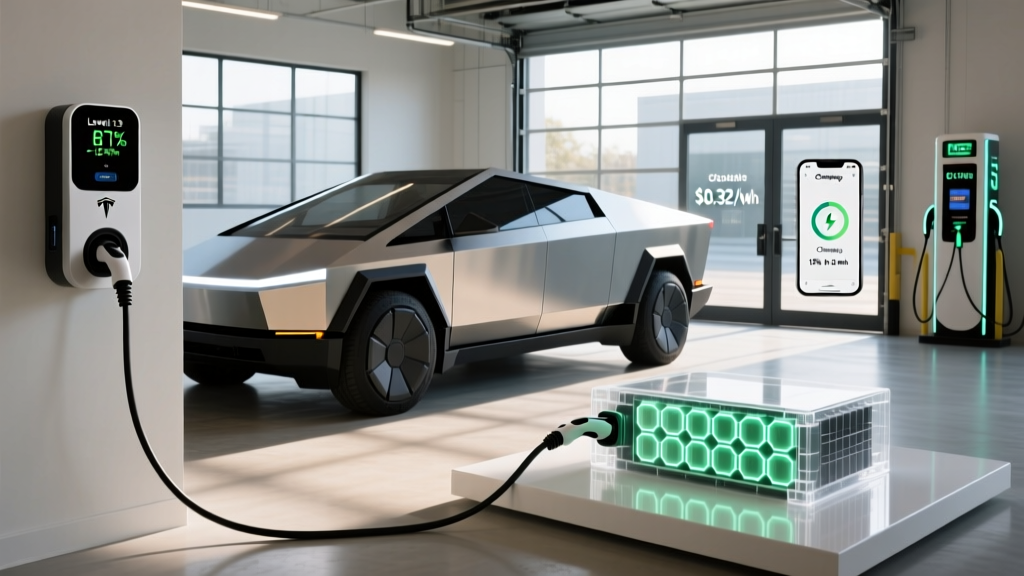
The Tesla Cybertruck's EPA-estimated range varies by trim: 340 miles for the AWD Dual Motor, 320 miles for the Cyberbeast, and up to 470 miles with the optional Range Extender battery pack. However, real-world Cybertruck mile range typically falls 10-15% below EPA estimates due to its angular aerodynamics, heavy payload capacity, and large 20-inch wheels. Expect 290-310 miles in mixed driving, dropping to 250-270 miles at sustained highway speeds above 70 mph or in cold weather below 40°F.
The Cybertruck uses a 123 kWh usable battery pack (NMC chemistry) in standard trims, with the Range Extender adding a secondary pack. To maintain optimal battery health and achieve the advertised Cybertruck mile range, Tesla recommends charging to 80% for daily use and 100% only before long trips. This means your practical daily range is closer to 270 miles (AWD) or 375 miles (with Range Extender).
Charging Levels: Speed, Power, and Range Added Per Hour
EV charging is measured in kilowatts (kW), which represents power delivery rate—not to be confused with kilowatt-hours (kWh), which measures total energy capacity. The Cybertruck's 123 kWh battery determines how much energy it stores; the charger's kW rating determines how quickly that energy flows.
| Charging Level | Voltage/Amps | Power (kW) | Miles Added/Hour | 10-80% Time (123 kWh) | Best For |
|---|---|---|---|---|---|
| Level 1 (120V) | 120V/12A | 1.4 kW | 3-4 mi/hr | 60+ hours | Emergency/trickle only |
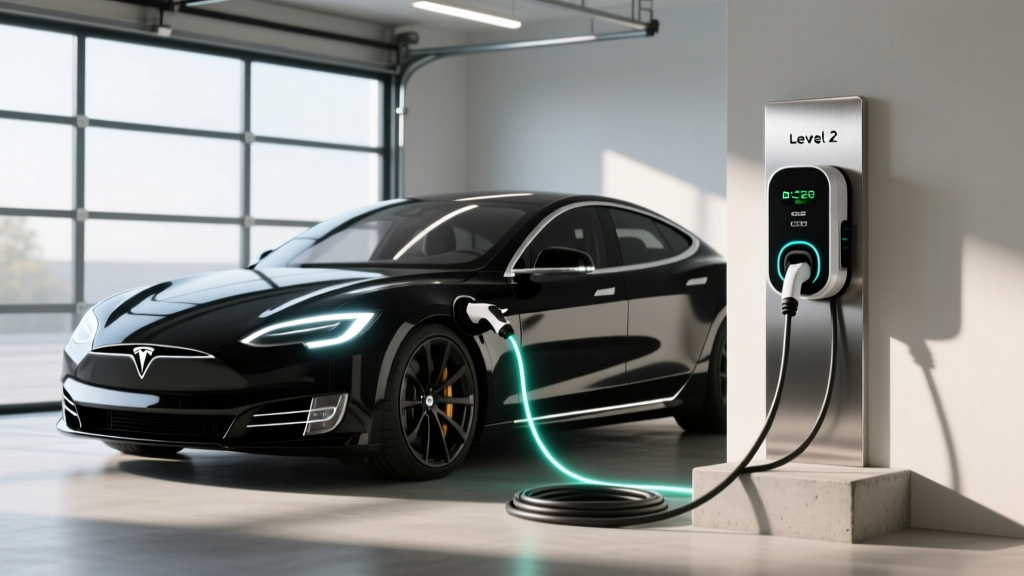
| Level 2 (240V) | 240V/48A | 11.5 kW | 30-35 mi/hr | 7-8 hours | Daily home charging |
| DC Fast (Supercharger V3) | 400-800V DC | 250 kW peak | 200+ mi in 15 min | 15-20 minutes | Road trips/quick top-ups |
| DC Fast (V4 Supercharger) | 800V DC | 350 kW peak | 250+ mi in 15 min | 12-15 minutes | Latest Tesla stations |
Level 1 charging using a standard 120V outlet adds only 3-4 miles per hour—impractical for the Cybertruck's large battery. Level 2 home charging at 240V is the practical daily solution, adding 30-35 miles per hour and fully replenishing overnight. DC fast charging peaks at 250 kW on Tesla V3 Superchargers (350 kW on newer V4 stations), but sustained rates taper significantly above 50% state of charge to protect battery longevity.
Home Charger Installation: Electrical Requirements and Costs
Installing a Level 2 home charger for your Cybertruck requires a dedicated 240V circuit, typically 60 amps to support 48A continuous charging (EVs draw 80% of circuit capacity for safety). The Tesla Wall Connector, ChargePoint Home Flex, and Enel X JuiceBox are popular choices, each with distinct features.
Electrical Panel and Circuit Requirements
Your home's electrical panel must have sufficient capacity for a new 60A circuit. Most modern homes with 200A service can accommodate this, but older homes with 100A panels often require a panel upgrade—a $1,500-$3,000 expense. A licensed electrician will perform a load calculation to verify capacity and determine if an upgrade is necessary.
The circuit must use 6 AWG copper wire for runs up to 50 feet, with 4 AWG required for longer distances to prevent voltage drop. The charger requires a NEMA 14-60 outlet (or hardwired connection, which some jurisdictions prefer for safety). Outdoor installations demand NEMA 4-rated enclosures and GFCI protection per NEC 2023 code updates.
| Component | Cost Range | Notes |
|---|---|---|
| Level 2 Charger Equipment | $400-$750 | Tesla Wall Connector, ChargePoint, Enel X |
| Electrician Labor (standard install) | $600-$1,200 | 2-4 hours, panel to garage/carport |
| Permit Fees | $50-$200 | Varies by municipality |
| Electrical Panel Upgrade (if needed) | $1,500-$3,000 | 100A to 200A service upgrade |
| Additional Wiring (long runs) | $200-$600 | Over 50 feet from panel |
| Total (standard install) | $1,050-$2,150 | Without panel upgrade |
| Total (with panel upgrade) | $2,550-$5,150 | Older homes with 100A service |
Federal Tax Credit for Home Charging Equipment
The Alternative Fuel Vehicle Refueling Property Credit (IRS Form 8911) covers 30% of home charger equipment and installation costs, up to $1,000. This credit applies to both the charger hardware and electrician labor. Eligibility requires installation at your primary residence in a non-urban area (census tract criteria apply). Check IRS guidelines for current-year qualification rules, as income caps and geographic restrictions may apply.
Charging Equipment Recommendations for Cybertruck Owners
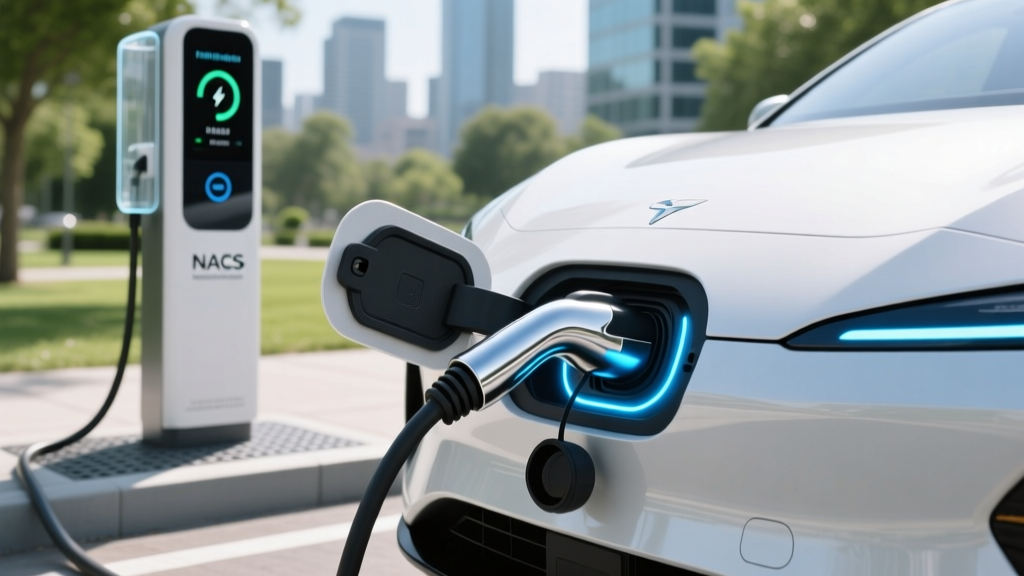
The Cybertruck's NACS (North American Charging Standard) connector is native to Tesla's ecosystem, eliminating adapter needs at Superchargers. However, third-party Level 2 chargers now offer NACS compatibility or include adapters. Here are three proven options:
Tesla Wall Connector (NACS Native)
- Power Output: Up to 11.5 kW (48A at 240V)
- Connector: NACS (Tesla proprietary)
- Cable Length: 24 feet
- Smart Features: Wi-Fi, power sharing (multiple units), load balancing
- Price: $475
- Best For: Tesla-only households, seamless Supercharger integration
ChargePoint Home Flex (NACS Adapter Included)
- Power Output: Up to 12 kW (50A at 240V, adjustable)
- Connector: J1772 with NACS adapter included
- Cable Length: 23 feet
- Smart Features: Wi-Fi, scheduling, energy tracking, Alexa integration
- Price: $699
- Best For: Multi-EV households, detailed app analytics
Enel X JuiceBox Pro 48 (NACS Adapter Available)
- Power Output: 11.5 kW (48A at 240V)
- Connector: J1772 (NACS adapter sold separately, ~$150)
- Cable Length: 25 feet
- Smart Features: Wi-Fi, load management, utility demand response
- Price: $599
- Best For: Utility rebate programs, commercial installations
All three chargers support the Cybertruck's 11.5 kW onboard charger limit. The Tesla Wall Connector offers the cleanest integration, while ChargePoint and Enel X provide better cross-brand compatibility if you own non-Tesla EVs.
Connector Compatibility: NACS, CCS, and Adapter Needs
The Cybertruck uses the NACS connector for AC Level 2 and DC fast charging. Tesla opened this standard to other manufacturers in 2024, and by 2026, most new EVs sold in North America include NACS ports. However, public charging infrastructure still includes CCS1 and legacy CHAdeMO connectors, requiring adapters for Cybertruck owners.
| Connector Type | Compatibility | Adapter Needed | Where You'll Find It |
|---|---|---|---|
| NACS (Tesla) | Native | None | Tesla Superchargers, home chargers, newer public stations |
| CCS1 | Requires adapter | Tesla CCS Adapter ($175) | Electrify America, EVgo, ChargePoint DC fast stations |
| CHAdeMO | Requires adapter | Third-party adapter (~$300) | Legacy Nissan Leaf stations (phasing out) |
| J1772 (Level 2) | Requires adapter | Tesla Mobile Connector ($200) or included adapter | Public Level 2 stations, workplaces, hotels |
Tesla sells an official CCS1 adapter for $175, enabling access to non-Tesla DC fast networks like Electrify America. The Tesla Mobile Connector bundle ($200) includes NACS, J1772, and NEMA 14-50 plugs for versatile Level 1 and Level 2 charging. For CHAdeMO stations (increasingly rare), third-party adapters exist but are expensive and less reliable—avoid relying on these for regular charging.
Charging Costs: Home vs. Public vs. Gas Comparison
The Cybertruck's efficiency averages 2.0-2.2 kWh per mile (50-55 MPGe combined), making it one of the least efficient EVs due to its weight (6,600-6,800 lbs) and aerodynamic drag. Charging costs vary dramatically between home and public networks.
| Charging Scenario | Cost per kWh | Cost per Mile | Full Charge (0-100%) | Annual Cost (12,000 mi) |
|---|---|---|---|---|
| Home (off-peak utility rate) | $0.12-$0.18 | $0.024-$0.040 | $15-$22 | $288-$480 |
| Home (peak utility rate) | $0.25-$0.35 | $0.050-$0.077 | $31-$43 | $600-$924 |
| Public Level 2 (ChargePoint, EVgo) | $0.30-$0.50 | $0.060-$0.110 | $37-$62 | $720-$1,320 |
| DC Fast (Tesla Supercharger) | $0.28-$0.36 | $0.056-$0.079 | $34-$44 | $672-$948 |
| DC Fast (Electrify America, EVgo) | $0.40-$0.60 | $0.080-$0.132 | $49-$74 | $960-$1,584 |
| Gas Truck (20 MPG, $3.50/gal) | N/A | $0.175 | N/A | $2,100 |
Home charging during off-peak hours delivers the lowest cost per mile—roughly $0.03 compared to $0.175 for a comparable gas truck (assuming 20 MPG and $3.50/gallon). This translates to $1,600-$1,800 in annual fuel savings for 12,000 miles of driving. However, exclusive reliance on public DC fast charging erodes these savings, with costs approaching $0.08-$0.13 per mile.
Tesla Superchargers average $0.28-$0.36 per kWh in 2026, with pricing varying by location and time of day. Third-party networks like Electrify America and EVgo charge $0.40-$0.60 per kWh for non-members, with subscription plans reducing rates by 20-30%. For cost optimization, install a home Level 2 charger and use time-of-use utility rates to charge overnight.
Safety, Code Compliance, and Best Practices
EV charger installation must comply with the National Electrical Code (NEC) and local building codes. Key requirements include:
- Dedicated Circuit: The charger must have its own 60A breaker—no sharing with other appliances
- GFCI Protection: Required for outdoor installations and garages per NEC 2023 updates
- Outdoor Rating: NEMA 4 enclosure for weather resistance if installed outside
- Permit and Inspection: Most jurisdictions require an electrical permit and final inspection
- Load Management: Some utilities require smart chargers with demand response capability
Never use extension cords or adapters to circumvent proper installation. The Cybertruck's high charging current (48A continuous) demands properly sized wiring and breakers to prevent overheating. A licensed electrician will ensure compliance and provide documentation for insurance and warranty purposes.
Frequently Asked Questions
How much does it cost to install a home EV charger for the Cybertruck?
A standard Level 2 installation costs $1,050-$2,150, including the charger ($400-$750), electrician labor ($600-$1,200), and permits ($50-$200). Older homes requiring a panel upgrade (100A to 200A service) add $1,500-$3,000, bringing the total to $2,550-$5,150. The federal Alternative Fuel Vehicle Refueling Property Credit covers 30% of costs up to $1,000, reducing your net expense.
How fast will each charging level add range to the Cybertruck?
Level 1 (120V) adds 3-4 miles per hour—impractical for daily use. Level 2 (240V, 48A) adds 30-35 miles per hour, fully charging the 123 kWh battery in 7-8 hours. DC fast charging at Tesla Superchargers (250-350 kW) adds 200+ miles in 15 minutes, with 10-80% taking 15-20 minutes. Charging speed tapers significantly above 50% state of charge to protect battery health.
Which connector and charger is compatible with my Cybertruck?
The Cybertruck uses the NACS connector natively, compatible with Tesla Superchargers and the Tesla Wall Connector. For non-Tesla DC fast stations (CCS1), purchase the Tesla CCS Adapter ($175). For public Level 2 stations (J1772), use the Tesla Mobile Connector ($200) or the included J1772 adapter. Recommended home chargers include the Tesla Wall Connector ($475), ChargePoint Home Flex ($699), and Enel X JuiceBox Pro 48 ($599).
How much does charging the Cybertruck cost per mile vs. a gas truck?
Home charging during off-peak hours costs $0.024-$0.040 per mile, while public DC fast charging ranges from $0.056-$0.132 per mile. A comparable gas truck (20 MPG, $3.50/gallon) costs $0.175 per mile. Annual fuel costs for 12,000 miles: $288-$480 (home off-peak), $672-$1,584 (public DC fast), vs. $2,100 (gas). Home charging delivers $1,600-$1,800 in annual savings.
What electrical upgrades might I need for a Cybertruck home charger?
A Level 2 charger requires a dedicated 60A, 240V circuit. Homes with 200A electrical service typically have sufficient capacity, but older homes with 100A panels often require a panel upgrade ($1,500-$3,000). Long wire runs (over 50 feet) may need thicker 4 AWG wire to prevent voltage drop. A licensed electrician will perform a load calculation and determine if upgrades are necessary. Always obtain permits and inspections to ensure code compliance and maintain insurance coverage.
For authoritative data on Cybertruck specifications, consult Tesla's official specifications and EPA fuel economy data. For tax credit eligibility and installation requirements, review IRS guidelines and consult a licensed electrician and tax professional.