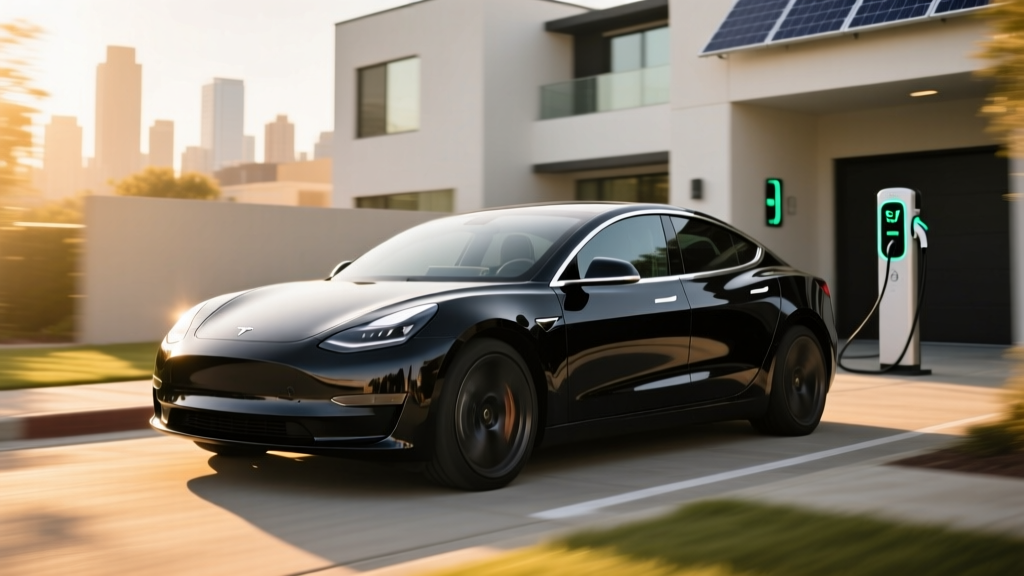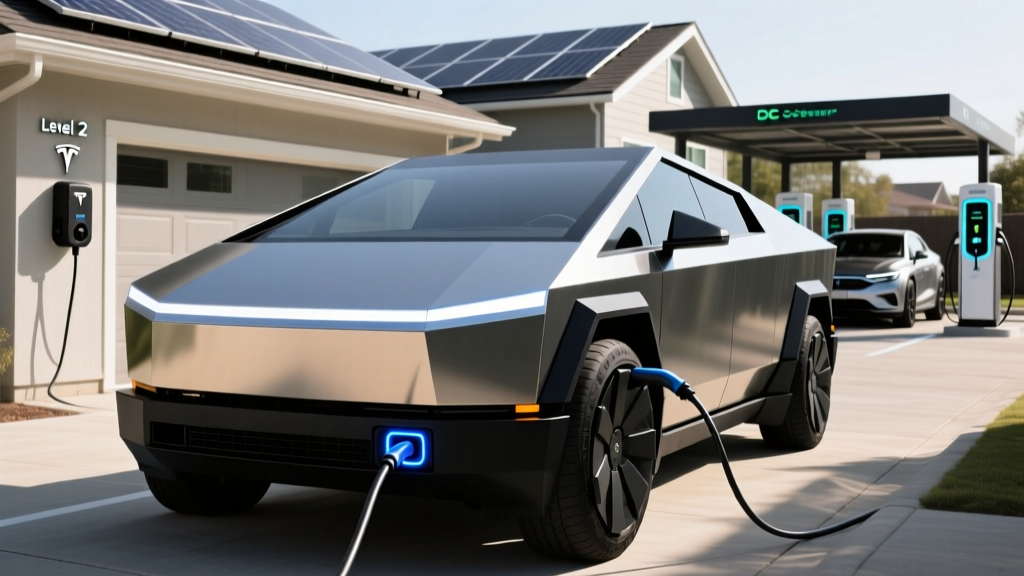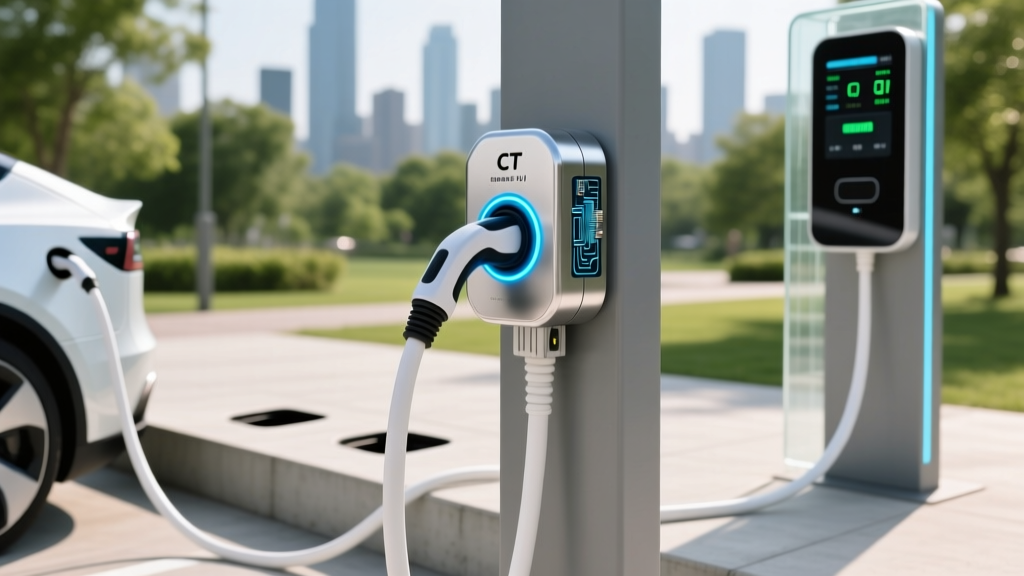
If you've been researching home EV charging setups, you may have encountered the term CT chargers — and wondered whether it refers to a brand, a charging standard, or something else entirely. In the EV electrical world, "CT" stands for current transformer, a clamp-on sensor that monitors electrical current flowing through your home's main service panel. When paired with a smart Level 2 EV charger, a CT sensor enables dynamic load management: the charger automatically adjusts its power draw in real time to avoid tripping your main breaker or exceeding your panel's capacity.
This matters enormously for older homes with 100-amp or 125-amp service, where adding a 40-amp or 48-amp EV circuit could overload the system during peak usage. Instead of paying $2,000–$5,000+ for a full panel upgrade, a CT-equipped smart charger can dynamically throttle down when your dryer, oven, or HVAC kicks on — then ramp back up when load drops. It's one of the most cost-effective solutions in the EV home-charging toolkit.
What Is a CT Charger and How Does It Work?
A "CT charger" is not a special type of charger — it's a standard Level 2 EV charger (240V AC) that integrates with a current transformer (CT) clamp installed on the main service conductors of your electrical panel. The CT clamp measures total household amperage in real time and communicates that data back to the charger's controller, typically via a wired connection (RS-485 or Modbus) or wireless protocol.
Here's the practical sequence:
- Your home's total electrical load approaches the panel's rated capacity (e.g., 180A on a 200A panel).
- The CT clamp detects the rising current draw.
- The charger's load-management software reduces charging current — say, from 40A down to 16A.
- When other appliances cycle off, the charger ramps back up to its maximum rate.
This happens seamlessly, often without the driver noticing anything beyond a slight variation in charging speed. For homes where a panel upgrade is cost-prohibitive or where the utility service drop limits total amperage, CT-based load management can be the difference between installing a 48A charger today or waiting months (and thousands of dollars) for an electrical upgrade.
Charging Levels: Speeds, Power, and Range Added Per Hour
Before evaluating CT-compatible chargers, it's essential to understand the three charging levels available to EV owners. Note the critical distinction: kW (kilowatts) measures power — the rate at which energy flows. kWh (kilowatt-hours) measures energy — the total amount stored in your battery. A charger rated at 11.5 kW delivers 11.5 kilowatts of power; a battery rated at 82 kWh stores 82 kilowatt-hours of energy.
| Level | Voltage / Amps | Max Power (kW) | Miles of Range per Hour | Typical Use Case |
|---|---|---|---|---|
| Level 1 | 120V / 12A | 1.4 kW | 3–5 mi/hr | Overnight trickle; PHEVs; emergency |
| Level 2 | 240V / 32A–48A | 7.7–11.5 kW | 25–45 mi/hr | Primary home & workplace charging |
| DC Fast Charge | 400V–800V DC | 50–350 kW | 150–1,000+ mi/hr (peak) | Road trips; public highway corridors |
For context, charging a Tesla Model Y Long Range (81 kWh usable battery, ~310 miles EPA) from 10% to 80% on an 11.5 kW Level 2 charger takes roughly 5.5 hours. On a 250 kW DC fast charger, that same 10–80% session takes approximately 20–25 minutes, though the charge curve tapers significantly above 80% state of charge (SoC) to protect the NMC battery chemistry.
How Much Does It Cost to Install a Home EV Charger?
The total cost of installing a Level 2 home charger with CT-based load management varies widely depending on your existing electrical infrastructure. Here's a realistic breakdown for 2026:
| Component | Low End | High End | Notes |
|---|---|---|---|
| Level 2 Charger (smart, CT-compatible) | $500 | $800 | 40A–48A, Wi-Fi, NACS or J1772 |
| CT Clamp Sensor Kit | $75 | $200 | Sometimes included with charger |
| Electrician Labor (standard run) | $600 | $1,500 | 50-ft run, accessible attic/crawlspace |
| Electrical Permit | $50 | $250 | Varies by municipality |
| Dedicated 60A Circuit Breaker | $15 | $50 | Required for 48A chargers (NEC 80% rule) |
| Panel Upgrade (if needed) | $2,000 | $5,000+ | 100A → 200A service upgrade |
| Total (without panel upgrade) | $1,240 | $2,800 | Most homes with 200A service |
| Total (with panel upgrade) | $3,240 | $7,800+ | Older homes, 100A/125A service |
The CT-based load management approach can eliminate the need for a panel upgrade entirely in many cases. If your 100A panel has enough spare breaker slots but not enough spare capacity for a continuous 40A draw, a CT-equipped charger set to limit total household draw to 80A (the NEC continuous-load safe threshold for 100A service) solves the problem for a fraction of the cost. Always have a licensed electrician perform a load calculation per NEC Article 220 before proceeding.
What Electrical Upgrades Might I Need?
Even with CT-based load management, certain electrical prerequisites are non-negotiable:
- Dedicated circuit: Your EV charger must have its own dedicated breaker — no sharing with other outlets or appliances. A 48A charger requires a 60A breaker (per the NEC 80% continuous-load rule: 48A ÷ 0.80 = 60A minimum breaker).
- Wire gauge: A 60A circuit requires 6 AWG copper wire (THHN in conduit) or 4 AWG if using NM-B (Romex) cable, depending on local code and run length.
- GFCI protection: The 2023 NEC (and most 2026-adopted local codes) requires GFCI protection for all EV charging outlets. Many smart chargers have built-in GFCI detection, but your electrician may also install a GFCI breaker.
- Outdoor rating: If your charger is mounted outdoors (garage wall facing exterior, driveway pedestal), the unit must carry a NEMA 4 or NEMA 4X rating for weather resistance, and the connector holster should have a drip loop.
- Panel capacity: A licensed electrician will perform a load calculation. If your existing loads plus the EV circuit exceed 80% of your panel's rated amperage, you'll need either a panel upgrade or CT-based dynamic load management.
For homes with 200A service and moderate existing loads (electric range, central AC, electric dryer), a 48A Level 2 circuit usually fits without upgrades. For 100A or 125A panels with electric heat or multiple large appliances, the CT clamp approach becomes a critical cost-saver.
Connector Compatibility: NACS, CCS1, and CHAdeMO
As of 2026, the North American EV connector landscape has consolidated significantly around NACS (North American Charging Standard), originally developed by Tesla and now adopted by nearly every major automaker. Here's what you need to know when selecting a home charger:
| Connector | Compatible Brands | Home Charger Adapter Needed? |
|---|---|---|
| NACS (Tesla-style) | Tesla (all), Ford, GM, Rivian, Hyundai/Kia, BMW, Mercedes, Volvo, Polestar, Nissan (2026+) | No — buy a NACS-connector charger natively |
| J1772 (legacy Level 2) | Older EVs (pre-2025 Nissan Leaf, some PHEVs), all EVs with adapter | Tesla-to-J1772 adapter (~$100–$150) if charger is J1772 |
| CCS1 (DC Fast) | Legacy non-Tesla DC fast charging; being phased out at new public stations | N/A for home Level 2; CCS is DC only |
| CHAdeMO | Nissan Leaf (pre-2026), Mitsubishi Outlander PHEV | Largely discontinued for new installations |
For new home charger purchases in 2026, a NACS-connector Level 2 charger is the most future-proof choice. If you currently own a J1772-equipped EV (older Leaf, some PHEVs), most NACS chargers can accommodate your vehicle with a simple adapter, and you'll be ready when you upgrade to a NACS-native vehicle.
Cost to Charge: Home vs. Public vs. Gas
One of the strongest arguments for home Level 2 charging is the dramatic per-mile cost advantage over gasoline. Here's how the numbers work in 2026, using the national average electricity rate of $0.16/kWh (residential) and the national average gasoline price of $3.40/gallon:
| Scenario | Rate | Vehicle Efficiency | Cost Per Mile |
|---|---|---|---|
| Home Level 2 (off-peak TOU rate) | $0.09/kWh | 3.5 mi/kWh (286 Wh/mi) | $0.026/mi |
| Home Level 2 (standard residential) | $0.16/kWh | 3.5 mi/kWh (286 Wh/mi) | $0.046/mi |
| Public Level 2 (network pricing) | $0.30/kWh | 3.5 mi/kWh | $0.086/mi |
| DC Fast Charge (public, peak) | $0.48/kWh | 3.5 mi/kWh | $0.137/mi |
| Gas vehicle (28 MPG combined) | $3.40/gal | 28 mi/gal | $0.121/mi |
| Gas vehicle (truck, 18 MPG) | $3.40/gal | 18 mi/gal | $0.189/mi |
At off-peak residential rates, home EV charging costs roughly $0.03 per mile — about one-quarter the cost of fueling an efficient gas car and one-sixth the cost of fueling a truck. Even at public DC fast-charging rates, the EV can match or beat gasoline on a per-mile basis, though the gap narrows considerably. According to fueleconomy.gov, most current EVs achieve 100–130 MPGe combined, translating to 3.0–4.0 miles per kWh in real-world mixed driving.
For a driver covering 12,000 miles per year, home charging at $0.12/kWh yields an annual fuel cost of approximately $412. The equivalent gas vehicle at 28 MPG and $3.40/gallon costs $1,457 annually — a savings of over $1,000 per year with the EV.
CT-Compatible Charger Recommendations for 2026
Not every Level 2 charger supports CT-clamp-based load management. Below are three proven options that integrate CT sensors for dynamic load balancing, suitable for homes where panel capacity is a concern:
Emporia Vue + Emporia Level 2 Charger
- Power Output: 48A / 11.5 kW (240V, hardwired, 60A breaker)
- Connector: NACS (native), J1772 adapter available
- CT Integration: Pairs directly with Emporia Vue home energy monitor (CT clamps on main service and individual circuits)
- Smart Features: Solar-aware charging, time-of-use scheduling, real-time load dashboard, Alexa/Google Home
- Cable Length: 24 ft
- Price: ~$599 (charger) + ~$99 (Vue monitor with CT clamps)
- Best For: Homes with solar panels or complex load profiles needing circuit-level visibility
Wallbox Pulsar Plus with Power Meter
- Power Output: 40A / 9.6 kW (240V, hardwired or NEMA 14-50 plug, 50A breaker)
- Connector: J1772 (NACS adapter available)
- CT Integration: Wallbox Power Meter accessory (CT clamp on main panel) enables Power Sharing and Power Boost load management
- Smart Features: Wi-Fi + Bluetooth, myWallbox app scheduling, Eco-Smart solar integration, multi-charger load sharing
- Cable Length: 25 ft
- Price: ~$649 (charger) + ~$129 (Power Meter)
- Best For: Homes wanting a compact unit with robust app controls and multi-charger capability
ChargePoint Home Flex with CT Panel
- Power Output: Up to 50A / 12 kW (240V, hardwired, adjustable 16A–50A via DIP switches, 60A breaker at max)
- Connector: J1772 (NACS pigtail adapter available) or NACS native (newer SKU)
- CT Integration: Compatible with ChargePoint CT accessory for panel-level load management; also supports utility demand-response programs
- Smart Features: Wi-Fi, ChargePoint app, Alexa, utility integration, flexible amperage adjustment
- Cable Length: 23 ft
- Price: ~$699 (charger) + ~$149 (CT panel kit)
- Best For: Drivers wanting maximum amperage flexibility and broad utility-program compatibility
Safety, Code, and Permit Considerations
Electrical safety for EV charging is governed primarily by the National Electrical Code (NEC) Article 625 and local amendments. Key requirements for any CT-charger installation:
- NEC 80% continuous-load rule: EV charging is classified as a continuous load (operating 3+ hours). A 48A charger must be on a circuit rated for at least 60A (48 ÷ 0.80 = 60). Never install a 48A charger on a 50A breaker.
- Permit requirement: Nearly all jurisdictions require an electrical permit for new 240V circuits. The permit ensures inspection by a local authority having jurisdiction (AHJ), who will verify wire gauge, breaker sizing, grounding, and GFCI compliance.
- CT clamp placement: The CT sensor must clamp around the main service conductors (hot legs) after the main breaker but before any branch circuits. This requires working inside the main panel — a task that should only be performed by a licensed electrician, as the service conductors remain energized even when the main breaker is off.
- Grounding: All hardwired EV chargers require an equipment grounding conductor. For NEMA 14-50 receptacle installations, a 4-wire connection (two hots, neutral, ground) is required. Never use a NEMA 10-50 (no ground) for EV charging.
- Utility notification: Some utilities require notification when adding a load exceeding 40A. Check with your local utility — some offer rebates for smart charger installations or time-of-use rate plans optimized for EV charging.
The IRS §30D tax credit applies to vehicles, not charging equipment. However, the Alternative Fuel Vehicle Refueling Property Credit (IRC §30C) covers up to 30% of home charging equipment and installation costs (capped at $1,000) for installations in qualifying census tracts. Check IRS guidelines and consult a tax professional to determine eligibility, as tract-level requirements and income limitations apply.
Frequently Asked Questions
How much does it cost to install a home EV charger with CT load management?
Expect $1,240–$2,800 total (charger, CT kit, electrician, permit) for homes with adequate panel capacity. If a panel upgrade is required, add $2,000–$5,000+. The CT system itself often eliminates the need for a panel upgrade, saving thousands.
How fast will each charging level add range?
Level 1 (120V) adds 3–5 miles per hour. Level 2 (240V, 48A) adds roughly 35–45 miles per hour depending on vehicle efficiency. DC fast charging (150–350 kW) can add 150–1,000+ miles per hour at peak, though the charge curve tapers sharply above 80% SoC, making 10–80% the practical fast-charging window (typically 18–30 minutes for modern EVs).
Which connector/charger is compatible with my EV?
For 2026 model-year vehicles, most new EVs use NACS natively (Tesla, Ford, GM, Hyundai/Kia, Rivian, BMW, and others). Older non-Tesla EVs may use J1772 for Level 2 — these can charge on NACS stations with an adapter. CHAdeMO is effectively discontinued for new vehicles. Buy a NACS charger for maximum forward compatibility.
How much does charging cost per mile compared to gas?
Home charging at average residential rates ($0.12–$0.16/kWh) costs $0.03–$0.05 per mile — roughly 3–4× cheaper than gasoline at $3.40/gallon in a 28 MPG vehicle ($0.12/mi). Off-peak time-of-use rates can push EV fueling below $0.03/mi.
Can a CT charger fully replace a panel upgrade?
In many cases, yes. If your panel has adequate physical breaker spaces and the main service drop can handle peak loads with dynamic management, a CT-equipped charger eliminates the need for a costly 200A upgrade. However, if your panel is physically full (no spare slots), has outdated wiring (aluminum branch circuits, knob-and-tube), or your utility service drop is undersized, a panel upgrade or service upgrade may still be necessary. A licensed electrician's load calculation is the definitive answer.
Does a CT-based charger affect charging speed?
Only when other household loads are high. During low-load periods (overnight, when HVAC and appliances are idle), the charger operates at its full rated amperage. The CT system only throttles down when total household draw approaches the panel's safe limit. Most users report no noticeable impact on overnight charging completion times.