What "Cross Charging" Actually Means for EV Owners
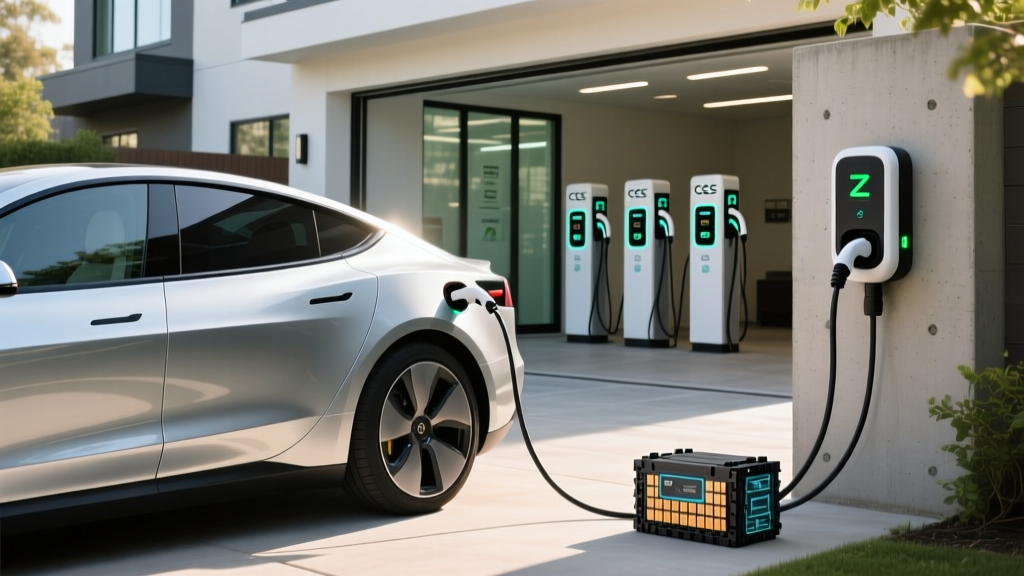
If you've ever pulled up to a public charger only to realize the plug doesn't match your car's port, you've experienced the core problem that cross charging solves. Cross charging is the practice of using adapters, multi-standard stations, or network-agnostic equipment to charge an electric vehicle outside its native connector ecosystem. In 2026, with Tesla's North American Charging Standard (NACS) adopted by nearly every major automaker and legacy CCS1 infrastructure still widespread, cross charging has become an essential skill for EV owners who want maximum flexibility on road trips and at home.
This guide breaks down exactly how cross charging works across all three connector types, what equipment you need, what it costs, and how to set up a home charging system that handles any EV you might own — now or in the future.
The Three Charging Levels: Speed, Power, and Real-World Range Added
Before tackling connector compatibility, you need to understand the three charging levels and what they deliver in practice. Note the critical distinction: kW (kilowatts) measures power — how fast energy flows into your battery. kWh (kilowatt-hours) measures energy — the total capacity of your battery. A 75 kWh battery charged at 11 kW takes roughly 7 hours from empty; at 150 kW, it takes under 30 minutes to 80%.
| Level | Voltage | Max Power (kW) | Miles of Range Added per Hour | Typical Use Case |
|---|---|---|---|---|
| Level 1 | 120V AC | 1.4–1.9 kW | 3–5 mi/hr | Overnight top-off, PHEVs, emergencies |
| Level 2 | 240V AC | 7.2–19.2 kW | 20–60 mi/hr | Home daily charging, workplace, destination |
| DC Fast Charge | 400–800V DC | 50–350 kW | 150–1,200+ mi/hr (peak) | Road trips, highway corridors, quick stops |
Real-world context: A 2026 Hyundai Ioniq 5 (84 kWh usable battery, NMC chemistry) charging at a 350 kW DC fast charger will peak near 240 kW and add roughly 200 miles in 18 minutes (10–80% SoC). But that peak rate only holds between roughly 10–55% SoC — above 80%, the charge curve tapers sharply to protect battery health, dropping below 50 kW. This taper is why manufacturers quote 10–80% times rather than 0–100%.
Connector Compatibility: NACS, CCS1, and CHAdeMO Explained
Cross charging hinges on understanding which physical connector your EV uses and what's available at the stations you'll visit. As of the 2026 model year, the connector landscape has consolidated significantly but still requires attention.
| Connector | Brands Using It (Native) | DC Fast Charge Pins | Status in 2026 |
|---|---|---|---|
| NACS (J3400) | Tesla, Ford, GM, Rivian, Volvo, Polestar, Mercedes-Benz, Nissan (new models), Honda (new models), Hyundai/Kia (select 2026+ models) | Integrated | Dominant standard; most new EVs shipping with NACS |
| CCS1 | Volkswagen ID.4 (2025 and earlier), BMW iX/i4 (pre-2026), legacy Hyundai/Kia, Stellantis EVs | Combo connector | Legacy but still widely available; being phased out on new models |
| CHAdeMO | Nissan Leaf (all years), Mitsubishi Outlander PHEV (older) | Separate DC connector | Deprecated; new installations rare |
The cross-charging adapter reality: If you own a CCS1-equipped EV (like a 2025 VW ID.4) and want to use Tesla Superchargers — which numbered over 25,000 in North America by early 2026 — you need a CCS-to-NACS adapter. Tesla sells one for approximately $250, and third-party options from brands like Lectron and A2Z are available for $150–$200. Conversely, NACS-native vehicles like the 2026 Ford F-150 Lightning can access legacy CCS stations using a NACS-to-CCS adapter (roughly $200–$300).
CHAdeMO is effectively a dead end for cross charging. Adapters to NACS or CCS exist but are expensive ($400+), bulky, and increasingly unnecessary as CHAdeMO stations are not being replaced when they retire. If you drive a Nissan Leaf, plan your DC fast charging around Electrify America and EVgo stations that still maintain CHAdeMO connectors — but verify availability in the station's app before you drive there.
Home Charger Installation: Electrical Requirements, Costs, and Panel Upgrades
The single biggest cross-charging advantage you can give yourself is a properly spec'd home Level 2 charger. A 240V Level 2 unit on a dedicated circuit will fully replenish any EV overnight, regardless of connector type (since home chargers use the J1772/NACS AC standard, and adapters are inexpensive for AC).
Electrical Requirements for a Level 2 Home Charger
A typical Level 2 home charger requires:
- Voltage: 240V (same as a dryer or oven circuit)
- Amperage: 40A circuit breaker for a 32A continuous charger, or 60A breaker for a 48A charger. Per the National Electrical Code, continuous loads must be rated at 125% of the circuit breaker — so a 48A charger needs a 60A breaker.
- Dedicated circuit: The charger must be on its own breaker — no sharing with other appliances.
- Wire gauge: 6 AWG copper for 48A; 8 AWG for 32A (varies by run length and local code).
- GFCI protection: Required by NEC 2020 and later for outdoor receptacles; many hardwired chargers have built-in GFCI.
| Component | Low End | High End | Notes |
|---|---|---|---|
| Level 2 charger (equipment) | $350 | $750 | 32A–48A smart chargers; premium models with load management cost more |
| Electrician labor | $500 | $2,000 | Depends on panel proximity, wall type, conduit run length |
| Electrical permit | $50 | $250 | Varies by municipality; some jurisdictions bundle with inspection |
| Panel upgrade (if needed) | $1,500 | $4,000 | Upgrading from 100A to 200A service; older homes may need this |
| Total (no panel upgrade) | $900 | $3,000 | Typical for homes with 200A service and spare breaker slots |
| Total (with panel upgrade) | $2,400 | $7,000 | Common in pre-1990 homes with 100A panels |
Panel upgrade reality check: If your home has a 100-amp electrical panel that's already near capacity (running electric heat, a dryer, and an oven), adding a 48A EV charger will likely require a service upgrade to 200A. This is the single largest hidden cost in home EV charging. Before purchasing a charger, have a licensed electrician perform a load calculation — many offer this for free or $100–$150 applied toward the installation.
Load management alternative: Some smart chargers (like the Emporia Vue with load management or the ChargePoint Home Flex with amp adjustment) can dynamically reduce their draw to stay within your panel's capacity, potentially avoiding a panel upgrade. This works well if you don't need the full 48A and can accept slower charging on high-load evenings.
How Much Does Charging Cost Per Mile? EV Electricity vs. Gasoline
The economics of cross charging vary dramatically depending on where and when you plug in. Here's a data-driven comparison using a mid-size electric SUV averaging 3.0 miles per kWh (roughly 112 MPGe combined, similar to a 2026 Tesla Model Y or Hyundai Ioniq 5).
| Scenario | Cost per kWh | Cost per Mile (at 3.0 mi/kWh) | Equivalent Gas MPG at $3.50/gal |
|---|---|---|---|
| Home Level 2 (off-peak utility rate) | $0.08–$0.12 | $0.03–$0.04 | 88–117 MPG |
| Home Level 2 (standard residential rate) | $0.14–$0.18 | $0.05–$0.06 | 58–70 MPG |
| Public Level 2 (ChargePoint, EVgo) | $0.25–$0.40 | $0.08–$0.13 | 27–44 MPG |
| DC Fast Charge (Electrify America, Tesla Supercharger) | $0.30–$0.55 | $0.10–$0.18 | 19–35 MPG |
| Gasoline vehicle (28 MPG combined avg.) | $3.50/gal | $0.125 | 28 MPG (baseline) |
The takeaway: Home charging at off-peak rates is roughly 3–4× cheaper per mile than gasoline. Even DC fast charging at peak rates ($0.55/kWh) is comparable to or slightly cheaper than a 28 MPG gas car at $3.50/gallon. The cross-charging implication is clear: maximize home Level 2 charging for daily use, and use public DC fast charging strategically on road trips where the cost premium is acceptable for the convenience.
Many utilities offer time-of-use (TOU) rates that drop to $0.06–$0.10/kWh between 10 PM and 6 AM. Smart chargers with scheduling features can automatically begin charging during these windows — a capability worth prioritizing in your equipment selection.
Cross-Charging Equipment Picks: Adapters and Home Chargers for Maximum Compatibility
Here are specific, currently available products that enable cross charging across connector ecosystems and provide reliable home charging in 2026.
Recommended Home Level 2 Chargers
ChargePoint Home Flex
- Power output: Up to 12 kW (50A circuit / 40A continuous) — adjustable down to 16A for panel-limited homes
- Connector: J1772 (NACS AC adapter included or available separately)
- Cable length: 23 feet
- Smart features: Wi-Fi, app scheduling, TOU rate optimization, Alexa integration, energy reports
- Price: ~$550 (charger only, before installation)
- Best for: Flexibility across panel capacities; works for NACS and CCS vehicles with a simple plug adapter
Tesla Wall Connector (Gen 4)
- Power output: Up to 11.5 kW (48A continuous on a 60A circuit)
- Connector: NACS native; includes J1772 adapter in box for non-Tesla EVs
- Cable length: 24 feet
- Smart features: Wi-Fi, OTA updates, Powerwall integration, load sharing between multiple units
- Price: ~$475
- Best for: NACS-native households; cleanest integration with Tesla and Ford/GM/Rivian EVs
Emporia Level 2 EV Charger
- Power output: Up to 11.5 kW (48A continuous on a 60A circuit)
- Connector: J1772
- Cable length: 24 feet
- Smart features: Real-time energy monitoring with Emporia Vue panel integration, dynamic load management to avoid panel overload, solar-aware charging
- Price: ~$400 (charger); ~$600 with Vue energy monitor bundle
- Best for: Homes with tight panel capacity; load management can avoid a $2,000+ panel upgrade
Cross-Charging Adapters Worth Carrying
- CCS1-to-NACS adapter (for CCS vehicles accessing Superchargers): Tesla official adapter ~$250; Lectron third-party ~$170. Supports up to 150 kW DC — sufficient for most CCS vehicles' peak charge rates.
- NACS-to-CCS1 adapter (for NACS vehicles accessing CCS stations): A2Z EVSE or Lectron ~$200–$280. Rated for up to 200 kW DC. Essential if your NACS vehicle needs to use Electrify America or EVgo CCS-only stations.
- J1772-to-NACS adapter (for AC Level 2 cross charging): ~$50–$80. Lets a NACS vehicle plug into any J1772 Level 2 station (hotels, workplaces, malls). Cheap and essential for road trips.
- NACS-to-J1772 adapter (for CCS/J1772 vehicles charging at NACS AC outlets): ~$40–$60. Often included with Tesla Wall Connector.
Charging Time Examples: How Long Does Cross Charging Take?
Charge times depend on battery size (kWh), the charger's power output (kW), and the vehicle's onboard charge acceptance curve. Here are realistic 10–80% estimates for common battery sizes:
| Battery Size | Level 2 at 11.5 kW (48A) | DC Fast at 150 kW (avg sustained) | DC Fast at 250 kW (avg sustained) |
|---|---|---|---|
| 40 kWh (e.g., Nissan Leaf) | ~2.5 hours | ~18 minutes | ~15 minutes (charge-limited to ~50 kW) |
| 75 kWh (e.g., Tesla Model Y) | ~4.5 hours | ~28 minutes | ~20 minutes |
| 84 kWh (e.g., Hyundai Ioniq 5) | ~5 hours | ~30 minutes | ~18 minutes |
| 100 kWh (e.g., Ford F-150 Lightning Extended) | ~6 hours | ~38 minutes | ~25 minutes |
| 131 kWh (e.g., GMC Hummer EV) | ~8 hours | ~50 minutes | ~35 minutes |
Critical nuance: The "avg sustained" column accounts for the charge curve taper. A 150 kW charger doesn't deliver 150 kW for the entire session — it peaks near 150 kW at low SoC and drops as the battery fills. The times above reflect realistic averages based on manufacturer testing and independent validation. Always plan road-trip stops around 10–80% charges; pushing to 100% on DC fast chargers can double the session time due to extreme tapering above 80%.
Safety, Electrical Code, and Installation Best Practices
Cross charging at home is safe when installed correctly. The National Electrical Code (NEC) and local building codes govern EV charger installations. Key requirements to verify with your electrician:
- Dedicated circuit: Your Level 2 charger must be on a breaker used by nothing else. Sharing a circuit with a dryer or HVAC system is a code violation and a fire risk.
- GFCI protection: NEC 2020+ requires ground-fault circuit interrupter protection for outdoor EV charging receptacles (NEC 625.54). Hardwired chargers may have internal GFCI — confirm with the manufacturer. If using a NEMA 14-50 receptacle, a GFCI breaker is required and adds $50–$100 to the panel cost.
- Outdoor rating: If your charger is mounted outdoors, it must carry at least a NEMA 4 (weather-resistant) rating. All chargers recommended above meet this standard.
- Permit and inspection: Most jurisdictions require an electrical permit for a new 240V circuit. The permit fee is typically $50–$250, and a city inspector will verify the installation meets code. Skipping the permit risks insurance claim denial if an electrical fire occurs.
- Conduit and wire routing: Runs longer than 50 feet from the panel may require larger wire gauge to prevent voltage drop. Your electrician will calculate this — it can add $100–$300 in materials.
Frequently Asked Questions About Cross Charging
How much does it cost to install a home EV charger?
A typical Level 2 home charger installation costs between $900 and $3,000 if your electrical panel has sufficient capacity (200A service with spare breaker slots). If a panel upgrade from 100A to 200A is needed, expect $2,400 to $7,000 total. Equipment accounts for $350–$750 of that; the rest is electrician labor, permit fees, and materials. Get at least two quotes from licensed electricians who have EV charger installation experience.
How fast will each charging level add range?
Level 1 (120V) adds 3–5 miles of range per hour — adequate for PHEVs with small batteries but impractical for full EVs. Level 2 (240V, 32A–48A) adds 20–60 miles per hour and will fully charge most EVs overnight in 5–8 hours. DC fast charging (50–350 kW) adds 150–1,200+ miles per hour at peak, with typical 10–80% sessions lasting 15–40 minutes depending on battery size and charger power.
Which connector and charger is compatible with my EV?
Check your vehicle's charge port. If it's a 2026 model from Tesla, Ford, GM, Rivian, Volvo, or most new Hyundai/Kia/Nissan/Honda models, it likely uses NACS. If it's a 2025 or earlier VW, BMW, or Stellantis EV, it likely uses CCS1. The Nissan Leaf uses CHAdeMO. For home charging, any Level 2 charger works with any EV using inexpensive AC adapters ($40–$80). For DC fast charging on the road, you may need a $150–$300 adapter to access stations outside your native connector ecosystem.
How much does EV charging cost per mile compared to gas?
Home charging at off-peak utility rates costs $0.03–$0.04 per mile — roughly 3–4× cheaper than a 28 MPG gas car at $3.50/gallon ($0.125/mile). Standard residential rates push EV cost to $0.05–$0.06/mile. Public DC fast charging at $0.30–$0.55/kWh costs $0.10–$0.18/mile, which is comparable to or slightly less than gasoline. The savings case for EVs is strongest when you can charge at home on a TOU rate plan.
What electrical upgrades might I need for a home charger?
The most common upgrade is a panel capacity increase from 100A to 200A service, costing $1,500–$4,000. This is needed when your existing panel is near its load limit. Other potential upgrades include: adding a new double-pole breaker ($50–$100 if slots are available), running new conduit and wire ($5–$15/foot), installing a GFCI breaker for outdoor receptacles ($50–$100), and in rare cases, upgrading the utility service drop if your home's connection from the street is undersized. A licensed electrician's load calculation will determine exactly what's required — always get this done before purchasing equipment.