If you've pulled into a Costco warehouse hoping to top off your EV while you shop, you've probably noticed the charging situation is... inconsistent. Some locations have a bank of DC fast chargers in partnership with networks like Electrify America or EVgo; many have nothing at all. Searching for "Costco EV charging stations" yields a patchwork of third-party apps and outdated forum posts rather than a reliable national network.
This guide cuts through the confusion. We'll cover exactly what charging infrastructure exists at Costco locations in 2026, why relying on retail parking lots isn't a long-term strategy, and—most importantly—how to set up a Level 2 home charger that adds more range overnight than any shopping trip could. We'll break down electrical requirements, real installation costs, connector compatibility, and the per-mile economics that make home charging the clear winner.
The Reality of Costco EV Charging Stations in 2026
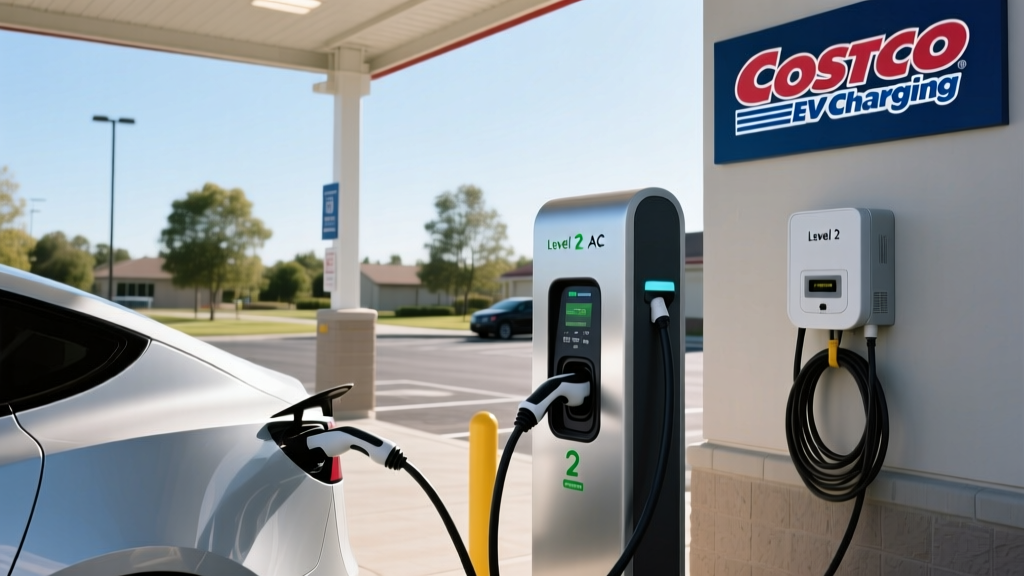
Costco does not operate its own branded charging network. Where chargers exist at Costco warehouses, they're typically installed and managed by third-party networks—most commonly Electrify America, EVgo, or ChargePoint. Availability varies enormously by region and by the specific network's rollout agreements with property managers.
Here's what you'll generally find when chargers are present:
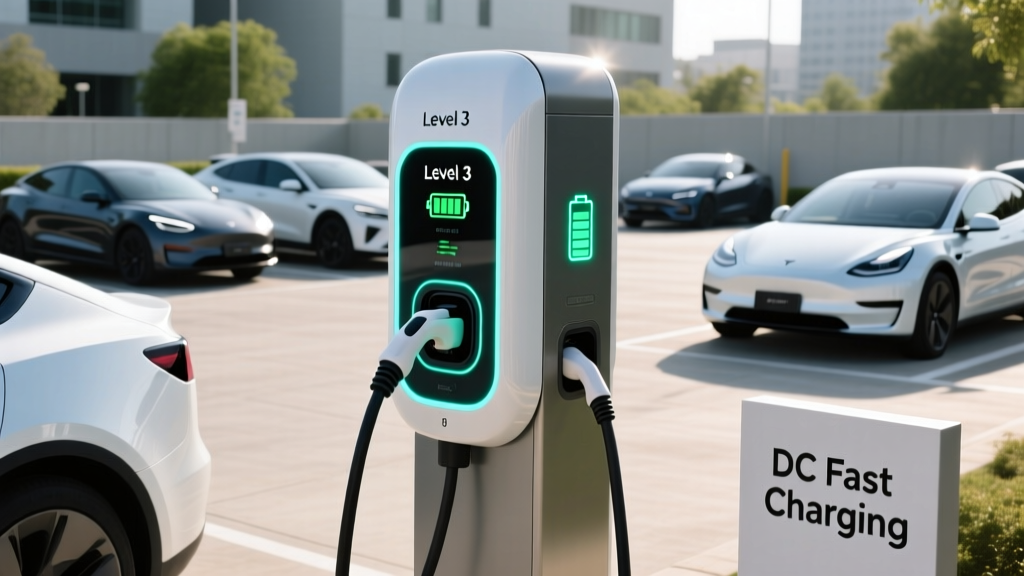
- DC fast chargers (50–350 kW): Usually 2 to 4 stalls, often located near the store entrance or along the perimeter of the lot. Peak speeds depend on the specific hardware installed and your vehicle's charge acceptance rate.
- Level 2 chargers (6.6–19.2 kW): Less common at Costco, but some locations have a handful of Level 2 pedestals. These add roughly 20–60 miles of range per hour—useful if you're spending 90 minutes inside, but not a primary charging strategy.
- No chargers at all: A significant portion of Costco warehouses still lack any EV infrastructure, particularly in older properties or regions with lower EV adoption.
Before driving to a Costco specifically to charge, check PlugShare or your vehicle's built-in navigation to confirm chargers are present, operational, and compatible with your connector type. Broken chargers and ICE-vehicle blockage remain common frustrations at retail charging locations.
Charging Levels Explained: Speeds, Power, and Range Added
Understanding the three charging levels is essential whether you're evaluating a Costco DC fast charger or planning a home installation. The key distinction: kW (kilowatts) measures the rate of power delivery—how fast energy flows into your battery. kWh (kilowatt-hours) measures total energy capacity—how much your battery holds. Think of kW as the width of a hose and kWh as the size of the bucket.
| Level | Power (kW) | Voltage / Amperage | Miles of Range Added per Hour | Typical Use Case |
|---|---|---|---|---|
| Level 1 | 1.2–1.9 kW | 120V / 12–16A | 3–5 miles | Overnight trickle; PHEV top-ups |
| Level 2 | 3.3–19.2 kW | 240V / 16–80A | 12–75 miles | Home daily charging; workplace; retail |
| DC Fast Charging | 50–350 kW | 400–800V DC | 150–1,000+ miles/hr equivalent | Road trips; rapid top-ups away from home |
Charging Time Examples by Battery Size
To make this concrete, here's how long typical 10–80% charging sessions take for common battery capacities:
- 60 kWh battery (e.g., base Tesla Model 3, Chevrolet Equinox EV): ~18 minutes on a 250 kW DC fast charger; ~6–8 hours on a 9.6 kW Level 2 home charger.
- 82 kWh battery (e.g., Ford Mustang Mach-E Extended Range): ~22 minutes on a 250 kW DCFC; ~8–10 hours on a 9.6 kW Level 2.
- 100+ kWh battery (e.g., GMC Sierra EV, Rivian R1S Max Pack): ~25–30 minutes on a 350 kW DCFC; ~10–13 hours on a 9.6 kW Level 2.
Home Level 2 Charger Installation: Requirements and Costs
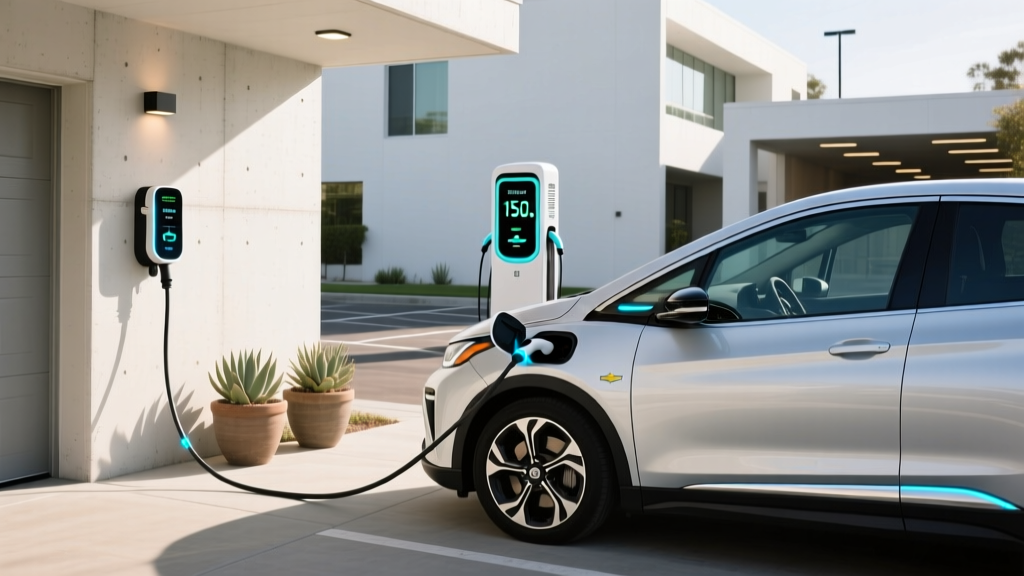
The most reliable "charging station" you'll ever use is the one in your own garage. A properly installed Level 2 home charger eliminates the uncertainty of retail chargers entirely—you plug in when you get home and wake up to a full battery every morning.
Electrical Requirements
A Level 2 home charger requires a dedicated 240-volt circuit, identical in principle to what powers your electric dryer or oven. The most common residential setup is a 240V / 40-amp or 48-amp circuit, which supports continuous charging at 7.7 kW to 11.5 kW respectively. (Electrical code requires circuits to be rated at 125% of the continuous load, so a 40A breaker supports a 32A continuous charger; a 60A breaker supports 48A continuous.)
Key installation considerations:
- Dedicated circuit: Your charger must have its own breaker—no sharing with other appliances.
- Panel capacity: Most modern 200-amp electrical panels can accommodate a 40–60A EV circuit. Older homes with 100A service may need a panel upgrade.
- Wire gauge: Typically 6 AWG copper for 40–50A circuits; 4 AWG for 60A. Your electrician will calculate exact requirements based on run length.
- GFCI protection: The 2020 and 2023 National Electrical Code (NEC) require GFCI protection for EV charging circuits in garages. Some hardwired chargers have built-in GFCI; plug-in units require a GFCI breaker.
- Permit and inspection: Most jurisdictions require an electrical permit and a post-installation inspection. This protects you and ensures code compliance—don't skip it.
Installation Cost Breakdown
Here's what homeowners actually pay for a Level 2 installation in 2026, based on national averages. Your mileage will vary based on local labor rates, panel condition, and wire run distance.
| Component | Typical Cost Range | Notes |
|---|---|---|
| Level 2 charger unit (hardware) | $350 – $750 | Smart Wi-Fi chargers; 32A–48A |
| Electrician labor (standard install) | $400 – $1,200 | Varies by wire run length & complexity |
| Electrical permit | $50 – $200 | Depends on municipality |
| Panel upgrade (if needed) | $1,500 – $3,500 | Required if panel is at capacity or 100A service |
| Total (no panel upgrade) | $800 – $2,150 | Most common scenario for modern homes |
| Total (with panel upgrade) | $2,300 – $5,650 | Older homes or maxed-out panels |
Connector Compatibility: NACS, CCS, and CHAdeMO
The connector landscape has shifted dramatically. As of 2026, nearly every major automaker has adopted the North American Charging Standard (NACS)—originally developed by Tesla—as the primary charging port on new EVs. The legacy CCS1 connector is still present on millions of existing vehicles, and CHAdeMO persists on older Nissan Leafs and a handful of other models.
| Connector | Brands Using It (New Vehicles) | DC Fast Charge Network Access |
|---|---|---|
| NACS (Tesla standard) | Tesla, Ford, GM, Rivian, Volvo, Polestar, Mercedes-Benz, Hyundai/Kia (2025+), Honda, BMW, Toyota | Tesla Supercharger network (native); growing Electrify America & EVgo NACS stalls |
| CCS1 | Most 2024 and earlier non-Tesla EVs; Volkswagen ID.4 (through 2024); some Stellantis models | Electrify America, EVgo, ChargePoint DCFC; Tesla Supercharger via adapter |
| CHAdeMO | Nissan Leaf (discontinued after 2025); Mitsubishi Outlander PHEV (legacy) | Declining network support; limited new installations |
Adapter Considerations
If you own a CCS1-equipped vehicle, Tesla sells a CCS-to-NACS adapter (approximately $200–$250) that unlocks access to the Supercharger network. Ford and GM have provided complimentary adapters to existing owners. Conversely, if you buy a new NACS-equipped vehicle and encounter a CCS-only public charger, a NACS-to-CCS adapter (available from third-party manufacturers) can bridge the gap, though these are less common and tend to be more expensive.
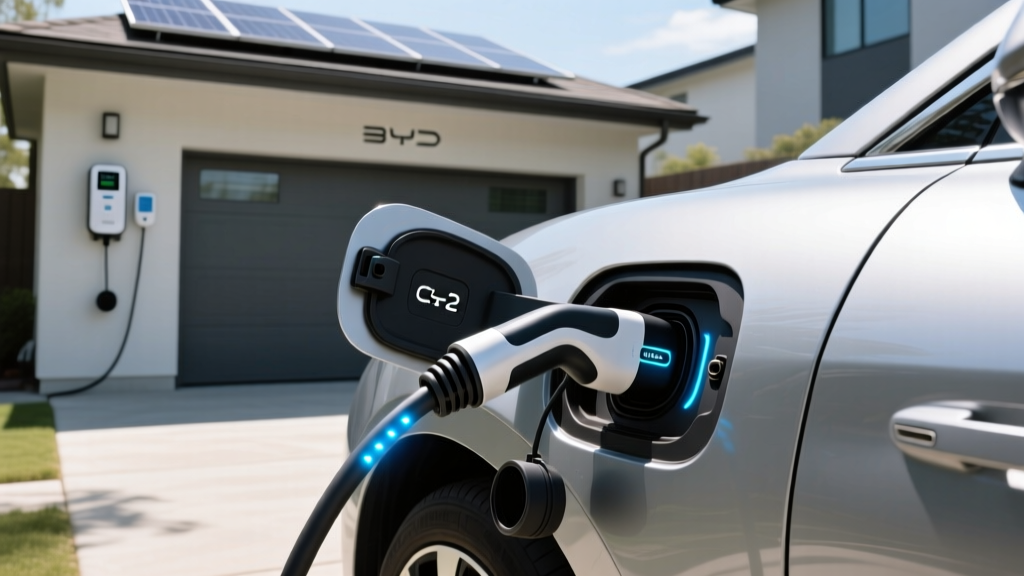
For home Level 2 charging, the connector situation is simpler: virtually all Level 2 chargers sold in North America ship with a J1772 connector (which handles Level 2 AC charging for all EVs). Tesla vehicles include a J1772-to-Tesla adapter in the glovebox, and newer NACS-equipped vehicles from other brands include the same adapter. This means any standard Level 2 home charger works with any EV for home charging—no adapter purchase necessary for most setups.
Cost to Charge: Home vs. Public vs. Gas
The economic case for home charging is overwhelming. Here's how the numbers break down across different charging scenarios, assuming an EV averaging 3.0 miles per kWh (a typical efficiency figure for vehicles like the Tesla Model Y, Hyundai Ioniq 5, or Chevrolet Equinox EV).
| Charging Scenario | Price per kWh | Cost per Mile (at 3 mi/kWh) | Annual Cost (12,000 miles) |
|---|---|---|---|
| Home (off-peak utility rate) | $0.08 – $0.14 | $0.03 – $0.05 | $320 – $560 |
| Home (standard utility rate) | $0.14 – $0.20 | $0.05 – $0.07 | $560 – $800 |
| Public Level 2 (network) | $0.25 – $0.49 | $0.08 – $0.16 | $1,000 – $1,960 |
| DC Fast Charging (public) | $0.35 – $0.65 | $0.12 – $0.22 | $1,400 – $2,600 |
| Gasoline (25 MPG avg, $3.40/gal) | — | $0.14 | $1,632 |
The takeaway is clear: home off-peak charging costs one-quarter to one-third of what you'd spend on gasoline for the same mileage. Even standard-rate home charging undercuts gas. But relying exclusively on DC fast charging at public stations can actually exceed gasoline costs—which is why a home Level 2 installation pays for itself quickly.
Many utilities offer time-of-use (TOU) plans that provide significantly cheaper rates between 10 PM and 6 AM. If your utility offers TOU pricing, programming your charger to start sessions after the off-peak window begins is one of the simplest ways to minimize operating costs.
Recommended Level 2 Home Chargers for 2026
Not all Level 2 chargers are created equal. Here are three proven units we recommend based on reliability, features, and value. All three are UL-listed (a critical safety certification), support NEMA 14-50 plug-in or hardwired installation, and include Wi-Fi-connected smart features for scheduling and energy monitoring.
ChargePoint Home Flex
- Power output: Up to 12 kW (50A) on a 60A circuit; configurable down to 16A for lower-capacity panels
- Connector: J1772 (works with all EVs; Tesla owners use included adapter)
- Cable length: 23 feet
- Smart features: Wi-Fi scheduling, Alexa integration, energy tracking, amperage adjustment via app
- Price: ~$550–$650
- Best for: Flexibility—adjustable amperage means it works even if your panel has limited headroom
Wallbox Pulsar Plus
- Power output: Up to 11.5 kW (48A) on a 60A circuit
- Connector: J1772 (NACS version available for newer vehicles)
- Cable length: 25 feet
- Smart features: Wi-Fi + Bluetooth, solar integration (pairs with home solar), load balancing, compact form factor
- Price: ~$450–$550
- Best for: Compact size and solar-home integration; one of the smallest Level 2 units available
Tesla Wall Connector
- Power output: Up to 11.5 kW (48A) on a 60A circuit
- Connector: NACS native (J1772 adapter included for non-Tesla EVs)
- Cable length: 24 feet
- Smart features: Wi-Fi scheduling, power sharing (link multiple units on one circuit), OTA firmware updates
- Price: ~$425–$475
- Best for: Tesla and NACS-equipped vehicle owners; excellent build quality at a competitive price
Safety and Code Considerations
Regardless of which charger you choose, ensure the following:
- UL listing: Only purchase chargers certified by UL (Underwriters Laboratories) or an equivalent Nationally Recognized Testing Laboratory (NRTL). Uncertified chargers from overseas marketplaces may lack critical safety protections and could void your homeowner's insurance in the event of a fire.
- NEMA 14-50 receptacle quality: If you choose plug-in installation (vs. hardwired), use a commercial-grade NEMA 14-50 receptacle (Leviton or Hubbell brand, ~$50–$80). Cheap residential-grade outlets have been linked to overheating during sustained EV charging loads.
- Outdoor rating: If your charger will be installed outdoors or in an unenclosed carport, confirm it carries a NEMA 4 (weatherproof) rating. All three units above are rated for outdoor use.
- Professional installation: Always hire a licensed electrician. DIY electrical work on 240V circuits carries serious shock and fire risk, and unpermitted work can create liability and resale issues.
Why Home Charging Beats Retail Charging Every Time
The appeal of charging while you shop is obvious in theory. In practice, retail charging—including at Costco locations—suffers from fundamental limitations:
- Unreliable availability: Chargers may be broken, occupied by non-EV vehicles, or already in use by another EV driver when you arrive.
- Higher cost: Public DC fast charging at $0.35–$0.65/kWh costs 3 to 5 times more than home off-peak charging.
- Time pressure: You're tethered to the store's operating hours and your own shopping timeline. A home charger works on your schedule.
- Battery health: Frequent DC fast charging accelerates battery degradation compared to the slow, steady Level 2 charging that's optimal for long-term battery health. Most battery chemistries (both NMC and LFP) prefer moderate charge rates and avoiding sustained high SoC.
For the vast majority of EV owners, the optimal strategy is: home Level 2 for 90%+ of your charging, supplemented by DC fast charging only on road trips. Retail chargers at places like Costco serve as a useful occasional supplement—not a primary charging solution.
Frequently Asked Questions
How much does it cost to install a home EV charger?
A typical Level 2 home charger installation costs between $800 and $2,150 when no panel upgrade is needed, covering the charger unit ($350–$750), electrician labor ($400–$1,200), and permit fees ($50–$200). If your home requires an electrical panel upgrade—from 100A to 200A service, for example—add $1,500 to $3,500 to that total. Get at least two quotes from licensed electricians, and ask about utility rebates that may offset costs.
How fast will each charging level add range?
Level 1 (120V standard outlet) adds 3–5 miles of range per hour—suitable only for plug-in hybrids or very low daily mileage. Level 2 (240V) adds 12–75 miles per hour depending on the charger's kW output and your vehicle's onboard charger capacity. DC fast charging adds the equivalent of 150–1,000+ miles per hour at peak rates, though real-world sessions taper significantly above 80% SoC. For most EV owners, a 9.6–11.5 kW Level 2 home charger fully replenishes daily driving in 2–4 hours.
Which connector/charger is compatible with my EV?
For home Level 2 charging, compatibility is universal: all EVs accept Level 2 AC charging via the J1772 connector (Tesla and NACS vehicles use a simple adapter, typically included with the car). For public DC fast charging, check whether your vehicle has a NACS port (Tesla, and most 2025+ models from Ford, GM, Hyundai/Kia, and others) or a CCS1 port (most pre-2025 non-Tesla EVs). CHAdeMO is limited to older Nissan Leafs and has declining network support. Refer to the connector compatibility table above for brand-specific details.
How much does charging cost per mile vs gas?
Home charging at off-peak utility rates costs approximately $0.03–$0.05 per mile for an EV averaging 3 miles per kWh—roughly one-quarter the cost of gasoline at $3.40/gallon in a 25 MPG vehicle ($0.14/mile). Even at standard residential rates ($0.14–$0.20/kWh), home charging costs $0.05–$0.07 per mile. However, exclusive reliance on public DC fast charging ($0.35–$0.65/kWh) can push costs to $0.12–$0.22 per mile, approaching or exceeding gasoline costs. This is the strongest economic argument for installing a home Level 2 charger.
What electrical upgrades might I need?
The most common upgrade is a dedicated 240V circuit with a 40A to 60A breaker, requiring appropriate wire gauge (6 AWG or 4 AWG copper) run from your panel to the charger location. If your electrical panel is already near capacity—or if you have an older 100A service—you may need a panel upgrade to 200A, which costs $1,500–$3,500. A licensed electrician will perform a NEC Article 220 load calculation to determine whether your existing panel can handle the additional EV load. Homes with solar panels or battery storage may also benefit from a smart charger with load-balancing capabilities to optimize self-consumption.
Do Costco EV charging stations actually exist?
Some Costco warehouses have EV chargers installed by third-party networks like Electrify America or EVgo, but Costco does not operate its own charging network, and availability is inconsistent. Always verify charger presence, status, and connector type on PlugShare or your vehicle's navigation before making a special trip. For reliable daily charging, a home Level 2 installation is far more practical and cost-effective than depending on retail locations.
Sources: U.S. Department of Energy / fueleconomy.gov for EV efficiency data; National Fire Protection Association (NFPA) for NEC electrical code requirements; PlugShare for public charging station availability. Consult a licensed electrician for installation specifics and your local utility for current rate schedules.