Does Costco Have EV Charging Stations in 2026?
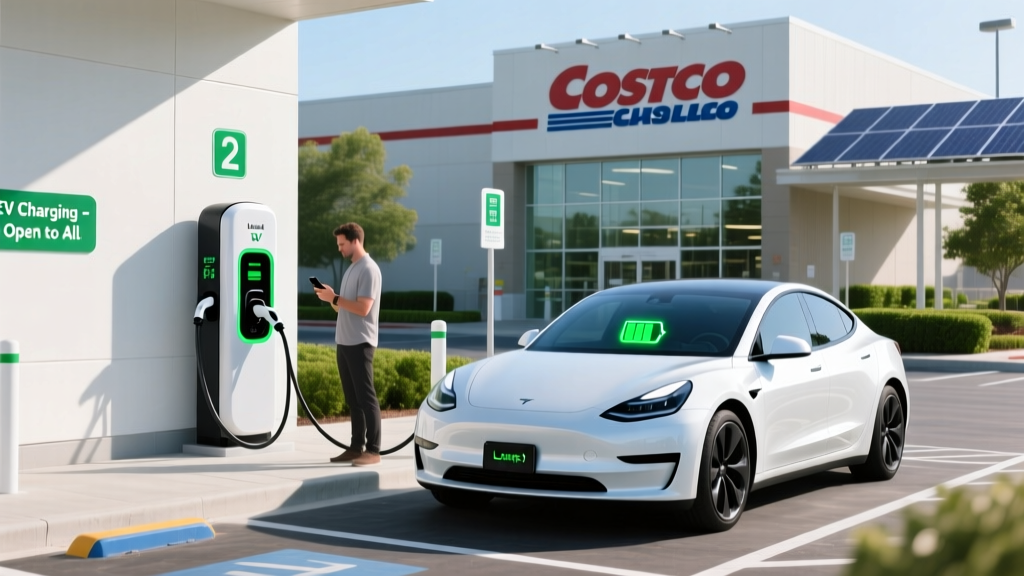
If you've ever circled a Costco parking lot hunting for a plug, you're not alone. The search query "do Costco have EV charging stations" pulls hundreds of searches a month — and the honest answer is: it depends entirely on which warehouse you visit. Costco does not operate a company-wide charging network the way Target, Walmart, or IKEA have committed to. Instead, charging availability at Costco is determined store-by-store, usually through third-party operators like ChargePoint, EVgo, or Blink that lease parking stalls from individual warehouse landlords.
As of early 2026, roughly 60–80 Costco warehouses nationwide have some form of EV charging on-site — out of 580+ U.S. locations. That's about 10–14% of stores. Most of those chargers are Level 2 (6–19 kW), which is ideal for topping up during a 45-minute shopping trip but won't deliver a meaningful charge in 15 minutes. A small but growing subset of Costco locations, particularly in California, Washington, and the Northeast corridor, host DC fast chargers (50–150 kW) operated by EVgo or Electrify America.
To check your specific warehouse, use the PlugShare app or the AFDC station locator from the U.S. Department of Energy. Filter by "Costco" and verify whether the charger is active, which network it's on, and what connector it uses before you rely on it.
Charging Levels Explained: Speeds, Power, and Miles Per Hour
Before comparing public chargers or installing one at home, you need clarity on the three EV charging levels. The most common confusion in EV ownership is mixing up kW (kilowatts — the rate of power delivery) with kWh (kilowatt-hours — the amount of energy stored in your battery). Think of kW as the width of the hose and kWh as the size of the bucket.
| Charging Level | Voltage | Power Output (kW) | Miles of Range Added Per Hour | Typical Use Case |
|---|---|---|---|---|
| Level 1 (120V) | 120V AC | 1.0–1.9 kW | 3–5 mi/hr | Overnight trickle, PHEVs, emergencies |
| Level 2 (240V) | 240V AC | 3.3–19.2 kW | 12–75 mi/hr | Home daily charging, workplaces, retail lots |
| DC Fast Charging | 400–800V DC | 50–350 kW | 150–1,200+ mi/hr (peak) | Road trips, highway corridors, rapid top-ups |
Charging time examples for common battery sizes (10–80% SoC):
- 60 kWh battery (e.g., Nissan Ariya, base Tesla Model 3): ~8 hours on Level 2 at 7.2 kW; ~22 minutes on a 150 kW DC fast charger (peak curve, tapering above 80%).
- 82 kWh battery (e.g., VW ID.4, Ford Mustang Mach-E Extended Range): ~11 hours at 7.2 kW; ~28 minutes on 150 kW DCFC.
- 100 kWh battery (e.g., Tesla Model S, Rivian R1T Max Pack): ~13 hours at 7.2 kW; ~32 minutes on 250 kW DCFC with 800V architecture.
Remember: peak kW ratings are not sustained. A charger rated at 150 kW may deliver that rate only between 10–40% SoC, then taper to 60–80 kW as the battery fills. This "charge curve" is why 10–80% time matters more than peak kW alone.
Costco Chargers vs. Home Charging: A Cost-Per-Mile Breakdown
Relying on Costco or public chargers is convenient occasionally, but for most EV owners, home Level 2 charging delivers the best economics. Here's how the costs compare in 2026:
| Charging Scenario | Cost per kWh | Cost per Mile (at 3 mi/kWh) | Annual Cost (12,000 mi) |
|---|---|---|---|
| Home Level 2 (off-peak utility rate) | $0.08–$0.14 | $0.03–$0.05 | $360–$600 |
| Home Level 2 (standard rate) | $0.14–$0.20 | $0.05–$0.07 | $600–$840 |
| Costco/public Level 2 (ChargePoint, EVgo) | $0.25–$0.49 | $0.08–$0.16 | $960–$1,920 |
| DC Fast Charging (Electrify America, EVgo) | $0.35–$0.58 | $0.12–$0.19 | $1,440–$2,280 |
| Gasoline vehicle (28 MPG, $3.40/gal) | — | $0.12 | $1,440 |
The takeaway: charging at home on off-peak rates costs roughly one-quarter to one-third of what you'd pay per mile for gasoline. Even standard-rate home charging undercuts gas significantly. Public DC fast charging, however, can approach or exceed gas costs — which is why home installation is the single most impactful financial decision an EV owner can make.
Home EV Charger Installation: Electrical Requirements, Costs, and Panel Upgrades
Installing a Level 2 home charger isn't just about buying a wallbox. Your home's electrical panel, wiring, and local code all shape the final cost. Here's what to expect.
Electrical Requirements
A typical Level 2 charger runs on a 240V dedicated circuit, similar to a dryer or oven outlet. Common configurations:
- 40-amp circuit / 32-amp continuous draw → delivers 7.7 kW. This is the most common home setup and sufficient for most EVs overnight.
- 50-amp circuit / 40-amp continuous draw → delivers 9.6 kW. Faster charging, recommended for larger batteries (80+ kWh).
- 60-amp circuit / 48-amp continuous draw → delivers 11.5 kW. Maximum for most residential panels without upgrade.
Per the National Electrical Code (NEC), continuous loads like EV chargers must not exceed 80% of the circuit breaker rating. A 40A breaker supports 32A continuous; a 50A breaker supports 40A continuous.
Panel Upgrade: The Hidden Cost
Many homes built before 2000 have 100-amp or 150-amp main panels. Adding a 40–50A EV circuit may exceed available capacity, especially if you already run electric heat, a dryer, and an oven. A licensed electrician will perform a load calculation to determine whether your panel can handle the new circuit.
If an upgrade is needed — typically to a 200-amp panel — expect to add $1,500–$3,500 to your project cost. In some cases, utilities offer rebates for panel upgrades tied to EV adoption, and a growing option is a smart panel load manager (like the Span smart panel or EMPoria system) that dynamically limits charger draw to avoid overload, potentially avoiding a full panel swap.
Installation Cost Breakdown
| Component | Low-End Estimate | High-End Estimate | Notes |
|---|---|---|---|
| Level 2 charger (hardware) | $300 | $750 | 32A–48A smart chargers; Wi-Fi enabled |
| Electrician labor | $400 | $1,500 | Depends on run length, wall type, conduit |
| Electrical materials (wire, conduit, breaker) | $100 | $500 | Longer runs = more copper = higher cost |
| Permit and inspection | $50 | $250 | Required in most jurisdictions; varies by city |
| Panel upgrade (if needed) | $1,500 | $3,500 | 200A panel swap; not always required |
| Total (no panel upgrade) | $850 | $3,000 | Most homeowners land at $1,200–$1,800 |
| Total (with panel upgrade) | $2,350 | $6,500 | Older homes with 100A service |
Always hire a licensed electrician — EV circuits carry sustained high current, and improper installation is a fire risk. Get at least three quotes and confirm the electrician has EV charger experience.
Which Connector Does Your EV Need? NACS, CCS, and CHAdeMO Compatibility
The connector landscape has consolidated significantly since 2023, when Ford and GM announced adoption of Tesla's North American Charging Standard (NACS). By 2026, NACS is the dominant connector for new EVs sold in North America, but millions of CCS1-equipped EVs remain on the road.
| Connector Type | Vehicles Using It (2026) | Availability at Costco/Public Chargers | Adapter Needed? |
|---|---|---|---|
| NACS (Tesla standard) | Tesla (all), Ford (2025+), GM (2025+), Rivian, Hyundai/Kia (2026+), Volvo/Polestar | Widely available; Tesla Superchargers open to all NACS vehicles | CCS→NACS adapter needed for older CCS chargers (~$200) |
| CCS1 (Combined Charging System) | VW ID.4 (pre-2026), BMW iX (pre-2026), older Hyundai/Kia, Chevy Bolt (discontinued) | Available at Electrify America, EVgo, ChargePoint DCFC | NACS→CCS adapter for Tesla Supercharger access (~$200) |
| CHAdeMO | Nissan Leaf (legacy), Mitsubishi Outlander PHEV (older) | Declining rapidly; fewer than 15% of new DCFC stalls | No widely available adapter; plan around CCS/NACS networks |
For Level 2 home and public charging, all non-Tesla EVs use a J1772 connector. Tesla vehicles include a J1772 adapter in the glovebox. This is universal and not a concern for home charging.
Best Home EV Chargers in 2026: Equipment Picks
After testing dozens of Level 2 units across multiple homes and EVs, here are the chargers that consistently deliver reliability, smart features, and fair pricing.
ChargePoint Home Flex
- Power: Up to 11.5 kW (48A) on 60A circuit; adjustable down to 16A
- Connector: J1772 (NACS adapter available)
- Cable length: 23 feet
- Smart features: Wi-Fi, app scheduling, Alexa integration, energy tracking
- Price: ~$550–$650
- Best for: Flexibility — adjustable amperage fits any panel
Tesla Wall Connector
- Power: Up to 11.5 kW (48A) on 60A circuit
- Connector: NACS native; J1772 adapter included for non-Tesla EVs
- Cable length: 24 feet
- Smart features: Wi-Fi, OTA updates, power sharing between multiple units
- Price: ~$450–$500
- Best for: Tesla owners or households with NACS-equipped EVs
Emporia Vue EV Charger
- Power: Up to 11.5 kW (48A) on 60A circuit
- Connector: J1772
- Cable length: 24 feet
- Smart features: Integrates with Emporia whole-home energy monitor, solar-aware scheduling
- Price: ~$400–$500
- Best for: Solar homes and energy-monitoring enthusiasts
Grizzl-E Smart
- Power: Up to 9.6 kW (40A) on 50A circuit
- Connector: J1772
- Cable length: 24 feet
- Smart features: OCPP-compatible, adjustable amperage, extreme cold rated (-40°F)
- Price: ~$400–$550
- Best for: Cold climates and outdoor installations
Safety, Code, and Installation Best Practices
EV charging involves sustained high-current draw — often 8+ hours at a time. This is fundamentally different from intermittent loads like a dryer. Safety requirements matter.
- Dedicated circuit: Your EV charger must have its own dedicated breaker — never shared with other appliances.
- GFCI protection: NEC 2020 and later requires GFCI (Ground Fault Circuit Interrupter) protection for outdoor receptacles. Many modern chargers have built-in GFCI; hardwired units may require a GFCI breaker.
- Outdoor rating: If installing outside, ensure the charger is rated NEMA 4 or NEMA 4X for weather resistance. All picks above carry outdoor ratings.
- Wire gauge: 40A circuits require minimum 8 AWG copper; 48A circuits require 6 AWG. Your electrician will size this correctly — don't cut corners.
- Permit and inspection: Most municipalities require a permit for new 240V circuits. The inspection ensures safe installation and may be required for insurance coverage or utility rebates.
Frequently Asked Questions
Do Costco have EV charging stations near me?
Availability varies by location. Roughly 60–80 Costco warehouses in the U.S. have third-party chargers (mostly Level 2, some DC fast). Use PlugShare or the DOE's AFDC station locator to check your specific warehouse before visiting. Do not assume a Costco will have a working charger without verifying.
How much does it cost to install a home EV charger?
For most homes with adequate panel capacity, expect $850–$3,000 total (charger + electrician + permit). If your home needs a 200A panel upgrade, add $1,500–$3,500. The national average lands around $1,400 for a straightforward 40A/240V install with a ~$500 smart charger.
How fast will each charging level add range?
Level 1 (120V) adds 3–5 miles per hour. Level 2 (240V) adds 12–75 miles per hour depending on amperage. DC fast charging can add 150–1,200+ miles per hour at peak power, though the charge curve tapers significantly above 80% SoC. For daily driving, Level 2 at home is the sweet spot.
Which connector/charger is compatible with my EV?
If you drive a Tesla, Ford (2025+), GM (2025+), Rivian, or 2026+ Hyundai/Kia/Volvo, your vehicle uses NACS. Most other recent EVs use CCS1. For Level 2 home and public charging, all non-Tesla EVs use J1772, and Teslas include a J1772 adapter. Check your vehicle's charge port or owner's manual if unsure.
How much does charging cost per mile vs gas?
Home Level 2 charging on off-peak rates costs roughly $0.03–$0.05 per mile. A comparable gasoline vehicle at 28 MPG and $3.40/gallon costs about $0.12 per mile. That's a 60–75% per-mile savings with home EV charging. Public DC fast charging ($0.12–$0.19/mile) is comparable to gas, which is why home charging is critical to the EV value proposition.
What electrical upgrades might I need?
If your home has a 100A or 150A main panel and existing high-draw appliances (electric heat, dryer, oven), you may need a 200A panel upgrade ($1,500–$3,500). Alternatives include installing a lower-amperage charger (16A/3.8 kW), using a smart load manager, or running a dedicated sub-panel. A licensed electrician's load calculation will determine your options.