Does Costco Have EV Charging Stations?
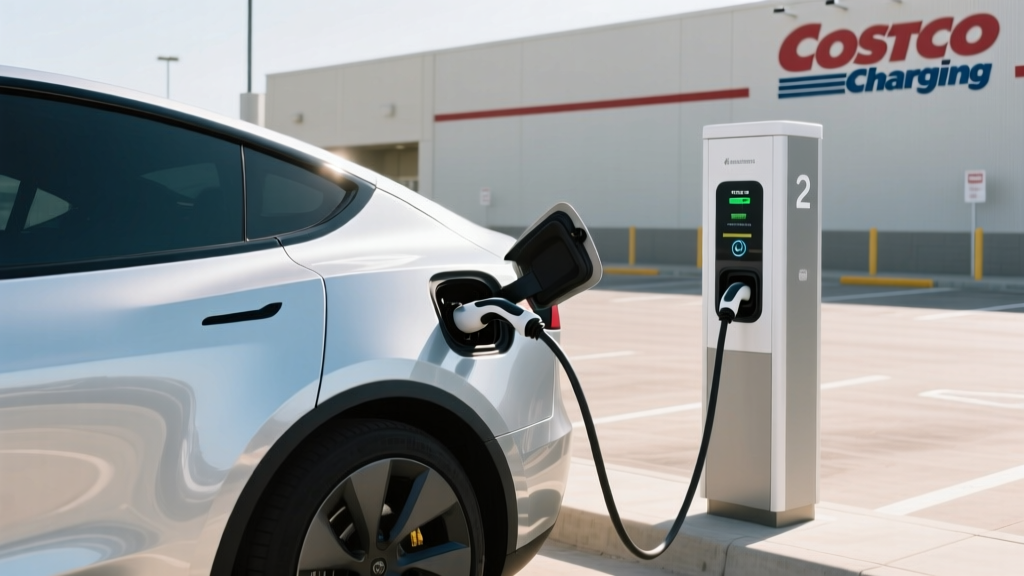
Costco does not operate a branded EV charging network, but a growing number of Costco warehouse locations across the U.S. host third-party chargers — primarily through partnerships with Electrify America, EVgo, and ChargePoint. As of early 2026, roughly 15–20% of Costco locations feature on-site DC fast chargers or Level 2 stations, typically installed in dedicated parking rows near the entrance or along the perimeter of the lot.
The appeal is obvious: a typical Costco shopping trip lasts 45–90 minutes, which is enough time to add 30–80 miles of range on a Level 2 charger or push a DC fast-charging session from 10% to 80% on compatible vehicles. For EV owners without home charging access, Costco charging represents a practical "destination charging" strategy that combines errands with battery replenishment.
Understanding EV Charging Levels: Speeds in kW and Miles Per Hour
Before evaluating any Costco charging setup — or deciding whether to install a home charger — you need to understand the three charging tiers. The critical distinction: kW (kilowatts) measures power — the rate at which energy flows into your battery. kWh (kilowatt-hours) measures energy — the total capacity stored. Think of kW as the width of a hose and kWh as the size of the bucket.
| Level | Voltage | Power (kW) | Miles Added Per Hour | Typical Use Case |
|---|---|---|---|---|
| Level 1 | 120V AC | 1.2–1.9 kW | 3–5 mi/hr | Overnight trickle; PHEVs |
| Level 2 | 240V AC | 3.3–19.2 kW | 12–75 mi/hr | Home, workplace, Costco destination |
| DC Fast | 400–800V DC | 50–350 kW | 150–1,200+ mi/hr (peak) | Road trips, quick top-ups |
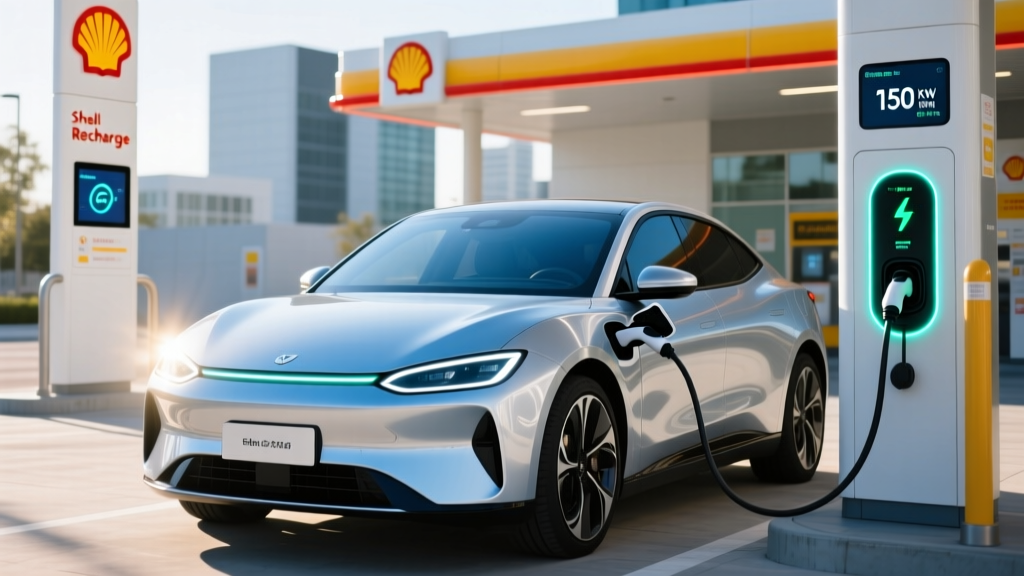
Most Costco locations with charging infrastructure offer either Level 2 (typically 7.2–19.2 kW) or DC fast charging (50–150 kW). The DC fast units are more common at newer installations, often Electrify America 150 kW CCS/NACS dispensers.
How Fast Will Each Charging Level Add Range?
Charging speed depends on your vehicle's onboard charger capacity (for Level 2) and its maximum DC fast-charge rate. Here are real-world charging time examples for common battery sizes:
| Battery Size | Level 2 at 7.2 kW | Level 2 at 11.5 kW | DC Fast 50 kW (10-80%) | DC Fast 150 kW (10-80%) |
|---|---|---|---|---|
| 40 kWh (Nissan Leaf) | ~4.5 hours | ~2.8 hours | ~35 min | N/A (max ~50 kW) |
| 75 kWh (Tesla Model Y / Hyundai Ioniq 5) | ~8.5 hours | ~5.2 hours | ~65 min | ~18–25 min |
| 100 kWh (Ford F-150 Lightning Extended) | ~11.5 hours | ~7 hours | ~90 min | ~35–42 min |
Important caveat: DC fast charging follows a charge curve. A vehicle rated for "150 kW peak" may only sustain that rate between 10–40% state of charge (SoC), then taper to 80–100 kW through 60%, and drop below 50 kW past 80%. This is why 10–80% times are the industry standard metric — charging past 80% is disproportionately slow and generally not worth the wait unless you absolutely need the range.
How Much Does It Cost to Install a Home EV Charger?
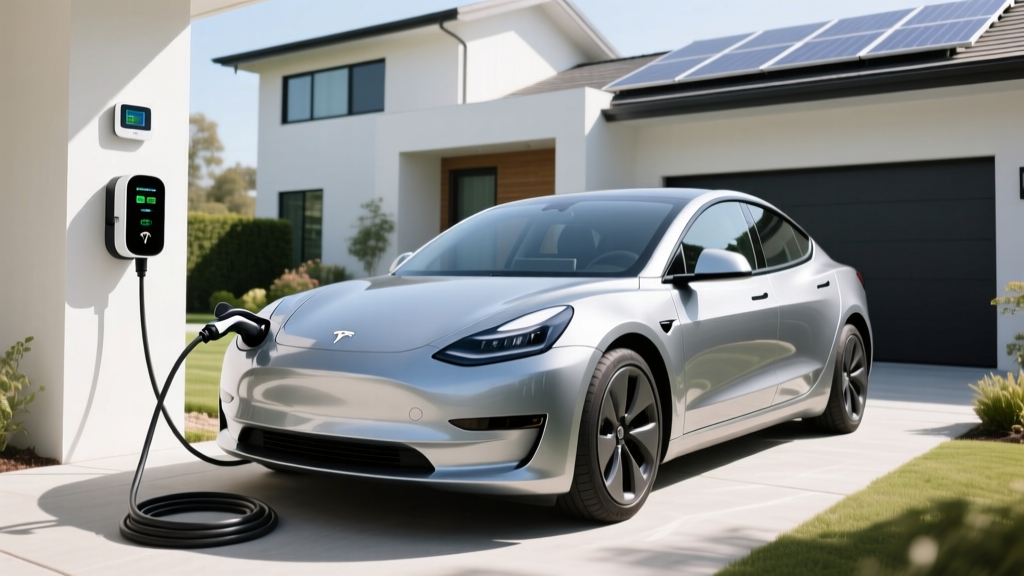
If Costco charging isn't convenient from your home, a Level 2 home installation is the single biggest quality-of-life upgrade an EV owner can make. Total cost depends on your electrical panel capacity, the distance from panel to charger location, and local permit fees.
| Component | Low-End Cost | High-End Cost | Notes |
|---|---|---|---|
| Level 2 Charger (hardware) | $300 | $750 | 32A–48A smart chargers; see equipment picks below |
| Electrician labor | $400 | $1,500 | Depends on run length, conduit, wall type |
| Electrical permit | $50 | $250 | Varies by municipality |
| Panel upgrade (if needed) | $1,500 | $4,000+ | Required if panel is maxed at 100A or has no spare slots |
| Total (no panel upgrade) | $750 | $2,500 | Most homes with 200A service |
| Total (with panel upgrade) | $2,250 | $6,500+ | Older homes with 100A service |
Electrical Requirements: What Your Panel Needs
A standard Level 2 home charger requires a 240V dedicated circuit, typically 40A or 50A. A 40A circuit delivers up to 9.6 kW (32A continuous draw, per NEC 80% rule); a 50A circuit delivers up to 12 kW (40A continuous). Your electrician will verify:
- Panel capacity: A 200A panel with available breaker slots can usually accommodate a 40–50A EV circuit. A 100A panel may require a service upgrade.
- Load calculation: Per NEC Article 220, your electrician will calculate total household load to confirm the panel won't be overloaded.
- Dedicated circuit: EV chargers must be on their own breaker — never shared with other appliances.
- GFCI protection: NEC 2020 and later require GFCI protection for EV charging outlets (NEMA 14-50 or hardwired).
- Outdoor rating: If installing outside, the charger must carry a NEMA 4 or IP65 weather-resistance rating.
Per the National Electrical Code, all EV supply equipment must be installed by a licensed electrician with proper permitting. DIY installation voids most charger warranties and may violate local code.
Connector Compatibility: NACS, CCS1, and CHAdeMO Explained
When pulling into a Costco charging spot — or any public station — you need the right connector. The North American market is consolidating around NACS (North American Charging Standard, originally Tesla's proprietary design), but CCS1 and CHAdeMO vehicles remain on the road.
| Connector | Brands Using It (2025–2026) | Adapter Needed? |
|---|---|---|
| NACS (Tesla) | Tesla (all), Ford, GM, Rivian, Volvo, Polestar, Hyundai/Kia (2025+ models) | CCS-to-NACS adapters available (~$200–$300) |
| CCS1 | VW, BMW, older Hyundai/Kia, Honda Prologue (pre-2025), Stellantis | NACS-to-CCS adapters available for Tesla Superchargers |
| CHAdeMO | Nissan Leaf (legacy), Mitsubishi Outlander PHEV | No adapter to NACS/CCS; network is shrinking |
Most new Electrify America and EVgo installations at Costco locations now offer both CCS1 and NACS cables. Always verify connector availability on the network's app before driving to a specific location.
How Much Does Charging Cost Per Mile vs Gas?
The economics of EV charging depend heavily on where and when you charge. Here's a cost-per-mile breakdown across common scenarios, compared against a 28 MPG gas vehicle at $3.40/gallon (national average, early 2026):
| Charging Scenario | Cost per kWh | Cost per Mile (at 3.0 mi/kWh) | Savings vs Gas |
|---|---|---|---|
| Home off-peak (utility time-of-use) | $0.08–$0.12 | $0.03–$0.04 | 70–75% cheaper |
| Home standard rate | $0.14–$0.18 | $0.05–$0.06 | 50–60% cheaper |
| Costco/public Level 2 | $0.20–$0.35 | $0.07–$0.12 | 10–40% cheaper |
| DC fast (Electrify America/EVgo) | $0.35–$0.55 | $0.12–$0.18 | 0–30% cheaper |
| Gas vehicle (28 MPG, $3.40/gal) | — | $0.12 | Baseline |
Key takeaway: home charging is dramatically cheaper than gas. Public DC fast charging at Costco or elsewhere can approach or exceed gas costs per mile, but it's still faster and more convenient than a gas station stop for many drivers. The sweet spot for Costco charging is Level 2 — if available at $0.20–$0.30/kWh, you're still saving meaningfully versus gasoline.
Recommended Level 2 Chargers for Home Installation
If Costco charging supplements your routine but you need reliable home charging, these are the top-performing Level 2 units we recommend for 2026:
ChargePoint Home Flex (NACS)
- Power: Up to 12 kW (50A circuit, 40A continuous)
- Connector: NACS (native); J1772 adapter included
- Cable length: 23 feet
- Smart features: Wi-Fi, scheduling, Alexa, energy tracking
- Price: ~$550–$650
- Best for: Tesla, Ford, GM, and Rivian owners wanting native NACS
Emporia Vue EV Charger
- Power: Up to 11.5 kW (48A continuous on 60A circuit)
- Connector: J1772 (NACS adapter available)
- Cable length: 24 feet
- Smart features: Solar integration, whole-home energy monitoring, load balancing
- Price: ~$400–$500
- Best for: Solar-equipped homes and budget-conscious buyers
Grizzl-E Smart
- Power: Up to 10 kW (40A continuous on 50A circuit)
- Connector: J1772 or NACS (configurable)
- Cable length: 24 feet
- Smart features: OCPP-compatible, adjustable amperage, outdoor-rated (NEMA 4)
- Price: ~$450–$550
- Best for: Cold-climate outdoor installs; Canadian-built durability
Finding Costco Charging Locations Near You
Because Costco does not maintain a public list of EV-equipped warehouses, the most reliable method is to use charging aggregator apps:
- PlugShare (plugshare.com) — filter by "Costco" in the search bar; shows real-time availability, connector types, and user reviews
- Electrify America app — many Costco-hosted DC fast chargers are EA stations; shows pricing and connector availability
- EVgo app — select Costco locations host EVgo Level 2 and DC fast units
- ChargePoint app — some Costco warehouses have ChargePoint Level 2 stations in employee or customer parking
Pro tip: PlugShare user reviews often note whether the chargers are reliably operational, whether ICE vehicles block the spots ("ICEing"), and whether the Costco location enforces EV-only parking.
Safety, Code, and Practical Considerations
Whether you're installing at home or evaluating a public Costco charger, keep these safety fundamentals in mind:
- Dedicated circuit: Home chargers must be on a dedicated breaker — never plug into a shared outlet with dryers, welders, or HVAC equipment.
- GFCI protection: Required by NEC 2020+ for all EV charging outlets. Modern hardwired chargers include built-in ground-fault protection.
- Outdoor rating: If your charger is exposed to weather, it must be rated NEMA 4 (splash-resistant) or IP65+. All three recommended chargers above meet this standard.
- Cable management: A 23–24 foot cable should be coiled or hung on a holster to prevent tripping hazards and UV degradation.
- Permit and inspection: Most jurisdictions require an electrical permit and post-installation inspection. Skipping this step can void homeowner's insurance coverage for electrical fires.
According to the National Fire Protection Association, properly permitted and inspected EV charger installations carry negligible fire risk. The greater safety concern is extension cords or undersized wiring — never use an extension cord with an EV charger.
Frequently Asked Questions About Costco Charging and Home EV Setup
How much does it cost to install a home EV charger?
Between $750 and $2,500 for most homes with existing 200A electrical service. If your home has a 100A panel that needs upgrading, total cost can reach $2,250–$6,500+. The charger hardware itself costs $300–$750; the remainder is electrician labor, conduit, and permits.
How fast will each charging level add range?
Level 1 (120V) adds 3–5 miles per hour. Level 2 (240V, 7.2–12 kW) adds 20–45 miles per hour depending on vehicle acceptance rate. DC fast charging (50–350 kW) can add 150–1,200+ miles per hour at peak, though real-world sessions average 10–80% in 18–45 minutes depending on battery size and charge curve.
Which connector is compatible with my EV?
Check your vehicle's charge port: NACS is now standard on Tesla, Ford, GM, Rivian, and 2025+ Hyundai/Kia/Volvo models. CCS1 is used by VW, BMW, and pre-2025 Hyundai/Kia. CHAdeMO is limited to older Nissan Leaf and Mitsubishi models. Adapters exist for cross-compatibility, but native connectors always deliver the best reliability.
How much does charging cost per mile compared to gas?
Home off-peak charging costs $0.03–$0.04 per mile — roughly 70% cheaper than a 28 MPG gas car at $3.40/gallon. Public Level 2 at Costco or similar venues runs $0.07–$0.12 per mile. DC fast charging at $0.35–$0.55/kWh costs $0.12–$0.18 per mile, approaching or exceeding gas costs.
What electrical upgrades might I need for a home charger?
If your home has a 200A electrical panel with available breaker slots, you likely need only a new 40A or 50A dedicated circuit. If your panel is 100A or fully loaded, a panel upgrade to 200A costs $1,500–$4,000+. Homes with older Federal Pacific or Zinsco panels should budget for full replacement regardless, as these are known safety hazards.
Is Costco charging free?
No. Costco does not subsidize charging. Third-party networks operating at Costco locations (Electrify America, EVgo, ChargePoint) charge standard rates, typically $0.25–$0.45/kWh for DC fast and $0.20–$0.35/kWh for Level 2. Some networks offer subscription plans that reduce per-kWh pricing by 10–25%.
Can I rely on Costco charging as my primary charging method?
It depends on your location and the specific Costco's charger reliability. For EV owners without home charging access, combining Costco Level 2 sessions (during weekly shopping) with workplace charging and occasional DC fast top-ups is a viable strategy. However, PlugShare reviews reveal that some Costco chargers experience downtime or ICEing — always have a backup charging plan.