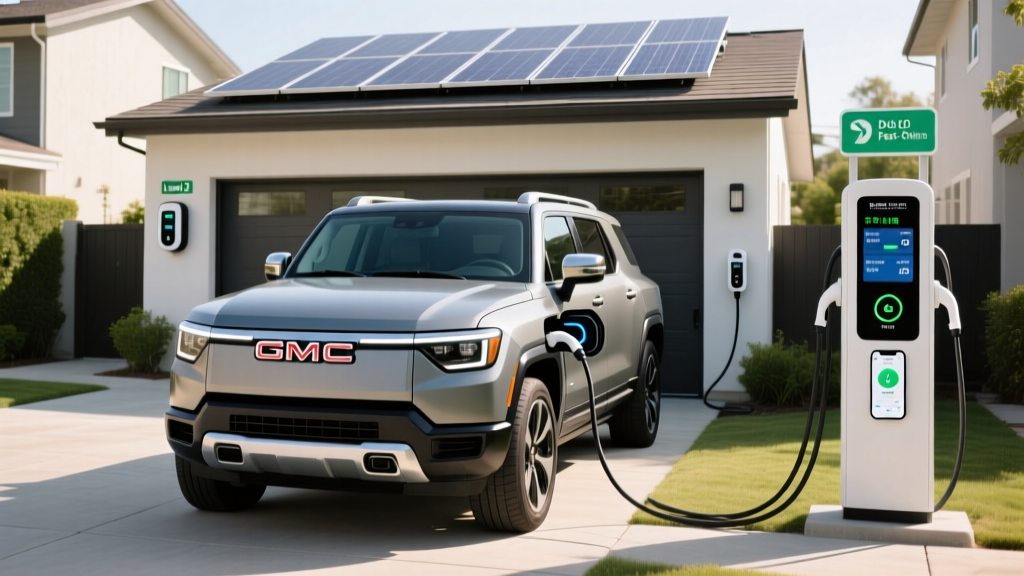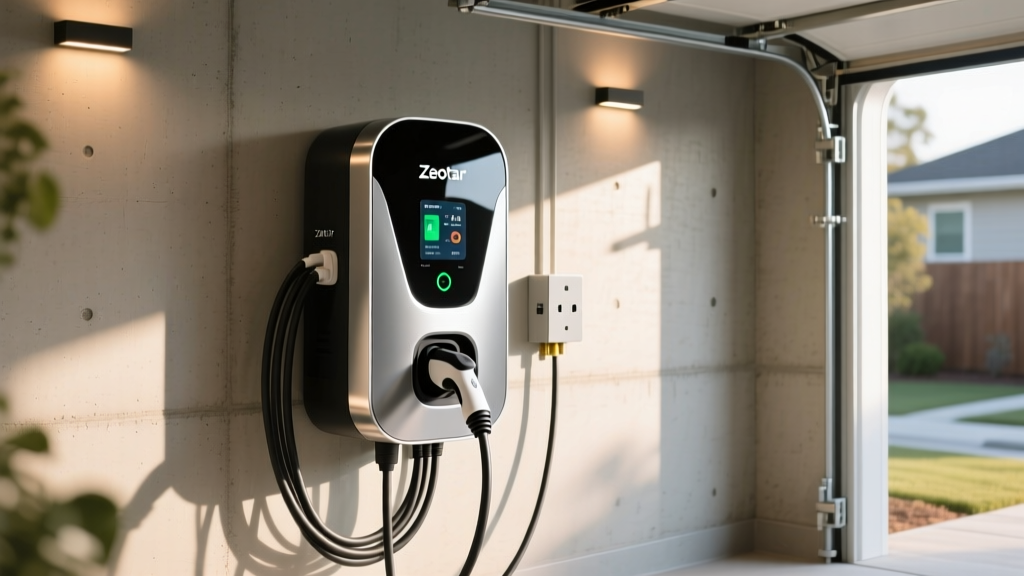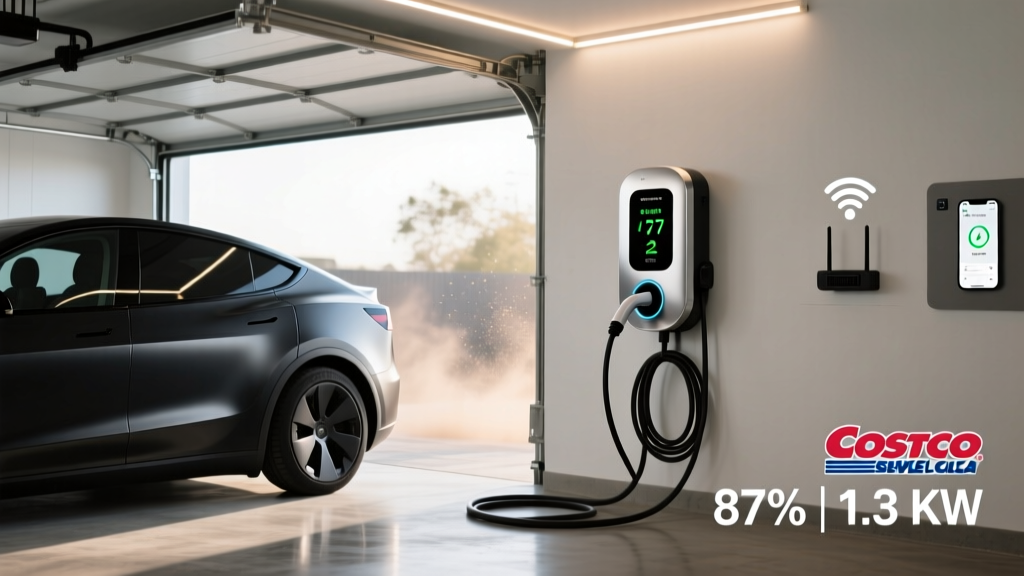
If you've wandered the electronics aisle at Costco or browsed their website lately, you've likely spotted Level 2 EV chargers stacked alongside air purifiers and robot vacuums. Costco's wholesale model promises bulk savings, but does that translate to the complex world of home EV charging equipment? As someone who has installed Level 2 chargers in three different homes and tested dozens of units, I took a hard look at what Costco actually offers, how those chargers compare to dedicated EV brands, and what the real total cost of ownership looks like when you factor in electrical work.
The short answer: Costco's EV charger selection is limited but occasionally includes solid mid-range units at competitive prices. However, the charger itself is only 20-30% of your total home charging setup cost. The electrical panel, wiring, permits, and electrician labor dominate the budget. Let's break down exactly what you need to know before you add a charger to your Costco cart.
Understanding EV Charging Levels: What Costco Actually Sells
Before evaluating any specific charger, you need to understand the three charging levels and what each delivers in practical terms. Costco exclusively sells Level 2 chargers — the 240-volt units that serve as the backbone of daily home charging. You won't find Level 1 cords (standard 120V) or DC fast chargers (commercial-grade 50-350 kW) in their inventory.
| Level | Voltage | Power (kW) | Miles of Range Added Per Hour | Typical Use Case |
|---|---|---|---|---|
| Level 1 | 120V AC | 1.0–1.4 kW | 3–5 miles | Overnight trickle; PHEVs with small batteries |
| Level 2 | 240V AC | 3.3–19.2 kW | 12–75 miles | Daily home and workplace charging |
| DC Fast | 200–900V DC | 50–350 kW | 150–1,200+ miles (equivalent rate) | Road trips; 10–80% in 15–30 minutes |
Critical terminology note: kW (kilowatts) measures power — the rate at which electricity flows into your vehicle. kWh (kilowatt-hours) measures energy — the total capacity of your battery. A 75 kWh battery charged at 7.2 kW takes roughly 10.4 hours from empty to full. Confusing these two is the single most common mistake new EV owners make when shopping for chargers.
Most Costco-listed Level 2 chargers fall in the 7.2 kW to 11.5 kW range, which translates to roughly 25–45 miles of range per hour of charging for a typical mid-size electric SUV consuming around 3.0–3.5 miles per kWh. That's enough to fully replenish most EVs overnight on a dedicated 40-amp or 48-amp circuit.
What EV Chargers Does Costco Stock?
Costco's EV charger inventory rotates seasonally and varies by warehouse location, but their online catalog has historically featured brands like Webasto (formerly AeroVironment HomeSmart), Emporia, and occasionally ChargePoint Home Flex bundles. Pricing typically ranges from $299 to $549, which positions them in the mid-range — cheaper than premium smart chargers like the $699 Enel X Way JuiceBox Pro or $649 Wallbox Pulsar Max, but above basic dumb chargers.
Here's where Costco's model creates friction: limited selection and inconsistent stock. Unlike dedicated EV equipment retailers or direct-from-manufacturer purchases, you can't count on Costco carrying a specific model with the exact amperage, cable length, or connector your vehicle requires. Their offerings tend to be J1772-connector units at 32A or 40A, which works for most non-Tesla EVs but leaves NACS-equipped Tesla owners needing an adapter or a different purchase path.
Costco Charger Snapshot: Typical Specs
- Power output: 7.2 kW (32A) to 9.6 kW (40A) most common
- Connector: J1772 standard (NACS/Tesla requires adapter)
- Cable length: 18–25 feet typical
- Smart features: Varies — some WiFi/app-enabled, some basic timer-only
- Price range: $299–$549 (member pricing)
- Warranty: Typically 1–3 years depending on manufacturer
Home Installation: The Real Cost Behind Any Charger
Here's the truth that no charger listing — Costco or otherwise — emphasizes enough: the charger hardware is the cheapest part of your home charging setup. The electrical work required to deliver 240V power to your garage or driveway typically costs 2–5x the price of the charger itself. Let's break down what a real installation looks like in 2026.
Electrical Requirements for Level 2 Charging
A Level 2 charger requires a dedicated 240-volt circuit, similar to what powers your electric dryer or oven. The amperage depends on your charger's power rating:
- 32A charger (7.2 kW): Requires a 40-amp circuit (NEC code mandates circuits be rated 125% of continuous load)
- 40A charger (9.6 kW): Requires a 50-amp circuit
- 48A charger (11.5 kW): Requires a 60-amp circuit
If your electrical panel has spare capacity and the run from panel to garage is short (under 50 feet), installation is straightforward. If your panel is maxed out, you're looking at a panel upgrade — a $1,500–$3,500 job on its own. Older homes with 100-amp service frequently need an upgrade to 200-amp to accommodate EV charging alongside existing loads like central AC, electric ranges, and dryers.
| Component | Simple Install (Short Run, Panel Has Space) | Complex Install (Long Run or Panel Upgrade) |
|---|---|---|
| Charger unit (e.g., Costco 40A) | $299–$549 | $299–$549 |
| Electrician labor (2–6 hours) | $300–$750 | $800–$2,000 |
| Materials (wire, conduit, breaker) | $100–$300 | $300–$800 |
| Permit and inspection | $50–$200 | $50–$200 |
| Panel upgrade (if needed) | $0 | $1,500–$3,500 |
| Total estimated cost | $749–$1,799 | $2,949–$7,049 |
Pro tip: Before buying any charger, have a licensed electrician evaluate your panel. Many offer free or low-cost assessments. Knowing your panel's spare amperage determines whether you can run a 48A charger or need to cap at 32A — a decision that affects daily charging speed significantly.
The federal Alternative Fuel Vehicle Refueling Property Credit (IRC §30C) can offset up to 30% of home charging equipment and installation costs, capped at $1,000. This applies to both the charger and the electrical work. Eligibility depends on your census tract meeting certain low-income or rural criteria — check the IRS guidelines or consult a tax professional, as these rules are specific and change periodically.
Connector Compatibility: Will a Costco Charger Plug Into Your EV?
The connector situation in 2026 is more complex than it was even two years ago. Here's the current landscape:
| Connector | Brands Using It | Adapter Needed for J1772 Charger? |
|---|---|---|
| NACS (Tesla standard, now SAE J3400) | Tesla (all models), Ford (2025+), GM (2025+), Rivian (2025+), Hyundai/Kia (2026+), many others transitioning | Yes — Tesla-to-J1772 adapter (~$50–$150) OR buy a native NACS charger |
| CCS1 (Combined Charging System) | Legacy: VW ID.4 (pre-2026), some older BMW, Mercedes, Honda models | No — J1772 is the AC portion of CCS1; plugs directly in |
| CHAdeMO | Nissan Leaf (discontinued 2025), older Mitsubishi Outlander PHEV | No — J1772 plugs directly in for Level 2 |
The bottom line: Most Costco chargers use the J1772 connector, which works natively with CCS1 and CHAdeMO vehicles for Level 2 AC charging. If you own a Tesla or any of the growing number of NACS-equipped vehicles from Ford, GM, Rivian, or Hyundai/Kia, you'll need a Tesla Mobile Connector with J1772 adapter or a third-party J1772-to-NACS adapter. These adapters are widely available but add $50–$150 to your total cost and introduce a connection point that some owners find less elegant than a native plug.
By late 2026 and into 2027, most new EVs sold in North America will ship with NACS ports. If you're buying a charger today and plan to keep it for 5+ years, investing in a NACS-native charger (like the Wallbox Pulsar Max NACS or Tesla Wall Connector) may be more future-proof than a J1772 unit, even if your current EV uses CCS1.
Charging Speed and Time: Real Numbers for Common EVs
Theoretical kW ratings only tell part of the story. What matters is how quickly your specific vehicle's battery can accept a charge and how long a 10–80% session takes. Here are real-world examples using a 9.6 kW (40A) Level 2 charger — the kind commonly found at Costco:
| Vehicle | Battery Capacity (kWh, usable) | Onboard Charger Acceptance | 10–80% Time at 9.6 kW | EPA Range |
|---|---|---|---|---|
| Tesla Model Y Long Range | 75 kWh | 11.5 kW max | ~5.5 hours | 320 miles |
| Hyundai Ioniq 5 (Standard Range) | 58 kWh | 10.9 kW max | ~4.2 hours | 240 miles |
| Ford Mustang Mach-E Extended Range | 91 kWh | 10.5 kW max | ~6.6 hours | 310 miles |
| Chevrolet Equinox EV 3RS | 85 kWh | 11.5 kW max | ~6.2 hours | 319 miles |
| Toyota bZ4X | 64 kWh | 7.2 kW max (limited) | ~4.7 hours | 236 miles |
Note the Toyota bZ4X's onboard charger limitation — even with a 9.6 kW Costco charger on your wall, the bZ4X can only accept 7.2 kW, so charging takes longer than the battery size alone would suggest. Always check your vehicle's onboard charger acceptance rate before investing in a high-amperage unit. Data sourced from fueleconomy.gov and manufacturer specifications.
For context, a typical overnight charge from 20% to 80% at 9.6 kW adds roughly 200–250 miles of range for most mid-size EVs — more than enough for daily driving. Even a 7.2 kW charger adds ~170 miles overnight, which covers the needs of 90%+ of American drivers whose daily commutes average under 40 miles.
Cost to Charge: Home vs. Public vs. Gas
The financial case for home charging is compelling — but only if you're charging at home most of the time. Here's how the math works in 2026:
| Scenario | Rate ($/kWh) | Vehicle Efficiency | Cost Per Mile |
|---|---|---|---|
| Home (off-peak utility rate) | $0.08–$0.14 | 3.2 mi/kWh | $0.025–$0.044 |
| Home (standard utility rate) | $0.14–$0.22 | 3.2 mi/kWh | $0.044–$0.069 |
| Public Level 2 (ChargePoint, EVgo L2) | $0.25–$0.49 | 3.2 mi/kWh | $0.078–$0.153 |
| DC Fast Charging (Electrify America, Tesla Supercharger) | $0.35–$0.55 | 3.0 mi/kWh (highway) | $0.117–$0.183 |
| Gasoline vehicle (28 MPG combined, $3.40/gal) | $3.40/gallon | 28 MPG | $0.121 |
The takeaway: Home charging at off-peak rates costs roughly $0.03–$0.05 per mile — a fraction of the $0.12 per mile a 28 MPG gas car burns. Even standard-rate home charging undercuts gasoline. But public DC fast charging approaches or exceeds gas costs, which is why home Level 2 installation pays for itself. According to the EPA, most EV owners who charge at home save $600–$1,200 annually on fuel compared to a comparable gas vehicle.
Equipment Recommendations: Beyond Costco's Aisles
If Costco happens to have a solid 40A smart charger in stock at a good price, it's a legitimate option. But if you need specific features, NACS compatibility, or higher amperage, here are the chargers I recommend based on hands-on testing:
Best Overall: Tesla Wall Connector (NACS or J1772)
- Power: Up to 11.5 kW (48A)
- Connector: NACS native; J1772 version also available
- Cable length: 24 feet
- Smart features: WiFi, app monitoring, power sharing between two units, load management
- Price: $475 (NACS) / $475 (J1772)
- Why: Best build quality, native NACS, and the power-sharing feature lets two chargers split one circuit — ideal for two-EV households
Best Smart Charger: Emporia Vue with EV Charger
- Power: Up to 11.5 kW (48A), adjustable in 1A increments
- Connector: J1772 (NACS adapter available)
- Cable length: 24 feet
- Smart features: Full energy monitoring, solar integration, scheduled charging, grid-aware charging
- Price: $399 (charger only) / $599 (with whole-home energy monitor)
- Why: Unmatched energy visibility; ideal for solar owners who want to charge only on excess production
Best Budget Option: Amazon Basics / Lectron 32A
- Power: 7.2 kW (32A)
- Connector: J1772
- Cable length: 20–25 feet
- Smart features: Minimal — basic timer, no WiFi
- Price: $199–$279
- Why: Gets the job done for under $300; fine for PHEVs and daily commuters who don't need app features
Safety, Code, and Installation Best Practices
EV chargers draw significant continuous current — more than most household appliances — making proper installation non-negotiable. Here's what the National Electrical Code (NEC) and best practices require:
- Dedicated circuit: Your EV charger must have its own breaker — no sharing with other outlets or appliances
- GFCI protection: NEC 2023 and later require ground-fault circuit interrupter protection for all EV charging outlets rated 150V to ground or less. Many chargers have built-in GFCI; verify with your electrician to avoid nuisance tripping from double-GFCI setups
- Outdoor rating: If your charger is installed outdoors or in an unsealed garage, ensure it carries a NEMA 4 or IP65 rating for weather resistance
- Wire gauge: 6 AWG copper for 40A circuits; 4 AWG for 50A; 3 AWG for 60A. Longer runs may require upsizing to prevent voltage drop
- Permit and inspection: Most jurisdictions require an electrical permit for EV charger installation. Skipping this can void homeowner's insurance coverage and create problems at resale
- Hardwired vs. plug: Hardwired installations (no plug) are preferred for 48A+ chargers and eliminate the failure point of a NEMA 14-50 receptacle. For 40A and below, a NEMA 14-50 outlet gives you portability
One often-overlooked detail: if you're installing a NEMA 14-50 outlet, make sure your electrician uses a commercial-grade receptacle (like Hubbell or Bryant), not a residential-grade one. EV charging draws continuous load for hours, and cheap receptacles have been known to overheat and melt under sustained use. This is a $15 vs. $60 difference that protects a $50,000 vehicle.
Should You Buy Your EV Charger at Costco?
Costco EV chargers make sense if:
- The specific model in stock matches your vehicle's amperage needs and connector type
- You're comfortable with J1772 or already own the necessary adapter
- The price undercuts comparable models by $50+ and you value the Costco return policy
- You don't need advanced smart features like solar integration or detailed energy analytics
Look elsewhere if:
- You drive a NACS-equipped vehicle and want a native plug without adapters
- You need a 48A charger to maximize charging speed for a large battery (90+ kWh)
- You want specific smart features like grid-responsive charging, detailed kWh tracking, or multi-unit power sharing
- The Costco selection simply doesn't have what you need — a common scenario given their limited inventory
The charger is a long-term investment — you'll likely keep it through your next EV purchase. Spending an extra $100–$200 on a NACS-native, 48A-capable smart charger today saves adapter hassles and ensures compatibility as the industry consolidates around the Tesla connector standard through 2027 and beyond.
Frequently Asked Questions
How much does it cost to install a home EV charger?
Expect $750–$1,800 for a straightforward installation with a short wire run and adequate panel capacity. Complex installs requiring long conduit runs, panel upgrades, or trenching can reach $3,000–$7,000. The charger itself typically costs $300–$550, with electrician labor and materials making up the rest. Always get a panel assessment before purchasing equipment.
How fast will each charging level add range?
Level 1 (120V) adds 3–5 miles per hour — barely adequate for daily driving. Level 2 (240V) at 7.2 kW adds ~25 miles per hour; at 9.6 kW, ~33 miles per hour; at 11.5 kW, ~40 miles per hour. DC fast charging can add 150–300+ miles in 20–30 minutes depending on the vehicle's peak acceptance rate. Real-world rates depend on your vehicle's efficiency (miles per kWh) and battery preconditioning.
Which connector/charger is compatible with my EV?
Check your vehicle's charge port. NACS (Tesla-style) is now standard on Tesla, Ford, GM, Rivian, and most 2025+ EVs. CCS1 is found on older VW, BMW, and Honda EVs. CHAdeMO is limited to the discontinued Nissan Leaf and older Mitsubishi PHEVs. J1772 chargers work with CCS1 and CHAdeMO vehicles natively; NACS vehicles require a J1772-to-NACS adapter. When in doubt, buy a NACS-native charger — it's the future standard.
How much does charging cost per mile vs gas?
Home charging at off-peak rates costs $0.03–$0.05 per mile for most EVs. A comparable 28 MPG gas car at $3.40/gallon costs $0.12 per mile. Public DC fast charging at $0.40–$0.55/kWh costs $0.12–$0.18 per mile — roughly equal to or slightly more than gas. The savings case for EVs depends heavily on home charging access.
What electrical upgrades might I need?
The most common upgrade is a panel capacity increase from 100A to 200A, required when your existing panel can't spare 40–60 amps for a dedicated EV circuit. This costs $1,500–$3,500. You may also need a service drop upgrade from the utility, new conduit runs, or a sub-panel if your garage is far from the main panel. A licensed electrician can assess your specific situation — many offer free estimates.