Understanding Costco's EV Charger Selection
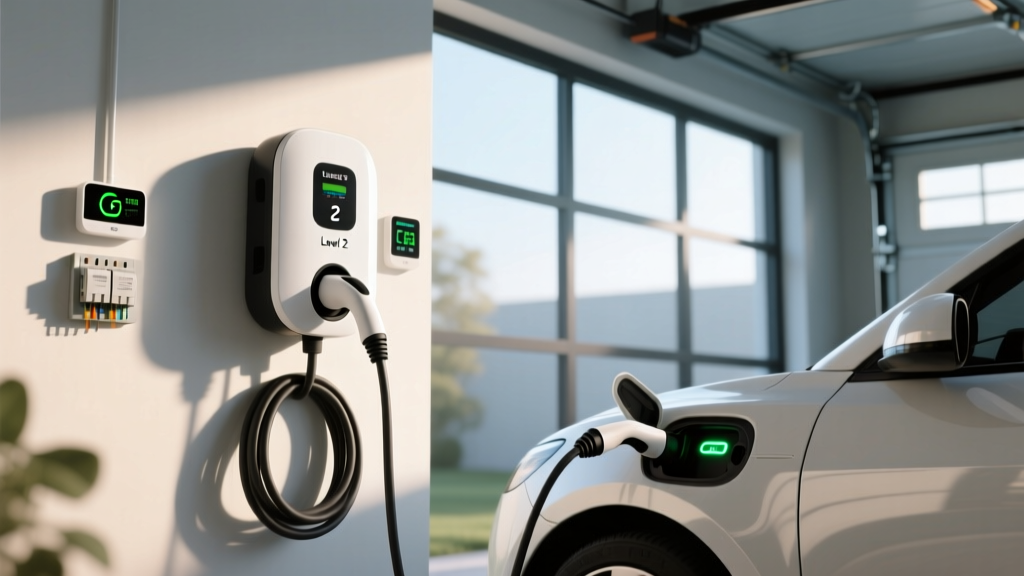
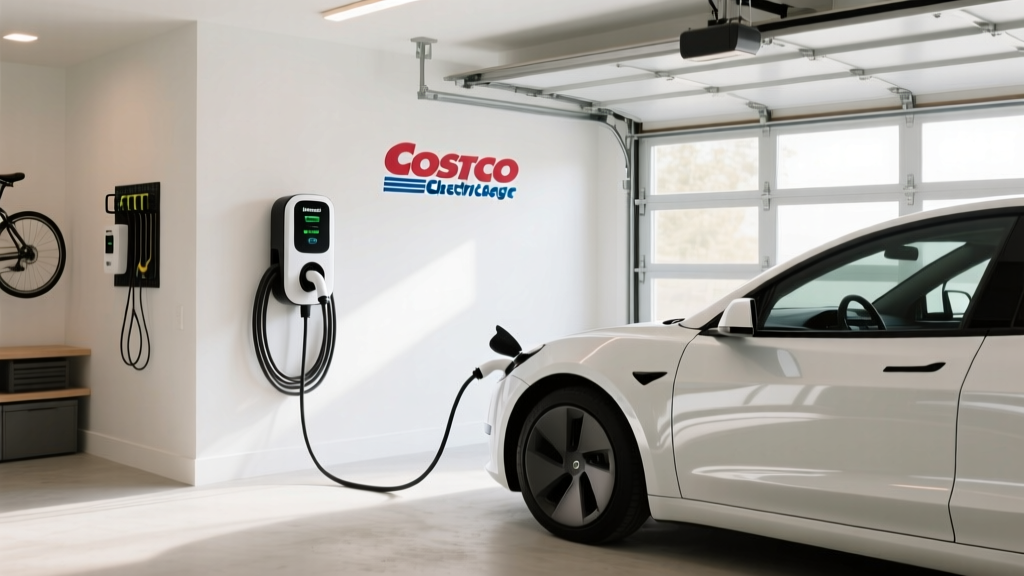
Costco occasionally stocks Level 2 home electric vehicle chargers through seasonal promotions and online inventory, typically featuring brands like Lectron, Emporia, or proprietary Costco-branded units. However, availability is inconsistent and varies by warehouse location and time of year. Before committing to a Costco electric charger purchase, you need to understand what electrical infrastructure your home requires, whether the unit meets your EV's connector needs, and if the total installed cost (equipment + electrician + permit) makes sense compared to dedicated EVSE retailers.
Charging Levels: Speed and Range Addition
Home charging happens at Level 1 or Level 2. DC Fast Charging is public-only infrastructure and irrelevant for home installation.
| Level | Voltage | Max Power (kW) | Miles Added/Hour | Typical Use Case |
|---|---|---|---|---|
| Level 1 | 120V | 1.4 kW | 3-5 miles | Overnight trickle, PHEVs, low-mileage drivers |
| Level 2 | 240V | 7.2-19.2 kW | 20-60 miles | Primary home charging, BEVs, daily use |
| DC Fast | 400-800V | 50-350 kW | 150-1000+ miles | Road trips, public stations only |
For a typical 75 kWh battery pack (Tesla Model Y, Ford Mustang Mach-E, Hyundai Ioniq 5), expect these 10-80% charging times:
- Level 1 (1.4 kW): 40-50 hours — impractical for daily BEV use
- Level 2 at 32A (7.7 kW): 8-10 hours — overnight charging, sufficient for most
- Level 2 at 48A (11.5 kW): 5-7 hours — faster recovery, future-proof
- Level 2 at 80A (19.2 kW): 3-4 hours — requires 100A circuit, premium install
Electrical Requirements for Home Installation
Any Level 2 Costco electric charger requires a dedicated 240V circuit. The circuit amperage must exceed the charger's maximum draw by 25% per National Electrical Code (NEC) continuous-load rules:
- 32A charger: Requires 40A circuit, 8-gauge wire
- 40A charger: Requires 50A circuit, 6-gauge wire
- 48A charger: Requires 60A circuit, 4-gauge wire
- 80A charger: Requires 100A circuit, 3-gauge wire
Most homes built after 1990 have 200A electrical panels with available capacity for a 40-60A EV circuit. Older homes with 100A service or panels already near capacity (electric heat, AC, dryer, oven) may require a panel upgrade to 200A or 400A, adding $1,500-$4,000 to installation costs.
Panel Upgrade Warning Signs
Before purchasing any charger, have a licensed electrician assess:
- Total existing load calculation vs. panel rating
- Available breaker spaces (you'll need 2 adjacent slots for a 240V double-pole breaker)
- Wire run distance from panel to garage/parking spot (longer runs = thicker wire = higher cost)
- Local permit requirements (most jurisdictions require permits for new 240V circuits)
Installation Cost Breakdown
Home EV charger installation costs vary dramatically based on your electrical panel condition, wire run distance, and local labor rates.
| Component | Cost Range | Notes |
|---|---|---|
| Charger Equipment | $300-$700 | Costco units typically $350-$500 when available |
| Electrician Labor | $400-$1,500 | Depends on wire run length and complexity |
| Permit Fees | $50-$200 | Varies by municipality |
| Wire & Materials | $100-$400 | Thicker gauge for longer runs costs more |
| Panel Upgrade (if needed) | $1,500-$4,000 | Only if existing panel lacks capacity |
| Total (no panel upgrade) | $850-$2,800 | Most homes fall in this range |
| Total (with panel upgrade) | $2,350-$6,800 | Older homes or high-load situations |
Many Costco chargers come with NEMA 14-50 plugs (50A receptacle) rather than hardwired connections. Plug-in units offer flexibility if you move, but hardwired installations are slightly cheaper and eliminate the receptacle as a failure point.
Connector Compatibility: Will It Fit Your EV?
As of 2026, the North American EV market has standardized on two connector types for Level 2 charging:
| Connector Type | Compatible Brands | Adapter Required? |
|---|---|---|
| NACS (Tesla) | Tesla (all), Ford (2025+), GM (2025+), Rivian (2025+), Volvo, Polestar | No for Tesla; adapter included with non-Tesla NACS vehicles |
| J1772 | All non-Tesla EVs pre-2025, most PHEVs | Tesla owners need J1772-to-NACS adapter ($100-$200) |
If you're buying a Costco electric charger in 2026, verify which connector it includes. Most third-party chargers still ship with J1772 connectors, which work with older EVs and require adapters for newer NACS-equipped vehicles. Some chargers offer swappable connector heads or include both in the box.
Cost to Charge: Home vs. Gas
Home electricity rates vary by region and time-of-use. Calculate your cost per mile to compare against gas vehicles:
| Scenario | Cost | Example Vehicle | Cost/Mile |
|---|---|---|---|
| Home off-peak (0.12/kWh) | $0.12/kWh | Tesla Model Y (3.5 mi/kWh) | $0.034 |
| Home peak (0.25/kWh) | $0.25/kWh | Tesla Model Y (3.5 mi/kWh) | $0.071 |
| Public Level 2 (0.35/kWh) | $0.35/kWh | Tesla Model Y (3.5 mi/kWh) | $0.100 |
| DC Fast (0.48/kWh) | $0.48/kWh | Tesla Model Y (3.5 mi/kWh) | $0.137 |
| Gas (3.50/gal, 25 MPG) | $3.50/gal | Toyota RAV4 (25 MPG) | $0.140 |
Home charging at off-peak rates delivers 75% cost savings versus gasoline. Even peak-rate home charging beats gas by 50%. Public DC fast charging approaches gas costs, which is why home installation remains the economic foundation of EV ownership.
Costco Charger vs. Dedicated EVSE Brands
Costco's EV charger inventory is opportunistic — they stock units when manufacturers offer bulk deals, then move on. This means limited selection, no long-term warranty support infrastructure, and potential difficulty finding replacement parts. Compare against established EVSE brands:
ChargePoint Home Flex
- Power: Up to 50A (12 kW) adjustable
- Connector: J1772 or NACS available
- Cable: 23 feet
- Smart Features: Wi-Fi, app scheduling, energy tracking
- Price: $550-$700
- Warranty: 3 years
Emporia Vue
- Power: 48A (11.5 kW)
- Connector: J1772 standard
- Cable: 24 feet
- Smart Features: Wi-Fi, solar integration, load management
- Price: $400-$500
- Warranty: 3 years
Typical Costco Unit (when available)
- Power: 32-40A (7.7-9.6 kW)
- Connector: Usually J1772
- Cable: 18-20 feet
- Smart Features: Basic or none
- Price: $350-$500
- Warranty: 1-2 years via manufacturer
Dedicated EVSE brands offer higher amperage, longer cables, better smart features, and established support channels. Costco units can save $100-$200 upfront but may limit your charging speed and lack the connectivity features that optimize off-peak charging schedules.
Safety and Code Considerations
NEC Article 625 governs EV charging installations. Key requirements:
- Dedicated Circuit: Your EV charger cannot share a circuit with other appliances
- GFCI Protection: Required for all receptacles (not hardwired units) in garages and outdoor locations
- Outdoor Rating: If installing outside, the charger must carry NEMA 4 or NEMA 4X rating for weather resistance
- Cable Management: NEC requires strain relief and protection from physical damage (no cables across driveways without conduit)
- Ventilation: Not required for modern sealed EV batteries, but garage installations should maintain ambient temperature below 104°F for optimal battery longevity
Always pull permits and schedule inspections. Unpermitted work can void homeowner's insurance claims if electrical fires occur, and may cause issues during home sale disclosures.
Frequently Asked Questions
How much does it cost to install a home EV charger?
Most installations cost $850-$2,800 total (equipment + electrician + permit + materials) if your electrical panel has sufficient capacity. Homes requiring panel upgrades spend $2,350-$6,800. Get quotes from 2-3 licensed electricians before purchasing equipment.
How fast will each charging level add range?
Level 1 adds 3-5 miles per hour (overnight = 30-50 miles). Level 2 at 32A adds 20-25 miles per hour. Level 2 at 48A adds 30-35 miles per hour. Most BEV owners charging overnight at 32A wake up with a full battery regardless of daily driving distance.
Which connector/charger is compatible with my EV?
Check your vehicle's charge port. Tesla, 2025+ Ford, GM, Rivian, Volvo, and Polestar use NACS. Older non-Tesla EVs use J1772. Adapters exist for cross-compatibility but add daily friction. Buy a charger matching your vehicle's native connector when possible.
How much does charging cost per mile vs gas?
Home off-peak charging costs $0.03-$0.05 per mile (75% savings vs gas). Peak home charging costs $0.06-$0.08 per mile (50% savings). Public DC fast charging costs $0.12-$0.15 per mile (approaching gas costs).
What electrical upgrades might I need?
If your home has a 200A panel with available breaker spaces and load capacity, you likely need no upgrades. Homes with 100A service, full panels, or existing high-load appliances (electric heat, AC, dryer, oven) may require panel upgrades to 200A or 400A, adding $1,500-$4,000 to installation costs.
Is a Costco electric charger worth buying?
Costco chargers can save $100-$200 versus dedicated EVSE brands, but availability is inconsistent and specs are often lower (32-40A vs 48-50A). If you find one in stock that matches your amperage needs and connector type, it's a reasonable budget option. For higher-power charging or smart features, established brands offer better long-term value.