Supercharger Pricing in 2026: What Tesla Owners Actually Pay
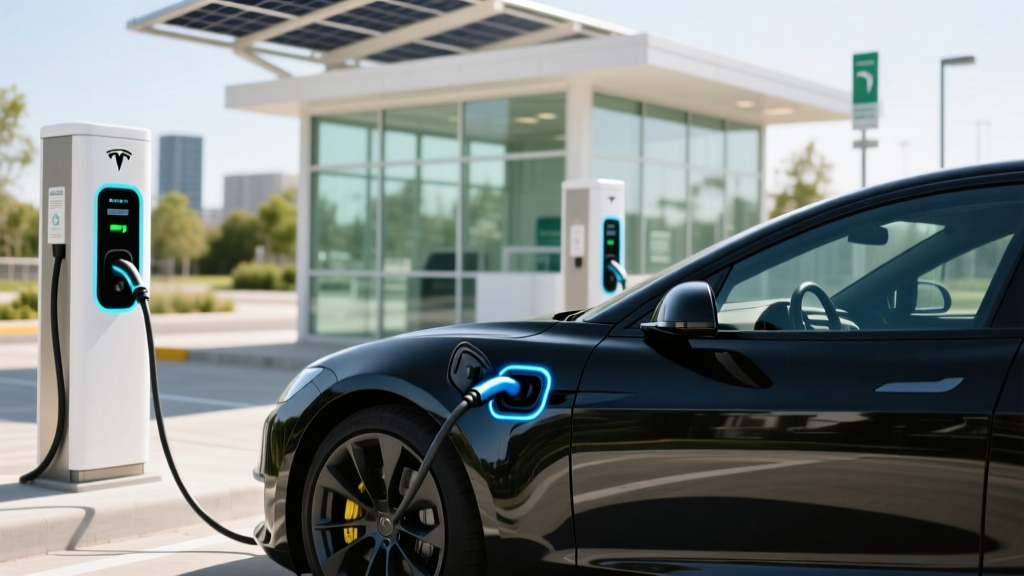
If you own a Tesla — or are about to buy one — the single most practical question is this: how much does it actually cost to charge? The answer depends entirely on where you plug in. The cost to Supercharge a Tesla at a public DC fast-charging station is dramatically different from topping up at home on a Level 2 wall connector, and understanding the gap between the two is the key to keeping your per-mile driving costs low.
As of early 2026, Tesla Supercharger pricing in the United States averages between $0.30 and $0.45 per kWh, depending on the station, time of day, and whether you're a Tesla owner or a non-Tesla EV driver using the network via the Tesla app. In high-cost markets like California, New York, and parts of the Northeast, peak-hour Supercharger rates can push past $0.50/kWh. Off-peak rates at select stations may dip to $0.25–$0.28/kWh, but these are the exception, not the norm.
Compare that to home charging on a Level 2 setup, where the national average electricity rate sits around $0.16–$0.18/kWh — and can drop to $0.08–$0.12/kWh on time-of-use (TOU) plans during overnight off-peak windows. That's a 2x to 4x cost difference per kilowatt-hour, and it compounds fast over thousands of miles.
Let's ground this in real numbers. A Tesla Model Y Long Range (2025/2026) carries a 75 kWh usable battery (NMC chemistry) with an EPA-estimated range of 310 miles. A Tesla Model 3 Long Range holds roughly 79 kWh usable and is EPA-rated at 341 miles. To charge either from 10% to 80% (the practical DC fast-charging window) requires about 52–55 kWh of energy delivered.
Charging Cost Comparison: Tesla Model Y Long Range (10%–80%)
| Charging Scenario | Rate ($/kWh) | Cost per Session (~55 kWh) | Cost per Mile | Annual Cost (12,000 mi) |
|---|---|---|---|---|
| Home Level 2 — Off-Peak TOU | $0.10 | $5.50 | $0.024 | $288 |
| Home Level 2 — National Avg | $0.17 | $9.35 | $0.040 | $480 |
| Tesla Supercharger — Avg US | $0.35 | $19.25 | $0.083 | $996 |
| Tesla Supercharger — CA Peak | $0.48 | $26.40 | $0.114 | $1,368 |
| Gas Car Baseline (28 MPG, $3.40/gal) | $3.40/gal | — | $0.121 | $1,457 |
Note: Annual cost assumes all charging occurs at the listed scenario. Most owners blend home and public charging. Gas baseline uses EPA combined fuel economy for a comparable compact SUV.
The takeaway is unambiguous: home charging is the economic backbone of EV ownership. Exclusive Supercharger use is cheaper than gasoline per mile in most states, but not by a wide margin — and in expensive electricity markets, it can approach or exceed gas costs. The owners who save the most charge at home 80–90% of the time and use Superchargers only for road trips.
Charging Levels Explained: Speed, Power, and Range per Hour
Before evaluating costs, you need to understand the three charging levels and what each delivers. The critical distinction: kW (kilowatts) measures power — the rate of energy flow, like water pressure from a hose. kWh (kilowatt-hours) measures energy — the total amount stored in your battery, like gallons in a tank. A 150 kW charger delivers energy faster than a 7.2 kW charger, but the battery capacity is still measured in kWh.
| Level | Voltage | Typical Power (kW) | Miles of Range Added per Hour | Best Use Case | 10%–80% Time (Model Y ~75 kWh) |
|---|---|---|---|---|---|
| Level 1 | 120V AC | 1.2–1.9 kW | 3–5 mi/hr | Overnight trickle, PHEVs, emergency | ~35–45 hours (not practical) |
| Level 2 | 240V AC | 7.2–19.2 kW | 20–55 mi/hr | Daily home/workplace charging | ~4–8 hours |
| DC Fast (Supercharger V3) | 400V+ DC | Up to 250 kW | ~1,000+ mi/hr (peak) | Road trips, rapid top-ups | ~18–22 minutes |
| DC Fast (Supercharger V4) | 800V+ DC | Up to 350 kW (future vehicles) | Varies | Next-gen Tesla architecture | TBD (vehicle-dependent) |
A few real-world nuances that matter:
- Charge curve taper: DC fast charging does not sustain peak kW. A Model Y at a V3 Supercharger may peak at 250 kW between 10–30% SoC, but tapers to ~100 kW by 60% and ~40 kW above 80%. The advertised "10–80% in 18 minutes" assumes ideal battery preconditioning and a V3 stall.
- Level 2 variability: A 48-amp Level 2 charger on a 60-amp circuit delivers 11.5 kW, adding roughly 37 miles of range per hour to a Model Y. A 32-amp unit on a 40-amp circuit delivers 7.7 kW — about 25 mi/hr. The difference matters if you're replenishing a large battery overnight.
- Level 1 is a fallback: Plugging into a standard 120V outlet works, but at 3–5 miles per hour, fully recharging a Model Y would take days. It's viable for PHEVs with small batteries or as a last resort.
How Much Does It Cost to Install a Home EV Charger?
This is where many first-time EV buyers get sticker shock — but the range is wider than most assume. The total installed cost of a home Level 2 charging station depends on four factors: the charger hardware, the electrical run from your panel, whether your panel needs an upgrade, and local permitting.
| Cost Component | Low-End Estimate | Typical Range | High-End Estimate | Notes |
|---|---|---|---|---|
| Level 2 Charger (hardware) | $350 | $450–$650 | $800 | Wi-Fi smart chargers; Tesla Wall Connector is ~$420 |
| Electrician labor (run + install) | $400 | $800–$1,500 | $3,000+ | Depends on distance from panel; conduit, drywall work |
| Electrical panel upgrade (if needed) | $0 | $0–$1,500 | $3,500+ | Required if panel is 100A or maxed out; 200A upgrade typical |
| Permit and inspection | $50 | $100–$300 | $500 | Varies by municipality; some areas waive for EV installs |
| Total Installed Cost | $800 | $1,350–$3,950 | $7,800+ | Homes needing panel + long runs hit the high end |
When do you need a panel upgrade? Most homes built after 2000 have a 200-amp electrical panel with enough spare capacity for a 60-amp circuit (serving a 48-amp charger). Older homes with 100-amp panels, or homes running electric heat, electric water heaters, and electric dryers simultaneously, may lack headroom. A licensed electrician will perform a load calculation per NEC Article 220 to determine if your panel can handle the additional draw. If not, a service upgrade to 200A (or even 320A for future-proofing) is required — and this is the single largest variable in your install cost.
Some utilities offer rebates that offset panel upgrades or charger hardware. Check with your local utility before scheduling work. Additionally, the federal Residential Clean Energy Credit (IRC §25D) through 2032 can cover up to 30% of qualified home energy expenditures; however, EV charger hardware eligibility under §25D has specific limitations — consult a tax professional for your situation.
Connector Compatibility: NACS, CCS, and the Tesla Advantage
Tesla vehicles use the North American Charging Standard (NACS) connector — a compact, proprietary design that Tesla opened to the industry in late 2022. As of 2025–2026, NACS has been adopted as the standard connector by Ford, GM, Rivian, Volvo, Hyundai, and most major automakers for new vehicles sold in North America. This means Tesla owners have native access to the entire Supercharger network (over 25,000 stalls in North America) without adapters, while non-Tesla EVs with NACS ports are gaining access via the Tesla app.
| Connector Type | Used By | Tesla Compatibility | Adapter Needed? |
|---|---|---|---|
| NACS (Tesla) | All Tesla vehicles; Ford, GM, Rivian, Volvo, Hyundai (2025+) | Native on all Teslas | No — direct plug |
| CCS1 (Combo) | Most non-Tesla EVs (pre-2025 models) | Requires Tesla CCS Adapter (~$175) | Yes — for CCS public chargers |
| CHAdeMO | Nissan Leaf, older Japanese EVs (legacy) | Not natively compatible | Third-party adapters exist but are rare/expensive |
| J1772 (Level 2 AC) | All EVs for Level 2 public/home charging | Tesla Mobile Connector includes J1772 adapter | Yes — included with Tesla |
If you own a Tesla and travel to areas with Electrify America, EVgo, or ChargePoint DC fast chargers (which predominantly use CCS1 connectors), you'll want Tesla's CCS adapter. It's a small dongle that converts the CCS plug to NACS and supports up to 250 kW. Without it, you're limited to Superchargers and J1772 Level 2 stations.
Cost per Mile: EV Charging vs. Gasoline in 2026
The per-mile cost comparison is where EV ownership makes its strongest financial case — if you charge at home. Here's a direct comparison using a 2026 Tesla Model Y Long Range (112 MPGe combined, per EPA data at fueleconomy.gov) versus a comparably sized gasoline SUV averaging 28 MPG combined.
| Vehicle / Scenario | Energy Cost | Cost per Mile | Annual Fuel Cost (12,000 mi) | 5-Year Fuel Cost |
|---|---|---|---|---|
| Tesla Model Y — Home Off-Peak ($0.10/kWh) | $0.10/kWh | $0.027 | $324 | $1,620 |
| Tesla Model Y — Home Avg ($0.17/kWh) | $0.17/kWh | $0.046 | $552 | $2,760 |
| Tesla Model Y — 50% Home / 50% Supercharger | Blended $0.26/kWh | $0.070 | $840 | $4,200 |
| Tesla Model Y — 100% Supercharger ($0.35/kWh) | $0.35/kWh | $0.095 | $1,140 | $5,700 |
| Gas SUV (28 MPG, $3.40/gallon) | $3.40/gal | $0.121 | $1,457 | $7,285 |
Over five years, a Tesla owner who charges primarily at home on an off-peak rate saves $5,000–$5,600 in fuel costs versus a gasoline SUV. Even a 50/50 blend of home and Supercharger use saves roughly $3,000 over five years. The worst-case scenario — 100% Supercharger use at national average rates — still saves about $1,585 over five years, though the margin narrows considerably in high-cost states.
The lesson: your electricity rate is your fuel price. If you can install a Level 2 charger and enroll in a TOU plan, your per-mile cost collapses. If you're entirely dependent on public DC fast charging, your savings shrink — and in some markets, you may pay more per mile than a fuel-efficient hybrid.
Recommended Home Charging Equipment for Tesla Owners
Not all Level 2 chargers are equal. Here are three proven options for Tesla owners in 2026, evaluated on power output, cable length, smart features, build quality, and price.
Tesla Wall Connector (Gen 4)
- Power Output: Up to 11.5 kW (48 amps on a 60-amp circuit)
- Connector: Native NACS — no adapter needed
- Cable Length: 24 feet
- Smart Features: Wi-Fi for OTA updates, load sharing with multiple Wall Connectors, power management for panel-limited homes
- Price: ~$420
- Verdict: Best value for Tesla-only households. Clean integration, fast charging, and Tesla's load-sharing feature lets you install two units on a single 60A circuit. No app ecosystem beyond Tesla's.
ChargePoint Home Flex (NACS version)
- Power Output: Up to 12 kW (50 amps, adjustable from 16A–50A)
- Connector: Available with NACS pigtail (2025+ models) or J1772 with Tesla adapter
- Cable Length: 23 feet
- Smart Features: ChargePoint app with scheduling, energy tracking, Alexa integration, amperage adjustment via app to match your circuit
- Price: ~$550–$650
- Verdict: Best for mixed-EV households or owners who want granular app control. The adjustable amperage is excellent for homes with limited panel capacity — you can set it to 32A or 40A without changing hardware.
Emporia Vue Level 2 Charger
- Power Output: Up to 11.5 kW (48 amps on a 60-amp circuit)
- Connector: J1772 (Tesla adapter included) or NACS version available
- Cable Length: 24 feet
- Smart Features: Integrates with Emporia Vue whole-home energy monitor, solar-aware charging, TOU scheduling, V2H-ready
- Price: ~$400–$500
- Verdict: Best for solar-equipped homes. If you have rooftop solar, the Emporia charger can prioritize excess solar production for EV charging, driving your effective fuel cost near zero.
All three chargers are UL-listed, rated for indoor and outdoor installation (NEMA 4 or equivalent), and support hardwired installation. Hardwired units are preferred over plug-in (NEMA 14-50) models because they eliminate the receptacle as a failure point, allow higher amperage, and satisfy code requirements for GFCI protection at the breaker rather than the outlet — reducing nuisance trips.
Safety, Electrical Code, and Installation Requirements
EV charging is a continuous high-draw electrical load — your charger will pull maximum current for 6–10 hours straight. This is fundamentally different from an oven or dryer that cycles on and off. The National Electrical Code (NEC) and local building codes reflect this with specific requirements:
- Dedicated circuit: Your Level 2 charger must be on its own dedicated circuit — not shared with other appliances. A 48-amp charger requires a 60-amp breaker (NEC requires circuits to be rated at 125% of continuous load).
- GFCI protection: NEC 2020 and later require GFCI protection for EV charging outlets. Hardwired installations handle this at the breaker; plug-in installations require a GFCI breaker (which costs $50–$100 more than a standard breaker) to avoid nuisance trips from the outlet's built-in GFCI.
- Outdoor rating: If your charger is installed outdoors (garage-adjacent, carport, driveway), the unit must be rated NEMA 4 or IP65 for weather resistance. All three chargers recommended above meet this standard.
- Wire gauge: A 60-amp circuit typically requires 6 AWG copper wire (THHN in conduit) or 4 AWG NM-B (Romex). Your electrician will size wire based on run length and local code. Long runs (>100 feet from panel) may require upsizing to prevent voltage drop.
- Permit and inspection: Most jurisdictions require an electrical permit for EV charger installation. The inspection verifies correct wire sizing, breaker rating, grounding, and GFCI compliance. Skipping the permit can void your homeowner's insurance coverage for electrical fires.
A critical warning: do not use extension cords or outlet splitters for EV charging. A standard 120V extension cord (even a heavy-duty 12-gauge) is not rated for the sustained thermal load of continuous Level 1 charging and poses a fire risk. For Level 2, there is no safe extension cord configuration. If your parking spot is too far from the charger, have an electrician relocate the unit or extend the circuit properly in conduit.
Frequently Asked Questions
How fast will each charging level add range to my Tesla?
Level 1 (120V) adds 3–5 miles per hour — roughly 36–60 miles overnight. Level 2 (240V, 48A) adds 37–44 miles per hour, fully recharging a Model Y overnight in 7–8 hours. DC fast charging (Supercharger V3, 250 kW) adds up to 200 miles in 15 minutes at peak rate, though the charge curve tapers significantly above 60% SoC, making 10–80% the practical fast-charging window.
Which connector do I need for my Tesla?
All Tesla vehicles built for the North American market use the NACS connector natively. This plugs directly into any Tesla Supercharger and Tesla Wall Connector. For non-Tesla public DC fast chargers using CCS1 connectors (Electrify America, EVgo, some ChargePoint stations), you'll need the Tesla CCS Adapter (~$175 from Tesla). For Level 2 public stations with J1772 connectors, Tesla includes a J1772-to-NACS adapter with every vehicle.
What electrical upgrades might my home need for a Level 2 charger?
The most common upgrade is a panel capacity increase. If your home has a 100-amp service panel that's already heavily loaded (electric heat, electric dryer, electric range), adding a 60-amp EV circuit may exceed the panel's capacity. A licensed electrician will run a NEC Article 220 load calculation. If you're over capacity, a service upgrade to 200A or 320A costs $1,500–$3,500+. Other potential upgrades include running new conduit from the panel to the garage, upgrading the meter base, or installing a sub-panel if the garage is detached.
Is Supercharging bad for my Tesla battery?
Occasional Supercharging has minimal impact on battery health. Tesla's battery management system (BMS) actively manages cell temperature during DC fast charging, and the charge curve taper above 80% is specifically designed to reduce stress on the NMC cells. However, daily DC fast charging at peak rates will accelerate degradation slightly compared to Level 2 home charging. Tesla's battery warranty covers 120,000 miles or 8 years (whichever comes first) with a minimum 70% capacity retention threshold. Most Tesla batteries in real-world data retain 88–92% capacity at 100,000 miles — well above the warranty floor. For maximum longevity, charge to 80% daily on Level 2 and reserve 100% charges and frequent Supercharging for road trips.
Can I install a Tesla Wall Connector myself?
Tesla sells a plug-in Wall Connector with a NEMA 14-50 plug that you can plug into an existing 240V/50A outlet. However, if that outlet was installed for a dryer or welder and hasn't been inspected for continuous EV-charging duty, it may not be safe. Loose connections, undersized wire, or worn receptacles can overheat during 8-hour charging sessions. The hardwired Wall Connector installation should always be performed by a licensed electrician with a permit. DIY electrical work on a 60-amp circuit carries serious shock and fire risk, and unpermitted work can void your home insurance.
The Bottom Line: Optimize Where You Charge
The cost to Supercharge a Tesla in 2026 ranges from $0.25 to $0.50+ per kWh depending on location and time — translating to roughly $0.07–$0.11 per mile. That's cheaper than gasoline in most states, but dramatically more expensive than home Level 2 charging at $0.03–$0.05 per mile. The financial case for EV ownership is strongest when you charge at home on a time-of-use plan, using Superchargers only for the 10–15% of miles driven on road trips.
A home Level 2 installation typically costs $1,350–$3,950 all-in (equipment, electrician, permit), with panel upgrades adding $1,500–$3,500 if needed. That upfront investment pays for itself in fuel savings within 2–4 years for a typical driver. Pair it with a smart charger like the Tesla Wall Connector or ChargePoint Home Flex, schedule charging during off-peak hours, and your per-mile cost drops below $0.03 — a figure no gasoline vehicle can approach.