The Real Cost of a Tesla Charging Station for Home
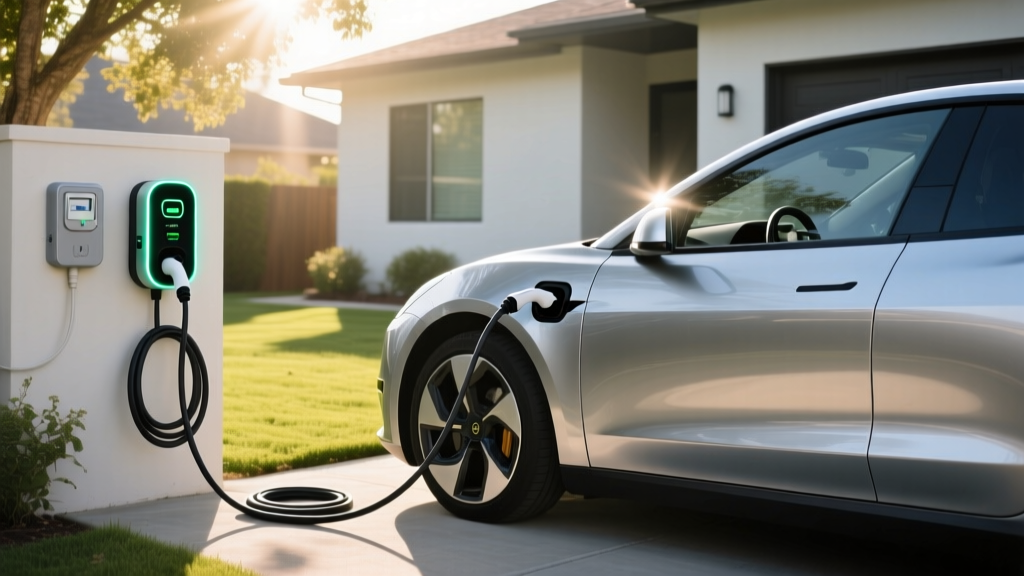
If you own a Tesla Model 3, Model Y, Model S, or Model X—or any EV adopting the North American Charging Standard (NACS)—the single most impactful upgrade you can make is a home Level 2 charger. The question every buyer asks: what does it actually cost to get a Tesla Wall Connector wired into your garage?
The short answer: expect to spend $1,200 to $2,800 total for a straightforward installation on an existing 200-amp electrical panel, or $3,000 to $5,500+ if your home needs a panel upgrade or a long conduit run. That figure includes the charger hardware, a licensed electrician, permit fees, and any necessary materials.
Below, we break down every cost component, explain what you're actually buying (in terms of power, not marketing), and show you how home charging compares to gas on a per-mile basis. We also cover the electrical realities that catch first-time EV owners off guard—panel capacity, dedicated circuits, and the 80% continuous-load rule.
Charging Levels Explained: Speed in kW and Miles Per Hour
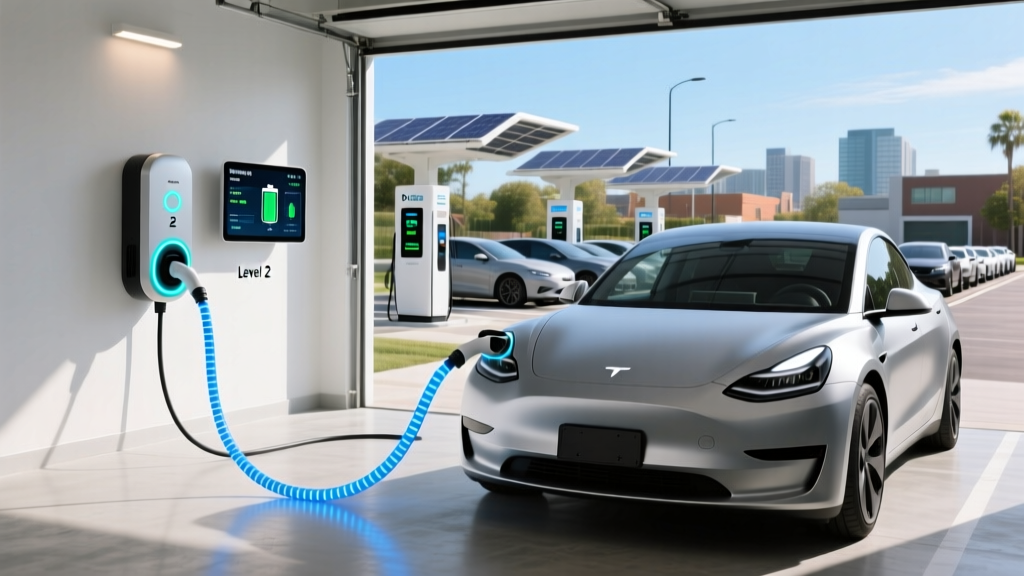
Before pricing equipment, you need to understand what each charging level delivers. Power is measured in kilowatts (kW)—the rate of energy flow—while your battery stores energy in kilowatt-hours (kWh). Think of kW as how fast water flows from a hose, and kWh as the total volume of the bucket.
| Level | Voltage | Max Power (kW) | Miles of Range Added Per Hour | Typical Use |
|---|---|---|---|---|
| Level 1 | 120V AC | 1.2–1.9 kW | 3–5 miles | Overnight trickle; PHEVs or very low daily mileage |
| Level 2 (Home) | 240V AC | 7.2–11.5 kW | 25–44 miles | Daily home charging; full overnight recharge for most BEVs |
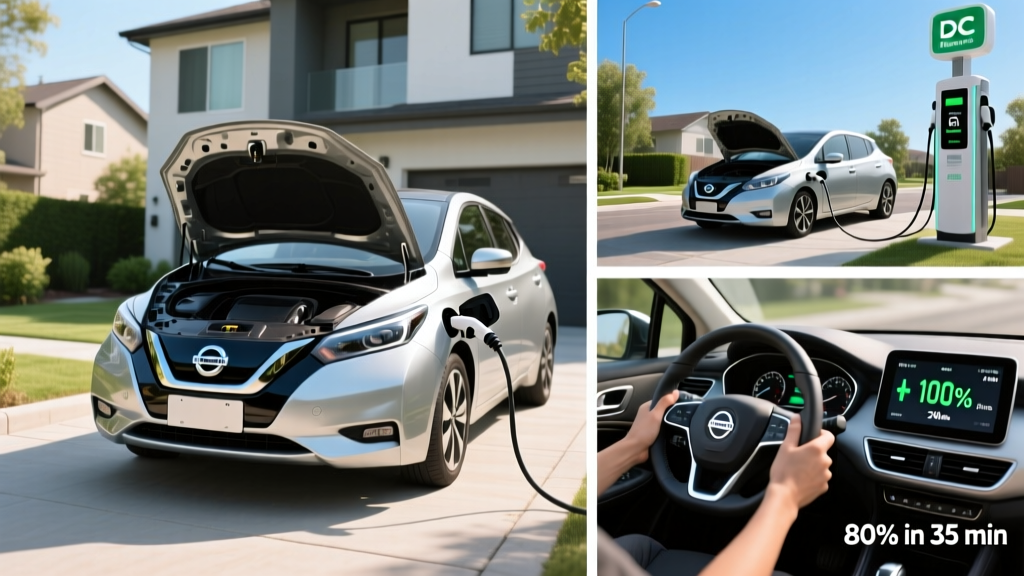
| DC Fast Charging | 400–800V DC | 50–350 kW | 150–1,000+ miles (equivalent rate) | Road trips; 10–80% in 15–40 minutes |
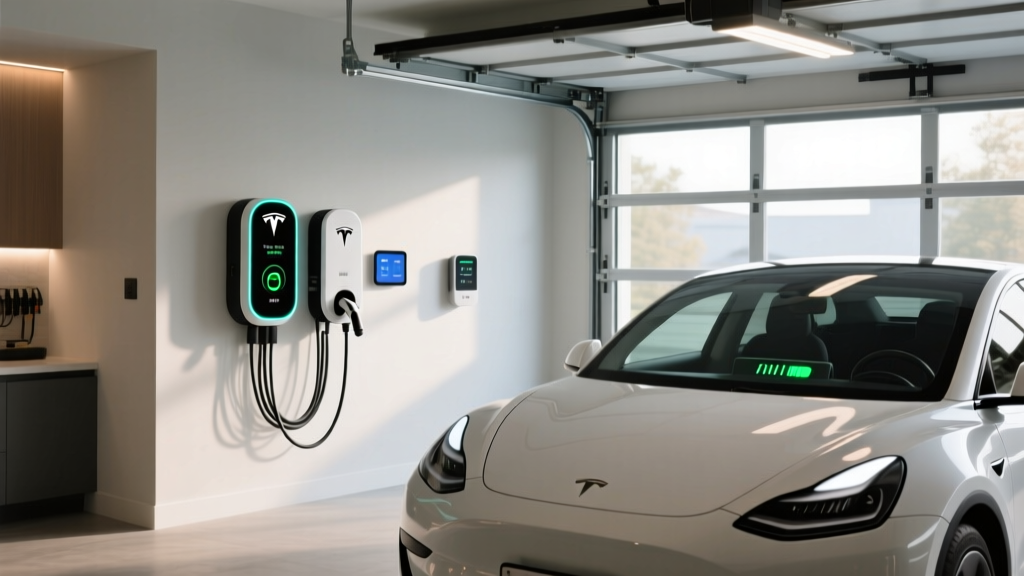
For Tesla owners, home Level 2 is the sweet spot. A Tesla Wall Connector on a 60-amp circuit delivers up to 11.5 kW (48 amps continuous), adding roughly 44 miles of range per hour of charging (per Tesla's official specs). That means a depleted 75 kWh battery (Model 3 Long Range) can go from 10% to 80% in about 4.5 hours—well within an overnight window.
Equipment: Tesla Wall Connector vs. Alternatives
Tesla's Wall Connector is the default choice for Tesla owners, but it's worth understanding the competitive landscape—especially now that NACS has become the industry standard adopted by Ford, GM, Rivian, Volvo, and others for 2025–2026 models.
Tesla Wall Connector (3rd Gen)
- Max Output: 11.5 kW (48A on 60A circuit)
- Connector: NACS (native Tesla)
- Cable Length: 24 feet
- Smart Features: Wi-Fi, OTA updates, power sharing between units, Tesla app integration
- Price: ~$475 (direct from Tesla)
- Best For: Tesla-only households wanting seamless integration
ChargePoint Home Flex (NACS)
- Max Output: 12 kW (50A on 60A circuit, adjustable down)
- Connector: NACS (2025+ models) or J1772 with adapter
- Cable Length: 23 feet
- Smart Features: Wi-Fi, Alexa, scheduling, energy tracking, flexible amperage
- Price: ~$649
- Best For: Multi-EV households or those wanting adjustable circuit sizing
Emporia Level 2 EV Charger
- Max Output: 11.5 kW (48A)
- Connector: J1772 (NACS adapter available) or native NACS
- Cable Length: 24 feet
- Smart Features: Wi-Fi, detailed energy monitoring, solar integration, scheduling
- Price: ~$399
- Best For: Budget-conscious buyers with solar panels wanting energy visibility
Grizzl-E Smart (NACS)
- Max Output: 10 kW (40A)
- Connector: NACS or J1772
- Cable Length: 24 feet
- Smart Features: OCPP protocol, adjustable amperage, extreme cold rating (-40°F)
- Price: ~$549
- Best For: Cold-climate owners needing rugged, adjustable hardware
Installation Cost Breakdown: What You'll Actually Pay
The hardware is the smallest part of the equation. Installation labor and electrical infrastructure dominate the final bill. Here's what a typical Tesla Wall Connector installation looks like, based on national averages and real-world quotes.
| Component | Simple Install (Panel Nearby) | Complex Install (Long Run / Panel Upgrade) |
|---|---|---|
| Tesla Wall Connector (hardware) | $475 | $475 |
| Electrician labor (2–6 hours @ $85–$150/hr) | $250–$500 | $600–$1,500 |
| 60A breaker + wiring (6 AWG copper, 50 ft) | $150–$300 | $400–$800 |
| Electrical permit | $50–$150 | $50–$200 |
| Conduit and mounting hardware | $50–$100 | $200–$500 |
| Panel upgrade (100A → 200A, if needed) | N/A | $1,500–$3,500 |
| Total Estimated Cost | $975–$1,525 | $3,225–$6,975 |
What Determines Your Installation Complexity?
Distance from panel to charger: Every foot of conduit and wire adds cost. A garage wall sharing a side with the main panel is ideal. A detached garage or a charger on the far side of the house means more wire, more conduit, and more labor.
Panel capacity: A Level 2 charger on a 60-amp circuit draws 48 amps continuously. Under the National Electrical Code (NEC), your panel must have sufficient spare capacity—calculated using a load calculation per NEC Article 220. Homes with 100-amp service often need an upgrade to 200 amps. This is the single biggest cost variable and one many buyers overlook.
The 80% rule: EV charging is classified as a continuous load under NEC 210.20(A). That means a 60-amp breaker can only deliver 48 amps continuously. A 50-amp breaker delivers 40 amps. Never undersize your breaker relative to the charger's rated amperage.
Connector Compatibility: NACS, CCS, and Adapter Needs
The connector landscape has consolidated dramatically since 2023. Tesla's NACS connector is now the dominant North American standard, but millions of CCS1-equipped EVs remain on the road. Here's what you need to know for your garage.
| Connector | Brands Using It | Home Charger Compatibility |
|---|---|---|
| NACS (Tesla) | Tesla, Ford, GM, Rivian, Volvo, Polestar, Mercedes, Nissan (2025+), Honda (2025+) | Tesla Wall Connector (native); NACS-equipped ChargePoint, Emporia, Grizzl-E |
| CCS1 | Hyundai, Kia, BMW, VW, Stellantis, legacy Ford/GM (pre-2025) | J1772 chargers with CCS DC inlet; some Level 2 chargers offer J1772 plugs with NACS adapters |
| CHAdeMO | Nissan Leaf (pre-2025), Mitsubishi (legacy) | Rarely supported at home; mostly DC fast-charge only |
If you own a Tesla: The Tesla Wall Connector uses a native NACS plug—no adapter needed. It's the simplest, cleanest setup.
If you own a non-Tesla EV with CCS1: You'll want a Level 2 charger with a J1772 connector (the AC standard for non-Tesla EVs). Most CCS1 vehicles accept J1772 for Level 2 AC charging—the CCS connector simply adds two DC pins below the J1772 inlet.
If you own both a Tesla and a non-Tesla EV: Consider a universal charger like the ChargePoint Home Flex (available in NACS or J1772) or the United Chargers Grizzl-E, and use Tesla's J1772-to-NACS adapter (included with most Teslas) or a NACS-to-J1772 adapter (like the Lectron or A2Z adapter, ~$150–$200) for the non-Tesla vehicle.
Cost Per Mile: Home Charging vs. Gas vs. Public DC Fast
This is where EV ownership economics crystallize. Let's compare real costs per mile using a Tesla Model Y Long Range (approximately 3.5 miles per kWh efficiency, per fueleconomy.gov) and a comparable gas SUV averaging 28 MPG combined.
| Scenario | Rate | Cost Per kWh | Cost Per Mile (Model Y) |
|---|---|---|---|
| Home off-peak (utility time-of-use rate) | $0.09–$0.14/kWh | $0.12 avg | $0.034 |
| Home standard rate (no TOU plan) | $0.15–$0.22/kWh | $0.18 avg | $0.051 |
| Solar-charged (amortized system cost) | $0.06–$0.10/kWh | $0.08 avg | $0.023 |
| Public Level 2 (ChargePoint, EVgo) | $0.25–$0.49/kWh | $0.35 avg | $0.100 |
| Tesla Supercharger (DC fast) | $0.25–$0.40/kWh | $0.32 avg | $0.091 |
| Non-Tesla DC fast (Electrify America) | $0.35–$0.55/kWh | $0.45 avg | $0.129 |
| Gas SUV (28 MPG @ $3.50/gal) | — | — | $0.125 |
The takeaway is unambiguous: home off-peak charging costs roughly one-quarter to one-third of gasoline per mile. Even public DC fast charging is competitive with gas for most vehicles. The annual savings for a driver covering 12,000 miles: approximately $1,100–$1,300 compared to a 28 MPG gas SUV, assuming home charging dominates.
Charging Time Examples for Common Tesla Batteries
Here's how long a full home charge cycle takes for current Tesla models using the Wall Connector at 11.5 kW:
- Model 3 Rear-Wheel Drive (60 kWh LFP battery): 10–80% in approximately 3.5 hours. LFP chemistry allows regular 100% charging without degradation concerns—Tesla recommends it.
- Model 3 Long Range AWD (79 kWh NMC battery): 10–80% in approximately 4.8 hours. Recommended daily charge limit: 80%.
- Model Y Long Range (75 kWh NMC battery): 10–80% in approximately 4.5 hours.
- Model S / Model X (100 kWh NMC battery): 10–80% in approximately 6.1 hours. Larger battery means longer home charge time, but these owners typically drive fewer miles daily relative to capacity.
For context, most Tesla owners charge 20–40 kWh overnight (replenishing 70–140 miles of range), which takes just 2–3.5 hours on a Wall Connector. You rarely charge from near-empty at home.
Safety, Code, and Permit Requirements
A Level 2 EV charger is a major electrical appliance. Proper installation isn't optional—it's code-mandated and critical for fire safety.
Dedicated circuit: Your charger must be on its own dedicated circuit. No sharing with outlets, lighting, or other appliances. A 60-amp circuit for a 48-amp charger, or a 50-amp circuit for a 40-amp charger.
GFCI protection: NEC 2020 (Article 625.54) requires GFCI protection for all EV charging outlets rated 150V to ground or less and 50 amps or less. The Tesla Wall Connector, when hardwired, has built-in ground-fault protection and satisfies this requirement without a separate GFCI breaker (which can nuisance-trip with EV loads).
Outdoor rating: If mounting outside, ensure your charger carries a NEMA 4 or NEMA 4X rating for weather resistance. The Tesla Wall Connector is rated for indoor and outdoor use. The electrical junction box and conduit must also be outdoor-rated.
Permit and inspection: Virtually all jurisdictions require an electrical permit for a new 240V circuit. The permit triggers an inspection after installation to verify code compliance. Permit fees typically run $50–$200. Skipping the permit risks insurance claim denial if an electrical fire occurs.
Hardwired vs. plug-in: The Tesla Wall Connector supports both hardwired installation and a NEMA 14-50 plug. Hardwiring is generally preferred for permanent installations—it eliminates the plug as a failure point, avoids the NEC requirement for a GFCI breaker on receptacles, and provides the cleanest appearance. A NEMA 14-50 outlet offers portability if you plan to move.
Federal Tax Credit and Utility Rebates for Home Charging
The federal Alternative Fuel Vehicle Refueling Property Credit (IRS §30C) can offset up to 30% of home charger equipment and installation costs, capped at $1,000. Eligibility depends on your census tract meeting specific low-income or non-urban criteria as defined by the IRS. Check the IRS §30C page for current eligibility maps.
Beyond the federal credit, many utilities offer rebates of $250–$1,000 for Level 2 charger installation, and some provide free or discounted TOU rate enrollment. Check your utility's EV program page before purchasing equipment—some require pre-approval or specific charger models to qualify.
Frequently Asked Questions
How much does it cost to install a Tesla home charger?
For a straightforward installation on an adequate electrical panel, expect $975–$1,525 total (hardware + electrician + permit). If you need a panel upgrade or long conduit run, costs rise to $3,000–$5,500+. Always get 2–3 itemized quotes from licensed electricians.
How fast will a Tesla Wall Connector charge my car?
At its maximum 11.5 kW output (48 amps on a 60-amp circuit), the Wall Connector adds approximately 44 miles of range per hour. A typical overnight session of 3 hours replenishes 130+ miles—more than enough for most daily driving.
Can I use a Tesla Wall Connector with a non-Tesla EV?
Tesla has begun opening the Wall Connector to non-Tesla NACS-equipped vehicles via a software toggle in the Tesla app. As of 2025–2026, Ford, GM, Rivian, and other NACS-adopting brands can use the Wall Connector. For CCS1 vehicles, you'll need a NACS-to-J1772 adapter or a different charger.
Do I need a 200-amp electrical panel for a Tesla charger?
Not necessarily, but you need sufficient spare capacity. A licensed electrician will perform an NEC Article 220 load calculation. Homes with 100-amp service and high existing loads (electric range, dryer, HVAC) often need an upgrade. Homes with 200-amp service typically have enough headroom.
Is a hardwired or plug-in (NEMA 14-50) installation better?
Hardwired is preferred for permanent garage installations: it avoids GFCI breaker requirements on receptacles, eliminates plug wear, and looks cleaner. A NEMA 14-50 outlet makes sense if you rent, plan to move, or want to take the charger with you. Both deliver the same 48 amps when properly installed.
How does home charging cost compare to Supercharging?
Home off-peak charging ($0.03–$0.05/mile) is roughly one-half to one-third the cost of Tesla Supercharging ($0.09–$0.11/mile). Most owners Supercharge only on road trips and charge at home for daily driving, maximizing savings while preserving battery health (frequent DC fast charging accelerates degradation slightly).