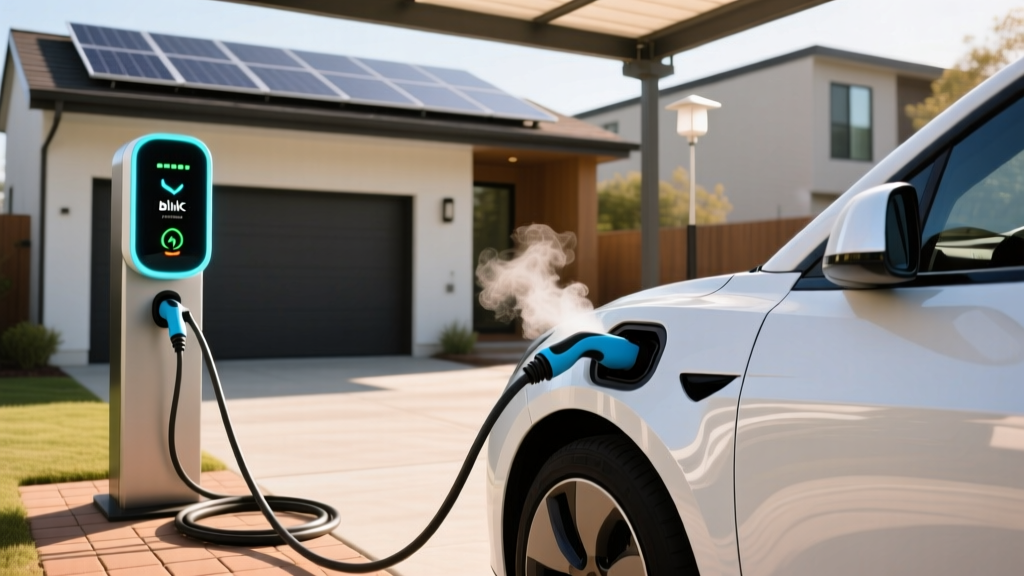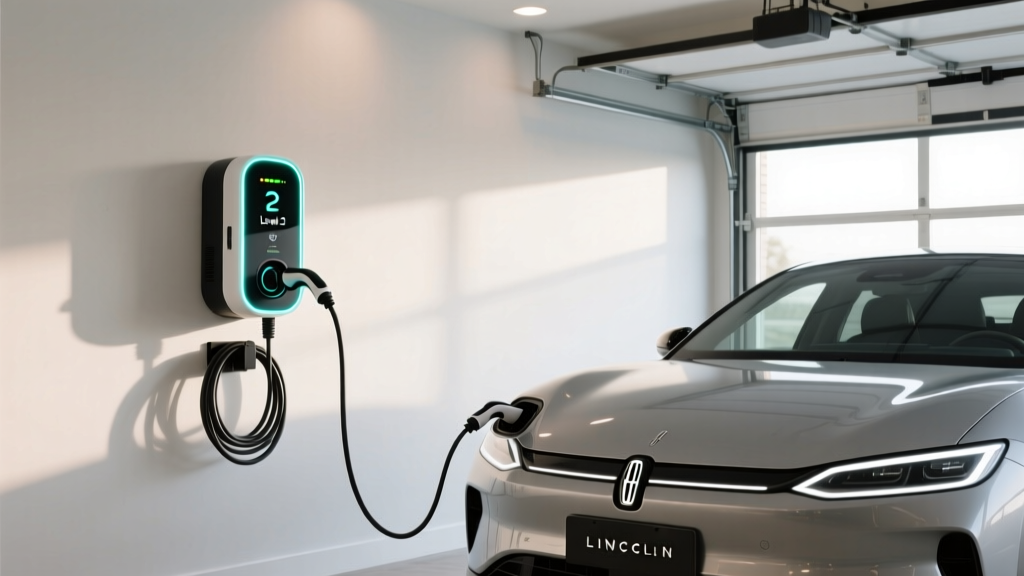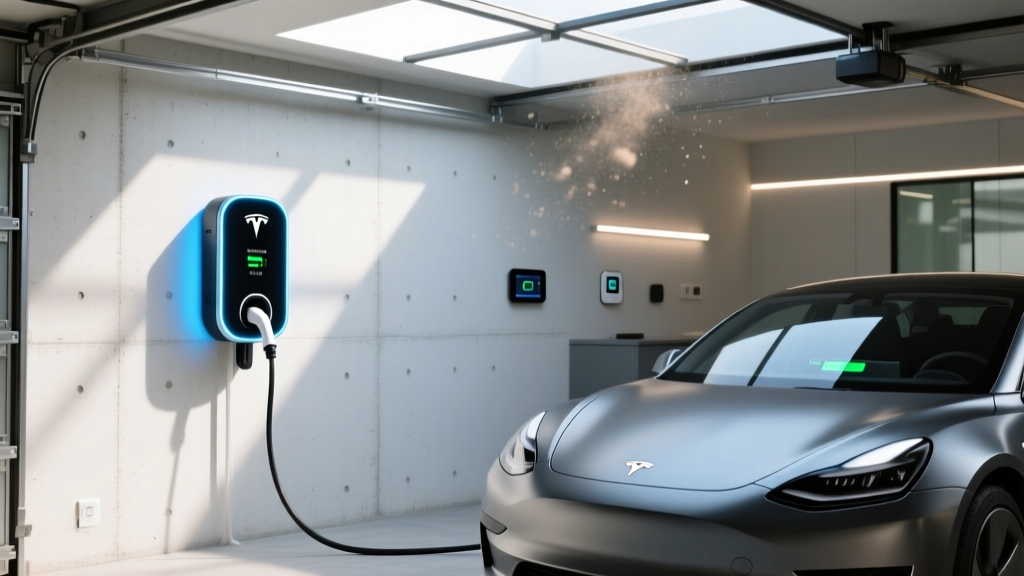
If you own a Tesla or any NACS-equipped EV, home charging is where the economics of electric driving truly pay off. Public DC fast chargers grab headlines with 250+ kW peak speeds, but the vast majority of electron replenishment happens in your garage or driveway overnight. Understanding the true cost of a Tesla charging station at home means looking beyond the hardware price tag to include electrical work, permits, potential panel upgrades, and the ongoing cost per mile.
This guide breaks down every line item, compares Tesla's own wall connector against top third-party alternatives, and gives you the exact numbers to budget accurately in 2026.
The Three Charging Levels: Speed, Power, and Range Added Per Hour
Before pricing equipment, you need to understand the three charging tiers available to EV owners. The critical distinction is between kW (kilowatts, the rate of power delivery) and kWh (kilowatt-hours, the total energy stored in your battery). Think of kW as the flow rate of a hose, and kWh as the size of the bucket.
| Level | Voltage | Max Power (kW) | Miles of Range Per Hour | Typical Use Case |
|---|---|---|---|---|
| Level 1 | 120V AC | 1.4–1.9 kW | 3–5 miles/hr | Emergency/overnight trickle for PHEVs or low-mileage drivers |
| Level 2 | 240V AC | 7.2–19.2 kW | 20–75 miles/hr | Primary home charging, workplace, public destination |
| DC Fast Charging | 400–800V DC | 50–350+ kW | 150–1,000+ miles/hr (peak) | Road trips, highway corridors; not for daily home use |
For a Tesla Model Y Long Range with a ~75 kWh usable battery, Level 1 charging would take roughly 50+ hours from empty — impractical. A Level 2 Tesla Wall Connector at 11.5 kW (48A) adds about 44 miles of range per hour, meaning a full overnight session easily replenishes a day's driving. That's why Level 2 is the standard for home installations.
How Much Does It Cost to Install a Home Tesla Charger?
The total cost of a Tesla charging station at home depends on four variables: the charger unit, electrical labor, materials (conduit, wire, breaker), and your local permit fee. Here's the realistic breakdown.
| Component | Low End | High End | Notes |
|---|---|---|---|
| Tesla Wall Connector (hardware) | $420 | $475 | Gen 3, 24-foot cable, Wi-Fi enabled; includes NACS plug |
| Third-party NACS charger (alternative) | $350 | $700 | E.g., Emporia Vue, ChargePoint Home Flex, Grizzl-E |
| Electrician labor | $400 | $1,500 | Depends on run length from panel, drywall cutting/patching |
| Materials (wire, conduit, 60A breaker) | $100 | $400 | 6 AWG copper THHN typical; longer runs cost more |
| Electrical permit | $50 | $200 | Varies by municipality; some jurisdictions waive for EV installs |
| Total (no panel upgrade) | $970 | $3,275 | |
| Panel upgrade (if needed, 100A → 200A) | $1,500 | $4,000 | Older homes with 100A service may need this for a 48A charger circuit |
| Total (with panel upgrade) | $2,470 | $7,275 |
Most homeowners with a modern 200-amp electrical panel and a garage-adjacent installation point land in the $1,200–$2,000 total range. The cost escalates quickly if your panel is in the basement and you're installing in a detached garage, or if your home still has 100-amp service from the 1970s–80s.
Electrical Requirements: What Your Installer Needs to Know
A proper Level 2 home charger installation isn't just plugging into an existing outlet. Here are the technical requirements and code considerations your electrician will evaluate:
Voltage, Amperage, and Circuit Sizing
- Tesla Wall Connector maximum: 48 amps continuous draw, requiring a 60-amp double-pole breaker on a 240V circuit
- Wire gauge: 6 AWG copper (THHN in conduit or NM-B/Romex where code permits) for 48A; 8 AWG may suffice for 32A circuits
- Dedicated circuit: NEC Article 625 requires EV charging equipment to be on its own dedicated circuit — no sharing with other appliances
Safety and Code Requirements
- GFCI protection: NEC 2020 and later require GFCI protection for receptacle-based EV chargers (14-50 outlets). Hardwired wall connectors may be exempt in some jurisdictions — hardwiring also eliminates the common failure point of 14-50 receptacle overheating.
- Outdoor rating: If installing outside, the Wall Connector is NEMA 4 rated (weather-resistant), but the junction box and conduit entries must also meet outdoor standards.
- Permit and inspection: Nearly all jurisdictions require an electrical permit for a new 240V circuit. Your electrician pulls this; the inspector verifies wire gauge, breaker size, grounding, and torque specs before sign-off.
- Utility notification: Some utilities require you to notify them before adding a Level 2 charger, especially if you want to enroll in time-of-use (TOU) rate plans for cheaper overnight charging.
Connector Compatibility: NACS, CCS, and Adapter Realities
As of 2026, the North American Charging Standard (NACS) — originally Tesla's proprietary connector — has become the dominant plug for new EVs. Ford, GM, Rivian, Volvo, Polestar, and others have adopted NACS, and Tesla Superchargers are open to non-Tesla vehicles via the built-in Magic Dock adapter at select stations.
| Connector | Brands Using It (Native) | Home Charger Availability | Adapter Needed? |
|---|---|---|---|
| NACS (Tesla) | Tesla, Ford, GM, Rivian, Volvo, Polestar, Hyundai (2026+) | Tesla Wall Connector, Emporia, Grizzl-E NACS | Non-Tesla NACS EVs can use Tesla Wall Connector natively |
| CCS1 | Legacy VW ID.4, some 2024–2025 Hyundai/Kia models | ChargePoint Home Flex, Enel X JuiceBox (CCS) | Tesla-to-CCS adapter available from Tesla (~$250) for Supercharger access |
| CHAdeMO | Nissan Leaf (discontinued after 2025) | Limited; mostly public stations | No practical home adapter to NACS |
| J1772 (Level 2) | All non-Tesla EVs for AC charging | Universal Level 2 chargers | Tesla Mobile Connector includes J1772 adapter |
If you own a Tesla and are installing at home, the Tesla Wall Connector with the native NACS plug is the obvious default. If your household has mixed EVs (e.g., a Tesla and a VW ID.4 with CCS), consider a ChargePoint Home Flex with a J1772 connector plus a Tesla J1772 adapter, or install two dedicated units if your panel supports it.
Equipment Recommendations: Which Home Charger Should You Buy?
Here are the top Level 2 home chargers compatible with Tesla and NACS-equipped vehicles as of 2026, compared on power output, cable length, smart features, and price.
Tesla Wall Connector (Gen 3)
- Max output: 11.5 kW (48A / 240V)
- Cable length: 24 feet
- Connector: Native NACS
- Smart features: Wi-Fi, OTA updates, power sharing (pair two units on one circuit), access control
- Price: ~$420–$475
- Best for: Tesla-only households; cleanest integration
ChargePoint Home Flex
- Max output: 12 kW (50A / 240V) configurable down to 16A
- Cable length: 23 feet
- Connector: J1772 (NACS adapter included or sold separately)
- Smart features: Wi-Fi, app scheduling, energy tracking, Alexa integration
- Price: ~$550–$650
- Best for: Multi-EV households; flexible amperage for limited panels
Emporia Level 2 EV Charger
- Max output: 11.5 kW (48A / 240V)
- Cable length: 24 feet
- Connector: J1772 or NACS (select at purchase)
- Smart features: Wi-Fi, solar integration with Emporia Vue energy monitor, TOU scheduling
- Price: ~$350–$400
- Best for: Budget-conscious buyers; solar homes
Grizzl-E Smart
- Max output: 10 kW (40A / 240V)
- Cable length: 24 feet
- Connector: J1772 or NACS
- Smart features: Wi-Fi, OCPP support, adjustable amperage
- Price: ~$450–$550
- Best for: Cold-climate durability (rated to -40°F); Canadian-built
Cost to Charge Per Mile: Home Electricity vs. Gas vs. Public DC Fast
The ongoing savings are where a home charger justifies its installation cost. Let's compare real numbers using a Tesla Model Y Long Range rated at roughly 28 kWh/100 miles (or about 120 MPGe combined per fueleconomy.gov).
| Scenario | Rate | Cost Per 100 Miles | Cost Per Mile |
|---|---|---|---|
| Home (national avg. electricity, 16¢/kWh) | $0.16/kWh | $4.48 | $0.045 |
| Home (off-peak TOU rate, 8¢/kWh) | $0.08/kWh | $2.24 | $0.022 |
| Home (California peak, 35¢/kWh) | $0.35/kWh | $9.80 | $0.098 |
| Tesla Supercharger (avg. $0.30/kWh) | $0.30/kWh | $8.40 | $0.084 |
| Electrify America DC fast ($0.48/kWh) | $0.48/kWh | $13.44 | $0.134 |
| Gas car (30 MPG combined, $3.40/gal) | $3.40/gallon | $11.33 | $0.113 |
At off-peak home rates, charging a Model Y costs roughly $0.02 per mile — about one-fifth the cost of a 30 MPG gas car. Even at California's higher peak electricity rates, home charging remains competitive with gasoline. The savings compound: a driver covering 12,000 miles per year saves $500–$1,100 annually on fuel with home Level 2 charging versus gas, depending on local rates.
Public DC fast charging, by contrast, often costs as much as or more than gasoline per mile. This is why daily reliance on public fast chargers erodes the economic case for an EV. Home charging is the linchpin.
Charging Time Examples for Common Battery Sizes
How long does a full home charging session actually take? Here are 10–80% estimates on a Tesla Wall Connector at 11.5 kW for several popular models:
| Vehicle | Usable Battery (kWh) | Max AC Acceptance (kW) | 10–80% Time at 11.5 kW |
|---|---|---|---|
| Tesla Model 3 Long Range (2026) | ~75 kWh | 11.5 kW | ~4.5 hours |
| Tesla Model Y Long Range (2026) | ~75 kWh | 11.5 kW | ~4.5 hours |
| Tesla Model S (2026) | ~95 kWh | 11.5 kW | ~5.7 hours |
| Ford F-150 Lightning Ext. Range | ~120 kWh | 19.2 kW (opt.) | ~4.5 hrs (at 19.2 kW); ~7 hrs (at 11.5 kW) |
| Rivian R1S Dual-Motor | ~128 kWh | 11.5 kW | ~7.7 hours |
For most Tesla owners, plugging in at 10 PM and waking at 7 AM provides more than enough time to charge from near-empty to 80–90%. Tesla's built-in charge scheduling and battery preconditioning features let you optimize for off-peak rates automatically.
Federal Tax Credit for Home Charger Installation (§30C)
The IRS §30C Alternative Fuel Vehicle Refueling Property Credit covers 30% of the cost of home EV charging equipment and installation, up to a maximum of $1,000 per tax year. This applies to both the charger hardware and the electrician's labor.
- Credit amount: 30% of total equipment + installation cost, capped at $1,000
- Eligibility: Equipment must be placed in service at your primary residence in the US
- Census tract requirement: For 2026, the property must be located in a qualifying census tract (non-urbanized area or a tract meeting specific low-income criteria) — check the IRS eligibility tool
- Filing: Claim on IRS Form 8911 with your annual tax return
Frequently Asked Questions
How much does it cost to install a home EV charger if I already have a 240V outlet?
If you have an existing NEMA 14-50 outlet (common for electric dryers or RV hookups) in your garage, you can plug in a Tesla Mobile Connector with the 14-50 adapter and charge at up to 32 amps (7.7 kW) with zero installation cost. However, Tesla recommends against continuous use of receptacles for daily EV charging due to thermal stress — a hardwired Wall Connector on a dedicated 60A circuit is more reliable and safer for daily use. If you want the Wall Connector but already have 14-50 wiring, an electrician can swap the receptacle for a hardwired junction for roughly $150–$300 in labor.
Can I install a Tesla Wall Connector myself?
Tesla sells the Wall Connector directly to consumers, and it ships with installation instructions. However, a 240V/60A circuit involves working inside your main electrical panel — a mistake here risks fire, equipment damage, or voiding your homeowner's insurance. Most jurisdictions require a licensed electrician to pull the permit and perform the work. DIY installation may pass inspection in some areas if you're a qualified homeowner, but the liability and safety risk make professional installation the prudent choice.
Will a Tesla Wall Connector work with non-Tesla EVs?
Yes. As of 2026, the Tesla Wall Connector uses the NACS connector, which is now standard on Ford, GM, Rivian, and other brands' EVs. Any vehicle with a native NACS inlet can plug directly into a Tesla Wall Connector and charge at full speed. For CCS-equipped vehicles (older VW ID.4, some Hyundai/Kia models), you'd need a NACS-to-CCS adapter or a J1772-based charger instead.
How much does charging cost per mile compared to gas?
At the US average residential electricity rate of ~$0.16/kWh, a Tesla Model Y costs approximately $0.045 per mile to charge at home — roughly 60% cheaper than a 30 MPG gas car at $3.40/gallon ($0.113/mile). With off-peak time-of-use rates as low as $0.08/kWh, the cost drops to about $0.022 per mile, an 80% savings.
What electrical upgrades might I need for a Level 2 charger?
The most common upgrade is a panel service increase from 100A to 200A, which costs $1,500–$4,000 depending on your utility and local labor rates. You may also need to upgrade from aluminum to copper wiring if your home has older aluminum branch circuits, or add a sub-panel if your main panel has no available breaker slots. A licensed electrician can perform a load calculation to determine whether your current panel can support a 60A dedicated circuit alongside your existing loads.