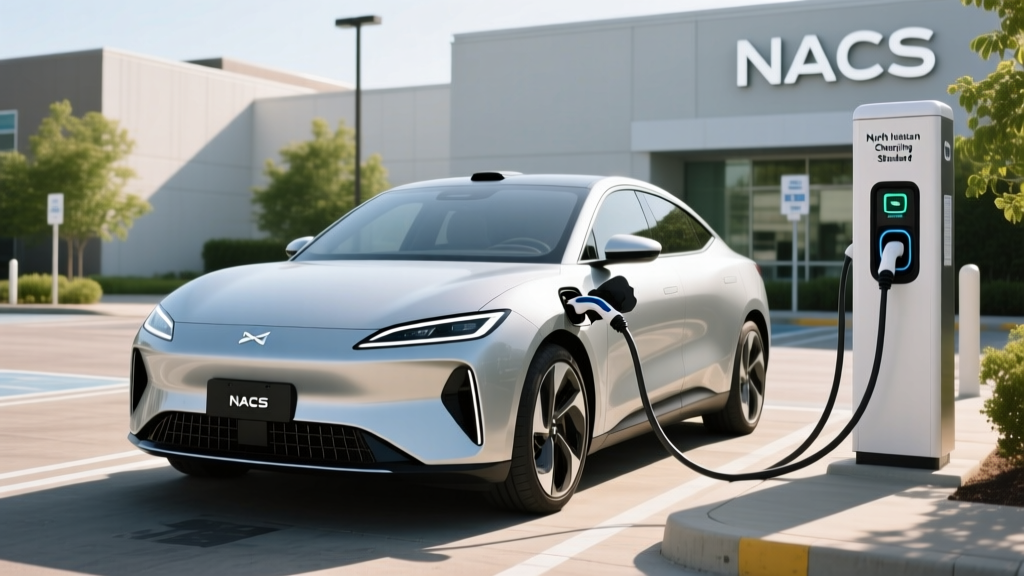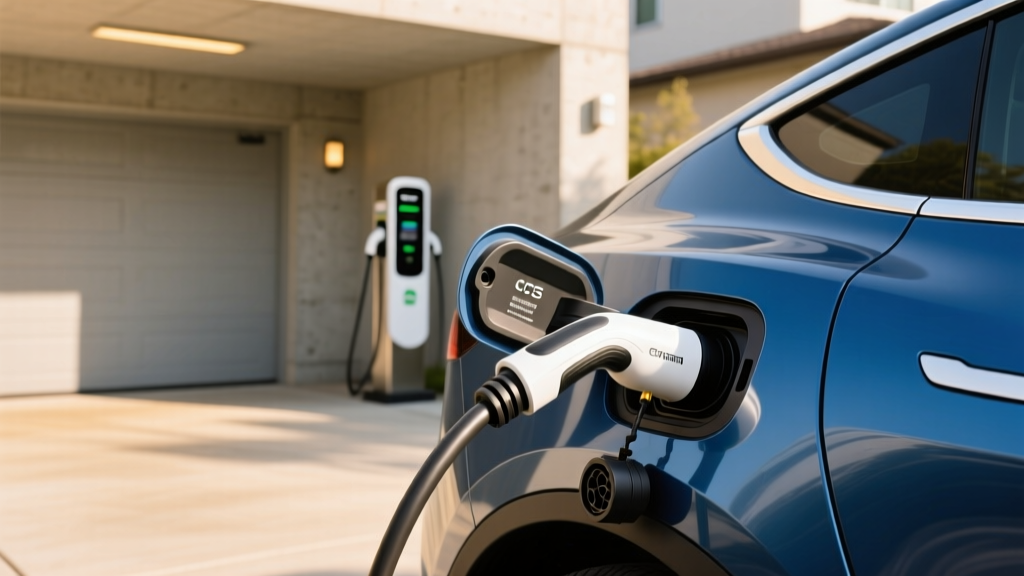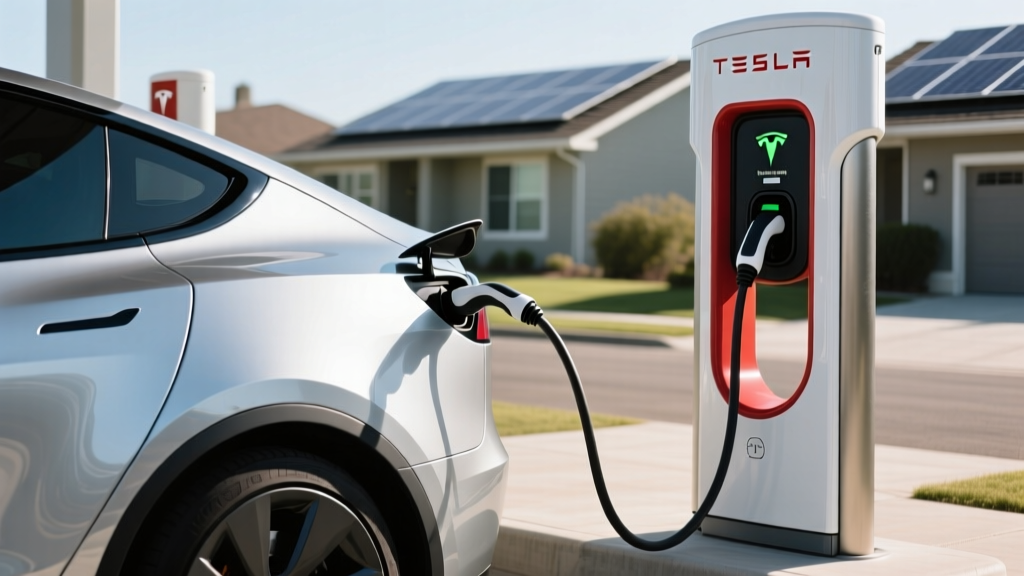
If you own a Tesla—or any EV with a NACS port—you have probably checked the Tesla app, seen a Supercharger nearby, and wondered: how much will this actually cost me? The cost of Tesla Supercharging varies significantly by location, time of day, and whether you are paying member vs. non-member rates. In this guide, we break down exactly what you will pay at a Supercharger, compare it to home and public Level 2 charging, and show the real cost-per-mile math against gasoline.
Before we get to the numbers, a quick but critical distinction: kW (kilowatts) measures power—the rate at which energy flows into your car. kWh (kilowatt-hours) measures energy—the total amount stored in your battery. A 75 kWh battery charged at 150 kW will not take 30 minutes to fill; the charge curve tapers as the battery approaches full. Keep this in mind as we discuss speeds and costs below.
How Tesla Supercharger Pricing Works in 2026
Tesla Supercharger pricing is per-kWh in most U.S. markets (a handful of legacy stations still charge per minute, but Tesla has largely transitioned to energy-based pricing). Rates are set per station and fall into two tiers:
- Member rate: Available to Tesla owners and, increasingly, NACS-equipped EVs from other brands that have enrolled in Tesla's charging membership. Typically $0.25–$0.48/kWh depending on the station and local utility rates.
- Non-member rate: For non-Tesla EVs using the Supercharger network via the Magic Dock or NACS port without membership. Typically $0.48–$0.68/kWh—roughly 30–60% higher than the member price.
Some stations also employ time-of-use pricing, where off-peak hours (usually overnight or mid-morning) carry a lower per-kWh rate. In California, for example, off-peak Supercharger rates can dip to around $0.28/kWh, while peak evening rates push past $0.45/kWh.
Charging Levels Explained: Speeds, Power, and Range Added
Understanding what each charging level delivers is essential for comparing costs and planning trips. Here is how Level 1, Level 2, and DC fast charging stack up:
| Level | Voltage / Amperage | Power (kW) | Miles of Range / Hour | Typical Use Case |
|---|---|---|---|---|
| Level 1 | 120V / 12A | ~1.4 kW | 3–5 mi/hr | Overnight trickle, emergencies, PHEVs |
| Level 2 | 240V / 32–48A | 7.7–11.5 kW | 25–44 mi/hr | Daily home charging, workplace |
| DC Fast (Supercharger V3) | ~400V DC | Up to 250 kW | Up to 1,000 mi/hr (peak) | Road trips, quick top-ups |
| DC Fast (Supercharger V4) | ~800V DC (compatible vehicles) | Up to 350+ kW | Up to 1,200+ mi/hr (peak) | Next-gen fast charging corridors |
Real-world charge-curve reality: A Tesla Model Y Long Range (75 kWh usable battery, NMC chemistry) charging at a V3 Supercharger peaks at 250 kW only between roughly 10–30% state of charge. By 50%, the rate drops to ~100 kW, and above 80% it tapers to under 40 kW. A typical 10–80% session takes about 25–30 minutes. Charging from 80–100% can add another 25 minutes—plan your stops accordingly.
Cost of Tesla Supercharging vs. Home and Public Charging
The real question is what you pay per mile driven. Let us compare across charging scenarios using a Tesla Model Y Long Range (rated at 310 miles EPA, expect ~260–280 miles real-world highway, less in cold weather) with an efficiency of approximately 28 kWh/100 miles:
| Charging Scenario | Rate ($/kWh) | Cost / 100 Miles | Cost / Mile |
|---|---|---|---|
| Home (off-peak utility rate) | $0.12 | $3.36 | $0.034 |
| Home (average U.S. residential) | $0.17 | $4.76 | $0.048 |
| Public Level 2 (ChargePoint, EVgo) | $0.25–$0.49 | $7.00–$13.72 | $0.07–$0.14 |
| Tesla Supercharger (member, avg.) | $0.35 | $9.80 | $0.098 |
| Tesla Supercharger (non-member) | $0.55 | $15.40 | $0.154 |
| Gasoline baseline (27 MPG avg, $3.40/gal) | — | $12.59 | $0.126 |
The takeaway: Home charging at off-peak rates costs roughly one-quarter of what gasoline costs per mile. Tesla Supercharging at member rates is about 22% cheaper than gas, but non-member Supercharger rates can actually exceed gasoline costs on a per-mile basis. If you rely exclusively on Superchargers without a membership, the financial case for EV ownership narrows considerably.
For a driver covering 12,000 miles per year, the annual fuel cost difference is substantial:
- Home charging (avg. $0.17/kWh): ~$571/year
- Supercharging (member, $0.35/kWh): ~$1,176/year
- Gasoline (27 MPG, $3.40/gal): ~$1,511/year
Home EV Charger Installation: Requirements and Costs
Home Level 2 charging is where the economics overwhelmingly favor EVs. But installing a 240V circuit is not a simple plug-in job for most homes. Here is what is involved.
Electrical Requirements
A standard Level 2 home charger requires a 240V dedicated circuit. For a 48-amp charger (the most common high-power home unit), electrical code requires a circuit rated at 125% of the continuous load—meaning you need a 60-amp breaker. Lower-power 32-amp chargers need a 40-amp breaker.
Your home's electrical panel must have sufficient spare capacity. Most modern homes with 200-amp service can accommodate a 60-amp EV circuit. Older homes with 100-amp service may require a panel upgrade to 200 amps, which is a significant added cost.
Installation Cost Breakdown
| Component | Simple Install (panel nearby) | Complex Install (long run / panel upgrade) |
|---|---|---|
| Level 2 charger (hardware) | $350–$700 | $350–$700 |
| Electrician labor (2–4 hrs simple, 6–12 hrs complex) | $300–$800 | $1,200–$3,000 |
| Electrical permit | $50–$200 | $50–$200 |
| Conduit, wiring, misc. materials | $50–$150 | $200–$600 |
| Panel upgrade (100A → 200A, if needed) | N/A | $1,500–$3,500 |
| Total estimated cost | $750–$1,850 | $3,300–$8,000 |
The wide range reflects real-world variability. A garage with the panel on the same wall and drywall construction might cost under $1,000 total. A detached garage requiring a 60-foot underground conduit run and a panel upgrade could exceed $7,000. Always get a site assessment from a licensed electrician before budgeting.
What Electrical Upgrades Might I Need?
Beyond the dedicated circuit, watch for these common upgrade scenarios:
- Panel capacity: If your load calculation shows insufficient headroom, a panel upgrade is mandatory—not optional.
- GFCI protection: NEC 2020 and later require GFCI protection for EV charging outlets in garages. Some chargers have built-in GFCI; hardwired installations may require a GFCI breaker ($50–$100 extra).
- Outdoor rating: If your charger mounts outside, ensure the unit carries a NEMA 4 or IP65 rating and that the conduit and junction boxes are rated for wet locations.
- Utility service entrance: In rare cases, the utility drop itself may need upgrading if your home's total service is under 100 amps. Coordinate with your utility early.
Connector Compatibility: NACS, CCS1, CHAdeMO, and Adapters
The North American charging connector landscape has shifted dramatically. Tesla's NACS (North American Charging Standard) connector is now the dominant standard, with Ford, GM, Rivian, Volvo, Hyundai, and most major automakers adopting it for 2025–2026 model-year vehicles. Here is where things stand:
| Connector | Vehicles Using It | DC Fast Network Access | Adapter Needed? |
|---|---|---|---|
| NACS (Tesla) | All Tesla models; 2025+ Ford, GM, Rivian, Hyundai, Volvo, etc. | Tesla Supercharger network, growing third-party NACS stations | None for Tesla vehicles; CCS-to-NACS adapter for legacy CCS EVs (~$200–$250) |
| CCS1 | Pre-2025 non-Tesla EVs (VW ID.4, older Bolt, Ioniq 5 pre-NACS) | Electrify America, EVgo, ChargePoint DC, Ionity (EU) | NACS-to-CCS adapter needed for Tesla Superchargers (where enabled) |
| CHAdeMO | Nissan Leaf (legacy), Mitsubishi Outlander PHEV | Declining network; some Electrify America stations | No widely available adapter to NACS/CCS; network access shrinking |
| J1772 (Level 2 AC) | All non-Tesla EVs (standard AC inlet) | Level 2 public stations everywhere | Tesla vehicles use included J1772-to-NACS adapter; non-Tesla EVs need no adapter |
If you are buying a new EV in 2026, NACS is the connector to have. The CCS1 network still works, but station growth has stalled as operators pivot to NACS. CHAdeMO is effectively a dead standard outside of legacy Leaf owners.
Recommended Home EV Chargers for 2026
Not all Level 2 chargers are equal. Here are three proven units we recommend, selected for reliability, power output, and smart features:
Tesla Wall Connector (Gen 3)
- Power output: Up to 11.5 kW (48A on a 60A circuit)
- Connector: NACS native; J1772 adapter available
- Cable length: 24 feet
- Smart features: Wi-Fi for OTA updates, power-sharing between two units on one circuit, Tesla app integration, load management
- Price: ~$475
- Best for: Tesla owners who want seamless integration and maximum Level 2 speed. Also works with NACS-equipped non-Tesla vehicles.
ChargePoint Home Flex
- Power output: Up to 12 kW (50A configurable, requires 60A+ circuit at max; 40A/9.6 kW on a 50A circuit)
- Connector: J1772 standard; NACS adapter cable available (~$100 add-on)
- Cable length: 23 feet
- Smart features: Wi-Fi, ChargePoint app with scheduling, Alexa integration, energy reports, flexible amperage dip-switch config
- Price: ~$550–$650
- Best for: Multi-EV households (mix of NACS and J1772 vehicles), renters who may move the unit, anyone wanting granular app control.
Emporia Level 2 EV Charger
- Power output: Up to 11.5 kW (48A on a 60A circuit)
- Connector: J1772 standard; NACS adapter available
- Cable length: 24 feet
- Smart features: Wi-Fi, Emporia app with real-time energy monitoring, integrates with Emporia Vue home energy monitor for solar-aware scheduling
- Price: ~$350–$400
- Best for: Budget-conscious buyers who still want smart scheduling and energy tracking. Excellent value for the power output.
For any of these units, ensure your electrician installs a NEMA 14-50 outlet (for plug-in models) or hardwires the unit directly. Hardwired installations avoid the GFCI breaker requirement in some jurisdictions and allow the full rated amperage. Plug-in NEMA 14-50 setups offer portability if you move homes.
Charging Time Examples: How Long Does It Really Take?
Charge times depend on battery size, state of charge, ambient temperature, and the charger's power output. Here are representative examples for common EV battery sizes:
| Vehicle (Battery Size) | Level 1 (1.4 kW) 10–80% | Level 2 (11.5 kW) 10–80% | DC Fast (250 kW) 10–80% |
|---|---|---|---|
| Tesla Model 3 RWD (57.5 kWh, LFP) | ~36 hours | ~4.5 hours | ~25 minutes |
| Tesla Model Y LR (75 kWh, NMC) | ~47 hours | ~5.8 hours | ~28 minutes |
| Ford F-150 Lightning Ext. (131 kWh, NMC) | ~82 hours | ~10 hours | ~40 minutes |
| Hyundai Ioniq 5 (77.4 kWh, NMC) | ~48 hours | ~6 hours | ~18 minutes (800V architecture) |
Cold-weather note: Below 32°F, lithium-ion batteries accept charge more slowly unless preconditioned. Tesla's navigation-routed battery preconditioning warms the pack en route to a Supercharger, but non-Tesla EVs without active preconditioning may see 10–80% DC fast-charge times increase by 30–50% in freezing temperatures. Always enable preconditioning when possible.
Safety, Code, and Best Practices
EV charging involves sustained high-current draw—unlike most household appliances. Follow these safety guidelines:
- Dedicated circuit only: Never share the EV charger circuit with other appliances. A 60-amp breaker should serve only the charger.
- Permit and inspection: Every jurisdiction requires an electrical permit for new 240V circuits. The inspection ensures wire gauge, breaker sizing, and grounding meet NEC code. Skipping this risks fire and voids homeowner's insurance coverage.
- Wire gauge: A 60-amp circuit requires minimum 6 AWG copper wire (THHN in conduit or NM-B). Longer runs may need 4 AWG to limit voltage drop. Your electrician will calculate this.
- Outdoor installations: Use NEMA 4-rated enclosures and wet-location connectors. Ensure the charger itself carries an outdoor rating—many indoor-rated units are not sealed against rain ingress.
- Utility notification: Some utilities require notification before adding an EV charger, especially in areas with transformer capacity limits. A few offer dedicated EV time-of-use rates that can cut your charging cost in half.
Frequently Asked Questions
How much does it cost to install a home EV charger?
A straightforward Level 2 installation (panel nearby, no upgrade needed) typically costs $750–$1,850 including the charger hardware, electrician labor, permit, and materials. Complex installations requiring long conduit runs or a panel upgrade (100A to 200A) can range from $3,300 to $8,000. Always get a site-specific quote from a licensed electrician.
How fast will each charging level add range?
Level 1 (120V) adds roughly 3–5 miles per hour. Level 2 (240V, 48A) adds 25–44 miles per hour depending on the vehicle's onboard charger acceptance rate. DC fast charging at a Tesla V3 Supercharger (250 kW peak) can add up to 200 miles in 15 minutes, though the charge curve tapers significantly above 50% state of charge.
Which connector is compatible with my EV?
All Tesla vehicles use the NACS connector natively. For 2025–2026 model years, most major automakers (Ford, GM, Rivian, Hyundai, Volvo, BMW, and others) have switched to NACS. Pre-2025 non-Tesla EVs typically use CCS1. Nissan Leaf models use CHAdeMO. Check your vehicle's charge port or consult the EPA's fueleconomy.gov database for your specific model.
How much does charging cost per mile compared to gas?
Home charging at the U.S. average residential rate of ~$0.17/kWh costs about $0.048 per mile for a Tesla Model Y. Tesla Supercharging at average member rates (~$0.35/kWh) costs about $0.098 per mile. A comparable gasoline vehicle at 27 MPG and $3.40/gallon costs about $0.126 per mile. Home charging saves roughly 60% per mile vs. gas; Supercharging saves about 22%.
What electrical upgrades might I need for a home charger?
The most common upgrade is a 200-amp panel if your home currently has 100-amp service ($1,500–$3,500). You will also need a dedicated 60-amp breaker and 6 AWG wiring for a 48-amp charger. Older homes may need wiring updates, GFCI breakers (required by NEC for EV outlets in garages), and possibly a utility service entrance upgrade. A licensed electrician's load calculation will determine exactly what is required.
Can non-Tesla EVs use Tesla Superchargers?
Yes. Tesla has opened portions of its Supercharger network to non-Tesla EVs equipped with NACS ports or using Tesla's Magic Dock CCS adapter at select stations. Non-member rates are typically 30–60% higher than member rates. Check the Tesla app for station availability and pricing in your area. For more details on the expanding network, see Tesla's official non-Tesla Supercharger page.
Is the federal tax credit available for home charger installation?
The Alternative Fuel Vehicle Refueling Property Credit (IRS Form 8911) covers 30% of home EV charger hardware and installation costs, up to a maximum of $1,000. Eligibility depends on your census tract meeting certain low-income or rural criteria. Consult a tax professional to confirm your eligibility for the current tax year.