The Real Cost of Supercharging: What You Actually Pay Per Mile
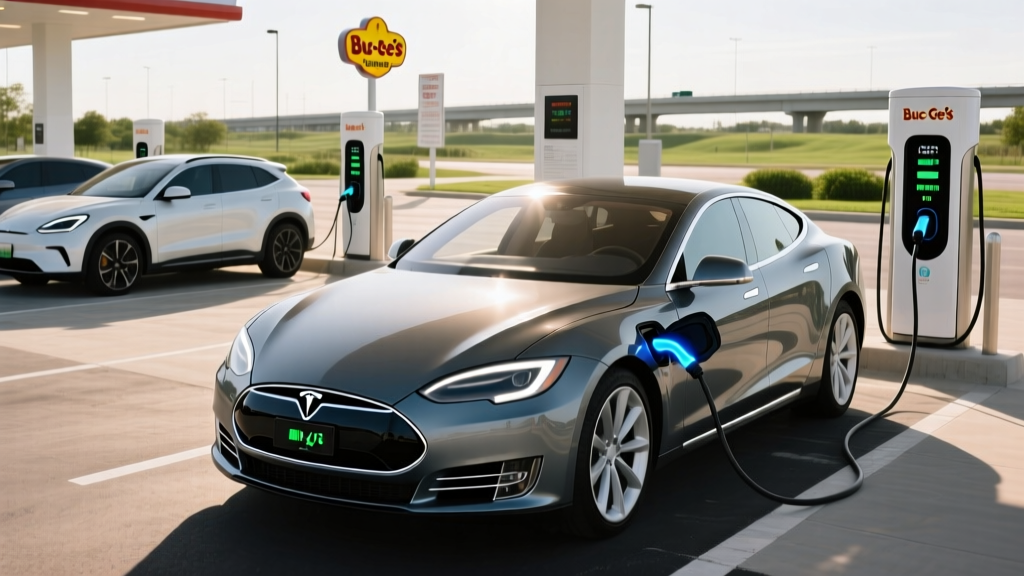
If you're shopping for an electric vehicle or have just taken delivery, one question dominates every road trip: how much does DC fast charging really cost? The cost of supercharging — whether at a Tesla Supercharger, Electrify America, or EVgo station — varies dramatically by network, location, time of day, and your vehicle's battery size. In 2026, national average DC fast-charging rates hover between $0.30 and $0.55 per kWh, with some urban stations pushing past $0.60/kWh during peak hours.
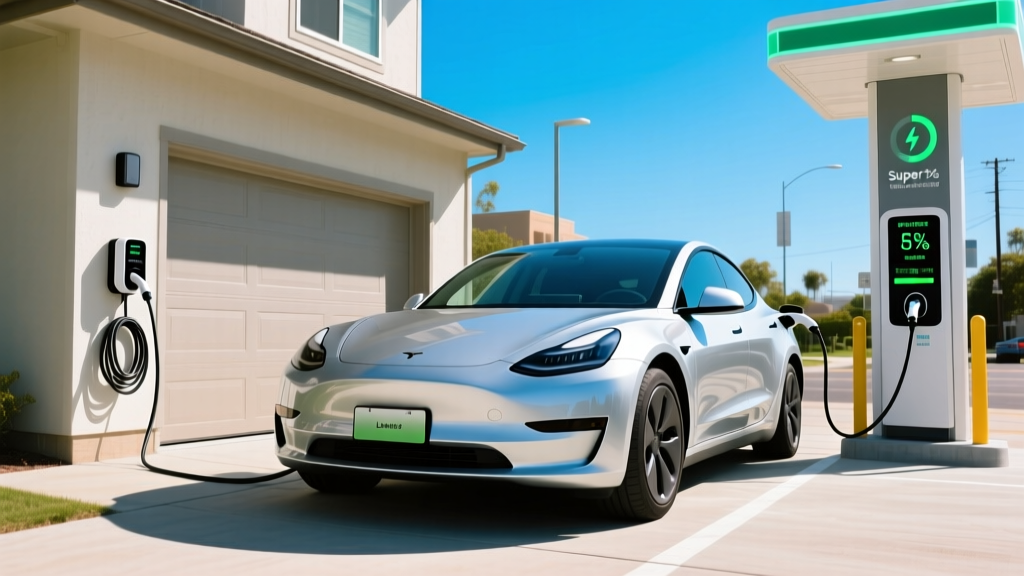
But the cost per kWh only tells part of the story. To make a real apples-to-apples comparison with gasoline, you need to understand your vehicle's efficiency (measured in kWh per 100 miles), the difference between power (kW) and energy (kWh), and how charging curves affect the time you spend at a station. This guide breaks down every cost variable — from highway Supercharger stops to overnight home Level 2 charging — so you can budget accurately and choose the right equipment.
Charging Levels Explained: Speeds, Costs, and Use Cases
Every EV owner uses a mix of charging levels depending on the situation. Understanding the speed and cost of each is essential to managing your budget and your time.
| Level | Voltage | Max Power (kW) | Miles of Range Added per Hour | Typical Cost ($/kWh) | Best For |
|---|---|---|---|---|---|
| Level 1 (120V) | 120V AC | 1.2–1.9 kW | 3–5 miles | $0.08–$0.18 (home electricity) | Overnight top-offs, PHEVs, low-mileage drivers |
| Level 2 (240V) | 240V AC | 7.2–19.2 kW | 20–60 miles | $0.08–$0.18 (home) / $0.20–$0.45 (public) | Daily home charging, workplace charging |
| DC Fast Charging | 400V–800V DC | 50–350 kW | 150–1,200+ miles (equivalent rate) | $0.30–$0.55 (average) | Road trips, rapid top-ups, fleet use |
A few nuances matter here. DC fast-charging "miles per hour" figures are instantaneous peak rates — no one charges for a full hour at 350 kW. Most modern EVs with 800V architectures (like the Hyundai Ioniq 5, Kia EV6, and Porsche Taycan) can sustain high charge rates longer, but all batteries taper charging speed as they approach full capacity. This is called the charge curve, and it's why manufacturers quote "10–80%" charge times rather than 0–100%.
Real-World 10–80% Charge Times by Battery Size
| Battery Capacity (kWh) | Example Vehicles | 50 kW DCFC | 150 kW DCFC | 250–350 kW DCFC |
|---|---|---|---|---|
| ~60 kWh usable | Chevrolet Bolt EV, Nissan Leaf Plus | ~55 min | ~35 min | N/A (vehicle-limited) |
| ~75 kWh usable | Tesla Model 3 RWD, Volvo EX30 | ~70 min | ~28 min | ~22 min |
| ~82–88 kWh usable | Ford Mustang Mach-E, BMW i4 | ~80 min | ~32 min | ~20 min |
| ~100 kWh usable | Tesla Model S, Rivian R1S, GMC Sierra EV | ~95 min | ~40 min | ~18–22 min |
These times assume preconditioned batteries and optimal conditions. In cold weather (below 32°F / 0°C), expect 10–80% times to increase by 20–40% unless your vehicle has active battery preconditioning — a feature that warms the pack before you arrive at the charger. Tesla, Hyundai/Kia (E-GMP platform), and Porsche all include this; some older models do not.
Breaking Down the Cost of Supercharging vs Gas Per Mile
The most practical way to evaluate charging cost is cost per mile, because it lets you compare directly against a gasoline vehicle's fuel cost. Here's the math for three realistic scenarios:
| Scenario | Rate ($/kWh or $/gal) | Vehicle Efficiency | Cost Per Mile |
|---|---|---|---|
| Home Level 2 (off-peak utility rate) | $0.12/kWh | 3.0 mi/kWh (112 MPGe) | $0.040 |
| Home Level 2 (national avg electricity) | $0.17/kWh | 3.0 mi/kWh (112 MPGe) | $0.057 |
| Tesla Supercharger (avg 2026) | $0.35/kWh | 3.0 mi/kWh (112 MPGe) | $0.117 |
| Electrify America / EVgo (avg) | $0.43/kWh | 3.0 mi/kWh (112 MPGe) | $0.143 |
| Gasoline car (28 MPG combined) | $3.40/gal | 28 MPG | $0.121 |
| Gasoline truck/SUV (20 MPG combined) | $3.40/gal | 20 MPG | $0.170 |
The takeaway: home charging is 2–4× cheaper per mile than gasoline, and even the cost of supercharging at a Tesla station is competitive with a fuel-efficient gas car. Non-Tesla DC fast networks at $0.43+/kWh can match or exceed the per-mile cost of a 28 MPG gas car — which is why DC fast charging is best treated as a road-trip expense, not your daily routine.
For a driver covering 12,000 miles per year with 80% home charging and 20% DC fast charging, the blended electricity cost works out to roughly $0.065/mile, or $780/year. A comparable 28 MPG gas car at $3.40/gal would cost about $1,457/year in fuel. That's nearly $680 in annual fuel savings — before accounting for reduced maintenance (no oil changes, less brake wear from regenerative braking).
Home Charger Installation: Electrical Requirements and Costs
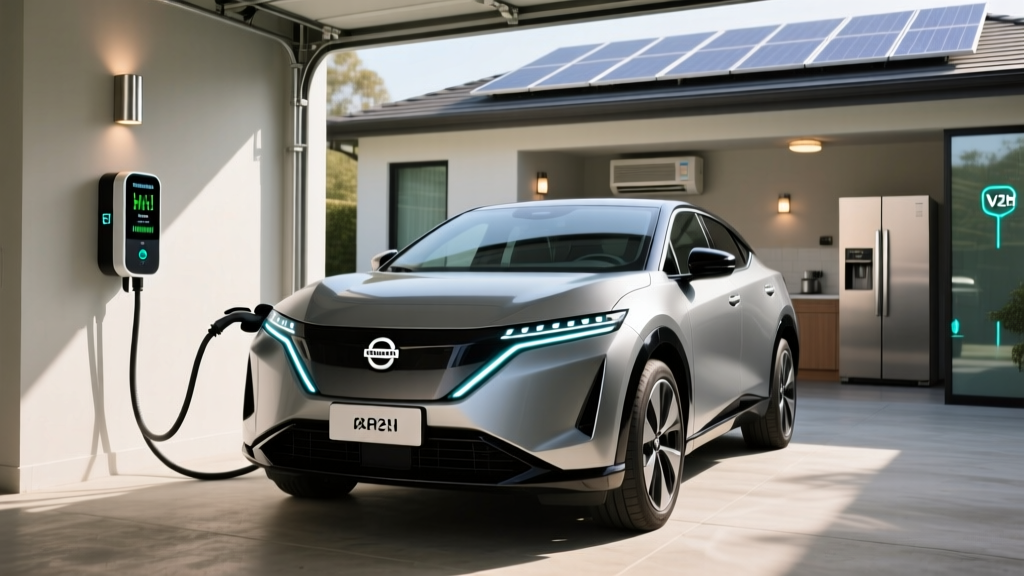
Installing a Level 2 home charger is the single most impactful upgrade for EV ownership. It's also where costs vary most, depending on your home's electrical panel, the distance from panel to charger location, and local permit requirements.
Electrical Requirements
A typical Level 2 home charger requires a 240-volt dedicated circuit, similar to what an electric dryer or oven uses. Common configurations:
- 40-amp circuit / 32-amp continuous (9.6 kW) — sufficient for most EVs, charges a 75 kWh battery from 10–80% in ~5–6 hours overnight
- 50-amp circuit / 40-amp continuous (12.0 kW) — faster, ideal for larger batteries (100+ kWh trucks/SUVs)
- 60-amp circuit / 48-amp continuous (11.5 kW at the vehicle) — the maximum most EV onboard chargers accept; some vehicles (Lucid Air, certain Tesla configs) can accept up to 19.2 kW with an 80-amp circuit
The National Electrical Code (NEC) requires that continuous loads (like EV charging) not exceed 80% of the circuit breaker rating. So a 40A breaker supports 32A continuous charging. Always consult a licensed electrician for final specifications.
Installation Cost Breakdown
| Component | Simple Install (panel nearby) | Moderate Install (50–80 ft run) | Complex Install (panel upgrade needed) |
|---|---|---|---|
| Level 2 Charger Equipment | $350–$700 | $350–$700 | $350–$700 |
| Electrician Labor | $300–$600 | $600–$1,200 | $1,000–$2,000 |
| Electrical Permit | $50–$150 | $50–$200 | $50–$200 |
| Panel Upgrade (if needed) | $0 | $0 | $1,500–$3,500 |
| Conduit, Wiring, Misc. | $50–$150 | $150–$400 | $200–$600 |
| Total | $750–$1,600 | $1,150–$2,500 | $3,100–$7,000 |
Federal Tax Credit for Home Charging Equipment
The IRS Alternative Fuel Vehicle Refueling Property Credit (Section 30C) covers 30% of home charging equipment and installation costs, up to $1,000, for equipment placed in service in 2026. Eligibility depends on the property being located in a qualifying census tract (generally non-urban or low-income areas). Check the IRS guidance or consult a tax professional to confirm your eligibility.
Connector Compatibility: NACS, CCS, and CHAdeMO in 2026
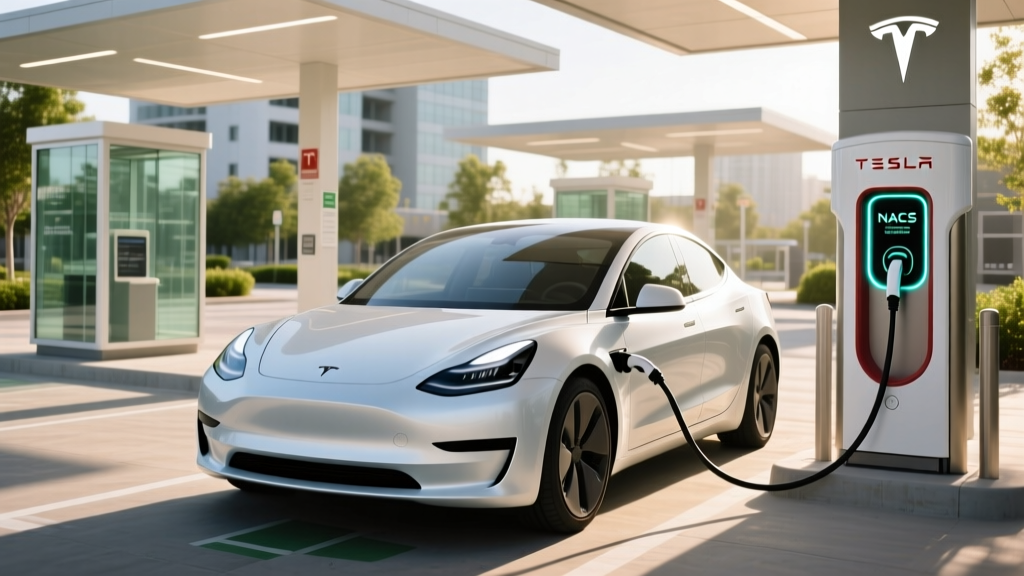
The connector landscape has shifted dramatically. As of 2025, nearly every major automaker adopted the North American Charging Standard (NACS) — originally Tesla's proprietary connector — as the standard for new vehicles. Here's where things stand:
| Connector | Brands Using It (2026) | Notes |
|---|---|---|
| NACS (Tesla standard) | Tesla, Ford, GM, Rivian, Volvo, Polestar, Mercedes-Benz, Honda, Nissan, Fisker, Lucid | Native on most new models from 2025+. Direct Supercharger access. |
| CCS1 (Combined Charging System) | Hyundai, Kia, BMW, Volkswagen, Stellantis, some legacy models | Still common on 2022–2024 models. Adapters available for NACS stations. |
| CHAdeMO | Nissan Leaf (legacy), Mitsubishi Outlander PHEV | Phased out for new models. Limited network support going forward. |
Adapter needs: If you own a CCS-equipped vehicle (e.g., 2023 Hyundai Ioniq 5, 2024 VW ID.4), you'll need a CCS-to-NACS adapter ($150–$250) to access Tesla Superchargers, which now outnumber all other DC fast networks combined in the U.S. Tesla sells an official adapter, and third-party options from companies like Lectron and A2Z are also available. Conversely, NACS-equipped vehicles may need a NACS-to-CCS adapter to use some older Electrify America or EVgo stations that haven't retrofitted NACS cables.
For home Level 2 charging, the standard J1772 connector is still universal for non-Tesla chargers. Tesla vehicles use a proprietary connector for Level 2 but include a J1772 adapter in the glovebox. Most third-party home chargers ship with J1772 or NACS connectors — specify your vehicle's inlet when ordering.
Recommended Home Level 2 Chargers (2026)
Based on reliability, features, and value, here are four well-regarded home chargers for different budgets and needs:
Tesla Wall Connector (Gen 4)
- Power Output: Up to 11.5 kW (48A) on a 60A circuit
- Connector: NACS (J1772 adapter included)
- Cable Length: 24 ft
- Smart Features: Wi-Fi, OTA updates, power sharing between multiple units, access control
- Price: ~$475
- Best For: Tesla owners or NACS-equipped vehicles seeking maximum speed
ChargePoint Home Flex
- Power Output: Up to 12 kW (50A) configurable from 16A–50A
- Connector: J1772 (NACS adapter available)
- Cable Length: 23 ft
- Smart Features: Wi-Fi, app scheduling, Alexa integration, amperage flexibility for panel-limited homes
- Price: ~$599
- Best For: Non-Tesla EVs, homes where amperage needs to be dialed down
Emporia Vue Level 2 Charger
- Power Output: Up to 11.5 kW (48A) on a 60A circuit
- Connector: J1772
- Cable Length: 24 ft
- Smart Features: Wi-Fi, energy monitoring, integration with Emporia whole-home energy panel, time-of-use scheduling
- Price: ~$399
- Best For: Budget-conscious buyers who want energy tracking and solar integration
Grizzl-E Smart
- Power Output: Up to 10 kW (40A) on a 50A circuit
- Connector: J1772
- Cable Length: 24 ft
- Smart Features: Wi-Fi, OCPP compatibility, adjustable amperage, built-in NEMA 4 outdoor rating
- Price: ~$449
- Best For: Outdoor installations, extreme climates (rated to -40°F), Canadian-built durability
Safety, Code, and Installation Best Practices
A properly installed home charger should operate safely for a decade or more. Key requirements and recommendations:
- Dedicated circuit: Your Level 2 charger must have its own dedicated breaker — never share a circuit with other appliances. This prevents overloads and tripped breakers during long charging sessions.
- GFCI protection: The 2023 NEC update requires GFCI (ground-fault circuit interrupter) protection for EV charging outlets in garages and outdoor locations. Hardwired installations (no plug) may exempt this requirement in some jurisdictions — your electrician will advise based on local code.
- Outdoor rating: If your charger is installed outside or in an uncovered carport, ensure the unit carries at minimum a NEMA 4 rating (splash-resistant). NEMA 4X adds corrosion resistance for coastal or salt-air environments.
- Hardwired vs. plug-in: Hardwired chargers (directly connected to your panel wiring) avoid the need for a 240V receptacle and are generally safer for continuous high-amperage use. Plug-in units using a NEMA 14-50 outlet offer portability but require the outlet to be properly installed with the correct torque specifications — loose 14-50 outlets have been linked to overheating incidents.
- Permit and inspection: Most municipalities require an electrical permit and post-installation inspection for EV charger installations. This protects your home insurance coverage and ensures code compliance. Permit costs typically range from $50 to $200.
- Wire gauge: A 40A circuit typically requires 8 AWG copper wire; a 50A circuit requires 6 AWG; a 60A circuit requires 4 AWG. Longer wire runs may require upsizing to reduce voltage drop. Your electrician will calculate this based on the distance from your panel to the charger location.
Frequently Asked Questions
How much does it cost to install a home EV charger?
Most straightforward Level 2 installations (panel within 30 feet, no upgrade needed) cost $750–$1,600 all-in, including equipment ($350–$700), electrician labor ($300–$600), and permit ($50–$150). If your electrical panel needs upgrading from 100A to 200A service, total costs can reach $3,100–$7,000. Always get a load calculation first.
How fast will each charging level add range?
Level 1 (120V) adds 3–5 miles of range per hour — adequate for plug-in hybrids or low-mileage drivers. Level 2 (240V, 40A) adds roughly 30–35 miles per hour, easily replenishing a full day's driving overnight. DC fast charging at 150 kW can add 150–200 miles in 15–20 minutes depending on the vehicle's charge curve and battery preconditioning.
Which connector/charger is compatible with my EV?
Check your vehicle's charge port. 2025–2026 models from Ford, GM, Rivian, Tesla, Volvo, and others use NACS. Hyundai, Kia, BMW, and VW models from 2022–2024 mostly use CCS1. The Nissan Leaf uses CHAdeMO. For home Level 2 charging, any J1772-compatible charger works with all non-Tesla EVs; Tesla includes a J1772 adapter. When in doubt, buy a charger with the connector native to your car or budget $150–$250 for an adapter.
How much does charging cost per mile vs gas?
Home charging at the national average electricity rate of $0.17/kWh costs roughly $0.05–$0.06 per mile for an efficient EV (3 mi/kWh). DC fast charging at $0.35–$0.45/kWh costs $0.12–$0.15 per mile. A 28 MPG gas car at $3.40/gallon costs about $0.12 per mile. Home charging delivers the clearest savings; exclusive DC fast charging erodes the cost advantage for efficient gas vehicles.
What electrical upgrades might I need?
The most common upgrade is a main panel upgrade from 100A to 200A service ($1,500–$3,500) if your existing panel lacks capacity for a dedicated 40–50A EV circuit. Some homes may also need a new conduit run from the panel to the garage or exterior wall. In rare cases, the utility may need to upgrade the service drop to your home. A licensed electrician can perform a load calculation to determine your exact needs before you commit to equipment.
Sources: fueleconomy.gov for vehicle efficiency data; IRS Section 30C for home charging tax credit details; manufacturer specification pages for charge rates and connector types.