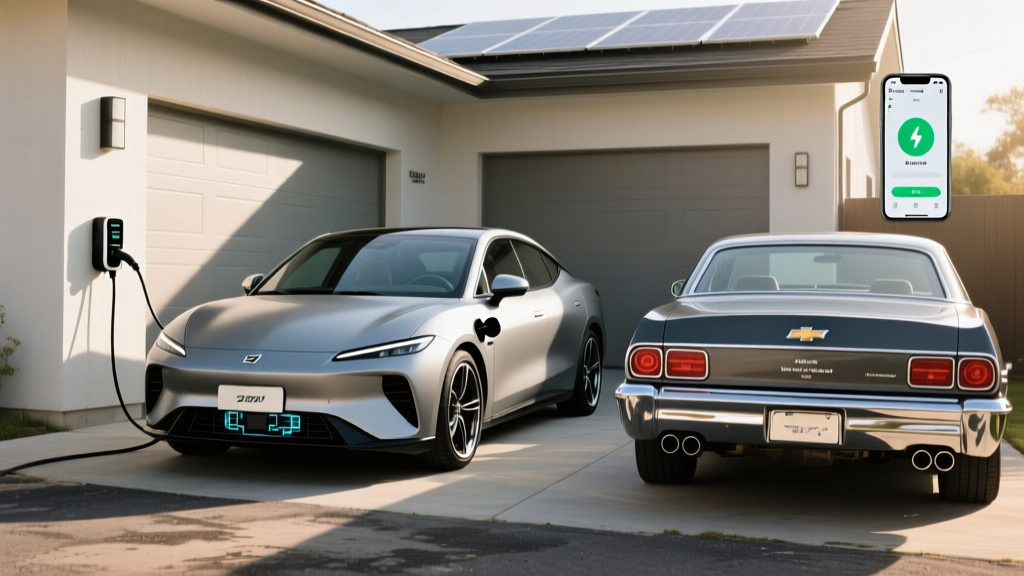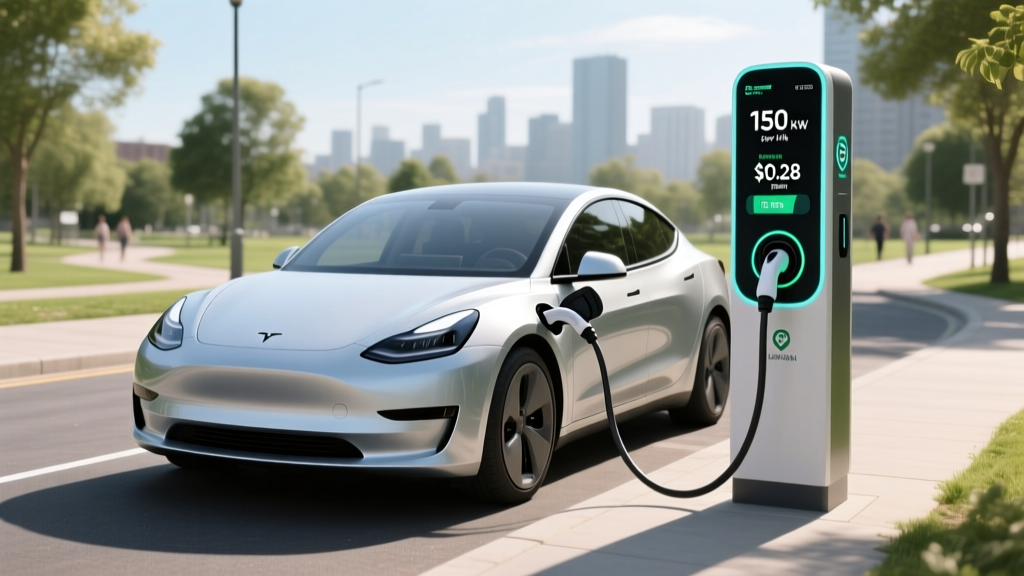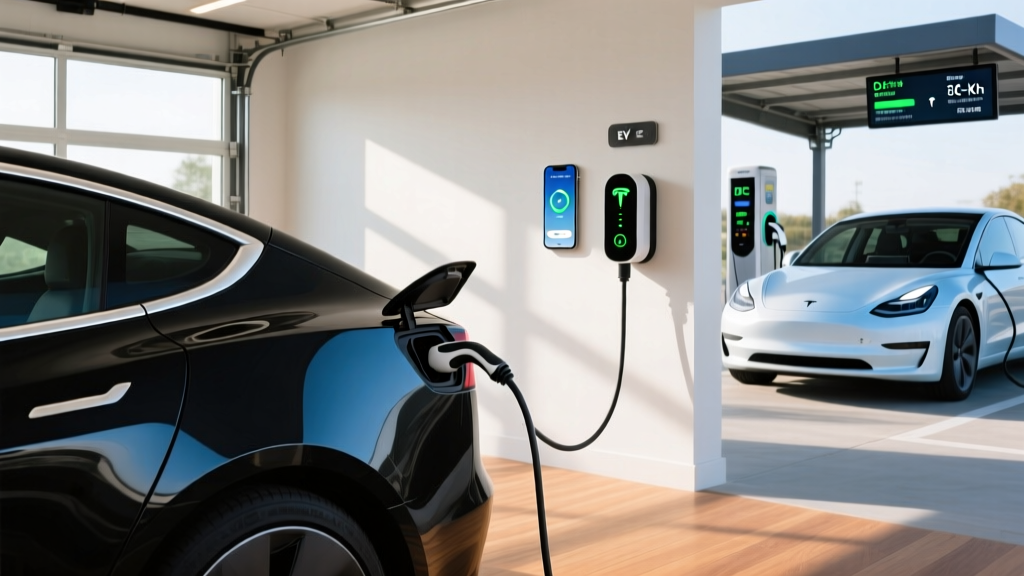
The Tesla Model 3 remains one of the most efficient electric vehicles on the road, but the actual cost to keep its battery full varies dramatically depending on where and how you plug in. Whether you're charging overnight in your garage on a Level 2 home charger, topping off at a grocery-store Level 2 station, or pulling into a Supercharger for a 10-80% DC fast charge, the per-kWh rate — and therefore your cost per mile — can swing by a factor of five.
This guide breaks down the true cost of charging a Tesla Model 3 across every common scenario in 2026, explains the electrical work required for home charging, and shows exactly where your money goes. We'll also cover the equipment you need, the connectors involved, and the real-world charging times you can expect.
Understanding Charging Levels: Speed, Power, and Range Added
Before calculating cost, you need to understand the three charging levels available to Tesla Model 3 owners. The distinction between kW (kilowatts) — a measure of power, or how fast energy flows — and kWh (kilowatt-hours) — a measure of energy, or how much the battery holds — is the single most important piece of EV literacy. Your Tesla Model 3 Long Range AWD has roughly 75 kWh of usable battery capacity. A 10 kW charger delivers 10 kWh of energy per hour. Simple math, but frequently confused.
| Level | Voltage / Phase | Typical Power (kW) | Miles of Range Added per Hour | Best Use Case |
|---|---|---|---|---|
| Level 1 | 120V AC (standard outlet) | 1.0 – 1.4 kW | 3 – 5 mi/hr | Emergency / overnight trickle for PHEVs |
| Level 2 | 240V AC (home / public) | 7.2 – 19.2 kW | 25 – 65 mi/hr | Daily home charging, workplace, retail |
| DC Fast (Supercharger) | 400V+ DC | 50 – 250 kW (peak) | 150 – 200+ mi in 15 min | Road trips, rapid top-ups |
The Real Cost of Charging a Tesla Model 3: Scenario by Scenario
The cost of charging a Tesla Model 3 depends entirely on the price per kWh you pay and the vehicle's efficiency. The 2026 Model 3 Long Range AWD achieves an EPA-rated combined efficiency of roughly 26 kWh/100 miles (about 130 MPGe combined per fueleconomy.gov). The Rear-Wheel Drive variant is slightly more efficient at around 25 kWh/100 miles.
Here's what that translates to in real dollars:
| Charging Scenario | Typical $/kWh | Cost for 100 Miles | Cost per Mile | Full 0-100% Charge (≈75 kWh) |
|---|---|---|---|---|
| Home — Off-Peak (TOU rate) | $0.08 – $0.12 | $2.08 – $3.12 | $0.021 – $0.031 | $6.00 – $9.00 |
| Home — Standard Residential Rate | $0.14 – $0.18 | $3.64 – $4.68 | $0.036 – $0.047 | $10.50 – $13.50 |
| Home — Peak / High-Cost State (CA, HI) | $0.25 – $0.40 | $6.50 – $10.40 | $0.065 – $0.104 | $18.75 – $30.00 |
| Public Level 2 (Workplace / Retail) | $0.15 – $0.30 | $3.90 – $7.80 | $0.039 – $0.078 | $11.25 – $22.50 |
| Tesla Supercharger (V3/V4) | $0.28 – $0.48 | $7.28 – $12.48 | $0.073 – $0.125 | $21.00 – $36.00 |
| Non-Tesla DC Fast (Electrify America, EVgo) | $0.35 – $0.55 | $9.10 – $14.30 | $0.091 – $0.143 | $26.25 – $41.25 |
Cost per Mile vs. a Comparable Gas Car
For comparison, a gas-powered sedan averaging 30 MPG combined at $3.50/gallon costs roughly $0.117 per mile in fuel alone. Even at Supercharger rates, the Model 3 is competitive; at home off-peak rates, it's roughly one-quarter the fuel cost of gasoline. Over 12,000 miles per year, home off-peak charging saves approximately $1,000–$1,300 annually versus gas.
Home Charger Installation: Electrical Requirements and Total Cost
The biggest variable in EV ownership cost isn't the electricity — it's the upfront investment in a home Level 2 charging setup. Here's what's involved for a typical Tesla Model 3 owner installing a 240V Level 2 charger.
Electrical Requirements
A Level 2 home charger for a Tesla Model 3 requires a 240-volt, dedicated circuit. The most common setup is a 60-amp breaker feeding a hardwired wall connector rated for 48 amps continuous (NEC code requires circuits to be rated 125% of continuous load, so a 48A charger needs a 60A breaker). This delivers up to 11.5 kW of charging power — enough to add roughly 44 miles of range per hour, or fully replenish a Model 3 Long Range overnight in about 7-8 hours.
If your electrical panel has limited capacity, a 40-amp breaker with a 32-amp charger (7.7 kW) is a viable alternative, adding roughly 30 miles per hour.
What Could Require a Panel Upgrade?
Homes built before 2000 often have 100-amp or 150-amp main service panels. Adding a 60-amp EV circuit to an already-loaded panel may require a service upgrade to 200 amps, which is the single largest cost variable in home charger installation. Signs you may need an upgrade:
- Your panel is 100A or 150A and has few open breaker slots
- You already run high-draw appliances (electric range, dryer, HVAC, hot tub)
- Your panel is a known problematic brand (Federal Pacific, Zinsco, certain Challenger models)
- The panel shows signs of corrosion, overheating, or double-tapped breakers
| Component | Low-End Estimate | High-End Estimate | Notes |
|---|---|---|---|
| Level 2 Charger Equipment | $350 | $700 | Tesla Wall Connector ~$420; third-party smart chargers $400-$700 |
| Electrician Labor (standard install) | $500 | $1,500 | Depends on run length from panel to garage/driveway |
| Electrical Permit | $50 | $300 | Varies by municipality |
| Panel Upgrade (if needed) | $1,500 | $4,000 | 100A→200A service upgrade; not always required |
| Conduit, Wire, Misc. Materials | $100 | $500 | Longer runs = more copper and conduit |
| Total (no panel upgrade) | $1,000 | $3,000 | Typical for homes with adequate panel capacity |
| Total (with panel upgrade) | $2,500 | $7,800 | Older homes needing 200A service |
Some utilities offer rebates of $250–$1,000 for home charger installation, and the federal Residential Clean Energy Credit may cover 30% of charger equipment and installation costs up to $1,000 (check current-year IRS rules, as incentive structures shift). Always hire a licensed electrician and pull a permit — unpermitted electrical work can void your homeowner's insurance.
Connector Compatibility: NACS, CCS, and Adapters
The 2026 Tesla Model 3 comes equipped with the North American Charging Standard (NACS) connector natively — the same connector used at all Tesla Superchargers. As of 2025-2026, most major automakers have adopted NACS for their new EVs, and networks like Electrify America and EVgo are adding NACS cables alongside legacy CCS1 connectors.
| Connector Type | Native on Model 3? | Where You'll Find It | Adapter Needed? |
|---|---|---|---|
| NACS (Tesla) | Yes — built in | Tesla Superchargers, Destination Chargers, growing third-party networks | No |
| CCS1 (Combo) | No | Electrify America, EVgo, older public DC fast stations | Yes — Tesla sells a CCS adapter (~$175) or use the Magic Dock at select Superchargers opened to non-Teslas |
| J1772 (Level 2 public) | No | Public Level 2 chargers (ChargePoint, Blink, workplace) | Yes — Tesla includes a J1772 adapter with the car |
| CHAdeMO | No | Largely legacy (Nissan Leaf, older stations) | Not recommended; no official Tesla adapter |
Practical advice: The J1772 adapter that ships with your Model 3 covers nearly all public Level 2 situations. For non-Tesla DC fast charging, the CCS adapter is worth purchasing if you travel in areas with limited Supercharger coverage. Keep both in your frunk or glovebox.
Recommended Home Charging Equipment for Tesla Model 3
Here are three proven Level 2 chargers well-suited to the Model 3, spanning Tesla's own hardware and top third-party options:
Tesla Wall Connector (Gen 3)
- Power Output: Up to 11.5 kW (48A on a 60A circuit)
- Connector: NACS — plugs directly into Model 3, no adapter
- Cable Length: 24 feet
- Smart Features: Wi-Fi for firmware updates, load sharing with a second unit, Tesla app integration
- Price: ~$420
- Best For: Tesla-only households wanting seamless integration
ChargePoint Home Flex
- Power Output: Up to 12 kW (50A on a 60A circuit, adjustable down to 16A)
- Connector: J1772 (use Tesla's included adapter) or NACS version now available
- Cable Length: 23 feet
- Smart Features: Wi-Fi, ChargePoint app with scheduling, energy tracking, Alexa integration
- Price: ~$550–$650
- Best For: Multi-EV households or those wanting detailed energy data
Emporia Level 2 EV Charger
- Power Output: Up to 11.5 kW (48A on a 60A circuit)
- Connector: J1772 or NACS
- Cable Length: 24 feet
- Smart Features: Wi-Fi, Emporia app with solar integration, real-time cost tracking, load management
- Price: ~$350–$400
- Best For: Budget-conscious buyers or homes with Emporia energy monitoring
Safety, Code, and Installation Best Practices
Home EV charging involves sustained high-current electrical draw — typically 6 to 10 hours at 32–48 amps. This is more continuous load than most household circuits ever see. Proper installation is non-negotiable:
- Dedicated circuit: Your Level 2 charger must have its own dedicated breaker — never share a circuit with other appliances.
- GFCI protection: NEC 2020 and later require GFCI (Ground Fault Circuit Interrupter) protection for outdoor receptacles. Hardwired installations may not require a GFCI breaker (the charger itself typically has ground-fault protection built in), but check local code.
- Outdoor rating: If your charger is mounted outside, it must carry a NEMA 3R or NEMA 4 enclosure rating for weather resistance. All three chargers recommended above meet this standard.
- Wire gauge: A 60A circuit typically requires 6 AWG copper wire (THHN in conduit) or 4 AWG if using NM-B (Romex) cable, depending on local code interpretations. Your electrician will spec this based on run length and ambient temperature.
- Permit and inspection: Always pull an electrical permit. The inspection ensures the work meets NEC and local code — and protects your homeowner's insurance coverage in the unlikely event of a fire.
Charging Time Examples: How Long Does a Full Session Take?
Here are realistic charging times for the 2026 Tesla Model 3 Long Range AWD (~75 kWh usable battery) across common scenarios:
| Charger Type | Power | Energy Added (~52 kWh) | Estimated Time |
|---|---|---|---|
| 120V Wall Outlet (Level 1) | 1.2 kW | 52 kWh | ~43 hours (not practical for full charge) |
| 240V / 32A (Level 2, 40A circuit) | 7.7 kW | 52 kWh | ~6.75 hours |
| 240V / 48A (Level 2, 60A circuit) | 11.5 kW | 52 kWh | ~4.5 hours |
| Tesla V3 Supercharger (DC Fast) | 250 kW peak (~130 kW avg) | 52 kWh | ~25 minutes |
| Tesla V4 Supercharger (DC Fast) | 350 kW peak (~160 kW avg) | 52 kWh | ~20 minutes |
Frequently Asked Questions
How much does it cost to install a home EV charger for a Tesla Model 3?
Expect $1,000–$3,000 for a standard Level 2 installation in a home with adequate electrical panel capacity (200A service, open breaker slots). If your home needs a panel upgrade from 100A to 200A, total costs can reach $2,500–$7,800. Always get 2-3 quotes from licensed electricians and verify they pull a permit.
How fast will each charging level add range to my Model 3?
Level 1 (120V) adds roughly 3-5 miles per hour — only practical for emergencies or plug-in hybrids. Level 2 (240V, 48A) adds about 44 miles per hour, easily replenishing a full day's driving overnight. DC fast charging at a V3 Supercharger can add up to 175 miles in 15 minutes during the peak portion of the charge curve.
Which connector does the 2026 Tesla Model 3 use?
The 2026 Model 3 uses the NACS (North American Charging Standard) connector natively, which is the Tesla Supercharger plug. For public J1772 Level 2 chargers, Tesla includes a J1772-to-NACS adapter in the vehicle. For non-Tesla DC fast chargers with CCS1 connectors, you'll need Tesla's CCS adapter (sold separately, ~$175).
How much does charging a Tesla Model 3 cost per mile vs. gas?
At home off-peak rates ($0.10/kWh), the Model 3 costs roughly $0.026/mile to charge. At Supercharger rates ($0.35/kWh average), it's about $0.091/mile. A comparable gas sedan at 30 MPG and $3.50/gallon costs $0.117/mile. Home charging saves $1,000+ per year for an average driver; exclusive Supercharger use still saves a modest amount vs. gas.
What electrical upgrades might I need for a home charger?
If your home has a 200-amp panel with available breaker slots and a short wire run to the garage, you likely need only a new 60A breaker, conduit, wiring, and the charger itself. If your panel is 100A or 150A, heavily loaded, or in poor condition, a service upgrade to 200A will be required — adding $1,500–$4,000 to the project. An electrician's load calculation will determine this before any work begins.
Does charging at home increase my electric bill significantly?
Yes, but less than you'd spend on gas. Charging a Model 3 Long Range for 12,000 miles per year at $0.12/kWh adds roughly $375 to your annual electric bill — compared to $1,400 in gas for a 30 MPG sedan. If your utility offers time-of-use (TOU) rates, schedule charging for off-peak hours (typically 10 PM – 6 AM) to minimize costs.
Is it safe to charge a Tesla Model 3 in the rain or outdoors?
Yes. The NACS connector and all recommended Level 2 chargers are rated for outdoor use (NEMA 3R or 4). The connector is designed so that no live pins are exposed until a secure connection is made with the vehicle. That said, avoid charging during active lightning storms and ensure your outdoor installation includes proper GFCI protection per local code.