If you've just ordered an electric vehicle — or are seriously considering one — the single most impactful ownership decision you'll make is setting up home charging. A Level 2 home charger transforms the EV experience from "where can I charge?" to "I wake up every morning with a full battery." But the upfront investment varies wildly depending on your home's electrical infrastructure, the equipment you choose, and local permitting requirements.
This guide breaks down the true cost of installing an EV charger at home in 2026, with exact figures for equipment, electrician labor, permits, and potential panel upgrades. We'll also cover charging speeds, connector compatibility, and how per-mile charging costs compare to gasoline.
Understanding EV Charging Levels: Speed and Power Explained
Before estimating costs, you need to understand the three charging levels available to EV owners. The critical distinction: kW (kilowatts) measures power — how fast energy flows into your battery — while kWh (kilowatt-hours) measures energy — the total capacity of your battery. Think of kW as the width of a hose and kWh as the size of the bucket you're filling.
| Level | Voltage | Max Power (kW) | Miles of Range Added per Hour | Typical Use Case |
|---|---|---|---|---|
| Level 1 | 120V AC | 1.4–1.9 kW | 3–5 mi/hr | Overnight top-ups, PHEVs, emergency |
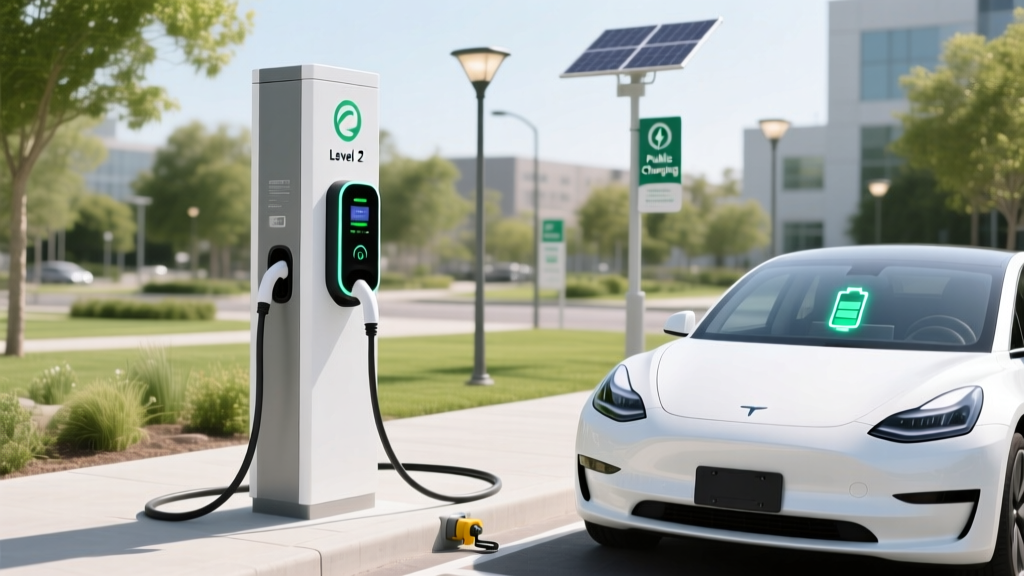
| Level 2 | 240V AC | 7.2–19.2 kW | 20–65 mi/hr | Home daily charging, workplace |
| DC Fast Charge | 400–800V DC | 50–350 kW | 150–1,000+ mi/hr | Road trips, public stations |
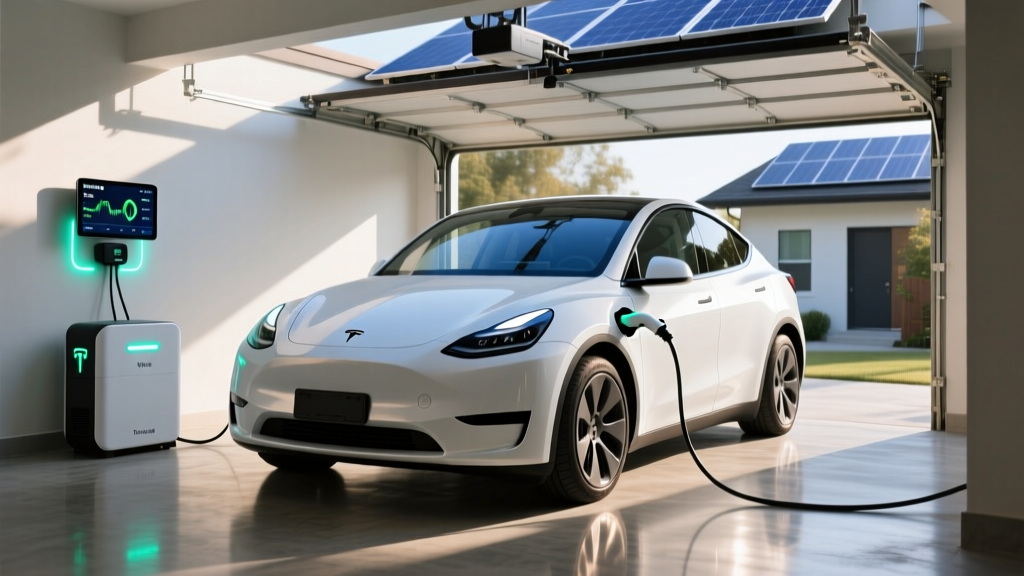
For most EV owners, Level 2 is the home standard. A typical Level 2 charger delivering 11.5 kW (48 amps on a 60-amp circuit) adds roughly 35–40 miles of range per hour. That means a 75 kWh battery (like the Tesla Model Y Long Range) can charge from 10% to 80% in about 5–6 hours overnight. Level 1 is adequate only for plug-in hybrids with small batteries or as a backup.
DC fast charging is not available for home installation — it requires commercial-grade infrastructure — but it's essential for road trips. Peak rates on modern chargers (like Electrify America's 350 kW stalls or Tesla V4 Superchargers) can add 200 miles in roughly 15 minutes, though sustained speeds taper significantly above 80% state of charge due to battery protection protocols.
How Much Does It Cost to Install a Home EV Charger?
The total cost of installing a Level 2 EV charger at home ranges from roughly $800 on the very low end to $5,000+ if your electrical panel needs an upgrade. Here's the realistic breakdown for a typical 2026 installation:
| Cost Component | Low End | Typical | High End |
|---|---|---|---|
| Level 2 Charger Equipment (hardwired or plug-in) | $300 | $500 | $750 |
| Electrician Labor (240V circuit, 40–60A) | $400 | $900 | $2,000 |
| Electrical Permit | $50 | $150 | $350 |
| Panel Upgrade (100A → 200A, if needed) | $0 | $0 | $3,500 |
| Conduit & Wiring (long runs, trenching) | $0 | $200 | $1,500 |
| Total (no panel upgrade) | $750 | $1,750 | $4,600 |
| Total (with panel upgrade) | $2,500 | $4,250 | $7,000+ |
What Drives the Cost Variation?
Distance from panel to garage: If your electrical panel is on the opposite side of the house from where you park, the electrician will run 50–100+ feet of 6-gauge or 4-gauge copper wire through conduit. At $8–$15 per linear foot for materials and labor, a 75-foot run adds $600–$1,100.
Hardwired vs. plug-in (NEMA 14-50): A plug-in charger using a NEMA 14-50 outlet offers portability — you can take the charger when you move. Hardwired units skip the outlet, reduce connection points (lowering fire risk), and often support higher amperage (48A–80A vs. the 40A limit on most 14-50 receptacles). Hardwired installs are typically $100–$200 cheaper in labor but lock the unit in place.
Panel capacity: This is the biggest hidden cost. A Level 2 charger on a 60-amp circuit draws roughly 48 continuous amps. If your home has a 100-amp main panel already running near capacity (electric range, dryer, HVAC), the electrician may recommend upgrading to a 200-amp service. According to NECA, panel upgrades cost $2,000–$4,000 depending on your utility's service drop requirements and local code.
Electrical Requirements: What Your Home Needs
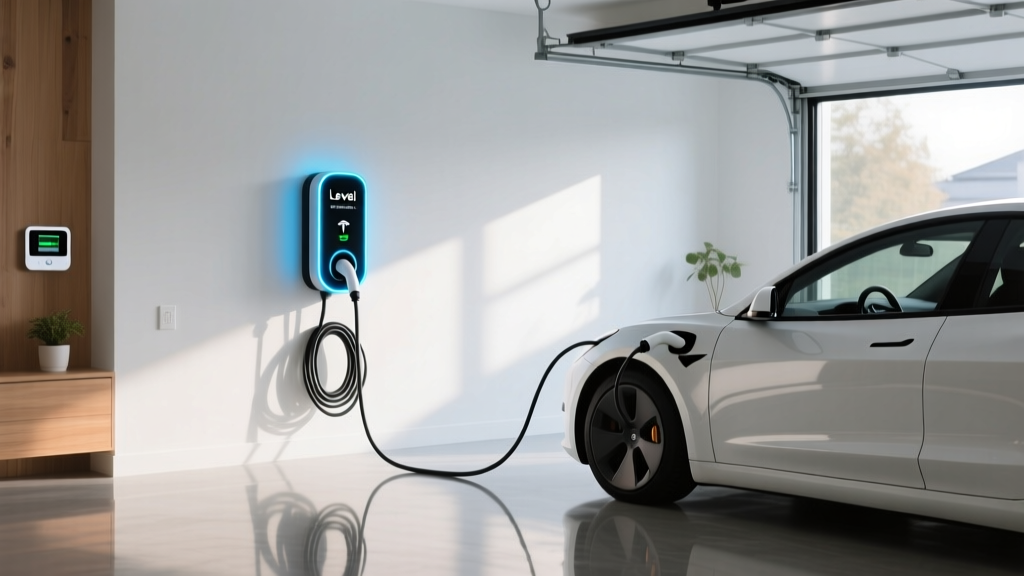
A Level 2 home charger requires a dedicated 240-volt circuit — the same voltage your electric dryer or oven uses. The most common configurations:
- 40-amp circuit / 32A continuous: Supports 7.7 kW chargers. Adequate for most daily driving needs (adds ~25 mi/hr). Uses 8-gauge wire.
- 50-amp circuit / 40A continuous: Supports 9.6 kW chargers. A good balance of cost and speed (adds ~32 mi/hr). Uses 6-gauge wire. NEMA 14-50 outlet compatible.
- 60-amp circuit / 48A continuous: Supports 11.5 kW chargers. Optimal for larger batteries (adds ~40 mi/hr). Uses 6-gauge wire. Hardwired recommended.
- 100-amp circuit / 80A continuous: Supports 19.2 kW chargers. Requires 2-gauge wire and hardwired connection. Only some EVs can accept this rate (e.g., Ford F-150 Lightning with the optional 80A Charge Station Pro). Overkill for most buyers.
Safety and Code Requirements
The National Electrical Code (NEC) mandates specific protections for EV charger installations:
- Dedicated circuit: Your EV charger must have its own breaker — it cannot share a circuit with other appliances.
- GFCI protection: NEC 2020 and later require ground-fault circuit interrupter protection for all EV charging outlets. Hardwired units with built-in GFCI may satisfy this requirement; plug-in units need a GFCI breaker.
- Outdoor rating: If installing outside, the charger must carry a NEMA 3R or NEMA 4 rating for weather resistance. Most major chargers (ChargePoint Home Flex, Emporia Vue, Wallbox Pulsar Plus) meet this standard.
- Permit and inspection: Virtually all jurisdictions require an electrical permit for a new 240V circuit. The inspection ensures proper wire gauge, breaker sizing, grounding, and GFCI compliance. Skipping the permit risks voiding your homeowner's insurance if an electrical fire occurs.
Which Connector Is Compatible with My EV?
The EV industry underwent a massive connector standardization shift between 2023 and 2025. Here's where things stand in 2026:
| Connector | Brands Using It | Notes |
|---|---|---|
| NACS (North American Charging Standard) | Tesla (all), Ford, GM, Rivian, Volvo, Polestar, Mercedes-Benz, Nissan (new models), Hyundai/Kia (2025+) | Now the dominant standard. Compact, lightweight. |
| CCS1 (Combined Charging System) | Volkswagen ID.4 (pre-2025), BMW iX/i4 (pre-2025), some Stellantis models | Larger plug. Phasing out on new models but still widely supported at public chargers. |
| CHAdeMO | Nissan Leaf (legacy only) | Effectively discontinued. Avoid buying new CHAdeMO-only vehicles. |
Adapter needs: If you own a CCS1-equipped vehicle (like a 2024 VW ID.4), you may need a CCS-to-NACS adapter to access Tesla Superchargers, which now welcome non-Tesla EVs at many locations. Tesla sells an official adapter for ~$250, and third-party options (A2Z, Lectron) run $150–$200. Most 2025-and-newer EVs ship with NACS natively, eliminating this concern.
For home Level 2 charging, all chargers use the J1772 standard (or NACS, which includes J1772 signaling). If you buy a NACS-equipped home charger (increasingly common), CCS vehicles will need the adapter for home use too. The simplest approach: match your home charger's connector to your vehicle's native port.
Level 2 Charger Recommendations for 2026
Here are five proven home chargers covering different budgets and needs, all current for 2026:
Tesla Wall Connector (Gen 4)
Power: Up to 11.5 kW (48A) | Connector: NACS (J1772 adapter included) | Cable: 24 ft | Price: ~$475
Smart features: Wi-Fi, OTA updates, load sharing (pair multiple units on one circuit), access control, integrated cable management.
Best for: Tesla and NACS-equipped owners wanting a clean, reliable, mid-price unit. The Gen 4 adds improved thermal management and a slimmer profile.
ChargePoint Home Flex
Power: Up to 12 kW (50A, configurable down to 16A) | Connector: J1772 (NACS adapter available) | Cable: 23 ft | Price: ~$550–$650
Smart features: Wi-Fi, Alexa/Google Home integration, detailed energy tracking app, flexible amperage settings to match your circuit.
Best for: Non-Tesla EV owners who want a flexible, well-supported smart charger with strong app features. The adjustable amperage (16A–50A) lets you match it to any circuit size without buying a different unit.
Emporia Level 2 EV Charger
Power: Up to 11.5 kW (48A) | Connector: J1772 | Cable: 24 ft | Price: ~$350–$400
Smart features: Wi-Fi, integration with Emporia Vue whole-home energy monitor, solar-aware charging, time-of-use scheduling.
Best for: Budget-conscious buyers who want smart features without the premium price. Excellent if you have or plan to install an Emporia energy monitoring system for solar integration.
Wallbox Pulsar Plus
Power: Up to 11.5 kW (48A) | Connector: J1772 or NACS | Cable: 25 ft | Price: ~$500–$600
Smart features: Wi-Fi + Bluetooth, compact form factor (smallest in class), Power Sharing for dual installations, Eco-Smart mode for solar integration.
Best for: Tight garage spaces where a compact unit matters. The Pulsar Plus is roughly 40% smaller than most competitors and offers NACS as a native option.
Ford Charge Station Pro
Power: Up to 19.2 kW (80A) | Connector: NACS (2025+ models) | Cable: 25 ft | Price: ~$1,300–$1,500
Smart features: Bi-directional V2H (vehicle-to-home) capability with F-150 Lightning, Wi-Fi, FordPass integration.
Best for: F-150 Lightning owners wanting maximum charge speed and backup power capability. Requires a 100-amp dedicated circuit and hardwired installation — budget for a significant electrical scope.
How Much Does Charging Cost Per Mile vs. Gas?
One of the strongest financial arguments for EVs is lower fueling cost per mile — but the savings depend heavily on where and when you charge.
| Scenario | Rate | Cost per Mile* |
|---|---|---|
| Home charging (off-peak TOU rate) | $0.08–$0.12/kWh | $0.025–$0.04 |
| Home charging (standard rate, no TOU) | $0.14–$0.18/kWh | $0.04–$0.055 |
| Public Level 2 (ChargePoint, EVgo, etc.) | $0.25–$0.49/kWh | $0.07–$0.15 |
| DC Fast Charging (Electrify America, Tesla Supercharger) | $0.30–$0.55/kWh | $0.09–$0.17 |
| Gasoline (28 MPG avg, $3.40/gal) | $3.40/gal | $0.12 |
| Gasoline (28 MPG avg, $4.00/gal) | $4.00/gal | $0.14 |
*Based on an EV averaging 3.2 miles per kWh (typical for a mid-size SUV like the Tesla Model Y or Hyundai Ioniq 5). Source: fueleconomy.gov.
The math is clear: home charging on a time-of-use plan delivers 3–5x lower fuel cost per mile than gasoline. A driver covering 12,000 miles/year at $0.04/mile spends roughly $480 on electricity vs. $1,440–$1,680 on gas. That's $1,000+ in annual savings just from fueling at home.
However, exclusive reliance on DC fast charging at $0.45/kWh narrows the gap to near parity with gas. The economic case for EVs is strongest when you charge at home. Public charging should supplement, not replace, your home setup.
Charging Time Examples: How Long Does a Full Charge Take?
Charging time depends on two variables: your battery's usable capacity (kWh) and your charger's sustained power output (kW). Here are real-world estimates for popular 2025–2026 EVs on a typical 11.5 kW (48A) home Level 2 charger:
| Vehicle | Battery (Usable kWh) | 10–80% Time | Overnight Full Charge (0–100%) |
|---|---|---|---|
| Tesla Model Y Long Range | 75 kWh | ~5.0 hours | ~7.0 hours |
| Hyundai Ioniq 5 (Long Range) | 77.4 kWh | ~5.2 hours | ~7.2 hours |
| Ford Mustang Mach-E Extended Range | 91 kWh | ~6.1 hours | ~8.5 hours |
| Chevrolet Equinox EV | 85 kWh | ~5.7 hours | ~7.9 hours |
| Toyota bZ4X | 64 kWh | ~4.3 hours | ~6.0 hours |
| BMW i4 eDrive40 | 81.5 kWh | ~5.5 hours | ~7.6 hours |
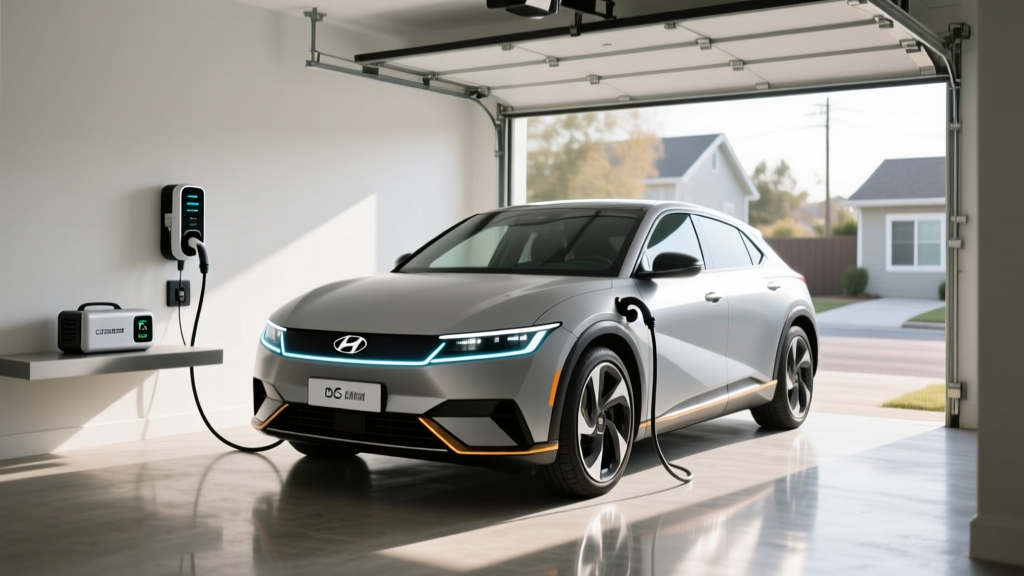
For context, DC fast charging these same vehicles from 10–80% takes roughly 18–30 minutes depending on peak charge rate and battery preconditioning. The Hyundai Ioniq 5, for instance, peaks at 240 kW on an 800V architecture and achieves 10–80% in about 18 minutes under ideal conditions — though real-world speeds taper to 50–80 kW above 70% SoC.
Federal and State Incentives for Home Charging
The IRS §30C Alternative Fuel Vehicle Refueling Property Credit offers a federal tax credit covering 30% of home EV charger equipment and installation costs, up to $1,000. Key eligibility details for 2026:
- The charger must be installed at your primary residence.
- The property must be located in an eligible census tract (lower-income or rural areas as defined by the Treasury Department — check the IRS eligibility tool).
- The credit applies to both equipment and labor costs.
- It's a non-refundable credit — you need sufficient tax liability to claim it.
- The credit is claimed on IRS Form 8911 with your annual tax return.
Many states and utilities stack additional rebates on top. California's utility programs (PG&E, SCE, SDG&E) often offer $250–$1,500 in charger rebates. New York's NYSERDA program covers up to $500. Always check your local utility's EV programs before purchasing — some require pre-approval to qualify.
Frequently Asked Questions
Can I install an EV charger myself?
Technically, a licensed homeowner with electrical experience can wire a 240V circuit. However, we strongly recommend hiring a licensed electrician. EV chargers draw sustained high current for hours — improper wiring, undersized breakers, or missing GFCI protection create serious fire risk. Most jurisdictions require a permit and inspection, and insurance companies may deny claims for unpermitted electrical work. The $400–$900 electrician cost is worthwhile risk mitigation.
Do I need a smart charger, or will a basic unit work?
A basic ("dumb") Level 2 charger will charge your car just fine — it's essentially a relay that sends power to the vehicle. Smart chargers add Wi-Fi connectivity, scheduling, energy tracking, and sometimes load management. If your utility offers time-of-use rates, a smart charger's scheduling feature alone can save you $200–$400/year by automatically charging during off-peak hours. For most buyers, the $100–$150 premium for a smart charger pays for itself within 1–2 years.
Will a home EV charger increase my electric bill significantly?
Yes, but less than you might expect. Charging a 75 kWh battery from empty to full costs roughly $6–$13 at residential electricity rates ($0.08–$0.18/kWh). If you drive 12,000 miles/year at 3.2 mi/kWh, you'll consume about 3,750 kWh annually — adding roughly $300–$675 to your yearly electric bill. Compare that to $1,400–$1,700 in gasoline for the same mileage. The net savings after the electricity increase is still $700–$1,300/year.
My garage is detached and 100 feet from the panel — is that a problem?
It's not a problem, but it increases cost. A 100-foot run of 6-gauge copper wire in conduit adds roughly $800–$1,500 in materials and labor. For runs over 100 feet, your electrician may recommend 4-gauge wire to reduce voltage drop, adding to material costs. Consider trenching requirements if the run goes underground — this can add $500–$2,000 depending on distance and soil conditions.
Can I use a portable Level 2 charger instead of a wall-mounted unit?
Yes. Units like the Tesla Mobile Connector (with a 14-50 adapter, ~$300) or the Emporia portable charger plug into a NEMA 14-50 outlet and deliver up to 32A (7.7 kW). This is a good option if you rent, plan to move, or want to minimize installation costs. Just have an electrician install the 14-50 outlet ($300–$800) and you have portable Level 2 charging. The trade-off is lower maximum amperage and no hardwired reliability benefits.
How long do home EV chargers last?
Quality Level 2 chargers from established brands (Tesla, ChargePoint, Wallbox, Emporia) typically last 8–15 years with no moving parts to wear out. Most carry 2–3 year warranties. The most common failure points are the cable (if repeatedly kinked or run over) and the Wi-Fi module. Budget chargers from unknown brands may fail sooner and lack firmware updates for safety patches. Stick with established manufacturers — the $100–$200 premium buys long-term reliability.