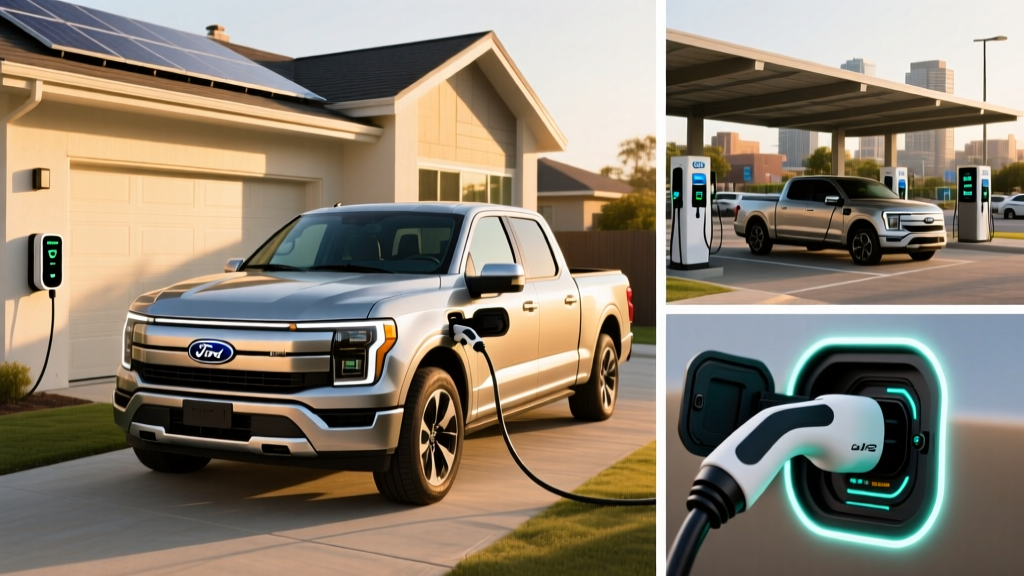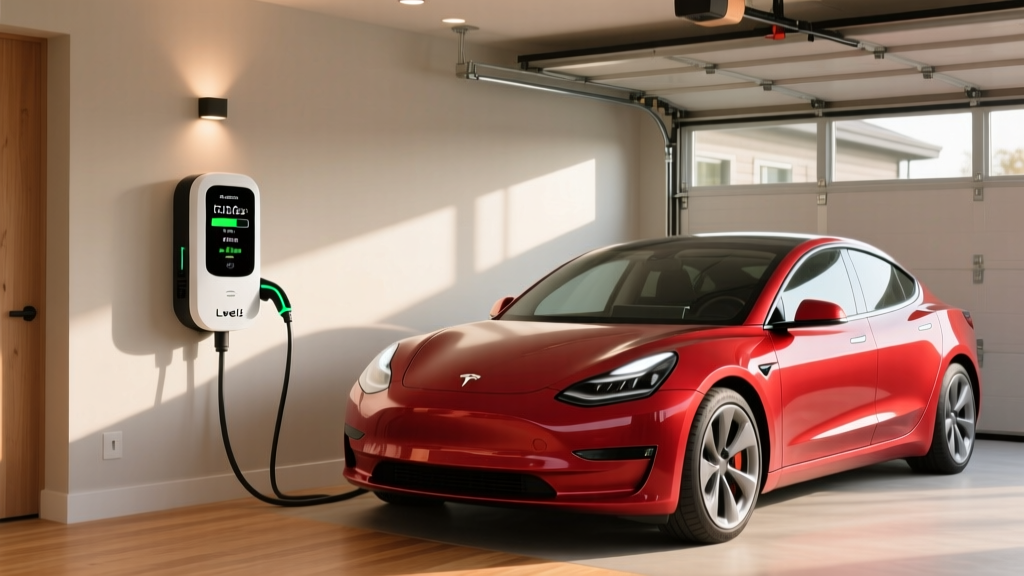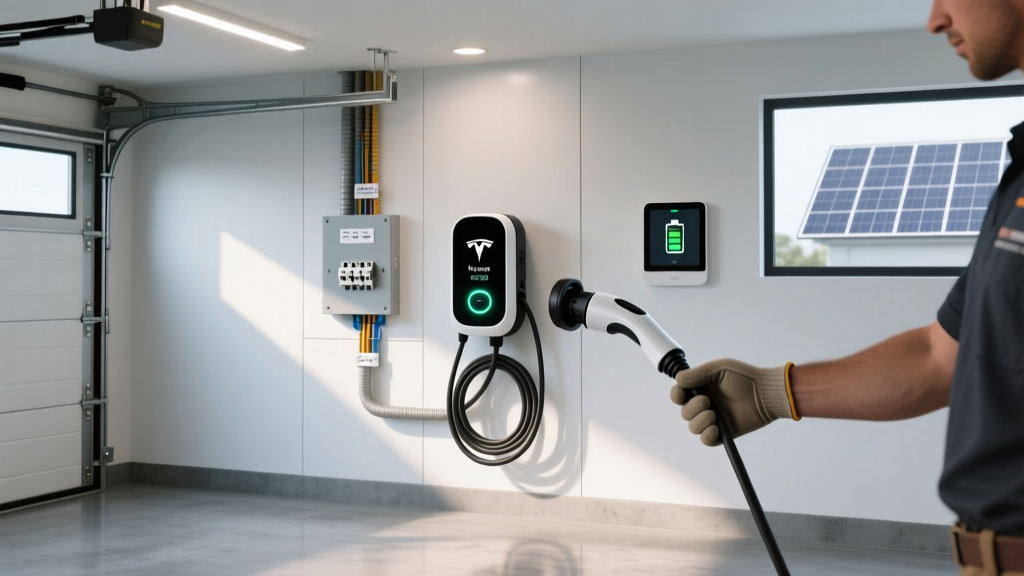
If you own a Tesla or any NACS-equipped EV, home charging is the single biggest quality-of-life upgrade you can make. But the question every buyer asks is practical: what's the real cost to install a Tesla home charger, including the hidden expenses most guides skip? The answer ranges from about $800 for a simple plug-in setup to $4,500+ if your home needs an electrical panel upgrade. This guide breaks down every line item, explains the electrical requirements, and shows you how to avoid the surprises that inflate invoices.
Understanding EV Charging Levels: What Speed Are You Actually Buying?
Before pricing an installation, you need to understand what each charging level delivers. EV charging is measured in kW (kilowatts) — that's power, or how fast energy flows into your car. The battery itself stores energy measured in kWh (kilowatt-hours). Think of kW as the width of the hose and kWh as the size of the bucket. A wider hose (higher kW) fills the bucket faster.
| Level | Voltage | Max Power (kW) | Miles of Range Per Hour | Typical Use |
|---|---|---|---|---|
| Level 1 | 120V AC | 1.4–1.9 kW | 3–5 mi/hr | Emergency / overnight trickle |
| Level 2 (Home) | 240V AC | 7.2–19.2 kW | 25–75 mi/hr | Daily home charging |
| DC Fast Charging | 400–800V DC | 50–350+ kW | 150–1,000+ mi/hr | Road trips, public stations |
For home use, Level 2 is the standard. A Tesla Wall Connector on a 60-amp circuit delivers up to 11.5 kW (48 amps continuous), which adds roughly 44 miles of range per hour on a Model 3 or Model Y. That's enough to fully replenish a typical daily commute in under two hours. Level 1, using a standard 120V outlet, adds only about 3–5 miles per hour — adequate only if you drive under 30 miles daily and can leave the car plugged in for 10+ hours.
Cost to Install Tesla Home Charger: Full Breakdown
The total cost to install a Tesla home charger depends on three variables: the charger hardware, the complexity of the electrical work, and whether your panel can handle the added load. Here's what each component costs in 2026.
| Component | Low End | High End | Notes |
|---|---|---|---|
| Tesla Wall Connector (hardware) | $420 | $475 | 24-foot cable, Wi-Fi enabled, NACS connector |
| Tesla Universal Wall Connector | $575 | $600 | Integrated J1772 adapter, works with all EVs |
| Electrician labor (simple install) | $400 | $800 | Short run from panel, same wall or adjacent |
| Electrician labor (complex install) | $800 | $2,000 | Long wire run, conduit, attic/crawlspace routing |
| Permit fees | $50 | $250 | Varies by municipality; some jurisdictions waive for EV |
| Electrical panel upgrade (if needed) | $1,500 | $3,500 | Upgrading from 100A to 200A service |
| Total (no panel upgrade) | $870 | $3,525 | Most homes with 200A service |
| Total (with panel upgrade) | $2,370 | $7,025 | Older homes with 100A or 150A service |
The median cost for a straightforward Tesla Wall Connector installation in a home with adequate panel capacity falls between $1,000 and $1,800 all-in. The biggest variable is wire run length: if your electrical panel is on the opposite side of the house from your garage, expect the electrician's quote to rise significantly due to labor and copper wire costs.
Electrical Requirements: Voltage, Amperage, and Panel Capacity
The Tesla Wall Connector is a hardwired 240-volt device. It requires a dedicated circuit — meaning no other appliances share that breaker. The circuit size determines your charging speed:
- 60-amp circuit (48A continuous): Delivers the full 11.5 kW. This is the recommended configuration and requires 6 AWG copper wire.
- 50-amp circuit (40A continuous): Delivers 9.6 kW. Uses 8 AWG wire. A good option if panel space is tight.
- 40-amp circuit (32A continuous): Delivers 7.7 kW. Still adds ~30 miles of range per hour — sufficient for most daily drivers.
- 30-amp circuit (24A continuous): Delivers 5.8 kW. Minimum practical circuit for a dedicated EV charger.
The critical question is whether your electrical panel has the capacity. A 200-amp panel — standard in homes built after the mid-1990s — can typically accommodate a 60-amp EV circuit alongside existing loads. A 100-amp panel, common in older homes, often cannot. Your electrician will perform a load calculation per NEC Article 220 to determine if the panel has headroom. If it doesn't, you'll need a panel upgrade or a smart load-management device like the Tesla Wall Connector's built-in power-sharing feature or a third-party system such as the Emporia Load Management Controller, which throttles the charger when household demand spikes.
Do You Need a Panel Upgrade?
You likely need a panel upgrade if:
- Your home has a 100-amp or 150-amp main service panel
- Your panel is already near capacity with existing circuits (electric range, dryer, HVAC, water heater)
- Your panel uses fuse-style breakers or shows signs of age (rust, scorch marks, double-tapped breakers)
A panel upgrade from 100A to 200A typically costs $1,500 to $3,500, depending on your utility's requirements and whether a new meter base or service drop is needed. Some utilities offer rebates for panel upgrades tied to EV adoption — check with your provider before paying full price.
Connector Compatibility: NACS, CCS, and Adapter Requirements
Tesla's North American Charging Standard (NACS) is now the dominant EV connector in the United States. As of the 2025–2026 model years, Ford, GM, Rivian, Volvo, Hyundai, Kia, BMW, and most other major automakers have adopted NACS on their new vehicles. This means a Tesla Wall Connector with a native NACS plug will charge virtually any new EV sold in North America without an adapter.
| Connector | Compatible Brands | Adapter Needed for Tesla Wall Connector? |
|---|---|---|
| NACS (native) | Tesla, Ford, GM, Rivian, Volvo, Polestar, Hyundai, Kia, BMW, Mercedes (select), Nissan (Ariana 2026+) | No — direct plug |
| CCS1 (legacy) | Older VW ID.4, Audi e-tron (pre-2026), Porsche Taycan (pre-2026), Stellantis EVs (pre-2026) | Yes — NACS-to-CCS adapter (~$200–$300) |
| CHAdeMO | Nissan Leaf (all years), Mitsubishi Outlander PHEV | Yes — but CHAdeMO adapters are rare and expensive; consider a J1772 charger instead |
| J1772 | All non-Tesla EVs (universal AC standard) | Tesla Universal Wall Connector includes J1772 adapter built in |
If your household has both a Tesla and a non-Tesla EV that still uses CCS1, the Tesla Universal Wall Connector ($575–$600) is the most practical choice. It includes a built-in J1772 adapter, allowing it to charge any EV that accepts J1772 or NACS. For CCS-only vehicles, you'd add a third-party NACS-to-CCS adapter from a manufacturer like Lectron or A2Z.
Charging Time Examples: How Long to Fill Common Tesla Batteries
Charging time depends on the battery's usable capacity (kWh) and the charger's sustained power (kW). Note that EVs don't charge at peak speed from 0% to 100% — the charge curve tapers significantly above 80% State of Charge to protect battery health. Here's what 10–80% charging looks like at home on a Tesla Wall Connector at 11.5 kW:
- Model 3 RWD (57.5 kWh usable, LFP battery): 10–80% in approximately 3.5 hours. LFP chemistry tolerates regular 100% charging, so Tesla recommends setting the charge limit to 100% for daily use on this model.
- Model Y Long Range (78.1 kWh usable, NMC battery): 10–80% in approximately 4.7 hours. NMC batteries benefit from an 80% daily charge limit to reduce long-term degradation.
- Model S (100 kWh usable, NMC): 10–80% in approximately 6.1 hours at 11.5 kW.
- Cybertruck AWD (123 kWh usable, NMC): 10–80% in approximately 7.5 hours. This is a large battery — consider starting your charge by 10 PM to ensure a full 80% by morning.
At 11.5 kW, even the largest Tesla batteries replenish comfortably overnight. The key is plugging in consistently — most EV owners find that a nightly charging habit eliminates range anxiety entirely, since the car is always topped up by morning.
Cost to Charge at Home vs. Gas: Per-Mile Economics
The ongoing cost advantage of home charging is where EVs deliver their most tangible savings. Electricity rates vary by state and time of day, but here's how the math works with realistic 2026 figures:
| Scenario | Rate | Vehicle Efficiency | Cost Per Mile |
|---|---|---|---|
| Home (off-peak, avg US rate) | $0.13/kWh | 3.5 mi/kWh (Model Y) | $0.037 |
| Home (California, off-peak EV rate) | $0.15/kWh | 3.5 mi/kWh | $0.043 |
| Home (Northeast, higher rates) | $0.22/kWh | 3.5 mi/kWh | $0.063 |
| Tesla Supercharger (avg 2026) | $0.32/kWh | 3.5 mi/kWh | $0.091 |
| Electrify America / EVgo (DC fast) | $0.38–$0.52/kWh | 3.5 mi/kWh | $0.109–$0.149 |
| Gas car (28 MPG combined, $3.40/gal) | $3.40/gallon | 28 mi/gal | $0.121 |
Home charging on an off-peak rate delivers fuel costs roughly one-third to one-quarter of a comparable gas vehicle. Even in high-cost electricity states like California or Massachusetts, home charging undercuts gasoline per mile. The savings erode if you rely exclusively on public DC fast charging at premium rates — which is why home charging access is the single most important factor in EV ownership satisfaction.
For a driver covering 12,000 miles per year, the difference between home charging at $0.04/mile and gas at $0.12/mile is approximately $960 in annual fuel savings. Over five years, that's $4,800 — often enough to offset the entire installation cost of a home charger within two to three years.
Equipment Recommendations: Which Tesla Charger to Buy
Tesla offers two Wall Connector models as of 2026. Both are excellent, but they serve different households.
Tesla Wall Connector (NACS) — $420–$475
- Power output: Up to 11.5 kW (48A on a 60A circuit)
- Cable length: 24 feet
- Connector: Native NACS
- Smart features: Wi-Fi connectivity, over-the-air updates, scheduled charging, power-sharing with a second Wall Connector on the same circuit
- Best for: Tesla-only households or those with NACS-equipped vehicles (Ford, GM, Rivian, etc.)
- Outdoor rating: NEMA 3R (suitable for outdoor mounting)
Tesla Universal Wall Connector — $575–$600
- Power output: Up to 11.5 kW (48A on a 60A circuit)
- Cable length: 24 feet
- Connector: NACS with integrated J1772 adapter (stored on the unit when not in use)
- Smart features: Same Wi-Fi, OTA updates, scheduling, and power-sharing as the standard model
- Best for: Multi-EV households with a mix of NACS and J1772/CCS vehicles
- Outdoor rating: NEMA 3R
Both units are hardwired — they do not plug into a NEMA 14-50 outlet. If you want a plug-in solution (for portability or to avoid hardwiring permit requirements in some jurisdictions), the Tesla Mobile Connector ($200) with a NEMA 14-50 adapter ($35) delivers up to 7.7 kW (32A) on a 50-amp outlet. It's slower but functional, and the outlet itself can later be upgraded to a Wall Connector.
For non-Tesla alternatives worth considering: the ChargePoint Home Flex ($549, up to 12 kW, J1772 with NACS adapter available) and the Emporia Vue Level 2 ($399, up to 11.5 kW, J1772) both offer robust energy monitoring and integration with home solar systems.
Safety, Permits, and Electrical Code Requirements
A Level 2 EV charger installation is a permanent electrical modification to your home. It must comply with the National Electrical Code (NEC) and your local jurisdiction's amendments. Here's what that means in practice:
- Dedicated circuit: The charger must have its own breaker — no sharing with other appliances or outlets. This is non-negotiable per NEC 625.40.
- GFCI protection: The 2023 NEC (adopted by most states by 2026) requires ground-fault circuit-interrupter protection for all EV charging circuits. Your electrician will install a GFCI breaker or confirm the Wall Connector's built-in ground-fault monitoring meets code.
- Permit and inspection: Most municipalities require an electrical permit for a hardwired EV charger installation. The permit typically costs $50–$250 and triggers a post-installation inspection. Skipping the permit risks insurance claim denial if an electrical fire occurs.
- Outdoor installations: If mounting the Wall Connector outside, confirm it carries a NEMA 3R or NEMA 4 rating (the Tesla Wall Connector is NEMA 3R, which protects against rain and ice but not hose-directed water). Use a weatherproof conduit entry and ensure the mounting surface is structurally sound.
- Wire gauge and conduit: A 60-amp circuit requires minimum 6 AWG copper wire (THHN in conduit or NM-B/Romex where allowed). For runs over 50 feet, your electrician may upsize to 4 AWG to reduce voltage drop.
Hire a licensed electrician who has EV charger installation experience. Ask whether they perform a full NEC Article 220 load calculation — if they skip this step and simply install the charger without verifying panel capacity, you risk tripped main breakers or, in extreme cases, overheated service conductors.
Frequently Asked Questions
How much does it cost to install a Tesla home charger?
The total cost to install a Tesla Wall Connector ranges from approximately $870 to $3,525 for homes that don't need a panel upgrade, and $2,370 to $7,025 if a panel upgrade is required. The national median for a straightforward installation is $1,000–$1,800, including hardware, labor, and permits.
How fast will a Tesla Wall Connector add range?
At its maximum 11.5 kW output on a 60-amp circuit, the Tesla Wall Connector adds approximately 44 miles of range per hour to a Model 3 or Model Y. On a 50-amp circuit (9.6 kW), it adds about 37 miles per hour. Even on a 30-amp circuit (5.8 kW), you'll gain roughly 22 miles per hour — enough for most daily commutes.
Can I install a Tesla Wall Connector on a NEMA 14-50 outlet?
No. The Tesla Wall Connector is a hardwired-only device. If you want a plug-in solution, use the Tesla Mobile Connector with a NEMA 14-50 adapter, which delivers up to 7.7 kW. Alternatively, have your electrician install a 14-50 outlet now and upgrade to a hardwired Wall Connector later.
Will a Tesla Wall Connector charge non-Tesla EVs?
Yes. The standard Tesla Wall Connector uses a NACS plug, which is now the standard connector on Ford, GM, Rivian, Hyundai, Kia, Volvo, and other 2025–2026 EVs. For older EVs with a CCS1 or J1772 port, the Tesla Universal Wall Connector includes a built-in J1772 adapter, or you can purchase a third-party NACS-to-CCS adapter.
Is there a federal tax credit for home charger installation?
The federal Alternative Fuel Vehicle Refueling Property Credit (§30C) covers 30% of home EV charger equipment and installation costs, up to a maximum credit of $1,000. However, as of 2026, this credit is only available for installations in eligible census tracts (generally low-income or non-urban areas). Check the IRS §30C page and verify your census tract eligibility before counting on this credit. Consult a tax professional for your specific situation.
How much does it cost to charge a Tesla at home per month?
At the US average residential electricity rate of $0.16/kWh and a driving distance of 1,000 miles per month in a Model Y (3.5 mi/kWh), your monthly charging cost would be approximately $46. Compare that to about $121 per month for a gas vehicle averaging 28 MPG at $3.40 per gallon. Over a year, home charging saves most drivers $600–$1,200 versus gasoline, depending on local electricity and fuel prices. For official efficiency data on specific models, see fueleconomy.gov.
Do I need a permit to install a Tesla home charger?
In most US jurisdictions, yes. A hardwired EV charger is a permanent electrical modification that requires an electrical permit and a post-installation inspection. Permit fees typically range from $50 to $250. Your electrician usually handles the permit application as part of the installation. Skipping the permit can void your homeowner's insurance coverage for electrical-related claims.